标签: Jamaica

牙买加

  • One dead, another injured in Mandela Highway shooting

    One dead, another injured in Mandela Highway shooting

    On a Friday morning on Jamaica’s busy Mandela Highway, a brazen shooting has upended routine travel and left one person dead and another hospitalized, triggering a full-scale police investigation that has closed a major westbound lane for hours. The violent incident unfolded just after 7:15 a.m. local time, near the Caymanas intersection, as a Ford Transit commercial truck moved west toward the popular population centers of Spanish Town and Portmore.

    According to initial law enforcement accounts, the truck’s driver had pulled to a stop shortly after reaching the intersection when two unidentified assailants on a motorcycle pulled alongside the vehicle’s right side. The attackers immediately opened fire, shooting through the truck’s right front window and front windshield before fleeing the scene.

    Two people inside the truck were hit by gunfire. First responders rushed both casualties to local medical facilities, where one victim was pronounced dead shortly after arrival. The second wounded person remains in hospital receiving care for their injuries as of Friday’s initial reports.

    In the wake of the attack, Jamaican police have fully cordoned off the westbound stretch of the highway affected by the incident to process evidence and conduct their investigation. With the lane blocked, local traffic authorities have diverted all westbound vehicles away from the area, and official advisories have been issued urging motorists heading toward Spanish Town and Portmore to use the toll road or other alternate routes to avoid major delays.

    Citing sources familiar with the early investigation, Jamaica’s Observer Online has confirmed that law enforcement suspects the attack was targeted. Investigators believe the intended target was the truck’s driver, a well-known prominent businessman based in Spanish Town. As of the latest update, the identity of the deceased victim has not been released to the public, pending next-of-kin notification. Police have not yet announced any arrests in connection with the shooting, and additional details are expected to be released as the investigation progresses.

  • Lebanon says 13 killed in Israeli strikes in south

    Lebanon says 13 killed in Israeli strikes in south

    BEIRUT, LEBANON – Fresh Israeli airstrikes across southern Lebanon have killed 13 civilians and wounded dozens more on Friday, in attacks carried out even after a regional ceasefire was meant to de-escalate months of cross-border violence between Israeli forces and the Iran-backed militant group Hezbollah. Lebanon’s Ministry of Public Health updated casualty figures, confirming that eight people – including one child and two women – died in strikes on the town of Habboush, where the Israeli military had issued an urgent evacuation order to residents just hours before the bombing. The updated death toll marked an increase from initial lower estimates, with 21 additional people left injured in the Habboush attacks. Separate strikes in the southern Lebanese town of Zrariyeh killed four more people, two of whom were women, and left four others wounded, according to the health ministry. A third strike in Ain Baal, a town located near the coastal Lebanese city of Tyre, killed one person and wounded seven others. An Agence France-Presse photographer on the ground in Habboush observed thick plumes of smoke billowing into the sky shortly after the raids concluded. Lebanon’s state-run National News Agency (NNA) confirmed that Israeli warplanes launched a sustained wave of heavy strikes on the town less than 60 minutes after the evacuation order was issued. The Israeli military had announced prior to the attacks that it would respond with force to what it described as repeated ceasefire violations by Hezbollah, ordering all Habboush residents to evacuate to areas at least one kilometer away from the town’s built-up zones. NNA also reported additional Israeli airstrikes and artillery shelling across other locations in southern Lebanon, including the outskirts of Tyre. Even after the April 17 ceasefire deal that was negotiated to end more than six weeks of open conflict between Israel and Hezbollah, Israeli forces have continued to carry out lethal strikes across southern Lebanon. The text of the ceasefire agreement explicitly allows Israel to take military action in response to planned, imminent, or ongoing attacks against its territory. Currently, Israeli military personnel are operating inside the so-called “Yellow Line,” a buffer zone extending roughly 10 kilometers into Lebanese territory along the shared border, where they have carried out large-scale controlled detonations and demolition of residential and public structures. NNA reported that Israeli troops carried out controlled blasts in the southern town of Shamaa, and demolished a monastery and a school operated by a local religious order in the town of Yaroun, after earlier detonating residential homes, commercial shops, and public roads in the same area. In a response to Friday’s strikes, Hezbollah announced it had carried out a series of coordinated attacks on Israeli military positions and troops across southern Lebanon, framing the operations as retaliation for Israeli violations of the ceasefire. The militant group first pulled Lebanon into the broader ongoing Middle East conflict in March, when it launched rocket attacks against Israeli territory to avenge the US-Israeli killing of a top Iranian official aligned with Supreme Leader Ali Khamenei. As of Friday, Lebanon’s health ministry has raised the total death toll from Israeli strikes across the country since March 2 to more than 2,600 people. That toll includes 103 emergency responders and paramedics who have been killed while carrying out rescue operations. Xavier Castellanos, under-secretary general for national society development and coordination at the International Federation of Red Cross and Red Crescent Societies (IFRC), spoke to reporters near Beirut this week, noting that Lebanese Red Cross volunteers face constant mortal danger every time they deploy on a rescue mission. Two Lebanese Red Cross paramedics are among the more than 2,600 people killed in Israeli strikes to date. “That a person that is trying to save lives, is trying to alleviate human suffering, might be targeted, might be killed… this is something that I found absolutely unacceptable,” Castellanos told reporters. The ongoing violence has deepened humanitarian crisis across southern Lebanon, with tens of thousands of residents displaced from their homes and medical services stretched beyond capacity.

  • Grange doubles down on claim Rastafarians’ rights are protected in Jamaica

    Grange doubles down on claim Rastafarians’ rights are protected in Jamaica

    A public debate over the legal standing of Jamaica’s Rastafari community has intensified, after Culture Minister Olivia Grange reaffirmed the government’s position that Rastafarians already hold full equal rights under existing national law, pushing back against fresh demands from Rastafari community leaders for targeted, explicit legislation.

    Grange laid out the administration’s stance Thursday during proceedings of the joint select committee tasked with reviewing the government’s Green Paper for Jamaica’s National Policy on Culture, Entertainment and the Creative Economy. She pushed back against what she described as a misleading public narrative that has emerged in recent discourse, claiming Rastafarians are denied formal recognition and equal legal protection in the country.

    “Recent commentary in local press has raised questions about whether the government recognizes Rastafari, and whether community members hold the same rights as followers of other religious groups,” Grange told the committee. “I want to place on official record that they do, in fact, have the same rights as any other religious group in Jamaica.”

    The minister emphasized that equal protections for Rastafari believers are already enshrined in Jamaica’s national Charter of Rights, and added that the current administration has done more to advance and support the Rastafari community than any preceding government in the nation’s history. As evidence of the government’s commitment, she cited the $176-million public contribution to the Coral Gardens Benevolent Fund, a initiative created after the state issued a formal apology for the 1963 Coral Gardens atrocity, a violent state-led crackdown targeting Rastafarians that left multiple community members dead.

    Grange’s remarks came just days after the Rastafari Mansions and Organizations (RMO), a leading collective of Rastafari groups, publicly criticized the government for exaggerating existing legal protections and renewed calls for a dedicated, comprehensive Rastafari Rights and Justice Act. The organization argues systemic discrimination against the community remains embedded in Jamaican law and government practice.

    The debate gained new momentum after neighboring St. Kitts and Nevis passed legislation granting formal legal recognition to Rastafari, including explicit provisions safeguarding sacramental rights, cultural identity, and economic concessions for the community. The move sparked direct comparisons to Jamaica’s legal framework and amplified RMO’s demands for explicit constitutional recognition in Jamaica.

    In a public statement released April 21, the RMO argued that broad constitutional guarantees of religious freedom do not go far enough to grant formal recognition to Rastafari as both a distinct religious faith and an indigenous Jamaican cultural group. Without explicit, targeted legal protections, the organization says, systemic discrimination and inconsistent enforcement of existing rights persist across key public sectors, including law enforcement, education, employment, and healthcare.

    The group also levied additional criticism against the government, accusing authorities of failing to deliver adequate support to Rastafari communities impacted by Hurricane Melissa. The RMO claims disaster relief efforts did not accommodate the community’s unique dietary, cultural, and health needs.

    Further, the organization pointed to recent court cases involving cannabis, known as ganja to Rastafarians who use it sacramentally. The RMO argues that even after amendments to Jamaica’s Dangerous Drugs Act, protections for Rastafari sacramental use of cannabis are still unevenly applied by authorities.

    Despite rejecting the RMO’s core claim that existing protections are insufficient, Grange signaled the Jamaican government remains open to broad, inclusive dialogue about the Rastafari community’s place in the nation’s legal and cultural landscape.

    “I invite full discussion on Rastafari as a religion, to examine the history of what has been done in this country, to chart a path forward toward even greater embrace and recognition of the importance of Rastafari to Jamaica,” Grange said Thursday.

  • Zale encourages young people to chase their dreams in new track

    Zale encourages young people to chase their dreams in new track

    In an era where many emerging artists tailor their sound to match fleeting mainstream trends to win broad attention, Jamaican singer-songwriter Zale is taking a different approach. While he shares the common goal of reaching a wide, diverse audience with his work, he refuses to compromise his creative integrity by leaning into overused popular riddims just to boost streams or visibility.

    For his latest independent release, *Don’t Stifle Dreaming*, Zale leaned into intentional patience rather than chasing viral appeal, keeping his creative process focused on authentic self-expression rather than marketability. In an exclusive interview with Observer Online, he drew a clear line between artistic creation and promotional strategy. “I want my music to reach people, but that’s a marketing task, separate from the creative process of making music,” he explained. “When I create, I try to only think about what is resonating with me in the moment. Of course, I will try to add in catchy elements, but that’s tuned to my own taste.”

    Raised in Spanish Town, Zale took on both writing and production duties for his new track, which carries a heartfelt message of empowerment for young people. The single pushes listeners to pursue their personal goals even when faced with doubt from critics and naysayers, and its upbeat, encouraging tone mirrors Zale’s own core outlook on life.

    He opened up about the personal motivation behind the song, noting that he has watched countless people abandon their own aspirations to take what is framed as a more “practical” path, leaving them unfulfilled and just going through the motions of daily life. “I’ve just always wished more people could follow their dreams and that more people were encouraged to try,” he said. “So that’s what this song is; it’s to light a fire in people that inspires them to go for the life they truly want.”

    Zale’s eclectic musical style has been shaped by a wide range of influences collected throughout his life, starting from his childhood home and continuing through his time at Campion College, his alma mater. His mother was a dedicated fan of rocksteady, roots-reggae, and American rhythm and blues, laying the foundation for his love of diverse sound. In high school, he expanded his listening library to include icons ranging from reggae legends Bob Marley and Junior Gong to contemporary artists like Runkus, John Mayer, Erykah Badu, and Ed Sheeran. These varied influences can be heard across his existing discography, which includes previously released tracks *Journey* and *Sunday*.

    Beyond encouraging dream pursuit, *Don’t Stifle Dreaming* also carries a lesson about navigating negative influences from peers. Zale shared his advice for handling unsolicited discouragement: first, recognize that most doubt from others stems from their own internal insecurities and fears, not a realistic assessment of one’s goals. Then, ask whether you actually aspire to live the life that the critical person is living. If the answer is no, take their input with a grain of salt, and instead seek guidance from people who have already found the fulfillment you want for yourself. “If I want to be fulfilled in life, I’d rather listen to people who are themselves fulfilled,” he reasoned.

  • GHN launches global campaign to support primary education initiative

    GHN launches global campaign to support primary education initiative

    In a major push to tackle systemic educational inequity for young learners across Jamaica, US-headquartered non-profit Global Humanity Network Inc (GHN) has kicked off a worldwide fundraising campaign to back its flagship education program, Beyond the Backpack. The initiative is crafted specifically to break down long-standing barriers that prevent thousands of Jamaican primary school students from accessing consistent, quality learning opportunities.

    GHN is extending a call to action to a broad coalition of supporters: individual donors, private sector corporate partners, established philanthropic organizations, and members of the large Jamaican diaspora spread across the globe. Unlike many one-off charity drives, the project is framed as a long-term, structured intervention that moves beyond temporary band-aid solutions to create lasting change for vulnerable communities.

    The project is a collaborative effort, led jointly by GHN vice-president Dr Binzie Roy Davidson – who also serves as an advisor to the Global Jamaica Diaspora Council – and the local advocacy group A Collision With Purpose Movement. For GHN’s top leadership, the initiative marks a deliberate departure from the short-term charitable aid that has long dominated development work in the region.

    “This initiative reflects the power of aligned leadership and global collaboration. It is a movement built not only on vision, but on execution,” noted Dr Laxley W Stephenson, GHN’s president and CEO, who was born and raised in Jamaica. Speaking on the core gaps the program seeks to fill, Stephenson emphasized that the supports provided by Beyond the Backpack are not optional extras for low-income students, but non-negotiable basics. “These are not luxuries. These are necessities. No child’s future should be determined by the absence of these basic supports,” he added.

    Beyond the Backpack targets a set of interconnected, often overlooked barriers that drag down student attendance and academic performance: a lack of reliable transportation to school, inability to afford required school uniforms, consistent food insecurity, and the absence of adult guidance and mental health support. To address these needs holistically, the program has designed a three-year structured support pathway for participating students, covering everything from transportation stipends and essential school supplies to daily nutrition access, one-on-one mentorship, professional psychosocial support, and youth leadership development training.

    For Dr Davidson, the campaign also serves as a critical rallying cry to activate the Jamaican diaspora to turn awareness of domestic educational challenges into tangible action. “This is a call to move beyond awareness and into action. When we invest in a child’s education, we strengthen families, communities, and the future of our nation,” he explained.

    To streamline participation for donors, GHN has established clear sponsorship tiers ranging from $2,000 USD to $10,000 USD and higher, with a commitment to tracking and publishing measurable outcomes for every investment made. The initiative will launch first in four Jamaican parishes: Westmoreland, Trelawny, St Elizabeth, and Hanover. Organizers have laid out long-term plans to expand the program across the entire island of Jamaica before scaling to other underserved communities around the world.

  • I-T Rockaz goes solo

    I-T Rockaz goes solo

    Just over a year ago, the three-member reggae collective Rockaz Elements, hailing from Spanish Town, dropped their third extended play (EP) *Sup’m Bout Reggae*, a project distributed by US-based label Berta Records. The four-track release, featuring standout cuts *My Pain*, *Twenty Dollars*, *Believe I*, and the Chino McGregor-assisted collaboration *Jamaica World*, earned steady airplay across local Jamaican FM radio stations, marking one of the group’s most successful runs to date.

    Now, on the heels of that breakout momentum, founding core member I-T Rockaz is embarking on a new creative chapter: launching a solo career while remaining anchored to the collective he helped build. His debut solo offering, *Thankful*, is a soul-stirring reggae anthem rooted in themes of gratitude, personal resilience, and authentic lived experience. Far more than just a track, it serves as a gentle but powerful rallying cry for anyone navigating hardship, reassuring listeners that temporary struggles will eventually give way to better days.

    What makes the single’s backstory even more compelling is its unexpected evolution. I-T Rockaz penned the track long before he survived a near-fatal motor vehicle crash. After walking away from the traumatic incident, he revisited the lyrics, and the song took on a deeper, more urgent meaning, transforming into a visceral reminder that life itself is a gift that deserves constant appreciation.

    In a recent interview with the *Jamaica Observer*, the artist opened up about the core inspiration behind his solo debut. “Well, it really was an inspiration from life itself and me being a true soul of gratitude. It is totally relatable to me and from the feedback so far others can resonate as well as it encourages everyone to be thankful through good and bad days,” he explained.

    One of the most common questions surrounding his new project has centered on his status with Rockaz Elements: is he leaving the group for good, or is this a side venture? I-T Rockaz made his position clear, emphasizing that his solo work is an expansion, not an exit. “I am forever Rockaz. I’ve been encouraged to step out and represent, so I’m a representation of Rockaz Elements. I’ve been a builder of the group over the years and I will always be. New music is still being released by the group as well. This is just more channels to showcase good music, but more from my personal view now,” he shared.

    Music has been a constant through every stage of I-T Rockaz’s life, rooted in a upbringing surrounded by artistic family members. “I started out at a tender age just loving the music and growing up in a musical family. I journeyed out on my bicycle back in time and met U-B, one of the other members of Rockaz Elements, at Angels Grove while pursuing the craft and from there I’ve been into the music entirely,” he recalled.

    Reflecting on his decades-long journey in the reggae industry, I-T Rockaz framed his career as a deliberate, growth-filled progression. “My musical journey can be defined as challenging, but successful through obstacles; a growing journey of greatness is what I’d call it as nothing great comes without hurdles,” he said. “I bring a soulful and truthful vibe to the table, I’m a happy creative soul, so I express that through my music, and I love playing instruments, so it’s a love for music in a person. The world needs good music to vibe to and so I’m here to give them good music to dance to and also to motivate others through music.”

  • Mandela Highway reopened after shooting

    Mandela Highway reopened after shooting

    KINGSTON, Jamaica — Law enforcement authorities have issued an update for motorists traveling across the island’s major transport corridor: the westbound lane of Mandela Highway, a key route connecting the capital to the populous municipalities of Spanish Town and Portmore, is now open to traffic again. The stretch had been closed off for forensic investigation and processing after a deadly shooting that left one man dead and a second person wounded.

    The violent attack unfolded shortly after 7:15 a.m. on Friday, at the busy Caymanas intersection along the westbound corridor. According to initial police accounts, a Ford Transit work truck was moving through the junction when the driver pulled to a stop. That was when two armed suspects riding a motorcycle pulled alongside the right side of the vehicle, and fired multiple rounds through the truck’s right front window and windshield.

    Both people inside the vehicle were hit by gunfire. Emergency responders rushed the injured pair to a local hospital for urgent care, but one of the occupants was pronounced dead shortly after arrival. The second victim remains hospitalized for treatment of their injuries, as of the latest update.

    In the immediate aftermath of the shooting, police cordoned off the entire westbound lane to preserve the crime scene and allow investigators to collect evidence. The closure caused significant traffic disruptions for commuters traveling between Kingston and the heavily populated St. Catherine parishes, where both Spanish Town and Portmore are located. With the investigation’s on-site processing complete, authorities have confirmed the lane is once again accessible for regular traffic.

  • Why Radio Endures: Jamaican execs point to cost, connection and listener loyalty

    Why Radio Endures: Jamaican execs point to cost, connection and listener loyalty

    Against a backdrop of sweeping digital transformation that has upended traditional media ecosystems around the globe, Jamaican radio has stood out as a surprisingly resilient medium, industry leaders say, crediting its unique accessibility, low cost, deep cultural integration and unrivaled public trust for its steady performance against struggling legacy competitors.

    The 2023 All Media Survey confirms that while radio has experienced a modest dip in overall listenership, its audience retention remains far stronger than that of television and print media, two other long-standing traditional platforms that have faced far steeper declines amid shifting consumer media habits.

    Industry executives made the case for radio’s enduring strength during a Thursday panel discussion titled *Why Radio still Wins*, hosted at the IMPACT x Mystique marketing conference held at Kingston’s AC Hotel.

    Brian Schmidt, acting managing director of popular Jamaican station Irie FM, emphasized that radio is far more than a media platform in Jamaica—it is interwoven into the fabric of the nation’s cultural identity. “We have an oral society and an oral tradition, and because of that, radio is interwoven into our society in a way that no other media has been, and that’s very, very important,” Schmidt explained during the discussion.

    D’Adra Williams, general manager of Zip 103 FM, echoed that perspective, noting that radio has carved out a permanent, unassuming space in the daily routines of Jamaican listeners. “[Radio] is a thing that’s [always] in the background, it’s a thing that people rely on, and it’s not so much something that we think of,” Williams said. “We’re interwoven into what we do in our daily space. And we may not be the new girl in town, but we are still very much there.”

    Beyond deep cultural roots, the medium’s low barrier to access has been another core driver of its stability. Unlike streaming platforms or social media that require mobile data or Wi-Fi connectivity, AM and FM radio comes pre-installed in nearly all vehicles at no extra cost, and can be accessed without any internet connection at all.

    Schmidt pointed to the aftermath of Hurricane Melissa, which devastated large swathes of western Jamaica, as a stark demonstration of this unique accessibility advantage. “The only thing that was serving the west was [radio] because everything else went,” he said.

    Trust, industry leaders add, is another foundational pillar of radio’s resilience. Citing recent research, Schmidt noted that 87% of consumers trust radio as a news and information source—making it the most trusted media platform in Jamaica, while social media trails as the least trusted, with approval ratings below 50%. “That’s a big part of the resilience,” Schmidt said.

    Dahlia Harris, head of radio business at the RJR Communications Group, echoed that finding, arguing that radio’s greatest strength lies not in raw reach and frequency of content, but in its unmatched influence built on public confidence. “Radio is not so much about reach and frequency as it is about trust and influence,” Harris said. “When people tune into radio, they believe what they hear, they trust what we tell them, and we impact the decisions they make more than anything else.”

    Even with its relative stability, radio has not escaped the pressure of digital competition, which has chipped away at the medium’s overall market share in recent years. But forward-thinking Jamaican radio networks have adapted to the new digital landscape by integrating podcasting and streaming into their offerings, turning the digital boom into a growth opportunity rather than a threat.

    Jheanelle Hughes-Headley, sales and marketing manager at Nationwide News Network (NNN), explained that her outlet has expanded far beyond traditional over-the-air broadcasting to build a multi-platform presence. “We are streaming live visually on Youtube, our audio is on our website and also on our app; so, when you come to Nationwide, you’re just not getting airplay, you’re getting multi-platform reach,” Hughes-Headley said, adding that on-demand streaming has exponentially expanded the network’s overall reach. “Unlike just radio, where you have to be listening to catch it, when it streams, you can go back on, rewatch it, share it, and so the reach expands.”

    For marketers looking to tap into radio’s unique influence, Schmidt advised leaning into long-term brand building campaigns, a strategy he says many modern brands have abandoned to their detriment. “Brand awareness is very critical, and I see that a lot of marketers are not doing brand awareness campaigns anymore and you see it reflected in the results of their companies,” Schmidt said. “One of the important things you always want to get is top of mind … no matter what category of business. Marketing is competing for people’s head space… It’s something you should do perpetually.”

  • Porsche Cayenneback in black

    Porsche Cayenneback in black

    On April 28, an exclusive invitation-only preview event at Kingston’s AC Hotel brought a fresh addition to Jamaica’s luxury automotive market, as Porsche Jamaica officially pulled the curtain back on its latest variant of the brand’s top-selling SUV: the Cayenne Coupé Black Edition. Speaking to assembled attendees and media at the launch, Shauwn Gracey, Sales Manager at Porsche Jamaica, framed the new model as a deliberate fusion of two core Porsche identities, highlighting that “the Porsche Cayenne Coupé Black Edition is bold, refined, and unmistakably confident. It brings together the practicality of a luxury SUV with the soul and spirit of a true sports car.”

    Unlike the traditional custom ordering process that Porsche has long offered its customers, the new Black Edition is structured as a pre-packaged set of popular premium features that come standard as a single bundled offering. Historically, buyers building a Porsche from the ground up start with a base model and add individual options incrementally, which often drives up the final purchase price significantly as more upgrades are included. With the Black Edition bundle, Gracey explained, the German automaker has reimagined this process to let buyers access a full suite of high-end luxury components for one transparent all-inclusive price, without sacrificing the brand’s signature customization flexibility. The Black Edition package can even be applied to any existing Cayenne trim level or body style, preserving opportunities for further personalization while locking in the core curated upgrades at a predictable cost.

    The Black Edition’s signature aesthetic starts not with exterior paint, as many special editions do, but with targeted badging and trim modifications that create a distinct, aggressive visual identity. Multiple key exterior elements receive a sleek high-gloss black treatment, including the Porsche logo, model name badging, and side mirror housings, among other accents. Beyond cosmetic upgrades, the package includes a number of performance and comfort features as standard: 21-inch wheels come fitted to every Black Edition, alongside exhaust tips pulled from the brand’s sports exhaust system and adaptive air suspension for a refined, dynamic ride.

    Inside the cabin, the upgraded experience continues with a suite of premium comfort and tech features. Buyers of the Black Edition get standard 14-way power-adjustable front seats with both heating and cooling functionality, plus a factory-fitted BOSE surround sound audio system for an elevated in-car entertainment experience. Throughout all of these bundled upgrades, Gracey emphasized, the model retains the core performance capability and luxurious build quality that has made the Cayenne line a staple of Porsche’s global and local offerings.

    For the Jamaican market specifically, the Cayenne line holds outsized strategic importance for the brand. “The Cayenne is very important to the Porsche Jamaica model line-up, especially in this market where Jamaica is seen as an SUV market,” Gracey noted, reflecting consumer preferences that skew toward high-riding, practical luxury vehicles in the region. The launch event was attended by the full local Porsche Jamaica leadership team, including Marketing and PR Manager Nicole Hamilton, Concierge & Sales Administrator Analeice Dixon, Sales Consultant Brian Johnson, and Senior Sales Consultant Rashida Gopie, with on-site photography captured by Rory Daley documenting the reveal.

  • Trump announces new sanctions against Cuban government

    Trump announces new sanctions against Cuban government

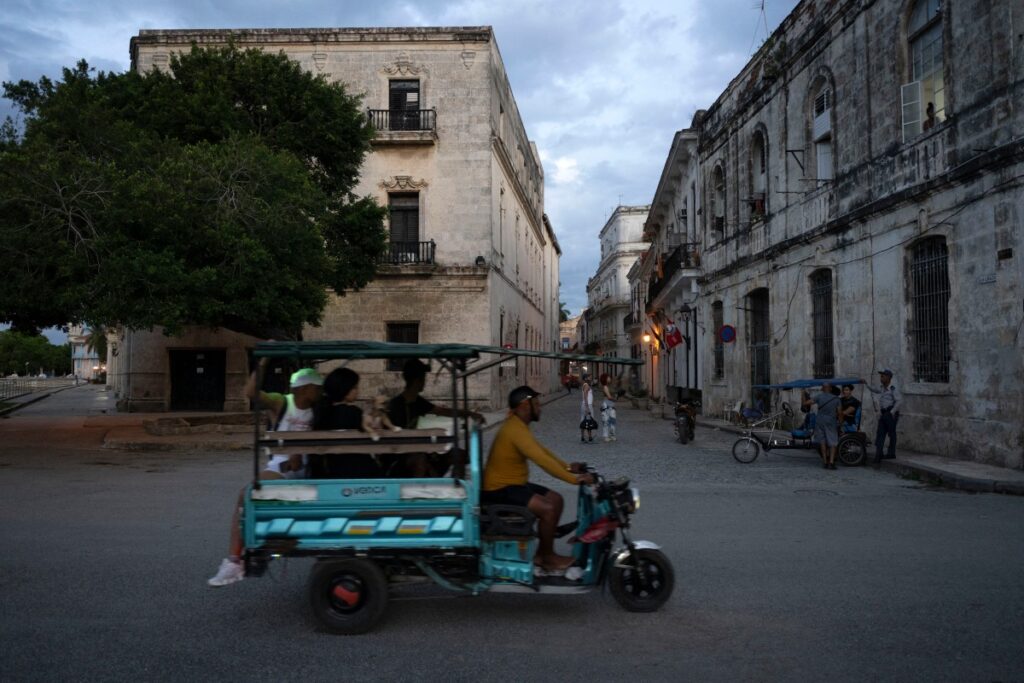
    WASHINGTON D.C. – In a sharp escalation of U.S. policy toward the communist-governed Caribbean nation, former U.S. President Donald Trump announced expansive new sanctions against Cuba on Friday, targeting dozens of domestic actors across key sectors of the island’s economy and levying threats against international financial institutions that conduct business with sanctioned individuals.

    This latest round of restrictions marks a new peak in the Trump administration’s years-long campaign to ramp up diplomatic and economic pressure on Havana, coming as Cuba grapples with a deepening economic emergency. The crisis has been exacerbated significantly by the cut-off of Venezuelan oil shipments, a critical lifeline for the Cuban energy grid for decades.

    Outlined in a formal executive order, the new penalties apply to any individual found to be active in five core areas of Cuba’s state-controlled economy: energy, defense and military-related materiel, metals and mining, financial services, and national security. The order also leaves room for the U.S. government to extend sanctions to actors in additional economic sectors at a later date. Beyond economic targeting, the measure also applies sanctions to Cuban officials deemed by Washington to have participated in serious human rights violations or public corruption.

    As part of the order, any individual named on the sanctions list will be barred from entering the United States, and all of their assets under U.S. jurisdiction will be frozen. Most notably, the executive order mandates that any foreign financial entity that engages in transactions with sanctioned individuals will also face U.S. penalties, a provision designed to cut off sanctioned actors from the global financial system entirely.

    Notably, the new sanctions come even after both sides took tentative steps toward bilateral dialogue in recent months. Senior U.S. diplomatic officials traveled to Havana for formal talks with Cuban counterparts as recently as April, raising faint hopes of a de-escalation of tensions between the two governments.

    Long-time Cuba critic and Cuban-American Secretary of State Marco Rubio has repeatedly pushed for sweeping policy shifts and increased pressure on the Havana government, a position that has aligned closely with the Trump administration’s hardline approach. Trump himself has openly discussed aggressive actions toward the island nation, which sits just 90 miles off the coast of Florida and has operated under a near-continuous U.S. trade embargo since Fidel Castro’s 1959 communist revolution that first severed bilateral ties.