HOUSTON, U.S. – After weeks of logistical hurdles and public health protocols, the Democratic Republic of Congo’s men’s World Cup team has officially entered the United States, clearing the final barrier to their first appearance at soccer’s biggest global tournament in nearly half a century. Head coach Sebastien Desabre says the squad is ready to compete, with the added mission of bringing a spark of joy to a country grappling with a deadly Ebola outbreak.
标签: Jamaica
牙买加
-

‘Mystery patients’ to monitor public health facilities
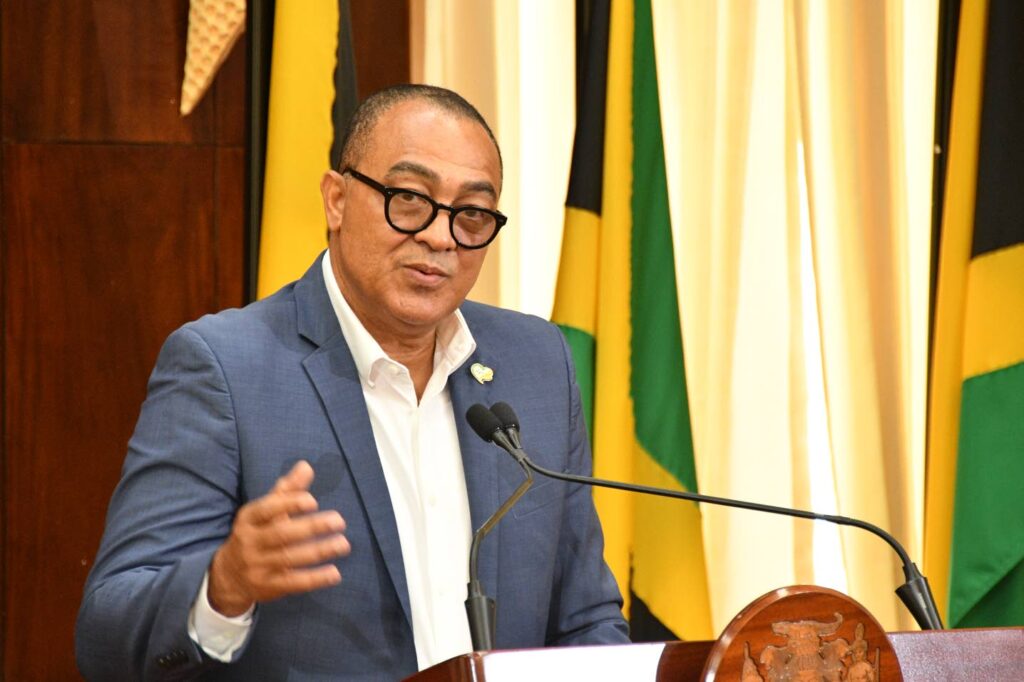
Jamaica’s Ministry of Health and Wellness is launching a multi-pronged strategy to address longstanding public grievances over subpar customer service at government-run health facilities, Health Minister Dr Christopher Tufton confirmed Wednesday. Speaking at the opening ceremony of the Carol Picart Courtyard at Kingston’s Victoria Jubilee Hospital, Tufton framed the new measures as a complementary reform to ongoing government investments in facility construction and infrastructure upgrades, noting that physical improvements alone cannot deliver a stronger, more patient-centered health system.
“We cannot build new buildings, equip them, and don’t have a different mindset. That’s the future of a reformed, improved health system,” Tufton told assembled health officials and industry stakeholders. “We need to focus on the people and on the attitude as to how we improve.”
At the core of the new oversight framework is a program modeled after the private sector’s mystery shopper initiative, which will deploy so-called “mystery patients” to pose as ordinary care seekers in public health waiting areas and triage queues. These undercover observers will document staff availability, responsiveness and adherence to customer service standards, compiling detailed reports for ministry leadership. Tufton explained that the program is designed to capture unfiltered, real-world insights into daily operations, rather than the polished, prepared displays that often accompany pre-announced inspections.
Complementing the mystery patient program is a brand-new internal investigations department created specifically to probe formal complaints of service failure. The specialized unit will dispatch independent investigators to affected facilities to collect witness statements, gather evidence and produce formal reports for both the Minister’s office and the Permanent Secretary’s office. Tufton emphasized that the unit will eliminate the longstanding culture of unaccountability for poor service, stating that “the days of people doing things with excuses, we have to bring that to an end.” All investigation findings will be reviewed by a governing board, which will issue disciplinary or corrective recommendations based on the evidence.
Tufton also announced that unannounced spot checks by the Minister and other senior ministry officials will become a regular occurrence across all public health institutions. He joked that pre-announced visits often trigger temporary, surface-level improvements — from cleaned floors to suddenly compliant staff uniform policies — that disappear as soon as official visitors leave. Unannounced checks, by contrast, will reveal the true daily conditions patients face.
The Minister stressed that the reforms are not intended as a rebuke of the health system’s overall workforce, acknowledging that the vast majority of patients receive adequate care and that the system serves more than three million patients annually across Jamaica, an enormous operational responsibility. He urged health staff not to become defensive, but to commit to incremental improvement. “I am not saying all of this to say that I am here to prosecute anyone,” he said. “It’s a huge portfolio that involves millions of Jamaicans. It’s a big task.”
Even so, Tufton made clear that the ministry will not tolerate persistent poor performance that undermines billions in government investment into public health. For staff who lack proper service training, the ministry will provide additional retraining to bring their performance up to standard. But for staff who refuse to adopt patient-focused practices, Tufton said, the ministry will take firm action: “who refuses to learn, they may have to go somewhere where they like the job. Because obviously they don’t like the job if they refuse to learn.”
-

WATCH: Body of missing Mandeville pharmacy technician found in St Elizabeth
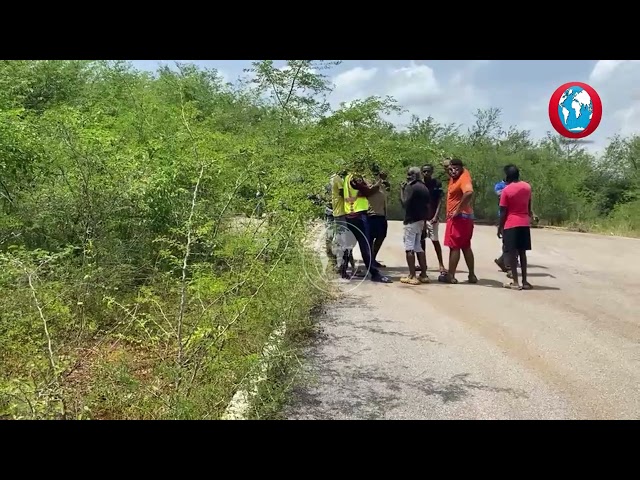
In southwestern Jamaica, a weeks-long community search for a missing local woman has come to a grim close, as the body of 40-year-old Kedecia Mcleod was recovered early Thursday morning in the Pepper community of St Elizabeth. Mcleod, a practicing pharmacy technician who resided in Allison District, Bombay, Manchester, had been unaccounted for and officially listed as missing since Tuesday, June 9.
According to initial law enforcement accounts, the discovery was made by ordinary passersby traveling through the rural St Elizabeth area, who stumbled upon the remains and alerted authorities shortly after. In the hours following the recovery, dozens of local residents from nearby communities gathered at the discovery site, many of whom had assisted in voluntary search efforts over the two days Mcleod was missing.
Official missing person filings detail that Mcleod was last documented leaving her workplace at approximately 1:11 p.m. on the Tuesday she disappeared. At the time of her last sighting, she was wearing identifiable clothing: a white blouse, a light grey sweater, brown trousers, and a pair of white slip-on shoes. As of the initial reporting, law enforcement has not released further details regarding the cause or circumstances of Mcleod’s death, and investigations remain ongoing. On-the-ground video footage of the scene was captured by local journalist Kasey Williams.
-

5,000 Manchester residents to benefit from $123m water infrastructure upgrade
Residents across multiple neighborhoods in Jamaica’s Greater Mandeville region are poised to gain consistent, efficient access to drinking water after the official launch of the Hopeton Road to Waltham Road Pipeline Project, a J$123.8 million infrastructure upgrade that targets longstanding local water supply challenges.
As announced in an official statement released by Jamaica’s Ministry of Water, Environment and Climate Change this past Thursday, the National Water Commission (NWC) carried out the construction work as a core component of the broader Greater Mandeville Water Supply Improvement Programme. The initiative forms part of a national strategy to update Jamaica’s aging water network, boost service reliability for customers, and reinforce nationwide water security.
The project centered on replacing an outdated 16-inch asbestos cement transmission main that had far outlasted its designed operational lifespan. The deteriorating old pipe was a major source of unaccounted-for water loss across the distribution network, leaving many local households with irregular access to supply. In its place, crews installed 3 kilometers (nearly 2 miles) of 400mm ductile iron transmission pipeline, alongside new control valves and complementary supporting infrastructure to ensure long-term functionality.
Following the upgrade, an estimated 1,300 households spanning Hopeton, Waltham, Perth, Bromfield Street, Airey Mount, Manchester Road, May Day, Woodlawn Road and their surrounding communities will see improved water delivery, translating to better service for roughly 5,200 total residents.
Addressing attendees at the official commissioning ceremony, Minister of Water, Environment and Climate Change Matthew Samuda emphasized that this investment is just one of many targeted interventions to resolve decades of water access issues in the parish of Manchester. “Over the last four years, the Government has invested approximately J$2.5 billion in upgrading the Greater Mandeville Water Supply System. This project is one important link in that chain of investments and will improve service to more than 5,000 residents. We are now approaching the point where communities will begin to experience the full benefit of these investments and the improved reliability they were designed to deliver,” Samuda said.
Mikael Phillips, Member of Parliament for Manchester North Western, publicly welcomed the project’s completion and praised all teams involved in its delivery. “Residents have been waiting for improvements to the Greater Mandeville Water Supply System for many years, and today’s commissioning represents meaningful progress. I commend the NWC team, the engineers and the contractors for successfully delivering this project, which will improve water service and quality of life for communities across the area,” Phillips noted.
Rhoda Crawford, Member of Parliament for Manchester Central, was unable to attend the event in person, and was represented by Sally Porteous, the Custos of Manchester. Porteous echoed the widespread support for the upgrade, framing it as a transformative milestone for local communities that have endured unreliable water access for generations.
-

Williams gives breakdown of $67-billion Hurricane Melissa allocation to ministries
Nearly six months after Hurricane Melissa battered sections of Jamaica, leaving widespread destruction of critical infrastructure and livelihoods in its wake, the island’s top finance official has publicly detailed how the government’s JMD $67 billion in emergency recovery funding is distributed across national ministries.
Minister of Finance and Public Service Fayval Williams walked reporters through the full breakdown of the allocation during a post-Cabinet media briefing held Wednesday at Jamaica House in St. Andrew.
During the most recent completed fiscal year, Jamaican lawmakers passed two supplementary budget measures – the third and fourth of the fiscal cycle – specifically to release the emergency recovery funds to the agencies leading restoration efforts, Williams explained. “I am here to just walk through, pretty quickly, where that went to and what ministries and how it got there,” she told assembled journalists.
The third supplementary budget, the larger of the two measures, carried a total allocation of $53.6 billion in recovery funding. This included $189 million directed to the Office of the Prime Minister, and $3.4 billion earmarked for Jamaica’s linchpin tourism industry, overseen by the Ministry of Tourism. Williams noted the tourism funds are dedicated to repairing storm-damaged visitor-facing infrastructure and providing direct support to thousands of workers left out of work by the hurricane.
The Ministry of Economic Growth and Infrastructure Development received one of the largest single allocations from the third supplementary, at $7.5 billion, targeted at clearing storm debris and repairing critical road networks damaged by the cyclone. By contrast, Williams’ own ministry, the Ministry of Finance and Public Service, received only $57 million from the recovery pool.
Other major allocations in the third supplementary include $3.2 billion for the Ministry of Water, Environment and Climate Change, $1.2 billion for the Ministry of Labour and Social Security, and $2.3 billion to repair and restore storm-damaged education facilities across the island. The Ministry of Health received $1.965 billion, including a targeted $35 million grant for Kingston’s iconic Bellevue Hospital, while the Ministry of Culture, Gender, Entertainment and Sports got $280 million. The agriculture sector, which suffered widespread crop damage from the hurricane, received $3 billion through the Ministry of Agriculture, while the Ministry of Industry and Commerce got $20 million. The Ministry of Energy secured $1.5 billion for restoring power infrastructure, and the Ministry of Local Government and Community Development got $4.6 billion for local-level restoration projects.
A large portion of the third supplementary allocation – $25 billion – takes the form of a loan to the Jamaica Public Service Company, the island’s primary electricity provider, to support full restoration of the national power grid damaged during the storm. Adding that loan to the $29.4 billion in direct ministry allocations brings the total third supplementary recovery package to $53.6 billion, Williams confirmed.
The fourth and final supplementary budget carries the remaining $13.4 billion in recovery funding. Of that, $3 billion is allocated to the Ministry of Finance, $10 billion is dedicated to the Restoration of Owner or Occupant Family Shelters programme overseen by the Ministry of Labour, and the Ministry of Health and Wellness received an additional $400 million. When combined, the two supplementary budgets bring the total government recovery allocation to exactly $67 billion, matching the total amount approved by lawmakers for post-Melissa recovery.
-

SERHA urges Jamaicans to give blood and save lives this World Blood Donor Day
KINGSTON, Jamaica – As the global community prepares to mark World Blood Donor Day on June 14, 2026, Jamaica’s South East Regional Health Authority (SERHA) has launched a public appeal urging local residents to become regular voluntary blood donors to replenish the country’s critically low national blood reserves. Hospitals across the region are facing steadily rising demand for blood products to support life-saving emergency care and routine medical interventions, prompting health officials to call on community members to step forward and contribute to this public health priority. Donations ensure that vulnerable patients can access the critical care they require at the moment they need it most, officials emphasized. As a core part of SERHA’s long-term strategy to strengthen national blood stockpiles, two large-scale public blood donation drives have been scheduled over the coming weeks to make participation accessible for community members across the region. The first drive will be hosted by Spanish Town Hospital on Saturday, June 20, 2026, running from 9:00 a.m. to 3:00 p.m. at the facility’s on-site Blood Collection Centre. The second drive is set to take place at Victoria Jubilee Hospital on Wednesday, July 1, 2026, operating from 9:00 a.m. to 4:00 p.m. in the hospital’s main parking lot. SERHA officials outlined the wide range of medical scenarios that rely on a steady supply of donated blood. It is an indispensable resource for patients undergoing complex surgical procedures, trauma patients injured in accidents, expectant mothers experiencing life-threatening complications during childbirth, people undergoing cancer treatment, and individuals managing chronic blood-related illnesses. Health leaders stress that just one single blood donation has the potential to save multiple lives, and consistent donations are the only way for hospitals to maintain an adequate supply to respond to unexpected surges in demand during public health emergencies or mass casualty events. Dr. Jacqueline Wright-James, Senior Medical Officer at Spanish Town Hospital, highlighted that maintaining a consistent, reliable pool of regular voluntary donors is foundational to a well-functioning public health system. “You never know when you or a member of your family may need an emergency blood transfusion, so there is no reason to wait to register as a donor,” Wright-James explained. “Regular donors fill an irreplaceable role that guarantees hospitals are fully prepared to handle emergencies and meet ongoing patient care needs.” Wright-James also used the campaign to address widespread misconceptions that have discouraged many potential donors from participating, reassuring the public that the entire donation process is strictly safe, minimally invasive, and even offers small health benefits to donors. “A common myth holds that donating blood leaves donors feeling weak long-term, but this is completely untrue,” she noted. “The human body rapidly replaces the volume of fluid and red blood cells that are donated, so donors can return to their normal daily activities with full strength and function almost immediately. Donation even comes with unexpected perks for donors: it includes a free pre-donation health screening, can help reduce excess iron buildup in the bloodstream, and even burns a small number of calories as the body works to regenerate the donated blood supply.” To help community members determine their eligibility before arriving at a drive, SERHA has published clear guidelines for potential donors. People qualify to give blood if they are between 16 and 60 years of age, weigh more than 110 pounds, have well-managed controlled high blood pressure, and are in generally good health and feeling well on the day of their scheduled donation.
-

WATCH: Jamaicans pick their favourites as FIFA World Cup kicks off
KINGSTON, Jamaica — The opening of the 2026 FIFA World Cup on Thursday has ignited a wave of infectious excitement among football supporters across Jamaica’s Corporate Area, even though the nation’s beloved national team, the Reggae Boyz, failed to qualify for this year’s global tournament.
Without a home team to cheer for, Jamaican fans have turned to personal connections and longstanding football loyalties to pick their favorite contenders, a vox pop conducted by Observer Online found. When asked which side they would be backing through the month-long competition, many fans based their selections on deeply personal factors: family ancestral ties to a particular country, admiration for star players, or nostalgic, unforgettable moments from previous World Cup cycles that stuck with them for years.
Brazil emerged as one of the most popular choices among respondents, with multiple fans pointing to their decades-long devotion to the five-time World Cup champions. Renowned for their flamboyant, attacking style of play and a legacy of producing some of the sport’s biggest icons, Brazil has retained a massive global fanbase that extends deep into Jamaican football culture. Beyond Brazil, other leading contenders including defending champions Argentina and European powerhouse Spain also garnered substantial support from local fans.
Full video footage of the vox pop interviews with Jamaican fans is available to view on Observer Online’s platforms.
-

THE SPECTACLE
Ahead of South Africa’s opening Group A fixture of the expanded 2026 FIFA World Cup against co-hosts Mexico at Mexico City’s iconic Estadio Azteca, Bafana Bafana head coach Hugo Broos has issued a clear challenge to his squad: block out the deafening home crowd and focus on executing their game plan.
At 74 years old, Broos is no stranger to the electric atmosphere of the Azteca. The former Belgian international played at the very same stadium during the 1986 World Cup, when Belgium opened their campaign against the Mexican hosts. That firsthand experience means he knows exactly what his team is walking into on matchday.
A day before kickoff, South Africa’s squad wrapped up final preparations, completing a pitch walk at Estadio Azteca to familiarize themselves with the surface before a closed training session at Club America’s facility in the capital. Broos warned his players that the crowd will be overwhelmingly in favor of El Tri, with an estimated 85,000 passionate Mexican fans set to pack the stands and create a wall of noise that could unsettle less prepared sides.
“There will be barely any South African supporters in the stands, which gives Mexico a massive home advantage,” Broos told reporters ahead of the clash. “Eighty-five thousand Mexicans cheering and singing nonstop creates an intimidating environment, but we have to lock that out and stay focused on what we do. If we can avoid letting the atmosphere get to us, we have every chance to put in a strong performance.”
The South Africa boss labeled Mexico the clear favorite to top Group A, pointing to their recent impressive run of form to underscore the challenge his side faces. “They’ve won nearly all of their last 10 matches, so they’re coming into this game full of confidence,” Broos said. “They’re the best team in our group, so this will be one of the toughest tests we could have asked for. But my team is ready to fight for every inch of the pitch and every single ball. We’re not here to make up the numbers.”
Beyond the opening match, Broos also shared his candid thoughts on the new expanded 48-team World Cup format, admitting the revised structure creates far more logistical and physical strain for participating squads. South Africa is scheduled to travel across North America for their group stage fixtures, with upcoming matches set for Atlanta in the United States and Monterrey in northern Mexico, a cross-continental itinerary that far outpaces the travel requirements of previous smaller tournaments.
“It’s gotten a bit too big with 48 nations participating,” Broos said. “When Mexico hosted 40 years ago, the tournament was smaller, and even though the game has evolved and we have to adapt to modern demands, this format is undeniably more exhausting than past World Cups with fewer teams. But it’s the system we have now, so we accept it and do our best with what we’re given.”
As the world waits for the first kickoff of Group A, all eyes will be on whether Broos’ prepared side can withstand the Azteca roar and pull off an opening upset against the hosts.
-

KSAMC must use increased allocations to fix parish council roads, says Morgan
KINGSTON, Jamaica — A sharp political clash has erupted over municipal road maintenance funding in Jamaica’s capital region, with a senior cabinet minister calling out the head of the Kingston and St Andrew Municipal Corporation (KSAMC) for longstanding hypocrisy in his complaints about resource shortages.
Robert Morgan, Minister without Portfolio with responsibility for Works, has publicly pushed back against KSAMC Chairman Andrew Swaby following the body’s recent announcement of a hike in annual divisional allocation funds. Under the new adjustment, urban divisions will see their allocations rise from the previous $10 million to $13 million, while rural divisions within the KSAMC’s jurisdiction will receive $13.5 million, a notable increase from prior levels.
In an official statement released this week, Morgan argued that this very funding adjustment lays bare the contradiction at the heart of Swaby’s repeated public grievances. For months, the mayor has centered his public messaging on blaming insufficient funding for the poor state of parish-managed roads, but Morgan points out that the KSAMC has long held the legal authority to increase these allocations on its own.
“The mayor cannot continue to lament the condition of roads while failing to fully use the resources and authority available to the KSAMC,” Morgan stated in his remarks. “This recent increase confirms that the corporation can do more for parish council roads, drains, mitigation works and emergency interventions. He has more money at his disposal than his predecessor ever did, yet he has failed to deliver on the key commitments he made to voters before taking office as Mayor.”
Morgan also highlighted a longstanding imbalance in responsibility for road repairs, noting that the central government-run National Works Agency (NWA) has been forced to carry a disproportionate share of the workload fixing roads that officially fall under municipal oversight.
While the Jamaican central government remains open to collaborative work with the KSAMC to improve infrastructure for local residents, Morgan emphasized that collaboration cannot require the national government to absorb all the cost while municipal resources go underutilized. “The KSAMC must use its increased allocations to repair and maintain the roads under its control,” he said. “That is core to their mandate.”
Morgan further pointed to a key historical context that undercuts Swaby’s position: back in 2020, when Swaby served as a local councillor before becoming mayor, he seconded a formal resolution calling for exactly this kind of increase in divisional allocations from the Parochial Revenue Fund, to specifically fund road and drain upgrades.
“He understood the importance of higher divisional allocations then. The question is why it has taken this long for the same urgency to be reflected in the Corporation’s own decisions,” Morgan added.
To address growing public confusion, Morgan is also calling for full transparency from the KSAMC around how municipal road funds have been spent to date. Residents across Kingston and St Andrew have a right to clear information on which projects are prioritized, how allocations are distributed, and when scheduled repair works will be completed, he argued. “No one knows how these funds are spent right now. Jamaicans deserve to know,” Morgan said.
-

Duckie leaves Chapelton Maroons
KINGSTON, Jamaica — A major leadership shift has hit Jamaica’s top-flight football ahead of the upcoming Jamaica Premier League season, as long-time domestic soccer coach Donovan Duckie has stepped down from his post as head coach of Chapleton Maroons, effective immediately, the club’s circle confirmed Thursday.
The experienced tactician, who took the reins of the Clarendon-based side just one year prior in August 2025, saw his tenure at the club wrap up after just a single full campaign. In a formal resignation letter submitted to Chapleton Maroons President Kaycie Butler, Duckie described his choice to leave the role as an unexpectedly tough call, noting that extensive reflection led him to conclude the move aligned with his long-term personal and professional development goals.
Beyond announcing his departure, Duckie extended heartfelt appreciation to the club for the opportunity to lead the side. “It has been an honour to work with the players, staff and management during my time as head coach,” he wrote in the correspondence.
Duckie is no stranger to the upper echelons of Jamaican club football, with a well-travelled coaching resume that includes stints at multiple other Jamaica Premier League outfits: Mt Pleasant FA, Montego Bay United, Humble Lion, Waterhouse, and Vere United. He also brings experience in elite youth football development, having previously served as head coach of Jamaica’s National Under-20 men’s team, and has coached at the grassroots schoolboy level with Manchester High.
The departure now leaves Chapleton Maroons searching for a new senior leader to guide the club through its next Premier League campaign, with no immediate word from the club’s management on a timeline for naming a replacement.
Reporting by Paul A Reid