标签: Jamaica

牙买加

  • Harvey Weinstein’s rape retrial begins in New York

    Harvey Weinstein’s rape retrial begins in New York

    MANHATTAN, N.Y. – A fresh chapter in the long-running legal saga of disgraced Hollywood power broker Harvey Weinstein opened this Tuesday, as jury selection got underway for his retrial on a lone rape charge that left a previous jury deadlocked last year. Regardless of how this new trial concludes, the 74-year-old former film producer will remain behind bars to serve sentences for other sexual violence convictions already on the books.

    The charge at the center of this proceeding is third-degree rape, brought forward by Jessica Mann, an actress who appeared in the 2015 romantic feature *This Isn’t Funny*. Back in June 2024, a judge was forced to declare a mistrial on this count after a bitter conflict within the jury room led the jury foreperson to refuse to continue deliberations. This split outcome left the charge unresolved, prompting prosecutors to move forward with a second trial.

    Presiding over the case is Judge Curtis Farber, who issued a series of preliminary rulings clearing the way for jury selection to launch this week. Farber also rejected the defense’s attempts to delay the start of the retrial, noting that repeated requests for postponement would unnecessarily prolong the process. Selecting 12 impartial jurors is expected to take multiple days, given the high-profile nature of the case and widespread public awareness of the surrounding allegations.

    Ahead of Tuesday’s initial hearing, Weinstein’s spokesperson Juda Engelmayer shared the former mogul’s position with Agence France-Presse, saying, “He is hopeful and expects a fair process where the facts will vindicate him.”

    Weinstein, who uses a wheelchair due to chronic ill health, already remains incarcerated for a 16-year sentence handed down in a California conviction for raping a European actress more than 15 years ago. That conviction is currently under appeal, with a scheduled hearing set for April 23. When he was wheeled into the Manhattan courtroom on Tuesday, observers noted he appeared gaunt. Clad in a dark suit and a textured grey tie, he was unshackled by court officers before potential jurors entered the room, and he responded slowly in a deep voice to confirm his agreement to a procedural legal step.

    The Oscar-winning producer’s fall from grace began in 2017, when hundreds of women came forward with sexual assault and harassment allegations against him. The wave of allegations became a core catalyst for the global “MeToo” movement, which sparked a widespread reckoning with sexual misconduct in workplaces across industries. In the original 2020 New York trial, Weinstein was convicted of sexual assault against producer Miriam Haley and another criminal charge, resulting in a 23-year prison sentence. That entire conviction was thrown out by an appeals court in 2024, after judges found significant irregularities in how prosecution witnesses were presented to the jury. He is also appealing the separate sexual assault conviction against Haley that stood from the 2024 partial retrial, and was acquitted on a third charge involving actress Kaja Sokola in that proceeding.

    For this retrial, Judge Farber has ruled that prosecutors cannot cross-examine Weinstein on the convictions that are currently under appeal, a key win for the defense. Weinstein has assembled an entirely new legal team for this proceeding, including high-profile defense attorney Marc Agnifilo – who currently represents rapper Sean “Diddy” Combs in his own ongoing legal matters – as well as attorney Jacob Kaplan.

    In addition to his court battles, Weinstein has raised public claims about dangerous conditions in his current place of detainment at New York’s notorious Rikers Island jail complex. He says ongoing threats from other incarcerated people have left authorities with no option but to keep him in nearly constant solitary confinement. In an interview with *The Hollywood Reporter* earlier this year, Weinstein described the risks he says he faces behind bars: “I’m constantly threatened and derided. I wouldn’t last long out there.” He also claimed that he was attacked and severely injured by another inmate while waiting to use a prison telephone, saying, “He punched me hard in the face. I fell on the floor, bleeding everywhere. I was hurt really badly.”

  • ‘Stop the profiling!’

    ‘Stop the profiling!’

    Addressing a landmark anniversary gathering for local justices of the peace (JPs) in Jamaica’s St Catherine parish, Justice Minister Delroy Chuck has issued a urgent call for volunteer judicial officials to abandon superficial community engagement and lead grassroots efforts to dismantle violent gang networks that have turned large swathes of the country into what he describes as a long-standing “killing field”.

    Speaking Sunday at the 4th anniversary service of the St Catherine Justices of the Peace Association, hosted at New Life Community Church International Worship Centre, Chuck pushed back against a pervasive culture he says has corrupted part of the JP system: a tendency for many volunteers to treat their role as nothing more than a symbolic title for resume-padding, or what he dubs the harmful misinterpretation of the JP acronym as “Just Profiling”. He stressed that the mandate of justices of the peace extends far beyond routine administrative tasks, requiring active, on-the-ground work to reduce violence, support marginalized community members and repair fractured social cohesion.

    Chuck used the occasion to urge all JPs to redefine their roles as frontline agents of social change, particularly amid a rare positive shift in national crime data. Official statistics show that Jamaica has recorded 143 murders so far in 2024, a notable drop from the 203 murders reported during the same period last year. While welcoming this downward trend as a small victory, Chuck warned that deep-rooted systemic challenges remain, from rampant gang activity and widespread extortion to quiet community complicity that allows criminal networks to retain power.

    To counter these threats, the minister called for coordinated collective action across all segments of Jamaican society, highlighting an underutilized leverage point: women with family or romantic ties to gang members. Chuck argued that while reaching hardened gang members directly is often difficult, mothers, sisters and girlfriends of offenders can cut off a key source of criminal power by refusing to accept profits from illicit activities including extortion, armed robbery and transnational scam operations.

    “Tell the mothers, the sisters and girlfriends to tell them that you don’t want anything from them, because when they rob, they will tell you they have to look after the girlfriend, [and] that is how they exercise their power in the community,” Chuck explained.

    He also issued a stark warning about the long-term risks of failing to confront organized crime decisively, drawing a parallel to the ongoing crisis in neighboring Haiti, where armed gangs now control large portions of national territory and effectively override state authority. “We want to get rid of all the gangs in Jamaica, because if we don’t do it, every single one, they could flourish like in Haiti, where in Haiti it is the gangs who run the country, and we must never allow any gang to run any community in St Catherine or Jamaica,” he said.

    Chuck added that law enforcement remains committed to rooting out extortion that preys on low-income working Jamaicans, from bus drivers and conductors to small informal vendors selling goods at roadside markets in Linstead and Bog Walk. Closing his address, he reinforced that JPs, as trusted community leaders, bear a unique responsibility to drive local change, emphasizing that their standing comes from tangible good works rather than empty titles.

    “You, the justice of the peace, are the best of the best in the parish and you must see yourself as the best, but not by profiling, but by doing good works and assisting your fellow human being,” he added.

  • US eases sanctions on Venezuela central bank

    US eases sanctions on Venezuela central bank

    In a significant step toward warming bilateral relations with oil-rich Venezuela following the removal of longtime leader Nicolas Maduro, the United States announced a rollback of sanctions against the South American nation’s central bank on Tuesday, marking the Trump administration’s latest pivot toward deeper engagement with the new interim government.

    The U.S. Treasury Department rolled out a new general license that clears the way for U.S. and international commercial entities to establish formal financial ties with the Venezuelan central bank, as well as three additional major domestic financial institutions: Banco Universal, Banco Digital de los Trabajadores, and Banco del Tesoro.

    This regulatory adjustment unlocks a range of critical financial activities that had been blocked for years under U.S. restrictive measures. Venezuelan financial institutions will now be permitted to carry out cross-border wire transfers, offer fully functional credit and debit card processing services, and conduct a host of other routine financial operations that had been off-limits to most global partners.

    Tuesday’s policy shift comes exactly two weeks after the Trump administration lifted punitive sanctions against interim Venezuelan President Delcy Rodriguez, who assumed the country’s top executive role after a U.S.-backed military operation removed Maduro from power in January.

    Diplomatic relations between Washington and Caracas have warmed steadily since Maduro’s ouster, with Rodriguez’s interim government moving quickly to meet core demands laid out by U.S. President Donald Trump. Most notably, the new administration has opened Venezuela’s massive energy sector to expanded investment and operations by American oil and gas companies.

    This latest sanctions rollback builds on a series of reciprocal moves over recent months. The United States has already relaxed a seven-year-wide full oil embargo on Venezuela, issuing targeted licenses that permit a small group of major multinational energy corporations to resume operations in the country, provided they adhere to specified transparency and regulatory conditions. Completing the normalization of diplomatic presence, the U.S. Embassy in Caracas resumed full formal operations last month, nearly seven years after it was ordered closed amid rising tensions with the Maduro government.

  • Salt Marsh protests lack of water; NWC gives May 15 timeline

    Salt Marsh protests lack of water; NWC gives May 15 timeline

    In the rural Jamaican community of Salt Marsh, Trelawny, months of unmet demand for clean piped water boiled over into organized public protest on Monday, when frustrated residents blocked a key thoroughfare to demand action from the National Water Commission (NWC). In response to the demonstration, the state utility has now formally committed to restoring full water service to the affected area by May 15, with emergency trucked water deliveries to bridge the gap until repairs are complete.

    The water crisis traces back to October 28 last year, when Category 5 Hurricane Melissa shifted an NWC transmission pipeline that serves Salt Marsh and its adjacent Davis Pen neighborhood. Ever since, residents have been completely cut off from piped water supplies. For nearly six months, community members repeatedly reached out to the NWC to request repairs, seeing only a brief burst of on-site work over three consecutive weekends before crews halted operations five to six weeks ago.

    Left with no other option, residents took to the main road connecting Salt Marsh Square and Davis Pen before 5 a.m. on Monday, placing large boulders across the pavement to block all vehicle traffic. The gridlock stranded hundreds of commuters, including schoolchildren and working residents, bringing daily life in the area to a standstill. Protesters carried placards emblazoned with the local term “Wata,” and voiced their anger over unaddressed promises and mounting costs.

    Local resident Renford Jackson, speaking on behalf of the demonstration, emphasized that the community had no intention of ending the protest until a permanent solution was put in place. “It’s been this way since the hurricane. We had good water supply until the storm shifted our pipeline from Davis Pen down to Salt Marsh,” Jackson explained. “We got repeated promises, NWC personnel came and started work, then suddenly they disappeared. A single day without water is terrible — six months is unbearable. If protesting is what we need to get attention, we will stay here as long as it takes.” Another protester added a widespread grievance: even with no water running through their pipes, residents are still receiving full monthly water bills from the NWC.

    The water shortage has hit the local Salt Marsh Primary and Infant School particularly hard, with acting principal Venesha Brown Gordon warning that the ongoing crisis is derailing learning for students, especially those preparing for the 2026 Primary Exit Profile (PEP) examinations scheduled for later this month. On the day of the protest, less than 20 percent of the school’s student body was able to attend, thanks to the road blockage that stranded most children and staff. “We already lost significant learning time right after Hurricane Melissa hit,” Brown Gordon told reporters. “Now grade six students are just weeks out from their high-stakes PEP exams, and we are also running internal assessments. The children are the ones bearing the brunt of this crisis. I implore authorities to fix the water issue so we can get back to normal teaching and learning.”

    Since the storm damaged the pipeline, the school has relied on stored water in holding tanks for its primary and infant programs, requiring weekly emergency water deliveries from the NWC to keep the campus running. Even with that support, access to water remains a constant challenge for the institution.

    Before the NWC issued its formal promise, local councillor Roydel Hamilton of the People’s National Party, representing the Martha Brae Division, publicly called on top national officials including Prime Minister Dr. Andrew Holness, Trelawny Northern Member of Parliament Tova Hamilton, and Water Minister Matthew Samuda to intervene and resolve the long-running issue. Hamilton noted that at a recent council meeting one month prior, NWC representatives had committed to finishing repairs within 30 days — a deadline that passed with less than half the work completed. “This situation cannot continue,” Hamilton stated from the protest site.

    In its official public response, the NWC confirmed that repair work on the damaged pipeline network is advancing, noting that roughly three kilometers of pipe suffered major damage during Hurricane Melissa, with overall completion of the project standing at roughly 30 percent. While most of the larger Martha Brae–Salt Marsh system has already been restored, key sections of the line serving Salt Marsh and Davis Pen require full replacement and extensive rehabilitation. The utility says its work includes not just fixing broken pipes, but upgrading the entire network to improve long-term resilience against future storm damage.

    Before full service is restored on May 15, the NWC will conduct mandatory pressure testing and sterilization of the repaired line to ensure water meets safety standards. Along with ongoing emergency trucked water deliveries to the community, the utility also confirmed that it is investigating the widespread complaints about incorrect billing for undelivered water. Following the NWC’s announcement, protesters stood down their road block, with residents now waiting to see if the utility meets its mid-May deadline for full service restoration.

  • Atletico resist Barca comeback to reach Champions League semis

    Atletico resist Barca comeback to reach Champions League semis

    In a tense, all-Spanish Champions League quarter-final second leg at Madrid’s Metropolitano Stadium, Atletico Madrid held firm against a ferocious early Barcelona onslaught to book their first semi-final spot since 2017, despite a 2-1 defeat on the night that secured a 3-2 aggregate victory and eliminated Barcelona from the competition.

    Barcelona exploded out of the gate from the opening whistle, nearly taking the lead inside the first minute when teenage winger Lamine Yamal forced a sharp save from Atletico goalkeeper Juan Musso. The 16-year-old prodigy would not be denied four minutes later, however, pressing Atletico defender Clement Lenglet into a sloppy turnover. Ferran Torres teed up the loose ball for Yamal, who slid a precise low shot between Musso’s legs to silence the packed home crowd and put Barcelona ahead on the night.

    Barcelona continued to dominate the early proceedings, with Dani Olmo coming inches from doubling the lead with a lobbed effort that Musso just managed to reach. In the 24th minute, Torres extended Barcelona’s lead, outrunning Lenglet to meet a threaded pass from Olmo and firing a clinical shot into the top far corner of the net, pulling the Catalan side level on aggregate at 2-2 and putting them on the brink of a comeback overturning Atletico’s 2-0 first-leg win.

    Barca’s Fermin Lopez nearly put the tie out of Atletico’s reach soon after, but Musso clawed away his header — an intervention that left Lopez bloodied after the goalkeeper’s boot caught him in the face. Though Atletico struggled to gain a foothold for much of the first half, enterprising winger Ademola Lookman, who consistently troubled Barcelona full-back Jules Kounde all night, finally dragged the home side back into contention in the 31st minute. Marcos Llorente exploited Barcelona’s high defensive line to break down the right and delivery a perfect cross, which Lookman converted to put Atletico back ahead on aggregate at 3-2.

    The second half delivered even more drama as tensions boiled over in pursuit of a decisive goal. Early in the half, Barcelona thought they had retaken the lead on the night when Torres volleyed home, but the strike was ruled out for offside, leaving the Catalans frustrated. With 20 minutes remaining, Barcelona manager Hansi Flick — who had opted to bench star forwards Robert Lewandowski and Marcus Rashford in favor of hardworking pressers Torres and Gavi for this sixth meeting between the two sides this season — brought on his veteran attackers to search for the third goal that would force extra time.

    As the game opened up, both sides traded close calls: Atletico’s Robin Le Normand was denied from point-blank range by Barcelona keeper Joan Garcia, who made a sharp save with his leg, and Atletico defender Matteo Ruggieri was left bloodied after an accidental elbow from Gavi as tempers flared. The turning point came in the final minutes, when Barcelona defender Eric Garcia clipped the heels of Atletico striker Alexander Sorloth as he broke through on goal, leaving the Catalans down to 10 men — just as Pau Cubarsi was sent off in the first leg. Flick pushed center-back Ronald Araujo forward in a last-ditch bid for a goal, but Atletico defended resolutely through eight minutes of stoppage time to hold onto their aggregate lead.

    For Atletico, the result ends an eight-year wait for a Champions League semi-final appearance, and the club will now face the winner of the quarter-final between Arsenal and Sporting Lisbon in the final four. Atletico has never lifted the Champions League trophy, having fallen short in the 2014 and 2016 finals under current manager Diego Simeone. After the final whistle, Atletico captain and midfielder Koke expressed his side’s pride in the result.

    “(We’re) very happy, knocking out a great Barca side. We had a great game away… it was really hard for us at the start (of this one), but the team knew how to get back on its feet,” Koke told Movistar.

    For Barcelona, the elimination extends their 10-year wait for a sixth Champions League crown, last won in 2015. Despite the exit, midfielder Frenkie de Jong insisted the club is still progressing in the right direction under its new regime. “I think we had a very good game, we gave our lives out there, we tried everything. I feel like luck was not on our side. We have to continue — we’re on a good path, we’re growing every year,” the Dutch midfielder said.

  • Corinaldi Avenue hunt for fourth straight VMF U-13 title

    Corinaldi Avenue hunt for fourth straight VMF U-13 title

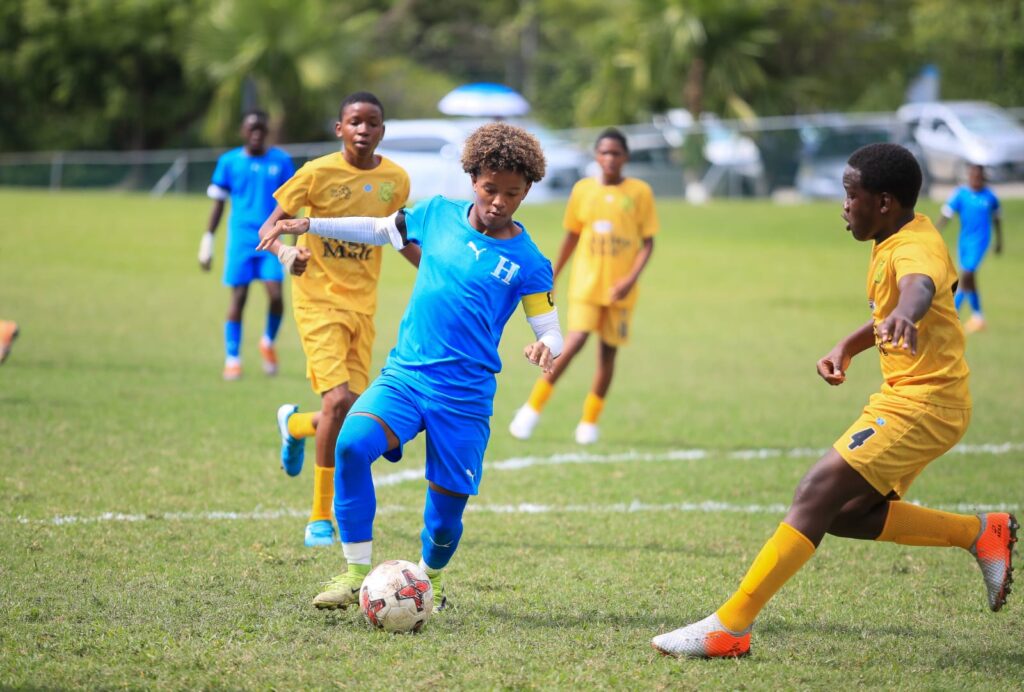
    Western Jamaica’s most anticipated youth football competition is poised to get underway this Tuesday at Wespow Park in Tucker, St James, where one program will chase a milestone no other local primary school has ever reached. Hosted by the St James Football Association in partnership with the Victoria Mutual Foundation, the annual Under-13 championship will open with a tightly scheduled double header that puts the tournament’s most dominant dynasty front and center from the first kick.

    Corinaldi Avenue Primary School, the three-time reigning back-to-back-to-back champion of the competition, will launch its bid for an unprecedented fourth consecutive title in the opening match of the 2024 season. The program has built a legendary legacy over the past three tournaments, not only claiming the title every year but doing so in extraordinary fashion: Corinaldi Avenue finished its last championship run undefeated and did not allow a single goal against any opponent throughout the entire tournament. Their opening test will come against Maldon Primary, with kickoff slated for 10:30 a.m. local time.

    The day’s second matchup will feature another exciting clash between two top contenders, as 2023 tournament runners-up Chetwood Primary will face off against Irwin Primary at 11:45 a.m. This year’s iteration of the championship has drawn a total of 20 participating primary schools from across the region, who have been divided into four five-team groups for the preliminary round robin stage. Following the conclusion of zone play, the top two finishing teams from each group will advance to the quarterfinal round, where the remaining competition will shift to a single-elimination knockout format that leaves no room for error for squads vying for the crown.

    The 2024 tournament also brings notable changes to the field of participants. Winners Prep will mark its debut as the only first-time entry to the competition this year, while three familiar programs are making their return to the tournament after time away: DMP Academy, Montego Bay Prep, and Adelphi Primary all rejoined the field for this season’s championship, adding new layers of competition to what is already shaping up to be one of the most exciting editions of the regional youth football event.

  • Major crimes down in St Thomas

    Major crimes down in St Thomas

    KINGSTON, Jamaica — A notable decline in major criminal activity is being reported across Jamaica’s St. Thomas parish, with local law enforcement attributing the downward trend to robust, collaborative engagement between residents and police officers working to curb violence. During the April 9 monthly meeting of the St. Thomas Municipal Corporation held in Morant Bay, Deputy Superintendent Rohan Ritchie — the newly installed commanding officer of the Jamaica Constabulary Force (JCF) St. Thomas Division — outlined the parish’s latest crime statistics to local leaders.

    From January through the early months of 2026, the parish has recorded just three homicide cases, Ritchie confirmed. This figure marks a 40% drop from the five murders reported in the same period last year. When measuring all categories of major offenses across the parish, the overall decline reaches 26% compared to 2025 figures.

    Beyond targeting general street crime, the JCF St. Thomas Division is ramping up its crackdown on domestic abuse, rolling out targeted public outreach campaigns to teach community members non-confrontational methods for resolving interpersonal disputes. To broaden the reach of their anti-violence messaging, law enforcement has partnered with local music and event promoters to spread the service’s clear zero-tolerance stance on domestic harm to larger audiences.

    “We’ve worked alongside entertainment promoters across the division to amplify our zero-tolerance message around domestic violence, facilitate conversations with people navigating interpersonal conflicts, and make our position clear to the entire community,” Ritchie explained.

    To further deter criminal activity, the division has boosted uniformed patrols and permanent presence in the parish capital of Morant Bay. Two key transport hubs in the area are currently serving as pilot sites for a new security initiative aimed at clearing these high-traffic locations of prohibited weapons, unsolicited loitering, and other nuisances that create opportunities for crime.

    “These two hubs are our pilot sites for the effort to make them completely secure: free from illegal offensive weapons, free from unregulated loitering, so that local residents can carry out their daily routines without fear,” Ritchie added.

    Though Ritchie has only served in his new post in St. Thomas for a short time, he emphasized that the cross-community partnership already forged between residents and police has delivered tangible results. “Citizens are fully invested in this work, and their cooperation is proving invaluable,” he said. Ritchie also publicly acknowledged the ongoing operational and strategic support the JCF has received from the St. Thomas Municipal Corporation as the force works to build a safer, more secure parish for all residents.

  • Legend beer makes its debut in 2026 Carnival Road March

    Legend beer makes its debut in 2026 Carnival Road March

    Months after its official launch to Jamaican consumers, locally brewed Legend Beer has marked its first major public appearance at one of the island’s most iconic cultural celebrations: the annual Carnival Road March. The young domestic beer brand stepped in as an official sponsor of the fan-favorite Yardmas Carnival, building immersive experiences to amplify the energy of thousands of revellers taking part in the 2026 procession.

    As part of its sponsorship activation, Legend Beer installed branded viewing decks at key high-traffic spots along the parade route, stretching from popular hospitality venue TGI Fridays to the central gathering hub Trafalgar Park. The activation drew huge crowds of costumed marchers, local spectators and international tourists alike, turning every stop along the route into a vibrant showcase of Caribbean culture, where music blared, bold fashion took center stage, and unfiltered festive energy filled the air.

    Parade participants – known locally as masqueraders – glided through the capital’s streets in elaborate, shimmering designs heavy on sequins and elaborate featherwork. Among the standout looks this year was Pamputtae’s eye-catching costume for Yard Mas’ *Starry Night* collection, described as a moving work of art, while Najiba brought nonstop energy to the road in the same collection’s design, and Aindrea Sewell leaned fully into the celebration’s signature sparkle at Trafalgar Park.

    On the sidelines, groups of friends gathered to cheer on marchers, cold drinks in hand, as DJs kept the upbeat tempo going through the day. Whether marching along the route or relaxing on one of Legend Beer’s viewing decks with a cold pint, every attendee described the atmosphere as unforgettable, unapologetically joyful, and perfectly fitting for a brand carrying the name “Legend.”

    Janek Shillingford, sponsorship manager at Wisynco, Legend Beer’s parent company, spoke to *Observer Online* on the ground during Sunday’s road march, noting that the brand’s values align perfectly with the core spirit of Jamaican Carnival. “Legend really connects with the high energy and the vibrant vitality that carnival represents,” Shillingford explained. “We really wanted to make an impact, and we did a lot of product sampling today. This is really about getting the brand out there, so it can resonate with Jamaican people.”

    Shillingford added that the public’s reception of the newly launched local beer far exceeded the team’s internal expectations. “The beer is getting a lot more traction than we even thought we would get. We have to give thanks to the Jamaican people for that. Really and truly, it’s for Jamaicans, the everyday people that you see out here celebrating today,” he said.

    A branded Legend Beer truck also joined the official procession, rolling along the parade route with in-house DJs spinning tracks and keeping crowds dancing alongside the float. When asked about the brand’s future plans for Jamaican Carnival, Shillingford confirmed that the partnership is here to stay: “For sure, no doubt, we’ll be involved in Carnival going forward.”

  • Trump says Iran talks may resume as Israel, Lebanon open direct track

    Trump says Iran talks may resume as Israel, Lebanon open direct track

    Two parallel diplomatic breakthroughs have brought cautious new momentum to Middle East peace efforts this week, even as ongoing conflict and deep policy disagreements underscore the extreme fragility of efforts to stabilize a region roiled by more than six weeks of full-scale war. US President Donald Trump announced Tuesday that a new round of bilateral peace negotiations between the United States and Iran could convene as early as this week in Pakistan, just one day after he claimed that unnamed Iranian officials had reached out to his administration seeking a negotiated settlement.

    Simultaneously, Israeli and Lebanese officials confirmed an agreement to launch the first direct high-level negotiations between the two longtime formal adversaries since 1993, following a mediated meeting in Washington hosted by US Secretary of State Marco Rubio. This rare opening has been immediately met with fierce pushback from Lebanese militant group Hezbollah, which launched a rocket attack targeting more than a dozen northern Israeli communities precisely as the diplomatic meeting kicked off in Washington.

    The United States has emerged as the primary driver of both diplomatic tracks, driven by growing fears that ongoing open conflict between Israel and Hezbollah could unravel the fragile two-week ceasefire already in place between Washington and Tehran, which followed an initial round of inconclusive talks in Pakistan earlier this month. Lebanon was dragged into the broader regional conflict after Hezbollah launched attacks against Israel in support of its core ally Iran, triggering large-scale Israeli ground incursions and airstrikes that have left more than 2,000 people dead and forced over 1 million Lebanese residents to flee their homes.

    Rubio, who mediated the initial meeting between Israeli ambassador Yechiel Leiter and Lebanese envoy Nada Hamadeh Moawad, framed the gathering as an unprecedented opening for decades-long tensions. “This is a historic opportunity,” Rubio stated during opening remarks, acknowledging that “decades of history” hang over the fragile negotiating process. Lebanese President Joseph Aoun added that he hoped the talks would “mark the beginning of the end of the suffering of the Lebanese people.”

    A US State Department spokesperson characterized the initial discussions as “productive,” confirming that “All sides agreed to launch direct negotiations at a mutually agreed time and venue.” While Leiter noted that both nations shared the core goal of removing Hezbollah’s armed influence from southern Lebanon, Moawad described the meeting as “constructive” while emphasizing that she had pushed aggressively for an immediate ceasefire. Israel, which currently maintains military control over parts of southern Lebanon, has rejected any ceasefire that leaves Hezbollah’s military infrastructure intact, arguing the group remains the single greatest barrier to long-term regional stability.

    Parallel to the Israeli-Lebanese track, the Trump administration has simultaneously ramped up economic and military pressure on Iran to advance its negotiating position, announcing a full naval blockade covering “vessels of all nations entering or departing Iranian ports and coastal areas,” per a statement from US Central Command. As of Tuesday, CENTCOM claimed that no vessels had transits through the relevant area and six ships had complied with orders to turn back, though public maritime tracking data indicated that several vessels that had docked at Iranian ports had crossed the blockade zone since it was imposed.

    Iran’s military command has decried the blockade as an act of state-sponsored piracy, issuing a stark warning that if Tehran’s harbor security is threatened, “no port in the Persian Gulf and the Arabian Sea will be safe.” Regional security analysts note that the blockade serves two core strategic goals for the White House: cutting off critical oil export revenue for Tehran, and pressuring Beijing—Tehran’s largest crude oil customer—to push Iranian leadership to reopen the Strait of Hormuz, a critical global oil chokepoint. China has already labeled the blockade “dangerous and irresponsible” after Trump issued an explicit threat to sink any vessel that attempts to enter or leave Iranian ports in violation of the order.

    Despite the rising tensions, the temporary ceasefire between the US and Iran agreed last Wednesday remains in place. Global financial markets reacted positively to renewed hopes for a negotiated end to the conflict, with stock indices climbing and international crude oil prices retreating. By Tuesday, Brent North Sea Crude traded at $94.79 per barrel, while West Texas Intermediate fell to $91.28. The US Treasury also confirmed it will not renew a temporary sanctions waiver for Iranian oil, which was implemented earlier to offset war-related supply disruptions to global energy markets.

    Hezbollah leader Naim Qassem reiterated his hardline position ahead of the Washington meeting, calling for the negotiations to be canceled and vowing to continue armed resistance against Israel. The international community has largely welcomed the diplomatic openings, with foreign ministers from 17 nations including Britain and France urging all parties to seize the moment to secure lasting regional security. UN Secretary-General Antonio Guterres has emphasized that “there is no military solution” to the conflict, adding that lasting peace requires “persistent engagement and political will” and that “Serious negotiations must resume.”

    At the center of the US-Iran negotiating impasse remains the long-running dispute over Tehran’s nuclear program. Pakistani diplomatic sources have confirmed to AFP that Islamabad continues to work behind the scenes to convene a second round of US-Iran talks. Trump has repeatedly stated that any final deal must permanently block Iran from acquiring a nuclear weapon, a core justification for his administration’s launch of the war earlier on the basis of claims Tehran is actively pursuing an atomic bomb—allegations Iran has repeatedly denied.

    According to reports from The New York Times, US negotiators offered a proposal during the first round of talks that would require Iran to suspend all uranium enrichment activities for 20 years, a demand Tehran has rejected. In response, Iran put forward a counter-offer to suspend nuclear enrichment for five years, an offer US officials have dismissed as insufficient. International diplomatic efforts have accelerated in recent days, with Russian Foreign Minister Sergei Lavrov meeting with his Chinese counterpart in Beijing just hours after holding talks with Iran’s top diplomat. Moscow has already tabled a proposal to securely store Iran’s enriched uranium as part of any final nuclear deal, adding another layer of international involvement to the ongoing negotiations.

  • Campari Boulevard: Not just a location; a whole vibe

    Campari Boulevard: Not just a location; a whole vibe

    On Jamaica’s annual Carnival Road March Sunday, Trafalgar Road — the iconic route that every mas band parades along — played host to a standout off-route experience that reimagined how fans engage with the festival: Campari Boulevard. Nestled directly along the parade route, this purpose-built hub offered an unrivaled front-row vantage point, letting guests watch the full Carnival spectacle unfold in real time without needing to join a mas band.

    From the early hours of the morning, the space buzzed with palpable excitement, drawing hundreds of festival-goers. Many arrived without official parade wristbands, many without the elaborate custom costumes that define masquerade participation, but every guest brought unmatched enthusiasm and festive spirit. For anyone craving the energy of Carnival from the sidelines, there was no better spot to soak in the atmosphere.

    When the first parade trucks rumbled into view, the crowd’s anticipation snapped into electric celebration. What followed was a steady, hypnotic procession: a vast sea of masqueraders moving steadily down the road in vivid, intricately detailed costumes that glinted and shimmered under the midday Caribbean sun, their bodies moving in lockstep with the rhythmic beats booming from parade speakers and side stage setups. Even for spectators watching from Campari Boulevard, the power of the moment felt just as immersive as being on the route.

    More than just a viewing spot, Campari Boulevard carved out its own unique identity as a space that blended two of the Caribbean’s most beloved musical genres: soca and dancehall. Instead of spectators being passive onlookers, the hub turned every guest into a participant, keeping the high energy of the Road March contained and sustained long after the last mas band passed through. Campari Jamaica brand manager Jerome Walters summed up the mood of the day, noting: “The vibe at Campari Boulevard was simply amazing. It was non-stop vibes throughout the entire day. Soca buss inna wi head and it’s been amazing to see the genre’s growth in Jamaica. We have room for more growth, but this year has been phenomenal compared to last year. The crowd is better, the vibe is better, and the entertainment is definitely top-notch.”

    That high bar for entertainment was fully met by the day’s curated lineup. The intentional blend of continuous soca anthems transitioned seamlessly into hard-hitting dancehall tracks, creating a one-of-a-kind sonic experience that felt distinctly Jamaican while still embodying the broader shared spirit of Caribbean Carnival. This thoughtful fusion, Walters explained, was what kept the crowd engaged from open to close.

    Walters added that the activation aligned perfectly with Campari’s brand identity, saying: “Campari is all about what is cool, sensual, and passionate. That says it all, because that’s what Carnival is. Carnival is a time for everyone to experience what is culturally relevant. We did our research and we knew this is something Jamaica wants at Carnival.”

    The on-stage lineup brought that energy to life through dynamic performances. Rising stars Yung Bredda and Valiant set the crowd alight with back-to-back hit sets, Yung Bredda leaning into soca’s infectious energy and Valiant delivering signature dancehall heat. Every track was met with thunderous roars of approval and waves of movement from the packed audience. A short but electrifying guest set from D’Yani added extra depth to the day’s programming, with crowd-pleasing performances of fan favorites *Goddess* and *Birthday*.

    Beyond the big-name headline acts, the unsung backbone of Campari Boulevard’s magic was the lineup of skilled local selectors who kept the energy steady all day long. Top DJs including DJ Escobar, Shukkle Bus, Team Coppershot, and DJ Banka mastered the crowd’s mood, reading the room to adjust the energy, and ensuring every minute of the day felt electric and dynamic.

    What made the activation truly special was its commitment to inclusivity. While masqueraders paraded along the route, fully immersed in their band’s experience, Campari Boulevard created a parallel, equally joyful experience for guests who preferred not to march. Instead of making spectators feel like outsiders looking in, the hub wove them into the broader Carnival story.

    Explaining the core vision behind the project, Walters noted: “The truth is, not everyone will get to do the road experience and some persons just want to watch. So we give them the best of both worlds at Campari Boulevard — to watch and participate. And let’s not forget that you get the right amount of soca mixes and hard-hitting dancehall favourites… our expert line-up of DJs served up both in equal measure.”

    By the end of the day, Campari Boulevard stood as a powerful reminder that Carnival, at its core, is a celebration for everyone. Regardless of whether you’re marching in a full costume in a mas band or enjoying the show from a prime vantage point with a drink in hand, the joy of the festival is open to all who want to take part.