标签: Jamaica

牙买加

  • Italy foils Russian cyberattacks targeting Olympics

    Italy foils Russian cyberattacks targeting Olympics

    ROME, Italy — Italian authorities have successfully intercepted a sequence of sophisticated cyber assaults allegedly originating from Russian operatives, specifically targeting critical infrastructure associated with the Milan-Cortina Winter Olympics. Foreign Minister Antonio Tajani confirmed the security breach on Wednesday, revealing that the attacks impacted both diplomatic facilities—including the foreign ministry office in Washington—and Olympic venues such as hotels in Cortina.

    The hacker collective Noname057, believed to have ties to Russia, publicly claimed responsibility for the coordinated distributed denial-of-service (DDoS) attacks. In a statement circulated on Telegram, the group justified its actions as retaliation for Italy’s continued support of Ukraine, declaring: “The pro-Ukrainian course of the Italian government leads to the fact that support for Ukrainian terrorists is punishable by our DDoS missiles on websites.”

    Cybersecurity experts have corroborated the group’s involvement, noting that the attacks temporarily disrupted access to several hotel websites in Cortina d’Ampezzo, a key host location for the Games scheduled from February 6 to 22.

    In response to escalating threats, Italy has mobilized an extensive security apparatus involving approximately 6,000 police officers and nearly 2,000 military personnel. Specialized units—including bomb disposal experts, anti-terrorism squads, sniper teams, and ski-trained police—have been deployed across competition zones stretching from Milan to the Dolomites. The defense ministry has further reinforced operations with 170 vehicles, radar systems, drones, and surveillance aircraft.

    Amid these security preparations, controversy emerged regarding the presence of US Homeland Security Investigations (HSI) agents—a branch of ICE—during the Games. Italian Interior Minister Matteo Piantedosi clarified that these agents would operate solely in an advisory capacity within US diplomatic missions, with no patrolling or enforcement authority. Milan Mayor Giuseppe Sala had previously criticized their involvement, labeling ICE a “militia that kills,” but Piantedosi dismissed the concerns as “completely unfounded,” emphasizing that international security cooperation during mega-events is standard practice.

    US Ambassador Tilman J Fertitta affirmed that HSI’s role would be limited to intelligence sharing and analysis of transnational cyber and criminal threats, with no operational duties on Italian soil.

  • Jamaica remittance inflows rise in November as sector shows signs of consolidation

    Jamaica remittance inflows rise in November as sector shows signs of consolidation

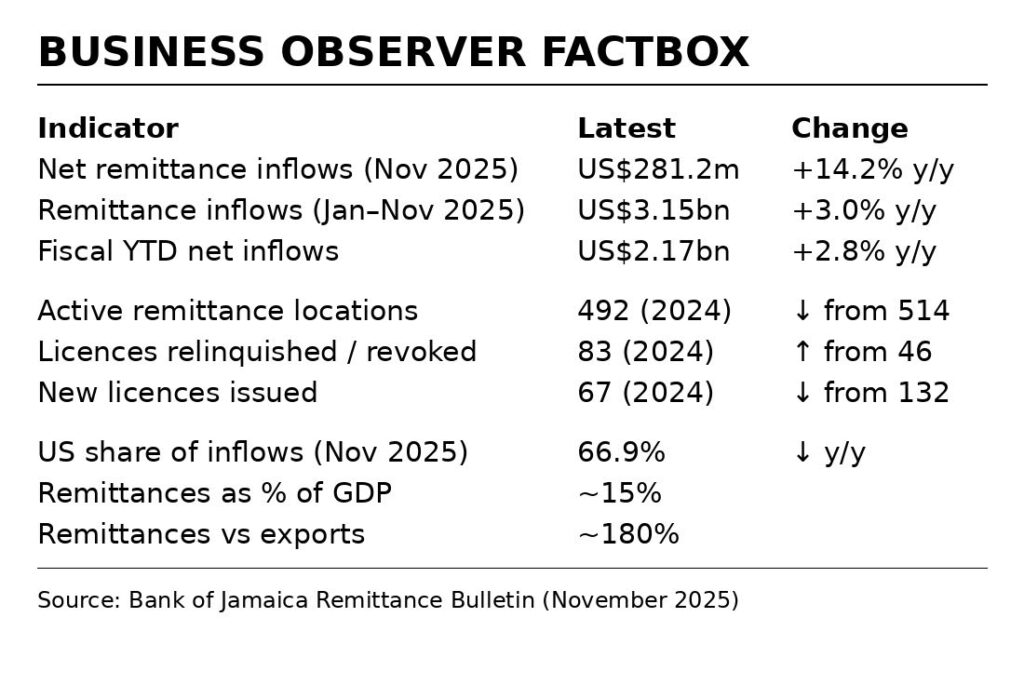
    Jamaica’s remittance landscape is undergoing significant transformation as new data from the Bank of Jamaica reveals both substantial financial growth and structural consolidation within the industry. According to the latest Remittance Bulletin published by the central bank, November 2025 witnessed remarkable growth in net remittance inflows, which surged to US$281.2 million – representing a robust 14.2 percent increase compared to the same period in the previous year.

    The impressive performance was primarily fueled by heightened activity through formal remittance companies, though partially tempered by an accompanying rise in outbound transfers. Cumulative figures for the current fiscal year demonstrate sustained growth, with net inflows reaching US$2.17 billion, marking a 2.8 percent year-over-year increase. Total incoming remittances grew by 2.9 percent, while outflows experienced a more pronounced uptick of 5.3 percent.

    Parallel to these financial developments, the industry’s operational framework is evolving dramatically. The number of active remittance locations contracted significantly from 514 in 2023 to 492 in 2024, indicating a trend toward market consolidation. This restructuring is further evidenced by licensing patterns: revoked or relinquished licenses nearly doubled to 83 from 46 year-over-year, while new licenses issued plummeted from 132 to 67. Complete 2025 structural data remains pending publication.

    From January through November 2025, total remittance inflows reached US$3.15 billion, maintaining a steady 3 percent annual growth rate. This performance positioned Jamaica favorably against regional counterparts, with some Central American nations experiencing stronger growth while Mexico recorded declines.

    The United States continues to dominate as Jamaica’s primary remittance source, accounting for 66.9 percent of total inflows in November – though slightly diminished from previous levels. The United Kingdom, Canada, and the Cayman Islands followed as significant contributors.

    Remittances remain a cornerstone of Jamaica’s economy, providing crucial foreign exchange equivalent to approximately 15 percent of GDP, nearly 80 percent of tourism earnings, and exceeding 180 percent of export values, according to the central bank’s macroeconomic indicators.

  • Saint’s Tami Williams stars in new Tommy Hilfiger fragrance campaign

    Saint’s Tami Williams stars in new Tommy Hilfiger fragrance campaign

    NEW YORK — Jamaican modeling sensation Tami Williams has been unveiled as the newest ambassador for Tommy Hilfiger’s signature fragrances, marking a significant milestone in her already illustrious career. The Saint International model headlines the freshly launched global campaign for the legendary American fashion house’s ‘Tommy Girl’ and ‘Tommy’ fragrances, photographed against the dynamic backdrop of New York City streets by renowned photographer Matteo Montanari.

    Williams expressed profound enthusiasm about collaborating with an American fashion icon, stating the experience resonated deeply with her personal connection to New York. ‘Shooting in the Empire State was incredible. Being aware that Mr. Hilfiger is a New Yorker himself made it particularly special. This city serves as my second home away from Jamaica, and its vibrant energy is authentically captured throughout the campaign imagery,’ Williams remarked. She appears alongside American model Conrad Solaka in the co-ed promotional blitz.

    The announcement triggered celebratory reactions from her agency. An elated Dewight Peters, CEO of Saint International, was fielding congratulatory calls upon the news breaking. ‘We are filled with gratitude for the blessings Tami continues to receive within the industry through this prestigious campaign,’ Peters commented. He highlighted the longevity of Williams’s career, noting her 12-year tenure since her exclusive debut as a teenager for Alexander Wang at New York Fashion Week in 2014.

    This achievement further solidifies Saint International’s reputation for developing top-tier modeling talent for major fragrance campaigns. The agency boasts a notable history, with Brit Knight featured in Lancôme’s 2023 campaign for ‘La Vie Est Belle’, Kai Newman in a 2016 Colors de Benetton blitz, and Kibwe McGann as a face for Puma in 2004.

    Tami Williams stands as one of Jamaica’s most prolific modeling exports. Her portfolio includes high-profile global campaigns for luxury fashion powerhouses such as Valentino, Balmain, Dolce & Gabbana, Calvin Klein, and Ralph Lauren. Demonstrating remarkable versatility, she has also fronted mass-market campaigns for major brands like Express, Maybelline, and Victoria’s Secret. The ‘Tommy Girl’ fragrance itself remains a powerhouse in the competitive industry, maintaining top-selling status since its original launch in 1996.

  • Salada profits rise, but cash falls as costs and climate risks bite

    Salada profits rise, but cash falls as costs and climate risks bite

    Jamaican coffee and beverage manufacturer Salada Foods Jamaica Limited has reported strengthened profitability in its fiscal year ending September 2025, despite facing significant operational challenges from inflationary pressures, currency fluctuations, and climate-related disruptions.

    The company achieved a net profit of $171.5 million, representing solid financial performance as revenue climbed 7.9% to approximately $1.6 billion. Gross profit reached $487.9 million, with margins maintaining stability at around 30.5% despite persistent cost pressures throughout the supply chain.

    Beneath the surface of these positive earnings indicators, the company’s financial position reveals strategic adaptations to a volatile operating environment. Cash reserves declined substantially to $154.6 million from $272.5 million year-over-year, while inventories surged to $552.5 million from $420.6 million. This inventory accumulation reflects a deliberate corporate strategy to secure essential inputs amid rising global coffee prices and supply chain uncertainties.

    The company’s defensive posture proved prescient when Hurricane Melissa struck Jamaica shortly after the fiscal year end, damaging agricultural infrastructure and supply networks. Salada’s advanced procurement strategy has shielded immediate production from disruption, though long-term agricultural impacts remain under assessment.

    Capital investment continued throughout the period with $67.1 million allocated to machinery, equipment, and work-in-progress assets, elevating the net book value of property, plant and equipment to $165.9 million. The company also distributed $130.9 million in dividends to shareholders, further impacting liquidity positions.

    Market performance revealed contrasting trends between domestic and international operations. Local sales demonstrated robust growth, advancing to $1.30 billion from $1.16 billion, while export revenues declined to $304.3 million from $322.1 million despite concerted efforts to expand regional and UK market presence.

    Looking forward, management emphasizes product diversification as a cornerstone of long-term strategy. Recent expansions into functional beverages utilizing locally sourced ingredients like ginger, turmeric, sorrel, and hibiscus target health-conscious consumers and aim to reduce dependence on volatile coffee markets. These innovations, coupled with established brands and operational efficiency focus, provide optimism despite the challenging trade-offs between financial resilience and cash generation in an increasingly unpredictable manufacturing landscape.

  • Flash Motors becomes first electric vehicle-only dealership in Jamaica’s auto association

    Flash Motors becomes first electric vehicle-only dealership in Jamaica’s auto association

    KINGSTON, Jamaica — Jamaica’s automotive industry has reached a significant milestone with the formal integration of electric vehicle specialization into its established trade framework. Flash Motors Company Limited has been admitted as the first exclusively electric vehicle dealership within the Automobile Dealers Association of Jamaica (ADA), signaling a transformative shift in the Caribbean nation’s transportation landscape.

    This groundbreaking membership, announced Tuesday, represents a strategic alignment between emerging electric mobility solutions and Jamaica’s conventional automotive sector. The development reflects accelerating regional adoption of sustainable transportation alternatives within previously fuel-dominated markets.

    Xavier Gordon, Chief Executive of Flash Motors, expressed enthusiasm about the collaboration: “Our ADA membership signifies industry recognition of electric mobility’s critical role in Jamaica’s transportation future. We value the association’s endorsement as we expand EV infrastructure throughout the Caribbean region.”

    ADA Chairman Jackie Stewart-Lechler confirmed the association’s commitment to embracing automotive innovation: “We enthusiastically welcome Flash Motors and applaud their introduction of cutting-edge electric mobility solutions for Jamaican consumers. Their expertise strengthens our industry’s evolution toward sustainable transportation.”

    Established in 2021, Flash Motors has developed comprehensive electric vehicle ecosystems across multiple Caribbean markets including Jamaica, St. Lucia, and Guyana. The company’s integrated approach encompasses EV sales, charging infrastructure development, and supportive policy advocacy.

    Operating from a modern New Kingston showroom, the dealership provides holistic customer solutions beyond traditional vehicle sales. “Our commitment extends far beyond placing EVs in driveways,” explained Sales Manager Phillip Oliver. “We install personalized charging infrastructure and implement ongoing owner education programs to ensure optimal EV ownership experiences.”

    The company maintains rigorous technical standards through international training programs, sending technicians abroad for certification in global EV maintenance protocols. This commitment to excellence aligns with ADA’s framework emphasizing accountability, transparency, and consumer protection standards.

    This institutional partnership establishes formalized retail standards for Jamaica’s emerging electric vehicle market, creating regulatory consistency while accelerating sustainable transportation adoption across the Caribbean region.

  • NCB’s Cayman transfer completes balance sheet clean-up

    NCB’s Cayman transfer completes balance sheet clean-up

    NCB Financial Group Limited has executed a significant internal restructuring through the acquisition of its Cayman Islands subsidiary by majority-owned Clarien Bank Limited. While presented as an organizational realignment, this transaction culminates a multi-year balance sheet optimization initiative that has fundamentally reshaped the group’s offshore operations.

    The transfer, pending regulatory approval, will transition select wealth and investment management relationships from NCB (Cayman) Limited to Clarien Bank, with the Cayman entity subsequently rebranding under the Clarien name. Group leadership has assured stakeholders of seamless client continuity and no material impact on capital adequacy, liquidity, or ownership structures.

    This stability is anchored by exceptionally robust capital metrics. Regulatory filings reveal NCB (Cayman) maintained a Total Capital Ratio exceeding 30%—more than double the 12% regulatory requirement—with nearly all capital derived from internally generated retained earnings. The entity’s Net Tier 1 capital, a core measure of financial strength, stood at US$35.5 million, characterized by simplicity without complex subordinated debt structures that typically complicate financial transfers.

    Despite these capital strengths, operational challenges persist. A recent rating agency downgrade highlighted a US$1 million net loss for fiscal 2024 and a fourth consecutive year of deposit base contraction. This funding decline reflects both strategic divestments and client migration to higher-yielding alternatives, indicating ongoing profitability pressures despite improved balance sheet stability.

    The transaction represents the culmination of a deliberate cleanup process that included addressing the substantial Sandy Bay loan facility in Barbados, which previously constituted approximately 75% of the subsidiary’s non-performing loans (NPLs). While its removal to National Commercial Bank Jamaica Limited in Q3 2025 significantly improved headline NPL ratios, the Cayman unit’s NPL ratio remained elevated at 25.8% as of June 2025, suggesting persistent credit quality concerns within the remaining portfolio.

    Group CEO Robert Almeida characterized the move as “a deliberate strategic internal realignment designed to strengthen focus and operational coherence across our regional businesses.” The consolidation simplifies the group’s offshore narrative for regulators and investors following its US$300 million return to international capital markets last year, reducing the number of separate entities requiring scrutiny.

    For Clarien Bank, the acquisition supports strategic expansion in selective offshore markets with emphasis on operational continuity, according to CEO Ian Truran.

    Ultimately, this transaction represents the strategic tidying of a stabilized but still recovering operation. While major surgical interventions have addressed the most critical issues, the transferred entity continues to navigate profitability and funding challenges within a cleaner, simplified operational structure.

  • Tropical Battery seeks extension for audited financial statements

    Tropical Battery seeks extension for audited financial statements

    KINGSTON, Jamaica — Tropical Battery Company Limited has formally requested and received authorization to postpone the submission of its audited financial statements for the fiscal year concluding September 30, 2025. The Jamaica Stock Exchange (JSE) was notified on Wednesday that the revised deadline for filing has been established for February 16, 2026.

    The corporation attributed this deferral to complexities arising from independent third-party assessments of its employee pension fund. These evaluations require meticulous scrutiny and subsequent actuarial recalculations, processes the company deems essential for guaranteeing the utmost precision in its financial disclosures. The initial publication date for these statements was set for November 29, 2025.

    Consequently, the release of the company’s comprehensive annual report, which is predicated on the finalized audited data, will be similarly delayed. Stakeholders can now anticipate its dissemination on or around February 18, 2026, a significant extension from the original target of January 28.
    In its official communication, Tropical Battery emphasized that its internal finance team is collaborating intensively with external auditors and specialized actuarial consultants to meet the new schedule. The company’s leadership expressed confidence in fulfilling all regulatory obligations within the allotted extension period.

    The JSE disclosure concluded with a firm reassurance from the company: “Tropical Battery Company Limited reaffirms its full commitment to transparency, regulatory compliance and the delivery of reliable information to its shareholders and the investing public.”

  • VANDALISM DRAINS US$350M A YEAR FROM JAMAICA’S UTILITIES

    VANDALISM DRAINS US$350M A YEAR FROM JAMAICA’S UTILITIES

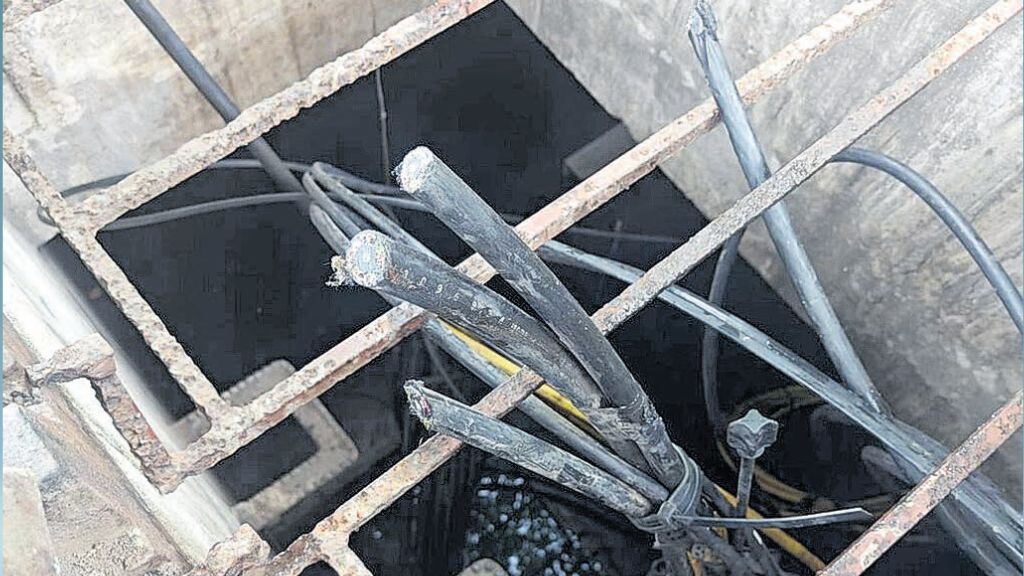
    Jamaica faces a severe infrastructure security crisis as coordinated vandalism and theft against utility networks drain the nation’s economy of at least US$350 million annually, according to revelations from a recent industry webinar. This staggering figure, considered conservative by experts, exposes systematic attacks on the country’s critical electricity, water, and telecommunications infrastructure.

    Telecommunications provider Digicel reported direct losses of US$3.9 million within a single year, with attackers specifically targeting critical systems. The company documented 452 battery thefts, 97 vandalized generators, 9 damaged shelters, and 290 compromised sites. According to Brithney Clarke, Digicel’s business marketing lead, perpetrators constitute a ‘mindless minority’ deliberately attacking infrastructure components—often with no functional value to them—primarily to extract scrap metal, with cabling infrastructure and lithium batteries being frequent targets.

    The Jamaica Public Service Company (JPS) revealed the most substantial financial impact, estimating annual losses of approximately US$200 million from electricity theft alone. Shockingly, among Jamaica’s 1.06 million electricity users, 350,000 operate illegally without contractual relationships with JPS. Revenue security manager Jermaine Clarke explained that 26.34% of generated electricity is lost annually, with 72% of these losses classified as non-technical—meaning the energy is consumed but not commercialized due to theft. Approximately 35% of households consume electricity without meters or contracts, resulting in nearly 19.5% of all generated electricity being stolen.

    This widespread theft directly contributes to Jamaica’s exceptionally high electricity costs, with residential customers paying 90% above the global average and businesses facing rates 60% higher than worldwide norms.

    The National Water Commission (NWC) reported significant losses from vandalism, including US$70-80 million in damages at Goshen facilities serving Portmore and approximately US$150 million in arson-related damage at the Caymanas water facility. Regional manager Garwaine Johnson noted that vulnerable NWC facilities cannot be easily secured, leaving infrastructure exposed to repeated attacks. These incidents resulted in an average loss of six hours of water production daily over one year, translating to approximately US$2 billion in losses.

    The crisis extends beyond Jamaica’s borders. Cletus Bertin of the Regional Caribbean Electric Utilities Services Corporation reported that member utilities across the region average about 20% losses in generation costs due to vandalism and theft. For a utility generating US$715 million annually, this represents approximately US$143 million in losses each year.

    Bertin emphasized that financial impacts extend beyond direct losses, as utilities must increase spending on security measures, repairs, and system restoration, thereby multiplying base operating costs.

    In response, utility providers are advocating for stronger legal penalties and a coordinated national response involving government agencies, law enforcement, and industry stakeholders. Proposed solutions include enhanced utility-to-utility partnerships, security intelligence sharing for high-risk zones, community-based stewardship programs, and legislative reform of the scrap metal Act to impose harsher penalties on purchasers of utility-grade materials without verified origins.

    While some collaboration already exists—particularly between NWC and JPS—industry leaders stress that deeper integration and engagement with political leadership is necessary to address this escalating national security and economic challenge.

  • Man denied bail in WhatsApp malicious communication case

    Man denied bail in WhatsApp malicious communication case

    KINGSTON, Jamaica — A foreign national facing serious allegations of issuing graphic death threats against his former landlord’s daughter has been ordered to remain in custody following a heated bail hearing in the Kingston and St Andrew Parish Court.

    Shawn Hosang, who has already spent eight months in detention, stands accused of two criminal offenses: overstaying his immigration permit and utilizing electronic communication systems for malicious purposes. The defendant’s legal representative attempted to secure his provisional release by emphasizing his role as sole caregiver for his 72-year-old mother and noting that the prosecution’s case file wouldn’t be finalized until March.

    These appeals were met with firm opposition from crown prosecutors, who presented disturbing evidence of threatening communications allegedly sent by the accused. According to court documents, Hosang utilized WhatsApp messaging platforms to deliver terrifying threats targeting the complainant’s daughter throughout late 2024 and early 2025.

    Among the explicit messages presented in court was one from December 2024 that stated: “Just be prepared for your daughter to be slaughtered, I swear,” followed by even more graphic violence. Subsequent messages from February 2025 contained similarly chilling content, with one voice message allegedly featuring Hosang’s recognizable voice declaring: “I am actually going to have your daughter killed, you can’t be surprised.”

    The prosecution emphasized that the victims continue to live in genuine fear of the accused and raised substantial concerns about potential witness intimidation should Hosang be released. Presiding Judge Alwayne Smith ultimately denied bail, citing the severity of the threats and the ongoing risk to the complainants. The case has been adjourned until March 26 for further proceedings.

  • Vaz flagged for breaching procurement guidelines in purchase of Starlink devices

    Vaz flagged for breaching procurement guidelines in purchase of Starlink devices

    A damning audit report from Jamaica’s Auditor General has exposed significant procedural violations by Energy, Transport and Telecommunications Minister Daryl Vaz in the procurement of emergency communication equipment following Hurricane Melissa. The investigation, detailed in the ‘Hurricane Melissa Relief Initiative Audit’ tabled in Parliament, reveals Minister Vaz improperly authorized a $12.12 million purchase of 200 Starlink devices without proper authority.

    The equipment was intended for parishes severely affected by October’s hurricane where communications infrastructure had been devastated. However, Auditor General Pamela Monroe Ellis found the procurement was initiated through ministerial instruction from Vaz rather than through the proper channel of the Director General of the Office of Disaster Preparedness and Emergency Management (ODPEM). This direct intervention violated Jamaica’s Public Procurement Act of 2015, which explicitly assigns procurement authority to heads of entities, not ministers.

    According to the audit timeline, Vaz sent written instructions in his capacity as Co-Chair of the Relief and Recovery Oversight Committee on November 13, 2025, directing payment to a specific supplier. Remarkably, the devices were delivered to the Office of the Commissioner of Police on November 14, while ODPEM only began preparing required procurement documentation five days later on November 19.

    The audit further uncovered concerning distribution issues. Of 120 devices distributed among 17 entities, only 86 were confirmed received, and physical inspections revealed 41 devices remained unused and in storage. The report noted a complete absence of documentation justifying the selection of the particular supplier engaged for the purchase.

    Auditor General Ellis emphasized that the sequence of events—particularly the receipt of devices before procurement approval—demonstrated a circumvention of controls designed to ensure transparency, competitive bidding, and fiscal responsibility. ODPEM additionally failed to maintain proper records regarding device conditions, inventory details, or distribution monitoring.

    The real-time audit was conducted to assess transparency and accountability in the hurricane relief initiative, specifically examining whether adequate controls exist to prevent fraud, waste, and abuse of public resources during disaster response operations.