标签: Jamaica

牙买加

  • Airbnbs to start paying GCT

    Airbnbs to start paying GCT

    In an overnight parliamentary sitting that stretched into the early hours of Wednesday, Jamaica’s House of Representatives has approved a suite of new tax measures, one of which mandates that short-term rental properties — including platforms like Airbnb — will begin paying General Consumption Tax (GCT) starting April 1, 2027.

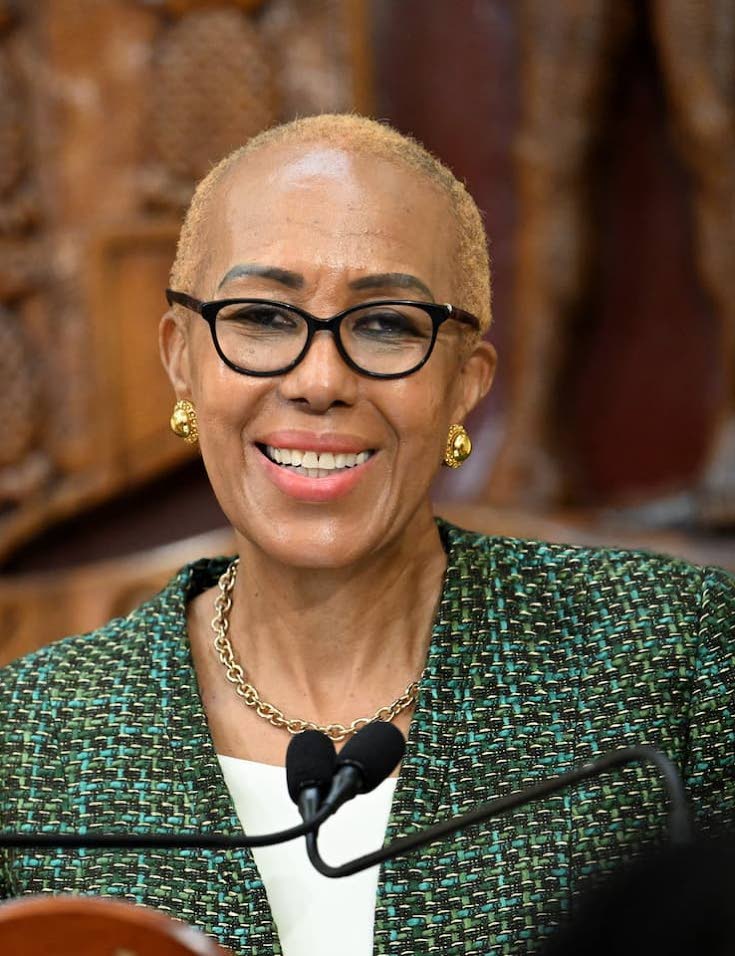
    The official confirmation of the policy came during debate over the 2026 General Consumption Tax Amendment of Schedules Order, when Opposition finance spokesperson Julian Robinson pressed the government for clarity on whether the tourism accommodation tax revisions would extend to peer-to-peer short-term rental properties. Finance Minister Fayval Williams explicitly confirmed that these unregulated short-term listings would be formally added to the tax regime under the new rules.

    Robinson noted during the parliamentary exchange that the change creates an entirely new taxable category, as prior to this amendment, short-term rental operators had fallen outside of Jamaica’s tax collection framework entirely. The new GCT requirement for short-term rentals is just one component of a wider government revenue reform package, which also includes higher excise taxes on alcohol, tobacco, and sugar-sweetened beverages, alongside adjustments to tourism sector regulations and motor vehicle concession rules.

    Williams defended the full package of reforms, framing the changes as a necessary response to mounting fiscal pressures in the wake of Hurricane Melissa, which pushed up government emergency and recovery spending. She emphasized that the measures are not arbitrary policy changes, but a coordinated part of the administration’s broader fiscal strategy to stabilize public finances while protecting funding for core public services. Williams added that the approved changes give formal legislative and operational force to revenue proposals that were first announced during earlier national budget debates.

    However, the government’s confirmation of the short-term rental tax quickly drew fierce criticism from the Opposition, which accuses the administration of ramming through the policy without meaningful public consultation or advance notice to the thousands of property owners who operate in the sector. In a media statement released Wednesday afternoon, Opposition tourism and industry linkage spokesperson Andrea Purkiss denounced the approval process, characterizing the government’s actions as pushing the measure through “like a thief in the night”.

    Purkiss argued that the overnight rush to pass the rule displays blatant disregard for thousands of ordinary Jamaicans who depend on short-term rental income to cover basic household costs and support their livelihoods. She noted that the sector has experienced explosive growth over the past seven years, expanding from just 59,500 annual guests in 2017 to more than 800,000 guests in 2024, generating over JMD $32 billion in total income for local property owners. For many Jamaican households, Purkiss added, short-term rental earnings are a critical supplementary or primary source of income.

    She is now calling on the government to open the policy up to full public scrutiny, conduct a comprehensive sector-wide impact assessment, and answer for the lack of transparency before the tax is scheduled to go into effect in 2027.


  • Maradona was ‘bipolar’, had ‘narcissistic’ disorder, psychologist tells death trial

    Maradona was ‘bipolar’, had ‘narcissistic’ disorder, psychologist tells death trial

    In a high-profile courtroom proceeding in San Isidro, Argentina, a key witness and defendant — Diego Maradona’s personal psychologist Carlos Diaz — has revealed three previously undisclosed long-term mental health conditions affecting the late Argentine football icon, offering new context for the defense argument in the negligence trial over the 2020 death of the global sports legend. Diaz, who stands among seven medical professionals accused of negligent homicide in Maradona’s death, told the court this Thursday that the celebrated athlete lived with three chronic, lifelong conditions: substance addiction, bipolar disorder, and narcissistic personality disorder. While Maradona’s well-documented struggles with cocaine and alcohol addiction have been public knowledge for decades, the formal dual diagnoses of bipolar disorder and narcissistic personality disorder had never been shared with the public prior to this court testimony.

    As a core member of the defense team, Diaz’s disclosures are framed to support the broader legal argument that Maradona was an especially challenging patient to treat, and that his death in 2020 at age 60 was ultimately a result of natural causes, not inadequate medical care. Diaz told the court that close associates of Maradona confided in him that the footballer’s substance use was intrinsically linked to his extraordinary career in professional football: when he encountered setbacks or frustration on or off the pitch, he lacked healthy coping mechanisms to manage his emotions, turning to alcohol and drugs as a crutch. Diaz also shared a personal anecdote of his first meeting with Maradona in October 2020, just one month before the star’s death: he recalled finding Maradona seated in an armchair drinking wine, a sight that stirred personal memory of his own father, an alcoholic who had passed away just months prior to that meeting. Despite the clear struggles, Diaz added that he believed Maradona had a genuine, sincere desire to adjust his behavior and commit to recovery at that time.

    Widely regarded as one of the most talented and influential football players in the history of the sport, Maradona died in November 2020, just two weeks after undergoing a routine surgical procedure to remove a blood clot in his brain, while he was recovering in his private home. An official autopsy confirmed the cause of death as heart failure combined with acute pulmonary edema, a dangerous condition that causes excess fluid to build up in the lungs. The seven defendants on trial — which include a lead neurosurgeon, a psychiatrist, a nurse, and other medical members of Maradona’s care team — face steep prison sentences ranging from 8 to 25 years if convicted of intentional homicide, a charge that alleges they continued with their planned care plan despite knowing it put Maradona’s life at severe risk. All seven accused have repeatedly denied any wrongdoing, maintaining that the 1986 FIFA World Cup champion died of pre-existing natural causes unrelated to the medical care he received in his final days.

    This current proceeding is actually the second trial held over Maradona’s death. The first trial was annulled entirely last year, after investigators uncovered that one of the presiding judges had secretly participated in filming an unauthorized clandestine documentary about the high-profile case, creating an unacceptable conflict of interest. The retrial, overseen by a completely new panel of independent judges, formally kicked off earlier this month, and is expected to draw global attention from football fans and legal observers alike as new details of Maradona’s final days emerge.

  • Richie Spice continues global mission

    Richie Spice continues global mission

    Jamaican reggae icon Richie Spice is opening 2026 on a high note, balancing a packed global touring itinerary with consistent studio work to deliver the uplifting, purpose-driven sound his fanbase has loved for decades. In a recent interview with Jamaica Observer, the veteran singer broke down his start to the year, his ongoing mission to elevate Jamaican culture worldwide, and his urgent plea for global peace amid rising global unrest.

    So far this year, Spice has already headlined multiple shows across his home country of Jamaica while maintaining a robust schedule of international performances, a routine that aligns with his decades-long commitment to expanding the global reach of homegrown Jamaican music. For the artiste, life on the road is far more than just a performance schedule — it is a core part of his cultural mission.

    “We never stop touring because that’s how we send this music of ours global,” Spice said. “Jamaica is a world brand and music is a big part of that brand so we have to keep spreading it throughout the earth.” Live performances, he emphasized, remain one of the most powerful tools to grow Jamaica’s cultural footprint across continents, connecting audiences from all backgrounds to the unique energy and message of reggae.

    Even with the demands of constant travel and show dates, the singer has not stepped away from the studio. He has steadily released new standalone singles over recent months and is currently working on several larger full-length projects, and he promises fans that his upcoming work will stay true to the style that has defined his decades-long career.

    Spice’s music has long centered on conscious storytelling and positive, uplifting energy, and he says that focus will not shift in his upcoming releases. “I’ve been putting out singles while working on projects and just keeping the music going so you can just expect some more tunes, good vibes, conscious lyrics that give a good vibration, soothe the people’s soul and make them happy,” he explained.

    Beyond talking about his upcoming music and tour plans, Spice took the opportunity to share reflections on the current state of the world, opening up about his deep concern over growing global unrest and widespread human suffering. He noted that across the globe, pain and conflict have increasingly pushed aside widespread joy, and he used his platform as a beloved artiste to issue a call for unity and peace to world leaders.

    “We’re paying attention to everything because it’s all happening right before our eyes, but I just want to tell all the governments involved to cease fire and preserve the world,” he urged.

  • FID strengthens capacity to trace, seize cryptocurrency with access to global enforcement platform

    FID strengthens capacity to trace, seize cryptocurrency with access to global enforcement platform

    KINGSTON, Jamaica — As transnational financial criminals increasingly leverage digital tools to hide illicit proceeds, Jamaica’s law enforcement community has announced a landmark upgrade to its anti-crime infrastructure. The island nation’s Financial Investigations Division (FID) has formalized a partnership to gain full access to Asset Reality, a world-leading digital platform designed to assist global law enforcement and public agencies in recovering and managing illegally obtained assets, with specialized capabilities for virtual and crypto-based holdings.

    The operational agreement, which launched on April 27, 2026, grants FID authorized access to the full Asset Reality platform, alongside comprehensive onboarding support and specialized user training for core investigative functions. Beyond basic tracing capabilities, the system streamlines end-to-end workflows for holding, selling off, and reclaiming virtual assets that are tied to open criminal probes and official asset recovery cases.

    According to FID leadership, the integration of this new platform is a core component of the division’s long-term capacity building strategy. For years, Jamaican authorities have focused overwhelmingly on tracking illicit funds moving through traditional formal banking channels, but the growth of decentralized blockchain networks and unregulated cryptocurrency markets has created new blind spots for enforcement. This new tool closes that gap, enabling investigators to follow illicit money across both conventional and digital transaction ledgers.

    “Financial criminals are constantly evolving their tactics to stay one step ahead of law enforcement, and our response has to evolve even faster to outpace them,” stated Dennis Chung, Chief Technical Director of the FID. “This platform drastically improves our ability to identify, secure, manage, and recover illicit assets of all kinds—both tangible physical holdings and intangible virtual assets. This upgrade will strengthen our ongoing investigations, safeguard the stability and integrity of Jamaica’s entire financial system, and cement our standing on the global stage as a reliable, committed partner in the international fight against transnational financial crime.”

  • 287 nominations for Nobel Peace Prize — institute

    287 nominations for Nobel Peace Prize — institute

    OSLO, Norway — The Norwegian Nobel Institute made a key announcement Thursday, confirming that a total of 287 candidates have been put forward for the 2025 Nobel Peace Prize. Of these nominees, 208 are individual activists, leaders, and advocates, while 79 are formal organizations working across the globe to advance peace. Per longstanding institutional rules, the full list of nominees remains unpublished, with names sealed for 50 years to protect candidates and preserve the integrity of the selection process.

    While this year’s total nomination count falls short of the all-time record of 376 set in 2016, institute officials framed the figure as consistently high, a reflection of the widespread global movement to recognize peacebuilding work. “In an increasingly conflictual world, there is no lack of candidates whose principled commitment and innovative action points towards a brighter future,” the institute shared in its official statement announcing the final nomination count.

    Under Nobel Foundation statutes, nominator eligibility is restricted to specific groups: sitting national lawmakers and cabinet ministers, former Nobel Peace Prize laureates, sitting members of the Norwegian Nobel Committee, university professors of social sciences and history, and leaders of independent peace research institutes. While nominee identities are formally confidential, eligible nominators are permitted to publicly disclose the candidates they have put forward, leading to a steady trickle of confirmed names ahead of the October 9 winner announcement.

    Already, publicly disclosed nominees include Ukrainian President Volodymyr Zelensky, Swedish youth climate activist Greta Thunberg, and the International Criminal Court, one of multiple global institutions that have been put forward for the honor. Multiple eligible nominators have also confirmed they have put forward former U.S. President Donald Trump, who mounted a high-profile campaign for the 2024 prize, claiming his administration had made unprecedented efforts to end eight ongoing global conflicts.

    Trump was overlooked for the 2024 award, which went to Venezuelan opposition leader Maria Corina Machado, and he publicly expressed his frustration over the snub. In a surprising turn, Machado dedicated her award to Trump and formally presented him with her physical prize medal in January 2025. The Norwegian Nobel Peace Prize committee later clarified that the physical medal is a symbolic artifact, and the honor of the prize itself remains tied exclusively to the official selected laureate.

    Annual Nobel Peace Prize rules require all initial nominations to be submitted by the January 31 deadline. However, the institute confirmed that sitting committee members retain the right to add new candidates to the shortlist during their first post-deadline working meeting, which was held this year on February 26.

  • Holness sets vision for parks in every parish

    Holness sets vision for parks in every parish

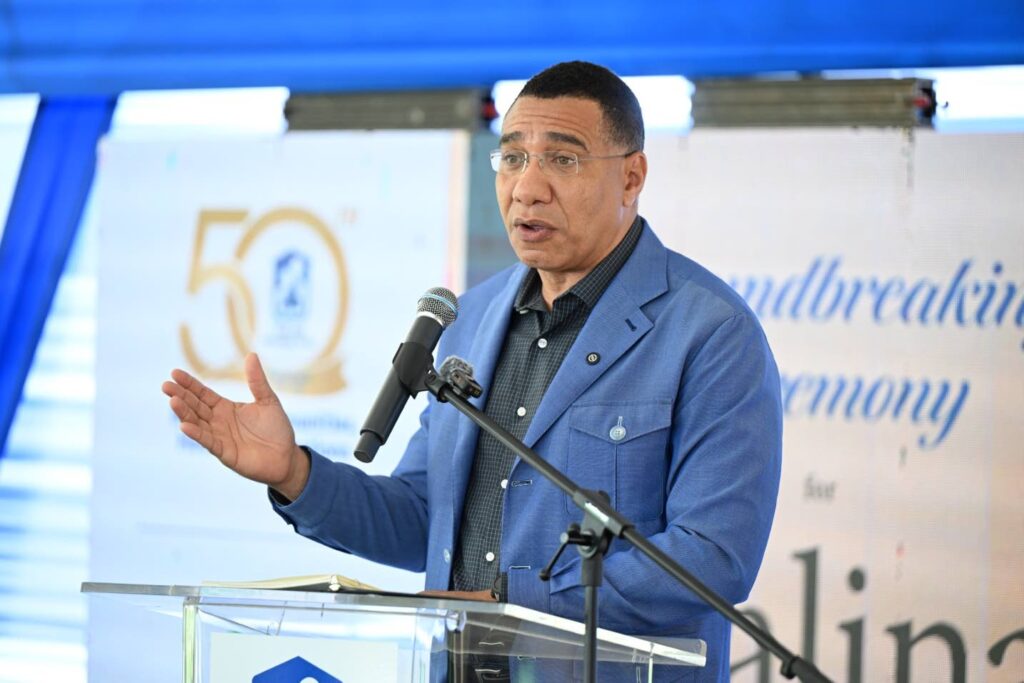
    KINGSTON, Jamaica — In a bold policy announcement delivered at the Urban Development Corporation (UDC) Board Retreat on April 30, Prime Minister Dr. Andrew Holness has laid out a new national development vision centered on bringing improved public amenities and accessible housing to communities across every corner of Jamaica. At the heart of this vision is a non-negotiable mandate: the UDC, in formal partnership with the National Housing Trust (NHT), will develop a public park in each of Jamaica’s 14 parishes.

    Holness made clear that meaningful national progress cannot be measured only in economic indicators, but must show up in tangible, daily improvements for ordinary Jamaicans. Accessible, thoughtfully designed recreational spaces, he argued, are a core public good that directly lift community well-being. The island-wide park initiative is designed to extend the benefits of high-quality public spaces to all citizens, regardless of their location, giving every community a safe, welcoming, professionally managed space for leisure, social connection, and physical wellness.

    Drawing on existing successful projects as a blueprint, the prime minister pointed to Harmony Beach Park as a model of what well-executed public space development can achieve. He detailed how projects of this kind do more than provide green space: they reshape entire neighborhoods, boost local pride, and create long-term improvements to quality of life that ripple out across surrounding communities.

    To move the initiative forward quickly, Holness has instructed the UDC to immediately conduct a national survey of state-owned lands, identifying parcels suitable for park development and present a full report to his office outlining potential sites for each parish. He stressed that this process requires disciplined, efficient use of public assets, ensuring that underutilized state lands are put to work serving the public good. The prime minister also emphasized that timely delivery and rigorous project management will be non-negotiable priorities for the program, pushing the UDC to avoid delays and deliver results for Jamaican communities.

    Beyond the park initiative, Holness called on the UDC to leverage its extensive national land bank to advance another critical national priority: closing Jamaica’s persistent housing gap. With unmet demand for affordable quality housing remaining a major challenge across the island, the prime minister said the UDC has a central role to play in unlocking its land reserves for residential development. He called for coordinated action across all relevant government agencies to mobilize resources and address the housing shortage, framing the work as a core responsibility of state development entities.

  • Help us scale up!

    Help us scale up!

    Jamaica’s construction industry is pushing for targeted government intervention to unlock the growth of domestic contractors, after Prime Minister Andrew Holness recently called on local firms to scale up their operations to meet the country’s rising infrastructure and housing demand.

    The call to action comes directly from The Incorporated Masterbuilders Association of Jamaica (IMAJ), which issued a formal media statement responding to Holness’ remarks delivered at a ground-breaking ceremony for the new Galina Housing Development project in St Mary this past Friday. At the event, Holness stressed that Jamaica needs a cohort of large-scale, enterprise-level contractors capable of matching the country’s growing need for affordable housing and public infrastructure, and urged domestic construction firms to expand their operational capacity to fill this gap.

    While the IMAJ has expressed full alignment with the Prime Minister’s vision, the association says turning this goal into reality requires systematic government support to address the structural barriers that have held local contractors back from competing and growing at scale. In its statement, the organization outlined a series of persistent challenges that prevent domestic firms from increasing their asset bases, investing in modern heavy equipment, upskilling workforces, and taking on large-scale national projects.

    Among the most pressing issues identified are uncertain government payment timelines, unstructured procurement processes that derail long-term project planning, and long delays in resolving contractual variation claims. The IMAJ also highlighted the unfair competitive advantage held by foreign contractors, which often access preferential financing and concessionary agreement terms that are not available to Jamaican private construction companies.

    The association also pushed back against the common public narrative that attributes all project delays to contractor misconduct or inefficiency. It noted that the majority of project delays stem from systemic issues outside of contractors’ control, including last-minute scope changes, delayed design finalization, slow regulatory approvals, unforeseen site conditions, and backlogs in variation processing across public sector agencies. If these systemic weaknesses are not acknowledged, the IMAJ argues, local contractors are unfairly blamed for issues they cannot resolve, which discourages the domestic talent and private investment needed to build a sustainable long-term construction sector.

    To address these gaps, the IMAJ is calling on the Jamaican government to develop a formal Emerging Contractor Capacity Policy, co-designed in direct consultation with the organized construction industry, that targets four key priority areas.

    First, the association is calling for a dedicated national contractor capacity building programme, to be administered either through the Development Bank of Jamaica or via a formal partnership with public housing entities such as the National Housing Trust (NHT). This programme would provide domestic construction firms with critical support including affordable equipment financing, working capital loans, bonding facilities, technical skills training, and management capacity building. The IMAJ emphasized that local firms cannot make the large-scale investments Holness has called for without access to low-cost capital to fund expansion.

    Second, the association is demanding sweeping reform of Jamaica’s current public procurement and project management systems. It notes that the current laborious, slow-moving procurement process discourages private domestic firms from bidding for public sector contracts. The IMAJ says public sector agencies must be held to the same accountability standards that the government requires of contractors, with binding, defined timelines for completing procurement approvals, certifying contractor invoices, processing variation claims, and disbursing approved payments. Persistent uncertainty around these timelines makes it impossible for contractors to maintain the investment and growth the government is asking for, the group added.

    Third, the IMAJ is calling for a transparent, enforceable regulatory framework governing foreign contractor participation in Jamaican projects. The association expressed support for Holness’ commitment that foreign-led projects should not be extractive, and must include mandatory transfer of skills and technology to local workers, create space for Jamaican technical expertise, and include binding corporate social responsibility commitments. The IMAJ argues these commitments must be formalized as legally binding contractual obligations, with public, measurable targets for local employment percentages, local subcontracting requirements, local materials procurement, skills certification outcomes, and community investment. All foreign contractors would also be required to publish annual compliance reports to meet these obligations.

    Finally, the IMAJ has formally requested a permanent seat at the table during the policy development process, arguing that any national policy designed to build local contractor capacity that does not include input from the organized construction industry will fail to address the real, on-the-ground constraints that domestic firms face.

  • Venezuela maintains Essequibo is part of the South American country

    Venezuela maintains Essequibo is part of the South American country

    A decades-old border dispute between Venezuela and Guyana over the resource-rich Essequibo region has reignited into a new diplomatic row, sparked by a piece of jewelry worn by Venezuela’s acting president Delcy Rodriguez during recent talks with Caribbean community leaders.

    The controversy erupted earlier this month, when Rodriguez met with the heads of government of Barbados and Grenada, two member states of the 15-nation Caribbean Community (Caricom). During the meeting, Rodriguez wore a brooch engraved with a map of Venezuela that includes the 159,000-square-kilometer Essequibo region — territory Guyana claims as its own sovereign land.

    Soon after the meeting, Guyanese President Irfaan Ali issued a formal statement of grave concern over the symbolic display of Venezuela’s territorial claim. In an April 28 letter addressed to Caricom Chairman Terrance Drew, who also serves as prime minister of St Kitts and Nevis, Ali clarified that Guyana does not oppose any Caricom member state pursuing independent bilateral relations with Venezuela. However, he emphasized that pairing high-level diplomatic engagements with public assertions of territorial claims against another member state was unacceptable.

    Caricom later issued a formal statement noting the controversy, reaffirming its longstanding support for Guyana’s position in the border dispute. Senior Guyanese officials have also separately voiced their objection to Rodriguez’s brooch.

    But Venezuelan officials have uniformly pushed back against the criticism, framing the backlash as an overreach that questions a core national position. Speaking at an anti-sanctions rally held in Valencia, the capital of Venezuela’s Carabobo state, Rodriguez dismissed the controversy. She said the map on the brooch is the only map of Venezuela her country has ever recognized, and questioned why Guyana would object to the clothing she chooses to wear.

    Venezuela will stand firm in its claim to Essequibo, Rodriguez added, ahead of upcoming hearings at the International Court of Justice (ICJ) that will hear the merits of the decades-long dispute. “We will soon be at the International Court of Justice in the coming days to reaffirm our historic position, which is aligned with international law and respect for the 1966 Geneva Agreement,” she said. “It is outrageous when Venezuela is attacked, and that is why we are undertaking this entire process for the good of our nation.”

    Venezuela’s Foreign Minister Yván Gil doubled down on this position, calling Ali’s public criticism unprecedented. Gil dismissed Ali’s complaints as “improvised shows” and argued that the brooch is merely a public acknowledgment of a longstanding historical truth that has been recognized since the 1966 Geneva Agreement. He added that Guyana’s harsh reaction reflects a desperate, erratic attempt to distract from the core legal issues of the dispute.

    Jorge Rodríguez, president of Venezuela’s National Assembly, also defended the country’s position in a post on the social platform X. “We maintain an incontrovertible position on our Guayana Esequiba. It is a historical, legal and moral right; it belongs to all Venezuelan women and men,” he wrote. “Our response remains one of peace diplomacy, but with the firmness of a people that does not renounce its sovereignty.”

    The current controversy comes as the decades-long border dispute heads to substantive hearings at the ICJ. The root of the disagreement dates back to the 1899 Arbitral Award, which established the current boundary between the two countries and granted Guyana control over Essequibo. The award stood unchallenged for more than 60 years, until Venezuela declared it null and void in 1962 and revived its claim to the entire region.

    In 1966, Venezuela and Guyana (then still a British colony) signed the Geneva Agreement, which established formal mechanisms to pursue a peaceful negotiated settlement to the dispute. When years of bilateral talks failed to produce a resolution, the United Nations Secretary-General referred the case to the ICJ in 2018, after Guyana formally brought the dispute before the court to seek legal confirmation that the 1899 award is fully legally binding.

    The ICJ has already issued a preliminary ruling confirming it has jurisdiction to hear the case, clearing the way for upcoming substantive hearings where both sides will present their full legal arguments to settle the dispute once and for all.

  • WATCH: ‘I was wrong but..’

    WATCH: ‘I was wrong but..’

    A dramatic confrontation in Jamaica’s Parliament has drawn widespread attention after opposition lawmaker Dr. Angela Brown Burke, representative for St Andrew South Western, grabbed the ceremonial mace mid-debate on a major infrastructure bill, resulting in her immediate suspension and formal naming by parliamentary leadership. Days after the incident, Brown Burke has publicly acknowledged her behavior violated established parliamentary rules, while continuing to defend the urgency of the concerns that prompted her extraordinary protest.

    The chaos unfolded during an overnight, marathon committee-stage debate on the National Reconstruction and Resilience Authority (NaRRA) Bill, which stretched into the early hours of Wednesday. The legislation, drafted in response to the widespread devastation left by Hurricane Melissa, aims to create a new central body tasked with coordinating post-disaster reconstruction and long-term climate resilience projects. After more than 20 amendments were approved by lawmakers, the bill was ultimately passed in the early hours of the sitting.

    From the start of clause-by-clause review, opposition lawmakers raised fierce objections to key provisions of the proposal. The core of their criticism centered on clauses that grant the new authority sweeping, unchecked powers to fast-track project approvals, issue binding directives to government regulatory agencies, and advance large-scale strategic investment projects. Opposition legislators have repeatedly flagged gaps in transparency, weak accountability mechanisms, and concerns over whether the vast spending authorized by the bill—amounting to trillions in public debt that will fall on current and future generations—lacks sufficient oversight safeguards.

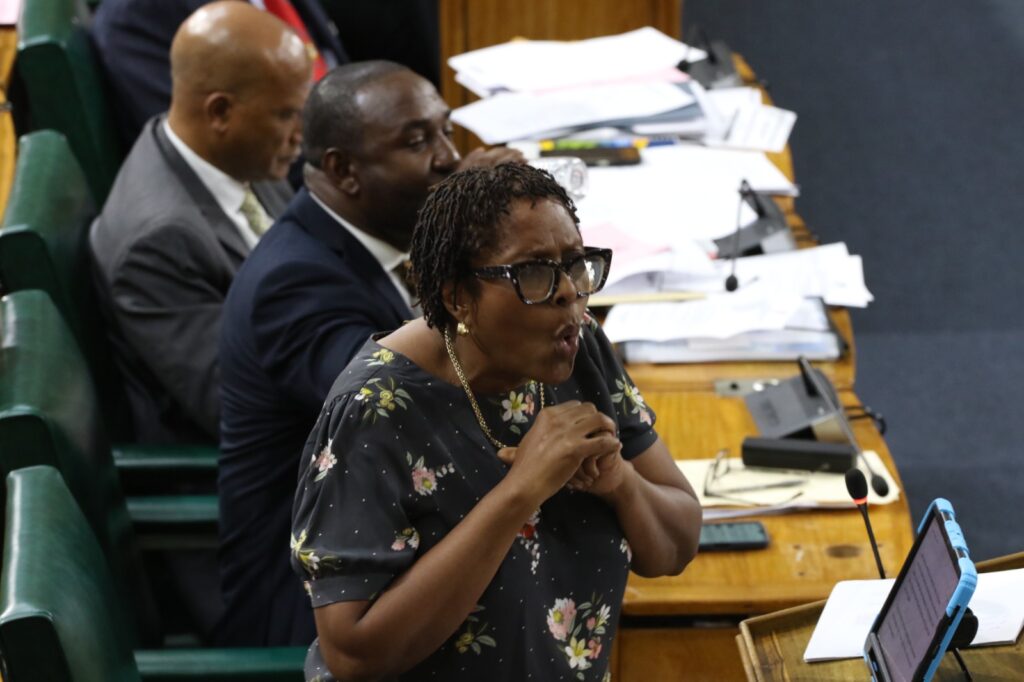
    Video footage published after the incident shows Brown Burke leaving her seat, approaching the mace— a centuries-old symbol of parliamentary authority and the Speaker’s power to govern proceedings—lifting it from its ceremonial position, and returning to her seat while some fellow opposition lawmakers reacted with laughter. Immediately after the act, House Speaker Juliet Holness ordered Brown Burke removed from the chamber, forcing a temporary halt to all proceedings. When the sitting resumed, the Speaker issued a firm warning to all legislators, making clear that interference with the mace would never be tolerated, regardless of the intensity of policy disagreements. “Not even in jest, Member, and not in protest either,” Holness emphasized.

    Prime Minister Dr. Andrew Holness also stepped in to call for order, urging members to uphold the dignity of Parliament even amid heated policy debate. “I think what we are witnessing now is a display which when we reflect on this in years to come it will not be amongst our best, and I think the order of the house and dignity of the house must be preserved,” the prime minister stated during the disruption. A motion to suspend Brown Burke for the remainder of the sitting was subsequently brought under parliamentary standing orders, and passed with support from government members, removing her from the chamber for the rest of the debate.

    In her first public comments since the incident, released in a video statement to media on Thursday, Brown Burke conceded that her actions fell outside acceptable parliamentary norms. “I start by accepting that my actions on Tuesday did not accord with acceptable parliamentary procedure. I also acknowledge under the circumstances that the decision of the House [to name me] is in keeping with the Standing Orders,” she said.

    Despite accepting the punishment, Brown Burke pushed back against attempts to dismiss the broader policy objections that led to the confrontation, arguing the important concerns raised by the opposition should not be overshadowed by the dramatic scenes in the chamber. She emphasized that context is critical to understanding the incident, noting that opposition lawmakers had been unable to get their concerns about unaccountable power and excessive public debt addressed through regular procedural channels.

    “I think context matters while we uphold the rules of the House, [and] at the same time I would not want that to distract unduly from the important points that we were making about the lack of transparency and accountability, the kind of unfettered powers that we saw with NaRRA because, you know, it’s trillions of dollars we’re talking about that is a debt to be borne by us and our children and our children and we want to make sure that we are doing it right and that we’re putting in the safeguards that are required,” she explained.

  • Celebrating a year of Excelerate Energy in Jamaica

    Celebrating a year of Excelerate Energy in Jamaica

    One full year after completing its high-stakes acquisition of New Fortress Energy’s Jamaican assets, US-based liquefied natural gas (LNG) firm Excelerate Energy gathered key stakeholders to mark the milestone at a special celebration hosted by the United States Embassy in Jamaica. The event, held April 28 at the Chief of Mission’s residence in the Jack’s Hill neighborhood of Kingston, brought together top industry leaders, senior Jamaican government officials, and diplomatic representatives to toast the company’s first 12 months of operations on the island.

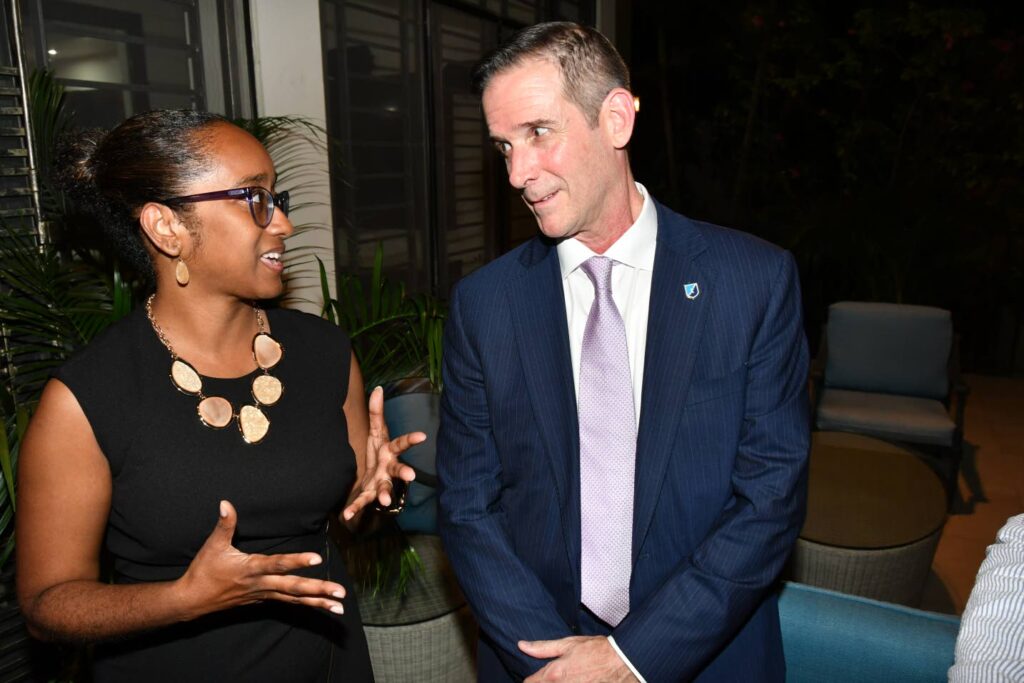
    In opening remarks to guests, US Embassy Chargé d’Affaires Scott Renner framed the first year of Excelerate’s operations as more than a corporate success — it stands as a tangible strengthening of both Jamaica’s energy landscape and the decades-long bilateral partnership between the United States and Jamaica. Renner emphasized that accessible, dependable energy is the backbone of any thriving modern economy, and projects like Excelerate’s Jamaican operations deliver both expanded economic opportunity and enhanced long-term energy security for the Caribbean nation.

    Renner highlighted the depth of Excelerate’s commitment to Jamaica beyond its core corporate investments, noting the firm has already poured $1 billion into local operations and stepped up to support disaster relief efforts in the wake of Hurricane Melissa. When the storm hit, the company deployed its LNG carrier *Excelerate Shenandoah* to deliver $500,000 worth of emergency supplies to affected communities. He also noted the symbolic alignment of the milestone: Excelerate’s first anniversary in Jamaica coincides with the 250th semiquincentennial celebration of the United States, a dual milestone that reflects shared values of innovation, entrepreneurship, and cross-border collaboration between the two nations.

    “America is defined by enterprise, innovation, and shared success. But our story is not one we write alone — we walk it with partners, and Jamaica is one of our closest partners,” Renner told attendees. “This partnership extends far beyond government cooperation; it thrives in civil society, in the private sector, and in the investments businesses like Excelerate choose to make abroad.”

    For his part, Excelerate Energy President and Chief Executive Officer Steven Kobos expressed pride in the progress the company has delivered in its first year, and reaffirmed the firm’s long-term commitment to growing its footprint in Jamaica. Recalling his first meeting with Jamaican Prime Minister Andrew Holness following the acquisition, Kobos noted he had promised the prime minister that the company would prove its reliability through action, not just words.

    “We made clear when we closed this acquisition that we were in Jamaica for the long haul, and today we are reaffirming that commitment. We absolutely plan to invest additional capital into the country — this is the right place for us to grow, and we are incredibly excited for what comes next,” Kobos said.

    As a symbolic tribute to the first year of partnership, Kobos presented Jamaican Minister of Foreign Affairs and Foreign Trade Kamina Johnson Smith with a detailed scale model of the *Sequoia*, one of Excelerate’s LNG carriers. Johnson Smith spoke on behalf of Prime Minister Holness at the event, praising Excelerate’s operations as a critical catalyst for Jamaica’s ongoing transition to more sustainable, accessible energy sources.

    “The LNG infrastructure Excelerate operates today is central to our energy transition goals. It has helped stabilize electricity generation costs for Jamaican consumers, strengthened our national energy security, and created an entirely new industrial platform that simply did not exist before this investment,” Johnson Smith explained. “This is tangible, meaningful progress, and it is a perfect example of what can be accomplished when public and private partners from aligned nations come together around a shared goal.”

    Following the formal remarks, guests enjoyed catered cuisine from celebrated Jamaican chef Oji Jaja, live music from violinist Meah Eliana, and DJ sets from Damion Haber, as attendees networked and toasted to future collaboration between Excelerate and Jamaican stakeholders. The event included representation from across Jamaica’s leading public and private sectors, with senior leaders in attendance from organizations including Sagicor Group, Grace Kennedy Group, the Development Bank of Jamaica, Jamaica Bauxite Mining Limited, the Port Authority of Jamaica, the Private Sector Organisation of Jamaica, and National Commercial Bank.