标签: Jamaica

牙买加

  • Legacy in every note

    Legacy in every note

    For Jamaican-American reggae artist Marcus “Nesta” Gayle, inspiration flows as naturally as breathing every time he steps into the recording studio. Long before he mastered musical theory, chord progressions, or production craft, he understood that music is rooted in feeling — and for him, the most resonant feeling has always been tied to the deep, unmistakable basslines of reggae. That connection stretches beyond sound: it is his lifelong bond to his late father Basil Gayle, a former member of influential 1980s roots reggae vocal group the Visionaires, part of the iconic Twelve Tribes of Israel movement.

    Now 33 and raised from birth in Queens, New York, the multi-hyphenate musician, singer, songwriter and producer has built a unique artistic identity by leaning into his Jamaican heritage. His signature sound, a seamless fusion of reggae, R&B, hip-hop and dancehall, has cemented his reputation as one of the most exciting rising forces in contemporary Caribbean-influenced music, with two chart-resonant lover’s rock releases, *Worthwhile* and *Don’t Let Me Down*, earning him a growing global fanbase.

    As he prepares to headline the main stage at the 2026 “To Mom With Love” Mother’s Day concert at Kingston’s AC Hotel on May 10, Gayle opened up in an exclusive interview with *Jamaica Observer* during a recent visit to the island, expressing his excitement to perform in the nation that shaped both his identity and his career. For Gayle, every step of his musical journey has been rooted in honoring his father’s legacy, and he carries one clear mission: to break down industry barriers, elevate global reggae, spread a message of unity and love, and clear a smoother path for the next generation of emerging artists.

    Raised in a household where reggae and R&B played constantly, surrounded by siblings who introduced him to 1990s and 2000s hip-hop, Gayle developed an early habit of exploring musical styles from across the globe. “I’m the type of guy who just researches all kinds of music all over the world and just takes things from literally all over — Brazil, Africa — wherever it is that I like melodies and stuff like that,” he explained. “I try to fuse it into what I’m doing and try to make my sound as universal as possible.”

    That early curiosity first turned into a side gig making hip-hop and trap beats for friends when he lived in Florida, recording rough demos in his spare time. It was not until 2012, when friends began complimenting his raw vocal talent, that he started experimenting with singing. For a time, he doubted whether he could turn his passion into a full-time career — but his father’s terminal cancer diagnosis gave him the clarity he needed to commit to music fully.

    Diagnosed with incurable mantle cell lymphoma, the diagnosis pushed Gayle to prioritize his art. “It wasn’t whether I wanted to do it or not, it’s something I have to do,” he said. In 2013, he moved back to New York to care for his father, a year he calls the most memorable of their relationship. Basil passed away in 2014, but not before hearing the music his son had been working on in Florida. When Gayle played him early hip-hop tracks laced with explicit lyrics, his father offered simple, lasting advice: he pointed to artists like Alicia Keys, who built massive hits without vulgarity, and encouraged his son to create music that could be enjoyed by all ages. That advice reshaped Gayle’s approach to songwriting, pushing him to refine his lyrics and stay true to his values.

    It was during this period of reflection that Gayle realized he had been running from his own cultural identity. Once he fully embraced his Jamaican roots and his father’s roots reggae legacy, everything fell into place. While natural talent made learning guitar, keyboard and vocal harmony easy, a friend named Jennifer helped him master the theoretical side of songwriting. A 2014 collaboration with trap producers at Black Wax Studio proved to be another turning point, teaching him to create freely in the moment instead of overwriting and overplanning. That spontaneous, instinct-driven approach became his signature style, and much of his acclaimed EP *Your Love Alone* was recorded exactly this way: through mental preparation and raw, unfiltered expression.

    “ I feel like it’s a more intuitive and spontaneous experience that is going to hit your heart rather than when it’s premeditated, and it’s going to hit your mind more,” he explained. “When you’re pulling it out of the air, it’s going to hit you, and it’s going to resonate with the people in the same type of way.”

    Gayle released his debut single, the lover’s rock track *Blending*, in 2017, but his viral breakthrough came when his remix of Gyptian’s iconic hit *Hold Yuh* exploded on TikTok, pushing him into the mainstream spotlight. He capitalized on the momentum, releasing a steady stream of new music, and ultimately quit his full-time job at U.S. supermarket chain Whole Foods Market in 2024 to pursue music full-time. His 2025 release *Worthwhile* also went viral on TikTok, and he quickly built a loyal transatlantic fanbase, earning enough support to sell out his first headline acoustic set in London earlier this year.

    “It was an amazing experience,” he recalled of the London show. “Those are people that have been rocking with me from 2021. They were singing songs that I didn’t even know they knew, like my song *Already There*, which was one of the first tunes that I really, really fused reggae and R&B together.”

    Since going full-time, Gayle has toured across the United States alongside well-known Bermudian reggae artist Collie Buddz, and even performed in East Africa’s Kenya. Now, with his upcoming Kingston performance just months away, he is preparing to share the stage with reggae and gospel legends including Third World, Marcia Griffiths, Glenn Jones and Robert Minott, and promises a family-friendly show accessible to all ages. “You don’t got to turn my music off when grandma comes in the car, and everybody can enjoy my music,” he said. “If you ask me, reggae music is like the best music. It’s a worldwide music, it’s a universal music, it’s different from any other music.”

    For Gayle, tracks like *Already There*, *Worthwhile*, and *Don’t Let Me Down* are the truest reflection of who he is as an artist. He hopes his message of love — romantic love, self-love, and collective unity — resonates with audiences far beyond Jamaica’s borders. “In my perception of life, I look at it like God resides in everybody. Some people call it spirit, me, I look at it as the Most High in everything. He is the conductor, the grand conductor… Separation is an illusion. I want people to just acknowledge oneness,” he said.


  • Bury Boring: Mystique director says safe marketing costing some Jamaican brands

    Bury Boring: Mystique director says safe marketing costing some Jamaican brands

    On a Thursday morning at Kingston’s AC Hotel, attendees of the IMPACT x Mystique marketing conference fell silent as a full-sized casket was rolled to the front of the stage before the opening of Matthew Mitchell’s presentation. The creative director of Mystique Integrated Services used this shocking, unconventional opening to frame a stark message: the greatest death a brand can face is being erased from consumers’ collective memory.

    What followed over 40 minutes was a sharp, data-backed critique of the Jamaican marketing ecosystem and a forceful argument for disruptive, convention-challenging branding that cuts through digital noise. Mitchell drove home his core thesis by the end of his talk: playing it safe with generic marketing is the costliest mistake a brand can make. He posed a provocative question to the silent room: “What’s more expensive, a bold campaign or a forgotten brand?”

    Mitchell argued that the Jamaican marketing landscape is suffering from what he terms a “distinctiveness crisis” and a “memory crisis”, rather than a shortage of creative talent. Industry-wide, brands are churning out more content, launching more campaigns and producing more marketing assets than ever before, yet the lasting impact of that work is steadily declining. Too many brands rely on recycled, generic concepts—he called out overused stock imagery of families on underperforming billboards as a prime example of this uncreative cycle.

    This crisis of memorability is unfolding against an increasingly challenging backdrop: shrinking consumer attention spans. Mitchell cited independent research from multiple leading institutions to back his claim. A study from the University of California found that average screen attention has plummeted to just 40 to 47 seconds, down from 2.5 minutes a little over two decades ago. Microsoft research places average attention on digital content even lower, at just six to 10 seconds. Meanwhile, research from Amplified Intelligence confirms that consumers need a minimum of 2.5 seconds of active attention for content to leave any lasting memory.

    Beyond generic creative, Mitchell pointed to a widespread misallocation of marketing budgets across Jamaican brands. Industry best practice for effective marketing leans toward a 60:40 split between long-term brand building and short-term brand activation, which prioritizes immediate customer engagement and quick sales. But in Jamaica, Mitchell noted, most brands pour far too much investment into short-term activation at the expense of building the emotional connections that drive long-term growth.

    He held up Jamaican Campari as a standout example of how bold, purpose-driven brand building can deliver tangible results. The global premium spirit brand faced a unique local challenge: its on-the-ground consumer base in Jamaica centered on community bar patrons, while its global identity leaned into high-end sophistication. To bridge this gap, Campari conducted deep local research that identified “desire” as the core emotional driver for its Jamaican consumers.

    The brand rebuilt its entire local storytelling around this core emotion, launching the viral “Red Passion” advertising campaign headlined by popular dancehall artist Valiant. The campaign also included a consumer promotion called “Win Your Passion”, which gives customers who purchase Campari a chance to win desire-aligned prizes, including a couples’ vacation and carnival costumes. Mitchell reported that the strategy has delivered overwhelming success: Campari has recorded a significant jump in sales following the brand refresh, proving that aligning bold creative with local emotional resonance delivers results.

    Mitchell also highlighted U.S. canned water brand Liquid Death, famous for its edgy “Murder Your Thirst” tagline, as a second example of how unapologetically bold branding drives sales growth.

    Beyond being forgotten, Mitchell outlined multiple hidden costs of sticking to safe, generic marketing: increased price sensitivity among consumers, internal institutional mediocrity, failure to connect with local cultural contexts, and persistent unnecessary marketing spend. He closed by reinforcing the core chain that drives brand growth: “The data is clear, emotion drives growth, distinctiveness drives memory, and memory, once I remember you, we’re going to grow together. So, when we choose safe work, we’re not just reducing risk, we’re reducing impact.”

  • Papa San blesses DJ Mac’s WYFL rhythm

    Papa San blesses DJ Mac’s WYFL rhythm

    For Jamaican gospel deejay and minister Papa San, stepping onto one of the biggest mainstream dancehall rhythms in recent memory was not a move he made lightly. A former secular recording artist who has spent decades focused on spreading Christian messaging through his music, this new project marks a rare return to a collaborative secular beat project for the first time in more than 30 years. It all began with a nudge from his son, BEAM, the multi-platinum selling rapper, singer and songwriter who has shared studio space and stages with global superstars ranging from Beyoncé to Justin Bieber.

    BEAM had been flooded with messages from fans and industry peers alike asking why his father had not contributed a verse to the trending WYFL rhythm, a beat that has already attracted dozens of artists across the dancehall space. At first, Papa San pushed back on the idea. “I don’t really run in on the rhythm that everybody else is on, because that was never my usual approach from the start of my career,” he told Jamaica Observer in a recent interview. But after a period of prayer, he felt a sense of peace about the project, trusting that God would shape the message he was meant to deliver.

    The resulting track, titled *Real Talk*, has already captured widespread attention after a clip of Papa San performing the song went viral on TikTok. Drawing widespread positive feedback from listeners across the globe, the track stands out for its unusual 36-verse structure, each touching on different themes all designed to point listeners toward faith in Christ. For Papa San, every line of the track is divinely inspired. “There’s nothing that I can do without Him,” he explained. “He put all the lines together and I thank Him for allowing me to use me in this way to bring the message to nations that can edify people. He pushed me to deliver His messages to His people.”

    This collaboration marks Papa San’s first appearance on a multi-artist secular dancehall rhythm since the iconic Duck rhythm of the late 1980s, a project that helped cement his status as a rising star in the Jamaican music scene. The Duck rhythm spawned a string of massive hits for the era’s top artists, including Flourgon’s *Bounce*, Red Dragon’s *Duck* and Ninja Man’s *More Reality*. Papa San notched two number one hits from the project: *Style and Fashion* and *I Will Survive*

    In the wake of *Real Talk*’s unexpected viral success, Papa San confirmed that the unplanned track will almost certainly be included on his upcoming worship project. “It wasn’t something that was planned. This is something that God has led us to, and I’m very happy,” he said, adding that messages of support have poured in from listeners across the world, proving that the track’s faith-centered message has resonated widely. The track comes on the heels of Papa San’s most recent release, a six-song extended play titled *My Worship* that dropped via Beloved Records back in January.

  • United Airlines plane hits lamppost, truck before landing at Newark

    United Airlines plane hits lamppost, truck before landing at Newark

    On a Sunday afternoon in early May, a routine commercial flight landing at one of the busiest East Coast airports ended in an unexpected collision that closed sections of a major highway and left one person with minor injuries. The incident, which unfolded around 2 p.m. local time on May 3, involved United Airlines Flight 169, which was completing a transatlantic journey from Venice, Italy, to Newark Liberty International Airport in New Jersey.

    As the jetliner, a Boeing 767 carrying 221 passengers and 10 crew members, made its final approach to the runway, its wing made contact with a stationary lamppost along the adjacent New Jersey Turnpike, according to official statements from the Federal Aviation Administration (FAA). The impact sent debris from the light pole into the path of a moving southbound tractor-trailer, operated by H&S Bakery, resulting in a secondary collision. The plane sustained only minor damage from the incident, and the aircraft managed to complete its landing safely without further incident on the runway.

    No passengers or crew members on board the commercial jet suffered any injuries, Port Authority of New York and New Jersey officials confirmed in an official update. For the delivery truck driver, the encounter resulted in small cuts when the plane’s wheel crashed through the driver’s side window, company senior vice president Chuck Paterakis shared in a statement. Though the driver was transported to a local hospital for evaluation of his minor injuries, he was quickly released and has since recovered from the incident. Paterakis added that the delivery truck itself remained largely undamaged despite the collision.

    In the wake of the incident, United Airlines announced it would launch a full, rigorous internal investigation into flight safety protocols surrounding the event. As a standard procedural step during ongoing inquiries, the full crew operating Flight 169 has been temporarily removed from active service. The FAA, the federal body responsible for overseeing civil aviation safety in the United States, has also confirmed it will launch its own independent investigation into how the collision occurred.

    Emergency response teams including New Jersey State Police were dispatched to the highway to clear debris, secure the scene, and manage traffic disruptions following the incident. As of the initial reporting, neither New Jersey State Police nor aircraft manufacturer Boeing have issued an official statement in response to requests for comment from Agence France-Presse.

  • PATIENCE IS THE WORD

    PATIENCE IS THE WORD

    For three-time-time Olympic sprint legend Elaine Thompson-Herah, the wait to represent her country is finally over. The 33-year-old Jamaican, who holds the title of the fastest woman alive with a 10.54-second 100m personal best, is gearing up to make her long-awaited return to international competition for Jamaica at the 2024 World Athletics Relays in Gaborone, Botswana, marking her first national team appearance since the 2023 World Athletics Championships in Budapest.

    After a devastating Achilles injury that sidelined her from all competition in 2023 and limited her to just two races early in 2024, Thompson-Herah has quietly put together a solid opening to her comeback season. Last month at Kingston’s Velocity Fest held at the National Stadium, she clocked 10.92 seconds in the 100m, a time that slots her in as the third-fastest woman in the world over the distance this year. That result has given the five-time Olympic gold medalist the confidence to step back onto the global relay stage, where she will compete in the women’s 4x100m as part of Jamaica’s third heat, alongside top squads from France, Germany, and Nigeria.

    In an interview ahead of the competition, the two-time Olympic 100m and 200m champion (2016 Rio de Janeiro and 2020 Tokyo) opened up about the grueling physical and mental struggles she navigated during her time away from the track. Following her historic 10.54-second run, pushing to match that world-class pace took a significant toll on her body, leaving her Achilles severely compromised. The full year off from competition, she says, was exactly what she needed to reset both physically and mentally.

    “I’ve always called myself a tough cookie,” Thompson-Herah said. “I leaned on my faith, my support team, and my own inner strength to get through this. This season isn’t about rushing to get back to peak form—it’s a rebuilding process. I’m not putting unnecessary pressure on myself; I’m just taking it one step at a time.”

    While she has not yet returned to her signature sub-10.6-second 100m and sub-21.6-second 200m form, Thompson-Herah says she is encouraged by the steady progress she has seen in training and early races. Once the lingering pain from her injury fades completely, she believes she can once again compete at the highest level. “I still have so much more left in me,” she said. “I’m unleashing the beast day by day, one step at a time. When I’m fully healthy, this season is going to be exciting.”

    Beyond the World Relays, Thompson-Herah has her sights set on defending her sprint double title at the upcoming Commonwealth Games, framing this comeback season as both a recovery period and a stepping stone to future success. She is part of a star-studded Jamaican women’s 4x100m squad that also includes Olympic medalists Shericka Jackson and twin sprinters Tia and Tina Clayton, one of the most deep and talented relay pools in the competition. A top-two finish in their heat and advancement to Sunday’s final will secure Jamaica’s qualification for the 2025 World Athletics Championships scheduled for Beijing.

    When asked about the possibility of challenging the 40.82-second women’s 4x100m world record set by the United States in 2012, Thompson-Herah played down expectations, emphasizing that the team’s primary focus is on securing qualification and competing well. “We’re not fixated on the world record right now,” she explained. “If everything lines up—good weather, clean baton exchanges—it could happen, but our main goal is to have a solid, fun competition and get the job done. This is a young team, but we have a lot of talent and great energy, and I’m confident we’ll perform.”

    For the Jamaican men’s 4x100m squad, the team will be without star sprinters Oblique Seville and Kishane Thompson for the competition, and they have been drawn in heat 2 alongside competitive squads from Canada and Spain. The World Athletics Relays kicked off its first day of competition with the mixed 4x100m at 7:05 am local time, followed by the mixed 4x400m at 7:30 am. The women’s 4x400m was scheduled to start at 8:55 am, with the men’s 4x400m closing out the day’s action at 9:30 am. Alongside the headline women’s 4x100m squad, Jamaica has fielded full competitive squads for all relay events, with emerging young talents and experienced veterans set to represent the country across men’s, women’s, and mixed competitions.

  • ‘Bookless bookstore’: audio-only book shop opens in New York

    ‘Bookless bookstore’: audio-only book shop opens in New York

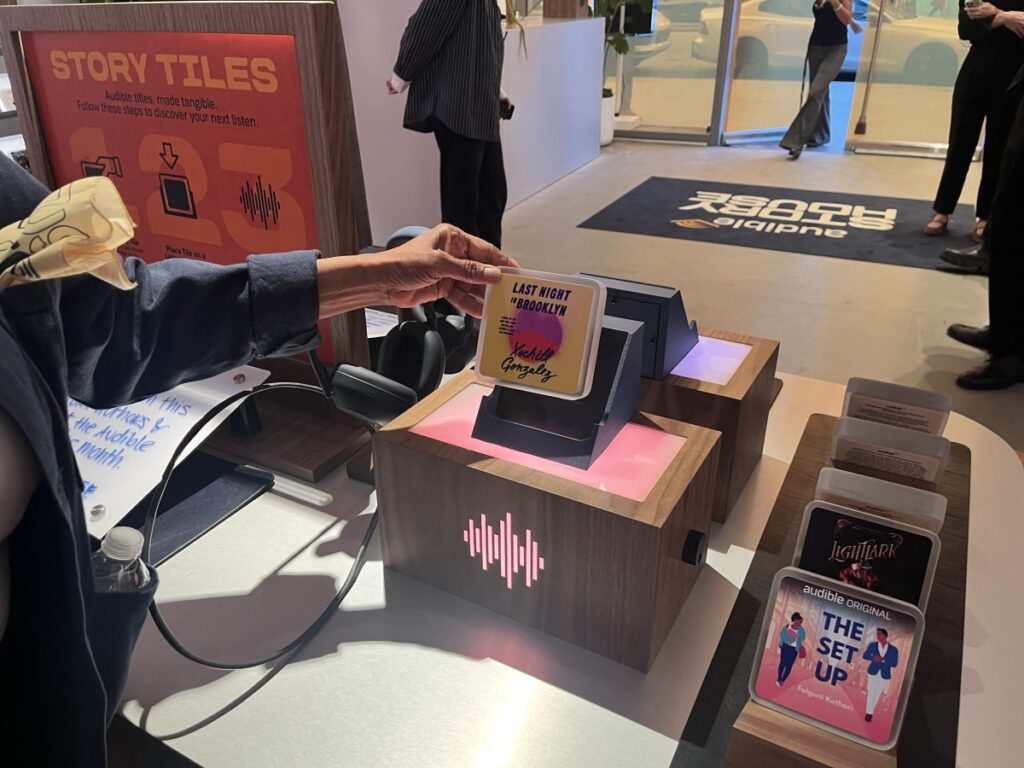
    In a bold reimagining of what a bookstore can be in the digital age, audiobook industry leader Audible has opened what it claims is the world’s first “bookless bookstore” in New York City’s Manhattan Lower East Side, launching a one-month pop-up experience as audiobooks continue their explosive growth across the United States.\n\nUnlike traditional brick-and-mortar bookshops, this space—branded the Audible Story House—features no printed page stacks, no dog-eared paperbacks, and no quiet rustle of turning pages. Instead, the Amazon-owned subsidiary has transformed the venue into a physical hub dedicated exclusively to the immersive world of audio storytelling. During a pre-opening press preview this Thursday, Audible CEO Bob Carrigan described the concept as an unconventional, slightly wild project that demanded significant creative vision to bring to fruition.\n\n“Our goal with this month-long pop-up is to translate the audiobook experience into a tangible, social environment where visitors can browse content and connect with fellow storytelling fans,” Carrigan explained of the venture.\n\nThe timing of the launch aligns with staggering industry growth tracked by the Audio Publishers Association (APA), which reported that total U.S. audiobook sales hit $2.22 billion in 2024—nearly double the total recorded just five years earlier. This steep upward trend reflects a broader consumer shift toward on-the-go, immersive digital content that has cemented audiobooks as a major player in the publishing market.\n\nInside the Story House, shelves are stocked not with bound books, but with “story tiles” — compact audiobook-enabled tablets that visitors can insert into dedicated players to listen to short content excerpts through headphones. Once a listener finds a title they enjoy, they can access the full work directly through the Audible mobile app. As the dominant platform in the global audiobook space, Audible operates a flexible business model that includes paid monthly subscriptions, individual title purchases, and complimentary access to select works for all Amazon account holders.\n\nThe venue also includes unique features designed for different listening preferences: a dedicated speaker-equipped room for group, headphone-free listening sessions, and a custom “Listening Bar” staffed by trained “Story Tenders.” Per Audible’s official press materials, these guides work one-on-one with visitors to curate audiobook recommendations that match each guest’s personal tastes and interests.\n\nBeyond showcasing audiobooks as a medium, the project also taps into the growing consumer demand for in-person offline experiences and community building in an increasingly digital world. “Audible Story House draws on the warm nostalgia and communal spirit of traditional book culture, while updating that experience entirely for today’s audio-first era,” the company statement noted.\n

  • Need for NaRRA

    Need for NaRRA

    When opening debate on the proposed National Reconstruction and Resilience Authority (NaRRA) Bill in Jamaica’s Senate on Friday, Education Minister Senator Dr. Dana Morris Dixon centered her argument for urgent legislative action on a striking example of bureaucratic gridlock: a perimeter security fence for Naggo Head Primary School that took nearly 18 months to earn approval, putting vulnerable students at unnecessary risk.

    Morris Dixon’s push for the bill comes as critics have raised alarms that the new legislation would grant the Jamaican government unchecked authority to bypass existing regulatory bodies, particularly through the controversial “step-in” powers outlined in Clauses 21 to 24 of the draft text. Rejecting claims that these provisions amount to a blanket override of all national regulatory agencies, the minister pushed back against what she called widespread mischaracterization of the powers in public discourse.

    “Step-in orders,” she explained, are not designed to be used lightly or arbitrarily. A strict series of procedural safeguards must be exhausted before extraordinary action can be taken: independent technical assessment must first confirm a delay, the relevant regulatory body must receive formal notification, the agency must be given a full opportunity to respond to concerns, and a continued failure to act within required timelines must be documented. Only after all these steps are complete would the government exercise its step-in authority, Morris Dixon emphasized.

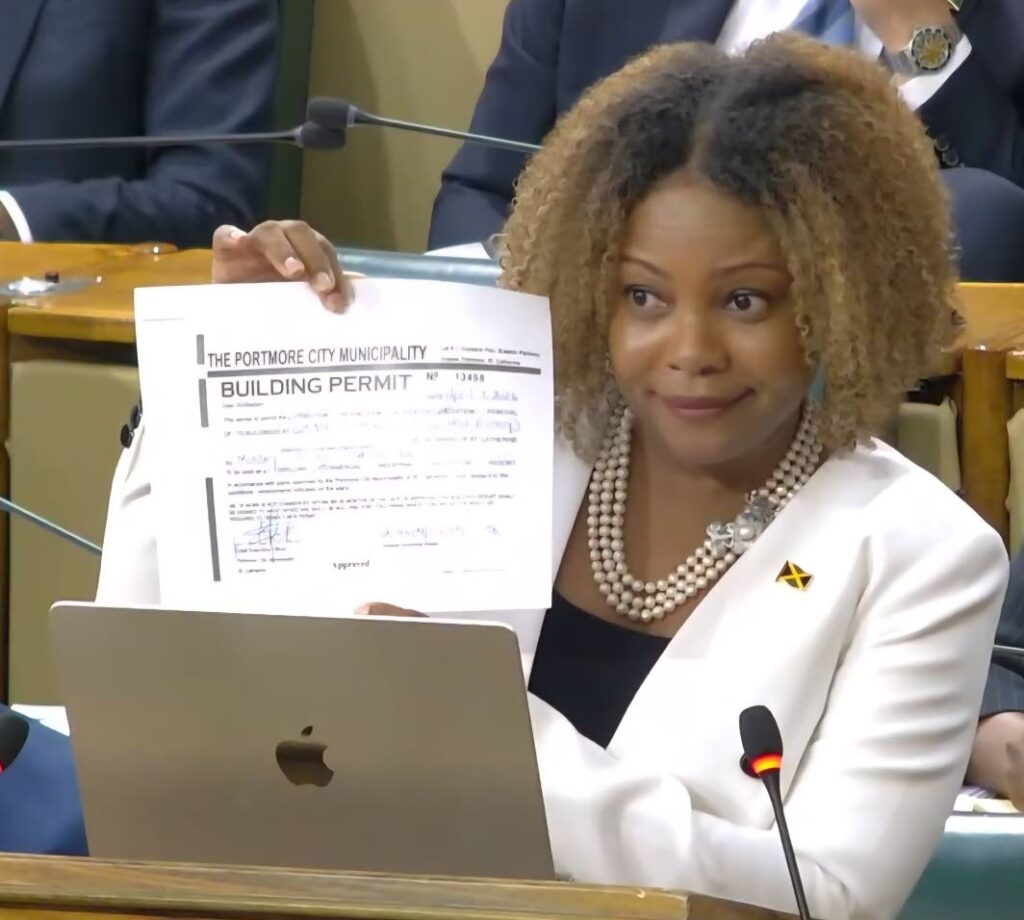
    To illustrate the urgent need for streamlining project approvals, the minister detailed the years-long safety crisis at Naggo Head Primary, located in Portmore. For years, school leadership and local officials have flagged risks of criminal actors accessing the unsecure campus. By November 2024, the Education Ministry had already allocated full funding for the fence project, but officials were forced to wait for approval from the local municipal corporation. That approval did not come through until April 2026, a wait of 17 months that put students and staff in danger the entire time. Local Member of Parliament Alando Terrelonge had previously raised public alarms about the safety threats stemming from the delay to the J$40 million perimeter project, echoing concerns shared by the school’s principal, who personally pleaded with Morris Dixon to resolve the impasse.

    This case, Morris Dixon argued, is exactly why the NaRRA legislation is necessary. The bill, drafted in response to widespread devastation caused by Hurricane Melissa in October last year, aims to establish a centralized authority to speed up post-disaster reconstruction and resilience projects, while also cutting red tape for major infrastructure and investment developments across the country.

    Beyond disaster recovery, the minister framed the legislation as a transformative policy that would turn a national crisis into a catalyst for long-term change. “NaRRA is not just about creating growth and investment architecture. It is not just about repairing what Hurricane Melissa damaged,” she told senators. “NaRRA is about converting a moment of national crisis into a platform for resilience, modernisation, and economic resurgence. That, in truth, is what this is all about. Speed with structure, execution with oversight, and rebuilding with purpose.”

  • Cybercrimes have devastating consequences, warns Senator Gayle

    Cybercrimes have devastating consequences, warns Senator Gayle

    KINGSTON, Jamaica — As the Jamaican Senate concluded debate and passed the landmark Cybercrimes (Amendment) Act 2026 on Friday, government Senator Kavan Gayle has emphasized the urgent need for the updated legislation, warning that unregulated cybercrime carries potentially devastating long-term harms for individual victims across the country.

    The revised bill introduces two key changes to the existing legal framework: significantly harsher criminal penalties for offenders, particularly for those who misuse digital devices to distribute malicious communication, and expanded formal protections for cybercrime victims through a structured, accessible compensation system. This framework explicitly covers people whose intimate images are shared or published online without their consent, a pervasive form of digital abuse that has previously lacked clear redress for victims.

    In his address to the upper legislative chamber, Gayle stressed that strengthening victim compensation is rooted in a simple, critical reality: cybercrimes are not victimless offenses. “Behind every compromised bank account, stolen identity, or act of online harassment is a person whose financial security, emotional well-being, and sense of safety have been undermined,” he explained. “Ensuring that victims can access adequate compensation is a critical step in restoring dignity, promoting recovery, and reinforcing public confidence in the rule of law. I want to commend the Government for this move of protection.”

    A professional trade unionist, Gayle outlined the wide spectrum of cyber threats that Jamaican citizens now face on a regular basis. These range from identity theft and phishing scams that steal sensitive financial information to unauthorized bank account breaches, cyberstalking, and ransomware extortion attacks that target both individuals and small businesses. Unlike many traditional offenses, he noted, the harm from cybercrime extends far beyond immediate financial losses: it can permanently damage personal and professional reputations, disrupt stable livelihoods, and leave victims with lasting psychological trauma.

    To address these harms, Gayle said, the compensation system must be robust enough to cover all categories of harm suffered by victims. This includes reimbursement for out-of-pocket financial losses, funding for costs associated with restoring stolen identities and damaged credit ratings, compensation for diagnosed psychological harm, and coverage of legal fees related to recovering damaged data or reputation. “A comprehensive system ensures that victims are not left to bear the burden of crimes committed against them,” he added.

    One of the core changes included in the 2026 amendment stems from a key recommendation made by the joint select committee that reviewed the original Cybercrimes Act: the repeal of the act’s Section 15, which will allow the broader, more structured compensation framework outlined in Section 24A of the Criminal Justice (Administration) Act to apply to cybercrime cases.

    Gayle explained that aligning the Cybercrimes Act with this existing comprehensive regime brings multiple benefits to Jamaica’s legal system. First, it creates consistency in how crime victims are treated, ensuring that people harmed in digital space have access to the same range of remedies as those harmed in physical space. It also reduces fragmentation in national law, and sends a clear signal to the public that the Jamaican government recognizes the severity of cyber harm and is committed to taking decisive action to address it. Most importantly, the amendment strengthens offender accountability: perpetrators will now face both criminal sanctions and court-ordered restitution to victims where appropriate, creating a balanced justice system that combines punishment with remediation.

    The push for reform comes amid official data that highlights the growing scale of cybercrime in Jamaica. Data shared with the joint select committee by the Jamaica Cyber Incident Response Team shows that in 2020 alone, 136 separate cyber incidents were reported across the country. The three most common categories were abusive online content, identity impersonation, and non-consensual intimate image sharing (often called revenge pornography). More than 70 percent of these cases were deemed prosecutable and referred to the Counter-Terrorism and Organised Crime Investigation Branch, but Gayle noted that a large share never moved forward to formal prosecution — exposing a critical gap between initial reporting, investigation, and final judicial outcomes.

    Additional caseload data from the Office of the Director of Public Prosecutions reinforces this challenge. Between 2017 and 2020, Jamaican parish courts maintained a persistent, fluctuating backlog of cybercrime cases. In 2017, there were 65 active cases, 6 inactive cases, and 26 cases finalized. In 2018, 61 cases remained active, 2 were inactive, and only 12 were completed. Between 2019 and 2020, 83 new cybercrime cases were filed, 103 were disposed of, and 107 remained pending. Gayle called these numbers clear evidence that Jamaica’s current justice system is under strain, and needs reforms to speed up case resolution and improve throughput.

    The reform process also identified a hidden transparency gap in cases of cyber fraud targeting financial institutions. Gayle highlighted a recent real-world incident where fraudsters ran a phishing campaign targeting a Jamaican bank, using deceptive emails and phone calls to steal customer banking credentials. While existing laws technically covered this conduct, Gayle noted that most financial institutions handle cyber fraud incidents internally rather than reporting them publicly. This lack of public data limits the ability of policymakers and law enforcement to accurately measure the full scale of cyber fraud and track how many cases result in successful prosecution.

    To address this gap, the joint select committee recommended a new reporting requirement: financial institutions will be required to share aggregated, anonymized data on cyber fraud incidents with the Bank of Jamaica. The committee further recommended that both the Bank of Jamaica and the Financial Services Commission collect and publish this aggregated data, making it accessible to both law enforcement and the general public. Gayle said this step will dramatically improve transparency, help policymakers craft more targeted future reforms, and strengthen Jamaica’s overall national cybercrime response strategy.

    On the topic of malicious online communication, which Gayle described as a rapidly growing problem, the committee balanced free expression protections with the need to protect individuals from harm. “While the right to free expression must always be preserved, the Committee was clear that there must be a firm boundary where speech becomes harmful, particularly when it threatens an individual’s reputation, livelihood, or safety,” he said.

  • Judge warns JPs

    Judge warns JPs

    MANDEVILLE, Jamaica — During a formal commissioning ceremony for 27 newly appointed justices of the peace (JPs) in Manchester Parish this Thursday, Senior Parish Judge John Tyme delivered an urgent, stark warning to the new public servants, grounding his caution in a high-profile 2018 sexual assault case that exposed critical gaps in reference vetting practices across the island. The incident, which unfolded at a Montego Bay resort, saw a wanted hotel employee attack two international tourists — a tragedy that directly stemmed from an unvetted character reference provided by a sitting JP, Tyme explained.

    The offender at the center of the case, Demar Scott, worked as an entertainment coordinator at the Montego Bay resort when he carried out the assault. Years before the attack, in 2015, Scott had been placed on the Manchester Parish Police’s most wanted list in connection with an earlier rape charge. Despite his outstanding warrant, Scott secured a character recommendation from a JP based in St Catherine Parish that was included in his job application for the resort position, clearing his path to employment that put him in contact with vulnerable visitors.

    Tyme walked the new JPs through the chilling details of the 2018 attack: Scott, who had stolen a firearm prior to entering the tourists’ hotel room, committed the sexual assaults before the gun slipped from his possession, and one of the victims shot him in self-defense. Scott survived the shooting and was apprehended by police in Clarendon Parish 24 hours after the incident. In March 2022, he pleaded guilty at St James Parish Court to two counts of rape, two counts of grievous sexual assault, and illegal possession of a firearm and ammunition.

    Tyme emphasized that the case is far from an abstract hypothetical for new JPs. Following amendments to the Justice of the Peace Act that expanded JPs’ jurisdiction to cover the entire island of Jamaica, rather than limiting authorization to their home parish, JPs now regularly receive reference requests from individuals residing outside their local communities. This expanded authority, Tyme stressed, comes with greater responsibility to conduct full background checks before affixing a signature to any character endorsement.

    “When persons speak to you about making sure that when you affix your signature that you are, in fact, attesting to what you know, based on what you have researched, it is not abstract, it is real,” Tyme told the gathering. The case sparked widespread public scrutiny of the JP system over the failure to flag Scott’s outstanding warrant, he noted, underscoring how a single unchecked endorsement can have devastating, far-reaching consequences for public safety.

    Head of the Manchester Parish Police Superintendent Carey Duncan echoed Tyme’s warning during the event, held at Mandeville’s Garden Hotel. Duncan urged the new JPs to reject casual requests for references, framing the JP’s official seal as a public trust rather than a favor to grant to friends or acquaintances.

    “The fastest way to lose public trust is to treat the JP seal like a favour. Say ‘no’ when you must. Verify identity, read the document; if something feels off, pause, because one careless signature can damage a life. One careful refusal can protect many,” Duncan said.

    Beyond the safety warning, the ceremony also addressed ongoing efforts to expand and revitalize Manchester’s JP cohort. Custos of Manchester Garfield Green announced that the 27 new appointments will bring the parish’s total number of active JPs to roughly 500. To meet the community’s needs aligned with population size, the parish requires a total of 2,000 JPs, leaving a gap of 1,500 additional appointees. Green explained that an aging JP population has created this gap, as many long-serving JPs pass away, leaving vacant positions.

    To address the shortfall, parish officials are actively recruiting younger eligible candidates to serve, Green said. The initiative has already seen steady progress: since Green took office, 40 percent of all newly commissioned JPs are under the age of 40, a marked shift toward a younger, more representative cohort. Green issued a public call for eligible residents to apply, outlining key requirements for appointment: candidates must be at least 23 years old, Jamaican citizens, proficient in written and spoken English, and hold a record of unwavering integrity and outstanding standing in their local communities.

  • Education Ministry targets mental health for Child Month 2026

    Education Ministry targets mental health for Child Month 2026

    KINGSTON, Jamaica – Jamaica’s Ministry of Education, Skills, Youth and Information (MOESYI) has officially launched the 2026 edition of Child Month, placing youth mental wellness and holistic development at the center of this year’s national campaign.

    Framed around the theme “Prioritise Our Children’s Mental Health: Strong Minds, Safer Future,” the month-long initiative is designed to foster emotional resilience, boost self-awareness among young people, and cultivate safe, supportive spaces for children across every region of the island nation.

    The official launch kicked off last Friday at MOESYI’s Kingston headquarters with a “Prayer and Praise: Child Month Blast-off” event, which drew education stakeholders, community leaders, and student representatives. Attendees gathered to affirm a shared, cross-sector commitment to advancing children’s overall well-being, according to an official statement from the ministry.

    Over the course of May, MOESYI and its partner agencies will roll out a full slate of programming tailored to engage children, caregivers, educators, and community partners. The schedule includes interactive skill-building workshops, public recognition programs celebrating young people’s achievements, and targeted community outreach efforts. Beyond raising awareness, the activities are structured to uplift children’s rights, reinforce support systems, and nurture healthy mental, emotional, and social growth.

    Senator Dr Dana Morris Dixon, Jamaica’s Minister of Education, Skills, Youth and Information, issued a public call for nationwide participation in the campaign. “Jamaica’s future depends on how we invest in our children today. This year, we are prioritising mental health because strong minds build safer communities. I urge all Jamaicans to help create environments where children feel supported and empowered,” Dixon said during the launch.

    To expand the reach of child protection and wellness efforts, the ministry is also advancing inclusive policies and deepening cross-sector partnerships with public health agencies, education institutions, and local community organizations. Dr Kasan Troupe, Permanent Secretary at MOESYI, reaffirmed the government’s long-term commitment to whole-child development in her remarks.

    “We are committed to holistic child development – supporting both achievement and well-being – so every child can grow, succeed and reach their full potential,” Troupe said.

    MOESYI is encouraging all schools, household caregivers, and community groups to take active part in Child Month activities, emphasizing that coordinated collective action is the foundation for nurturing a generation of resilient, confident, and capable young Jamaicans.