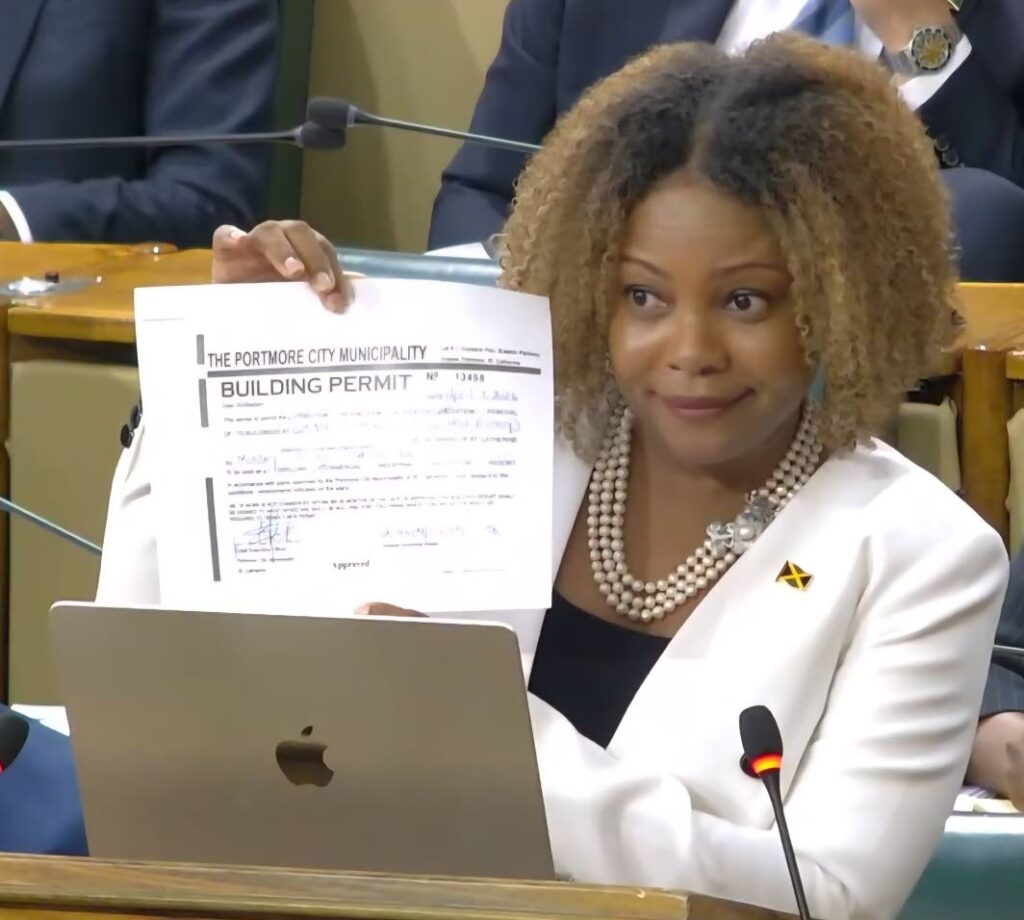
When opening debate on the proposed National Reconstruction and Resilience Authority (NaRRA) Bill in Jamaica’s Senate on Friday, Education Minister Senator Dr. Dana Morris Dixon centered her argument for urgent legislative action on a striking example of bureaucratic gridlock: a perimeter security fence for Naggo Head Primary School that took nearly 18 months to earn approval, putting vulnerable students at unnecessary risk.
Morris Dixon’s push for the bill comes as critics have raised alarms that the new legislation would grant the Jamaican government unchecked authority to bypass existing regulatory bodies, particularly through the controversial “step-in” powers outlined in Clauses 21 to 24 of the draft text. Rejecting claims that these provisions amount to a blanket override of all national regulatory agencies, the minister pushed back against what she called widespread mischaracterization of the powers in public discourse.
“Step-in orders,” she explained, are not designed to be used lightly or arbitrarily. A strict series of procedural safeguards must be exhausted before extraordinary action can be taken: independent technical assessment must first confirm a delay, the relevant regulatory body must receive formal notification, the agency must be given a full opportunity to respond to concerns, and a continued failure to act within required timelines must be documented. Only after all these steps are complete would the government exercise its step-in authority, Morris Dixon emphasized.
To illustrate the urgent need for streamlining project approvals, the minister detailed the years-long safety crisis at Naggo Head Primary, located in Portmore. For years, school leadership and local officials have flagged risks of criminal actors accessing the unsecure campus. By November 2024, the Education Ministry had already allocated full funding for the fence project, but officials were forced to wait for approval from the local municipal corporation. That approval did not come through until April 2026, a wait of 17 months that put students and staff in danger the entire time. Local Member of Parliament Alando Terrelonge had previously raised public alarms about the safety threats stemming from the delay to the J$40 million perimeter project, echoing concerns shared by the school’s principal, who personally pleaded with Morris Dixon to resolve the impasse.
This case, Morris Dixon argued, is exactly why the NaRRA legislation is necessary. The bill, drafted in response to widespread devastation caused by Hurricane Melissa in October last year, aims to establish a centralized authority to speed up post-disaster reconstruction and resilience projects, while also cutting red tape for major infrastructure and investment developments across the country.
Beyond disaster recovery, the minister framed the legislation as a transformative policy that would turn a national crisis into a catalyst for long-term change. “NaRRA is not just about creating growth and investment architecture. It is not just about repairing what Hurricane Melissa damaged,” she told senators. “NaRRA is about converting a moment of national crisis into a platform for resilience, modernisation, and economic resurgence. That, in truth, is what this is all about. Speed with structure, execution with oversight, and rebuilding with purpose.”