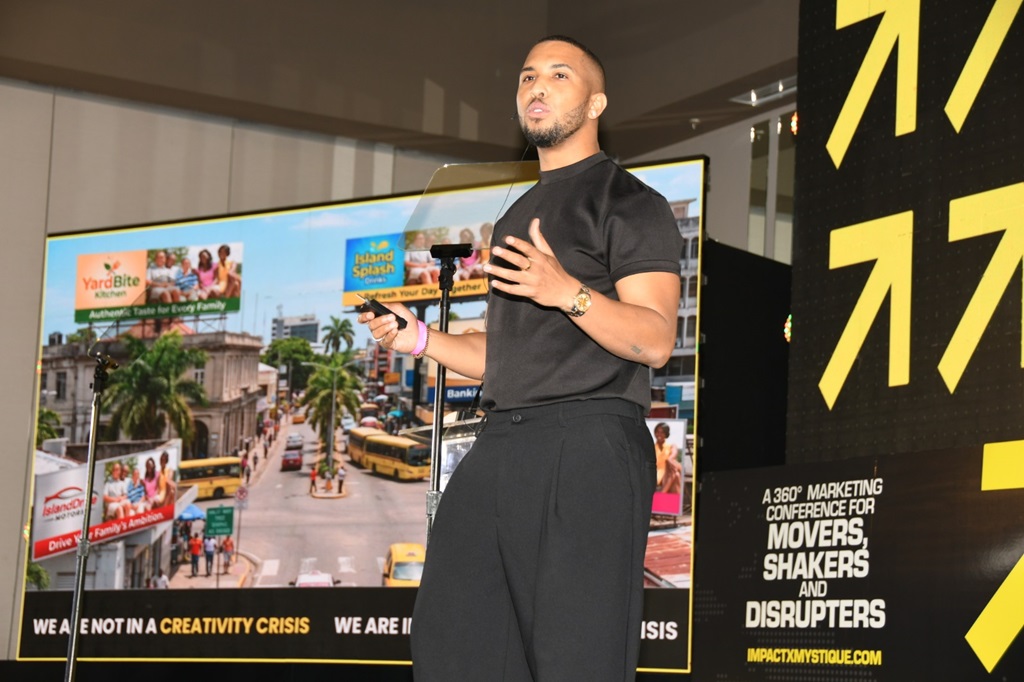
On a Thursday morning at Kingston’s AC Hotel, attendees of the IMPACT x Mystique marketing conference fell silent as a full-sized casket was rolled to the front of the stage before the opening of Matthew Mitchell’s presentation. The creative director of Mystique Integrated Services used this shocking, unconventional opening to frame a stark message: the greatest death a brand can face is being erased from consumers’ collective memory.
What followed over 40 minutes was a sharp, data-backed critique of the Jamaican marketing ecosystem and a forceful argument for disruptive, convention-challenging branding that cuts through digital noise. Mitchell drove home his core thesis by the end of his talk: playing it safe with generic marketing is the costliest mistake a brand can make. He posed a provocative question to the silent room: “What’s more expensive, a bold campaign or a forgotten brand?”
Mitchell argued that the Jamaican marketing landscape is suffering from what he terms a “distinctiveness crisis” and a “memory crisis”, rather than a shortage of creative talent. Industry-wide, brands are churning out more content, launching more campaigns and producing more marketing assets than ever before, yet the lasting impact of that work is steadily declining. Too many brands rely on recycled, generic concepts—he called out overused stock imagery of families on underperforming billboards as a prime example of this uncreative cycle.
This crisis of memorability is unfolding against an increasingly challenging backdrop: shrinking consumer attention spans. Mitchell cited independent research from multiple leading institutions to back his claim. A study from the University of California found that average screen attention has plummeted to just 40 to 47 seconds, down from 2.5 minutes a little over two decades ago. Microsoft research places average attention on digital content even lower, at just six to 10 seconds. Meanwhile, research from Amplified Intelligence confirms that consumers need a minimum of 2.5 seconds of active attention for content to leave any lasting memory.
Beyond generic creative, Mitchell pointed to a widespread misallocation of marketing budgets across Jamaican brands. Industry best practice for effective marketing leans toward a 60:40 split between long-term brand building and short-term brand activation, which prioritizes immediate customer engagement and quick sales. But in Jamaica, Mitchell noted, most brands pour far too much investment into short-term activation at the expense of building the emotional connections that drive long-term growth.
He held up Jamaican Campari as a standout example of how bold, purpose-driven brand building can deliver tangible results. The global premium spirit brand faced a unique local challenge: its on-the-ground consumer base in Jamaica centered on community bar patrons, while its global identity leaned into high-end sophistication. To bridge this gap, Campari conducted deep local research that identified “desire” as the core emotional driver for its Jamaican consumers.
The brand rebuilt its entire local storytelling around this core emotion, launching the viral “Red Passion” advertising campaign headlined by popular dancehall artist Valiant. The campaign also included a consumer promotion called “Win Your Passion”, which gives customers who purchase Campari a chance to win desire-aligned prizes, including a couples’ vacation and carnival costumes. Mitchell reported that the strategy has delivered overwhelming success: Campari has recorded a significant jump in sales following the brand refresh, proving that aligning bold creative with local emotional resonance delivers results.
Mitchell also highlighted U.S. canned water brand Liquid Death, famous for its edgy “Murder Your Thirst” tagline, as a second example of how unapologetically bold branding drives sales growth.
Beyond being forgotten, Mitchell outlined multiple hidden costs of sticking to safe, generic marketing: increased price sensitivity among consumers, internal institutional mediocrity, failure to connect with local cultural contexts, and persistent unnecessary marketing spend. He closed by reinforcing the core chain that drives brand growth: “The data is clear, emotion drives growth, distinctiveness drives memory, and memory, once I remember you, we’re going to grow together. So, when we choose safe work, we’re not just reducing risk, we’re reducing impact.”