标签: Jamaica

牙买加

  • Bartlett excited by launch of UWI’s Research Support Fund

    Bartlett excited by launch of UWI’s Research Support Fund

    Jamaica has launched a landmark JMD 100 million Research Support Fund for the Faculty of Medical Sciences (FMS) at The University of the West Indies (UWI) Mona Campus, with government officials framing the initiative as a critical intersection of medical progress, public confidence and national economic growth.

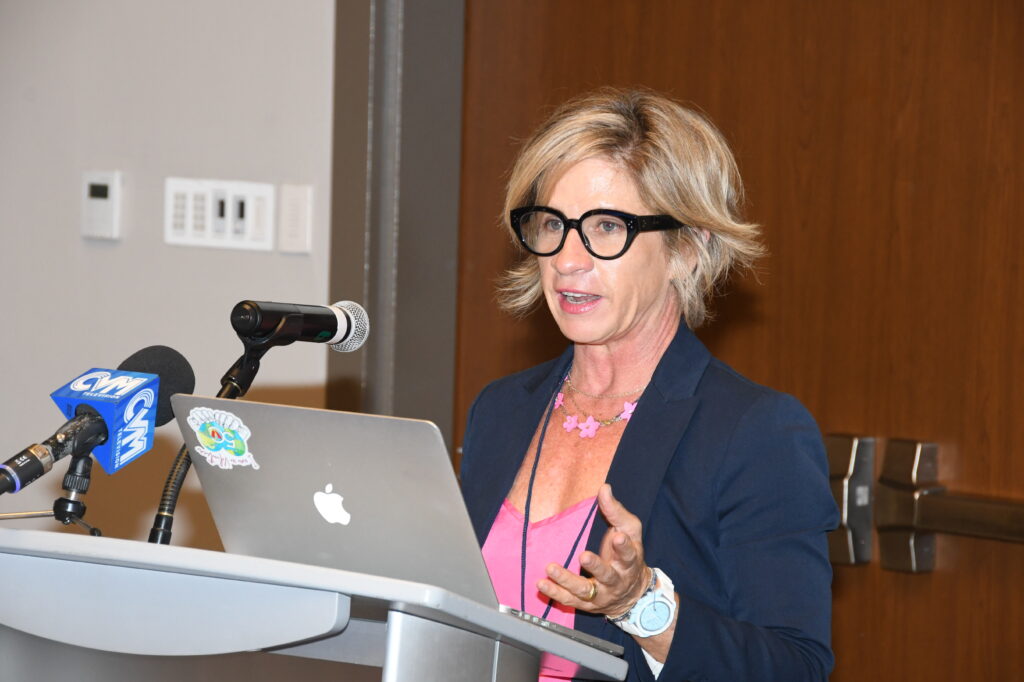
    Speaking as the keynote speaker at the launch event held last Tuesday in St. Andrew, Tourism Minister Edmund Bartlett argued that the fund is far more than a simple injection of capital into academic research. For Jamaica, whose economy relies heavily on tourism as a primary engine of growth, the initiative opens new pathways for aligned development across health science and the travel sector, he said.

    “This represents a launch of possibility, signaling a deeper bond between scientific advancement, societal well-being and the country’s long-term economic future — especially through the lens of tourism,” Bartlett emphasized during his address.

    The minister positioned the new fund within a broader national “tourism, health and resilience” strategy, noting that the sustainability of Jamaica’s $3 billion-plus tourism industry hinges entirely on public trust. Unlike common perceptions that frame tourism as only driven by scenic beauty and cultural attractions, Bartlett pointed out that modern travelers prioritize assurance of safety, stability and proactive health preparedness when choosing destinations.

    “Tourism is not merely about movement of people across borders — it is about confidence,” Bartlett said. “Trust is the decisive factor that drives travel decisions, attracts foreign investment and encourages visitors to return year after year.”

    That foundational trust, he explained, can only be built on a robust public health system, cutting-edge local research capacity and a proven ability to respond rapidly to emerging public health crises. Bartlett defined tourism health resilience as a nation’s ability to anticipate, detect and mitigate health threats without derailing economic stability, a mandate that extends beyond clinical care to protecting tourism workers, supporting resort-dependent communities, and upholding strict standards for food safety, water quality and public sanitation.

    To turn this vision into reality, Bartlett called on FMS and the affiliated University Hospital of the West Indies to take a leading role in strengthening Jamaica’s national destination assurance framework. Medical researchers and clinical professionals, he noted, are the unsung guardians of Jamaica’s global reputation as a safe, welcoming travel destination.

    Demonstrating the Jamaican government’s commitment to the initiative, the Tourism Enhancement Fund (TEF) has contributed JMD 10 million to the overall research fund. The National Health Fund (NHF) has added JMD 35.4 million to the pot, earmarked specifically for advancing research into mental health and maternal health outcomes. Additional funding is expected to come from private sector and institutional partners in the coming months.

    Looking ahead, Bartlett laid out an ambitious vision for UWI Mona to grow into a central pillar of Jamaica’s national health security architecture. His vision includes expanded access to telemedicine for rural and underserved communities, more coordinated emergency response systems, and greater integration of artificial intelligence into clinical care and public health monitoring. He also called for the fund to be used to support ground-breaking interdisciplinary research that connects medical science, tourism policy, data governance and AI ethics, creating a model that can be replicated across small island developing states.

    Through all these efforts, Bartlett stressed, protecting the health of both international visitors and Jamaican citizens remains the core mission — one that is inseparable from sustaining the country’s tourism industry and delivering inclusive long-term national development.

  • Guyana says neither Spain nor Venezuela ever administered the Essequibo region

    Guyana says neither Spain nor Venezuela ever administered the Essequibo region

    At the United Nations’ highest judicial body, the International Court of Justice (ICJ) based in The Hague, Guyana has launched a comprehensive argument challenging Venezuela’s territorial claim to the resource-rich Essequibo region, centering its case on centuries of administrative and historical evidence that contradicts Caracas’ assertions of ownership.

    Spanning more than 61,600 square miles, Essequibo makes up roughly two-thirds of Guyana’s total land area. The region, which is teeming with untapped natural resources and extraordinary biodiversity, sits between the Essequibo River along its eastern edge and the Venezuela border to the west, making it one of the most contentious territorial disputes in the Western Hemisphere.

    During the opening round of oral arguments before the ICJ panel, Guyana’s legal team and diplomatic representatives laid out a detailed historical record of the region’s occupation and governance. Ambassador Donnette Streete, who leads the Frontiers Division at Guyana’s Ministry of Foreign Affairs, and Carl Greenidge, Guyana’s designated agent for the case focused on the 1899 Arbitral Tribunal Award’s legal validity, emphasized that neither Spain nor Venezuela ever established formal control over the territory. The first European settlers to occupy Essequibo, they argued, were Dutch colonists arriving at the turn of the 17th century.

    Between the 17th and 19th centuries, the territory was subsequently populated by descendants of enslaved Africans and indentured Asian laborers brought to the region by Dutch and later British colonial rulers. Today, Streete told the court, Guyana exercises full, uninterrupted sovereign authority over Essequibo: the national government collects taxes there, provides public administration, elects nine members to Guyana’s national parliament from the region, and manages its ecologically valuable biodiverse landscapes.

    Data from Guyana’s 2022 national census puts Essequibo’s current population at more than 313,000 people, accounting for over a third of the country’s total population. This population includes members of nine indigenous communities, who Streete confirmed are the original, long-standing inhabitants of the land.

    Greenidge, a former Guyanese foreign minister, supplemented the historical narrative with tangible documentary evidence, including archival maps and place-name records. The maps, he explained, clearly place the farthest eastern Spanish outposts more than 650 kilometers outside Essequibo’s boundaries, while 35 existing settlements within the region still retain Dutch-origin names centuries after their founding.

    Post-Columbian European settlement in what is now Guyana, Greenidge argued, begins definitively with the 1598 arrival of Dutch explorers. By 1616, the Dutch had formally established the Colony of Essequibo, built Fort Kykoveral along the Mazaruni River (west of the Essequibo River) as their colonial administrative seat, and extended settlement and formal governance westward all the way to the Orinoco River. In 1621, the Dutch West India Company took over formal administration of the colony, and the administrative seat was relocated to Fort Zealandia in 1744. “The Spanish, they were nowhere to be found, not east of the Orinoco, at any rate,” Greenidge told the court. “Their nearest outpost was San Tome on the banks of the Orinoco. This was the easternmost Spanish settlement. The Spanish governor there was candid about his predicament. The settlement, he wrote, was so far distant from other Spanish positions.”

    Beyond historical evidence, Guyana’s legal team built a robust case based on established international judicial precedent. Pierre d’Argent, a globally recognized expert in public international law representing Guyana, referenced two previous ICJ rulings on the border dispute issued in 2020 and 2023. He noted that Venezuela has never formally challenged the legal principle of res judicata — the rule that final court rulings are binding on all parties — nor has Caracas filed a formal application for review under Article 61 of the ICJ Statute, the only legal pathway to contest this binding precedent.

    “It must be concluded, therefore, that Venezuela has not discovered any new fact of such a nature had it been known as to be a decisive factor on the conclusions reached by the court in its judgments of 2020 and 2023 and in these conditions, these judgments remain res judicata for the parties in the court itself,” d’Argent told the panel.

    Paul Reichler, another senior member of Guyana’s legal team, added that Venezuela itself accepted, respected and abided by the 1899 Arbitral Award for more than six decades after it was issued. Caracas did not formally challenge the award’s validity until February 1962, when Venezuela’s UN permanent representative sent a formal letter to the UN Secretary-General contesting the ruling. Even at that time, Reichler noted, Venezuela explicitly acknowledged that the 1897 bilateral treaty underlying the 1899 award remained legally binding. It was not until 1963 — 66 years after Venezuela ratified the 1897 treaty — that Caracas first began to question the treaty’s validity.

    The ICJ is currently hearing the first round of oral arguments in the case, which is split into multiple three-hour sessions for each side. Both Guyana and Venezuela are presenting their full cases during this round, with proceedings set to continue through Friday and conclude next Monday.

  • Stars shine at Met Gala, fashion’s biggest night

    Stars shine at Met Gala, fashion’s biggest night

    MANHATTAN, N.Y. — A-list celebrities from Hollywood, global music, professional sports and high fashion gathered under the bright lights of Manhattan’s iconic red carpet on Monday for the annual Met Gala, one of the world’s most high-profile charitable fashion events that this year centers the long-running conversation between the fashion and fine art industries.

    Hosted annually by Vogue and the Metropolitan Museum of Art’s Costume Institute, the 2026 event carries the official theme “Fashion is Art”, which aligns with the institute’s newest flagship exhibition, simply titled *Costume Art*. Invited guests were specifically requested to craft their red carpet looks around the theme, blurring the lines between wearable couture and gallery-worthy fine art.

    The gala has not been without its share of public drama this cycle: after e-commerce and aerospace billionaire Jeff Bezos and his wife Lauren Sanchez Bezos were named the event’s lead sponsors and honorary co-chairs, progressive activist groups launched a public campaign calling for a boycott of the gala, decrying the couple’s involvement as a symbol of extreme wealth inequality. Anti-billionaire group “Everyone Hates Elon” — which originally formed to critique Tesla CEO Elon Musk but has expanded its advocacy to target other high-profile billionaires — plastered campaign advertisements across New York City’s street billboards and subway cars in the lead-up to Monday’s event, framing the gala as an indulgent display of excessive riches amid widespread economic hardship for working Americans. Vogue global editorial director Anna Wintour, who has led the Met Gala’s curation and organization for 30 years, pushed back on the criticism Monday, noting that the Bezos’ commitment to the event demonstrates a sincere dedication to philanthropic giving for the arts.

    For fashion fans and celebrity watchers across the globe, however, the Met Gala remains one of the most anticipated red carpet events of the year, unmatched in its concentration of A-list star power. The 2026 event counts three official public co-chairs: tennis legend Venus Williams, Oscar-winning screen icon Nicole Kidman, and global pop superstar Beyoncé, who made her first Met Gala appearance in a decade at this year’s event. Williams and Kidman were among the first high-profile guests to arrive on the red carpet, turning heads with their theme-aligned couture looks. Kidman wowed onlookers in a form-fitting, shimmering red long-sleeve column gown from Chanel, finished with dramatic oversized feather cuffs at the wrists. Williams opted for a black crystal-encrusted gown from Swarovski, complete with an ornate sculptural neck plate; the 45-time Grand Slam champion told Vogue her look drew direct inspiration from a portrait of her housed in the U.S. National Portrait Gallery.

    Other celebrity attendees brought similarly bold, theme-inspired looks: rapper and host committee member Doja Cat turned out in a draped latex design from Saint Laurent, which featured a modest high neckline cut with a dramatic high slit extending up to her waist. Multiple A-list guests including singer Jon Batiste, pop star Katy Perry, and model Dree Hemingway also walked the red carpet, showcasing couture looks that played into the night’s fine art theme.

    Beyond the red carpet spectacle, the Met Gala serves as the single largest annual fundraiser for the Costume Institute, and this year the event hit a new milestone: Met CEO Max Hollein confirmed to reporters early Monday that the 2026 gala has already raised a record-breaking $42 million for the institute, up from the $31 million raised at the 2025 event.

    In addition to its philanthropic purpose, the Met Gala has evolved into a global social media phenomenon, with celebrities crafting over-the-top, attention-grabbing looks to generate viral buzz and dominate online conversation in the hours after the event kicks off. This year’s *Costume Art* exhibition, which opens to the public at the Met on May 10, places couture designs in direct conversation with classic fine art works, breaking down traditional hierarchies between different artistic mediums. Curators have paired iconic couture pieces with famous paintings and sculptures: a classic Saint Laurent design hangs alongside Vincent van Gogh’s *Irises*, while a John Galliano gown for Maison Margiela is displayed alongside a classical antique statue.

    Andrew Bolton, the Costume Institute’s head curator, told reporters that the exhibition’s core thesis centers on equal status for all artistic forms. “When I think about the show, if there’s one word to describe it, I suppose it would be equitability or equivalency, equivalency between artworks,” Bolton explained. “So there’s no hierarchy between sculpture, painting, fashion, photography and no hierarchy between bodies, between the classical body or the disabled body.”

    First launched in 1948, the Met Gala operated for decades as an exclusive, low-key gathering for New York’s old money high society, until Wintour revamped the event in the 1990s to transform it into the high-wattage celebrity and fashion showcase that it is today. Last year’s Met Gala centered the subversive cultural history of Black dandyism, marking a rare focus on men’s and masculine fashion in the event’s modern history.

  • 5 things to consider before you marry a younger man

    5 things to consider before you marry a younger man

    Age-gap relationships between older women and younger men remain a largely unspoken but widely experienced reality for women across the world — one that often sparks quiet curiosity, unvoiced anxiety, and unsolicited outside judgment. Certified life coach and women’s empowerment advocate Marie Berbick-Bailey, who once walked this path herself, draws on personal experience and decades of coaching work to lay out a clear, honest framework for women navigating this high-stakes decision. Years ago, Berbick-Bailey turned down a marriage proposal from a much younger man she shared deep spiritual and personal connection with. Though the pair clicked on multiple levels and felt clear physical chemistry, she walked away after recognizing a fundamental incompatibility: he wanted children, and she had already completed her family. Choosing to prioritize his right to the life he wanted, she made the difficult decision to end the relationship. Today, she guides other women facing a similar crossroads. Many women find themselves unexpectedly falling for a younger man: one who is kind, present, emotionally open, everything they have been looking for. But the discovery of a significant age gap immediately floods the relationship with unasked questions — and societal judgment never fails to insert itself into the dynamic, uninvited. Before allowing outside opinions, fear, or giddy excitement to dictate a decision to marry, Berbick-Bailey outlines five non-negotiable areas women must evaluate first. First, emotional maturity cannot be judged by chronological age. It is not uncommon to see older men act with childish impulsivity while younger men lead with a wisdom far beyond their years. The real question women need to answer is whether their partner can handle the hard edges of life: how does he respond to conflict, stress, and unplanned responsibility? Can he communicate openly during hardship, or does he shut down and withdraw? Marriage will always test a relationship, and a partner needs the emotional capacity to hold steady rather than collapse under pressure. Second, alignment on children is non-negotiable, a foundational pillar of any lasting marriage. Women must ask clear, direct questions early on: does he already have children? Does he want children in the future? If he does, what is his desired timeline for growing a family? For women who are past the childbearing stage biologically or emotionally, this conversation cannot be put off or brushed aside in the name of love. Too many women enter marriage assuming love will bridge this divide, only to find themselves trapped in a painful, irresolvable disagreement years down the line. Alignment on this issue is not a bonus — it is an absolute requirement. Third, financial stability and mindset matter for any partnership, especially when there is an age gap. It is reasonable for a younger man to still be building his career, but he must have clear direction rather than drifting through life. Women need to examine his relationship with money: does he budget, save, and invest for the future, or does he spend recklessly as if there is no need to plan for tomorrow? Marriage requires a true partnership, not a dynamic where one partner carries all the financial responsibility while the other remains dependent. Fourth, shared long-term vision is critical to avoiding future conflict. Women should ask their partners to outline concrete plans, not just vague dreams, for where they see themselves in five to 10 years: what are their career goals, lifestyle priorities, and personal development targets? After hearing his vision, women must honestly ask whether it aligns with their own. If one partner is ready for quiet stability and the other is still chasing new experiences and exploring different life paths, that gap will inevitably grow into tension over time. Love alone cannot sustain a relationship where two people are moving in opposite directions. Fifth, women must honestly assess their own ability to push back against societal perception and stand confident in their choice. It is impossible to ignore that people will comment: there will be whispers labeling the older woman a “cougar”, rude jokes about the age gap, and endless unsolicited advice from people who have no stake in the woman’s happiness. The problem is not the comments themselves — it is whether the woman feels secure enough in her own choice to ignore them. Constantly having to defend one’s relationship to outsiders is an exhausting burden that will erode even the strongest connection over time. One question women almost always want answered but rarely ask aloud is: how much younger is “too young”? Berbick-Bailey says there is no universal one-size-fits-all answer, but offers clear wisdom: the wider the age gap, the greater the need for full alignment on core values, emotional maturity, and current life stage. A five-year gap will create very different practical and social challenges than a 15-year gap, and women must evaluate not just where both partners are today, but where they will be in 10 and 20 years down the line. Berbick-Bailey’s final counsel is straightforward: do not let flattery or excitement push you into a decision you have not carefully considered. It is true that a younger man’s attention can feel refreshing: he often sees a woman’s value, celebrates her, and brings renewed energy to the relationship. But that thrill should never override a careful assessment of core compatibility. Marriage is not held together by physical attraction alone. It lasts because of alignment on core priorities, emotional maturity, shared values, and matching long-term vision. A younger man can absolutely be the right life partner — but only if he is truly ready to be a husband, not just caught up in the excitement of new love. Ultimately, women are encouraged to choose wisely, not just emotionally. Marie Berbick-Bailey is a certified master life coach, women’s transformational coach, ordained minister, author, and motivational speaker dedicated to empowering women to heal, thrive, and live out their personal purpose. She can be reached through her websites www.marieberbick.com and www.marieberbickcoach.com, or via email at marieberbick@gmail.com.

  • Wild duck hunting is illegal, NEPA warns

    Wild duck hunting is illegal, NEPA warns

    KINGSTON, Jamaica — In a public advisory issued this Monday, Jamaica’s National Environment and Planning Agency (NEPA) has reinforced longstanding legal protections for all wild duck populations across the island, reminding residents and visitors that harming, hunting, or trapping these birds is a criminal offense under national law. The official warning comes in response to verified, credible accounts of unregulated hunting and trapping activities documented across multiple Jamaican parishes, actions that NEPA confirms directly violate the island’s Wild Life Protection Act.

    This piece of legislation extends full legal protection to every native bird species in Jamaica, encompassing not only all year-round resident duck populations but also migratory duck varieties that travel to the island on a seasonal basis. To clarify the scope of protections, NEPA outlines key differences between the two groups: resident species such as the vulnerable West Indian Whistling Duck (*Dendrocygna arborea*) live and breed within Jamaica’s borders year-round, while migratory species including the Blue-winged Teal (*Spatula discors*) and Ring-necked Duck (*Aythya collaris*) rely on Jamaica’s warm, resource-rich landscapes as a critical stopover and wintering habitat each year.

    Jamaica’s expansive network of wetlands and inland waterways does more than support local waterfowl: these ecosystems serve as globally important conservation sites that underpin biodiversity across the Caribbean region and the broader Western Hemisphere. Illegal hunting of wild ducks, NEPA emphasizes, does not just threaten targeted waterfowl populations—it disrupts the delicate ecological balance of these critical habitats, putting the entire range of wildlife that depends on wetland ecosystems at risk.

    In response to the recently reported incidents, the agency confirmed that it has already launched formal investigations to identify and prosecute individuals involved in the illegal activity. NEPA also issued a clear reminder of the steep penalties for violations of the Wild Life Protection Act: anyone convicted of hunting, trapping, or illegally possessing protected wild species including wild ducks can face fines as high as JMD $3 million.

    To strengthen enforcement of these protections, NEPA is calling on the Jamaican public to become active partners in conservation. The agency is urging anyone with information about unreported illegal hunting activity to come forward and share details through multiple accessible channels. Tipsters can contact NEPA directly at 876-754-7540, reach the agency toll-free at 888-991-5005, or report incidents to local law enforcement via the national 119 emergency line or the nearest police station.

  • 10-y-o birthday girl among dead in Colombia monster truck crash

    10-y-o birthday girl among dead in Colombia monster truck crash

    A devastating incident at a Colombian monster truck exhibition has left three people dead and more than 40 injured, after a performance vehicle veered off its designated track and crashed into a crowd of spectators on Sunday, local authorities confirmed Monday. Among the fatalities was 10-year-old Hellen Velarde, who had been attending the event in Popayan, a city in southwestern Colombia, as a special birthday treat.

    Local media reports confirm a second minor girl and a young adult woman also lost their lives in the crush. Footage shared widely across social media platforms captures the vehicle lifting into a wheelie stunt before it swerved off course, smashing through the concrete barriers that were supposed to separate spectators from the driving track.

    In the immediate aftermath of the collision, widespread chaos broke out as hundreds of attendees scrambled to escape the path of the out-of-control truck, pushing past one another to reach safer ground. The Popayan local fire department confirmed that more than 40 people were hurt in the incident, with several suffering life-threatening critical injuries. Multiple children are included among the wounded, local media has reported.

    Hellen’s grandfather, Miller Velarde, harshly criticized event organizers for the lack of basic safety protocols, saying the exhibition operated with “practically no safety measures” — a failure he described as nothing short of a “crime.” Another of Velarde’s grandchildren remains in intensive care following emergency surgery to treat a severe head injury sustained in the crash.

    Popayan Mayor Juan Carlos Munoz has launched a full official investigation into the tragedy, releasing a public statement saying the preventable disaster “should never have happened” and promising to hold any responsible parties accountable for the deaths and injuries. The incident has sparked widespread public anger across the country over inadequate event safety regulation.

  • Jamaican expert sees one last hope for museums, galleries as world switches to digital

    Jamaican expert sees one last hope for museums, galleries as world switches to digital

    For decades, museums across the globe have held their position as unshakable stewards of human heritage, preserving collective memory and cultural identity for future generations. Today, however, these iconic institutions find themselves at a crossroads: facing mounting pressure to prove their social relevance, secure sustainable funding, and redefine their public role. But according to Dr Nadine Boothe-Gooden, the dynamic director of the National Gallery of Jamaica, acclaimed cultural strategist and multilingual consultant, museums do not have to accept decline as an inevitable fate.

    In an opinion piece published ahead of International Museum Day on May 18, 2026, in the *Jamaica Observer*, Boothe-Gooden acknowledges that the sector stands at a defining turning point, forced to confront unprecedented disruption driven by digital transformation. She argues that tradition and the inherent value of historic collections alone can no longer guarantee long-term survival. Instead, she outlines a proactive, optimistic roadmap for museums to thrive in 2026 and for decades to come, centered on one core principle: “It will depend on adaptability, leadership, and a willingness to rethink what a museum is and whom it serves.”

    For Jamaica, this conversation carries particular urgency. The island’s museums hold irreplaceable collections that document histories shaped by colonialism, Indigenous resistance, artistic creativity, and post-independence nation building, yet most operate within fragile financial and institutional frameworks. Boothe-Gooden frames the current debate not as a question of whether museums still matter — but whether global communities are prepared to take the bold steps needed to help them endure.

    Through most of the 20th century, the success of a museum was measured by two metrics alone: the size of its permanent collection, and the traditional authority of its curatorial team. That outdated model, Boothe-Gooden argues, no longer meets the needs of 21st century audiences. Contemporary visitors expect museums to engage directly with the urgent issues shaping their daily lives, from racial identity and climate change to social justice and the impact of technology. Younger generations, in particular, reject the traditional model of passive observation and demand active participation in institutional programming and governance.

    In Jamaica, public expectations have already shifted: museums are increasingly called on to act as community educators, core tourism assets, inclusive civic gathering spaces, and trusted custodians of national memory. Yet many local institutions still operate under rigid, outdated governance structures and funding models that stifle innovation and experimentation. Boothe-Gooden emphasizes that survival in the coming years will require museums to transform into more responsive, inclusive, and outward-facing organizations.

    One of the hardest truths the sector must confront is its ongoing financial instability. While public funding remains a critical foundation for museum operations, it is no longer enough to cover growing costs. Across the Caribbean, cultural institutions remain disproportionately vulnerable to sudden economic shocks and shifting political priorities that can cut funding overnight. Globally, Boothe-Gooden notes, the most successful and sustainable museums have already diversified their revenue streams through strategic cross-sector partnerships, targeted philanthropy, public membership programs, digital content offerings, and intellectual property licensing.

    This financial shift requires a fundamental change in institutional culture, she argues. Fundraising and engagement with the private sector must be redefined as tools for long-term sustainability, not compromises to a museum’s scholarly integrity. Museum boards and leadership teams must be empowered to embrace entrepreneurial thinking, while upholding strict scholarly and ethical standards that protect collections and institutional mission.

    For Caribbean museums in particular, climate change stands as one of the most urgent and underdiscussed threats to cultural heritage. Rising sea levels, more frequent extreme weather events, and accelerating environmental degradation put irreplaceable collections, archival materials, and historic museum buildings at constant risk of irreversible damage. Boothe-Gooden stresses that investment in specialized conservation labs, institutional disaster preparedness plans, and large-scale digital documentation of at-risk collections is no longer a discretionary luxury — it is an essential safeguard for collective cultural memory.

    Equally critical to long-term survival is the ongoing global reckoning over representation and institutional voice. Global conversations about decolonizing museum practices resonate with particular power in Jamaica, a nation whose history is inextricably tied to colonial extraction. Boothe-Gooden reminds readers that museums are not neutral spaces: they are sites where narratives of history, structures of power, and collective memory constantly intersect.

    Meaningful survival, she argues, depends on centering the perspectives of communities, artists, and scholars who were historically excluded and marginalized from museum leadership and narrative construction. This change requires far more than symbolic gestures like occasional guest exhibits; it demands structural transformation, shared decision-making authority, and radical honesty about a museum’s complicated historical role.

    Digital transformation, often framed as an existential threat to physical museums, is actually one of the greatest opportunities for the sector to expand its impact, Boothe-Gooden argues. Virtual exhibitions, freely accessible online collections, and dynamic digital storytelling projects allow Jamaican museums to reach diasporic and global audiences far beyond the physical limits of their gallery walls. Crucially, she notes, digital access is not intended to replace the irreplaceable experience of visiting a physical museum — it exists to amplify that experience and make it available to people who could never travel to the institution in person.

    Ultimately, Boothe-Gooden argues, the fate of museums will rise or fall based on the quality of their leadership. The next generation of museum leaders must combine rigorous scholarly vision with strong managerial skill, policy literacy, and global awareness to navigate the challenges ahead. In Jamaica, this priority aligns directly with national development goals that frame culture as a core driver of national identity, social cohesion, and inclusive economic growth.

    Boothe-Gooden closes by emphasizing that the future of museums is not preordained. Institutional decline is not inevitable. What lies ahead for the sector is a clear choice: a choice to adapt to changing expectations or retreat into tradition. To engage with diverse communities and contemporary issues or remain insular and isolated. In 2026 and beyond, she concludes, the museums that survive and thrive will be those that understand their role is not just to guard the heritage of the past — but to be active participants in shaping a more inclusive, equitable future for all.

  • Forest sink woeful Chelsea to boost survival bid

    Forest sink woeful Chelsea to boost survival bid

    In a result that reshaped two critical English Premier League races on Monday, Nottingham Forest delivered a crushing 3-1 away defeat to Chelsea at Stamford Bridge, sending Nottingham one massive leap closer to top-flight survival while all but ending Chelsea’s already fading bid for 2025-26 Champions League qualification.

    Taiwo Awoniyi stole the show on his 100th appearance for Forest, opening the scoring just 97 seconds into the match. The forward capitalized on woefully slack Chelsea marking, powering a six-yard header past the keeper after winger Dilane Bakwa outpaced left-back Marc Cucurella to deliver a pinpoint cross. Chelsea came inches from an immediate equalizer when Enzo Fernandez’s curled effort from the edge of the box ricocheted off the far post, but the hosts’ discipline collapsed soon after.

    In the 15th minute, Chelsea defender Malo Gusto conceded a controversial penalty after tugging Awoniyi’s shirt during another Bakwa cross. Referee Anthony Taylor initially waved away Forest’s appeals, but reversed his decision after a VAR review at the pitchside monitor. Midfielder Igor Jesus stepped up and slotted the penalty straight down the center of the goal, marking his 16th goal across all competitions this season and putting Forest 2-0 up before the 20-minute mark.

    Chelsea was handed a lifeline in first-half stoppage time when young Blues forward Jesse Derry was knocked out of the match by a rough collision with Forest’s Zach Abbott, forcing the teenager to stretchered off with a head injury and earning Chelsea a penalty. In a moment that summed up Chelsea’s miserable afternoon, however, Cole Palmer’s spot-kick was saved spectacularly by Forest goalkeeper Matz Sels, drawing jeers from disgruntled home fans.

    Chelsea defender Levi Colwill made his first appearance since July following a serious knee injury as a half-time substitute, but the change failed to turn the tide. Five minutes after the break, Morgan Gibbs-White played a perfectly weighted through ball to Awoniyi, who tapped home his second of the match. Chelsea’s desperate offside appeals were rejected, putting Forest 3-0 up and out of sight.

    Joao Pedro grabbed a late highlight for Chelsea with a spectacular 10-yard bicycle kick in stoppage time, but the goal meant little as thousands of Chelsea fans had already left the stadium long before the final whistle. The result marked Chelsea’s sixth consecutive Premier League defeat, a club low not seen since 1993.

    Currently sat in ninth place, Chelsea now sit 10 points behind fifth-placed Aston Villa, the lowest position that guarantees Champions League qualification, with only three matches remaining and a maximum of nine points left to play for. A sixth-place finish can also secure Champions League football if Villa claim the Europa League title, but Chelsea are still four points behind sixth-placed Bournemouth, leaving only the slimmest mathematical chance of qualifying for Europe’s premier club competition. Sunday’s shambolic display was only brightened by one small positive: it was the first time Chelsea have scored in six consecutive league outings.

    For Nottingham Forest, the victory marked a third straight league win, stretching their lead over the relegation zone to six points. With just three matches left to play, Nuno Espirito Santo’s side, who made eight changes to their starting lineup to rest key players for Thursday’s Europa League semi-final second leg against Aston Villa, need just four more points to guarantee Premier League survival for another season. The risky rotation strategy paid off massively, and Forest head into Thursday’s clash unbeaten in their last 10 matches across all competitions, with a golden chance to reach their first European final since 1980.

    The result adds more pressure to Chelsea’s already chaotic off-season. Interim manager head coach Enzo Maresca was sacked by the club hierarchy in January after 18 months in charge, and his replacement Liam Rosenior was sacked in April just 106 days after taking the job. Last week, club sporting director said Calum McFarlane insisted Chelsea remains an attractive proposition for top managerial candidates despite the turbulent campaign. But Monday’s listless, lethargic display, where even Forest’s rotated reserve players outclassed the hosts, suggests many potential managers may disagree with that assessment.

  • Disruption in motor vehicle registration services islandwide, says TAJ

    Disruption in motor vehicle registration services islandwide, says TAJ

    KINGSTON, Jamaica — Tax Administration Jamaica (TAJ) has issued a public advisory confirming that all motor vehicle registration-related transactions are currently unavailable across every tax office in the country, as well as through the agency’s online eServices portal. The service suspension, which is temporary, stems from unplanned system disruptions that have knocked offline the core platform used to process these high-demand automotive transactions.

    The outage has impacted a full range of registration services, leaving Jamaican motorists unable to complete routine and new transactions alike. These include new vehicle registration applications, annual registration renewals, vehicle ownership transfers, and purchases of new official registration plates.

    Fortunately, the disruption has not spread to all TAJ services, and two key automotive-related payment services remain fully operational. Drivers can still submit payments for motor vehicle certificates of fitness and settle outstanding traffic ticket fines both through the TAJ eServices online platform and in-person at any local tax office across the island.

    TAJ confirmed in its Monday statement that its in-house technical team and third-party service partners have already mobilized to diagnose and resolve the root cause of the system outage. The agency said crews are working around the clock to full restore all affected services as quickly as possible. In closing, TAJ apologized to the public for the unplanned inconvenience, and expressed gratitude to Jamaican motorists for their patience, understanding, and cooperation while the agency works to bring all systems back online.

  • Jada Kingdom reimagines Damian Marley classic in Still Searching visuals

    Jada Kingdom reimagines Damian Marley classic in Still Searching visuals

    Jamaican dancehall sensation Jada Kingdom is continuing her calculated creative ascent with the highly anticipated official music video release of “Still Searching”, the standout track from her recent critically lauded EP ‘Just A Girl In A Money Man’s World’.

    Far more than just a standard visual accompaniment to the single, the new music video acts as an intentional artistic tribute to reggae icon Damian Marley. Kingdom reimagines the core of Marley’s 2001 classic hit through her own unique artistic lens, centering themes of unapologetic confidence, feminine autonomy and personal control.

    This latest release comes on the heels of a prolific stretch of creative output from the rising star. Just one month prior, Kingdom unveiled “New Religion”, a four-track extended play featuring collaborative work from Maryland-based rapper Foggieraw. That project leaned into a more intimate creative perspective, exploring the intricacies of romance, desire and emotional vulnerability. It marked a clear sonic and thematic departure from ‘Just A Girl In A Money Man’s World’, showcasing Kingdom’s commitment to shifting narrative perspectives while broadening her artistic range without sacrificing her signature core voice.

    This career momentum has not been limited to studio recording, either. Kingdom recently delivered a showstopping live set at the Barbados Reggae Weekend Festival, where she was invited to the stage by iconic dancehall heavyweight Popcaan. She is next scheduled to take the stage at Citi Splash in London on May 25, continuing to grow her international live audience.

    ‘Just A Girl In A Money Man’s World has already earned widespread critical acclaim from some of the biggest names in music journalism, including Billboard, NME, Wonderland, Dancehall Mag, and World Music Views, among others.

    Billboard specifically highlighted the EP track “Don’t Talk To Me”, praising Di Genius’ polished production work and Kingdom’s magnetic vocal delivery. The outlet noted that the track continues “the legacy of women in dancehall assuming positions of power and control in their own sex-minded anthems”.

    World Music Views framed the EP as a work that captures an artist acutely aware of the industry systems around her, moving through themes of money, desire and power entirely on her own terms. The Source called the project a bold artistic statement, while Wonderland highlighted that Kingdom “continues to set the standard for the genre”, describing the EP as vibrant, sharply produced, and rooted in nuanced explorations of womanhood and original storytelling, with “Still Searching” standing out as the release’s defining moment. For its part, Dancehall Mag described the full project as “deliberate, controlled, and culturally locked in. The kind of project that doesn’t beg for attention yet commands it”.

    Kingdom’s path to stardom is rooted in the resilience she developed early in life. Born and raised in the vibrant yet challenging 7 Mile Bull Bay neighborhood, specifically Gold Shore Lane, Jamaica, her upbringing was defined by perseverance. Even amid the obstacles her community faced, she found stability and joy in close family bonds. By the age of eight, she had already begun writing poetry, revealing a depth of creative vision that would go on to shape her signature artistry.

    She draws creative influence from a diverse range of legendary artists across genres, including Nina Simone, Diana King, Sade, Minnie Riperton, and Amy Winehouse. From these icons, she absorbed the emotional honesty, narrative skill and musicality that remain central to her sound today.

    Kingdom’s commercial success matches her critical acclaim: she has accumulated more than 150 million total streams on Spotify, 100 million streams on Apple Music, and over 200 million views on YouTube, numbers that stand as a clear testament to her magnetic on-screen and on-stage presence and undeniable star power. Her high-profile collaborations with A-list artists including John Legend, Popcaan, Vybz Kartel, Davido, Skillibeng, and Aluna further underscore her rapidly growing global reach as one of dancehall’s brightest rising stars.