标签: Jamaica

牙买加

  • Appeal denied

    Appeal denied

    Two men serving life sentences for a deadly 2011 home invasion in Westmoreland, Jamaica, have seen their final attempt to overturn their convictions rejected after the island’s Court of Appeal refused permission to introduce previously undisclosed police evidence that they claimed would prove their innocence.

    Carvel Hines and Bruce Lamey were found guilty by a seven-member jury at the Westmoreland Circuit Court in February 2017 on charges of murder and wounding with intent. The crimes dated back to January 27, 2011, when the pair allegedly forced entry into the home of 72-year-old Bernice Clarke and her 67-year-old husband Clement in Clark’s Town. Prosecutors argued the attack was carried out that night shortly after 8 p.m., leaving Bernice dead and Clement wounded by gunfire. He survived only by playing dead after the shooting.

    In March 2017, the court handed down dual sentences: 18 years of hard labor for the wounding conviction, and a life term for the murder conviction, with a requirement that each man serve a minimum of 33 years behind bars before becoming eligible for parole. All sentences were ordered to run concurrently. An initial application for leave to appeal was turned down in 2018, and the pair launched a second bid that included a motion to admit the new evidence from the 2011 police station log.

    The appeal panel, made up of three senior judges, heard the application across two hearings in December 2023 and May 2024, and issued a final ruling rejecting the motion. In their ruling, the judges issued an unqualified apology to both the convicted men and other parties for the multi-year delay in delivering their decision.

    The sole eyewitness to the crime was Clement Clarke, who survived the attack. He told the trial that he heard a loud impact on his front door, went to investigate, and found Hines — a man he already knew — standing inside his hallway, armed with a gun. Clarke grabbed a machete to defend himself, but Hines shot him, forcing him to drop the weapon. As he retreated to his bedroom, Hines continued firing and followed him inside, then shot Bernice Clarke. Lamey, who Clarke also knew by sight, joined Hines in the bedroom and also opened fire on the 72-year-old, according to the eyewitness testimony. Clarke fell on top of his wife and pretended to be dead until the two men left the property, then called police for help. He was treated for his wounds at a local hospital, but Bernice Clarke died from her injuries.

    At the original trial, both Hines and Lamey denied any involvement in the attack and claimed they were not present at the scene. Hines argued he was with his partner in St Ann on the night of the murder, while Lamey stated he was a father of three and would never commit such a violent crime.

    The fresh evidence the pair sought to introduce was a single line entry from the Bethel Town Police Station diary, written the day after the murder by a detective corporal, that noted the killing was believed to be a reprisal attack. Attorneys for the men argued that the prosecution’s failure to disclose this diary entry before and during the trial violated its legal duty to share potentially exculpatory evidence. They contended the entry undermined the credibility of Clement Clarke’s identification of the two men as the attackers, and would have opened new avenues of investigation for the defense that could have changed the trial’s outcome.

    Prosecutors pushed back against these claims, noting that the defense never requested access to the police station diary before or during the 2017 trial, and that the document was available for the defense to obtain if they had sought it out. The Crown also argued that the line about a reprisal motive was purely speculative, not factual, and would not have impacted the jury’s assessment of Clarke’s identification of the defendants.

    In their ruling dismissing the application, the appeal judges agreed with the prosecution’s assessment. They noted that the diary entry was not a record of direct sensory observation by the officer, but merely a note of an unsubstantiated belief about the motive, meaning it could not qualify as credible factual evidence. Even if it had been introduced at trial, the panel ruled, the entry would not have changed the jury’s guilty verdict. The court added that the core information from the entry was already brought to the jury’s attention as part of the defense’s original case, so it could not qualify as new material that meets the legal standard for admission on appeal. For these reasons, the application to admit the fresh evidence was refused.

  • Rubio says had ‘very good meeting’ with Pope Leo

    Rubio says had ‘very good meeting’ with Pope Leo

    VATICAN CITY, ROME — Amid already heightened tensions sparked by former U.S. President Donald Trump’s public rebuke of Pope Leo XIV’s anti-war stance, U.S. Secretary of State Marco Rubio announced Friday that his closed-door discussions with the pontiff yielded a constructive, productive exchange. Speaking to assembled reporters on the grounds of the Vatican immediately after the hour-long meeting, Rubio characterized the encounter as a “very good meeting” that laid clear ground for mutual understanding between the U.S. government and the Holy See.

  • The houses are here, says Fitz-Henley

    The houses are here, says Fitz-Henley

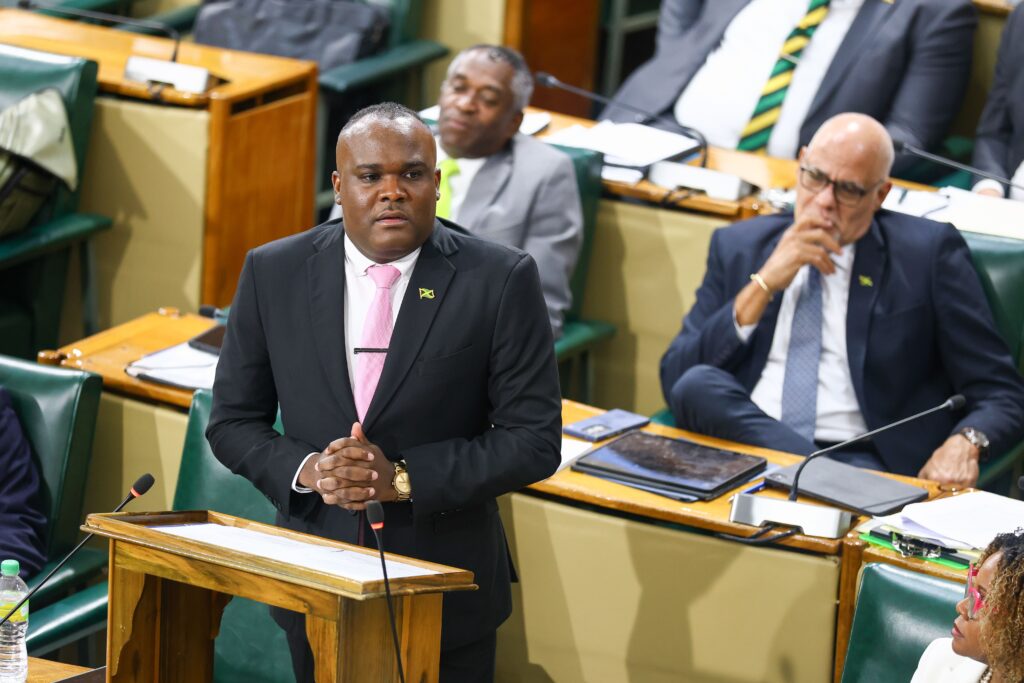
    A heated exchange during Friday’s Senate debate on Jamaica’s landmark National Reconstruction and Resilience Authority (NaRRA) Bill has brought clarity to the status of promised post-hurricane housing for displaced Jamaicans. As proceedings adjourned for the midday break, Opposition Senator Dr. Floyd Morris, the party’s spokesperson for housing and sustainable living and a visually impaired legislator, pressed the government for concrete answers about the 5,000 promised containerized homes for victims of Hurricane Melisa. Using local Jamaican vernacular to emphasize his urgency, Morris stated: “I want to know, weh di house dem deh. Where are the houses for the people that you have promised […] I look down at the wharf and I caw find dem.”

    Within moments, Government Senator Abka Fitz-Henley delivered an official response, disclosing that 924 prefabricated modular and containerized homes have already arrived on the island, with hundreds more en route. Fitz-Henley explained that Prime Minister Dr. Andrew Holness, who holds direct ministerial responsibility for the national housing portfolio, convened a cross-agency coordination meeting with the National Housing Trust, the Office of Disaster Preparedness and Emergency Management, and the Social Housing Programme just one day prior on Thursday. At that meeting, Holness confirmed that the full order of 5,000 units has been finalized: 924 are already cleared at Jamaican ports, a further 700 are currently in transit, and an additional 700 will be shipped in the coming weeks.

    Fitz-Henley reaffirmed the administration’s commitment to delivering on its promise to support Jamaicans displaced by the destructive impact of Hurricane Melisa. He went on to draw a contrast with past housing initiatives, alleging that the previous administration’s Operation Pride programme was marred by systemic corruption that saw hundreds of millions of dollars in public taxpayer funds stolen, resulting in the arrest of a People’s National Party (PNP) activist. He emphasized that under Prime Minister Holness’ leadership, the current government prioritizes full accountability and transparency in all public spending. The modular housing relief programme, he noted, operates under strict, independent regulatory oversight to eliminate mismanagement and graft, addressing any concerns about the integrity of the initiative. By closing out the exchange, Fitz-Henley reminded Morris that his question had received an immediate, official answer just minutes after it was raised during debate.

  • Big battle ahead!

    Big battle ahead!

    The global movement pushing for reparations for the transatlantic slave trade and centuries of colonial exploitation is entering a historic new phase, with Caribbean advocates launching their most coordinated, cross-international campaign to date, according to senior Caribbean political figure Dr. Ralph Gonsalves. The former prime minister of St. Vincent and the Grenadines, who now serves as opposition leader in his home country and senior advisor to the global Repair Campaign, laid out the movement’s year-long action plan during a speaking engagement at the Jamaica Observer Press Club this Wednesday, outlining a strategy that expands regional advocacy into major global diplomatic, legal, and academic institutions.

    For decades, Caribbean nations have led calls for reparatory justice from Britain and other Western European powers that built their economies through the forced enslavement of millions of Africans and the systemic exploitation of Caribbean colonies. What began as regional advocacy has gained rapid international traction in recent years, with new partnerships and institutional backing turning a scattered movement into a cohesive global push.

    Gonsalves emphasized that the moment has come for disparate advocacy groups and international institutions to align their efforts to build unstoppable momentum. In remarks that framed the movement as a convergence of multiple streams of work, he noted, “I want to see all these tributaries be conjoined into a mighty river towards reparatory justice. So that is CRC, the Caricom entities, they are the authoritative bodies. But other entities have to feed into them and work with them, and engineer the canals for the streams to come and build the bridges.”

    The movement is already building on a landmark diplomatic win achieved earlier this year: a UN General Assembly resolution adopted on March 25, co-sponsored by Ghana, Caricom, and a bloc of African nations, that formally designated the transatlantic slave trade and racialized chattel slavery “the gravest crime against humanity” and explicitly called for global action to deliver reparatory justice. That resolution opened the door for a series of high-profile engagements planned across the rest of the year.

    The next major milestone is scheduled for June, when Ghana will host an international conference bringing together the African Union, civil society groups, and other global stakeholders to map out the long-term strategic direction of the movement. Following that gathering, the Caribbean Community (Caricom) Reparation Commission (CRC) is set to advance an unprecedented academic and outreach partnership with the University of London, designed to engage British political, economic, religious, and social elites directly on the issue. Gonsalves confirmed that planning for the high-level London gathering is already underway, with the Repair Campaign working alongside the CRC to finalize logistics.

    In July, regional leaders will gather for the Caricom Heads of Government meeting in St. Lucia, where the Caricom Prime Ministerial Subcommittee on Reparations will present a full progress update and request new strategic guidance from regional heads. September will bring two key global opportunities: first, the 25th anniversary of the landmark Durban Conference Against Racism in South Africa, which produced the Durban Declaration and Programme of Action — the foundational international document that first formally recognized slavery and the transatlantic slave trade as crimes against humanity, and which remains a core legal pillar of modern reparation advocacy. Later that month, Caribbean leaders will bring the issue back to the UN General Assembly, where they will leverage months of diplomatic progress to push for deeper global institutional commitment to reparatory justice.

    The most politically contentious moment of the year is expected to come in November, when the Commonwealth Heads of Government Meeting (CHOGM) convenes in Antigua. Gonsalves framed the summit as a critical “staging post” where English-speaking Caricom nations will directly confront Britain over the issue of reparations. He warned that British officials and their key allies — including Canada, Australia, and New Zealand — are already pushing to block reparations from being added to the official CHOGM agenda, setting the stage for a high-stakes diplomatic battle in the months leading up to the summit.

    Notably, Gonsalves pointed out that King Charles III, head of the Commonwealth, has already publicly stated that the issue merits open discussion, making any attempt to sidelined the topic untenable. “The head of the Commonwealth, [King] Charles [III], already said that the time has come for this issue to be discussed and ventilated, so you can’t keep it off the agenda,” he added.

    The Repair Campaign, which launched in 2022 founded by Irish businessman Denis O’Brien, works in formal partnership with the Caricom Reparation Commission to support research, public outreach, and advocacy efforts across Caribbean nations affected by centuries of slavery and colonial exploitation. Today, key global institutions including the United Nations, the African Union, and UNESCO have all grown their involvement in the push for reparatory justice, marking a major shift from the movement’s early days as a regional cause.

  • Sweden charges teen for promoting violent acts online in sadistic online network

    Sweden charges teen for promoting violent acts online in sadistic online network

    In a long-awaited transparency move decades in the making, the U.S. Pentagon has opened the vault on more than 160 previously classified documents detailing public and official sightings of Unidentified Anomalous Phenomena (UAP, the Defense Department’s official term for what are commonly known as UFOs), spanning more than 75 years of reported encounters. The publication of the files, announced Friday by Defense Secretary Pete Hegseth, fulfills a transparency directive issued by President Donald Trump earlier this year.

    Hegseth emphasized in an official statement that decades of secrecy around these records had sparked widespread, well-founded public curiosity, and that the administration was committed to giving the American public direct access to the unredacted original files. The records, hosted on the Defense Department’s public website, include entries stretching all the way back to the late 1940s – the era when modern UFO lore first entered mainstream American culture. Among the earliest documents is a 1947 compilation of multiple “flying disc” sightings, followed a year later by a top-secret Air Force intelligence memo detailing reports of “unidentified aircraft” and “flying saucers.” More contemporary entries include a 2023 incident in which three separate teams of federal law enforcement special agents independently submitted reports of glowing orange orbs in the sky that launched smaller red objects.

    The declassification push traces back to February 2024, when President Trump ordered all federal agencies to begin the process of sorting through and releasing all government-held records related to UFOs and potential extraterrestrial activity, citing overwhelming public demand for greater government openness around the topic. Alongside issuing the order, the Republican president drew controversy by accusing his Democratic predecessor, former President Barack Obama, of improperly disclosing classified information during a viral podcast interview. In that conversation with host Brian Tyler Cohen, Obama addressed persistent speculation surrounding Area 51 – the highly classified Nevada military base that has been the center of UFO conspiracy theories for decades – noting, “They’re real, but I haven’t seen them, and they’re not being kept in… Area 51.” When pressed by reporters, Trump argued Obama had broken classification protocols with his comments, while adding that he personally remained undecided on the question of extraterrestrial life: “I don’t know if they are real or not.”

    To date, no formal evidence of intelligent extraterrestrial life has been presented by the U.S. government. Public and official interest in UAP has surged in recent years, however, driven by a steady stream of declassified military footage of unexplained aerial encounters and growing national security concerns that some unidentified objects could be advanced surveillance or weapons technology developed by U.S. geopolitical adversaries. In a major update published just months ago in March 2024, the Pentagon confirmed that it has yet to find any conclusive evidence linking reported UAP sightings to extraterrestrial technology. The vast majority of unexplained encounters, officials found, can be traced back to ordinary human activity, including weather balloons, commercial and military aircraft, reconnaissance drones, orbital satellites, and atmospheric anomalies.

  • US fire on Iran tankers sparks reprisals as deal hangs in balance

    US fire on Iran tankers sparks reprisals as deal hangs in balance

    On Friday, a U.S. fighter jet carried out precision strikes that disabled two Iran-flagged oil tankers in the Gulf of Oman, an action Washington framed as enforcement of an ongoing port blockade. The targeted attack immediately triggered Iranian retaliatory strikes and sent shockwaves through a tenuous regional ceasefire, arriving at a critical moment when Tehran was actively reviewing a new U.S. diplomatic proposal to end the 10-week-old Middle East conflict.

    The confrontation unfolded in a strategically vital waterway that acts as the primary gateway to the Strait of Hormuz, the chokepoint through which roughly a fifth of global oil supplies pass daily. U.S. Central Command confirmed that an F/A-18 Super Hornet used precision munitions to disable the two vessels, stating the action was intended to stop the ships from reaching Iranian territorial waters. In the immediate aftermath, an anonymous senior Iranian military official told local media outlets that the country’s naval forces had launched proportional retaliatory strikes against what it labeled “American terrorism and ceasefire violation,” adding that active clashes had ceased following the exchange.

    This latest flare-up came less than 24 hours after smaller-scale skirmishes in the strait, a waterway that a top adviser to Iran’s Supreme Leader has compared to holding “an atomic bomb” due to its outsized geopolitical importance. U.S. Secretary of State Marco Rubio, speaking to reporters during a diplomatic stop in Rome, repeated longstanding U.S. policy that Iranian control of the critical oil transit route is “unacceptable.” Rubio also confirmed that Washington was awaiting Tehran’s formal response to its latest peace proposal, shared via Pakistani intermediaries, and expressed cautious hope that the proposal would receive serious consideration from Iranian leadership.

    The proposal put forward by the U.S. would extend the current fragile Gulf ceasefire to create space for comprehensive negotiations aimed at reaching a permanent end to the conflict. The conflict began 10 weeks ago when U.S. and Israeli forces launched joint strikes against Iranian military and nuclear targets across Iran. Iranian Foreign Ministry spokesman Esmaeil Baqaei told Iran’s official ISNA news agency on Friday that the U.S. proposal remains “under review” by Iranian authorities, with no final decision yet issued.

    In the hours following the tanker strikes, Iranian officials ramped up diplomatic pushback against the U.S. action. Iran’s United Nations Ambassador Amir Saeed Irvani sent an official letter to U.N. Secretary-General and the Security Council accusing Washington of a deliberate violation of the existing ceasefire that undermines all ongoing diplomatic efforts to de-escalate. Iranian Foreign Minister Sayed Abbas Araghchi, in a phone call with his Turkish counterpart, voiced deep skepticism about the U.S.’s commitment to a diplomatic resolution of the conflict, according to Iran’s Tasnim news agency.

    Parallel diplomatic efforts were underway in Washington Friday, where Qatari Prime Minister Sheikh Mohammed bin Abdulrahman Al Thani held talks with U.S. Vice President JD Vance focused on supporting the Pakistani-brokered peace initiative. Qatar has found itself drawn into the conflict already: Iran has repeatedly targeted Qatari sites throughout the war, in retaliation for Qatar hosting a large forward-deployed U.S. air base on its territory.

    In a separate development that adds further uncertainty to global energy markets, satellite imagery analyzed by global monitoring firm Orbital EOS shows a growing oil slick spreading off the west coast of Iran’s Kharg Island, the country’s primary oil export terminal. The slick currently covers more than 20 square miles (52 square kilometers), though the exact cause of the spill remains unconfirmed as of Friday. Kharg Island is the linchpin of Iran’s oil export industry, which forms the backbone of the country’s already severely battered economy, and sits just north of the Strait of Hormuz in the Gulf.

    The current crisis traces back to the outbreak of war on February 28, when Iran responded to the U.S.-Israeli strikes by effectively closing the Strait of Hormuz to commercial shipping. That closure sent global oil markets into turmoil and pushed crude prices sharply higher, prompting the U.S. to impose a full blockade of Iranian ports in response. Earlier last week, former President Donald Trump, whose administration launched the current military campaign, announced a large-scale U.S. naval operation to reopen the strait, only to reverse course just two days later and pivot back to diplomatic negotiations. The reversal came after Saudi Arabia, a key regional U.S. ally, publicly refused to grant U.S. forces access to Saudi bases and airspace for the planned operation. Senior Saudi sources told AFP Friday that Riyadh made the call because it believed the military operation would only escalate regional tensions and would not succeed in achieving its stated goals.

    Beyond the Gulf, the separate parallel ceasefire between Israel and Iran-backed Hezbollah in Lebanon is also crumbling under mounting pressure. Friday saw Hezbollah launch two waves of attacks against Israeli military targets: first a salvo of missiles targeting an Israeli military base south of the coastal city of Nahariya, followed hours later by a swarm of attack drones targeting a second base in northern Israel. The group said the attacks were retaliation for a recent Israeli strike on Beirut’s southern suburbs and ongoing daily Israeli strikes across southern Lebanon.

    Israel has continued its airstrikes against Hezbollah positions despite the formal ceasefire, and on Wednesday carried out its first attack on Beirut’s southern suburbs in a month, stating the strike killed a senior Hezbollah commander. Lebanon’s Ministry of Public Health reported Friday that 11 people were killed in Israeli strikes across southern Lebanon that day: 10 civilians, including two children and three women, plus one civil defense volunteer.

    The new round of violence on the Lebanon front comes just days before Lebanon and Israel are scheduled to hold the first round of direct peace negotiations in Washington next week, a meeting that Hezbollah has issued repeated and vehement statements opposing. The two countries have remained officially in a state of war since 1948, making any diplomatic breakthrough a historic shift for the region.

  • Firestorm over dead witness’s statement dominates Klans trial for second day

    Firestorm over dead witness’s statement dominates Klans trial for second day

    A high-stakes criminal trial involving 25 alleged members of the Tesha Miller-affiliated Klansman Gang saw intensifying legal battles on Wednesday, as defense teams doubled down on efforts to block prosecutors from entering a key witness statement from a deceased woman into official court evidence. The core of the defense’s challenge centers on serious unresolved questions surrounding the woman’s formal identity.

    Prosecutors (referred to as the Crown in this jurisdiction) have been calling a sequence of witnesses to meet the legal criteria laid out in Section 31(D) of the country’s Evidence Act. This provision allows out-of-court statements to be admitted as evidence when a witness is unable to testify in person, a rule that applies in cases of death, severe illness, the witness being outside the court’s jurisdiction, or failure to locate the witness after exhaustive reasonable searches. The statement in question relates specifically to the 15th and 16th charges laid out in the grand indictment.

    The would-be witness, identified as Shanice Roberts, passed away in February 2021. Before her death, she provided a formal statement to law enforcement investigators about the February 7, 2020 murder of Noah Smith, which occurred at Yarico Place in St. Andrew. Four of the accused — Michael Wildman, Jerome Spike, Nashuan Guest, and Geovaughni McDonald — are standing trial on charges that they knowingly facilitated the robbery and killing that resulted in Smith’s death.

    Wednesday’s proceedings focused heavily on cross-examination of the detective constable who recorded Roberts’ statement on the night of the 2020 murder. Denise Hinson, the defense attorney representing Nashuan Guest, subjected the officer’s testimony to searching scrutiny. Hinson argued that the photographic exhibit entered into the record, which the detective identified on Monday as depicting the woman he interviewed the night of the killing, is actually not a photo of Roberts. The detective had previously told the Crown during his direct examination that he could recognize Roberts from her distinctive facial features, specifically noting she had a very small nose. The defense has pushed back hard, contending that the submitted photograph is too blurry for the officer to even make out the shape of her nose, undermining his identification.

    Hinson’s attempt to prove that the spelling of the woman’s name recorded by the detective did not match the spelling on official court records was unsuccessful. In response, prosecutors argued that variations in spelling were ultimately irrelevant to the case, emphasizing that the Crown only needs to prove the deceased witness and the person in the photograph are the same individual, regardless of minor name spelling discrepancies.

    Presiding Justice Dale Palmer ruled on the dispute, noting that recalling the witness solely to address a minor spelling discrepancy does nothing to resolve the core question of whether the person in the photo is actually Shanice Roberts. “It might not take us anywhere,” Palmer observed, later adding: “How does the spelling assist us in one way or the other even if it was a clear image?”

    With the judge indicating he would not allow a witness to be recalled to address Hinson’s spelling challenge, prosecutors announced they will outline next steps for their Section 31(D) application when the court reconvenes next Monday. Hinson and fellow defense attorney Sasha-Kay Shaw, who have both formally objected to admitting the statement, are scheduled to submit written legal arguments on the matter in the coming days.

    In a separate procedural ruling on Wednesday, the Crown secured judicial approval to amend the third and fourth counts of the indictment, despite fierce pushback from the defense team. The amendment corrects an incorrect date listed for the offense in question. Defense attorneys argued that the amendment would prejudice their clients — Tesha Miller, Rolando Jermaine Hall and Michael Wildman — who are named in these counts.

    Justice Palmer, however, rejected the defense’s objections. He noted that there had been no disagreement over the actual date of the offense during cross-examination of the only witness called so far for these counts. Furthermore, Palmer ruled that the amendment request was filed sufficiently early in the trial proceedings, and that defense teams already have more than enough time to adjust their strategies in response. The judge concluded there was no material prejudice to the accused as a result of the change.

    Following the ruling, all defendants formally entered a plea of “not guilty” when asked to respond to the amended counts. The trial is scheduled to resume later on Thursday, with additional procedural and substantive arguments expected to move the high-profile case forward.

  • US sanctions target Cuba’s military, elites

    US sanctions target Cuba’s military, elites

    In a new step to escalate pressure on the Cuban government, the second Donald Trump administration has announced sweeping sanctions targeting three major Cuban entities and a senior executive, framing the move as decisive action to safeguard United States national security. U.S. Secretary of State Marco Rubio, who is the child of Cuban immigrants, outlined the penalties during a formal announcement Thursday, saying the measures are designed to cut off access to what Washington calls illicit assets held by Cuba’s ruling government and military establishment.

    The sanctions are issued under the authority of Executive Order 14404, signed by President Trump on May 1, 2026, which grants the administration power to penalize actors deemed responsible for political repression in Cuba and threats to U.S. national security and foreign policy interests. Under the order, Rubio formally designated three entities for sanctions: Grupo de Administración Empresarial S.A. (GAESA), a sprawling military-controlled holding conglomerate; Moa Nickel SA (MNSA), a major nickel mining joint venture; and Ania Guillermina Lastres Morera, GAESA’s top executive.

    GAESA was targeted for its operations within Cuba’s financial services sector, while MNSA was sanctioned for its activities in the country’s metals and mining industry. Lastres, who serves as executive president of GAESA, was designated for her role as a senior leader of the conglomerate. Rubio described the sanctions as a core component of the administration’s broader campaign to counter what it calls growing national security risks from Cuba’s communist government, and to hold the regime and its backers accountable for their actions.

    In his remarks, Rubio doubled down on the administration’s sharp criticism of the Cuban government, claiming that just 90 miles off the U.S. coast, Cuban leaders have reduced the island to economic ruin while opening it up to foreign intelligence, military, and terrorist activities that threaten U.S. interests. He added that additional sanctions designations will be rolled out in the coming days and weeks, warning that the campaign is only in its early stages.

    The secretary of state positioned GAESA as the central node of what he called Cuba’s kleptocratic communist system, noting that the conglomerate controls an estimated 40 percent or more of the island’s entire national economy. Rubio alleged that GAESA operates across multiple key economic sectors not to generate broad-based prosperity for the Cuban people, but solely to enrich a small circle of corrupt ruling elites. He claimed that as ordinary Cubans grapple with widespread food insecurity, inadequate healthcare, and crumbling critical infrastructure including the national power grid, most of GAESA’s profits are siphoned off into hidden offshore bank accounts held by elite figures. Citing recent independent public estimates, Rubio said GAESA’s annual revenues likely exceed three times the Cuban state’s official public budget, and that the conglomerate controls as much as $20 billion in undeclared illicit assets globally. Lastres, he added, directly oversees the management of these hidden international assets.

    Turning to MNSA, Rubio said the joint venture between Canadian firm Sherritt International Corporation and Cuban state-owned enterprise La Compania General de Niquel exploits the island’s natural resource wealth to line the pockets of regime leaders, at the direct expense of ordinary Cuban citizens. He also noted that the company operates assets that were originally seized by the Cuban government from U.S. citizens and corporations decades ago, a longstanding point of contention between the two nations.

    As part of the sanctions announcement, Rubio confirmed that all property and financial interests held by the designated actors that are located within the U.S. or controlled by any U.S. person are immediately frozen, and must be reported to the U.S. Treasury Department’s Office of Foreign Assets Control (OFAC), the agency responsible for enforcing U.S. sanctions programs. Any entity that is 50 percent or more owned, directly or indirectly, by one or more of the sanctioned individuals or groups is also subject to the same blocking measures.

    All transactions involving the sanctioned parties carried out by U.S. persons or conducted within or transiting through U.S. jurisdiction are prohibited, unless explicitly authorized via a general or specific license issued by OFAC. These prohibitions extend to any contributions of funds, goods, or services to or for the benefit of a blocked party, as well as the receipt of any such contributions from sanctioned actors.

    Rubio also issued a stark warning to third-country actors, saying that any foreign individual or entity that conducts transactions with the newly designated parties, or operates in any of the Cuban sectors identified as high-risk in Executive Order 14404 — including energy, defense, metals and mining, financial services, and security — faces significant risk of being added to U.S. sanctions lists themselves. “Non-U.S. persons, including foreign financial institutions, should proceed with caution in any dealings with a party sanctioned under this authority,” Rubio said. “Actions to return assets to a sanctioned party or transfer them to another jurisdiction for potential use by the target could expose non-U.S. persons to significant sanctions risk.”

    The sanctions align with longstanding U.S. trade restrictions on Cuba enforced under the Cuban Assets Control Regulations (CACR), the foundational regulatory framework for the decades-long U.S. embargo on Cuba managed by OFAC. The CACR prohibits any person subject to U.S. jurisdiction from engaging in transactions involving property in which Cuba or a Cuban national holds an interest, unless a specific exemption or authorization is granted. All existing blocked property under the CACR remains frozen following the new designations, Rubio confirmed.

    Rubio emphasized that the new sanctions advance multiple core policy objectives of the second Trump administration, not only fulfilling the authority granted by Executive Order 14404, but also advancing the goals of Executive Order 14380 — which addresses perceived threats to the U.S. from the Cuban government — and National Security Presidential Memorandum 5. That memorandum directs the executive branch to prioritize efforts to improve human rights, establish rule of law, build free market systems, and advance democratic governance in Cuba.

  • Virus-hit cruise ship heads for Spain as evacuees land in Europe

    Virus-hit cruise ship heads for Spain as evacuees land in Europe

    MADRID, Spain — Spanish authorities announced Wednesday that the MV Hondius, a cruise ship affected by a fatal hantavirus outbreak that has claimed three lives, is on track to dock at the Canary Islands’ Tenerife within three days, with mass passenger evacuation operations set to begin on May 11. The outbreak has triggered international concern over potential spread, though top global health officials have moved quickly to reassure the public that the situation does not mirror the scale of the COVID-19 pandemic.

    Earlier on Wednesday, emergency response teams completed the evacuation of three individuals from the vessel: two symptomatic crew members and one close contact of a confirmed infection case. The ship had previously been anchored off the coast of Cape Verde, and after the evacuation operation was completed, it set sail for the Spanish archipelago. Medical personnel clad in full hazmat suits transferred the three evacuees from the cruise ship to a specialized ambulance boat, before the group was transported to Praia International Airport, Cape Verde’s main air hub in its capital, for onward travel.

    According to on-site AFP correspondents, a medical aircraft carrying two of the evacuated passengers touched down at Amsterdam Airport Schiphol in the Netherlands at 17:47 GMT. German emergency services confirmed they subsequently took custody of the third evacuee — the individual who had been exposed to an infected passenger on board — and transported the person to a specialized hospital in Dusseldorf for monitoring and treatment.

    Virology experts have confirmed that the strain of hantavirus detected on the MV Hondius is the Andes virus, an uncommon subtype that is the only known hantavirus capable of spreading from person to person. World Health Organization (WHO) expert Anais Legand explained to AFP that based on the virus’s 1- to 6-week incubation period, the initial index case on the cruise could not have contracted the virus during the voyage itself. The ship departed Ushuaia, Argentina on April 1, and the first fatality linked to the outbreak was recorded just 10 days later on April 11.

    Argentine health officials confirmed that the first couple killed by the virus had completed travel through Chile, Uruguay and Argentina before boarding the cruise in Ushuaia. In response to the outbreak, experts will travel to the southern Argentine port city to conduct testing on local rodent populations — the natural reservoir for hantavirus — to trace the origin of the infection.

    Global and national health authorities have actively sought to calm widespread public anxiety over a potential large-scale global outbreak, noting that hantavirus is significantly less transmissible than the SARS-CoV-2 virus that caused the COVID-19 pandemic. WHO Director-General Tedros Adhanom Ghebreyesus told AFP that the current situation is not comparable to the COVID-19 pandemic, emphasizing: “The risk to the rest of the world is low.”

  • ‘Bunny’ set to leave Man City with Chelsea the favourites to land star striker — reports

    ‘Bunny’ set to leave Man City with Chelsea the favourites to land star striker — reports

    One of women’s football’s most prolific strikers is preparing for a high-profile summer move, after Manchester City Women confirmed that Khadija “Bunny” Shaw will leave the club when her current contract expires in June. Contract extension negotiations between the all-time leading goalscorer and the reigning Women’s Super League champions collapsed after the two sides failed to reach a consensus on key terms, opening the door for a major transfer move.

    Shaw, who has captured the hearts of City fans throughout her tenure at the club, had publicly shared her desire to remain in Manchester following the team’s historic 2024 WSL title win — their first top-flight league crown in 10 years. But according to reporting from *The Guardian*, irreconcilable differences over critical contract details, most notably the length of the proposed new deal, ultimately derailed extension talks. Both the club and the Jamaican striker have expressed deep disappointment at the breakdown of negotiations, with City acknowledging they cannot compete with the lucrative financial terms being tabled by suitors elsewhere.

    The leading contender to sign Shaw is London-based Chelsea FC Women, who have tabled an offer worth £1 million per year to secure the striker’s signature, multiple sources close to the negotiations have confirmed. The forward is not short of options, however: elite clubs across global football have registered interest in her availability, including Spanish giant Barcelona and several top-flight clubs in the U.S. National Women’s Soccer League.

    The 28-year-old Jamaican international, nicknamed “Bunny,” is currently leading the 2023-24 WSL in goalscoring and is on track to win the league’s Golden Boot award for the third consecutive season. Before she leaves the club, Shaw will face her prospective new side Chelsea this Sunday in the FA Cup semi-final, with her final appearance for Manchester City currently scheduled for the following Saturday’s league clash against West Ham United.