标签: Jamaica

牙买加

  • The houses are here, says Fitz-Henley

    The houses are here, says Fitz-Henley

    A heated exchange during Friday’s Senate debate on Jamaica’s landmark National Reconstruction and Resilience Authority (NaRRA) Bill has brought clarity to the status of promised post-hurricane housing for displaced Jamaicans. As proceedings adjourned for the midday break, Opposition Senator Dr. Floyd Morris, the party’s spokesperson for housing and sustainable living and a visually impaired legislator, pressed the government for concrete answers about the 5,000 promised containerized homes for victims of Hurricane Melisa. Using local Jamaican vernacular to emphasize his urgency, Morris stated: “I want to know, weh di house dem deh. Where are the houses for the people that you have promised […] I look down at the wharf and I caw find dem.”

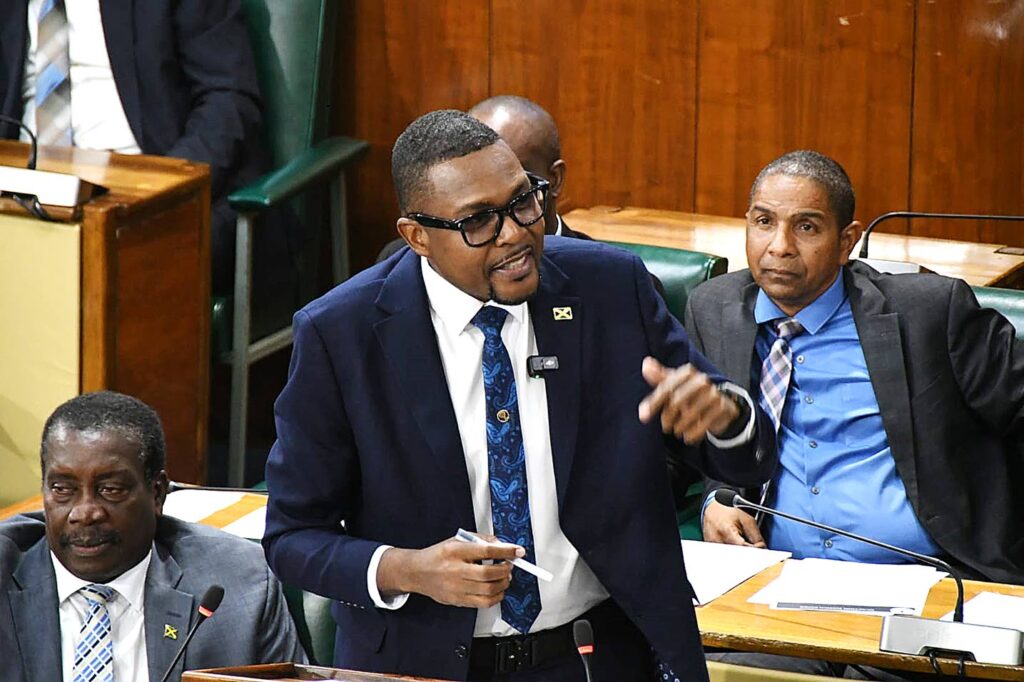
    Within moments, Government Senator Abka Fitz-Henley delivered an official response, disclosing that 924 prefabricated modular and containerized homes have already arrived on the island, with hundreds more en route. Fitz-Henley explained that Prime Minister Dr. Andrew Holness, who holds direct ministerial responsibility for the national housing portfolio, convened a cross-agency coordination meeting with the National Housing Trust, the Office of Disaster Preparedness and Emergency Management, and the Social Housing Programme just one day prior on Thursday. At that meeting, Holness confirmed that the full order of 5,000 units has been finalized: 924 are already cleared at Jamaican ports, a further 700 are currently in transit, and an additional 700 will be shipped in the coming weeks.

    Fitz-Henley reaffirmed the administration’s commitment to delivering on its promise to support Jamaicans displaced by the destructive impact of Hurricane Melisa. He went on to draw a contrast with past housing initiatives, alleging that the previous administration’s Operation Pride programme was marred by systemic corruption that saw hundreds of millions of dollars in public taxpayer funds stolen, resulting in the arrest of a People’s National Party (PNP) activist. He emphasized that under Prime Minister Holness’ leadership, the current government prioritizes full accountability and transparency in all public spending. The modular housing relief programme, he noted, operates under strict, independent regulatory oversight to eliminate mismanagement and graft, addressing any concerns about the integrity of the initiative. By closing out the exchange, Fitz-Henley reminded Morris that his question had received an immediate, official answer just minutes after it was raised during debate.

  • Big battle ahead!

    Big battle ahead!

    The global movement pushing for reparations for the transatlantic slave trade and centuries of colonial exploitation is entering a historic new phase, with Caribbean advocates launching their most coordinated, cross-international campaign to date, according to senior Caribbean political figure Dr. Ralph Gonsalves. The former prime minister of St. Vincent and the Grenadines, who now serves as opposition leader in his home country and senior advisor to the global Repair Campaign, laid out the movement’s year-long action plan during a speaking engagement at the Jamaica Observer Press Club this Wednesday, outlining a strategy that expands regional advocacy into major global diplomatic, legal, and academic institutions.

    For decades, Caribbean nations have led calls for reparatory justice from Britain and other Western European powers that built their economies through the forced enslavement of millions of Africans and the systemic exploitation of Caribbean colonies. What began as regional advocacy has gained rapid international traction in recent years, with new partnerships and institutional backing turning a scattered movement into a cohesive global push.

    Gonsalves emphasized that the moment has come for disparate advocacy groups and international institutions to align their efforts to build unstoppable momentum. In remarks that framed the movement as a convergence of multiple streams of work, he noted, “I want to see all these tributaries be conjoined into a mighty river towards reparatory justice. So that is CRC, the Caricom entities, they are the authoritative bodies. But other entities have to feed into them and work with them, and engineer the canals for the streams to come and build the bridges.”

    The movement is already building on a landmark diplomatic win achieved earlier this year: a UN General Assembly resolution adopted on March 25, co-sponsored by Ghana, Caricom, and a bloc of African nations, that formally designated the transatlantic slave trade and racialized chattel slavery “the gravest crime against humanity” and explicitly called for global action to deliver reparatory justice. That resolution opened the door for a series of high-profile engagements planned across the rest of the year.

    The next major milestone is scheduled for June, when Ghana will host an international conference bringing together the African Union, civil society groups, and other global stakeholders to map out the long-term strategic direction of the movement. Following that gathering, the Caribbean Community (Caricom) Reparation Commission (CRC) is set to advance an unprecedented academic and outreach partnership with the University of London, designed to engage British political, economic, religious, and social elites directly on the issue. Gonsalves confirmed that planning for the high-level London gathering is already underway, with the Repair Campaign working alongside the CRC to finalize logistics.

    In July, regional leaders will gather for the Caricom Heads of Government meeting in St. Lucia, where the Caricom Prime Ministerial Subcommittee on Reparations will present a full progress update and request new strategic guidance from regional heads. September will bring two key global opportunities: first, the 25th anniversary of the landmark Durban Conference Against Racism in South Africa, which produced the Durban Declaration and Programme of Action — the foundational international document that first formally recognized slavery and the transatlantic slave trade as crimes against humanity, and which remains a core legal pillar of modern reparation advocacy. Later that month, Caribbean leaders will bring the issue back to the UN General Assembly, where they will leverage months of diplomatic progress to push for deeper global institutional commitment to reparatory justice.

    The most politically contentious moment of the year is expected to come in November, when the Commonwealth Heads of Government Meeting (CHOGM) convenes in Antigua. Gonsalves framed the summit as a critical “staging post” where English-speaking Caricom nations will directly confront Britain over the issue of reparations. He warned that British officials and their key allies — including Canada, Australia, and New Zealand — are already pushing to block reparations from being added to the official CHOGM agenda, setting the stage for a high-stakes diplomatic battle in the months leading up to the summit.

    Notably, Gonsalves pointed out that King Charles III, head of the Commonwealth, has already publicly stated that the issue merits open discussion, making any attempt to sidelined the topic untenable. “The head of the Commonwealth, [King] Charles [III], already said that the time has come for this issue to be discussed and ventilated, so you can’t keep it off the agenda,” he added.

    The Repair Campaign, which launched in 2022 founded by Irish businessman Denis O’Brien, works in formal partnership with the Caricom Reparation Commission to support research, public outreach, and advocacy efforts across Caribbean nations affected by centuries of slavery and colonial exploitation. Today, key global institutions including the United Nations, the African Union, and UNESCO have all grown their involvement in the push for reparatory justice, marking a major shift from the movement’s early days as a regional cause.

  • Sweden charges teen for promoting violent acts online in sadistic online network

    Sweden charges teen for promoting violent acts online in sadistic online network

    In a long-awaited transparency move decades in the making, the U.S. Pentagon has opened the vault on more than 160 previously classified documents detailing public and official sightings of Unidentified Anomalous Phenomena (UAP, the Defense Department’s official term for what are commonly known as UFOs), spanning more than 75 years of reported encounters. The publication of the files, announced Friday by Defense Secretary Pete Hegseth, fulfills a transparency directive issued by President Donald Trump earlier this year.

    Hegseth emphasized in an official statement that decades of secrecy around these records had sparked widespread, well-founded public curiosity, and that the administration was committed to giving the American public direct access to the unredacted original files. The records, hosted on the Defense Department’s public website, include entries stretching all the way back to the late 1940s – the era when modern UFO lore first entered mainstream American culture. Among the earliest documents is a 1947 compilation of multiple “flying disc” sightings, followed a year later by a top-secret Air Force intelligence memo detailing reports of “unidentified aircraft” and “flying saucers.” More contemporary entries include a 2023 incident in which three separate teams of federal law enforcement special agents independently submitted reports of glowing orange orbs in the sky that launched smaller red objects.

    The declassification push traces back to February 2024, when President Trump ordered all federal agencies to begin the process of sorting through and releasing all government-held records related to UFOs and potential extraterrestrial activity, citing overwhelming public demand for greater government openness around the topic. Alongside issuing the order, the Republican president drew controversy by accusing his Democratic predecessor, former President Barack Obama, of improperly disclosing classified information during a viral podcast interview. In that conversation with host Brian Tyler Cohen, Obama addressed persistent speculation surrounding Area 51 – the highly classified Nevada military base that has been the center of UFO conspiracy theories for decades – noting, “They’re real, but I haven’t seen them, and they’re not being kept in… Area 51.” When pressed by reporters, Trump argued Obama had broken classification protocols with his comments, while adding that he personally remained undecided on the question of extraterrestrial life: “I don’t know if they are real or not.”

    To date, no formal evidence of intelligent extraterrestrial life has been presented by the U.S. government. Public and official interest in UAP has surged in recent years, however, driven by a steady stream of declassified military footage of unexplained aerial encounters and growing national security concerns that some unidentified objects could be advanced surveillance or weapons technology developed by U.S. geopolitical adversaries. In a major update published just months ago in March 2024, the Pentagon confirmed that it has yet to find any conclusive evidence linking reported UAP sightings to extraterrestrial technology. The vast majority of unexplained encounters, officials found, can be traced back to ordinary human activity, including weather balloons, commercial and military aircraft, reconnaissance drones, orbital satellites, and atmospheric anomalies.

  • US fire on Iran tankers sparks reprisals as deal hangs in balance

    US fire on Iran tankers sparks reprisals as deal hangs in balance

    On Friday, a U.S. fighter jet carried out precision strikes that disabled two Iran-flagged oil tankers in the Gulf of Oman, an action Washington framed as enforcement of an ongoing port blockade. The targeted attack immediately triggered Iranian retaliatory strikes and sent shockwaves through a tenuous regional ceasefire, arriving at a critical moment when Tehran was actively reviewing a new U.S. diplomatic proposal to end the 10-week-old Middle East conflict.

    The confrontation unfolded in a strategically vital waterway that acts as the primary gateway to the Strait of Hormuz, the chokepoint through which roughly a fifth of global oil supplies pass daily. U.S. Central Command confirmed that an F/A-18 Super Hornet used precision munitions to disable the two vessels, stating the action was intended to stop the ships from reaching Iranian territorial waters. In the immediate aftermath, an anonymous senior Iranian military official told local media outlets that the country’s naval forces had launched proportional retaliatory strikes against what it labeled “American terrorism and ceasefire violation,” adding that active clashes had ceased following the exchange.

    This latest flare-up came less than 24 hours after smaller-scale skirmishes in the strait, a waterway that a top adviser to Iran’s Supreme Leader has compared to holding “an atomic bomb” due to its outsized geopolitical importance. U.S. Secretary of State Marco Rubio, speaking to reporters during a diplomatic stop in Rome, repeated longstanding U.S. policy that Iranian control of the critical oil transit route is “unacceptable.” Rubio also confirmed that Washington was awaiting Tehran’s formal response to its latest peace proposal, shared via Pakistani intermediaries, and expressed cautious hope that the proposal would receive serious consideration from Iranian leadership.

    The proposal put forward by the U.S. would extend the current fragile Gulf ceasefire to create space for comprehensive negotiations aimed at reaching a permanent end to the conflict. The conflict began 10 weeks ago when U.S. and Israeli forces launched joint strikes against Iranian military and nuclear targets across Iran. Iranian Foreign Ministry spokesman Esmaeil Baqaei told Iran’s official ISNA news agency on Friday that the U.S. proposal remains “under review” by Iranian authorities, with no final decision yet issued.

    In the hours following the tanker strikes, Iranian officials ramped up diplomatic pushback against the U.S. action. Iran’s United Nations Ambassador Amir Saeed Irvani sent an official letter to U.N. Secretary-General and the Security Council accusing Washington of a deliberate violation of the existing ceasefire that undermines all ongoing diplomatic efforts to de-escalate. Iranian Foreign Minister Sayed Abbas Araghchi, in a phone call with his Turkish counterpart, voiced deep skepticism about the U.S.’s commitment to a diplomatic resolution of the conflict, according to Iran’s Tasnim news agency.

    Parallel diplomatic efforts were underway in Washington Friday, where Qatari Prime Minister Sheikh Mohammed bin Abdulrahman Al Thani held talks with U.S. Vice President JD Vance focused on supporting the Pakistani-brokered peace initiative. Qatar has found itself drawn into the conflict already: Iran has repeatedly targeted Qatari sites throughout the war, in retaliation for Qatar hosting a large forward-deployed U.S. air base on its territory.

    In a separate development that adds further uncertainty to global energy markets, satellite imagery analyzed by global monitoring firm Orbital EOS shows a growing oil slick spreading off the west coast of Iran’s Kharg Island, the country’s primary oil export terminal. The slick currently covers more than 20 square miles (52 square kilometers), though the exact cause of the spill remains unconfirmed as of Friday. Kharg Island is the linchpin of Iran’s oil export industry, which forms the backbone of the country’s already severely battered economy, and sits just north of the Strait of Hormuz in the Gulf.

    The current crisis traces back to the outbreak of war on February 28, when Iran responded to the U.S.-Israeli strikes by effectively closing the Strait of Hormuz to commercial shipping. That closure sent global oil markets into turmoil and pushed crude prices sharply higher, prompting the U.S. to impose a full blockade of Iranian ports in response. Earlier last week, former President Donald Trump, whose administration launched the current military campaign, announced a large-scale U.S. naval operation to reopen the strait, only to reverse course just two days later and pivot back to diplomatic negotiations. The reversal came after Saudi Arabia, a key regional U.S. ally, publicly refused to grant U.S. forces access to Saudi bases and airspace for the planned operation. Senior Saudi sources told AFP Friday that Riyadh made the call because it believed the military operation would only escalate regional tensions and would not succeed in achieving its stated goals.

    Beyond the Gulf, the separate parallel ceasefire between Israel and Iran-backed Hezbollah in Lebanon is also crumbling under mounting pressure. Friday saw Hezbollah launch two waves of attacks against Israeli military targets: first a salvo of missiles targeting an Israeli military base south of the coastal city of Nahariya, followed hours later by a swarm of attack drones targeting a second base in northern Israel. The group said the attacks were retaliation for a recent Israeli strike on Beirut’s southern suburbs and ongoing daily Israeli strikes across southern Lebanon.

    Israel has continued its airstrikes against Hezbollah positions despite the formal ceasefire, and on Wednesday carried out its first attack on Beirut’s southern suburbs in a month, stating the strike killed a senior Hezbollah commander. Lebanon’s Ministry of Public Health reported Friday that 11 people were killed in Israeli strikes across southern Lebanon that day: 10 civilians, including two children and three women, plus one civil defense volunteer.

    The new round of violence on the Lebanon front comes just days before Lebanon and Israel are scheduled to hold the first round of direct peace negotiations in Washington next week, a meeting that Hezbollah has issued repeated and vehement statements opposing. The two countries have remained officially in a state of war since 1948, making any diplomatic breakthrough a historic shift for the region.

  • SCHOOLYARD BRAWLS

    SCHOOLYARD BRAWLS

    A wave of growing student indiscipline that has shaken Jamaica’s education system in recent weeks has reached St Elizabeth Technical High School (STETHS), triggering an immediate campus closure for most students on Thursday and leaving families uncertain about when regular classes will resume.

    The shutdown came after a day of escalating violent incidents at the Santa Cruz-based institution on Wednesday, according to unofficial sources familiar with the situation. Multiple physical altercations broke out across the campus, one of which reportedly involved a bladed weapon, leaving one student injured. The escalating chaos forced school administrators to call on local law enforcement to intervene to restore order mid-morning.

    Following the initial confrontation, additional fights flared up across the school grounds—some even unfolding directly in front of senior school leaders, sources confirmed to the Jamaica Observer. In a formal advisory sent to parents and guardians Wednesday, STETHS Principal Keith Wellington announced the suspension of classes, noting the move was implemented to safeguard the well-being of every student and staff member on campus, and to give administrators time to restore order and implement new disciplinary measures. When reached for comment by the Observer Thursday evening, Wellington declined to share further details, stating he would not address the situation publicly until his internal handling of the crisis was complete.

    Only students scheduled to sit external examinations were permitted to access the campus after the shutdown. Deputy Superintendent Owen Brown, operations head of the Jamaica Constabulary Force’s St Elizabeth Division, confirmed that police worked alongside school leaders and responding parents to bring the unrest under control. No students were taken into custody following the incident, Brown confirmed, adding that the situation was resolved through on-site coordination between law enforcement, school officials, and family members.

    Brown emphasized that STETHS is one of many local institutions participating in the police’s School Resources Officer (SRO) Programme, which places dedicated law enforcement officers on campus to prevent violence and mediate student conflicts. “One core goal of the SRO initiative is to teach students to work through their disagreements through dialogue rather than physical confrontation,” Brown explained. “We help them understand how to resolve conflicts amicably, instead of turning to violence.”

    The senior police official reaffirmed the force’s commitment to tackling school violence across the parish, extending beyond Wednesday’s incident at STETHS. “We have promised to work with every school in St Elizabeth, not just STETHS, to help foster orderly, safe learning environments for all students,” he said.

    Brown also called on parents to take a leading role in teaching conflict resolution skills to young people, noting that family socialization lays the foundation for how children behave in public spaces. “The home is the first and most important place children learn how to interact with others. We are urging parents to be more intentional about teaching basic social skills, especially how to handle disagreement,” he said. “A difference of opinion doesn’t have to end in a fight. If adults model healthy conflict resolution for children, they will carry those skills into their school and community interactions.”

    Wednesday’s shutdown is just the latest in a string of deadly and disruptive violent incidents at Jamaican schools since the start of 2024. At least two students have been killed in conflicts with peers this year, with multiple other assaults, fights, and bullying cases reported across the island. In March, 16-year-old Devonie Shearer was fatally killed during a dispute at Ocho Rios High School in St Ann; a 17-year-old classmate has been arrested and charged in connection with his death. Just last month, 13-year-old Seaforth High School student Kland Doyle was fatally stabbed during a confrontation with a peer in Morant Bay, St Thomas, resulting in the arrest of three other schoolboys. Also last month, Jamaica College drew widespread public criticism after a video showing one student being beaten by two classmates went viral on social media—the second high-profile incident of violence at the institution in as many months.

  • WATCH: Promised housing for Petersfield High shelterees ‘not ready’, says Dwayne Vaz

    WATCH: Promised housing for Petersfield High shelterees ‘not ready’, says Dwayne Vaz

    A Jamaican opposition politician has publicly condemned the national government for failing to deliver on a critical pledge to relocate displaced hurricane survivors from a Westmoreland Parish school shelter by the agreed deadline, leaving dozens of residents stuck in unsanitary, dangerous conditions.

    Dwayne Vaz, the People’s National Party Member of Parliament for Westmoreland Central, says the administration’s missed May 8 deadline has forced people who were staying at the Petersfield High School hurricane shelter to move into adjacent, rodent-infested housing originally built for school teachers.

    The government’s original promise included the construction of 50 prefabricated container homes at a new site in Shrewsbury, located just a short distance from the current overcrowded school shelter. But according to Vaz, work on the development has barely progressed: only five concrete foundations have been poured, and no basic infrastructure including electricity, running water, or a working sewage system has been installed at the property.

    Vaz placed direct blame for the delay squarely on the head of the Minister of Local Government, arguing that the failure to keep this promise to vulnerable survivors exposes deep-seated incompetence within the minister’s portfolio. He has now called on Jamaica’s Prime Minister to step in and address what he frames as a clear case of mismanagement of the national hurricane recovery program.

    “We are calling out the prime minister. Please assist the residents in Shrewsbury and get them to where was promised to them,” Vaz told reporters.

    The Ministry of Local Government and Community Development first made the public commitment to relocation last month, as part of the country’s ongoing post-disaster recovery work. The pledge came in the wake of unconfirmed reports that shelter residents were engaging in inappropriate sexual conduct in the presence of students attending the school, sparking public outcry over the continued use of campus facilities as long-term emergency housing.

    The survivors currently housed at the site were displaced by Hurricane Melissa, which impacted Jamaica in recent years, leaving hundreds of residents across the country without permanent housing.

  • National Futsal Championship launched

    National Futsal Championship launched

    KINGSTON, Jamaica — Jamaica’s first nationwide structured National Futsal Championship formally entered its operational phase this week, with opening matches scheduled to kick off on May 16 at the Legacy 5 facility in Runaway Bay, St Ann. The tournament’s grand “Super Final” is slated for June 6 at the Horace Burrell Centre, bringing a months-long organizational vision to a competitive climax.

    Organized by the Jamaica Futsal and Scrimmage Association (JFSA), the official launch event was hosted Friday at the headquarters of the Jamaica Football Federation (JFF), marking a milestone in the organized growth of the five-a-side indoor sport across the island. A total of 28 teams from Jamaica’s 14 parishes — two qualifying squads per parish — will compete across four geographically divided regional pools to narrow down the field for the final stage.

    The four regional groups are drawn to reflect the island’s administrative and geographic layout: the North Eastern zone draws teams from St Ann, Portland, and St Mary; the North Western pool includes squads from St James, Hanover, Westmoreland, and Trelawny; the South Western zone encompasses Clarendon, Manchester, and St Elizabeth; and the South Eastern grouping brings together competitors from Kingston and St Andrew, St Catherine, and St Thomas. The regional stage will follow a round-robin format, with the top two point-earning teams from each pool advancing to the national finale in June.

    In his address at the launch, JFSA President Dr Curven Whyte framed the championship as far more than a single seasonal sporting event. Instead, he positioned it as a core step forward for a long-term grassroots movement centered on athletic development, community opportunity, and national progress. “Since 2024, the JFSA has been intensely laying the foundation for the structured growth of futsal in Jamaica, and so what we have is a vision and the strategic planning will quickly evolve into meaningful action across communities, institutions and the wider football landscape,” Whyte explained.

    He emphasized that the association’s strategic ambitions extend well beyond the current tournament to build a sustainable futsal ecosystem across Jamaica. The JFSA’s ongoing agenda includes rolling out targeted grassroots development programs, launching dedicated youth academy competitions, expanding programming for female futsal athletes, introducing masters competitions for veteran players, and creating inclusive competitive opportunities for athletes with special needs. The body is also working to strengthen cross-border collaboration with other Caribbean futsal governing bodies to raise the profile and competitive standard of the sport across the entire region.

    The National Futsal Championship has received formal endorsement from the island’s leading sporting bodies. JFF President Michael Ricketts voiced his support for the initiative, while Jamaica Olympic Association President Christopher Samuda also backed the tournament. Sports Minister Olivia Grange also extended her blessing for the event, though she was unable to attend the launch in person.

    Beyond the immediate competition, the 2025 National Futsal Championship serves a critical high-stakes purpose: it will act as a selection showcase for Jamaica’s national futsal squads, which are set to compete in upcoming regional tournaments with the long-term goal of qualifying for the prestigious FIFA Futsal World Cup.

  • DBJ takes commitment to the classroom

    DBJ takes commitment to the classroom

    On the annual observation of Read Across Jamaica Day, the Development Bank of Jamaica (DBJ) brought its corporate social responsibility commitment to life by sending a team of trained volunteers to two local educational institutions: St Jude’s Primary School and Mona High School. The initiative was rooted in a clear mission: to ignite a lifelong passion for reading among young Jamaicans, open young minds to new ideas, and help students understand how continuous learning can unlock personal and professional opportunities long into the future.

    During their time on both campuses, DBJ volunteers stepped out of their usual professional roles to join students directly in classroom-based literacy activities. Rather than sticking to passive reading, they led dynamic, interactive sessions that encouraged students to ask questions, participate in discussions about story themes, and connect the texts they explored to their own lives. Volunteers read aloud to groups of students, modeling expressive reading and helping younger learners build fluency, while also facilitating peer-to-peer reading activities that boosted student confidence.

    Beyond interactive engagement with the student body, DBJ made tangible contributions to support long-term literacy development at both schools. The institution donated new reading materials and learning resources to the schools’ existing library hubs, expanding the collections available to students and strengthening the capacity of the schools’ resource centers to support teaching and independent reading.

    Charlene Wong, DBJ’s Manager of Public Relations and Corporate Communications, framed the event as a core investment in Jamaica’s future, noting that “Today’s readers are tomorrow’s business owners, innovators, and leaders.” She expanded on this perspective, explaining that literacy development extends far beyond basic reading and writing skills. Reading fosters creativity, builds self-assurance, sharpens critical reasoning abilities, and hones strong communication skills—all foundational competencies that will empower the next generation to build successful careers and contribute meaningfully to national development.

    Wong reaffirmed DBJ’s long-standing dedication to supporting community initiatives that invest in Jamaican human capital, aligning this literacy outreach with the bank’s broader mission of driving inclusive, long-term economic growth across the island. By investing in young people’s literacy today, the bank is laying the groundwork for a more skilled, innovative, and prosperous Jamaica tomorrow.

  • Gospel singer ‘Kukudoo’ dies after battle with cancer

    Gospel singer ‘Kukudoo’ dies after battle with cancer

    The Jamaican gospel music community is mourning the loss of one of its most beloved stars, David ‘Kukudoo’ McDermott, who passed away after a short battle with non-Hodgkin lymphoma. His family made the official announcement of his death via the singer’s social media channels on Friday, confirming he was 56 years old at the time of his passing.

    “It is with a heavy heart that we, the family of David ‘Kukudoo’ McDermott, have to tell the public that he passed this morning…at this time we ask for grace and respect in our time of grief,” the family’s statement read.

    McDermott only received his diagnosis of the blood cancer in late February this year. According to his long-time manager Nicholas Marks, who has represented the artist since 2018, delays in critical testing and the singer’s declining health left little room for life-saving treatment. Blood samples had been shipped to Florida for analysis to map out the most effective treatment plan, but results never arrived in time to intervene. Too weak to tolerate chemotherapy, McDermott ultimately succumbed to the disease, Marks shared in an emotional interview with Observer Online.

    He leaves behind three children, who alongside fans across the globe, are grieving the loss of the warm, authentic performer.

    Non-Hodgkin lymphoma, the cancer that took McDermott’s life, typically presents with initial symptoms including painless swollen lymph nodes in the neck, armpit or groin, which often feel like firm rubbery lumps under the skin. Additional common signs include ongoing fatigue, severe night sweats, unexplained weight loss and recurrent fever.

    Marks remembered his client as a uniquely genuine and deeply passionate artist, whose commitment to his craft shone through every project he touched. “He was a genuine person and a passionate person, and you could see that…in anything he put his hand on, he put his all in it, and you saw that with his music,” Marks said.

    In the wake of McDermott’s death, Marks is moving forward with plans to release the singer’s final, unfinished body of work: a 10-track album titled *Life’s Journey*. The project had been in development for three years, plagued by repeated delays as McDermott navigated his declining health. The pair initially set out to create a 12-track record, but only 10 songs were completed before his passing. Despite the long set of challenges that have dogged the album’s creation, Marks believes the project holds a deeper meaning. “This album must have some greater purpose. From we decided to do the album, he began to get sick, yu caan tell me it don’t have a purpose!” he said passionately.

    McDermott’s journey to gospel stardom began long before his diagnosis, growing out of humble beginnings. Before launching his full-time music career, he worked as a machine operator at the now-shuttered Bernard Lodge Sugar Estate. He got his start performing at traditional Jamaican nine-night wake events, called “dead yards,” under the early stage name King David.

    His big break came by chance one evening when a church band was performing at a nine-night event. An audio engineer recorded McDermott’s impromptu performance, pressed it to a CD, and within weeks, his tracks *See People Business* and *Leave It Alone* climbed local radio playlists. The songs became ubiquitous across Jamaica, played constantly on public buses and taxis, turning the former factory worker into an overnight star.

    From there, his career grew into a full-time vocation, and he became a staple act at the annual Jamaica Independence Gala. His signature sound, a rousing blend of traditional mento music and heartfelt gospel, won over crowds across the island and beyond. He earned a particularly strong fanbase in the United States, and cemented his place as one of Jamaica’s most notable gospel exports. “As a performer, he was loved by many across the world, one who was notable especially in the United States. When you mention any gospel artiste out of Jamaica, Kukudoo has to be part of the conversation, he has to be mentioned. He was a wonderful performer and a genuine individual,” Marks added.

  • Fitz-Henley insists NaRRA Bill contains strong oversight mechanisms

    Fitz-Henley insists NaRRA Bill contains strong oversight mechanisms

    KINGSTON, Jamaica — As debate over the National Reconstruction and Resilience Authority (NaRRA) Bill unfolds in Jamaica’s Senate, government Senator Abka Fitz-Henley has issued a forceful rebuttal to widespread claims that the proposed legislation lacks robust checks and balances to ensure accountability for the new disaster recovery body. The NaRRA Bill, if passed, will formalize the legal mandate of the already-established NaRRA, the government’s lead agency for rebuilding infrastructure and communities devastated by Hurricane Melissa. That powerful storm slammed into Jamaica’s southwestern parishes last October, leaving behind an unprecedented US$12.2 billion in total damage.

    Critics of the bill have repeatedly argued that the draft legislation does not include enough formal mechanisms to oversee NaRRA’s operations and prevent misuse of public reconstruction funds. Addressing these claims directly on the Senate floor, Fitz-Henley rejected the criticism as entirely unfounded, then walked through a comprehensive list of accountability guardrails built into the proposed framework.

    First, NaRRA will fall fully under the jurisdiction of Jamaica’s Auditor General, who retains the authority to launch audits and assessments of the agency’s activities at any time. All of NaRRA’s work, including every cent of public expenditure, will also be subject to ongoing oversight by two key parliamentary committees: the Public Accounts Committee and the Public Appropriations and Administration Committee.

    The bill also requires NaRRA to maintain all financial records in strict alignment with accounting standards set by the Institute of Chartered Accountants of Jamaica. The agency must submit annual audited financial statements to the responsible government minister, who is legally required to table those documents for full review by Parliament. Additionally, NaRRA is mandated to conduct an independent internal audit each year, led by a certified registered public accountant meeting the qualifications outlined in Jamaica’s Public Accountancy Act.

    Other requirements include the submission of a yearly corporate plan, complete with detailed revenue and expenditure projections, to the responsible minister. NaRRA must also maintain a public, searchable register of all its projects and initiatives with full pertinent details, which will be published in the official government gazette and open to inspection by any member of the Jamaican public. To top these existing safeguards, the government has established an entirely independent oversight body, the Jamaica Reconstruction and Resilience Oversight Committee (JAMRROC), tasked specifically with monitoring NaRRA’s activities.

    To put the scope of these safeguards in context, Fitz-Henley drew a comparison to the post-disaster reconstruction framework put in place by the former People’s National Party (PNP) administration after Hurricane Ivan struck Jamaica in 2004. At that time, the PNP government launched the Office of National Reconstruction (ONR) to oversee billions in recovery spending, but the agency lacked most of the formal oversight mechanisms included in the current NaRRA Bill, he noted. The ONR’s chief executive officer also served as its chairman, and the body answered directly to then-Prime Minister Percival Patterson, with only a private sector auditor providing limited review. Fitz-Henley emphasized that the comparison is not intended to undermine the ONR’s work, but rather to put current criticisms of the NaRRA Bill in proper historical context.

    The senator also acknowledged concerns raised by Jamaican citizens that the new agency could create opportunities for corruption, noting that many well-meaning members of the public hold this worry out of genuine concern for public funds. “To them I say, we hear the concern and we are not dismissive,” he stated.

    Fitz-Henley admitted that no legal framework anywhere in the world can completely eliminate the risk of public office abuse. But he argued that the multiple layers of checks and balances built into the NaRRA Bill address this risk head-on. He added that the current administration has strengthened Jamaica’s anti-corruption ecosystem through both increased funding for independent anti-corruption bodies and legislative reforms that have toughened existing anti-corruption laws.

    Closing his remarks, Fitz-Henley took a direct swipe at the opposition PNP, noting that when credible, evidence-backed allegations of public malfeasance have emerged during the current administration’s tenure led by Prime Minister Dr. Andrew Holness, the government has acted swiftly and decisively to address wrongdoing. He also highlighted that Jamaica has achieved its highest ever anti-corruption transparency score from international assessment bodies during the Jamaica Labour Party administration’s time in office.