标签: Jamaica

牙买加

  • Trelawny motorcyclist dies in Manchester crash

    Trelawny motorcyclist dies in Manchester crash

    In a tragic weekend traffic incident in central Jamaica, a young motorcyclist has died after sustaining severe critical injuries in a two-vehicle collision. The crash unfolded shortly before 10 p.m. Saturday along the Sedburgh main road, close to the town of Christiana in the parish of Manchester, local law enforcement confirmed.

    Investigating officers have identified the fatality as Valdie Thomas, a 20-year-old resident of the Lowe River district in Trelawny parish. According to official police accounts, Thomas was operating a 2025 green-model Missile CG250 motorcycle when the collision occurred with a 2003 grey Toyota Probox passenger vehicle.

    The force of the impact threw Thomas from his motorcycle immediately after the crash. First responders rushed the injured motorcyclist to the nearby Percy Junor Hospital located in Spalding, where medical personnel later pronounced him dead from his injuries. No further details on the condition of the Probox driver or any other passengers have been released as of this update. The report was filed by correspondent Kasey Williams.

  • Man who shot at cop fails in bid to overturn conviction

    Man who shot at cop fails in bid to overturn conviction

    Nearly a decade after a Jamaican man opened fire on a police officer conducting a stakeout in Kingston’s Manning’s Hill neighborhood, the Court of Appeal has finalized his sentence, upholding his conviction on weapons and assault charges while trimming two months off his 20-year prison term to account for pre-sentencing custody time.

    The defendant, Rohan Dixon, a St. Catherine resident, was first found guilty in the 2015 incident in 2021 by the Gun Court’s High Court division. For the charge of illegal firearm possession, he received a 15-year prison term, and an additional 20-year sentence for shooting with intent to harm. The court ruled the sentences would run concurrently, meaning Dixon would serve the full 20-year term. Dissatisfied with the ruling, Dixon launched an appeal challenging both his conviction and the original sentencing.

    Dixon’s legal team argued the original trial had critical flaws. They claimed there was no physical evidence to prove a firearm was even present at the scene—neither the weapon itself nor spent bullet casings were ever recovered—and no accurate description of the weapon was provided by witnesses. The defense further pushed the claim that prosecution evidence could not support the conviction, as there was no definitive proof Dixon was the person who fired at the officer.

    The prosecution’s account of the 2015 incident lays out the context for the case. In July 2015, a team of plainclothes police officers executing an operation targeted a specific residential property in Manning’s Hill. When officers arrived, they found the home empty but discovered clear signs that occupants had fled in a urgent hurry. The team set up a hidden surveillance perimeter around the property to wait for the occupants’ return.

    One lead detective, who was a sergeant at the time of the operation, testified that while he was positioned at the rear of the home watching a downhill slope through a window, he spotted two armed men moving up the hill toward the back of the property. The officer moved to hide behind a wall on the home’s left side, where he saw one man approaching his position with a gun pointed directly toward him. When the man got within range, the officer shouted his police identification and ordered the man to stop. The detective confirmed the suspect fired at him, but the shot missed. The officer returned fire, and the suspect fled the yard into nearby dense brush. A subsequent search of the brush turned up multiple blood trails, indicating the suspect had been hit in the exchange.

    A month after the shooting, acting on a tip, a detective corporal apprehended Dixon at a home in Gregory Park, St. Catherine. The officer, who had prior knowledge of Dixon, noticed Dixon had a fresh gunshot wound to his ankle. When cautioned, Dixon initially claimed he had been shot while trespassing on a squatted site near Mexico. Later, while detained at the Portmore lock-up, Dixon allegedly admitted to the corporal he had been at the Manning’s Hill scene, telling the officer he had followed another person uptown when police arrived, shots broke out, and he was shot in the foot. During another police interview, Dixon gave a contradictory statement, saying he had never carried a gun, had just run from the house when shots started, and was shot by police.

    At his original trial, Dixon swore under oath he had no involvement in the shooting at the officer. He admitted he could not even confirm where he was on the day of the incident, and denied ever telling police he had been present at the scene. During the appeal process, the prosecution successfully petitioned to reopen its case to present new rebuttal evidence refuting Dixon’s claim that he was not at the crime scene.

    After reviewing all arguments from both sides and issuing its ruling this month, the Appeal Court confirmed the original convictions were legally sound. Justices on the appeal panel wrote that a thorough review of the case found the lead detective had provided sufficient, detailed description of the firearm used in the attack. The court further noted that the detective’s testimony, which was accepted by the original trial judge, led to one unavoidable conclusion: that Dixon fired at the detective with the clear intent to cause severe bodily harm.

    The court highlighted significant aggravating factors that justified the lengthy sentence, including the original trial judge’s note that Dixon’s social enquiry report painted a picture of a man widely feared in his local community. Justices also pointed out that Dixon had two prior convictions for illegal firearm and ammunition possession, both of which were committed after he was charged for the 2015 shooting. He had just finished serving those prior sentences when he was sentenced for the 2015 crimes, further weighing against a more lenient sentence.

    A key argument from the defense was that the six-year delay between Dixon’s arrest and his trial violated his constitutional right to a timely, fair trial, and the trial judge had failed to account for this delay in sentencing. The Appeal Court ruled that Dixon could not prove his defense had suffered any prejudice from the overall delay, which was split between prosecution/administrative delays (accounting for 60% of the total wait) and defense-caused delays (the remaining 40%). The court found the three years and four months of delay attributable to the state was not excessive, given the well-documented operational constraints of Jamaica’s justice system, and did not violate Dixon’s constitutional rights.

    While the court upheld the convictions, it did find the original trial judge had made a procedural error in carrying out the sentencing. After conducting a full resentencing review, the only adjustment the court made was a two-month reduction to account for pre-sentence custody Dixon served after completing his prior, unrelated sentences. The court rejected the defense’s request for a broader sentence reduction tied to the delay, finding no constitutional violation had occurred that would warrant such a cut.

    After apologizing to both legal teams for the delay in issuing the appeal judgement, the court dismissed Dixon’s challenge to his illegal firearm possession conviction and 15-year sentence, affirming that penalty in full. The court allowed the appeal of the 20-year shooting with intent sentence, setting aside the original term and substituting it with a 19-year and 10-month term. As with the original ruling, the two sentences will run concurrently, backdated to the original April 15, 2021 sentencing date.

  • Woman dies after alleged police shooting at protest in Granville

    Woman dies after alleged police shooting at protest in Granville

    In St James, Jamaica, a woman who sustained a gunshot wound early Sunday in an incident allegedly involving local law enforcement has passed away while receiving medical care at a local hospital, multiple sources including Jamaica Observer Online have confirmed.

    Identified as Latoya Bulgin, who was widely known by her community nickname “Buju”, the deceased was a resident of Granville, the same St James community where the shooting unfolded.

    The Independent Commission of Investigations (INDECOM), Jamaica’s independent oversight body tasked with probing incidents involving law enforcement officers, has confirmed it has opened an active investigation into the fatal shooting.

    According to initial incident reports, Bulgin was among a crowd of demonstrators gathering to protest the recent fatal shooting of 17-year-old Tjey Edwards. At the time of the shooting, she was seated in the driver’s seat of a Toyota Voxy bus parked in the center of Granville’s community square. No further details about the circumstances of the shooting or potential witnesses have been released to the public as of yet, with INDECOM’s ongoing review expected to uncover a full account of what led to Bulgin’s death.

  • Why inflation is falling but Jamaicans still feel squeezed?

    Why inflation is falling but Jamaicans still feel squeezed?

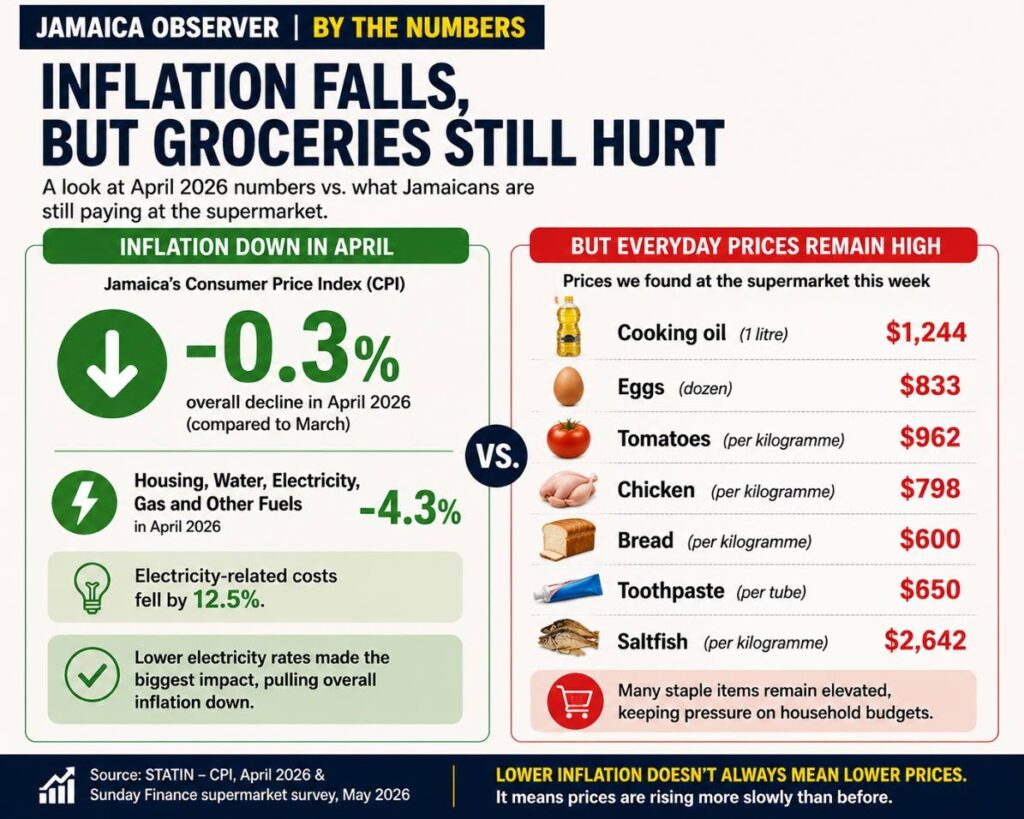
    Jamaica’s national inflation rate recorded another downward shift in April, with official data pointing to sharp drops in electricity costs as the primary driver. The Statistical Institute of Jamaica (Statin) announced that the country’s Consumer Price Index (CPI) fell by 0.3% for the month, a move that looks encouraging on paper but has failed to translate into tangible relief for the majority of Jamaican households.

    The reality on the ground tells a more complicated story: grocery costs remain elevated, petrol prices have climbed once again, rent stays at historically high levels, school fees are increasing, and dining out has grown more expensive. After years of consecutive price hikes triggered by the COVID-19 pandemic, global supply chain disruptions, and repeated hurricane damage to local infrastructure and agriculture, most families are still adjusting to a permanently higher cost of living that shows little sign of reversing.

    This gap between falling official inflation figures and widespread persistent financial pressure has emerged as one of the most widely misunderstood features of Jamaica’s current economy. The confusion stems from a common misinterpretation: lower inflation does not mean prices are decreasing across the board. Instead, it simply means that prices are rising at a slower pace than they were previously. In April’s case, the overall decline was only made possible by a single large category — electricity — dropping enough to cancel out price increases across every other major sector.

    Statin’s breakdown confirms this disparity: food prices rose by 0.6% in April, led by a dramatic 6.2% jump in the cost of fruits and nuts including ripe bananas, oranges, and watermelon. Higher petrol prices also pushed up overall transport costs for consumers and businesses alike. That means while the headline inflation number moved downward, most of the goods and services Jamaicans purchase on a regular basis continued to get more expensive.

    This mismatch explains why so many households still feel financially squeezed even though headline inflation now sits squarely within the Bank of Jamaica (BOJ)’s official target range, a development policymakers frame as a sign of economic stability.

    Clearing Up the Inflation Misconception

    A core source of public confusion is the frequent mixing up of inflation and general price levels. Inflation does not measure how cheap or expensive goods are — it measures the rate at which prices are changing over time. For example, if inflation falls from 8% to 4%, prices are still going up; they are just increasing at half the speed they were previously.

    After several years of sustained high inflation across the global economy, most prices remain far higher than they were in the pre-pandemic period. A family that once spent JMD 15,000 a week on groceries may now pay JMD 23,000 or more for the same basket of goods. Even if inflation slows sharply, prices almost never drop back to their previous levels, leaving families permanently adjusting to higher costs. This is the key reason official inflation statistics and everyday lived experience so often feel out of alignment: official numbers may show stabilizing price growth, but consumers are still dealing with long-term financial fatigue from cumulative increases.

    Electricity Carries the Weight of April’s Decline

    April’s drop in inflation was driven almost entirely by a single factor: falling electricity costs. Statin reports that the “Housing, Water, Electricity, Gas and Other Fuels” category fell by 4.3% in April, after electricity costs themselves dropped by 12.5%. This shift is economically significant, because electricity touches nearly every part of the national economy. Lower electricity costs can reduce pressure on businesses, transport operators, manufacturers, distribution networks, and household budgets all at the same time.

    Over the past year, Jamaica’s inflation trends have increasingly been shaped by movements in global energy prices, paired with weather-related disruptions to local food production. When global oil prices ease and fuel-related utility charges fall, inflation tends to soften quickly. Food prices, by contrast, follow a much more volatile pattern.

    Agricultural prices remain extremely vulnerable to droughts, hurricanes, supply chain breakdowns, and seasonal shortages, and this volatility consistently shows up in monthly inflation data. Over the 12 months leading up to April, prices for fruits and nuts jumped 26.3%, while fish and seafood costs rose 11.4%, both adding steady upward pressure to household grocery budgets. This explains why consumers feel the impact of inflation most acutely at supermarkets and local markets, even when the overall headline inflation rate is moderating.

    What This Means for the Bank of Jamaica’s Policy

    The Bank of Jamaica does not aim to drive prices down across the entire economy — its core mandate is to prevent inflation from becoming unstable and eroding purchasing power too quickly. Sustained high inflation creates widespread economic uncertainty: businesses struggle to set accurate prices for goods and services, borrowing becomes riskier for all parties, savings lose value more quickly, consumers delay major discretionary purchases, and long-term investment decisions become far harder to make.

    To avoid these outcomes, the BOJ targets an inflation range of 4% to 6%. April’s 4.3% year-over-year inflation rate falls comfortably within that target, a reading that is widely expected to reinforce the central bank’s plan to keep interest rates relatively stable when the Monetary Policy Committee meets later this month.

    Stable interest rates have direct benefits for consumers: higher rates push up the cost of mortgages, car loans, credit cards, and business borrowing, so holding rates steady eliminates the risk of even higher debt repayments for households and enterprises. But stable, moderate inflation does not immediately solve widespread affordability problems — it primarily prevents economic conditions from worsening more quickly than they otherwise would.

    The Long-Term Structural Shift in Living Costs

    What Jamaica appears to be entering right now is not a return to the era of cheap living many consumers remember, but rather a period of slower, more stable price growth after years of rapid increases. These are two very different outcomes.

    For decades before the pandemic, the global economy saw unusually low inflation, and consumers grew accustomed to gradual, barely noticeable price increases. The post-pandemic world upended that reality entirely. Global shipping disruptions, geopolitical conflicts, climate-related extreme weather, widespread labor shortages, and energy market volatility pushed costs higher across dozens of sectors at the same time.

    Many economists now believe the global economy is entering a structurally more inflationary era than the period that existed before 2020. If that prediction holds, consumers will need to adjust their expectations of what counts as a “normal” price level. This does not mean inflation will spin out of control, but it does mean households will likely continue facing elevated costs even when headline inflation appears statistically stable.

    Broader Social and Political Implications

    Inflation is never just an economic metric — it is a major driver of public mood and political sentiment. When workers find their salaries do not stretch far enough to cover basic needs, public frustration grows regardless of what official statistics report. This dynamic has left governments around the world struggling politically even as inflation rates have moderated from their post-pandemic peaks.

    Consumers experience prices through deeply personal, repeated encounters: the weekly grocery checkout total, the daily taxi fare, the monthly electricity bill, school lunch costs, and the quarterly rent payment. Food inflation in particular hits harder psychologically, because consumers encounter price increases at the grocery store every week, making the pressure impossible to ignore.

    In Jamaica’s context, this pressure is especially acute because wages in most sectors have not kept pace with cumulative price increases over the past five years. Even with inflation slowing, many households are still working to recover financial ground after years of eroding purchasing power.

    The real question facing Jamaican policymakers and households right now is not whether inflation is falling. Instead, the more critical question is whether incomes will rise fast enough to rebuild consumers’ purchasing power after several years of economic hardship. For most families, the only economic statistic that matters ultimately comes down to one simple, practical question: when will it be affordable to live comfortably again?


  • Late own goal gifts Montego Bay lead over Cavalier after JLP first-leg semis

    Late own goal gifts Montego Bay lead over Cavalier after JLP first-leg semis

    KINGSTON, Jamaica — The opening round of the Jamaica Premier League’s semi-final stage delivered a tense, dramatic encounter at the National Stadium on Sunday, where Montego Bay United secured a fragile one-goal advantage over reigning title holders Cavalier FC ahead of Wednesday’s decisive second leg at the same ground.

    From the opening whistle, Montego Bay, the western Jamaican side, controlled large stretches of the match, pinning Cavalier back in their defensive half and creating a string of dangerous chances. However, the defending champions’ backline held firm for nearly 90 minutes, frustrating Montego Bay’s attacking efforts and keeping the scoreline deadlocked.

    The first big moment of the game came in the opening 45 minutes, when Malachi Sterling thought he had put Montego Bay ahead, only for the assistant referee’s flag to rule out the effort for offside, leaving his side still waiting for a breakthrough. After halftime, Montego Bay came close again: Dwight Merrick fired a powerful shot that beat Cavalier’s goalkeeper, but the effort bounced off the crossbar, sparing the defending champions from falling behind.

    It was not until three minutes into stoppage time at the end of the second half that the deadlock was finally broken — and it came from an uncharacteristic mistake from Cavalier midfielder Adrian Reid Jr. Attacking a corner delivered into the box by Montego Bay, Reid accidentally redirected the ball past his own goalkeeper, handing Montego Bay a last-gasp 1-0 advantage. The late own goal gives Montego Bay a critical slim lead heading into the second leg, setting up a high-stakes decider for a spot in the league final.

  • WHO declares international emergency as Ebola outbreak kills more than 80 in DR Congo

    WHO declares international emergency as Ebola outbreak kills more than 80 in DR Congo

    In a high-stakes announcement made on Sunday, the World Health Organization (WHO) has formally designated the ongoing Ebola outbreak driven by the rare Bundibugyo strain in the Democratic Republic of the Congo (DRC) as a Public Health Emergency of International Concern (PHEIC), marking one of the most urgent global health alerts in recent years. This declaration comes as the outbreak, which has no licensed vaccine or targeted treatment, has already claimed more than 80 lives and crossed international borders, triggering widespread alarm among public health officials.

    The confirmation of an infected case in Goma, a major eastern DRC city located in territory controlled by the Rwanda-backed M23 militia, amplified fears of wider uncontrolled spread on Sunday. According to preliminary data released Saturday by the Africa Centres for Disease Control and Prevention (Africa CDC), the outbreak has so far been linked to 88 recorded deaths and 336 suspected cases of the deadly, highly contagious haemorrhagic fever.

    Professor Jean-Jacques Muyembe, director of the Congolese National Institute for Biomedical Research (INRB), confirmed the Goma case in a statement to AFP, explaining that the patient is the widow of an Ebola victim who died in Bunia, the capital of Ituri province. The woman had already contracted the virus when she traveled from Bunia to Goma following her husband’s death, he said.

    WHO Director-General Tedros Adhanom Ghebreyesus voiced deep concern over the accelerating spread of the outbreak in his official announcement posted to the social platform X. While formally classifying the event as a PHEIC, the WHO’s second-highest alert level under international health regulations (IHR) — with a full pandemic designation reserved as the highest level — Ghebreyesus noted that the outbreak does not yet meet the formal criteria for a pandemic under existing global health rules.

    The WHO emphasized that the full scope of the outbreak remains shrouded in uncertainty. “There are significant uncertainties to the true number of infected persons and geographic spread,” the global health body stated in its official briefing.

    Medical humanitarian organization Doctors Without Borders (MSF) has already begun mobilizing for a large-scale emergency response, with officials describing the outbreak’s rapid growth as “extremely concerning.” DR Congo’s Health Minister Samuel-Roger Kamba highlighted a critical gap in medical tools to fight the outbreak: “The Bundibugyo strain has no vaccine, no specific treatment,” he said, adding that the strain carries an exceptionally high fatality rate that can reach 50 percent.

    First identified in 2007, the Bundibugyo strain has already caused a death outside DR Congo’s borders: officials confirmed Saturday that a Congolese national has died of the disease in neighboring Uganda. Currently, licensed Ebola vaccines only exist for the more well-known Zaire strain, which was first documented in 1976 and carries an even higher fatality rate of 60 to 90 percent.

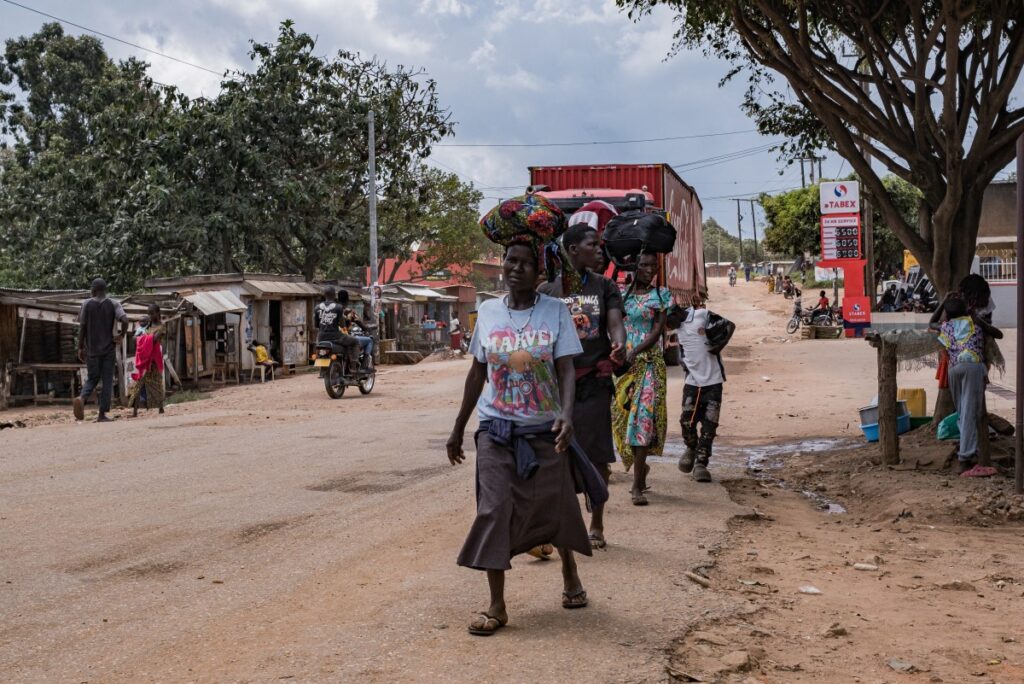
    The outbreak was first officially confirmed in Ituri province, a northeastern region of DR Congo that borders Uganda and South Sudan, on Friday, though local residents report deaths from unexplained illness stretching back two weeks. “We’ve been seeing people die for the past two weeks,” Isaac Nyakulinda, a local civil society representative, told AFP via phone. “There is nowhere to isolate the sick. They are dying at home and their bodies are being handled by their family members.”

    According to DR Congo’s health minister, the index case, or patient zero, was a nurse who first presented Ebola-like symptoms at a Bunia health facility on April 24. Common symptoms of the viral disease include fever, internal and external bleeding, and vomiting.

    Trish Newport, MSF’s Emergency Programme Manager, who is coordinating the group’s deployment of medical and support staff to the affected region, echoed widespread alarm. “The number of cases and deaths we are seeing in such a short timeframe, combined with the spread across several health zones and now across the border, is extremely concerning,” she said.

    Adding to response challenges, DR Congo — a nation of more than 100 million people with a land mass four times the size of France — suffers from severely underdeveloped transport and communications infrastructure, making large-scale movement of critical medical equipment a major obstacle.

    This outbreak marks the 17th Ebola event to hit DR Congo, and public health officials have repeatedly warned the risk of further geographic spread is very high. Since most cases are concentrated in hard-to-reach conflict-affected areas, only a small fraction of suspected infections have been tested in certified laboratories. Still, the WHO notes that the high positivity rate of tested samples, the spread to two separate countries, and growing reports of new suspected cases “all point towards a potentially much larger outbreak than what is currently being detected and reported, with significant local and regional risk of spread.”

    The previous Ebola outbreak in the region was declared eradicated in December last year, after killing at least 34 people between August and December 2023. Over the past 50 years, Ebola has killed roughly 15,000 people across Africa, even amid major advances in vaccine development and treatment. The 2018 to 2020 Ebola outbreak in eastern DR Congo remains the deadliest on record for the country, killing nearly 2,300 people.

    Believed to originate in bat populations, Ebola causes severe bleeding and organ failure in infected patients. Across all past outbreaks, the overall mortality rate ranges between 25 percent and 90 percent, per WHO data. The virus spreads between humans through contact with bodily fluids or infected blood, with patients only becoming contagious after they develop symptoms. The incubation period for Ebola can last up to 21 days, allowing undetected spread before symptoms appear.

  • WATCH: Cop interdicted after woman killed in Granville police shooting

    WATCH: Cop interdicted after woman killed in Granville police shooting

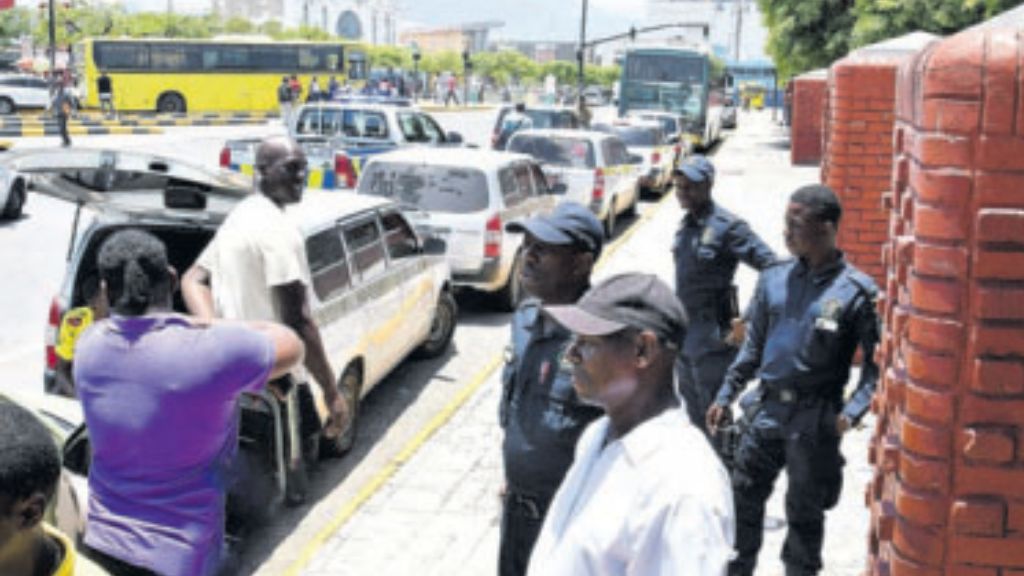
    In the quiet community of Granville, St James, Jamaica, a fatal shooting involving an on-duty Jamaica Constabulary Force (JCF) officer has ignited public anger and triggered swift administrative action over the weekend. The victim, 44-year-old Latoya Bulgin, a local resident widely known by her nickname “Buju”, was killed during what law enforcement initially described as a confrontation with security personnel.

    Late Sunday, the JCF High Command issued an official statement confirming that the officer involved has been immediately interdicted from duty pending a full probe. The command emphasized that it holds deep concern over the suspicious circumstances surrounding Bulgin’s death, and moved quickly to notify two independent oversight bodies – the Independent Commission of Investigations (INDECOM) and the Inspectorate Professional Standards Oversight Bureau (IPROB) – to lead the independent investigation. Both agencies have already launched their comprehensive inquiries after the High Command ordered the suspension following a preliminary review of available evidence, including closed-circuit television footage from the area.

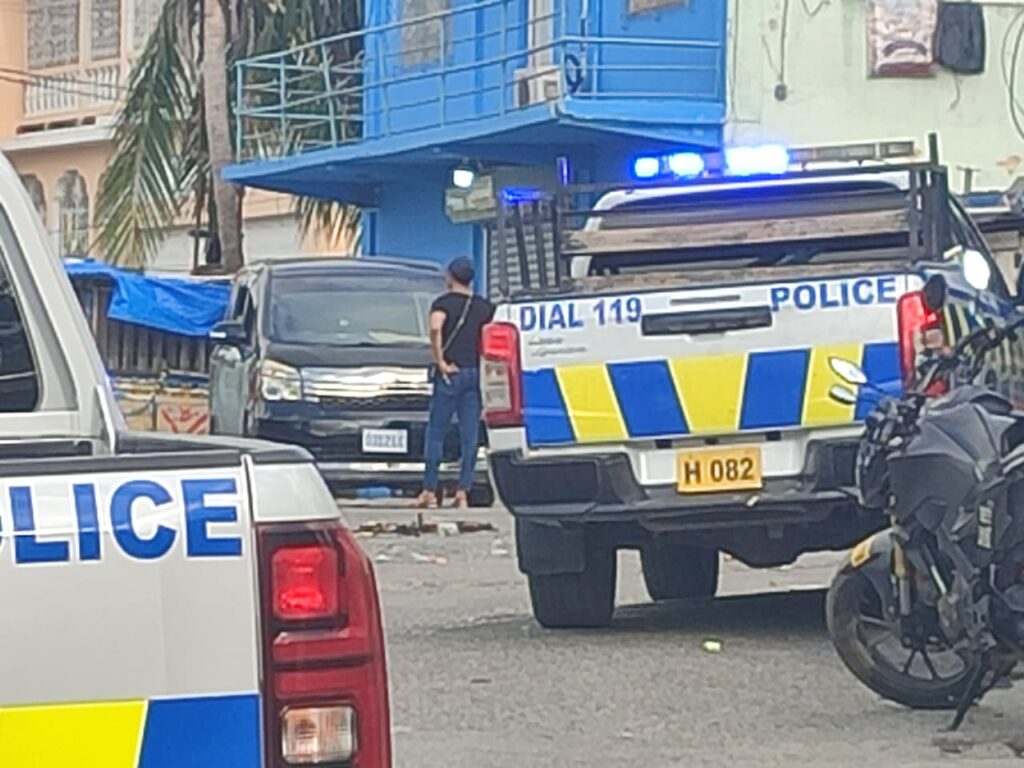
    Surveillance video obtained from local cameras has provided critical visual context for the incident, contradicting initial claims of a violent confrontation. The footage reveals that Bulgin was driving a black Toyota Voxy en route to a community protest in downtown Montego Bay when the incident unfolded. The protest had been organized to mark the death of 17-year-old Tjey Edwards, who lost his life the previous Sunday in another incident that locals allege also involved a member of the security forces.

    According to the recorded timeline from the CCTV footage, Bulgin’s vehicle came to a stop in Granville Square, where other passengers began exiting the car shortly after officers approached to interact with the vehicle’s occupants. Within seconds, as the Voxy pulled back onto the main roadway, the JCF officer drew what appeared to be a service firearm and fired a shot. After the shooting, officers removed the wounded Bulgin from the vehicle and transported her to a local hospital in a JCF service vehicle, though she could not be saved.

    In the wake of the shooting, furious local residents have publicly accused the JCF of extrajudicial murder, calling for full accountability for the officer involved. Local lawmaker Marlene Malahoo Forte, the Member of Parliament for St James West Central, arrived at the scene within hours to address the gathered crowd. Speaking to angry, grieving residents, Malahoo Forte acknowledged that the shooting was unjust and validated the community’s right to be angry and seek answers.

    She highlighted that the availability of clear CCTV footage would support a fast, transparent investigation, and appealed to residents to avoid any retaliatory actions that could bring harm or negative consequences to their community. “I know the community is angry, grieving and searching for answers. The good thing is that the investigation is being assisted by camera footage and the investigation has proceeded swiftly,” Malahoo Forte told the crowd. She urged residents to remain lawful, warning that unrest would only undermine efforts to get to the truth, and pledged to work closely with investigators to ensure full transparency and that the full facts of the case are brought to light.

  • Fernandes equals assist record as Man United edge Forest thriller

    Fernandes equals assist record as Man United edge Forest thriller

    MANCHESTER, England – In a tense, eventful final home game of the 2024-25 Premier League season, Bruno Fernandes matched the league’s single-season assist record of 20, powering Manchester United to a narrow 3-2 victory over Nottingham Forest that locked in third place for the Red Devils.

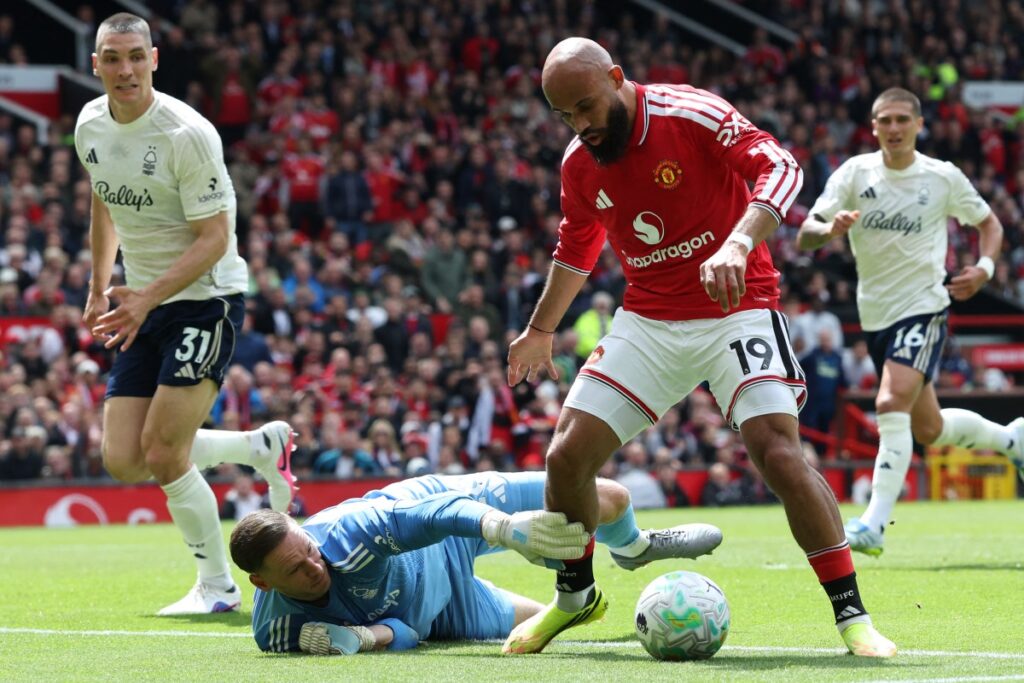
    Fresh off being named the Football Writers’ Association Player of the Season, Fernandes joined elite company, drawing level with Arsenal legend Thierry Henry and current Manchester City playmaker Kevin De Bruyne for the most assists in a single Premier League campaign. His milestone assist came in the 76th minute, when a drilled cross from the Portuguese captain was deflected into the net by Forest forward Bryan Mbeumo for United’s third goal.

    The result extended a stunning turnaround for United since interim manager Michael Carrick took over first-team duties in January, and reports confirm the former United midfielder is set to sign a two-year permanent contract to stay in charge at Old Trafford in the coming days. Third place guarantees United a spot in next season’s UEFA Champions League, marking a strong recovery from a poor first half of the campaign. For Forest, the trip to Old Trafford came just one week after the club secured its Premier League survival, meaning both sides went into the contest with their primary seasonal targets already checked off.

    That low-stakes context opened the door for an open, end-to-end clash that delivered goals and controversy from the opening minutes. United broke the deadlock as early as the fifth minute, when Luke Shaw volleyed home a well-placed cross to put the hosts ahead. Both squandered multiple clear scoring chances before halftime, but Forest pulled level just seven minutes after the restart: Elliot Anderson delivered a pinpoint cross to the back post, where defender Morato nodded home his first goal for the club.

    The game’s most contentious moment came shortly after, when United’s Matheus Cunha scored to restore the hosts’ lead. The build-up saw the ball ricochet off Mbeumo’s thigh onto his arm before falling to Cunha, but referee Michael Salisbury upheld his original decision to award the goal after a lengthy VAR review – a rare outcome for a handball incident in modern Premier League play.

    Fernandes’ record-tying moment followed 14 minutes from full time, before Forest hit back once more to cut the deficit. Anderson combined with England international Morgan Gibbs-White, who made his first appearance since suffering a severe facial injury in a collision with Chelsea goalkeeper Robert Sanchez earlier this month, and Gibbs-White coolly slotted into the bottom corner to make the score 3-2.

    The match also featured an emotional send-off for Brazilian midfielder Casemiro, who received a standing ovation from the Old Trafford crowd when he was substituted off in the 81st minute, widely expected to be his final appearance on the ground before a summer transfer exit.

    In stoppage time, Fernandes came inches away from breaking the all-time record, picking out Diogo Dalot with a perfectly weighted pass only for the full-back to hit the post with his effort. Speaking after the final whistle, Fernandes emphasized that team honors matter more to him than personal milestones.

    “I want collective awards more than anything,” he said. “But knowing that your job is being recognised by many people, a lot of players came out and said I was player of the season, for that I am very grateful. I got to 20 today. We have one more game. The manager decides who will play the next game. I will be very happy to do it. But if I don’t, I am already happy because it is the most assists I have got in the Premier League.”

    In his end-of-season address to fans, Carrick struck an optimistic tone about the club’s future, highlighting the rapid progress the side has made since he took charge. “We’ve had some big, big moments, big goals and big results in this place over the last few months,” Carrick said. “Hopefully there’ll be a few more of them.”

  • Amid strike threat, finance and transport ministers to meet with public transport operators

    Amid strike threat, finance and transport ministers to meet with public transport operators

    Growing unrest among Jamaica’s public transport operators over their long-running push for adjusted ticket prices has prompted the country’s Ministry of Transport to call a high-stakes stakeholder meeting set to kick off on Monday, May 18, 2026. Scheduled for 10 a.m. at the Transport Centre located in Half-Way-Tree, St. Andrew, the gathering will bring together senior officials from the Transport Authority and leadership from groups representing bus and taxi operators across the nation. Finance and Public Service Minister Fayval Williams is slated to deliver key remarks during the discussions, the ministry confirmed in an official statement issued late Sunday.

    The intensification of operators’ demands comes directly on the heels of steep global fuel price increases, triggered by ongoing geopolitical frictions that have sent energy costs soaring across international markets. Transport operators, already grappling with years of unmet requests for fare adjustments, now face amplified operational cost pressures from the fuel price shock, pushing their demands to a breaking point.

    In a comment released alongside the meeting announcement, Transport Minister Daryl Vaz emphasized that the Jamaican government remains acutely attuned to the dual pressures facing both transport workers and ordinary citizens. “The Government is sensitive to challenges facing members of the public who have been trying to cope with price adjustments caused by developments across the globe,” Vaz noted. The minister went on to acknowledge the legitimacy of operators’ concerns, pointing out that their wait for a fare revision has stretched across multiple years, and that the sudden spike in fuel costs has only deepened their financial strain.

    Vaz, who has held direct discussions with transport representative groups over the past several years on this very issue, stressed the urgent need for a balanced resolution. “We also recognise that it is important that a balance be struck and a solution arrived at which does not have major negative consequences for our economy and wider society,” he said. Calling for calm deliberations through the negotiation process, Vaz reaffirmed the government’s commitment to finding an outcome that addresses operators’ legitimate grievances without exacerbating the broader cost-of-living crisis that ordinary Jamaican households currently contend with. “We seeks to arrive at a solution that causes the least possible dislocation across the country but is also responsive to their genuine concerns and also mindful of the cost of living challenges which face the wider population,” he added.

  • Iran have ‘constructive’ meeting with FIFA over World Cup preparations

    Iran have ‘constructive’ meeting with FIFA over World Cup preparations

    In a pivotal weekend meeting hosted at the Turkish Football Federation’s Istanbul headquarters, FIFA and the Iranian Football Federation (IRIFF) have wrapped up discussions focused on paving the way for Iran’s smooth participation in the 2026 FIFA World Cup, co-hosted by the United States, Canada and Mexico. Top FIFA official Secretary General Mattias Grafstrom characterized the closed-door talks as both excellent and constructive, echoing positive feedback from Iranian federation leadership.