标签: Jamaica

牙买加

  • Unity Cup gets FIFA Tier 1 designation – report

    Unity Cup gets FIFA Tier 1 designation – report

    LONDON — Just days ahead of its opening kickoff at Charlton Athletic’s London stadium, the four-nation Unity Cup has secured official confirmation as a FIFA Tier 1 international football competition, multiple football sources have confirmed. The designation grants every match in the tournament full international recognition under FIFA’s governing rules, though a key caveat means player appearances will not be added to their official national team cap counts. The unusual arrangement stems from the tournament’s scheduling outside of FIFA’s official international match window, which does not open until June 1 this year.

    Four national men’s teams will compete for the title: Nigeria, Jamaica’s Reggae Boyz, India, and Zimbabwe. The tournament kicks off May 26 with the first of two semi-final matches, as Nigeria takes on Zimbabwe in the opening fixture. The second semi-final will follow a day later, on May 27, pitting hosts-region side Jamaica against India. Both the third-place playoff and the tournament final are scheduled to take place on May 30 at Charlton’s home ground.

    For Jamaica, this tournament marks a return to the Unity Cup for the third consecutive iteration. The Reggae Boyz have advanced to the final in both of their prior appearances, but have fallen to Nigeria on both occasions. Most recently in 2025, Jamaica forced a 2-2 draw against Nigeria after full time, only to lose the title in a penalty shootout.

    As of Sunday, England-based players called up to the Jamaican national squad have already begun arriving at the team’s pre-tournament training camp in London. Jamaican-based players are scheduled to complete their arrival by Monday, just one day ahead of the Reggae Boyz’s semi-final opener.

  • New dairy rules aim to close loopholes

    New dairy rules aim to close loopholes

    During a legislative sitting held Friday, Jamaica’s Senate advanced two key industry-focused bills, drawing heated debate over proposed changes to the island nation’s dairy regulatory framework and bipartisan support paired with pointed oversight concerns for reforms to conch export levy rules. The most contentious of the two pieces of legislation is the amendment to the 2026 Jamaica Dairy Development Board Act, which redefines qualifying dairy products to include items containing as little as 5% milk solids — a sharp drop from the previous 50% threshold set in alignment with European Union regulations. The bill also expands the formal definition of milk beyond cattle to include milk from all animal sources, a change framed by government legislators as a long-overdue modernization aligned with global industry trends. Piloting the legislative debate, Government Senator Aubyn Hill framed the amendments as a targeted fix for longstanding regulatory gaps that have allowed unregulated imported dairy-containing products to enter Jamaican markets. He noted that major North American markets including the United States and Canada have already updated their own dairy classifications to include milk from small ruminants like goats and sheep, and Jamaica’s update brings the nation into line with these shifting international standards. Explaining the rationale for the dramatically lower milk solids threshold, Hill emphasized that the original 50% requirement was far too restrictive, creating a loophole that allowed a wide range of processed products with significant dairy content to avoid classification as dairy products entirely, slipping past regulatory oversight and skipping required cess payments. “To create a clear, consistent regulatory framework in Jamaica, we are establishing a five per cent milk solid content threshold for set purposes in relation to the trade of milk products and milk by-products,” Hill told the chamber. Under the new rule, any product with more than 5% milk solids will be formally classified as a dairy product, requiring official import approval and falling under full regulatory supervision, a change Hill argues will strengthen, rather than weaken, the nation’s food import oversight. But the changes have drawn sharp pushback from opposition legislators, who warn the amendment threatens Jamaican food safety standards, hurts local dairy producers, and creates unaddressed regulatory ambiguity. Opposition Senator Allan Bernard argued that the new, lower threshold will disproportionately benefit importers of heavily processed imported dairy substitutes, while putting additional economic strain on local dairy farmers who are already grappling with spiking input costs for feed, land and energy. Bernard also raised questions about the vague, broad language of the updated definition of milk, which now includes milk from “any animal.” “Jamaicans will legitimately ask, what exactly does any animal mean? What limitations exist? What protections are established? And who determines what may ultimately enter the Jamaican food chain under the label of dairy?” Bernard asked. Hill rejected these criticisms, asserting that Bernard had misinterpreted the core purpose of the amendment, repeating that the lower threshold brings more imported products under regulation rather than opening the market to uninspected goods. Alongside the dairy amendments, the Senate also unanimously approved the 2026 Conch (Export Levy) (Amendment) Act, a bill designed to give conch exporters much-needed financial flexibility during periods of industry disruption. The new framework authorizes the relevant government minister to approve instalment payments for export levies tied to licences and health certificates, extend payment deadlines for up to 12 months, and waive or reduce levy obligations under specific circumstances, following formal recommendations from Jamaican fisheries authorities. Hill explained that the reform is a direct response to the growing frequency of disruptive events that upend conch fishing operations, from severe weather events driven by climate change to unexpected external trade shocks. “The rationale for this amendment is that, in the event of a disruption in the fishing season, for instance severe weather conditions and or other external trade factors, this enlarged period would provide adequate time for an exporter of conch to make the relevant payment of the levy,” he said. While opposition legislators supported the bill, they used the debate to highlight longstanding concerns about unsustainable fishing practices, including illegal poaching and overfishing in Jamaican waters, and questioned the effectiveness of the Fisheries Management and Development Fund in protecting the nation’s wild conch stocks. In response, Hill confirmed that the Andrew Holness administration has significantly bolstered maritime enforcement capacity by expanding the coast guard’s fleet of well-armed patrol vessels, cracking down on unauthorised foreign vessels that enter Jamaican waters to poach fish and other marine resources. “No country really is going to get rid of illegal fishing entirely…but what we have to do is make sure we reduce the level — and that is a continuing work,” Hill added. Both pieces of legislation have now passed the Senate and will move forward to the next stage of implementation.

  • WATCH: Mayor urges calm after murder of beloved Papine Market supervisor

    WATCH: Mayor urges calm after murder of beloved Papine Market supervisor

    A brutal mid-afternoon shooting at Jamaica’s Papine Market has left a well-loved local staff member dead and sent shockwaves through the adjacent Mona Commons community, prompting Kingston’s top official to plead for restraint amid public grief and anger.

    Colleen Bernard, a long-serving supervisor at the popular public market, was gunned down in a public attack this past Friday. Within hours of the shooting, law enforcement officers launched an urgent manhunt for the perpetrator. Pursuing the suspect across the area, police eventually intercepted the shooter, who was wounded in the confrontation and remains hospitalized for treatment as of the latest updates.

    Two days after the killing, Kingston Mayor Andrew Swaby — who also serves as chair of the Kingston and St Andrew Municipal Corporation (KSAMC) — released a public video address directly to residents of the nearby Mona Commons neighborhood. In the message, Swaby urged community members not to resort to vigilante justice in response to Bernard’s death, emphasizing that official investigations remain in their early stages.

    “In moments like this, it’s only natural for people to want to form their own conclusions about what happened, but right now, many critical details are still unconfirmed,” Swaby said in the address. He stressed that the responsible path forward is to let trained police investigators complete their work unimpeded by community unrest.

    Swaby also shared that the entire KSAMC workforce is reeling from the unexpected loss of one of their own. “Colleen was an exceptional, dedicated worker,” he said, describing the attack as a pointless act of violence. “It’s senseless that someone would walk into a busy public market, take her life, and then try to run away.”

    The mayor publicly praised responding police officers for their rapid work that led to the suspect’s apprehension. Looking ahead, Swaby confirmed that municipal leaders are already reviewing next steps to improve public safety at the market, and will arrange professional mental health counselling for both market staff and vendors who witnessed the traumatic incident.

  • Haitian group calls for reparations, TPS

    Haitian group calls for reparations, TPS

    On the commemoration of one of Haiti’s most foundational historic milestones, the California-based Haitian Bridge Alliance (HBA) has spotlighted the enduring revolutionary legacy of the world’s first independent Black republic, while issuing urgent calls for reparative justice from France, a long-term extension of Temporary Protected Status (TPS) for Haitian residents in the United States, and equitable systemic change for Haitian people at home and abroad.

    Haiti’s path to independence, cemented in 1804 after the only successful large-scale enslaved people’s revolt in modern history, redefined global conversations about liberation and self-governance. Ahead of the annual observance of the 1803 adoption of the Haitian flag during the Arcahaie Congress, HBA Executive Director Guerline Jozef spoke with the Caribbean Media Corporation (CMC) in San Diego, framing the commemoration as both a celebration of resistance and a call to address unresolved historical and contemporary crises.

    “Haiti remains a global beacon of Black liberation, resistance, and self-determination,” Jozef said. “As we honor this landmark moment, we are demanding reparative justice from France and an immediate extension of Temporary Protected Status for Haitian nationals living in the United States.”

    This year’s observance unfolds against a backdrop of deepening humanitarian catastrophe across Haiti. Jozef highlighted that latest data from the United Nations and leading humanitarian agencies confirms roughly 1.4 million Haitians have been displaced by widespread violence and political instability, while millions more grapple with acute food insecurity and severely limited access to clean water, healthcare, and other basic necessities. More than 2.6 million Haitian children currently require life-saving humanitarian assistance, she added.

    Despite the cascading crises facing their home country, Jozef emphasized that Haitian communities in the U.S. — including current TPS holders — make substantial, underrecognized contributions to the American economy and workforce. TPS alone, the temporary protection that prevents deportation and allows work authorization for Haitians unable to return to their unstable home country, has allowed hundreds of thousands of Haitians to fill critical gaps across key U.S. sectors. Jozef noted that Haitian TPS holders contribute an estimated $5.9 billion annually to U.S. gross domestic product, pay roughly $1.5 billion each year in combined federal, state, and local taxes, and around 200,000 Haitian TPS holders are active in the U.S. workforce, holding essential positions in healthcare, elder and childcare, agriculture, transportation, and service industries.

    Beyond contributions within U.S. borders, the Haitian diaspora serves as a critical economic lifeline for the country itself. Jozef reported that in 2024, remittances from Haitians living abroad to family in Haiti totaled roughly $4.5 billion, a sum that makes up a large share of Haiti’s overall national economy and sustains millions of households.

    A core demand of the Haitian Bridge Alliance this year is renewed pressure for France to pay reparations for the crippling “independence debt” imposed on Haiti immediately after it won its freedom. This historic financial extraction, which required Haiti to pay reparations to French enslavers for lost property (the enslaved people who won their freedom), is widely documented by economists and historians as a root cause of decades of economic underdevelopment that has burdened generations of Haitians.

    “Haitian Flag Day is a reminder that Haiti altered the trajectory of world history through its unyielding fight for Black freedom,” Jozef said. “Yet more than two centuries later, Haitians continue to live with the aftermath of centuries-old exploitation, ongoing political instability, anti-Black U.S. immigration policies, and widespread family separation. The international community cannot claim to celebrate Haiti’s revolutionary legacy while turning a blind eye to the conditions force Haitians to flee their homes, and the foreign and domestic policies that continue to destabilize Haitian communities.”

    Advocacy led by HBA and its partner organizations has already yielded incremental progress on the TPS extension front. Jozef noted that last month, the U.S. House of Representatives passed legislation — spearheaded by Massachusetts Congresswoman Ayanna Pressley — that would extend TPS protections for Haitian nationals for an additional three years. HBA is now actively lobbying the U.S. Senate to move forward with a matching bill to cement the extension into law.

    The organization continues its advocacy across both legislative chambers and the court system, Jozef added, working not only on behalf of Haitian TPS recipients but also supporting all immigrant communities, with a particular focus on those from marginalized, historically excluded backgrounds.

    “On this Haitian Flag Day, the Haitian Bridge Alliance calls for an immediate end to deportations to Haiti, lasting protection for Haitian families in the United States, meaningful international engagement centered on Haitian-led solutions, and serious, good-faith dialogue around reparative justice and long-term stability that allows the Haitian people to thrive and prosper,” Jozef said.


  • Rajindra Campbell breaks national record, Jackson wins 200m at Diamond League

    Rajindra Campbell breaks national record, Jackson wins 200m at Diamond League

    The second stop of the 2025 Diamond League track and field circuit, held Saturday in Xiamen, China, delivered a night of record-breaking performances highlighted by standout efforts from Jamaican athletes and a historic run from American hurdler Masai Russell.

    One of the biggest stories of the competition came from shot putter Rajindra Campbell, the Olympic bronze medalist who made global headlines recently when World Athletics denied his and three other Jamaican athletes’ requests to switch national allegiance to Turkey. Undeterred by the off-track controversy, Campbell launched a 22.34-meter throw that shaved three centimeters off his own 2024 Jamaican national record, set earlier that year in Croatia. The mark pushed Campbell to second place in the global shot put rankings, outperforming a pair of top American competitors: Jordan Geist, who took silver with a 21.52-meter throw, and Olympic star Ryan Crouser, who notched a season’s best 21.41 meters to round out the top three.

    In the women’s 200-meter sprint, Jamaican sprinter Shericka Jackson continued her fine form this season, clocking a new season’s best time that improved on the mark she set just one week prior. Jackson surged ahead of the pack coming off the final turn, pulling away from the field with a smooth, controlled stride to cross the line well clear of her competitors. Her time also broke the existing Xiamen meet record of 22.41 seconds set by American sprinter Anavia Battle in 2024. In a repeat of the previous weekend’s podium, Shaunae Miller-Uibo of the Bahamas took second place with a 22.04-second run, while Battle earned third with 22.29 seconds.

    Long jump delivered its own share of standout results, led by Greek Olympic and world champion Miltiadis Tentoglou, who claimed gold with a season’s best 8.46-meter jump. The mark matched the 2025 global leading distance and broke the previous meet record of 8.18 meters set by China’s Zhang Mingkun last year. Jamaican Olympic and world medalist Tajay Gayle notched a massive personal improvement from his 7.93-meter result at the previous week’s Shanghai-Keqiao meet, leaping to a season’s best 8.32 meters to take second place. Fellow Jamaican Wayne Pinnock finished sixth with a 7.93-meter jump, matching his own season’s best.

    In the men’s 110-meter hurdles final, American Jamal Britt took gold with a 13.07-second run that equaled his personal best. Japan’s Rachid Muratake claimed silver with 13.13 seconds, while Jamaica’s Orlando Bennett rounded out the podium with 13.20 seconds, matching his 2025 season’s best.

    Jamaica’s Lamara Distin took third place in the women’s high jump, clearing 1.94 meters behind a pair of Ukrainian competitors: gold medalist Yulia Levchenko, who cleared 1.99 meters, and silver medalist Iryna Gerashchenko, who hit 1.97 meters.

    The most historic performance of the day came in the women’s 100-meter hurdles, where American Masai Russell delivered one of the fastest times in the history of the sport. Russell crossed the line in 12.14 seconds, beating her own existing American record of 12.17 seconds. The run also shattered both the Xiamen meet record of 12.45 seconds set by Jasmine Camacho-Quinn in 2024 and the overall Diamond League record for the event. Nigerian world record holder Tobi Amusan took silver with a season’s best 12.28 seconds, while Devynne Charlton of the Bahamas broke her own national record for the second consecutive week, clocking 12.37 seconds to take third. Jamaica’s Ackera Nugent finished sixth in the race with 12.64 seconds, and fellow Jamaican Danielle Williams placed seventh with 12.90 seconds, capping a day of strong results for Caribbean track and field in Xiamen.

  • French mum accused of blindfolding, abandoning sons in Portugal remanded

    French mum accused of blindfolding, abandoning sons in Portugal remanded

    On Saturday, a judicial court in Portugal’s southern port city of Setubal ordered a French woman and her male partner to be held in pretrial detention, following a two-day court hearing over allegations that the pair abandoned her two young sons, aged 4 and 5, on a remote roadside in the country’s south. Beyond charges of child abandonment and endangerment that apply to both suspects, the 55-year-old male partner also faces an additional aggravated assault charge relating to one of the two children, court officials confirmed following closed questioning of the pair. After the hearing concluded, the couple was transported from the courthouse via an unmarked police van, which exited directly through the building’s private garage to avoid public attention.

    The high-profile case has sparked intense public scrutiny in both Portugal and France, ever since the two young boys were discovered crying on the side of a road near the town of Alcacer do Sal, roughly 60 miles south of the Portuguese capital Lisbon, on Tuesday evening. According to local Portuguese media reports, the pair left the children with small backpacks stocked with basic food and water, but no form of identification that could connect the boys to any guardian or family.

    Portuguese law enforcement tracked down and arrested the couple on Thursday at an open-air cafe in Fatima, a central Portuguese pilgrimage town, and they were first brought before an investigating judge at the Setubal court the following day. Speaking to local Portuguese broadcaster SIC, Carlos Canatario, a spokesperson for Portugal’s national GNR police force, described the pair’s demeanor after arrest as deeply disturbing to officers. “After something as shocking as abandoning two small children, finding this couple sitting relaxed at an outdoor cafe for hours was quite shocking,” Canatario said. He added that the couple displayed a striking emotional detachment from the situation: “They did not respond much. They appeared very withdrawn and therefore did not react.”

    During the initial questioning session at the court Friday, the pair was interviewed for multiple hours. As they arrived at the courthouse, the male suspect, identified by authorities only as Marc B. to comply with privacy rules, twice shouted “I love you” in French to onlookers, while the children’s mother, identified as Marine R., hummed a quiet melody. Shortly after midnight on Friday, as Marc B. was being led to a police transport van, he shouted “Portugal Armageddon” toward the crowd of journalists gathered outside the courthouse building. To prevent further public disruption, when transporting the pair back to the courthouse for the second day of the hearing Saturday, law enforcement kept the suspects inside the vehicle until it had fully entered the closed garage and all external doors were secured.

    In the aftermath of the discovery, the two young boys have been placed in the care of a French foster family based in Lisbon, as authorities coordinate arrangements to return the children to their native France. Official records show the brothers had been living with their mother in Colmar, a city in eastern France, while the children’s biological father was granted only limited, supervised visitation rights under a French court order. French law enforcement had been searching for the mother and the two boys since May 11, when the father filed a missing person report for the group, prompting French authorities to issue a cross-border European arrest warrant shortly after.

    New details from the motorist who first encountered the boys have also shed light on the children’s experience. Eugenia Quintas, whose son discovered the abandoned children, told AFP that one of the boys told rescuers the pair had been blindfolded by their mother and told they were searching for a hidden toy. When the children removed their blindfolds, both their mother and her vehicle were already gone. Quintas added that despite the traumatic abandonment, “On them they had an orange, a pear and a bottle of water each. We didn’t see any signs of mistreatment.”

    Investigators have noted that the couple appears to have no prior personal or professional ties to Portugal, which has deepened public curiosity around the motivation for the abandonment. Further reporting on the suspects’ backgrounds has amplified public interest in the case. Marine R. describes herself on public social media profiles as a sexologist specializing in somatic body practices, developmental therapy and trauma care. Marc B., meanwhile, is a former officer with the French national gendarmerie who left the force in 2010; French media reports confirm he has repeatedly shared conspiracy theory and antisemitic content on his public social media accounts.

    This case marks the second high-profile incident involving French citizens in Portugal within the span of a few months. Earlier this year, Portuguese authorities charged French national Cedric Prizzon with murdering his current and former romantic partners in northern Portugal, before fleeing the area with the young children he had with the two women. Portuguese courts have rejected France’s extradition request for Prizzon, ruling that the alleged crimes were committed on Portuguese territory and fall under Portuguese national jurisdiction.

  • The coded messages of folk and mento music

    The coded messages of folk and mento music

    Against the backdrop of Limon, Costa Rica’s annual Marcus Garvey Symposium, one cultural presentation resonated more deeply than most: a dynamic exploration of the hidden coded messaging woven into traditional Jamaican folk and mento music by the Tallawah Mento Band, a group rooted in South Florida’s vibrant Jamaican diaspora. For 30 engaging minutes, founding band member Colin Smith blended interactive discussion with live performance to pull back the curtain on a little-known layer of Caribbean musical history, revealing how the genres’ upbeat, infectious rhythms long served as a clever shield for sharp critique of the brutal plantation system that shaped Jamaican life.

    Smith emphasized that the lyrics of these songs, written in the Jamaican dialect that many cultural stewards and educators now argue deserves classification as a distinct national language rather than “broken English”, carried unapologetic mockery of white planter elites, hidden in plain sight from the ruling class that controlled every aspect of enslaved and post-emancipation Black life. “These musical artforms simultaneously lightened the unbearable challenges of slavery and harnessed collective resilience,” Smith explained to the audience. “They served as a living storybook of our survival, spreading news of plantation activities and developments that doubled as an entertainment and information network, all while evading detection and comprehension by the planter class.”

    The performance was elevated by a guest appearance from acclaimed dub poet Malachi Smith, who joined the band to guide the transfixed audience through a journey tracing the music’s origins all the way back to the transatlantic slave trade. Choral refrains echoed the wails of endurance and collective resistance that marked the middle passage, before evolving to reflect the dehumanizing reality of forced labor on Caribbean sugarcane plantations and the gradual formation of modern Jamaican cultural identity. The band’s repertoire spanned more than a century of Jamaican musical evolution, moving from traditional folk and mento to early ska and sacred Nyabinghi drumming. Standout pieces included the traditional standards Ribba to De Bank, Dis Long Time Gal, and Rum and Coconut Water, the band’s original composition Sweet Jamaica, and two of Marcus Garvey’s own poems set to music for the first time at the symposium: Keep Cool and Africa for the Africans.

    Beyond their role as vehicles of resistance, the presentation also highlighted the practical cultural functions of folk and mento as call-and-response field worksongs. Many of these tracks were structured to force brief moments of rest during grueling, 12+ hour work days, while others were adapted for communal labor projects — such as the traditional practice of pulling entire wooden houses from one settlement to another, a custom once common in Jamaica’s Westmoreland parish.

    Following the symposium, the band traveled to Wallaba in Puerto Viejo, a coastal community known locally as Old Harbour for its large population of Jamaican diaspora members, for a public concert that proved far more emotionally resonant than anyone expected. “It was incredibly festive,” Smith recalled. “The entire audience got up to dance, and there was this immediate, unbreakable connection across generations. One of our band members even discovered long-lost family members living in the community. It felt exactly like being in Jamaica in the 1920s and 30s — the local cuisine was just what your grandmother would cook, a full traditional spread. It was a classic old-school Jamaican gathering, and you could feel the same longing for connection to ancestral roots that many of us feel when we talk about returning to Africa.”

    Smith also noted that the event held particular weight in Costa Rica, where national hero Marcus Garvey holds a revered place in local labor history. Garvey was a central organizing figure in the movement to unionize Costa Rica’s plantation workers, and was ultimately expelled from the country amid elite pushback against growing labor unrest. The expulsion sparked mass public outcry and a general strike that forced the government to reverse its decision, and a public holiday was declared in Wallaba to mark Garvey’s return. For the band, the entire symposium and tour boiled down to one simple, unifying truth: “The tour, the symposium was simply about us all being home,” Smith said.

  • Six St Andrew gullies to be repaired as hurricane season approaches

    Six St Andrew gullies to be repaired as hurricane season approaches

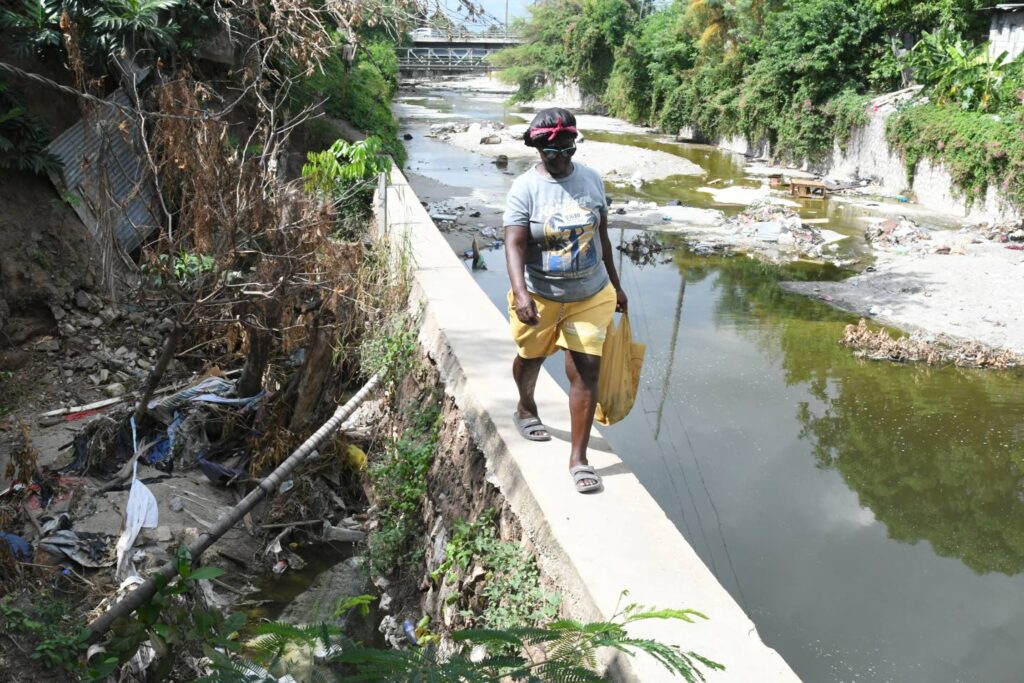
    KINGSTON, Jamaica — As the Caribbean region braces for the 2026 Atlantic hurricane season, which officially kicks off on June 1, Jamaica’s National Works Agency (NWA) has launched a major infrastructure upgrade initiative to strengthen flood management systems across St Andrew parish. The multi-million dollar project targets the rehabilitation of sections of six critical gullies, key water infrastructure that reduces flooding risk during intense tropical storm activity.

    The six gully sections marked for upgrades include two stretches of the Constant Spring Gully along Carawina Avenue, the waterway passing beneath Torrington Bridge, Yoro Crescent Gully, Burgher Gully, and Gem Road Gully. Stephen Shaw, NWA’s Manager of Communication and Customer Services, confirmed that on-site construction has already started at two of the targeted sites: Yoro Crescent Gully and Gem Road Gully.

    At the Gem Road Gully location, crews are focused on reconstructing a segment of the gully’s retaining wall and invert — the channel floor designed to facilitate unobstructed water flow. Shaw noted that this portion of the work is already approaching completion. For Burgher Gully, permanent upgrades are set to begin in the near future, following extensive temporary stabilization work NWA completed ahead of Hurricane Melissa’s landfall in 2025. The separate contract for Burgher Gully is valued at more than $30 million, and will cover repairs to damaged sections of the waterway’s invert and retaining walls.

    According to NWA’s project timeline, construction at all remaining unstarted gully sites is scheduled to break ground before the end of June, putting the infrastructure upgrade on track to be completed ahead of the peak of the 2026 Atlantic hurricane season, which typically runs from August through October. The initiative forms part of Jamaica’s broader efforts to upgrade critical climate resilience infrastructure across the island, which faces recurrent tropical storm and flooding threats each Atlantic hurricane season.

  • Barcelona win Women’s Champions League, thrashing Lyon 4-0 in final

    Barcelona win Women’s Champions League, thrashing Lyon 4-0 in final

    In a stunning display of attacking dominance at the UEFA Women’s Champions League final held in Oslo, Norway on Saturday, FC Barcelona delivered a crushing 4-0 defeat to eight-time defending champions Lyon, securing the club’s fourth continental title. The star of the match, Polish striker Ewa Pajor, broke the deadlock in the 55th minute after a tightly contested first half where both sides struggled to find clear openings. Pajor doubled her personal tally 14 minutes later, putting Barcelona firmly in the driver’s seat before Spanish talent Salma Paralluelo put the result beyond doubt with a spectacular long-range effort late in regulation. Paralluelo capped off the dominant performance with a fourth goal in stoppage time, leaving the Lyon side stunned and unable to respond to Barcelona’s relentless pressure.

    This latest title extends Barcelona’s extraordinary recent run in the competition: all four of the club’s Women’s Champions League crowns have come in the last six seasons, marking the Catalan side as the preeminent European women’s football powerhouse of the past half-decade. Lyon, who still hold the all-time record for most titles with eight, had been seeking their first championship since lifting the trophy in 2022. Saturday’s lopsided result marks one of the most surprising final scorelines in the competition’s recent history, cementing Barcelona’s status as the dominant force in European women’s football for the 2023-2024 season.

  • Champions Inter Milan finish Serie A season with thrilling draw at Bologna

    Champions Inter Milan finish Serie A season with thrilling draw at Bologna

    MILAN, Italy – After a historic campaign that secured them both the Serie A title and domestic cup glory, Italian champions Inter Milan wrapped up their triumphant league season with a thrilling, high-scoring 3-3 comeback draw against Bologna on the final matchday.

    Simone Inzaghi’s side headed into the closing fixture of the campaign already confirmed as champions, and they stretched their unbeaten streak to 10 consecutive matches, finishing the domestic season an extraordinary 14 points clear at the top of the table. Second-placed Napoli was set to close out their own campaign against Udinese later Sunday, with no chance of catching Inter’s dominant lead.

    The match looked set to end in a disappointing defeat for the champions, as Bologna held a two-goal advantage shortly after halftime. The breakthrough for Inter came in the 64th minute, when young French midfielder Andy Diouf, a former France under-21 international, broke past two Bologna defenders and saw his shot bounce off the goalpost. Pio Esposito was quick to react, tapping the loose ball into the net to cut Bologna’s lead in half for Inter.

    Earlier in the match, Inter’s Federico Dimarco opened the scoring with a stunning free kick, but goals from Bologna’s Federico Bernardeschi and Tommaso Pobega, paired with an own goal from Inter’s Piotr Zielinski, put the hosts firmly in control of the contest. With just three minutes left in regulation time, Diouf became Inter’s unlikely hero, firing home his first ever Serie A goal for the club to lock in the final 3-3 scoreline.

    For Bologna, the result sees them end the 2024-25 Serie A season in eighth position, falling just short of securing a spot in next season’s European competitions.