标签: Haiti

海地

  • «D-5» 2026 World Cup : The Government calls on all Haitians

    «D-5» 2026 World Cup : The Government calls on all Haitians

    Half a century after Haiti’s last appearance on football’s most prestigious global stage, the Caribbean nation is set to make a historic return to the FIFA World Cup in 2026 — and the Haitian government is calling on every citizen, at home and abroad, to rally behind the national team as the country prepares for this momentous occasion.

    Haiti’s men’s national football team, affectionately known as the Grenadiers, secured their qualification for the 2026 tournament on November 18, 2025 — a date deliberately echoing the 1803 Battle of Vertières, the revolutionary conflict that secured Haiti’s independence and gave the team its iconic name. For the administration of Prime Minister Alix Didier Fils-Aimé, this qualification is far more than a landmark sporting achievement: it is a beacon of hope for a nation that has navigated persistent challenges, and a powerful reminder of what collective perseverance can deliver.

    In an official statement, the government praised the squad for embodying the very values that defined Haiti’s founding revolution. The historic battle cry “Grenadiers to the assault!” has carried through two centuries of Haitian history, and today it echoes in the grit and determination of the players who fought through qualifying to claim their spot at the World Cup. “This qualification represents a powerful symbol of hope, perseverance, and confidence in the future of the Haitian Nation,” the statement reads, noting that the team’s journey mirrors the resilience of Haiti’s revolutionary ancestors, who turned the aspiration for freedom into a historic victory.

    Beyond the pitch, the government frames this World Cup run as a unique opportunity to bridge societal, political and geographic divides, uniting all Haitians under a single national banner. Just as sporting success is built on cohesion, discipline and collective faith, the government argues, national progress depends on these same foundational principles. Football, in this moment, becomes a unifying force that strengthens national pride, boosts Haiti’s international standing, and reaffirms a shared sense of national community.

    The Grenadiers will compete in Group C, with all three of their group-stage matches hosted across the United States. Their campaign kicks off on June 13, 2026 at Boston’s Gillette Stadium, where they will face Scotland at 9:00 p.m. local (USA/Haiti) time. Next, they will take on five-time World Cup champions Brazil at Philadelphia’s Lincoln Financial Field on June 19, also kicking off at 9:00 p.m. Their final group-stage match will be against 2022 World Cup semi-finalists Morocco at Atlanta’s Mercedes-Benz Stadium on June 24, with kickoff scheduled for 6:00 p.m. USA/Haiti time. The group is widely regarded as a challenging draw: Morocco currently ranks as Africa’s top national team, while Scotland is known for its physical, robust style of play, and Brazil remains one of the tournament’s perennial favorites.

    The official roster of players called up to represent Haiti at the 2026 World Cup is available via the HaitiLibre portal, where fans can also access full coverage of the team’s pre-tournament preparation, including a recent 4-0 friendly win over New Zealand, a run-down of qualifying matches, and government-led initiatives to support national viewing events for the public. The government extended its call for unity to the millions of Haitians living in the diaspora as well as citizens across all 10 of Haiti’s domestic departments, urging everyone to stand behind the Grenadiers throughout the competition.

    “This success illustrates the immense potential of our youth and the ability of our people to accomplish great things when they move forward together,” the statement notes. The government’s message is clear: the 2026 World Cup is more than a sporting event — it is a chance to show the world that Haiti stands tall, resilient and unified, capable of turning collective dreams into historic reality.
  • Cuba and Haiti affect Latin American growth

    Cuba and Haiti affect Latin American growth

    In its latest 2026 regional economic outlook published in June, the United Nations Economic Commission for Latin America and the Caribbean (ECLAC) has revised down its projected growth rate for the region from the 2.3% forecast made in December 2025 to 2.2%, with prolonged crises in Cuba and Haiti identified as the primary factors dragging down the regional average.

    The UN agency’s analysis warns that 24 out of the 33 economies in the region are set to see an expansion slowdown in 2026, extending a stretch of four consecutive years where regional growth has hovered around 2.3% — a trend ECLAC characterizes as a persistent low-growth trap that limits job creation and poverty reduction across the bloc.

    Cuba is expected to register the sharpest contraction across the region, with ECLAC projecting a 6.5% economic shrinkage for 2026, a deterioration from the 3.8% drop the island recorded in 2025. Haiti, meanwhile, is forecast to shrink by 1.4% this year — a smaller decline than 2025’s 2.7% contraction, but still a continued drag on overall regional performance.

    The impact of these two struggling economies on the regional average is substantial: when the two crisis-hit nations are excluded from calculations, the 2026 average growth for the rest of Latin America and the Caribbean climbs to 3.9%, a modest uptick from the 3.8% expansion the region excluding Cuba and Haiti posted in 2025. This gap makes clear the outsized distorting effect of the two countries’ ongoing economic collapses on regional aggregate data.

    Cuba’s economic crisis has deteriorated dramatically in the first half of 2026, triggered by a critical loss of oil imports. Following the capture of Venezuelan leader Nicolás Maduro on January 3, Cuba lost 80% to 90% of its crude oil supplies from Venezuela, which amounted to between 25,000 and 35,000 barrels of oil per day. Shortly after, Mexico suspended all oil shipments to Cuba on January 9 under pressure from the United States, and former U.S. President Donald Trump signed Executive Order 14380 on January 29, which enforces secondary tariffs on any third country that continues to export oil to the island. This oil supply shock has gutted Cuban energy infrastructure and industrial production.

    Independent analysts have offered an even grimmer outlook for Cuba: The Economist Intelligence Unit projected in February 2026 that the Cuban economy will contract by 7.2% this year, a deeper shrinkage than ECLAC’s official estimate. In contrast to the collapse in Cuba, the region sees stark growth disparities, with Guyana leading all regional economies at a projected 16.3% expansion in 2026, driven by booming output from its fast-growing offshore oil sector. Venezuela follows with a projected 6.5% growth, while Nicaragua and Paraguay are both forecast to expand by 4.5% this year.

    External headwinds are also adding pressure to vulnerable economies across the region. In the first three weeks of April 2026, the price of West Texas Intermediate crude oil was 74% higher than the average price recorded in December 2025, creating new global inflationary pressures that hit already weakened economies like Cuba’s particularly hard.

    Cuban President Miguel Díaz-Canel’s administration has repeatedly pointed to the longstanding U.S. trade embargo as the core cause of the country’s economic collapse, and ECLAC’s data confirms that Cuba is by far the worst-performing economy in the entire Latin American and Caribbean region. Notably, the Cuban government’s official 2026 projection puts economic growth at 1% for the year, a figure that independent economists widely dismiss as completely disconnected from on-the-ground economic realities.

  • The Prime Minister announces the elimination of taxes on batteries and solar panels

    The Prime Minister announces the elimination of taxes on batteries and solar panels

    On June 5, 2026, top Haitian government officials, cross-sector partners, youth environmental activists, and education leaders gathered at Port-au-Prince’s Karibe Hotel for an official World Environment Day ceremony hosted by the country’s Ministry of Environment. Centered on the theme “Green Jobs Serving a Sustainable Haiti,” the event brought together cabinet ministers from eight key government departments alongside technical, financial, and community stakeholders to outline the nation’s path forward for climate action and sustainable development.

    Opening the proceedings, Minister of Environment Valéry Fils-Aimé centered youth leadership as the foundational pillar of Haiti’s environmental transition. He detailed the ministry’s ongoing work across six core priority areas: public sanitation expansion, protected area conservation, degraded ecosystem restoration, widespread environmental education, national climate change mitigation, and targeted green job development. Reaffirming the government’s commitment to realizing Haitian youth’s vision for a sustainable 2050, Fils-Aimé highlighted key recent milestones, including the official launch of the national clean-up initiative “Konbit Ayiti Zewo Dechè” and the removal of more than 60,000 cubic meters of accumulated waste from urban centers across the country.

    In his keynote address, Prime Minister Alix Didier Fils-Aimé underscored the untapped economic potential of green industries to create stable, accessible employment for Haitian young people. The centerpiece of his announcement was a landmark policy change: the full elimination of import and consumption taxes on both batteries and solar panels. Framed as a concrete, ambitious step forward, the policy formalizes the Haitian government’s commitment to advancing a national energy transition, protecting critical ecosystems, and building an inclusive, green-centered sustainable economy. The reform is designed to lower barriers to renewable energy access for households, small businesses, and public institutions, while cutting the nation’s reliance on carbon-intensive traditional energy sources.

    Following the formal ceremony, the Prime Minister toured on-site exhibition spaces hosted by the Ministry of Environment’s technical departments, the National Agency for Protected Areas (ANAP), the National Solid Waste Management Service (SNGRS), private environmental enterprises, and local green artisans. Displayed innovations and achievements spanned recycling technology, waste-to-resource recovery, biodiversity conservation, renewable energy solutions, and circular economy initiatives.

    Minister of Planning Sandra Paulemon used her remarks to outline the severe, interconnected environmental challenges Haiti continues to face. She outlined the extent of existing damage: widespread deforestation has stripped mountain ecosystems, critical watersheds are in decline, rivers suffer from dangerous silt accumulation and pollution, unmanaged waste overwhelms public spaces, residential neighborhoods, and coastal areas, and the nation faces extreme climate vulnerability to recurrent hurricanes, flooding, prolonged drought, soil erosion, and deadly landslides that disproportionately harm low-income and marginalized communities.

    Paulemon emphasized that environmental action is not an abstract policy goal but a matter of national survival. “The environment is the land we cultivate, the water we drink, the air we breathe, and the legacy we will leave to our children,” she stated. Turning to the event’s theme of green job development, she outlined the strategic role that sustainable employment can play in driving Haiti’s broader economic and social transformation. Key green sectors including reforestation, urban sanitation, integrated waste management, watershed protection, sustainable agriculture, renewable energy, recycling, ecotourism, and green infrastructure offer a unified solution to multiple national crises, simultaneously driving job growth, reducing poverty, advancing environmental protection, and strengthening social cohesion across communities.

    Despite acknowledging the scale of the challenges ahead, Paulemon closed with a message of determined hope for the nation’s future. “I refuse to believe that Haiti’s destiny is one of decline, vulnerability, or resignation,” she said. “I believe in the Haitian people’s capacity to transform difficulties into opportunities, challenges into solutions, and crises into new beginnings.”

  • Towards the Digital Transformation of the haitian Education System

    Towards the Digital Transformation of the haitian Education System

    In a landmark move to modernize learning across the Caribbean nation, Haiti’s Ministry of National Education and Vocational Training (MENFP) has officially launched a dedicated national body tasked with steering the full digital transformation of the country’s public education system, announced by Education Minister Vijonet Déméro in a formal ministerial decree published on July 6, 2026.

    Citing longstanding gaps in outdated teaching practices, fragmented school governance, and unequal access to modern learning materials, Minister Déméro framed the new commission as a critical strategic priority aligned with the need to integrate 21st-century information and communication technologies (ICT) into every level of Haitian education. The official order draws its legal authority from the 1989 Decree that governs the structure and operations of the national education ministry.

    Officially named the National Commission for the Digital Transformation of the Education System (CNTNSE), the 11-member intersectoral body will operate directly under the oversight of MENFP. Its core mandate is to design, lead, and coordinate a unified national strategy for digitizing the entire education sector, bringing together stakeholders from government agencies, academic institutions, private industry, and international partners to align efforts and avoid fragmented initiatives.

    The commission’s leadership and membership draws representation across multiple key sectors to ensure broad buy-in and technical expertise. Renan Michel, Inspector General of MENFP, will serve as the commission’s chair. Additional voting members include Gerald Belaire from the National Bureau of External Security (BUNEXE), Jean Joseph Mackenzie Charles from the Tunisian Union of Information and Communication Technologies (UTICE), Pierre Jean from the University of the South (US), Jean Misgaire Fanor from the French Center for Continuing Education (CFCE), and designated representatives from the National Telecommunications Council (CONATEL, technical and financial partners, the Network of Departmental Public Universities, state-recognized private universities, and the Departmental Directorates of Education. The final seat is reserved for an expert in educational and digital engineering appointed directly by the Minister’s office. The commission is also authorized to recruit ad-hoc technical specialists from any public or private entity to support its work as needed.

    CNTNSE’s responsibilities are structured across four core focus areas that cover every stage of the digital transformation process. On the strategic front, the body will develop a comprehensive National Digital Transformation Plan for Education (PNTNE), establish unified technology standards for all schools nationwide, and roll out mandatory digital skills training for all education system employees. For pedagogical initiatives, it will oversee the development and regulation of digital learning platforms, including massive open online courses, manage the conversion of traditional print textbooks to digital formats, and coordinate ongoing upskilling for classroom teachers on digital teaching tools. For infrastructure, the commission will conduct a national audit of existing internet connectivity and technological equipment in schools and regional education offices, then develop a multi-year investment plan to close gaps. Finally, the commission will lead partnership and resource mobilization efforts, working with public, private, and international stakeholders to secure the technical and financial support needed to implement large-scale digital projects.

    The commission’s formal term runs for 24 months, from June 5, 2026, to June 5, 2028, with the option of renewal based on the ministry’s strategic priorities and progress achieved. To ensure full transparency and accountability, the body is required to submit quarterly progress updates on its Digital Roadmap (DRM) to the Minister’s office, in addition to a full annual report covering achievements, challenges, and next steps. The new commission went into immediate effect following the publication of the ministerial decree and will be formally registered with all relevant Haitian government bodies.

    This initiative marks one of the most ambitious structural overhauls of Haiti’s education system in recent decades, with the potential to expand access to quality learning resources for thousands of students across the country who currently lack access to modern educational tools.

  • Technology : DevExpo 2026 Final, list of the 5 winning projects

    Technology : DevExpo 2026 Final, list of the 5 winning projects

    On June 6, 2026, the fifth iteration of DevExpo, Haiti’s premier innovation competition focused on digital transformation, concluded its final round at Port-au-Prince’s Montana Hotel. Co-organized by local tech group Banj and the Digicel Foundation, the pitch event drew high-profile attendees from across the public and international development sectors, including representatives from the United Nations Development Programme (UNDP) Haiti, Haiti’s Ministry of Commerce and Industry, Sogebank Group, the Inter-American Development Bank, and dozens of partner organizations invested in advancing Haiti’s tech ecosystem.

    Launched earlier this year in March 2026, the 2026 DevExpo carried the central theme of “AI for Social Impact,” created to center and amplify the technical talent of young Haitian innovators. The competition challenged participants to leverage artificial intelligence and cutting-edge digital tools to tackle pressing, real-world challenges across key sectors of Haitian society, from public education and healthcare to small business development and expanded access to critical community services.

    The selection process began with more than 200 project submissions from across the country. After an initial rigorous evaluation round, 29 projects advanced, with 10 ultimately earning a spot in the final pitch competition. At Saturday’s finale, five standout startups were selected as winners, splitting a total prize pool of 5 million Haitian gourdes to fund further development and scaling of their community-focused solutions, each of which uses AI to address unmet social and economic needs across Haiti.

    The first-place winner, ZònPam, took home 2 million HTG for its real-time community security platform. The tool alerts local residents to ongoing incidents and marks high-risk areas across the country, while integrating an AI chatbot named Nora that answers user questions related to public safety.

    Second place went to Kòb Mwen, which received 1.5 million HTG. The fintech solution is designed to expand financial inclusion for Haitian communities, offering built-in budgeting education and accessible personal finance management tools for users who often lack access to traditional banking services.

    Three projects tied for third place, each awarded 500,000 HTG. The first of these is Smart Digital Health for Haiti, also known as KURA, an e-health initiative that streamlines medical record management, remote patient monitoring, and telehealth services to expand access to care across underserved areas of Haiti. Next is The Baccalaureate, an AI-powered adaptive learning platform that provides personalized study guidance and targeted practice exercises to help Haitian secondary students prepare for their national baccalaureate exams. The third third-place winner is PHARx, a pharmaceutical sector platform that simplifies medication access for patients, improves inventory tracking for local pharmacies, and streamlines connections between patients and care providers.

    Competition organizers have expressed confidence that the development of these five projects will drive tangible, positive innovation and widespread social benefit across Haiti. UNDP Haiti extended formal congratulations to all five winning teams, noting that their work underscores the extraordinary capacity of Haitian youth to turn ambitious creative ideas into actionable, impactful solutions for national development. By continuing its support for DevExpo, UNDP reaffirms its long-term commitment to strengthening Haiti’s digital innovation and entrepreneurship ecosystem for future generations.

  • World Environment Day 2026 : Green Jobs and Citizen Action

    World Environment Day 2026 : Green Jobs and Citizen Action

    To mark 2026 World Environment Day, Haiti’s Ministry of the Environment oversaw a sweeping national series of public engagement, education, and conservation activities across all 10 of the country’s departmental jurisdictions on June 5, 2026. The nationwide campaign highlighted the critical role of grassroots citizen action and green economic opportunity in building a more sustainable future for the Caribbean nation.

    In the northern department, outreach teams brought environmental education programming to more than 1,200 secondary and primary students across multiple municipalities including Cap-Haïtien, Acul-du-Nord, and Plaine-du-Nord. Event organizers hosted interactive panel discussions, community awareness walks, and completed a large-scale native energy forest restoration project in Mapou, Plaisance. Moving east to the Northeast department, 500 area schoolchildren learned about the devastating impacts of plastic pollution and the urgency of ecosystem restoration, capped off by a community tree planting drive in Morne-Casse and a cross-school public awareness campaign.

    In Haiti’s Northwest, pre-event preparations centered on upskilling local journalists and educators to accurately communicate climate change science, facilitate cross-stakeholder dialogue, and lead consistent community outreach. On World Environment Day itself, the department hosted a public awareness march, a full beach cleanup operation in Haut-Fourneau, the planting of 500 coconut saplings, and guided educational activities in the region’s critical coastal mangrove ecosystems out of Port-de-Paix.

    The Artibonite department continued its long-running work to mobilize local communities around natural resource conservation and improvements to public living conditions through targeted outreach. In the Centre department, activities centered on youth engagement, watershed protection, and widespread adoption of eco-friendly daily practices. The West Department intensified school-focused outreach, holding a public tree planting event at the Canapé-Vert Urban Nature Park and launching a large awareness campaign across multiple schools in the Delmas and Pétion-ville districts.

    In Nippes, more than 1,500 students and teachers from 15 schools across five departmental municipalities participated in organized activities, with the department’s 2026 Eco-Genius environmental competition serving as a centerpiece of the day’s celebrations. The southern department reached nearly 3,000 students through a multi-municipality education campaign focused on waste management, natural resource protection, and climate change adaptation, with sustained community mobilization and additional tree planting wrapping up the day’s events.

    The Southeast department broke new ground by hosting the region’s first ever Departmental Forum on Climate Change, an extension of the ongoing “Environmental Fridays” and national Eco-Genius public education programs. Beyond the forum, local organizers distributed clean, energy-efficient eco-stoves to households in Belle-Anse, hosted targeted climate and energy professional training sessions, held a public environmental fair, and organized a public awareness parade through the coastal town of Jacmel. In Grand’Anse, planning centered on cross-institutional collaboration and partner mobilization, with a specific focus on protecting the Clément Spring, a critical source of drinking water for the city of Jérémie.

    At the national level, the Ministry of the Environment hosted a flagship open house event at the Karibe Hotel in Pétion-ville, themed “Green Jobs Serving a Sustainable Haiti”. Held under the official patronage of Haiti’s Prime Minister, the gathering brought together a diverse cross-section of stakeholders: technical teams from across the Ministry, leadership from the National Agency for Protected Areas (ANAP), the National Solid Waste Management Service (SNGRS), and the Bureau of Mines and Energy (BME), private environmental enterprises, local recycling artisans, academic researchers, international technical and financial partners, and hundreds of participating students and young activists.

    The national event featured three interconnected exhibition zones showcasing institutional environmental initiatives, artisanal upcycled goods, and green small business innovations. Organizers also held public conferences exploring green job growth and the potential of Haiti’s blue economy, hands-on educational activities for young attendees, and an official opening ceremony that included the public reading of student letters outlining collective visions for a healthy, sustainable Haitian environment by 2050.

  • 2026 World Cup Preparation : In a friendly match, Haiti loses [2-1] against Peru (video)

    2026 World Cup Preparation : In a friendly match, Haiti loses [2-1] against Peru (video)

    With the 2026 FIFA World Cup just days away, Haiti’s national men’s football team, nicknamed the Grenadiers, suffered a heart-wrenching 2-1 defeat to Peru in their final pre-tournament friendly on Friday, June 5, hosted at DRV PNK Stadium in Miami, Florida. The result marked a disappointing end to Haiti’s warm-up campaign, just one week after the side delivered a dominant 4-0 rout of New Zealand in their first preparation match.

    Ranked 82nd in the FIFA global rankings, Haiti entered the match as the underdog against 51st-ranked Peru, but head coach Sébastien Migné, a French tactician, shuffled his lineup to test depth ahead of the tournament. Making four changes to the starting XI that defeated New Zealand, Migné gave starts to Hannes Delcroix, Jeanricner Bellegarde, Louicius Deedson and Frantzdy Pierrot, rounding out a starting roster that featured players plying their trade across top leagues in Europe, North America and South America. Johnny Placide started in goal, with Carlens Arcus, Martin Expérience, Ricardo Adé and Delcroix forming the defensive line. Jean-Jacques Danley and Bellegarde anchored the midfield, while Deedson, Ruben Providence, Wilson Isidor and Pierrot made up Haiti’s attacking unit.

    The match unfolded as a stunning display of resilience from Haiti through 75 minutes, with the underdog side taking an early lead. In the 16th minute, Deedson set up Isidor for a clinical finish that put Haiti up 1-0, a lead the Grenadiers protected for more than an hour of play. As the second half wore on, both teams rotated their squads heavily to test depth: Haiti made eight substitutions between the 59th and 85th minutes, swapping out every starting outfield player to give reserve players critical pre-tournament minutes.

    But in a dramatic late turnaround, Peru struck twice in just three minutes to steal the win. Renzo Garcés netted the equalizer for Peru in the 81st minute, leveling the score at 1-1, before Jairo Vélez put Peru ahead just three minutes later. No further goals followed, locking in a 2-1 victory for the South American side. The match also saw six yellow cards issued, with four going to Peru players (Alfonso Barco, André Carrillo, Erick Noriega, Adrián Ugarriza) and one to Haiti substitute Wilguens Paugain.

    Haiti is set to make its World Cup appearance in Group C, with all three of its group stage matches hosted on U.S. soil. The Grenadiers will kick off their tournament campaign against Scotland on June 13 at Boston’s Gillette Stadium, before facing five-time world champions Brazil at Philadelphia’s Lincoln Financial Field on June 19. The side will wrap up group play against Morocco, the 2022 World Cup semi-finalists and current top-ranked African nation, at Atlanta’s Mercedes-Benz Stadium on June 24. The tough group pits Haiti against three of international football’s most consistent sides, testing the underdog Grenadiers as they make their run in the 2026 tournament.

  • Brazil 2027 Preparation : Victory for the Grenadières [2-1] against New Zealand (video)

    Brazil 2027 Preparation : Victory for the Grenadières [2-1] against New Zealand (video)

    As preparation for the final round of 2027 FIFA Women’s World Cup qualifiers in Brazil continues, Haiti’s women’s national football team, the Grenadières, claimed a hard-fought 2-1 friendly victory over New Zealand’s Ford Football Ferns at Spain’s El Mauli Stadium in Antequera, Malaga Province, on June 5, 2026. Ranked 47th globally, the side put in a disciplined, organized performance that perfectly executed the game plan drawn up by their veteran Swedish head coach Pia Sundhage, building on a dominant 4-0 win over the same opponent just three days prior.

    Ahead of the match, the squad received a major boost with the return of star midfielder Melchie Daëlle Dumornay, widely known by her nickname “Corventina”, who had missed the team’s previous training camp. The fixture also marked a milestone for young Paris Saint-Germain shot-stopper Océane Toussaint, who earned her first start in the national team’s starting eleven.

    Haiti’s starting lineup featured a mix of experienced talent and rising young players plying their trade across top European and American clubs. Alongside Toussaint in goal, the defensive line included Kethna Louis of Montpellier Hérault SC, Jennyfer Limage of RC Lens, Tabita Dougenie Joseph of Olympique de Marseille, and Claire Constant of DC Power FC. Sherly Jeudy joined Dumornay in the midfield, while the attacking unit was led by captain Nerilia Mondesir of Seattle Reign FC, Darlina Florsie L. Joseph of Toulouse FC, Roseline Eloissaint of FC Nantes, and Lourdjina Etienne of FC Fleury.

    New Zealand got on the scoreboard first in the 41st minute, when Michaela Foster swung a long-range free kick into the Haitian penalty area. New Zealand defender Claudia Bunge rose above the defense to plant an unstoppable header past Toussaint, putting the Football Ferns up 1-0 going into halftime.

    Haiti responded quickly after the opening goal, forcing New Zealand goalkeeper Alina Santos into a critical save just minutes after Bunge’s strike. The Grenadières kept up relentless pressure through the closing stages of the first half, and found their equalizer deep into first-half stoppage time. In the 45+3rd minute, Mondesir converted a well-placed free kick from the right touchline to level the score at 1-1, sending the sides into the break all square.

    Just two minutes into the second half, Haiti grabbed the lead for good. Dumornay, who had already set up one scoring opportunity earlier in the match, orchestrated a quick attacking move that outpaced New Zealand’s backline, playing a perfectly weighted through ball to Etienne. The FC Fleury forward calmly slotted the ball past the onrushing Santos to put Haiti up 2-1, a scoreline that would hold until the final whistle.

    From that point, Haiti took control of the game’s tempo, absorbing New Zealand pressure and protecting their narrow lead. The Football Ferns struggled to generate clear scoring chances for most of the second half, and their few late attacking attempts were all turned away by Toussaint and the Haitian defense.

    The win marks another positive milestone for the Grenadières as they gear up for the 2027 Women’s World Cup final qualifying phase, which will run from June 24 to July 25 next year in Brazil. The side is set to continue their warm-up campaign with another friendly against Equatorial Guinea, nicknamed the Nzalang (meaning “lightning” in a Bantu language), on June 8 at Juventus Stadium in Torremolinos, Malaga Province, with kickoff scheduled for noon local time in Haiti.

  • Geneva : Speech by Haitian Minister Nelson at the 114th International Labour Conference (video)

    Geneva : Speech by Haitian Minister Nelson at the 114th International Labour Conference (video)

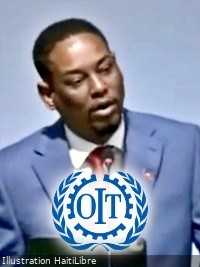
    GENEVA — On June 4, 2026, Marc-Elie Nelson, Haiti’s Minister of Social Affairs and Labor, delivered a landmark address to delegates gathered at the 114th International Labour Conference, hosted by the International Labour Organization (ILO) in Geneva. During his speech, Nelson laid out a clear vision for deepened collaboration between Haiti and the global labor body, framing targeted cooperation as a critical catalyst to renew systems that deliver inclusive growth, open constructive social dialogue, and expand access to dignified work across the Caribbean nation.

    A central priority of Nelson’s address was a formal call for a strengthened ILO footprint within Haiti, anchored by the establishment of a permanent ILO representative office in the country. He emphasized that the ILO’s decades of specialized global expertise would be transformative for Haiti’s ongoing efforts to update its national labor framework, bringing local legislation into full alignment with internationally recognized labor standards and adapting rules to match the shifting demands of the modern global workforce.

    Nelson also used the platform to highlight the Haitian government’s ongoing domestic progress on worker welfare, specifically pointing to recent policy efforts to raise the national minimum wage and expand social safety net coverage for Haitian working people. These steps, he argued, reflect the administration’s commitment to centering worker well-being in national policy priorities.

    In addition to bilateral cooperation priorities, Nelson offered public praise for ILO Director-General’s recently released report, *A moment of choice: Harnessing artificial intelligence for decent work*. He noted that the report makes a substantial and timely contribution to global conversations about the future of work, and underscored the meaningful opportunities that AI can bring to expanding labor access and improving working conditions when governed responsibly.

    Closing his address, Nelson offered a reflection on what defines a successful nation: “Nations are not measured solely by the size of their economies or the strength of their institutions. They are also measured by how they treat those whose work builds their future.” He concluded by reaffirming that, regardless of political or economic differences between nations, global leaders share a universal core responsibility: to “enable every woman and man to live from their work with dignity, justice, and hope.”

  • A Haitian-American woman from Jacksonville (FL) pleads guilty to illegally shipping firearms

    A Haitian-American woman from Jacksonville (FL) pleads guilty to illegally shipping firearms

    A federal court case has exposed a large-scale illicit weapons trafficking ring that moved firearms from Florida to violent gangs in Haiti, with a local Haitian-American woman admitting her role in the scheme. U.S. Attorney Gregory W. Kehoe for the Central District of Florida announced May 6 that 28-year-old Francesca Charles of Jacksonville, Florida, has pleaded guilty to two key charges: conspiracy to smuggle goods out of the United States and illegal shipment of firearms and contraband. Charles now faces a maximum possible sentence of 20 years in federal prison, with her sentencing hearing scheduled to take place August 18.

    The case traces back to a major 2025 seizure by Dominican law enforcement, who intercepted a shipping container traveling from Miami bound for Haiti. Inside the container, authorities found a massive cache of illegal weaponry: 25 total firearms, including a .50 caliber Barrett sniper rifle, 17 7.62 caliber rifles, one 9mm rifle, five 9mm Glock pistols, an Uzi submachine gun, plus more than 36,000 rounds of mixed-caliber ammunition, 18 assault rifle magazines, 13 9mm magazines, one .50 caliber magazine, and a firearm silencer.

    Joint investigation by agents from the Bureau of Alcohol, Tobacco, Firearms and Explosives (ATF), the Florida Attorney General’s Office, and Homeland Security Investigations (HSI) traced the seized weapons to three Florida-based co-conspirators: Charles, 32-year-old Jacques Pierre and 34-year-old Jeff Pierre, both Haitian citizens residing in the state. Investigators confirmed the trio purchased at least 20 of the 23 recovered firearms included in the seized cache.

    A deeper probe into the group’s activities found that between May 2024 and February 2025, the three defendants acquired at least 46 firearms total, most matching the makes and models of weapons recovered in the Dominican Republic. Thirty-seven of these weapons were bought in just a six-month window between August 2024 and February 2025, with Charles alone accounting for purchases of at least 24 of the 46 documented firearms. Court records also show Jacques Pierre purchased two .50 caliber Barrett rifles – heavy, vehicle-mounted military-grade weapons that are widely used by gangs and drug cartels for violent operations.

    The two Pierre brothers remain involved in separate ongoing legal proceedings. Both have been indicted on charges of conspiracy to smuggle goods, illegal firearms trafficking, and smuggling goods out of the United States. If convicted on all counts, each also faces a maximum sentence of 20 years in federal prison.