标签: Haiti

海地

  • Politic : All you need to know about Minister Mario Andrésol (Bio)

    Politic : All you need to know about Minister Mario Andrésol (Bio)

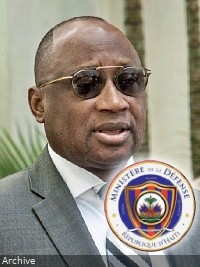
    Haiti’s newly appointed Defense Minister Mario Andrésol brings decades of distinguished security expertise to his role following his official swearing-in ceremony on March 4, 2026. The 65-year-old Port-au-Prince native assumes leadership of Haiti’s defense establishment at a critical juncture in the nation’s development.

    Minister Andrésol’s educational foundation began at the Brothers of the Sacred Heart (John XXIII) institution before advancing to Collège Saint Pierre for secondary education. His academic journey continued at the State University of Haiti’s Faculty of Humanities from 1980-1982, after which he pivoted toward military service by enrolling in the Haitian Military Academy as a cadet officer.

    The newly installed defense chief possesses exceptional international training credentials. After graduating from the Military Academy’s 1982-1984 class, he immediately traveled to Fort Benning, Georgia, where he completed specialized Infantry Officer training at the U.S. Army facility in 1985. His educational advancement continued with police theory and practice specialization at France’s prestigious Gendarmerie Officer Training School in Melun during 1986.

    Andrésol’s professional development demonstrates remarkable intellectual versatility. Following his French internship, he pursued International Relations studies at Haiti’s National Institute of Management and Advanced International Studies (INAGHEI) from 1986-1989 while simultaneously maintaining military duties. During his New York exile from 2001-2005, he earned dual paralegal specialties degrees from the New York Para-Legal School.

    His service career commenced in 1986 with assignment to the 39th Company of Haiti’s Armed Forces (FAd’H) Traffic Division as a Second Lieutenant. Subsequent postings included the Anti-Gang Unit (40th Company) where he gained crucial experience combating organized crime from 1989-1990. His promotion to First Lieutenant brought executive responsibility for security at Port-au-Prince International Airport through 1994, followed by district military command positions in Jacmel and Arcahaie.

    Following the formal separation of military and police functions in 1995, Andrésol transitioned seamlessly into senior police leadership roles. His distinguished police career included service as Municipal Commissioner of Pétion-ville (1995-1997), Chief Commissioner of Port-au-Prince District (1997-1998), and Director of the Judicial Police Central Directorate (1998-2001). He ultimately ascended to Commander-in-Chief of the Haitian National Police, serving from July 2005 through August 2012.

    Throughout his extensive career, Minister Andrésol has demonstrated exceptional integrity, discipline, and administrative rigor. He successfully navigated political transitions under three different administrations—Boniface Alexandre/Latortue (2004-2006), René Préval (2006-2011), and Michel Martelly (2011-2012)—while maintaining institutional independence from political interference. His leadership achievements include significant personnel expansion, organizational restructuring with international support, and establishing professional integrity standards within the police force.

    Notably, Andrésol resisted pressure to reconstitute the Haitian Army during the 2012 remobilization of former FAd’H personnel, demonstrating principled commitment to democratic civilian oversight of security forces. His departure from police leadership occurred without scandal, concluding a exemplary service chapter that now continues with his defense ministerial appointment.
  • Health : Drinking water distribution, Ministry requirements

    Health : Drinking water distribution, Ministry requirements

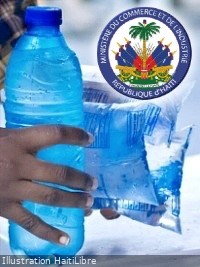
    The Haitian Ministry of Commerce and Industry (MCI), under Minister James Monazard, has issued a decisive regulatory mandate to all drinking water treatment and distribution companies. This action follows a circular published on March 2, 2026, which formally outlines the stringent requirements for operators in this critical sector. A firm deadline of March 22, 2026, has been established for full compliance, marking a significant governmental effort to confront a longstanding public health crisis linked to contaminated water.

    The regulatory framework is anchored in Articles 5 and 6 of a March 11, 2020 decree governing food production and trade. The comprehensive compliance checklist mandates that every entity, from large-scale producers to local water kiosks, must be formally registered with the MCI and possess a valid Professional Identification Card (CIP). Operations must adhere to strict Good Hygiene Practices (GHP), requiring fully enclosed transportation vehicles to shield packaged water, particularly sachets, from environmental contaminants and sunlight.

    Material safety is paramount, with regulations specifying that all containers, especially sachets, must be constructed from inert, non-toxic, and officially approved food-contact materials that offer optimal heat resistance. Mandatory labeling must conform to consumer protection statutes detailed in Article 10 of the 2020 decree.

    From a microbiological standpoint, the policy adopts a zero-tolerance stance against pathogenic germs, including Escherichia coli and various coliforms. Companies are obligated to conduct monthly bacteriological analyses through accredited laboratories and present these valid certificates during official health inspections.

    Further provisions require suppliers to guarantee the rigorous disinfection of their tanker trucks and their customers’ storage tanks prior to any delivery. A robust traceability system must be implemented, complete with defined expiration dates for products sold at kiosks, which must also retain valid transaction receipts. Kiosks are additionally required to install advanced purification devices, such as UV lamps or ozonators, to neutralize any bacterial presence. Finally, companies must employ qualified technical staff specialized in water treatment and quality control to monitor operations and implement corrective measures.

    The MCI has announced it will deploy inspectors to verify the quality of distributed water and the sanitary conditions of all concerned operations. The Directorate has called for full cooperation from all stakeholders to ensure public health protection and adherence to the newly enforced national standards.

  • Preparations for the May 18th celebration and the qualifications of our Grenadiers

    Preparations for the May 18th celebration and the qualifications of our Grenadiers

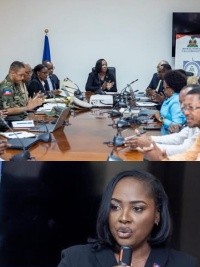
    Port-au-Prince, Haiti – In a comprehensive strategy session led by Joseph Innocent, Chief of Staff to Youth, Sports, and Civic Action Minister Pythagore Dumas, Haitian officials outlined ambitious plans for national celebrations and athletic support programs. The high-level meeting focused on two primary objectives: orchestrating successful Flag Day commemorations on May 18, 2026, and coordinating unprecedented support for Haiti’s multiple national football teams competing in various World Cup tournaments.

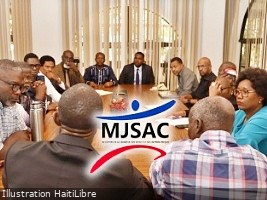
    The working session brought together directors from across the Ministry of Youth, Sports, and Civic Action (MJSAC) to address logistical challenges that hampered previous celebrations. Officials committed to developing a structured project document with detailed budgetary requirements to ensure proper procurement processes and compliance with national standards. This document will be submitted to the Prime Minister’s office for approval.

    Minister Dumas, through his Chief of Staff, emphasized that the Flag Day celebrations must transcend symbolic significance to become a genuinely unifying national event. The initiative aims to mobilize youth and institutions around core civic values and national unity, particularly crucial given Haiti’s ongoing security, economic, and social challenges. The celebrations are strategically positioned to foster a peaceful environment conducive to the general elections scheduled for late 2026.

    Simultaneously, the ministry addressed Haiti’s extraordinary sporting achievements. The nation is preparing for its historic participation in two FIFA World Cups (senior men’s and U-17 men’s) while competing for qualification in three additional tournaments (senior women’s, U-17 women’s, and U-20 men’s). This unprecedented sporting success was described as a phenomenal achievement against substantial odds, given the country’s current climate.

    The MJSAC intends to leverage these events as symbols of national resilience and hope. The coordinated approach seeks to highlight Haitian youth, sports excellence, and civic engagement as fundamental pillars for national renewal during this pivotal period in the nation’s history.

  • Risk Assessment Report on Money Laundering and Terrorism Financing

    Risk Assessment Report on Money Laundering and Terrorism Financing

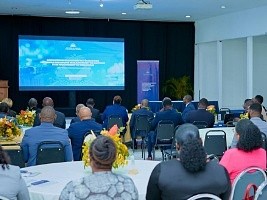
    In a landmark development for Haiti’s financial governance, the government has formally presented its National Risk Assessment Report on Money Laundering and Terrorist Financing after an extensive 18-month collaborative effort. The comprehensive evaluation was unveiled this week at the Montana Hotel through a joint initiative led by the Ministry of Economy and Finance (MEF), the Bank of the Republic of Haiti (BRH), and the Ministry of Justice and Public Security (MJSP).

    The assessment process employed a participatory methodology that engaged over 35 multidisciplinary professionals spanning both public and private sectors, with technical guidance provided by the World Bank. This inclusive approach ensured a thorough examination of Haiti’s financial vulnerabilities and institutional capabilities.

    Serge Gabriel Collin, Haiti’s newly appointed Minister of Economy and Finance, emphasized that this assessment represents a critical milestone in fortifying the nation’s financial system integrity. The report identifies multiple systemic threats including organized criminal networks, arms trafficking operations, ransom kidnappings, corruption schemes, smuggling activities, and narcotics trafficking. These criminal enterprises exert continuous pressure on Haitian institutions and present substantial barriers to achieving socio-political stability, national security, and sustainable economic development.

    Minister Collin outlined that effective implementation of the report’s recommendations requires comprehensive adoption by both public and private entities. Organizations must integrate these guidelines into their operational frameworks and enhance internal compliance mechanisms to properly align resources, controls, and procedures with identified risk exposures.

    The ultimate objective of this initiative is twofold: to facilitate Haiti’s removal from the Financial Action Task Force’s (FATF) increased monitoring list (grey list) and to prevent potential designation as a non-cooperative jurisdiction (blacklist). Success in these efforts would significantly contribute to stabilizing the country’s financial sector, creating conditions favorable for economic revitalization, and accelerating social welfare and protection programs essential for national recovery.

  • Development of the Amending Public Investment Program

    Development of the Amending Public Investment Program

    PORT-AU-PRINCE, Haiti – In a significant move to enhance governmental efficiency, Minister of Planning and External Cooperation Sandra Paulemon convened a strategic workshop on March 13, 2026, with ministerial Study and Programming Units (UEPs). This gathering focused on developing a revised Public Investment Program (PIP) for the 2025-2026 period, marking a pivotal step in Prime Minister Fils-Aimé’s administration. The initiative underscores the government’s dedication to optimizing state resources and international cooperation funds by channeling them into high-impact, structural projects that deliver tangible public benefits. Minister Paulemon emphasized that the PIP serves as the fundamental mechanism for translating national development policies into actionable, financed initiatives. She directed the UEPs to formulate realistic, meticulously prepared project proposals that are in strict alignment with the administration’s core priorities: enhancing national security, stimulating economic recovery, and establishing the necessary framework for conducting upcoming elections. This electoral preparation is a direct commitment under the National Pact for Stability and the Organization of Elections, a landmark agreement signed on February 21, 2026. Concluding the session, Paulemon issued a call to action for all involved parties, urging heightened commitment and professional rigor to ensure the planning process effectively reinforces public governance and ultimately improves citizen welfare.

  • A historic first at the Ministry of Religious Affairs of Haiti

    A historic first at the Ministry of Religious Affairs of Haiti

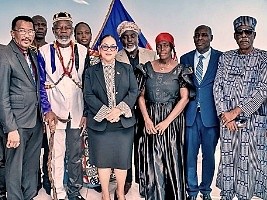
    In an unprecedented move signaling a new era of collaboration, Haiti’s Ministry of Religious Affairs hosted its first-ever gathering of national religious leaders on March 13, 2026. Minister Raina Forbin, overseeing both Foreign Affairs and Religious Affairs, convened representatives from diverse religious denominations at the ministerial headquarters, marking a transformative approach to governance.

    The landmark meeting, characterized by officials as a ‘historic first,’ establishes a formal framework for institutional dialogue between the Haitian government and the nation’s moral and spiritual leadership. Director General of Religious Affairs Joël Turenne emphasized the unprecedented nature of this initiative, highlighting its significance in recognizing religious communities as essential partners in national development.

    Minister Forbin articulated the government’s vision of integrating religious communities as vital contributors to addressing Haiti’s pressing security and social challenges. She identified religious leaders as crucial moral guides whose influence extends beyond spiritual matters into the realms of social cohesion and civic values education.

    Central to the minister’s address was the assertion that lasting stability requires not only institutional action but also moral commitment from all societal sectors. She positioned religious communities as indispensable partners in consolidating national values of unity, solidarity, and hope during this critical period in Haiti’s development.

    The ministry announced plans to convene a National Conference of Religious Leaders, creating a structured platform for ongoing state-religious dialogue. This initiative aims to systematically promote peace culture, strengthen social cohesion, and mobilize consensus around fundamental national values including responsibility and national solidarity.

    Religious representatives responded enthusiastically to the announcement, welcoming this new chapter of cooperation as a significant advancement in state-community relations that recognizes their essential role in Haiti’s social fabric.

  • 21 new games on the Quiz Haiti Libre platform (March 2026)

    21 new games on the Quiz Haiti Libre platform (March 2026)

    The interactive gaming platform Quiz.HaitiLibre.com has significantly expanded its educational offerings with the introduction of 21 new trivia games in March 2026. Since its inaugural launch on January 28, 2026, the platform has now added a total of forty games, demonstrating its commitment to continuous content development and user engagement.

    Operating on a completely free access model without mandatory registration requirements, the platform provides inclusive educational entertainment for global audiences. All content is available in both French and English, with each quiz featuring three progressive difficulty levels to accommodate casual players and knowledge enthusiasts alike.

    Contrary to what the platform’s name might suggest, Quiz.HaitiLibre.com offers diverse thematic content beyond Haitian-specific topics. The platform organizes its gaming experience into three distinct thematic worlds: the ‘Haiti’ section for cultural exploration of the Caribbean nation, the ‘World’ category for global knowledge, and the ‘Expert’ tier designed for challenging trivia conquests.

    Each game incorporates an educational framework where every answer is accompanied by detailed explanations, transforming entertainment into learning opportunities. This design philosophy emphasizes knowledge acquisition alongside recreational gameplay.

    The development team has announced plans for monthly content expansions, ensuring fresh gaming experiences while encouraging community feedback through website comments and social sharing features. The platform’s growth strategy focuses on building sustainable engagement through regular updates and user-driven improvements.

    Available at: https://quiz.haitilibre.com/en

  • Haitian Chef Carline Irantus inducted into the Culinary Academy of France

    Haitian Chef Carline Irantus inducted into the Culinary Academy of France

    In a landmark achievement for Caribbean cuisine, Haitian culinary virtuoso Carline Irantus has been formally inducted into the esteemed Académie Culinaire de France during 2026 induction ceremonies. This historic recognition marks the second time Chef Irantus has received this distinguished honor, placing her among an exclusive cohort of twenty internationally renowned chefs selected for their exceptional contributions to gastronomic excellence.

    As a pioneering force in contemporary Haitian cuisine throughout Europe, Chef Irantus has established an unparalleled record of accomplishment, distinguished by an extraordinary collection of medals, awards, and international recognitions. Her culinary journey represents a remarkable narrative of cultural ambassadorship, technical mastery, and innovative interpretation of traditional Haitian flavors within global culinary contexts.

    The recent induction ceremony not only celebrated her inclusion among the Academy’s membership but also elevated her to the prestigious position of Auditor, acknowledging both her technical expertise and leadership within international culinary circles. This dual recognition underscores the profound impact of her work in elevating Haitian gastronomy to unprecedented global prominence.

    The Network of Haitian Women Role Models and Inspirers (REFEHMI) has celebrated Chef Irantus’s achievement as emblematic of Haitian excellence, noting her unique status as the only Haitian woman to attain such comprehensive international acclaim in the culinary arts. Her accomplishments serve as a powerful testament to the creative genius, resilience, and determination that characterize Haitian women’s contributions to global cultural landscapes.

    This recognition transcends individual achievement, representing a significant milestone for Haitian cultural diplomacy and the international appreciation of Caribbean culinary traditions. Through her work, Chef Irantus has effectively expanded the global understanding of Haitian cuisine while simultaneously honoring the nation’s rich culinary heritage and demonstrating its capacity for innovation and excellence on the world stage.

  • Gang Supression Force brings smiles back to children’s faces

    Gang Supression Force brings smiles back to children’s faces

    In a heartening display of community solidarity, Haiti’s Gang Suppression Force (FRG) has launched a humanitarian initiative targeting the nation’s most vulnerable youth. On March 11, 2026, the specialized security unit partnered with PNH-ÉduPOL to deliver critical supplies to a Port-au-Prince orphanage severely impacted by gang-related violence.

    The comprehensive donation drive provided essential items ranging from nutritional provisions and clothing to hygiene products and sanitation supplies. The contribution included practical necessities such as detergents, bedding materials, infant care products, and recreational equipment including soccer balls to restore normalcy to children’s lives.

    Under the leadership of Commander Godfrey Otunge, FRG officers accompanied by Haitian National Police personnel formally presented the donations to the facility. The event transformed into an emotional connection between security forces and children, with shared meals, spontaneous singing, and meaningful conversations creating an atmosphere of genuine joy and renewed hope.

    This intervention addresses the devastating consequences of gang violence that has left numerous Haitian children orphaned, homeless, or forcibly recruited by armed groups. The initiative demonstrates a multifaceted approach to security operations that combines law enforcement with humanitarian assistance, recognizing that lasting stability requires both protection and social support.

    Community leaders have praised the effort as a replicable model for other institutions caring for vulnerable children nationwide, emphasizing that such comprehensive support systems are vital for breaking cycles of violence and building sustainable peace.

  • Leisure : Did you know ? #6

    Leisure : Did you know ? #6

    In the lush landscapes of northern Haiti grows a remarkable culinary delicacy known scientifically as Psathyrella coprinoceps, locally celebrated as djon djon. This rare, edible mushroom species exhibits a distinctive dark brown to black pigmentation and thrives on decaying wood trunks following rainfall periods. Unlike conventional mushrooms where the flesh is consumed, Haitian culinary tradition uniquely utilizes this fungus for its profound aromatic properties and rich dark pigment that infuses dishes with exceptional depth.

    The mushroom’s primary culinary application centers on diri ak djon djon, an iconic Haitian rice dish that undergoes transformation through mushroom infusion. The preparation involves steeping the mushrooms to extract their distinctive dark hue and complex woody essence, subsequently discarding the physical mushroom while retaining the flavored liquid for cooking rice. This technique results in a visually striking black rice dish with layered flavor profiles that sophisticated palates may identify as containing notes of forest undergrowth, humus, and pronounced umami characteristics.

    Contemporary Haitian chefs are innovatively incorporating this traditional ingredient into modern gastronomic creations, including risotto variations and emulsion-based dishes. The mushroom’s versatility and unique properties have positioned it as a cornerstone of Caribbean fine dining, often complemented with traditional accompaniments like dried shrimp or land crabs. Culinary experts emphasize the critical importance of precise dosing during preparation to balance the mushroom’s potent characteristics and prevent undesirable bitterness.

    This culinary treasure represents more than mere sustenance—it embodies a significant cultural heritage that combines ecological rarity, technical preparation mastery, and deep historical roots within Haitian society. The ongoing evolution of djon djon utilization in haute cuisine demonstrates how traditional ingredients can achieve international gastronomic recognition while preserving cultural authenticity.