标签: Haiti

海地

  • Justice : Damning report on detention conditions at Fort-Liberté

    Justice : Damning report on detention conditions at Fort-Liberté

    A shocking humanitarian crisis is unfolding within Haiti’s prison system, according to a devastating report released by the Haitian NGO Association of Volunteers for the Reintegration of Inmates (AVRED). The organization’s December 2025 investigation revealed that 312 inmates incarcerated at Fort-Liberté’s two detention facilities are enduring conditions that systematically strip them of basic human dignity and essential healthcare services.

    The comprehensive assessment documents a multi-faceted institutional failure affecting both convicted individuals (279) and those awaiting trial (33). Beyond mere deprivation of liberty, detainees face critical shortages in medical staffing with only one physician serving the entire population, supported by just three nurses and two psychology interns operating without necessary resources. The near-total absence of essential medications creates a dangerous environment where communicable diseases including tuberculosis, malaria, HIV/AIDS, and scabies spread unchecked due to inadequate isolation protocols.

    Infrastructure deficiencies compound the health emergency, with investigators reporting cracked walls, complete electrical system failure, overcrowded cells, non-functional water systems, and overflowing septic tanks. These hazardous conditions are exacerbated by severe understaffing among prison personnel, increasing risks of violence and tension within the facilities.

    Nutritional provisions fail to meet basic standards, with merely two cooks attempting to serve 300 individuals. The resulting meals lack essential nutrients, particularly damaging for inmates suffering from chronic illnesses and further compromising already weakened immune systems.

    The crisis extends to judicial rights, as the absence of functional transportation prevents both emergency hospital transfers and court appearances. This institutional failure results in unjustified extensions of pretrial detention, effectively punishing individuals before conviction.

    AVRED concludes that the Fort-Liberté situation represents a collective societal failure rather than merely a prison administration problem. The organization urgently calls for immediate intervention from national and international partners, substantial reinforcement of health and logistics systems, and comprehensive infrastructure rehabilitation to ensure basic safety and human rights protections.
  • iciHaïti – 2010 Earthquake : Speech by the Secretary of State for the Integration of Persons with Disabilities

    iciHaïti – 2010 Earthquake : Speech by the Secretary of State for the Integration of Persons with Disabilities

    Sixteen years after Haiti’s catastrophic 7.3-magnitude earthquake, the nation continues to honor the memory of the tragedy while reaffirming its commitment to disability inclusion. On the anniversary of the January 12, 2010 disaster that claimed approximately 300,000 lives and left hundreds of thousands injured, Secretary of State for the Integration of Persons with Disabilities Génard Joseph delivered a poignant address recognizing the enduring impact on Haitian society.

    The seismic event, lasting merely 35 seconds but resulting in over 280,000 fatalities and 1.6 million displaced persons, fundamentally transformed Haiti’s social landscape. Secretary Joseph emphasized how the tragedy exposed the profound vulnerabilities faced by individuals with disabilities while simultaneously revealing their remarkable resilience and determination.

    In his commemorative speech, Joseph declared the government’s unwavering dedication to improving living conditions for disabled citizens through collaborative efforts with disability organizations, civil society groups, and international partners. The administration’s focus includes enhancing access to essential services, promoting socioeconomic and educational integration, and protecting the rights of persons with disabilities.

    The Secretary framed disability inclusion as both a moral imperative and political responsibility for the Haitian state, noting that the earthquake’s legacy necessitates continuous action toward building a more equitable society. His address called for national solidarity in creating a Haiti where human dignity remains paramount and no citizen faces exclusion.

    Joseph’s remarks highlighted how the collective memory of the disaster serves as both a tribute to those lost and an inspiration for constructing a more inclusive future. The anniversary observance underscores Haiti’s ongoing journey from tragedy toward transformation, with disability rights at the forefront of national recovery efforts.

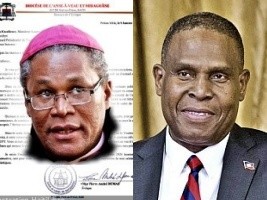
  • Politic : Me Jean Henry Céant opposes the mediation of Mgr Dumas (letter)

    Politic : Me Jean Henry Céant opposes the mediation of Mgr Dumas (letter)

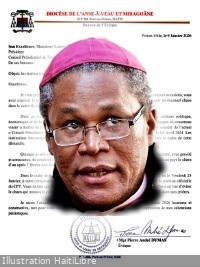
    In a significant development within Haiti’s ongoing political turmoil, former Prime Minister Jean Henry Céant has formally opposed the mediation efforts proposed by Bishop Pierre André Dumas. The controversy emerged after Bishop Dumas, Vice-President of the Haitian Episcopal Conference and Bishop of Anse-à-Veau-Miragoâne, agreed to lead mediation efforts to prevent potential chaos following the Transitional Council’s mandate expiration on February 7, 2026.

    Céant, who served as Haiti’s acting Prime Minister and currently faces Canadian sanctions, expressed his position through a strongly worded letter dated January 11, 2026. The document, addressed directly to Bishop Dumas and copied to multiple Haitian institutions, outlines Céant’s profound concerns regarding the bishop’s suitability as a neutral mediator.

    The former Prime Minister, identifying himself as a practicing Catholic and former Economic Advisor to the Catholic Church, expressed astonishment and dismay at the bishop’s involvement. Céant referenced a previous incident on March 9, 2024, when Bishop Dumas co-signed a document condemning sanctioned citizens without prior trial, creating what Céant described as a ‘painful rupture’ within the Church community.

    While acknowledging the necessity of mediation in crisis situations, Céant questioned Bishop Dumas’ ability to maintain the neutrality, moral integrity, and detachment essential for credible mediation. The former leader suggested that the bishop’s past political positions effectively place him among stakeholders rather than as an impartial mediator.

    Céant’s letter appeals to members of the Transitional Council to reject the mediation proposal, characterizing it as exclusionary and potentially damaging to institutional credibility. He urged Bishop Dumas to focus instead on his spiritual role as a pastor and man of prayer rather than engaging in political mediation.

    The correspondence concludes with a call for divine guidance during Haiti’s troubled times, maintaining a tone of respect while expressing firm opposition to the bishop’s proposed involvement in the country’s political resolution process.

  • LHF Playoff D1 : All the results from the first day

    LHF Playoff D1 : All the results from the first day

    The Haitian Football League’s Men’s First Division championship playoffs commenced on January 11, 2026, delivering an electrifying opening day marked by decisive victories and intense regional rivalries across four critical matches.

    In the Northern conference bracket, Ouanaminthe FC demonstrated formidable prowess with a commanding 2-0 triumph over Racing FC at Parc Notre-Dame de Ouanaminthe. The match witnessed spectacular goals from Roobens Philogene (54th minute) and Louibenn Sinor (65th minute), securing their team’s dominant performance. Simultaneously, AS Capoise emerged victorious with a 2-1 win against Baltimore SC at Parc Levelt de Saint-Marc. Henry Saint Juste (46th minute) and Philistine Hornet (48th minute) scored rapid successive goals, while Baltimore’s sole point came from an unfortunate own goal by Stanley Volcin in the 54th minute.

    The Southern conference matches presented equally thrilling encounters. Violette AC secured a narrow 1-0 victory against Cavaly AS at Parc Gérard Christophe in Léogâne, with Fernando Ciceron scoring a remarkably early goal just four minutes into the match. In a closely contested battle at Land des Gabions in Cayes, Juventus FC and Racing CH concluded with a 1-1 draw. Mackenson Rosier put Racing CH ahead in the 35th minute, but St-Cyr Jeanson equalized for Juventus FC during the 62nd minute, resulting in a hard-fought stalemate.

    These inaugural playoff matches establish compelling narratives for the remainder of the championship series, setting the stage for heightened competition as teams advance through the brackets in pursuit of the coveted D1 title.

  • Hinche : OFATMA forces the closure of 3 construction sites

    Hinche : OFATMA forces the closure of 3 construction sites

    In a significant enforcement action, Haiti’s Occupational Health, Safety and Social Security Agency (OFATMA) has compelled the closure of three construction sites in the Hinche region for systematic non-compliance with labor regulations. The crackdown followed repeated refusals by site operators to register their workers with the national social security system, despite receiving multiple formal notices.

    The regulatory body characterized the operators’ conduct as deliberate resistance to legal obligations, prompting authorities to order immediate shutdowns. This decisive measure aims to terminate practices that violate Haiti’s social protection statutes and workplace safety standards.

    The enforcement operation was conducted under judicial supervision with support from officers of the Haitian National Police (PNH), ensuring adherence to legal protocols and maintaining public order throughout the process.

    OFATMA investigators reported that site operators exposed workers to substantial hazards by employing them without legal protection against occupational accidents and construction-related risks. The agency condemned this practice as a severe infringement of fundamental worker rights.

    The institution reaffirmed that Haitian legislation mandates all employers to formally declare their employees and fulfill corresponding social security contributions. Non-compliance coupled with defiance of regulatory authority subjects violators to stringent administrative sanctions and potential judicial proceedings.

    Legal actions are presently under deliberation, while any resumption of operations at the shuttered sites remains conditional upon complete regularization in strict accordance with existing legal frameworks.

  • Insecurity : Attacks and population displacements in Montrouis…

    Insecurity : Attacks and population displacements in Montrouis…

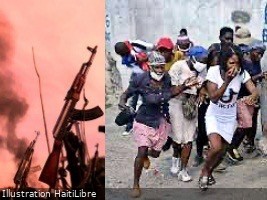
    The Lower Artibonite region of Haiti continues to grapple with a deteriorating security situation as a series of coordinated armed attacks have triggered significant population displacements and created severe humanitarian challenges. Following earlier violence in Pont-Sondé on November 29 and L’Estère on December 1, the commune of Montrouis experienced renewed hostilities between December 23-25 when armed groups targeted the 1st section of Délugé. The Canaan gang specifically attacked the locality of Piâtre, burning numerous homes and intensifying pressure on already strained host communities.

    According to the International Organization for Migration, approximately 1,120 individuals have been displaced by the recent violence, with all affected persons finding refuge with host families primarily in neighboring areas and the city of Saint-Marc. The Communal Section Administrative Council and General Directorate of Civil Protection report that most displaced persons are concentrated in surrounding localities including Rozo, Aymé, and Dipen. However, humanitarian access remains severely constrained as roads to these areas are subject to ongoing armed attacks and remain extremely dangerous for travel.

    The security environment remains highly volatile, particularly impacting humanitarian operations throughout the Saint-Marc commune. National Road #1, a critical transportation artery, remained impassable at Montrouis as of January 6 due to security concerns. These access constraints have significantly hampered rapid humanitarian response efforts, limiting the ability of aid workers to reach affected populations and maintain essential services.

    The General Directorate of Civil Protection in Artibonite, with support from the UN Office for the Coordination of Humanitarian Affairs, is actively monitoring the situation through existing coordination mechanisms established for the Lower Artibonite region. The continued violence highlights the persistent security challenges facing Haiti and the growing humanitarian needs of vulnerable populations caught in conflict-affected areas.

  • FLASH : Mgr Dumas agrees to lead the mediation at the end of the CPT’s mandate

    FLASH : Mgr Dumas agrees to lead the mediation at the end of the CPT’s mandate

    In a significant development for Haiti’s political future, Bishop Pierre-André Dumas has formally accepted the formidable task of mediating the nation’s escalating constitutional crisis. The Bishop of Anse-à-Veau and Miragoâne, who also serves as Vice-President of the Haitian Episcopal Conference, confirmed his pivotal role in a carefully worded letter addressed to Laurent Saint-Cyr, the Pro Tempore President and Coordinator of the Transitional Presidential Council (CPT).

    This intervention comes at the urgent request of approximately fifteen coalitions spanning Haiti’s political, economic, and civil society sectors, alongside international institutions including CARICOM, the Organization of American States (OAS), and the United Nations Integrated Office in Haiti (BINUH). The mediation seeks to establish consensus on forming an executive government before the CPT’s mandate expires on February 7, 2026, as stipulated in Article 12.1 of the April 4, 2024 Political Agreement.

    Despite acknowledging his ongoing recovery from unspecified health concerns, Bishop Dumas emphasized that “no sacrifice is too great to prevent the country from descending into chaos after February 7.” He characterized his acceptance as a decision made “with gravity and conscience” amid growing apprehensions about potential institutional collapse.

    The bishop has proposed critical meetings with Transitional Council leadership on January 22nd or 23rd to coordinate positions and develop contingency plans. His letter underscores the collaborative nature required between political leadership and religious guidance, noting that both sectors must “combine our efforts to avoid the chaos that threatens the country if we do not anticipate the events following February 7th.”

    This ecclesiastical intervention represents one of the most substantial peacemaking efforts since the establishment of the transitional government, highlighting the Catholic Church’s enduring influence in Haitian society and governance. The successful formation of a functional executive government before the February deadline now appears contingent upon Bishop Dumas’s mediation efforts.

  • Agriculture : World Bank, School Feeding Program Evaluation Mission

    Agriculture : World Bank, School Feeding Program Evaluation Mission

    A comprehensive evaluation mission conducted by the World Bank in collaboration with multiple international agencies has assessed the progress of Haiti’s innovative school feeding initiatives under the Resilient Agriculture for Food Security Project (PARSA). The December 2025 mission to Grand’Anse Department involved representatives from the World Bank, PARSA coordination team, Food and Agriculture Organization (FAO), and World Food Programme (WFP) examining the implementation of various project components with particular emphasis on school nutrition programs.

    The assessment focused on operational functionality of school canteens and meal quality standards for students across the region. Since the 2023-2024 academic year, PARSA has significantly expanded its school feeding coverage, now benefiting over 125,000 students across Nippes, Sud, Grande Anse, and Centre Departments through two distinct implementation models.

    The primary model, serving 95% of beneficiary students, utilizes a decentralized local purchasing system where WFP partners with cooperating organizations to source supplies directly from agricultural producer organizations within the project’s intervention zone. This approach simultaneously addresses child nutrition while stimulating local agricultural economies.

    A particularly innovative pilot model in Chambellan and Moron communes grants substantial autonomy to canteen workers who receive fixed per-meal allocations and manage local market purchases and meal preparation independently. This stock-free approach requires daily market purchases by canteen workers who earn income based on dish pricing and actual preparation expenses rather than receiving direct compensation.

    The evaluation included site visits to Saint-Joseph National Congregational Girls’ School in Moron and Bon Berger College in Chambellan, enabling year-over-year progress assessment. Through the PARSA framework, WFP and Haiti’s Ministry of Agriculture, Natural Resources and Rural Development (MARNDR) are collaboratively strengthening the national school feeding system while bolstering local economic networks.

    During the 2024-2025 academic year, WFP’s comprehensive funding approach, including PARSA resources, provided daily school meals to approximately 600,000 children across 10 departments, with nearly 400,000 beneficiaries receiving meals sourced exclusively from local food systems.

  • Security : Seizure of weapons and ammunition at Quartier Morin customs

    Security : Seizure of weapons and ammunition at Quartier Morin customs

    Haitian authorities have made a significant breakthrough in combating international weapons trafficking with the interception of a major arms shipment originating from the United States. The operation, conducted on January 6, 2026, represents a critical development in Haiti’s ongoing security challenges.

    In a coordinated effort, investigators from the North Anti-Narcotics Brigade (BLTS) joined forces with the Customs Surveillance Brigade and local customs officials to execute a targeted inspection at the Cap-Terminal S.A 2 facility in Quartier Morin. The operation focused on a shipping container with registration ASJU5884650, managed by D CARGO agency, which had arrived from the United States.

    During the thorough examination, authorities discovered five cardboard boxes labeled ‘L663’ that contained a substantial arsenal. The concealed weapons included nine pistols from multiple manufacturers (S&W, Luger, Bryco Arms, SCCY, KAHR, Palmetto, and Springfield), accompanied by nine magazines and 5,500 rounds of 7.62x39mm ammunition—caliber primarily associated with AK-47 assault rifles and their variants.

    The judicial response was immediately activated with Attorney Bimps Noël, Acting Presiding Judge at the Quartier Morin Magistrate’s Court, appointed to lead the official investigation. He was assisted by his bailiff, Attorney Kattia Joseph, underscoring the seriousness with which Haitian authorities are treating this case.

    Two individuals present during the container inspection—Willy Pierre and Clevickson Servius—were promptly taken into custody by BLTS investigators on charges related to international firearms and ammunition trafficking.

    In a subsequent development on January 7, police officers from the North Department arrested Joseph Cedernier, known by the alias ‘Djo’, who is suspected of being the intended recipient of the confiscated weapons and ammunition. This arrest suggests authorities are making progress in dismantling the network behind this trafficking operation.

    The significant weapons seizure has prompted a comprehensive investigation under judicial authority, with BLTS agents working to establish the complete network structure and individual responsibilities connected to this international trafficking operation. This operation highlights both the ongoing security challenges in Haiti and the determined efforts by authorities to combat the illegal weapons trade that contributes to instability in the region.

  • FLASH : End of TPS, Judge Reyes skeptical and unconvinced…

    FLASH : End of TPS, Judge Reyes skeptical and unconvinced…

    In a significant legal development, Federal Judge Ana C. Reyes has expressed substantial skepticism toward the Trump Administration’s decision to terminate Temporary Protected Status (TPS) for Haitian nationals. During the second day of hearings on January 7, 2026, Judge Reyes ordered the government to produce additional documentation to determine whether the administration’s controversial move was “predetermined” rather than based on thorough policy analysis.

    The court proceedings revealed sharp judicial criticism of the administration’s selective use of a United Nations report to justify ending protections while simultaneously ignoring the same document’s detailed security concerns regarding Haiti’s stability. “You can’t rely on one article for one thing and not for another,” Judge Reyes emphatically stated during the hearing.

    Judge Reyes directly questioned whether Homeland Security Secretary Kristi Noem had conducted a comprehensive analysis of conditions in Haiti and fulfilled her statutory obligation to assess whether circumstances had sufficiently improved to warrant termination of protected status. The administration’s argument rested heavily on a brief email from a State Department official claiming “no foreign policy concerns” about ending TPS—a response sent merely 53 minutes after the initial request on a Friday afternoon.

    The judge noted this unusually rapid response indicated insufficient consultation with subject matter experts or proper review procedures. During an extensive 30-minute exchange, government attorney Dhruman Sampat contended that the term “foreign policy” could reasonably encompass ground conditions in Haiti, but Judge Reyes remained unconvinced, stating the response failed to demonstrate whether Haitian TPS holders could safely return to their home country.

    While no final ruling has been issued, Judge Reyes indicated she would deliver her decision on suspending the TPS termination by February 2, 2026—just one day before protections for Haitian nationals are scheduled to expire. Legal observers suggest that if Judge Reyes suspends the revocation, the government will likely appeal, potentially setting the stage for Supreme Court consideration of this immigration policy matter.

    Background: Judge Ana C. Reyes, nominated by President Biden and confirmed by the Senate in February 2023, made history as the first Latin American woman and first openly LGBTQ+ person to serve as a district judge in Washington, D.C. She brought over two decades of experience from Williams & Connolly LLP, with extensive expertise in international law and representation of asylum seekers.