标签: Haiti

海地

  • FLASH : 5 departments on Yellow Alert

    FLASH : 5 departments on Yellow Alert

    Meteorological authorities in Haiti have escalated warnings across multiple regions as an approaching cold front stationed over Cuba poses significant threats of severe weather. The Haitian Hydrometeorological Unit (UHM), in coordination with the General Directorate of Civil Protection (DPC), has maintained a yellow alert status for five departments following forecasts predicting intense rainfall and thunderstorms.

    The affected regions include the Far North territories encompassing Artibonite, North, Northeast, and Northwest departments, along with the Far South regions of South, Grand’Anse, and Nippes. Additional areas within the West and Central departments are also anticipated to experience severe weather conditions beginning late Thursday evening and continuing through Friday morning.

    Meteorological experts warn that the anticipated precipitation could trigger dangerous flash floods and potentially catastrophic landslides in vulnerable areas. The yellow alert designation indicates that residents should remain高度 vigilant and implement precautionary measures immediately.

    Authorities have issued comprehensive safety guidelines for at-risk populations:

    • Residents residing in coastal zones, ravine-adjacent areas, or historically flood-prone locations should initiate preventive evacuation procedures, seeking refuge with relatives or neighbors in secure areas

    • Individuals are strongly advised against attempting to cross swollen rivers through any means of transportation including foot travel, bicycles, animal transport, or vehicles

    • Citizens should prioritize safeguarding important documents and valuables by storing them in elevated, water-resistant locations

    • Maintaining constant awareness through official weather updates and strictly adhering to instructions from emergency management officials is critically important

    The interagency collaboration between UHM and DPC continues to monitor atmospheric developments closely, with officials prepared to escalate alert levels should weather conditions deteriorate beyond current projections.

  • Education : USD$13M to improve access to quality education

    Education : USD$13M to improve access to quality education

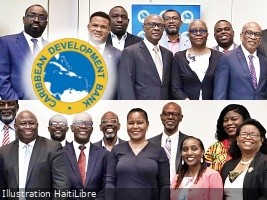
    The Caribbean Development Bank (CDB) has partnered with the Haitian government to launch a transformative educational initiative, the Quality Enhancement in Public Education II (QEPE II) Project. This $13 million grant-funded program represents a significant investment in Haiti’s future, targeting improved educational access and quality learning outcomes, particularly for children from impoverished and vulnerable communities.

    The comprehensive project builds upon the success of its predecessor with an expanded scope of interventions. Approximately 16,000 students and 700 educators will receive direct support through multiple channels including school nutrition programs, tuition waivers, gender-responsive support initiatives, and enhanced Information and Communication Technology equipment. The project will also facilitate professional development for teachers and school administrators while upgrading e-learning platforms for secondary students to ensure educational continuity during socio-political disruptions.

    Dr. Martin Baptiste, Division Chief of CDB’s Social Sector Division, emphasized the strategic importance of this investment, stating: “Education remains one of the most powerful tools for resilience, social stability, and long-term development. QEPE II represents a critical investment in Haiti’s future, ensuring children across all circumstances have access to safe, supportive, and high-quality learning environments.”

    Yves Roblin, Director General of Haiti’s Ministry of National Education and Vocational Training, welcomed the timely intervention, noting that the partnership strengthens institutional capacity and improves classroom resources nationwide. The project directly supports Haiti’s Decennial Education Sector Plan (2022-2032) and aligns with CDB’s Country Engagement Strategy, which identifies human capital development as a central pillar for sustainable growth.

    This initiative advances multiple development objectives including poverty reduction, gender equality, and inclusive development while reinforcing the Bank’s commitment to Haiti’s long-term educational transformation.

  • FLASH : Fire at the West 1 Departmental Directorate in Champ de Mars

    FLASH : Fire at the West 1 Departmental Directorate in Champ de Mars

    PORT-AU-PRINCE, HAITI – A significant fire erupted on March 19, 2026, at the West-1 Departmental Directorate (DDO-1) headquarters, a key administrative building within the capital’s Champ de Mars district. The incident triggered initial panic and resulted in the temporary suspension of the directorate’s operational activities.

    Initial assessments by the Haitian National Police (PNH) confirmed that the blaze caused substantial material and infrastructural damage to the facility. Authorities have emphasized that no fatalities or injuries were reported as a direct result of the fire.

    In response to the emergency, Acting PNH Commander-in-Chief Vladimir Paraison personally visited the site to conduct a preliminary evaluation of the damage. While the precise origin of the fire remains undetermined, Paraison has mandated the Central Directorate of the Judicial Police (DCPJ) to launch a comprehensive investigation to establish the exact cause.

    During his assessment, Commander Paraison publicly commended the Port-au-Prince firefighting corps for their swift and effective response. Their rapid deployment and professional execution were credited with preventing the fire from escalating further and ensuring that the incident resulted in no loss of life.

    Despite the disruption, security operations in the Champ-de-Mars area and its vicinity have been maintained without interruption, with officers from the affected directorate continuing their duties to ensure public order.

  • U-17 WC Morocco 2026 Qualifications : Our Grenadières humiliated by the United States [0-9] (video)

    U-17 WC Morocco 2026 Qualifications : Our Grenadières humiliated by the United States [0-9] (video)

    In a stunning display of football dominance, the United States U-17 Women’s National Team delivered a devastating 9-0 victory against Haiti during the CONCACAF qualifiers for the 2026 FIFA U-17 Women’s World Cup in Morocco. The match, played on March 19, 2026, at the Costa Rican Football Federation Stadium, showcased the overwhelming gap between the two squads as the Americans systematically dismantled their Caribbean opponents.

    The match began ominously for Haiti when defender Kaylee Mallebranche scored an own goal in the 5th minute, setting the tone for what would become a relentless American offensive. The US team’s attacking prowess was on full display as Giselle Aguilar recorded a remarkable hat-trick (25′, 45+1′, 52′), while teammates Grace Murra, Mak Whitham, Loradana Paletta, and Deus Stanislaus (who scored twice) completed the scoring rout. Jordyn Heathcock provided multiple assists, demonstrating exceptional playmaking ability throughout the match.

    Haitian coach Marc-Ogil Frenoy Baptiste attempted to shift momentum with strategic substitutions, including bringing in Krystel Châtelain for Mallebranche in the 17th minute and Samira Ductan for Laetitia Decombe at halftime. However, these changes proved insufficient against the American onslaught.

    The result leaves Haiti at the bottom of Group B with zero points from two matches, having conceded 12 goals while scoring only one. The United States and Puerto Rico lead the group with perfect records, though the Americans boast a staggering +28 goal difference. Haiti’s final opportunity for redemption comes against Bermuda on March 22, though World Cup qualification is now mathematically impossible.

    This performance underscores the developmental challenges facing Caribbean football programs against well-established soccer nations like the United States, which continues to demonstrate its depth of talent in women’s youth football.

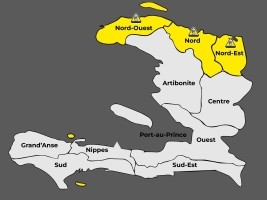
  • FLASH : Yellow alert in the Far North

    FLASH : Yellow alert in the Far North

    Haiti’s northern territories are on high alert as meteorological authorities warn of an approaching cold front currently positioned over Cuba. The National Disaster Risk Management System (SNGRD), in coordination with the General Directorate of Civil Protection, has activated a yellow alert level for the North, North-East, and North-West departments, anticipating severe weather conditions expected to develop late this afternoon and throughout the evening.

    The weather system poses significant threats including torrential rainfall, intense thunderstorms, potential flooding, dangerous landslides, and hazardous coastal waves. Emergency management officials have issued comprehensive safety guidelines for residents, particularly those inhabiting vulnerable zones.

    Authorities emphasize the critical importance of monitoring official weather bulletins through reliable media channels and avoiding rumor dissemination. The population is advised to maintain constant access to information via radio, television, official internet sources, and community loudspeaker systems.

    Preparedness measures include securing personal belongings and vital documents in waterproof containers, establishing emergency supplies sufficient for several days including non-perishable food, treated drinking water, batteries, radios, flashlights, and essential medications. Residents are strongly discouraged from undertaking unnecessary travel to mountainous regions or areas proximate to rivers during this period of heightened meteorological risk.

  • Leisure : Did you know ? #8

    Leisure : Did you know ? #8

    The didgeridoo stands as one of humanity’s most ancient musical instruments, created by Aboriginal peoples of Northern Australia over 1,500 years ago. This remarkable wind instrument represents both cultural heritage and acoustic innovation, crafted traditionally from eucalyptus trunks naturally hollowed by termites.

    What makes the didgeridoo truly extraordinary is the unique playing technique required. Musicians employ circular breathing—an exceptional method where players inhale through the nose while simultaneously expelling air stored in their cheeks. This creates a continuous, uninterrupted sound that can be sustained for remarkable durations.

    Beyond producing its characteristic low-pitched drone, skilled players utilize vocal cords, throat manipulations, and tongue movements to mimic natural sounds including bird calls, animal noises, and environmental acoustics. The instrument holds profound spiritual significance within Aboriginal culture, serving as a vital component in ceremonial rituals and storytelling traditions.

    Despite its seemingly simple construction, the didgeridoo produces astonishing rhythmic complexity and sonic richness. In contemporary music, it has transcended its traditional roots to become integrated into diverse genres including jazz, electronic, world fusion, and meditation music. Its distinctive vibrational qualities and hypnotic tones continue to captivate global audiences, making it both an ancient artifact and modern musical phenomenon.

    This musical exploration originates from the Quiz-HaitiLibre educational platform launched in January 2026, which features comprehensive knowledge sheets accompanying its cultural quizzes. The platform offers dozens of free, registration-free games available in both French and English, with three difficulty levels covering topics from Haitian culture to global knowledge.

  • Japan : Financial contribution to the IOM for the urgent needs of repatriated Haitians

    Japan : Financial contribution to the IOM for the urgent needs of repatriated Haitians

    In a significant humanitarian response to Haiti’s escalating migration crisis, the Japanese government has allocated $667,000 to the International Organization for Migration (IOM) through its “Comprehensive Assistance to Forcibly Returned Haitian Migrants” initiative. This funding arrives amid deteriorating conditions characterized by widespread violence, prolonged political turmoil, and severe economic distress throughout the Caribbean nation.

    The substantial contribution will enable IOM and its collaborative partners to deliver critical aid to migrants arriving in extremely vulnerable conditions. The program focuses on strengthening essential infrastructure and services at strategic border crossings, including Anse-à-Pitres, Belladère, Cap-Haitien, and Ouanaminthe. Key improvements will target water, sanitation, and hygiene (WASH) facilities at these priority locations.

    Grégoire Goodstein, IOM Chief of Mission in Haiti, emphasized the project’s comprehensive approach: “This support will provide immediate humanitarian assistance while building sustainable infrastructure to handle the massive influx of returning migrants.”

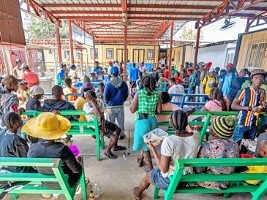
    The initiative outlines multifaceted support including frontline reception services, vulnerability screening, basic medical care, mental health and psychosocial support, protection service referrals, and limited transportation assistance to facilitate safe return to communities of origin. Particular attention will be directed toward unaccompanied minors, pregnant women, nursing mothers, elderly individuals, and migrants requiring urgent medical attention.

    All operational activities will be conducted through close coordination with national and local authorities, including the National Migration Office (ONM), Institute for Social Welfare and Research (IBESR), Haitian National Police (PNH), Ministry of Public Health and Population (MSPP), and various humanitarian organizations operating within Haiti.

    Yohei Ueno, Chargé d’Affaires at the Japanese Embassy in Haiti, stated: “This assistance demonstrates Japan’s steadfast commitment to the Haitian people during this profoundly challenging period. It will deliver essential humanitarian support to those confronting extremely difficult circumstances upon their return.”

    The migration situation continues to deteriorate alarmingly, with approximately 200,000 Haitians forcibly repatriated in 2024. This figure surged to over 270,000 in 2025, marking a distressing 36% year-over-year increase. While the Dominican Republic constituted the primary source of returns, significant numbers also arrived from the United States, the Bahamas, and the Turks and Caicos Islands.

    Through this financial commitment, Japan and IOM reaffirm their shared dedication to preserving human dignity, enhancing border stability, and supporting Haiti’s management of complex migration challenges.

  • Economy : Strengthening cooperation in investment and entrepreneurial development

    Economy : Strengthening cooperation in investment and entrepreneurial development

    In a significant move to accelerate economic recovery, Haiti’s Ministry of Trade and Industry (MCI) has solidified a strategic cooperation framework with the United Nations Conference on Trade and Development (UNCTAD). Minister James Monazard convened a technical meeting to establish enhanced collaboration in investment promotion and entrepreneurial development, aligning with the government’s strategic priorities for sustainable growth.

    This partnership leverages UNCTAD’s internationally recognized expertise in assisting developing nations, particularly in formulating strategies that foster inclusive and sustainable economic expansion. The collaboration focuses on strengthening public policies dedicated to trade, investment, and entrepreneurship as fundamental pillars of Haiti’s development agenda.

    Three flagship initiatives received particular emphasis during the discussions:

    The Women’s Entrepreneurship Support Program (PAEF), designed to empower female business leaders through capacity building and promotion;
    The Youth Entrepreneurship Support Program (PAPEJ), which facilitates economic integration of young Haitians through entrepreneurial guidance;
    The Entrepreneurial Innovation and University Startup Support Program (AIESU), focused on cultivating innovation and establishing a robust national startup ecosystem.

    UNCTAD will provide strategic technical assistance through specialized workshops on sustainable investment policies and comprehensive online training modules for inclusive entrepreneurship. This support aims to strengthen MCI’s institutional capabilities and enhance the effectiveness of public policies, with direct benefits expected for the PAEF and PAPEJ programs.

    Digital economy development emerged as a critical transformation lever, with initiatives to attract investments in this sector complementing the objectives of the AIESU program. Through its Investment Facilitation Center (CFI), the Ministry is implementing several institutional enhancements:

    Progressive establishment of a Single Investment Window to streamline and digitalize administrative procedures;
    Strengthening CFI’s operational capacities in investor attraction and support;
    Enhancing tools for promoting national investment opportunities while developing strategic analysis capabilities.

    Minister Monazard characterized the meeting as paving the way for ‘strengthened cooperation, structured around clearly defined priorities and geared toward concrete results for Haiti’s economic development.’

  • Security crisis : High-level strategic meeting

    Security crisis : High-level strategic meeting

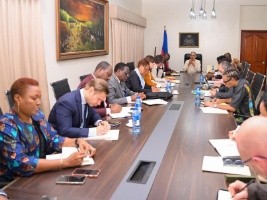
    Port-au-Prince, Haiti – In a decisive high-level meeting convened on Wednesday, March 18, 2026, Haitian Prime Minister Alix Didier Fils-Aimé articulated a comprehensive national strategy to confront the nation’s escalating security crisis. The strategic session, held at the Prime Minister’s Office, brought together the National Commission for Disarmament, Dismantling and Reintegration (CNDDR) and key international partners to coordinate a unified response.

    Prime Minister Fils-Aimé delivered a resolute declaration of the government’s commitment to fully restore state authority across Haiti’s national territory. This initiative emerges as Haitian security forces intensify operations to reclaim control of regions dominated by armed factions. The government’s approach is dual-faceted, merging robust law enforcement actions with structured social reintegration programs.

    Addressing the core of the crisis, the Prime Minister condemned the systematic recruitment of youth by criminal networks as a grave assault on public order and the nation’s future. He emphasized the state’s dual responsibility: to uncompromisingly suppress criminal activities while providing viable alternatives for those ensnared by armed groups, particularly children, adolescent girls, and women.

    The reintegration policy was explicitly framed not as a concession but as an integral component of a broader security strategy. Justice Minister Patrick Pélissier received directives to strengthen judicial actions against crime, including the deployment of judicial centers nationwide to ensure rigorous law enforcement.

    To ensure implementation coherence, Prime Minister Fils-Aimé announced the creation of a strategic coordination mechanism between the state and international partners. CNDDR President Guerda Prévilon was tasked with leading this effort, developing integrated operational plans that include secure reception infrastructure, training programs, and socioeconomic support systems.

    The meeting garnered significant international support, with Carlos R. Massieu of the United Nations Integrated Office in Haiti (BINUH) and representatives from IOM, UNICEF, European Union, UNDP, UNESCO, and UNOPS affirming their commitment to assist the Haitian government while respecting national priorities and sovereignty.

    The government’s unified message underscores Haiti’s determination to reestablish republican order, protect vulnerable populations, and ensure universal accountability under the law through this balanced approach of authority and social responsibility.

  • Leisure : Did you know ? #7

    Leisure : Did you know ? #7

    Deep within Haiti’s dry forest ecosystems grows Guaiacum officinale, known locally as ‘Gwayak’—a botanical marvel renowned for possessing one of the world’s densest woods, so heavy it sinks in water. This extraordinary species, often called ‘holy wood’ or ‘tree of life,’ displays striking blue blossoms against its evergreen foliage and carries profound historical significance in traditional medicine.

    The tree’s resin was historically utilized to treat various ailments, earning its medicinal reputation. However, the very properties that make guaiac wood exceptional—its density and durability—have also made it highly sought after for shipbuilding and luxury craftsmanship, contributing to its threatened status today.

    With an extremely slow growth rate, guaiac populations struggle to recover from exploitation. Its presence in Haiti’s coastal regions serves as a critical indicator of forest ecosystem health. Conservationists emphasize that protecting this species represents more than preserving biodiversity—it safeguards a living connection between Haiti’s medicinal heritage and its unique natural patrimony.

    The survival of Guaiacum officinale directly correlates with efforts to combat rampant deforestation in Haiti’s coastal areas. This conservation challenge highlights the delicate balance between preserving natural resources and addressing human pressures on the environment.

    This botanical profile originates from educational materials developed for the HaitiLibre Quiz platform, which launched in January 2026 to promote knowledge about Haiti’s cultural and natural heritage. The platform offers dozens of free, accessible games in both French and English across three difficulty levels, with new content added monthly.