标签: Guyana

圭亚那

  • GY$100,000 cash grant in 2026 budget

    GY$100,000 cash grant in 2026 budget

    In a significant national address delivered Wednesday evening at the Arthur Chung Conference Centre in Liliendaal, President Irfaan Ali unveiled substantial economic measures that will directly impact Guyanese citizens. The centerpiece announcement confirmed that all Guyanese citizens aged 18 and above will receive a cash grant of GY$100,000 (approximately US$480), with funding allocated in the forthcoming 2026 national budget.

    During his comprehensive two-hour presentation to diplomats and senior government officials, President Ali emphasized that cash transfers serve as crucial instruments for achieving specific policy objectives. He further indicated that additional cash grants would be distributed throughout his five-year presidential term, though specific details and timelines were not fully elaborated.

    The announcement follows previous campaign trail promises made during the 2025 general election, where President Ali had suggested citizens might receive Christmas holiday cash grants conditional on good behavior. The delayed implementation has sparked speculation within political circles, with some observers suggesting the administration may be avoiding parliamentary procedures that would involve interaction with opposition figures.

    Notably, the main opposition WIN party leader Azruddin Mohamed and his father currently face extradition proceedings to the United States over alleged financial crimes. House Speaker Manzoor Nadir has yet to convene a meeting for Mohamed’s constitutional election as Opposition Leader, a position that Attorney General Anil Nandlall believes could potentially harm Guyana’s international reputation.

    In parallel developments, President Ali announced substantial wage increases for government workers, who will earn GY$50,000 monthly beginning next year. The administration also revealed ambitious plans to establish tax-free special development zones nationwide, strategically designed to boost employment in non-oil sectors through import substitution initiatives. These zones will specifically target regions with high unemployment needs while promoting economic activities that generate export earnings or reduce import dependency.

    The precise locations for these development zones will be formally identified in the 2026 budget presentation. Additionally, the government committed to providing financing programs for Amerindian communities to enhance housing quality and infrastructure development.


  • US President bans and restricts entry of nationals from three Caribbean countries

    US President bans and restricts entry of nationals from three Caribbean countries

    In a significant immigration policy move, the Trump administration has announced stringent entry restrictions targeting nationals from three Caribbean Community (CARICOM) member states. Effective January 1, 2026, citizens of Antigua and Barbuda, Dominica, and Haiti will face either complete bans or limited access to the United States.

    President Donald Trump justified these measures as essential for national security, citing inadequate screening protocols and information-sharing deficiencies in these nations. The policy represents an extension of travel restrictions initially implemented during his first term, which were subsequently upheld by the Supreme Court.

    The administration specifically highlighted concerns regarding Citizenship by Investment (CBI) programs offered by Antigua and Barbuda and Dominica. These initiatives grant citizenship to foreign investors without requiring residency, creating potential security vulnerabilities according to U.S. officials. Trump’s executive order noted that such programs could enable individuals from already restricted countries to obtain secondary citizenship and bypass existing travel bans.

    Under the new regulations, consular officers will substantially reduce visa validity periods for nationals of these Caribbean nations to the maximum extent permitted by law. The restrictions apply comprehensively to both immigrant and nonimmigrant visas, including B-1, B-2, B-1/B-2, F, M, and J categories.

    The policy expansion also affects several additional countries beyond the Caribbean region. Afghanistan, Burma, Chad, Republic of the Congo, Equatorial Guinea, Eritrea, Iran, Libya, Somalia, Sudan, and Yemen will face complete entry restrictions. Meanwhile, Angola, Benin, Côte d’Ivoire, Gabon, The Gambia, Malawi, Mauritania, Nigeria, Senegal, Tanzania, Tonga, Zambia, and Zimbabwe will encounter partial limitations.

    The administration emphasized that these measures result from unsuccessful diplomatic engagements aimed at improving information-sharing practices and security protocols with the affected nations.

  • Agro-chemicals from Guyana allegedly smuggled into Suriname

    Agro-chemicals from Guyana allegedly smuggled into Suriname

    Surinamese authorities have apprehended a 63-year-old businessman identified by initials J.P. in connection with an illicit cross-border agro-chemical smuggling operation. The arrest occurred Monday at a storage facility on Ramawat Soechitweg in western Suriname following actionable intelligence received by local law enforcement.

    Police surveillance operations led to the discovery of ten containers of unauthorized herbicides concealed within a truck bed at the specified location. According to official statements from the Suriname Police Corps, the suspect confessed to transporting the regulated substances from neighboring Guyana utilizing unauthorized border crossing points known locally as ‘back track’ routes.

    Investigations reveal the detained individual intended to distribute the contraband chemicals through his agricultural supply retail establishment. Law enforcement officials have impounded both the chemical shipments and the transportation vehicle used in the operation.

    Following judicial review, the suspect remains in pretrial detention pending completion of the criminal investigation. This incident marks the second major smuggling case between the two South American nations within recent weeks, following last month’s interception of illegally transported fuel from Guyana destined for unauthorized sale in Suriname.

    The case highlights ongoing challenges in border security coordination between Suriname and Guyana, particularly regarding regulated agricultural materials that require proper certification and taxation for cross-border commerce.

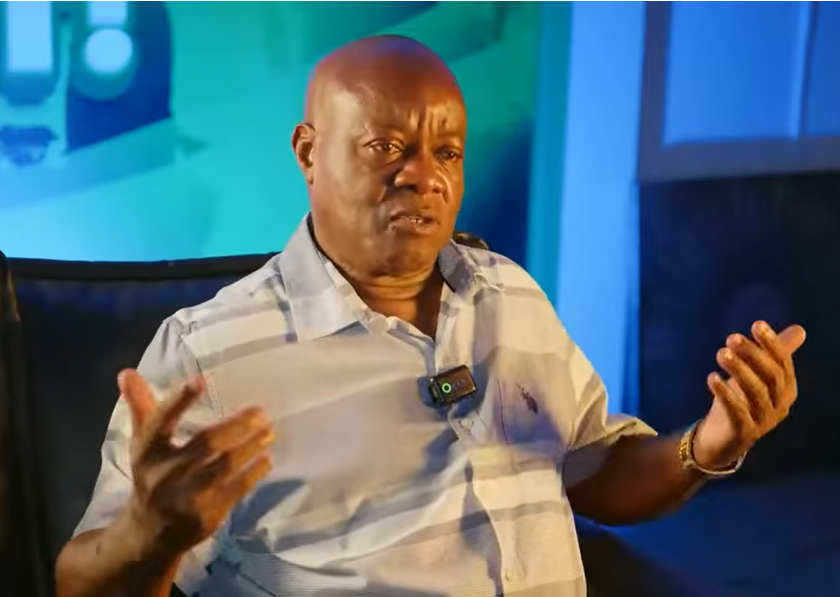
  • Norton promises to revitalise PNCR after recent electoral defeat

    Norton promises to revitalise PNCR after recent electoral defeat

    In the wake of the People’s National Congress Reform’s (PNCR) most devastating electoral performance, party leader Aubrey Norton has unveiled a comprehensive strategy to rebuild and revitalize the political organization. The September 1, 2025 general and regional elections saw the PNCR-led coalition, A Partnership for National Unity (APNU), secure merely 12 parliamentary seats—a stark contrast to the ruling People’s Progressive Party Civic’s 36 seats and newcomer We Invest in Nationhood’s 16 seats.

    Addressing supporters on the party’s weekly program ‘Nation Watch,’ Norton acknowledged the severity of the defeat, stating that the party cannot ‘bury your head in the sand’ following such a significant electoral setback. The veteran politician, who has been with the PNC since the 1970s, identified several factors contributing to the poor showing, including the absence of a coalition with the Alliance For Change, well-financed opposition campaigns, alleged electoral irregularities, and a voters list containing names of emigrants, migrants, and deceased persons.

    Norton’s revitalization plan centers on extensive grassroots engagement beginning in the first quarter of 2026. The initiative will focus on understanding Guyanese citizens’ desires, improving parliamentary representation, and deploying social workers to assist and guide youth populations. ‘We will engage the youth because I do believe that urgent work needs to be done with the youth,’ Norton emphasized, criticizing the current government for displacing young people’s priorities and hindering their development as future leaders.

    The PNCR leader also pledged to address internal party disunity, which he acknowledged had ‘accumulated’ over time. His strategy includes creating a corps of educated and trained young party members who can eventually assume leadership roles. Norton stressed that youth must be educated that politics is about service rather than mere position-seeking, and that commitment should extend beyond electoral victories.

    Looking forward, Norton expressed hope that within twelve months, national discourse could shift toward Guyana’s comprehensive development, proper resource allocation, addressing ethnic problems connected to social, economic and political challenges, and establishing a properly managed Natural Resources Fund that saves for future generations.

  • New Demerara River Bridge remains safe; contractor to fix waviness of road

    New Demerara River Bridge remains safe; contractor to fix waviness of road

    Guyana’s Ministry of Public Works has issued firm assurances regarding the structural integrity of the recently inaugurated Bharrat Jagdeo Demerara River Bridge (BJDRB), following public concerns about visible surface irregularities. Technical investigations confirm that the observed pavement undulations pose no threat to the bridge’s fundamental stability or load-bearing capacity.

    Public Works Minister Juan Edghill personally inspected the structure on Monday, accompanied by technical experts. During a Facebook Live broadcast from the site, Minister Edghill clarified that the problematic section featuring cracked asphalt is not part of the bridge itself but constitutes the approach road. “Where I am standing here, where you’re seeing this defect in the asphaltic work, it is not even the bridge. This is the road to the bridge,” he emphasized.

    Engineering assessments attribute the road surface waviness near the east approach to natural settlement behavior occurring at the transition zone where the road embankment fill meets the concrete abutment structure. The ministry’s statement explained that “differences in material properties between the sand fill and the concrete structure have resulted in varying settlement behavior, leading to a temporary elevation difference.”

    Regarding undulations observed on the main bridge’s side spans, investigations confirmed these are merely superficial irregularities limited to the asphalt pavement layer, arising during the construction process. The ministry stressed that these conditions “do not compromise the structural integrity or load-bearing capacity of the bridge.”

    The contractor responsible for the $260 million infrastructure project, which was officially opened on October 5, 2025, has been instructed to perform remedial works to restore a smooth driving surface. Minister Edghill characterized such surface issues as not unusual in major construction projects, noting that the observed defects would be promptly corrected.

    The ministry’s reassurance comes in response to concerns raised over the weekend by Dorwain Bess, Chairman of the Vigilant Political Action Committee (VPAC), regarding the structural integrity of the vital transportation link. Officials maintain that continuous monitoring data indicates the bridge “remains safe, stable, and fully reliable for public use,” with the government committed to ensuring the highest standards of safety and travel comfort.

  • Education Ministry strengthening “quality and accountability”

    Education Ministry strengthening “quality and accountability”

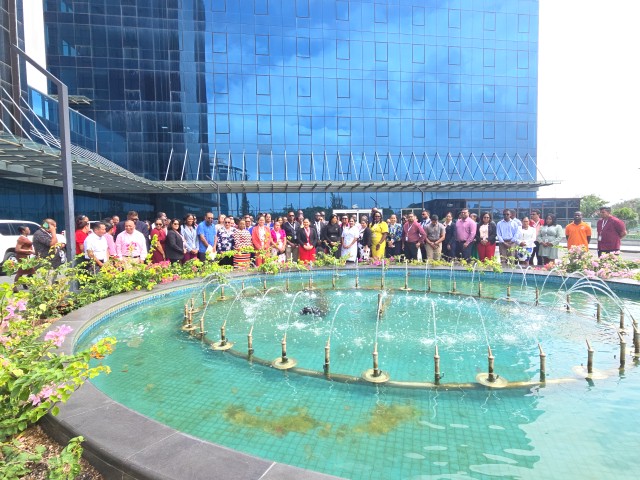
    In a significant move to transform its educational landscape, Guyana’s Ministry of Education has officially inaugurated the National Education Leadership Academy (NELA), marking a pivotal step toward enhancing school leadership and institutional accountability. The launch ceremony at Pegasus Corporate Suites on December 15, 2025, gathered education officials and practitioners to witness what authorities describe as a cornerstone initiative for improving learning outcomes nationwide.

    Chief Education Officer Saddam Hussain outlined an ambitious package of reforms scheduled for implementation in early 2026. These measures include reinstating teacher appraisals after a five-year hiatus, introducing performance report cards for all schools and regional education departments, and establishing a transparent school ranking system. ‘When there is a clamour for a particular school, then it’s based on the ranking and not necessarily what we think the good schools are,’ Hussain stated, emphasizing data-driven decision making.

    NELA represents a collaborative effort funded by the Global Partnership for Education and the Inter-American Development Bank, with implementation support from UNESCO’s International Institute for Educational Planning. The inaugural cohort comprises 100 education professionals—including school administrators, education officers, and ministry staff—who will undergo comprehensive leadership training.

    Complementing NELA’s launch, the ministry will soon introduce a Continuous Professional Development Policy alongside national teacher awards. Hussain explained this dual approach: ‘You have a system where teachers are held accountable but you also have a system where those who have excelled are rewarded for their efforts.’

    The academy’s mandate extends beyond conventional training, encompassing research into systemic challenges and solutions for parental engagement, school attractiveness, and leadership development. Hussain highlighted the need for ‘independence of thought’ among education leaders, citing concerning examples where school administrators resisted basic responsibilities like operating water systems installed with IDB support.

    Education Minister Sonia Parag addressed the gathering, noting that while infrastructure expansion—with over 100 schools built since 2020—and technological integration have improved access, transformational leadership remains crucial. ‘When this tier is strong, systems improve, teaching improves, learning improves and most importantly opportunity expands,’ Parag asserted, describing NELA’s mission to develop empathetic, ethical, and data-driven leaders.

    The initial 100 participants will engage in an 18-month blended learning program combining theoretical instruction with practical applications in educational leadership, mentoring, and collaborative improvement strategies.

  • Guyana to train its own pilots- Pres Ali; globally-recognised aviation cadet scheme targets youths

    Guyana to train its own pilots- Pres Ali; globally-recognised aviation cadet scheme targets youths

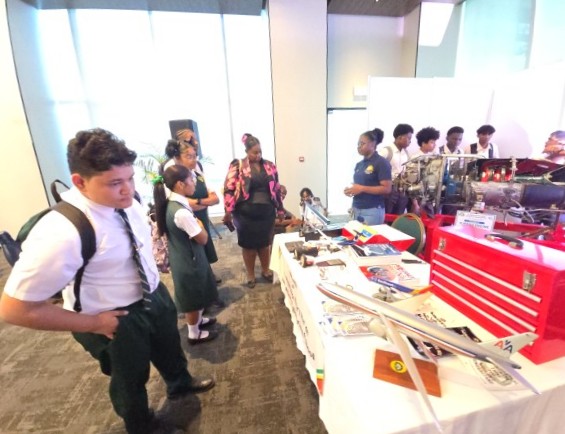
    In a strategic move to develop domestic aviation capabilities, Guyana has announced plans to establish a premier aviation training institution that will certify local professionals across multiple aerospace disciplines. President Irfaan Ali confirmed the initiative, emphasizing that this will enable aspiring Guyanese pilots to “earn their wings right here in Guyana” rather than overseas, where training currently costs approximately US$140,000 per pilot.

    The groundbreaking effort is being advanced through the Guyana’s Next Generation of Aviation Professionals Programme, a collaborative partnership between the Guyana Civil Aviation Authority (GCAA), the United Kingdom’s International Air Cadets organization, Air Cadets of Guyana, and the University of Guyana. This program represents one of the first implementations of i.ACT’s fully integrated NGAP+ framework, aligning with the International Civil Aviation Organization’s (ICAO) global standards.

    Under the newly signed memorandum of understanding, the NGAP+ partnership supports Guyana’s ambitious goal of training 1,500 internationally qualified aviation personnel by the end of 2028. The program will create a comprehensive pathway for participants aged 16 and above, offering internationally benchmarked aviation education, technical training, and industry-focused life skills. A pre-vocational “Air Cadets” track will also engage youth aged 12-16, introducing them to aerospace careers early.

    Malcolm Evans, CEO of i.ACT, described the program as “a transformational pipeline from classroom and community air cadet activities right through to internationally recognised qualifications.” He noted that “Guyana is sending a clear signal that aviation is a strategic national economic asset and that investing in young people” is a priority.

    The initiative addresses both economic and developmental objectives, with President Ali noting that “our government’s economic philosophy is built on the principle of inclusive development” as Guyana’s domestic aviation network continues to expand. Captain Gerry Gouveia Jr., Head of Air Cadets Guyana, highlighted the program’s accessibility aspects, noting that it provides alternative pathways into aviation beyond traditional expensive routes or military service.

    The University of Guyana has committed space, expertise, and technical support to the program, which will roll out over an initial three-year period as a adaptable national framework. The curriculum will eventually expand across disciplines including airport operations, air navigation services, airline operations, safety management, and emerging aerospace technologies.

  • ExxonMobil hires new ground transportation provider; CEO promises high quality service

    ExxonMobil hires new ground transportation provider; CEO promises high quality service

    In a significant development within Guyana’s energy sector logistics, locally-owned Scoop Inc has been appointed as the exclusive ground transportation provider for ExxonMobil Guyana. Chief Executive Officer Edmond Braithwaite confirmed the contract award on Sunday, highlighting the company’s commitment to international service standards and substantial local investment.

    The transportation company, which represents a fully Guyanese-owned enterprise, has already deployed US$2 million in capital investments and created approximately 200 jobs. With anticipated expansion into additional oil and gas sector contracts, Braithwaite projects investment growth to US$5 million and workforce expansion to nearly 400 employees.

    This contractual shift follows the termination of previous provider Cyril’s Transportation Service, whose owner was involved in a December 2024 incident involving the discharge of a licensed firearm that disabled the vehicle assigned to ExxonMobil Guyana President Alistair Routledge.

    Scoop Inc emphasizes rigorous safety protocols, including international-standard defensive driving training, random substance testing for alcohol and narcotics, and comprehensive GPS monitoring of all vehicles. The company’s fleet features emergency preparedness equipment and premium amenities including complimentary beverages from local producer Banks DIH.

    Braithwaite brings four decades of U.S. business experience to the venture, which was initiated following encouragement from family members within Guyana’s transportation industry. The launch event garnered support from Prime Minister Mark Phillips, who noted that Scoop Inc’s emergence reflects broader technological advancements and infrastructure development within Guyana’s transportation landscape.

    In a related business development, Braithwaite confirmed his leadership role at ERES Guyana Inc, a property management firm connected to U.S.-based Energy Real Estate Solutions, which counts ExxonMobil among its major clients.

  • Rodrigues woos investors to Rupununi

    Rodrigues woos investors to Rupununi

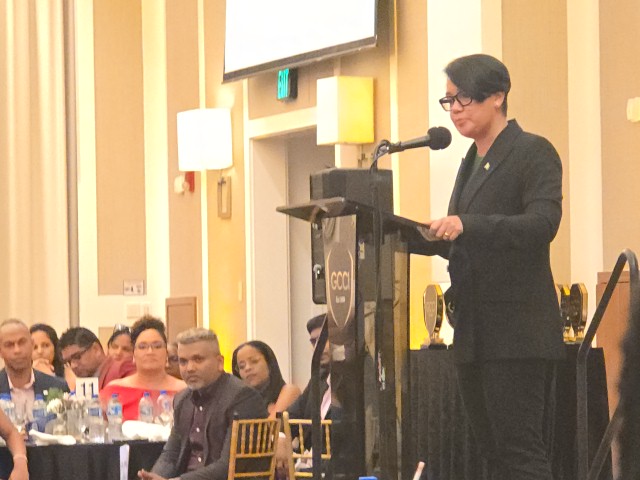
    Guyana’s Minister of Tourism, Industry and Commerce Susan Rodrigues has issued a compelling call to action for domestic investors, urging them to capitalize on emerging opportunities in the Region Nine (Upper Takatu-Upper Essequibo) area. This appeal comes alongside significant infrastructure advancements, including the ongoing construction of the critical Linden-Lethem Road and planned development of a major international airport in Lethem.

    Addressing attendees at the Georgetown Chamber of Commerce and Industry’s annual awards ceremony, Minister Rodrigues emphasized that Guyanese businesses should not delay their strategic positioning until project completion. “Now is the time to make strategic decisions about your presence, your services and your role in that region,” she asserted, highlighting that the roadway will create direct access to substantial economic zones in neighboring Brazil.

    The Minister confirmed that contract awarding for the modern Lethem airport has been finalized, with construction scheduled to commence in 2026. Rodrigues delivered a sense of urgency to potential investors, stating plainly: “If you are not there, you’re almost late already.

    Tourism development features prominently in the government’s regional strategy, with Rupununi identified as one of ten priority locations for eco-lodge construction. Rodrigues specifically invited GCCI members to submit proposals for these initiatives, noting they represent “potential opportunities for business expansion through engagement and partnership with local communities.”

    The investment push coincides with Guyana’s remarkable tourism growth trajectory. Official projections indicate a 20 percent increase in visitor numbers compared to the previous year, with the Caribbean Tourism Organization confirming the country achieved the region’s “highest percentage increase” in tourist arrivals during the first seven months of 2025.

  • Stop paying in gold, declare all to reach national target- Miners Assoc

    Stop paying in gold, declare all to reach national target- Miners Assoc

    In a significant move to bolster national gold reserves, the Guyana Gold and Diamond Miners Association (GGDMA) has issued a stern directive to mining operators, demanding an immediate cessation of using raw gold as currency for transactions and worker compensation. The call to action emerged from the association’s Annual General Meeting held Friday, where Ronaldo Alphonso was re-elected as President.

    The GGDMA’s position received strong governmental backing as the Ministry of Natural Resources concurrently released a statement reinforcing that all mining sector employees must be compensated exclusively through lawful financial channels in accordance with labor regulations. “Paying workers in gold undermines transparency, weakens declaration accuracy, and exposes workers to exploitation and unsafe practices,” the ministry emphasized, announcing plans to intensify compliance inspections with penalties for violations.

    Central to this initiative is the national target of 500,000 ounces of gold for 2025. Current declarations to the Guyana Gold Board stand at approximately 420,000 ounces, with projections suggesting a year-end total between 450,000 and 475,000 ounces—falling short of the ambitious goal. This compares to 434,067 ounces declared in 2024 and 432,113 ounces in 2023.

    The crackdown extends to eliminating the practice known as the “Blai box,” which both entities deem illegal. Miners are instructed to conduct sales exclusively through the Guyana Gold Board or authorized licensed dealers to ensure accurate national production data and fair trade practices.

    In a related development, the GGDMA membership unanimously supported stronger measures against gold smuggling, including potential blacklisting of members engaged in such activities. Alphonso committed to enhanced collaboration with government authorities to eradicate illegal gold trading operations and unlicensed buyers.