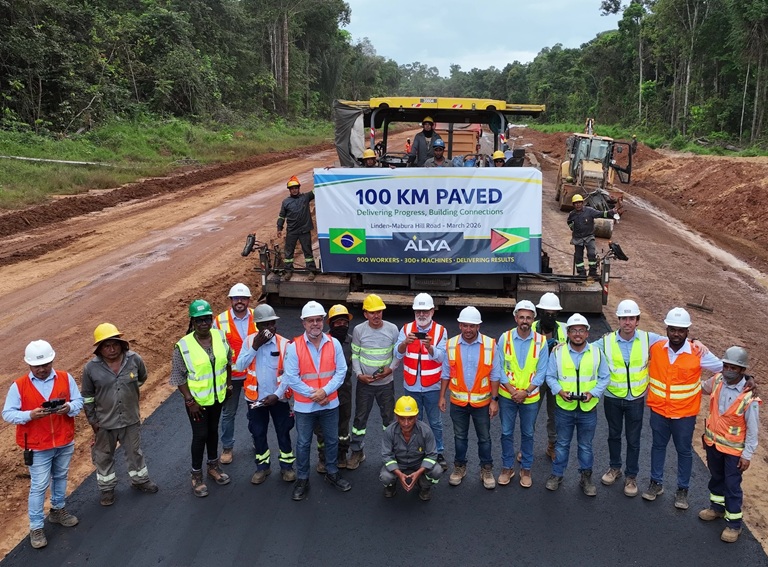
Guyana’s transformative infrastructure project, the US$190 million Linden-to-Mabura Hill Road development, has achieved a significant construction breakthrough with approximately 100 kilometers of roadway successfully converted from historically challenging terrain into a modern asphalt highway. Brazilian construction firm Álya Construtora announced this milestone on Friday, March 20, 2026, marking substantial progress in the nation’s coastal-hinterland connectivity enhancement initiative.
The project represents a dramatic upgrade from what was previously described as a ‘mud and slush’ trail that posed significant transportation challenges, particularly during rainy seasons. President Irfaan Ali acknowledged the achievement through social media, emphasizing its importance for Guyana’s infrastructure development trajectory.
Engineering teams have implemented comprehensive terrain stabilization techniques, including advanced soil reinforcement using quicklime and cement applications to create durable sub-base layers capable of withstanding high-moisture conditions. The construction effort has mobilized an impressive arsenal of over 300 heavy equipment units and approximately 900 personnel working in challenging environmental conditions.
According to Daniel Amaral, Contractor’s Representative for Álya Construtora, the transformation signifies more than mere pavement installation: ‘What used to be a grueling journey through mud is now a functional transport corridor aligned with Guyana’s ongoing infrastructure development.’ The company reported current road-specific works at approximately 83% completion despite earlier delays that pushed the projected finish date to September 2026.
Financial backing for the 121-kilometer roadway comes from multiple international sources, including a US$112 million loan from the Caribbean Development Bank, a US$66 million grant from the United Kingdom, and US$12 million from the Guyanese government. The enhanced corridor is anticipated to significantly boost economic activity between coastal regions and the hinterland while improving transit efficiency toward the Brazilian border.
Álya Construtora, specializing in complex environment infrastructure projects, indicates that subsequent phases will continue extending the corridor southward while maintaining established technical standards and construction methodologies.