标签: Grenada

格林纳达

  • Diabetes prevalence nearly doubles from one Caricom country to the next

    Diabetes prevalence nearly doubles from one Caricom country to the next

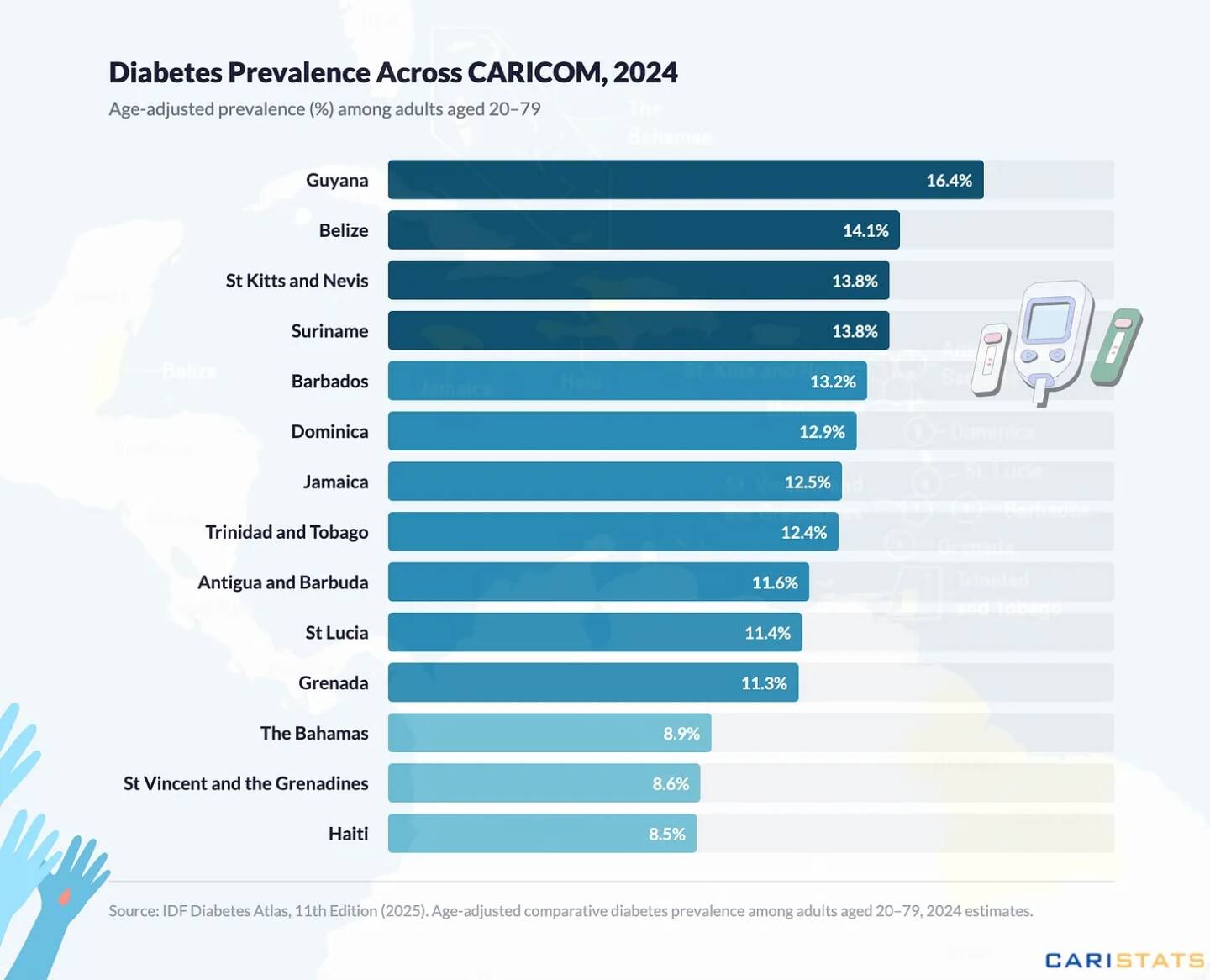
    A stark disparity in diabetes prevalence has emerged across the Caribbean Community (Caricom), with age-adjusted rates varying dramatically from 8.5% in Haiti to 16.4% in Guyana, according to the forthcoming 2025 International Diabetes Federation (IDF) Diabetes Atlas. This near twofold difference highlights significant public health inequities within the single regional bloc.

    The data, which standardizes comparisons by accounting for national age structures, identifies Guyana (16.4%), Belize (14.1%), alongside St. Kitts and Nevis and Suriname (both 13.8%) as the nations with the highest prevalence. A middle cluster of seven countries, spanning from Barbados (13.2%) down to Grenada (11.3%), forms the core of the region. Notably distinct at the lower end of the spectrum are The Bahamas (8.9%), St. Vincent and the Grenadines (8.6%), and Haiti (8.5%).

    This public health challenge is set against a concerning regional backdrop. The broader North America and Caribbean zone already contends with the second-highest diabetes prevalence globally. IDF projections indicate an additional 12 million adults living with diabetes across the region by 2050. For high-prevalence Caricom states, this accelerating trajectory intensifies an already critical health crisis, demanding urgent policy intervention and coordinated public health strategies to mitigate long-term impacts on healthcare systems and population wellness.

  • Grenada included in expanded US visa bond programme

    Grenada included in expanded US visa bond programme

    The Grenadian Ministry of Foreign Affairs has issued an official advisory confirming the United States government’s expansion of its visa bond program, which now includes Grenada among the affected nations. This policy development specifically targets business and tourism visitor visas (B1/B2 categories), introducing potential financial obligations for applicants ranging from $5,000 to $15,000 based on individual assessments during visa interviews.

    According to the Ministry’s statement, U.S. authorities have emphasized that the bond requirement will be implemented on a case-by-case basis rather than as an automatic mandate for all Grenadian applicants. The discretionary nature of the program means immigration officials will evaluate each application individually to determine bond necessity.

    In response to this diplomatic development, the Grenadian government has initiated formal engagements with U.S. counterparts to advocate for national interests and ensure proper consideration for Grenadian citizens throughout the policy’s implementation phase. The Ministry emphasized its commitment to protecting the rights and concerns of Grenadian nationals within the framework of this new visa requirement.

    The advisory concludes with recommendations for the public to rely exclusively on official information channels and maintain strict compliance with all visa conditions. This cautionary guidance aims to prevent misinformation and ensure successful visa applications amidst the changing immigration landscape.

  • Romania Scholarship Announcement 2026/2027

    Romania Scholarship Announcement 2026/2027

    In a significant bilateral educational partnership, the Governments of Romania and Grenada have announced a comprehensive scholarship program for Grenadian nationals seeking undergraduate and postgraduate studies in Romania for the 2026/2027 academic year.

    The initiative, facilitated through Romania’s Ministry of Foreign Affairs, extends beyond traditional scholarship offerings by incorporating extensive support systems for successful applicants. While excluding medical fields (medicine, dental medicine, and pharmacy), the program encompasses all other academic disciplines across Romania’s accredited higher education institutions.

    Prospective candidates must meet specific eligibility criteria, including demonstrated physical and mental fitness, commitment to reside in Romania throughout their studies, and willingness to complete a mandatory one-year Romanian language preparatory course. Applicants must also respect Romanian constitutional values and adhere to institutional regulations.

    The program structure accommodates three academic tiers: Bachelor’s degrees (3-6 years duration for high school graduates), Master’s programs (1-2 years for undergraduates), and Doctoral studies (3-5 years for graduate students).

    Comprehensive financial benefits include full tuition coverage for both the language preparatory year and subsequent academic programs, monthly stipends ranging from €65-€85 depending on academic level, free accommodation in university dormitories, medical coverage for emergencies, and extensive domestic transportation benefits equivalent to those granted to Romanian students.

    Critical application requirements involve submission of certified academic transcripts, birth certificates, passport copies, medical certificates, and completed application forms—all processed exclusively through Romanian diplomatic channels. The application portal (studyinromania.gov.ro) remains open until March 31, 2026, with additional guidance available through Grenada’s Human Resource Development Division.

    Notably, the scholarship excludes international travel costs and domestic transportation from Romanian entry points to host institutions, requiring students to budget accordingly. Academic performance benchmarks mandate minimum credit accumulation for continued funding eligibility throughout the program duration.

  • CPSO applauds adoption of Caricom Industrial Policy and Strategy (CIPS)

    CPSO applauds adoption of Caricom Industrial Policy and Strategy (CIPS)

    In a historic move signaling regional economic integration, Caribbean Community (CARICOM) leaders have unanimously adopted the CARICOM Industrial Policy and Strategy (CIPS) 2035 during their 50th Regular Meeting held in St. Kitts and Nevis. This comprehensive framework represents a strategic blueprint designed to reshape the region’s economic landscape through enhanced industrial development and competitive positioning.

    The CARICOM Private Sector Organisation (CPSO), having played an instrumental role in the policy’s formulation, celebrated this development as a transformative milestone. The organization emphasized that CIPS 2035 establishes a robust foundation for strengthening industrial capabilities, boosting intra-regional commerce, and generating substantial economic opportunities across member states.

    This pioneering policy framework facilitates private sector-led industrial expansion while promoting innovation and fostering interconnectedness among diverse industries within CARICOM. By adopting a coordinated regional approach, the strategy aims to position Caribbean nations as more competitive participants in global value chains for both goods and services.

    Dr. Patrick Antoine, CPSO Chief Executive Officer and Technical Director, characterized the policy’s adoption as a critical advancement for regional economic development. He emphasized that CIPS 2035 enables CARICOM to pursue industrial development through deliberate, synchronized measures that enhance productive sectors and create new avenues for business growth. Dr. Antoine stressed the imperative of translating policy into actionable initiatives, including establishing a Competitiveness Council to expand regional supply networks, support innovation ecosystems, and empower Caribbean enterprises for global market competition.

    The CPSO acknowledged the leadership of Suriname’s President, who holds the Industrial Policy portfolio within the CARICOM Quasi-Cabinet, along with contributing governments for steering the policy through development and approval processes. The organization reaffirmed its commitment to collaborate with the CARICOM Secretariat, member states, and regional partners to ensure the swift realization of CIPS objectives into tangible economic outcomes.

  • UK and Grenada partner to protect coastal communities

    UK and Grenada partner to protect coastal communities

    A groundbreaking initiative between the United Kingdom and Grenada is equipping coastal communities with advanced technological tools to address the escalating threat of shoreline degradation. Through the UK’s Sustainable Blue Economies Technical Assistance Platform, this comprehensive program provides drone systems, GPS survey equipment, and specialized training to empower local organizations in monitoring environmental changes.

    The project specifically targets vulnerable regions including St Patrick, Carriacou and Petite Martinique, where Hurricane Beryl previously caused devastating economic losses exceeding $218 million in 2023. By implementing a train-the-trainers methodology, the program ensures knowledge transfer to youth associations, women’s groups, and local NGOs, creating sustainable monitoring capabilities that will remain within communities long-term.

    Technical contributions include four high-precision GPS receivers, one professional-grade drone with photogrammetry software, and computing equipment that collectively enable detailed coastal mapping. This technology facilitates the creation of a comprehensive 15-70-year shoreline dataset, addressing a critical gap in nationwide erosion data that has previously hampered effective disaster planning.

    British High Commissioner Victor Clark emphasized the strategic importance of this collaboration: “With numerous communities and essential services located along Grenada’s coastline, reliable data is fundamental for sustainable development. This initiative strengthens national planning for climate resilience while creating pathways for climate finance opportunities.”

    The program aligns directly with Grenada’s National Sustainable Development Plan 2035 and supports the country’s Integrated Coastal Zone Management policy. According to Dr. Tony Dolphin, Principal Scientist leading the SBE ShoreSecure project, the initiative delivers dual benefits: providing vital national erosion data while empowering communities with practical tools to track environmental changes themselves.

    Minister Kerryne James of Climate Resilience, the Environment and Renewable Energy highlighted the transformative potential: “By equipping our coastal communities with cutting-edge technology, we’re building resilient coastlines through ecosystem-based adaptation. This approach safeguards our fisheries, tourism livelihoods, and critical infrastructure while placing knowledge directly into the hands of our people.”

    This partnership represents a significant advancement in climate adaptation strategy, combining technological innovation with community engagement to address the urgent challenges posed by coastal erosion in climate-vulnerable nations.

  • Higher gas prices for March 2026

    Higher gas prices for March 2026

    The Government of Grenada has announced substantial increases in petroleum product prices across the nation, effective Wednesday, March 18, 2026. The new pricing structure affects gasoline, diesel, kerosene, and liquefied petroleum gas (LPG) throughout Grenada, Carriacou, and Petite Martinique.

    Gasoline prices will rise by $1.25 per imperial gallon, reaching $15.18 from the previous $13.93. Diesel experiences the most significant percentage increase at $1.76 per imperial gallon, climbing to $16.11 from $14.35. Kerosene sees the largest absolute increase of $2.65, jumping from $10.45 to $13.10 per imperial gallon.

    Notably, standard 20-pound LPG cylinders for household cooking will maintain their current pricing at $40 in Grenada and $49 in the sister islands. However, commercial and bulk users face substantial increases, with 100-pound cylinders rising by $66.40 and bulk LPG prices increasing by $0.65 per pound across all territories.

    The Ministry of Finance confirmed these adjustments follow comprehensive monitoring of international market conditions, using average cost, freight, and insurance rates for computation. The government has implemented full price harmonization for gasoline, diesel, and kerosene nationwide, fulfilling commitments made in the 2023 Budget Address.

    Consumers are reminded that petroleum products remain price-controlled commodities, and retailers are prohibited from deviating from the established pricing. The ministry encourages immediate reporting of any overpricing instances to the Price Control/Consumer Affairs Unit at 435-1459.

    The government maintains its commitment to market monitoring and has established an intervention threshold should prices exceed $17 per imperial gallon, though current levels remain below this benchmark.

  • Today in History: French landed in Lagoon 18 March 1649

    Today in History: French landed in Lagoon 18 March 1649

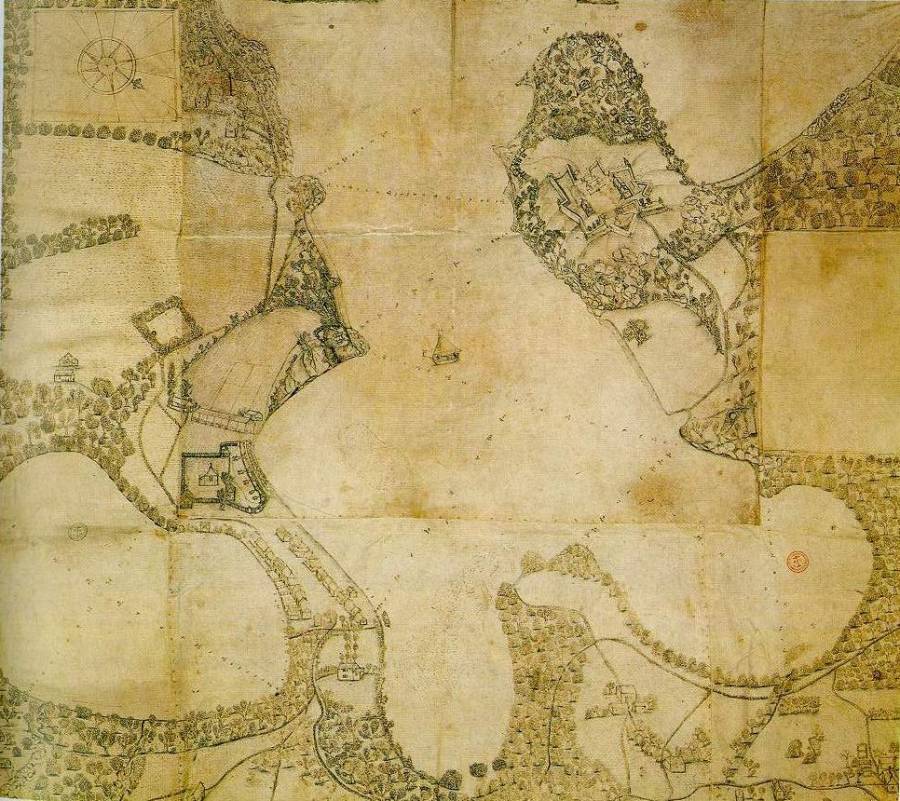
    March 18, 1649, marks a pivotal moment in Caribbean history when French colonists from Martinique initiated the first successful European settlement on the island of Grenada. This expedition, led by Governor Jacques Dyel du Parquet, culminated in a landing at St. George’s Harbor following decades of failed colonization attempts by various French adventurers.

    The strategic push for Grenada’s colonization emerged from its perceived economic potential and proximity to South American trade routes. Prior efforts by prominent figures including Phillip de Poincy (1639/40) and Jean Aubert (1643) had collapsed due to Carib resistance and logistical challenges. In 1645, Philibert de Noailly received a gubernatorial commission but similarly failed to establish a foothold.

    Du Parquet’s meticulously planned operation departed Martinique on March 14, 1649, with two vessels and two barks carrying 45 colonists, construction materials, and military supplies. After anchoring offshore on March 17, the French established Fort l’Annunciation on March 25, formally claiming the territory through a ceremonial act of possession.

    Initial encounters with the indigenous Island Carib population involved tense negotiations rather than immediate conflict. French accounts claiming Chief Kairoüane sold Grenada for trivial trade goods like beads and brandy are contradicted by historical evidence showing the Caribs understood the interaction as trade, not land transfer. The chief’s subsequent banishment by his people for failing to expel the French further undermines the legitimacy of these colonial claims.

    The French rapidly developed agricultural settlements, cultivating both subsistence and cash crops. By June 1650, du Parquet had purchased Grenada, Martinique, St. Lucia and the Grenadines from the bankrupt Compagnie des Isles de l’Amérique for approximately £1,660, retroactively legitimizing French control.

    Peaceful coexistence proved短暂 as Carib resistance intensified within seven months of settlement. The establishment of a second French settlement at Beausejour triggered a decade-long conflict featuring guerrilla warfare, ambushes, and bloody confrontations. The French ultimately prevailed through military superiority, systematically reducing the indigenous population and eliminating organized resistance.

    This colonial acquisition fundamentally altered Grenada’s demographic and cultural landscape, initiating the displacement and destruction of the island’s original inhabitants that would continue through the colonial era.

  • RDU calls on farmers and Grenadians to increase food production

    RDU calls on farmers and Grenadians to increase food production

    The Grenadian government has issued an urgent call to action for agricultural producers nationwide to dramatically scale up domestic food production in response to growing global instability and rising import costs. Dr. Stephen Fletcher, Head of the Rural Development Unit (RDU) within the Ministry of Economic Development, Planning, Blue Economy and Cooperatives, emphasized that achieving food self-sufficiency has become a critical matter of national sovereignty and resilience.

    The comprehensive mobilization strategy targets farmers, fishermen, and livestock producers across Grenada, Carriacou, and Petite Martinique. The initiative focuses on several key pillars: expanding cultivation of staple crops fundamental to the national diet, diversifying agricultural products to reduce import dependency, implementing climate-resilient farming techniques, and developing robust marketing channels including supermarkets, hotels, and restaurants to ensure affordable distribution.

    Dr. Fletcher underscored the existential urgency of the situation, stating that failure to act decisively would leave the nation vulnerable to external shocks and fluctuating global markets. He framed food security as not merely an economic issue but one of national dignity and self-determination.

    The government has committed substantial support through technical assistance, training programs, grant funding, and partnership development aimed at enhancing productivity and strengthening agricultural livelihoods. Simultaneously, the RDU is encouraging households to participate through complementary measures including backyard gardening, bulk purchasing and preservation techniques, energy-efficient cooking methods, and preferential purchasing of local produce.

    The campaign’s overarching message—’Plant Today, Feed Tomorrow’—encapsulates the collective effort required to insulate Grenada from global food price volatility and supply chain disruptions while ensuring all citizens have consistent access to affordable, nutritious food.

  • ECTEL Vacancy: Legal Officer – Regulatory Affairs

    ECTEL Vacancy: Legal Officer – Regulatory Affairs

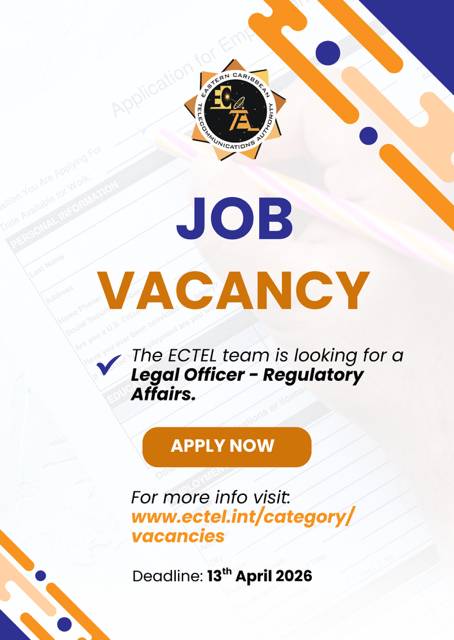
    The Eastern Caribbean Telecommunications Authority (ECTEL) has announced a significant career opportunity for legal professionals specializing in regulatory affairs. The organization is currently accepting applications for the position of Legal Officer – Regulatory Affairs, to be based at its regional headquarters in St. Lucia.

    This senior role operates under the direct supervision of the General Counsel/Secretary to the ECTEL Board of Directors. The successful candidate will assume critical responsibilities including serving as the primary liaison with National Telecommunications Regulatory Commissions (NTRCs) regarding technical advice and assistance requests. The position requires providing comprehensive legal interpretation and opinions on electronic communications and telecommunications regulatory matters, preparing legal opinions on administrative and contract issues, and advising ECTEL Contracting States on sector-specific legal considerations.

    Additional duties encompass evaluating license applications, addressing customer complaints, reviewing access and interconnection agreements, and assessing regulatory compliance with the Telecommunications Act/Electronic Communications Act. The officer will also coordinate regulatory activities supporting the ECTEL framework, ensure compliance with ECTEL’s recommendations and NTRC decisions, advise on licensing procedures and tender processes, and facilitate the appointment of mediators and arbitrators. The role further involves drafting model electronic communications legislation and reviewing international agreements and treaties.

    Qualified applicants must possess a first degree in law from an English Commonwealth university, a Legal Education Certificate or equivalent qualification, and admission to a Commonwealth Bar, preferably within ECTEL or CARICOM member states. A minimum of five years’ experience in a similar capacity is mandatory, while postgraduate qualifications or three years’ experience in legal drafting and/or electronic communications regulation would be considered advantageous. Prior experience in regulatory agencies or public law is also desirable.

    The position demands demonstrated competencies in corporate governance, regulatory policy development, sound legal judgment, advanced research capabilities, and strong communication and presentation skills. The role requires a service-oriented professional with excellent planning abilities who can work both independently and collaboratively.

    The appointment offers permanent status following successful completion of a probation period. The compensation package, classified as Grade 4, is income tax-free and includes comprehensive housing and vehicle allowances. Based at ECTEL’s St. Lucia headquarters, the successful candidate recruited from outside the duty station will receive relocation support including baggage allowances and vehicle transfer costs.

    Interested candidates must apply through ECTEL’s official portal at https://ectel.bamboohr.com/careers/15 by April 13, 2026, at 4:30 PM. Applications require submission of a detailed curriculum vitae, three professional references with contact information, and certified copies of relevant academic and professional certificates.

  • Nexa: Call for nominations

    Nexa: Call for nominations

    Nexa Credit Union has officially initiated its nomination process for three key governance bodies, inviting committed members to participate in shaping the institution’s future leadership. The financial cooperative is seeking candidates for election to its Board of Directors, Credit Committee, and Supervisory Committee, with a submission deadline set for March 26, 2026.

    The Board of Directors position offers members the opportunity to influence strategic direction and governance policies, while the Credit Committee plays a crucial role in lending decisions and credit risk management. The Supervisory Committee serves as the internal watchdog, ensuring regulatory compliance and financial integrity across the organization’s operations.

    Prospective candidates must complete the official Nexa Credit Union Limited Self-Nominating Form, available through the institution’s administrative channels. This extended nomination timeline provides ample opportunity for members to consider their qualifications and prepare comprehensive applications.

    The nomination drive reflects Nexa Credit Union’s commitment to member-driven governance and democratic principles inherent in the credit union movement. These volunteer positions enable members to contribute directly to the financial cooperative’s stewardship while gaining valuable governance experience.

    NOW Grenada, while publishing this announcement, has clarified that it bears no responsibility for contributor opinions or statements presented in relation to this nomination process. The media outlet has established reporting mechanisms for addressing content concerns.