标签: Grenada

格林纳达

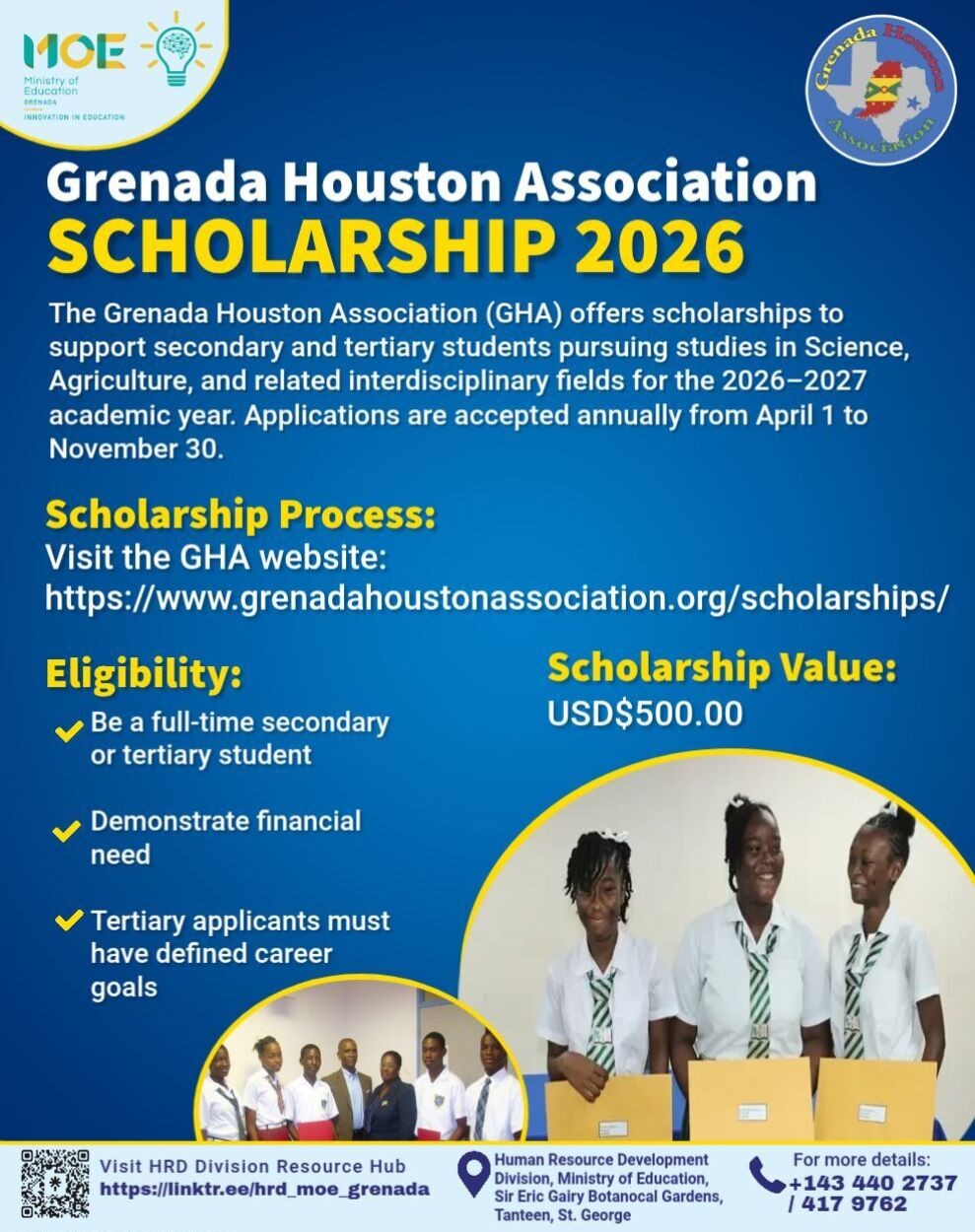
  • Grenada Houston Association Scholarship 2026–2027

    Grenada Houston Association Scholarship 2026–2027

    The Grenada Houston Association (GHA) has announced the opening of its scholarship program for the 2026-2027 academic year, targeting students pursuing studies in science, agriculture, and interdisciplinary fields. This initiative aims to support educational advancement for both secondary and tertiary level students from Grenada.

    Eligibility criteria for the scholarship mandate that applicants must be enrolled as full-time students and demonstrate financial need. Additionally, tertiary education applicants are required to present clearly defined career objectives. The selection process will prioritize candidates who exhibit academic promise and alignment with the program’s focus areas.

    Each successful applicant will receive a financial award of US$500 to support their educational expenses during the academic year. The scholarship application must be completed through the online portal at https://www.grenadahoustonassociation.org/scholarships/scholarship-application/ by the November 30, 2026 deadline.

    Prospective applicants must ensure all required documents are properly scanned and uploaded during the digital submission process. For additional information and application guidance, students may contact the Grenada Houston Association directly at [email protected] or reach out to the Scholarship Desk at the Ministry of Education’s Human Resource Development Division via telephone at (473) 440-2737/8 or (473) 417-9762, or by email at [email protected].

    The Ministry of Education supports this scholarship initiative as part of broader efforts to enhance educational opportunities for Grenadian students in critical development fields.

  • CYEN Grenada calls on nation to observe Earth Hour 2026

    CYEN Grenada calls on nation to observe Earth Hour 2026

    The Grenada Chapter of the Caribbean Youth Environment Network (CYEN) has issued a formal appeal to citizens, commercial enterprises, and institutional bodies across the nation to actively participate in Earth Hour 2026. This globally recognized environmental initiative, orchestrated by the World Wildlife Fund for Nature (WWF), represents a powerful demonstration of worldwide commitment to planetary conservation.

    Scheduled for Saturday, March 28, 2026, between 8:30 PM and 9:30 PM local time, the event will see Grenadians joining millions worldwide in a synchronized display of environmental solidarity. For Small Island Developing States (SIDS) like Grenada, this participation carries particular significance amid growing climate vulnerabilities including sea-level rise, intensifying storm systems, and ecosystem deterioration.

    CYEN Grenada Chapter President Krisma McDonald emphasized the deeper purpose behind the initiative: “Earth Hour transcends mere symbolic action—it serves as an annual activation point for collective consciousness. We urge every segment of society to participate and contemplate our shared responsibility in building a sustainable, resilient nation.”

    Participation guidelines recommend switching off non-essential lighting and unplugging unnecessary electronic devices throughout the designated hour. The organization suggests embracing low-energy activities such as family dialogues, storytelling sessions, or personal reflection during this period. Participants are encouraged to amplify the movement’s impact by sharing their involvement through social media channels using official Earth Hour hashtags.

    Recognizing that symbolic gestures alone cannot address systemic environmental challenges, CYEN advocates for sustained behavioral changes beyond the sixty-minute observance. The network calls for reduced energy consumption in domestic and commercial settings, investment in renewable energy infrastructure, ecosystem protection initiatives, and support for climate policy development at local and regional levels.

    The organization specifically invites governmental bodies, corporate entities, and civil society groups to utilize Earth Hour 2026 as a platform for announcing new environmental commitments or reaffirming existing pledges. CYEN Grenada positions itself as a strategic partner for youth-led climate action, seeking collaborative engagements that extend far beyond the annual event.

  • IICA initiates CDB-funded intervention for AgriMSE Business and Regional Market Integration

    IICA initiates CDB-funded intervention for AgriMSE Business and Regional Market Integration

    A landmark initiative to transform the agricultural landscape across five Caribbean nations was formally launched on March 11, 2026, through a virtual event hosted by the Inter-American Institute for Cooperation on Agriculture (IICA). The AgriMSE Business Development and Regional Market Integration Project, backed by Caribbean Development Bank (CDB) funding, aims to elevate the competitive edge, operational efficiency, and market penetration of Agricultural Micro and Small Enterprises (AgriMSEs) in Antigua and Barbuda, Dominica, Grenada, St. Lucia, and Trinidad and Tobago.

    Diana Francis, IICA’s Representative in Trinidad and Tobago, inaugurated the event by highlighting the pivotal role of AgriMSEs as engines for agricultural value chains, rural economic vitality, and food security. She stressed that successful integration of these enterprises into broader markets necessitates robust, sustained collaborations among regional institutions, development partners, the private sector, and consumers. Francis specifically pointed to the indispensable role that distribution, marketing, and logistics corporations will play in ensuring the seamless movement of goods across domestic, regional, and international markets.

    The project’s implementation strategy is structured around three specialized consultancy streams, which IICA will oversee to ensure cohesion and provide technical support. EconoTech Ltd. will lead efforts to enhance business and production efficiencies for market scaling; Jai Rampersad will spearhead intra-regional marketing and export facilitation; and GBest Consulting will focus on improving creditworthiness and financing access for AgriMSEs. This multi-pronged approach, developed in concert with national entities, is designed to boost enterprise performance, readiness for export, and access to capital.

    The launch also featured presentations on complementary initiatives financed by the European Union. Janet Lawrence, IICA’s Agricultural Health, Food Safety and Quality Specialist for the Caribbean, detailed the EU’s long-standing commitment to regional agricultural development, particularly in addressing sanitary and phytosanitary (SPS) standards and building capacity for over a decade. These EU-funded programs will work in tandem with the IICA-CDB project, offering additional resources to not only AgriMSEs but also to policymakers and institutions working to create a more favorable operational environment. Key focus areas include food safety, quality assurance, and regulatory frameworks—critical components for competing in global markets.

    Adding a significant private sector perspective, Patrick Antoine, CEO and Technical Director of the Caricom Private Sector Organisation (CPSO), addressed the audience. He advocated for enhanced collaboration between small agricultural enterprises and larger regional firms to tackle common challenges related to scale, logistics, and processing. Antoine announced the formation of a Regional Agribusiness Working Group by the CPSO, intended to perpetuate the project’s objectives beyond its formal timeline. This group will harness the expertise, networks, and technical capabilities of major enterprises to provide direct support to AgriMSEs, particularly in shared processing, logistics, and packaging.

    Antoine also revealed a major financial development: the African Export Import Bank (Afreximbank) has increased its investment commitment to the Caribbean from $3 billion to $5 billion, signaling vastly expanded financing opportunities. The Working Group will leverage such partnerships and utilize tools like the Regional AgriMSE Database, currently under development, to deliver targeted support and advance the Caricom 25 by 2025 plus 5 food security agenda.

    Scheduled for an 18–24 month duration, the project will engage AgriMSEs through diagnostic assessments, technical support programs, and market development initiatives. An AgriMSE participant present at the launch described the session as ‘inspiring’ and ‘purpose-driven,’ noting that it comprehensively addressed long-standing requests from the sector.

    Francis concluded by framing the initiative as more than a typical project. ‘Its overwhelming focus is ensuring that agri-food products from micro and small businesses meet the quality and price competitiveness required to establish a presence in domestic and export markets,’ she stated. The project also aims to fortify a foundation for ongoing, organized collaboration in support of AgriMSEs through the strategic IICA-CPSO partnership and other aligned entities.

    AgriMSEs interested in participating, including those who missed the launch, are encouraged to contact the project team at agrimse.tt@iica.int to be included in future communications.
  • Grenadians brace for rising food prices amid global tensions

    Grenadians brace for rising food prices amid global tensions

    Grenada faces mounting economic pressure as escalating global conflicts drive up fuel and shipping expenses, threatening to significantly increase food prices in the coming weeks. The import-dependent Caribbean nation stands particularly vulnerable to international market fluctuations, with rising costs expected to directly impact household budgets already stretched to their limits.

    Economic Development Minister Lennox Andrews acknowledged the widespread economic implications, emphasizing fuel prices’ central role in creating ripple effects across all sectors. “Increase in fuel cost will have a ripple effect across the economy, leading to higher costs for goods and services,” Andrews stated during a recent press conference in St. George’s. The minister highlighted domestic production as a critical buffer against external shocks, pointing to the government’s Food Security Programme as a strategic initiative to enhance local agricultural output.

    Opposition voices had sounded warnings prior to the government’s address. Peter David, political leader of the Democratic People’s Movement, advocated for substantial farming subsidies to strengthen local agriculture systems. “Meaningful subsidy to our farming community” represents essential preparation for cushioning against global price surges, David argued as international tensions intensified.

    Labor representatives expressed concerns extending beyond economic measures. Andre Lewis, President of Grenada Trades Union Council’s Management Committee, cautioned that financial strain on workers could deteriorate the nation’s “social outlook” and potentially provoke civil unrest. Lewis urged employers to prioritize humanitarian considerations over profit margins during the emerging crisis.

    Opposition Leader Emmalin Pierre had previously raised alarms regarding living costs, advocating for policy interventions including Price Control List expansion for essential items, water levy elimination, VAT reduction on electricity, and specialized support for fisheries. Pierre attributed part of the economic pressure to government spending inefficiencies creating what she termed a “hidden tax” affecting households and businesses throughout Grenada, Carriacou and Petite Martinique.

    With global uncertainty persisting, Grenadians confront the prospect of continuously climbing prices with limited control over the ultimate economic impact. Families already managing tight budgets now face additional adjustments to maintain basic living standards.

  • Arley Gill returns to political frontline

    Arley Gill returns to political frontline

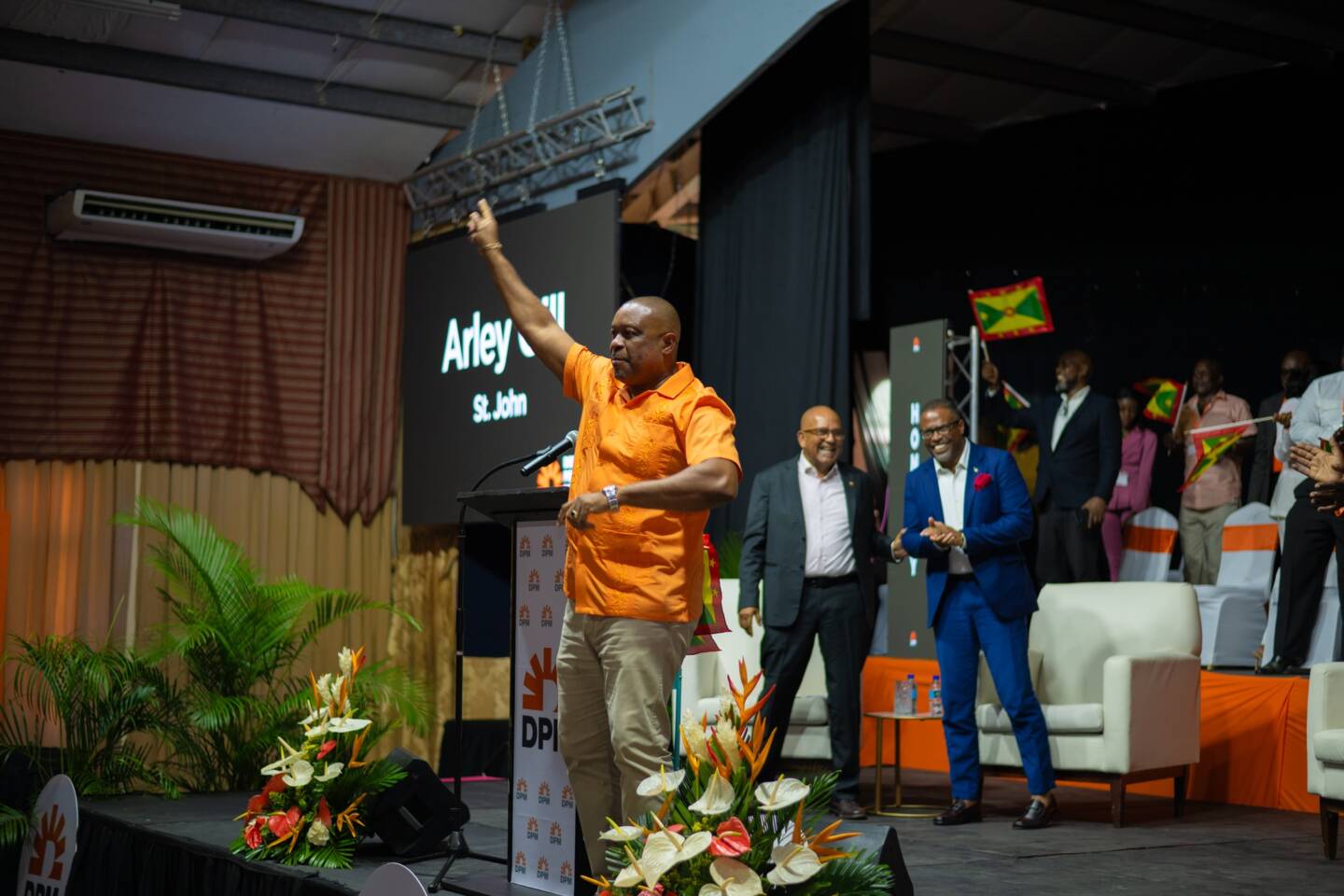
    In a significant development for Grenada’s political landscape, the Democratic People’s Movement (DPM) has solidified its leadership structure during its inaugural congress held at the Grenada Trade Centre. The newly formed party confirmed Independent Member of Parliament Peter David as its Political Leader through unanimous delegate voting, while veteran politician Arley Gill assumed the role of Deputy Political Leader.

    The congress attracted hundreds of supporters nationwide, marking a pivotal moment for the emerging political force. Both David and Gill bring considerable experience to their roles, having previously been expelled from the National Democratic Congress (NDC) before their current alignment. David subsequently associated briefly with the New National Party (NNP) prior to establishing the DPM framework.

    Gill, addressing delegates, revealed his thoughtful transition into the movement: ‘Only weeks ago, I hadn’t committed to direct participation, but an internal conviction persuaded me that greater contributions remained possible. One doesn’t merely join a movement—you become swept by its momentum, and ultimately, the movement becomes an extension of yourself.’

    The party simultaneously announced its initial candidate roster for upcoming general elections, with Gill contesting the St John constituency and David vying for the Town of St George seat. Additional candidates include Andy Best (St Patrick West), Pamela Williams (St Andrew North East), Olvine Holas (St Andrew North West), Aaron Lewis (St Andrew South West), Charmaine Gibbs (St George South), and Christopher Cudjoe (Carriacou and Petite Martinique).

    David characterized the congress as both an organizational milestone and a symbolic demonstration of readiness: ‘Today’s proceedings transcend internal elections—they represent our collective preparedness to advance together toward national transformation.’

    The DPM’s emergence is reshaping opposition dynamics, attracting attention as a potential alternative drawing support from traditional bases and younger voters alike. With experienced leadership now established, the party faces the critical challenge of converting early momentum into tangible electoral success.

  • Public Accounts Committee moves to trigger NLA probe

    Public Accounts Committee moves to trigger NLA probe

    Grenada’s Public Accounts Committee (PAC) has taken decisive steps toward launching a formal investigation into the National Lotteries Authority (NLA) following mounting concerns over governance irregularities and alleged corruption within the state-owned entity.

    Opposition Leader Emmalin Pierre, who chairs the parliamentary committee, announced during a Tuesday session of the Lower House that the PAC intends to engage the Accountant General’s office to conduct a comprehensive probe into NLA’s operations. The findings will be compiled into an official report for parliamentary scrutiny.

    This development marks a significant escalation from political discourse to formal oversight action. The PAC, which holds constitutional authority to examine public expenditure and state entity operations, has already begun reviewing official documents and consulting with senior public officials as part of its preliminary work.

    The move follows serious allegations raised by former minister Johnathan La Crette, who previously held ministerial responsibility for the NLA. La Crette had publicly questioned oversight mechanisms within the organization and pointed to potential corruption, claiming he had formally communicated these concerns to the NLA’s board leadership prior to his July 2024 dismissal from Cabinet by Prime Minister Dickon Mitchell.

    The NLA represents a critical revenue stream for Grenada, financing numerous national development projects. Consequently, any verified deficiencies in its governance or financial management would carry substantial implications for public trust and institutional accountability.

    If the investigation proceeds as planned, it could bring longstanding concerns into sharper focus and potentially test the effectiveness of Grenada’s public accountability frameworks. The probe represents a crucial examination of transparency mechanisms within the country’s most significant statutory bodies.

  • Rotary Club of Grenada hosts inclusive movie day

    Rotary Club of Grenada hosts inclusive movie day

    In a demonstration of community solidarity and inclusive values, the Rotary Club of Grenada organized a specially curated Movie Day for students from the Grenada School for Special Education on March 19th. The event, held at Movie Palace cinema at 10 AM, served as both a term-ending celebration and a meaningful observance of World Down Syndrome Day (March 21st).

    Students experienced a morning of cinematic enjoyment with a featured animated film presentation in a fully accessible environment. The outing provided valuable social engagement opportunities beyond the traditional classroom setting, fostering an atmosphere of excitement and shared community participation.

    This initiative embodies Rotary International’s core philosophy of ‘Service Above Self’ and reflects the organization’s sustained commitment to creating inclusive spaces where all individuals receive recognition and support. By facilitating social experiences for students with diverse abilities, the club actively promotes dignity, equality, and community belonging.

    The event was realized through the generous sponsorship of Movie Palace, which provided complimentary film access along with refreshments including popcorn and beverages for all attendees. This collaborative partnership highlights how community organizations and businesses can jointly create positive social impact.

    World Down Syndrome Day represents a global awareness campaign advocating for the rights, inclusion, and wellbeing of individuals with Down Syndrome. This genetic condition, resulting from an additional copy of chromosome 21, presents both unique challenges and strengths. Community initiatives like the Movie Day event serve to celebrate abilities while promoting broader societal understanding and acceptance.

    The Rotary Club of Grenada maintains an ongoing collaborative relationship with the Grenada School for Special Education, consistently developing programs that empower and inspire students with diverse needs. Through such compassionate outreach, the organization continues strengthening community bonds and fostering environments where every member feels valued and included.

  • Caricom welcomes Adoption of UN Resolution

    Caricom welcomes Adoption of UN Resolution

    In a historic move with profound implications for global justice, the United Nations General Assembly has formally recognized the transatlantic trafficking of enslaved Africans and racialized chattel enslavement as humanity’s gravest crime. The landmark resolution, adopted on March 25, 2026, received unanimous support from all member states of the Caribbean Community (Caricom).

    The Ghana-led resolution establishes several critical frameworks for addressing historical injustices. It characterizes the transatlantic slave system as unprecedented in its scale, duration, brutality, and enduring consequences. The declaration mandates the creation of comprehensive reparations mechanisms while emphasizing the importance of remembrance initiatives, academic research, and educational programs about this dark chapter in human history.

    The timing of the adoption carries deep symbolic significance, coinciding with the International Day of Remembrance of the Victims of Slavery and the Transatlantic Slave Trade. This alignment reinforces the resolution’s call for global acknowledgment and reconciliation.

    Caricom nations have consistently championed international efforts to address the harmful legacies of African chattel enslavement. The regional body has pledged to continue collaborative work with international partners to ensure full implementation of the resolution’s provisions, which include promoting healing, justice, and substantive reparatory frameworks.

    This unprecedented UN action represents a watershed moment in the global movement for historical justice, potentially establishing new precedents for addressing historical crimes against humanity through international institutions.

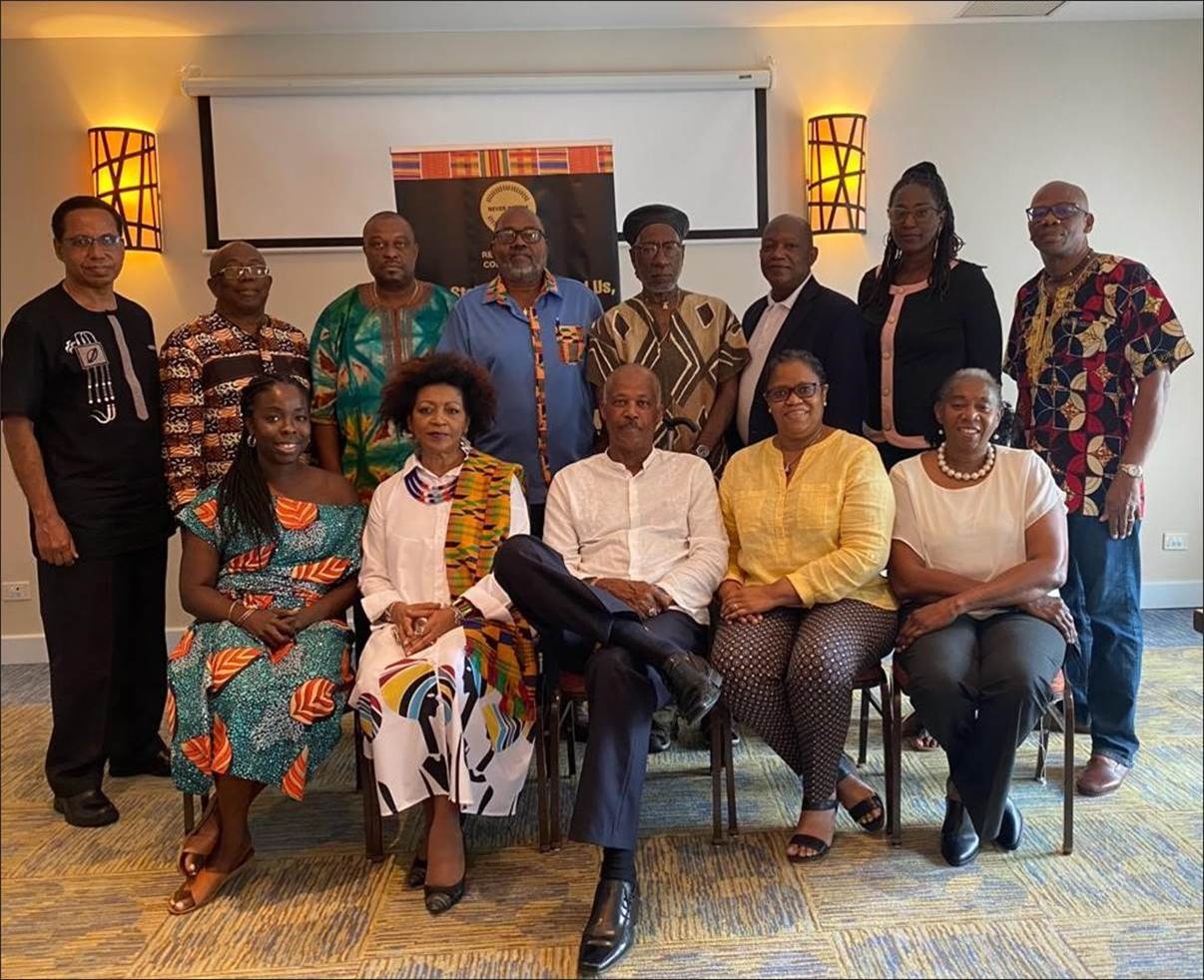
  • Caricom Reparations Commission message

    Caricom Reparations Commission message

    On the International Day of Remembrance for the Victims of Slavery and the Trans-Atlantic Slave Trade, the Caricom Reparations Commission issued a powerful declaration honoring the approximately 15 million African men, women, and children who suffered through centuries of chattel enslavement in the Americas. The commission memorialized both the profound suffering inflicted during the Middle Passage and the systemic brutality that denied basic humanity, while simultaneously celebrating the courageous resistance and defiance that ultimately challenged this racialized system of European domination. The commission framed its contemporary advocacy within the Caricom Ten Point Plan for Reparations, presenting it as the continuation of historical freedom struggles. It explicitly characterized transatlantic slavery as crimes against humanity—comprising racialized enslavement, human trafficking, and genocide—that were deliberately engineered to fuel European economic expansion while systematically underdeveloping Africa and the Caribbean. The commission welcomed the African Union’s declaration of a Decade for Reparations (2026–2035) as a pivotal framework for enhanced collaboration between Africa, the Caribbean, and the global diaspora. This announcement signals a strategic unification of the global reparations movement around principles of historical truth, moral accountability, and legal rights. The commission concluded by urging the international community to take concrete action toward repairing enduring legacies of exploitation, asserting that justice for victims of African enslavement constitutes justice for all humanity.

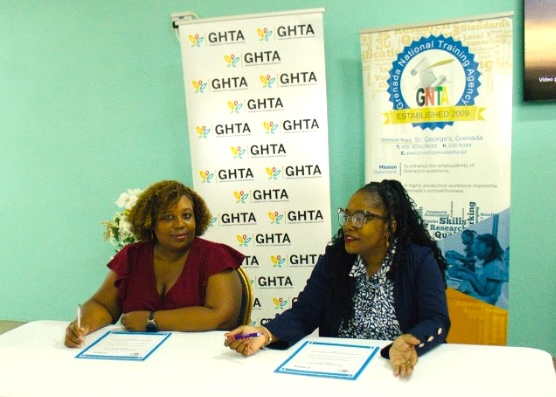
  • GNTA partners with GHTA to launch Hospitality Apprenticeship Programme

    GNTA partners with GHTA to launch Hospitality Apprenticeship Programme

    Grenada’s vocational training landscape is set for a significant transformation with the launch of the Work and Learn: Hospitality Apprenticeship Programme, a collaborative initiative between the Grenada National Training Agency (GNTA) and the Grenada Hotel and Tourism Association (GHTA). Funded by Canada’s Local Engagement and Action Fund (LEAF), this pioneering program represents a strategic investment in human capital development within the nation’s crucial tourism sector.

    The comprehensive training framework will certify 45 hospitality professionals across three specialized disciplines: 8 pastry chefs, 17 bartenders and mixologists, and 20 housekeeping supervisors. The program combines theoretical instruction at either T A Marryshow Community College or the Point Salines Hotel with practical, hands-on training at participating hospitality establishments. Upon successful completion, participants will receive a Level 3 Caribbean Vocational Qualification (CVQ), a regionally recognized credential that enhances both employability and career advancement prospects.

    Arlene Friday, CEO of GHTA, emphasized the program’s transformative potential: “This apprenticeship program represents a quantum leap in our commitment to cultivating a skilled workforce for Grenada’s hospitality sector. By equipping our employees with industry-recognized certifications, we are simultaneously creating pathways for personal advancement while elevating service standards across our tourism industry.”

    Dr. Kemoy Edwards, CEO of GNTA, highlighted the collaborative nature of the initiative: “Our partnership with GHTA, bolstered by Canada’s support through LEAF, demonstrates the powerful synergy that emerges when institutions unite to address skills gaps. This program establishes a replicable model for sector-wide workforce development that can drive sustainable economic growth.”

    Abebech Assefa, Head of Cooperation at the High Commission of Canada to Barbados and the Eastern Caribbean, stated: “Canada takes pride in supporting this initiative through LEAF, reflecting our dedication to inclusive economic growth through strategic investments in human capital development. This partnership with Grenadian institutions and private sector stakeholders strengthens hospitality workforce capabilities while creating meaningful opportunities that foster long-term resilience and shared prosperity.”

    The nine-month program, scheduled to commence in April 2026, incorporates principles of environmental sustainability within hospitality operations and prioritizes inclusion by targeting underemployed youth aged 18-35, with particular emphasis on women and marginalized communities.