标签: Grenada

格林纳达

  • Tevaughn Hall ascends to 3rd in NACAC Rankings

    Tevaughn Hall ascends to 3rd in NACAC Rankings

    The 2026 CARIFTA Games, hosted on home soil in Grenada over the Easter holiday weekend, delivered a historic moment for Grenadian athletics as rising teen hurdler Tevaughn Hall secured a podium finish that ended a 25-year medal drought for the nation in the Under-18 400m hurdles.

    The young Inter-Col Under-17 champion, who represents St Andrews Anglican Secondary School (SAASS), delivered a career-defining performance in front of thousands of cheering local spectators. Hall crossed the finish line in a new personal best of 53.45 seconds to claim the bronze medal, marking a dramatic 1.59-second improvement on his previous record of 55.04 seconds set just weeks earlier at the 2026 Inter-Col competition. SAASS went on to claim its 22nd boys’ team title at that same event, with Hall as one of its standout contributing athletes.

    What makes Hall’s achievement particularly significant is its place in Grenadian track and field history. He is the first Grenadian athlete to earn a medal in any CARIFTA 400m hurdles event in 25 years. The nation’s last medal in the discipline came back in 2001, when Rodney George took home silver with a time of 54.39 seconds – a mark Hall’s new personal best already surpasses.

    Following his standout performance at the regional games, the latest NACAC (North American, Central American, and Caribbean Athletics Association) Outdoor Rankings, updated on April 6, 2026, place Hall third overall in the region for the Under-18 400m hurdles. He trails only Jamaican athletes Oniel Lawrence, the CARIFTA gold medallist, and Kavian Minnot, the silver medallist, cementing his status as the highest-ranked athlete in the event outside of Jamaica, a regional powerhouse in track and field.

    For local fans eager to see the young rising star compete again, the wait will be short. Hall is already scheduled to make his next competitive appearance at the 2026 Classique Lighting Communal Invitational, set to take place on April 25 and 26.

  • Grenada stuns St Lucia in Windward Islands U19 Tournament

    Grenada stuns St Lucia in Windward Islands U19 Tournament

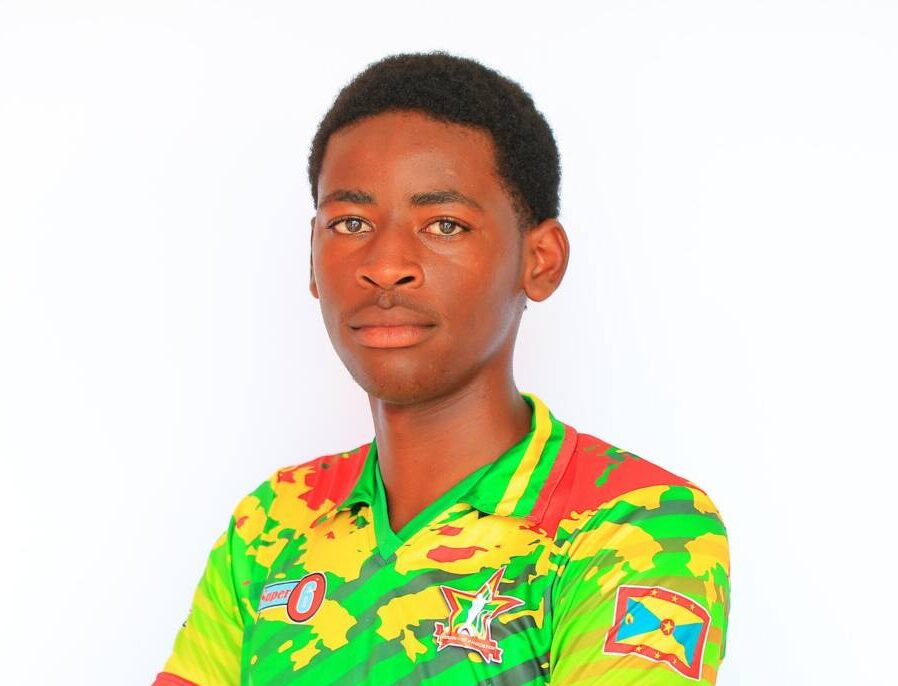
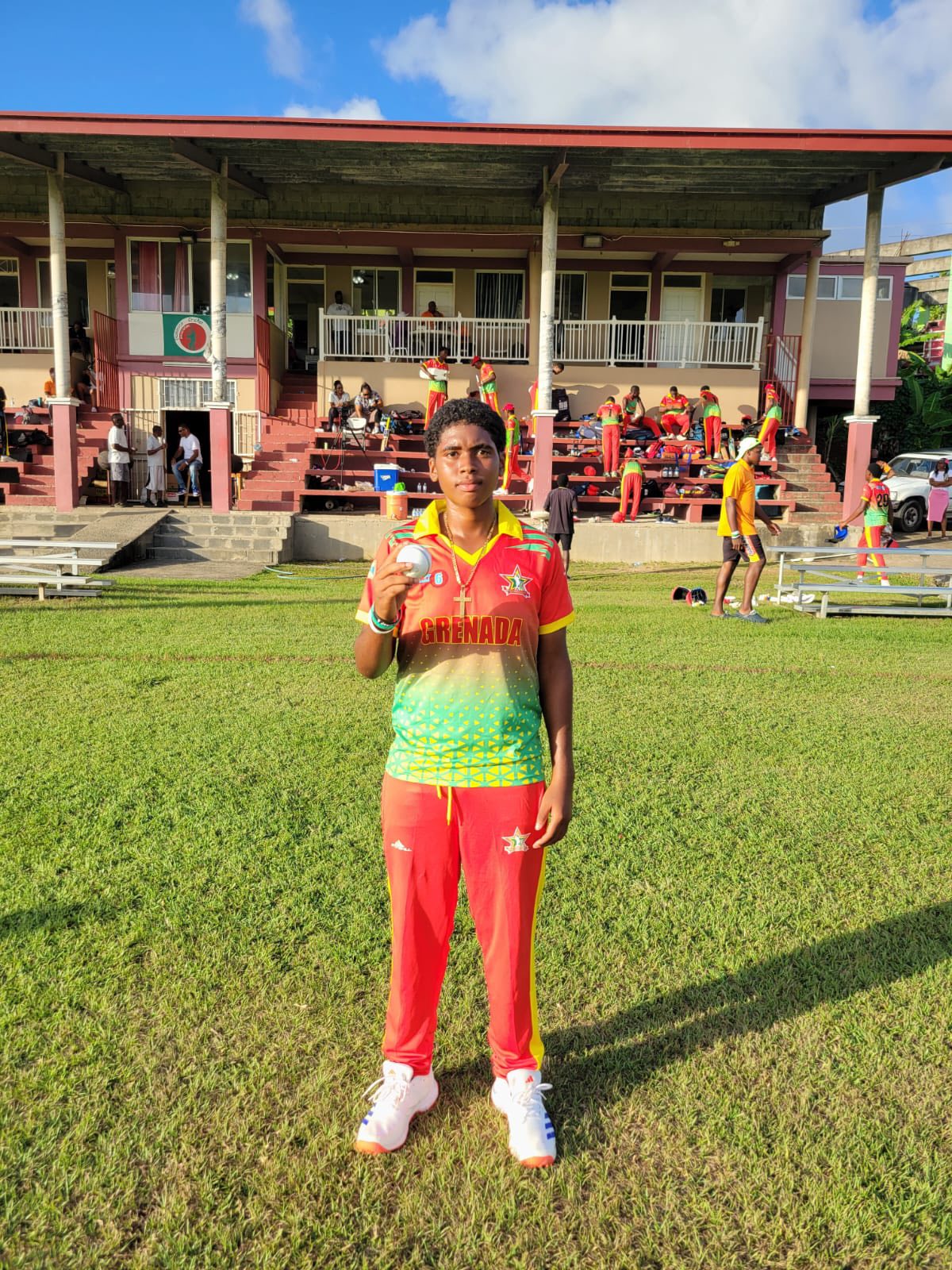
    The WINLOTT Super 6 Windward Islands U19 Tournament served up a thrilling comeback story on Sunday, 12 April 2026, at Dominica’s Benjamin’s Park, where Grenada’s under-19 men’s cricket side pulled off a dramatic win against St Lucia, powered by a career-best performance from young spinner Shamel Hillaire.

    Coming into the fixture, both sides carried contrasting momentum. Grenada was still bouncing back from a underwhelming defeat in their tournament opener, while St Lucia entered the match brimming with confidence after a lopsided win over St Vincent and the Grenadines. A brief rain shower pushed back the start of play, but once the action got underway, Grenada won the pre-match toss and opted to set a target batting first.

    Grenada’s batting innings got off to a disastrous start. The team lost their first wicket with just 8 runs on the board, when opening batsman Jordan John was clean-bowled for 5. Raekeim Lewis Charles followed just overs later, trapped leg before wicket for 11, leaving the Grenada camp reeling at 2 wickets down early. With St Lucia’s bowlers consistently hitting tight lines, runs proved difficult to come by, and Kemile Abraham’s attempt to steady the innings could not halt the wicket column. By the 14th over, Grenada had slumped to 42 runs for the loss of 4 wickets.

    A small but critical recovery followed, as Abraham and Hillaire put together a steady partnership to push the total up to 74 for 5 before another wicket fell. St Lucia’s bowling attack never let up on the pressure, however, and Grenada was eventually bowled out all out for 123 runs. Abraham finished as the team’s top scorer with 24 runs, while the best of the other contributions came from Jayonn Henry (16), Hillaire (12), Lewis Charles (11) and Jeremy Edwards, who finished not out on 11. For St Lucia, Bjorn Fanis led the bowling attack with impressive figures of 3 wickets for just 23 runs, receiving solid support from captain Theo Edward (2 for 20) and Cody Fontenelle (2 for 26), while Nathaniel Joseph and Tyler Venner each picked up one wicket apiece.

    Chasing a modest target of 124 runs to win, St Lucia only needed just over 3 runs per over to secure victory, and the early stages of their innings suggested they would cruise to a comfortable win. But Grenada’s bowlers had other plans, launching a clinical fightback that turned the match on its head.

    Pace bowler Aaron Edwards struck early blows, removing both of St Lucia’s opening batsmen – captain Theo Edward for 15 and Roystan Fannis for 9 – to leave St Lucia at 43 for 2 after 8 overs. Just three balls after Edwards’ second wicket, left-arm spinner Aravinda Bishop extended Grenada’s advantage by dismissing Jonathan Daniel lbw, dropping St Lucia to 43 for 3.

    A brief recovery pushed St Lucia to 73 for 3, but it was not enough to withstand the spin pressure that Grenada brought to bear. Bishop and Hillaire triggered a catastrophic collapse that saw St Lucia lose their final 7 wickets for just 30 runs, folding all out for 103 runs to hand Grenada a 20-run victory.

    Making his first tournament appearance after sitting out the opening match on the bench, Hillaire delivered a match-winning spell, finishing with sensational figures of 6 wickets for 26 runs from just 5.4 overs. The standout performance earned the young bowler well-deserved Man of the Match honours. Edwards backed up Hillaire with 2 wickets for 13 runs from 5 overs, while Bishop claimed 1 wicket for 20 runs to cap a dominant bowling display from Grenada.

    After the match, Grenada captain Khavaughn Bartholomew highlighted his side’s resilience following their opening loss, crediting the team’s adjusted game plan for the win. “I just want to thank the Lord for the opportunity. We didn’t get it right with the batting, but we came through with the bowling. We put the ball in the right areas, got early wickets and put them under pressure. The spinners played a massive role. The man of the match wasn’t with us yesterday, so we made a change, and you can see it worked.”

    Speaking after picking up his award, Hillaire said he had remained confident he would get his chance to contribute after starting the tournament on the bench. “I first want to thank God for the opportunity. We didn’t bat well today, but we came out on the field and fought until we won. I had faith that I would do well. I was on the bench yesterday, but I knew my time would come.”

    The result moves Grenada into third place in the tournament standings, trailing early leaders St Lucia and defending champions Dominica. Up next, Grenada will return to action on Tuesday, 14 April 2026, to take on St Vincent and the Grenadines as the round-robin phase of the tournament continues.

  • Grenada U19 fall to Dominica in Windward Islands Youth Clash

    Grenada U19 fall to Dominica in Windward Islands Youth Clash

    The 2026 WINLOTT Inc. Super 6 Windward Islands Under-19 Tournament kicked off with a weather-disrupted opening clash on Saturday 11 April at Benjamin’s Park, where hosts Grenada suffered an opening defeat to defending tournament champions Dominica. Persistent heavy showers reshaped the entire course of the match, forcing a revised target under the Duckworth-Lewis-Stern (DLS) method that left Grenada unable to find their footing in the chase.

    After winning the pre-match toss, Grenada’s captain made the call to field first, a decision that looked solid in the opening exchanges. Grenada’s bowlers stuck to tight line and length early, restricting Dominica’s batters and holding the first wicket until the final delivery of the 10th over. It was pace bowler Aaron Edwards who broke the opening stand, dismissing Derwin Lewis for 19 runs with Dominica’s total just 46 at that point.

    Rain interruptions would go on to disrupt the middle overs, but Dominica’s middle-order batter Aiden Burton stepped up to steady the innings, crafting a well-compiled 58 runs off 62 deliveries marked by five fours and two maximums. When play was called off for the weather at 33.3 overs, Dominica had posted 168 runs for the loss of three wickets. Grenada’s bowling was led by spinner Aravinda Bishop, who claimed two key wickets while conceding 46 runs across his full 10-over allocation. Edwards backed him up with an economical spell, taking one wicket for just 25 runs from six overs. The full bowling breakdown for Grenada saw Jayonn Henry end with 0 wickets for 19 runs from four overs, Jeremy Edwards at 0 for 15 from five overs, Desrond Mitchell at 0 for 41 from eight overs, and Ron Charles at 0 for 9 from 0.3 overs.

    Following an extended weather delay, match officials applied the DLS par score rule, setting Grenada a challenging revised target of 209 runs to win from a shortened 29-over chase. Grenada got off to a steady start in their response, with opener Raekeim Lewis Charles top-scoring for his side. Lewis Charles put on a 36-run opening partnership with Jordan John (18), followed by a 26-run second-wicket stand with captain Khavaughn Bartholomew (16). As the required run rate climbed steadily, Grenada was forced to accelerate, but Dominica’s disciplined bowling attack choked the scoring, allowing just 27 runs across the next five overs before Lewis Charles was dismissed with Grenada on 89 for three.

    From the position of 90 for three in the 19th over, Grenada’s batting collapsed, losing four quick wickets for the addition of just 22 runs. The innings closed at 111 for seven after the full 29 allotted overs, leaving Dominica to take the opening win of the tournament. The full Grenada batting scorecard lists Jamie Wickham 11 not out, Christian Niles 2, Jayonn Henry 6, Desrond Mitchell 1, Aravinda Bishop 3, and Ron Charles 0 not out alongside Wickham.

    Grenada will now turn their focus to bouncing back from this opening setback, with their second group fixture scheduled to take place against St Lucia on Sunday 12 April 2026.

  • Official Addendum List of Electors as at 31 March 2026

    Official Addendum List of Electors as at 31 March 2026

    The Parliamentary Elections Office of Grenada has issued an official public notice, under the authority of the Representation of The People Act (Chapter 286A), announcing that the updated Official Addendum List of Electors, finalized as of March 31, 2026, will be open for public review starting Wednesday, April 15, 2026.

    To give eligible voters and community members a chance to verify voter roll accuracy, the electoral body has scheduled a seven-day window for filing claims and challenging incorrect entries on the list, running concurrently with the public inspection period from April 15 through April 22, 2026.

    The updated voter addendum is accessible to all members of the public at multiple convenient public locations across the country, including every parliamentary constituency election office, as well as local post offices, police stations, medical stations, and other designated public facilities.

    According to the notice, any requests to amend or correct inaccurate entries — including mistakes in a registered voter’s full name, residential address, or assigned polling division — must be submitted in writing or in person to the relevant constituency’s Registration Officer no later than the end of the day on April 22, 2026.

    Election Supervisor Arthur Pierre, who signed the official notice, is urging all eligible voters, and especially those who completed their new voter registration between January and March 2026, to prioritize checking their entries on the addendum. Confirming personal details are correct will help ensure voters are properly eligible to participate in upcoming electoral processes, Pierre noted. Members of the public are also encouraged to flag any improper entries — such as names of ineligible voters incorrectly added to the roll — during the inspection period.

    A full directory of Registration Officers, including their full names, official office addresses, and contact details, is attached to the official public notice for reference by constituents.

  • Chinese Food Festival: April 18

    Chinese Food Festival: April 18

    On the Caribbean island of Grenada, a highly anticipated cultural and culinary event is slated to take place next spring at one of the island’s popular coastal gathering spots. The Chinese Food Festival has been scheduled to run from 12 p.m. to 6 p.m. on April 18, 2026, at Camerhogne Park, located in the Morne Rouge district near Grand Anse. The event, which spotlights authentic Chinese cuisine and cultural exchange, will bring together local residents and visiting tourists to experience a wide range of traditional Chinese dishes, cultural performances, and interactive culinary activities. Local media outlet NOW Grenada has issued a standard content disclaimer, noting that the organization is not liable for any opinions, statements, or third-party contributed media content associated with the event announcement, and provides a reporting channel for users to flag any content that violates community guidelines. As a cross-cultural event open to the public, the festival is expected to strengthen the cultural ties between Chinese and Grenadian communities, boost local tourism and the small food business sector, and offer a unique multicultural experience for attendees visiting the Morne Rouge and Grand Anse area.

  • Caribbean countries strengthen prison intake systems

    Caribbean countries strengthen prison intake systems

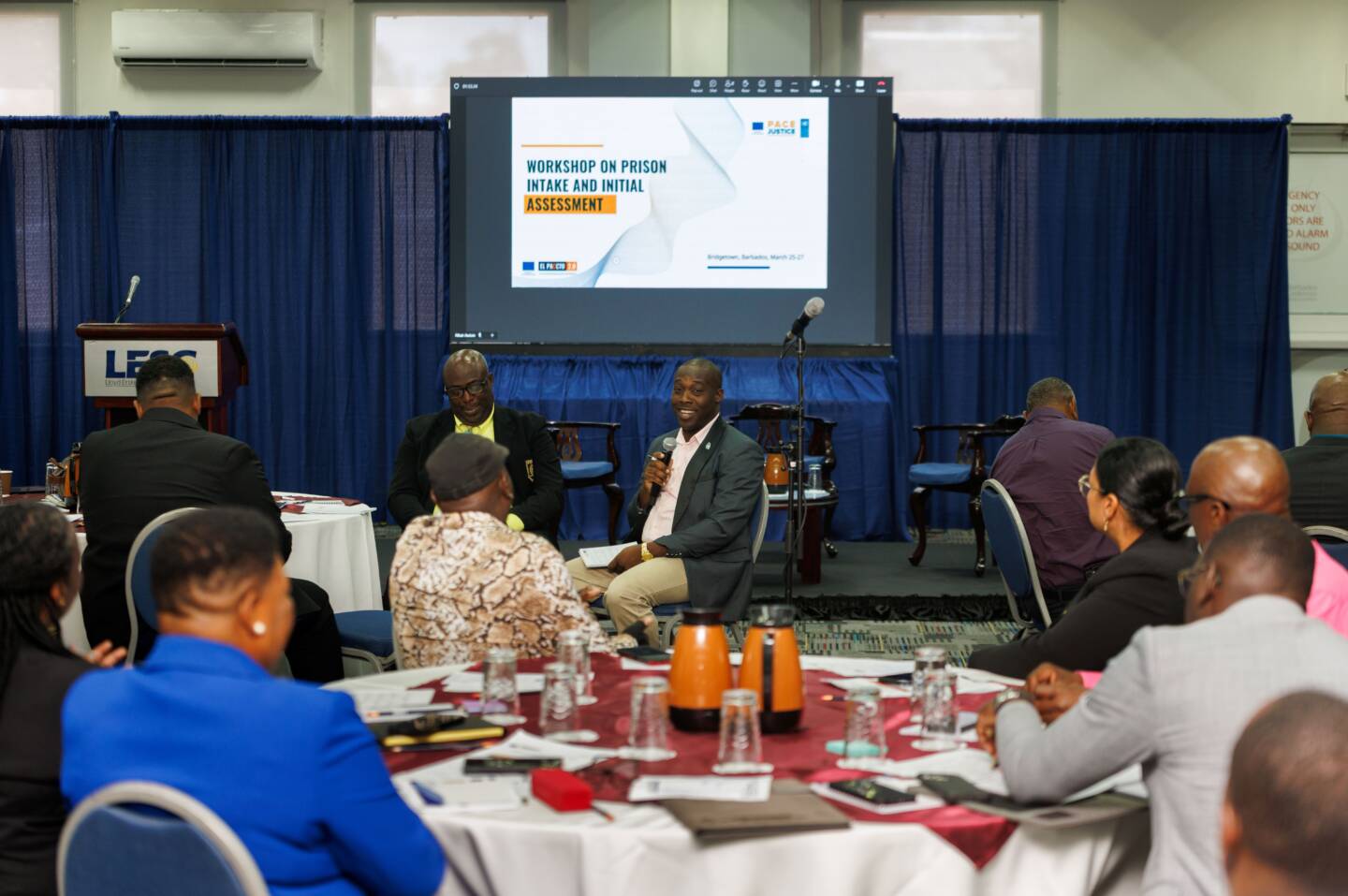
    Thirteen Caribbean nations have united to advance correctional system reform, wrapping up a three-day intensive training workshop in Bridgetown, Barbados, focused on overhauling prison intake and assessment protocols to boost rehabilitation outcomes and reduce recidivism. Held from March 25 to 27 at the Lloyd Erskine Sandiford Centre, the workshop brought together prison and probation leaders from across the region, brought into being through a collaborative partnership between the United Nations Development Programme (UNDP) Partnership of the Caribbean and Europe on Justice (PACE Justice) initiative and EL PACCTO 2.0, the European Union’s flagship justice and security cooperation program.

    Participants represented Antigua and Barbuda, Barbados, Belize, Dominica, Guyana, St Kitts and Nevis, St Lucia, Trinidad and Tobago, The Bahamas, Grenada, St Vincent and the Grenadines, Jamaica and Suriname, all gathering to address longstanding gaps in the first critical step of the custodial process: intake assessment. Experts leading the workshop emphasized that rigorous, well-structured intake procedures lay the foundation for effective correctional policy from an individual’s first day in custody. When implemented correctly, these processes allow authorities to map an individual’s unique risks and needs early, streamline administrative decision-making around detention or community-based alternatives, cut costly bureaucratic delays, and set the stage for targeted rehabilitation work that supports long-term reintegration. Functional intake systems also address two of the Caribbean’s most pressing correctional challenges: prison overcrowding and unnecessary pre-trial detention.

    Vanessa Untiedt, PACE Justice Project Specialist with the UNDP, framed the work as a fundamental step toward breaking intergenerational cycles of crime. “A proper intake assessment process can significantly improve a prisoner’s experience within the facility and, ultimately, their reintegration into society. In short, it can help break the cycle of crime,” Untiedt said.

    Angela Dixon, Director of the Barbados Probation Service and President of the Caribbean Association of Probation and Parole, centered the conversation on the underrecognized role of probation services in building a holistic, person-centered intake system. Dixon noted that probation officers bring unique, irreplaceable insight to the assessment process, thanks to their ongoing connections to offenders and communities. “Probation’s defining value is continuity of knowledge about the individual. No other service carries the same depth of pre-existing relationship, community intelligence, and risk history,” Dixon explained.

    Luuk Bruijn, EL PACCTO 2.0’s Field Officer for the Caribbean, highlighted that cross-regional collaboration is key to building correctional systems that work for all Caribbean contexts. Bruijn explained that a shared regional framework does not erase local needs; rather, it creates a consistent foundation rooted in regional best practice that can be adapted to local contexts. “The development of a standard procedure for intake assessment in prisons allows for local adaptations to a regionally agreed framework, taking into account best practices and expertise from across the Caribbean, ultimately strengthening the overall management of penitentiary systems,” Bruijn said.

    By the close of the three-day workshop, participants reached a landmark agreement: a unified regional framework for prison intake and assessment that preserves flexibility for country-specific implementation. The agreement marks a major milestone toward establishing more consistent, fair, and effective correctional practices across the entire Caribbean region.

    Moving forward, the partnership will turn its attention to translating the high-level framework into actionable Standard Operating Procedures (SOPs) that frontline prison and probation staff can implement in daily work. Planners are also exploring development of a lightweight digital tool to streamline intake workflows, improve standardized record-keeping, and strengthen cross-agency information sharing. A core priority of the next phase will be deepening coordination between prison authorities and probation and parole services to ensure all decisions are rooted in robust, comprehensive evidence.

    This workshop is part of the PACE Justice project’s ongoing mission to support fair, effective, human rights-aligned correctional systems across the Caribbean. The initiative operates on the core principle that safer, more humane prison systems are the building blocks of safer, more resilient communities across the region.

  • Official Visit of H E Delcy Rodriquez

    Official Visit of H E Delcy Rodriquez

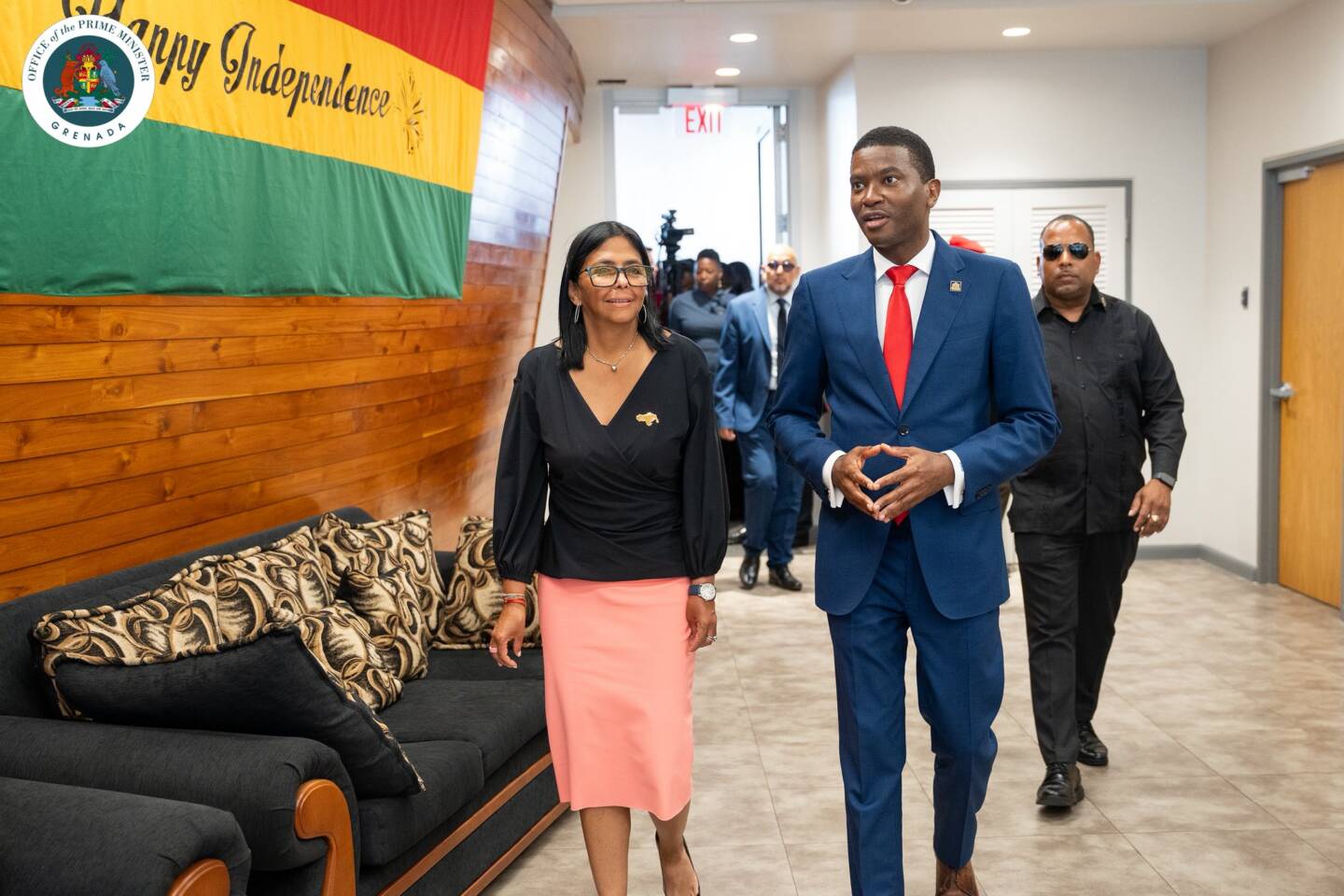
    On April 9, 2026, the Government of Grenada hosted a landmark diplomatic moment, welcoming Venezuela Acting President Delcy Rodriguez for her first official visit to the Caribbean island nation. Rodriguez was joined by a full delegation of senior Venezuelan government officials for the one-day diplomatic engagement, which unfolded in a warm and collaborative atmosphere designed to advance the decades-long friendship between the two states.

    The visit began with Rodriguez’s departure from Venezuela’s Maiquetía International Airport, where an official aircraft transported the delegation directly to Grenada’s Maurice Bishop International Airport. Upon landing, the Venezuelan leader received a formal ceremonial welcome from Grenadian government representatives, complemented by an honour guard organized by the Commissioner of Police and personnel from the Royal Grenada Police Force.

    Following her arrival, Rodriguez carried out her first scheduled engagement: a courtesy call with Dame Cécile La Grenade, Grenada’s Governor-General, at the Governor-General’s official office in Point Salines. Next, she moved to Grenada’s Parliament building for an in-depth working meeting with Grenadian Prime Minister Dickon Mitchell, who was joined by a select group of his cabinet ministers for the talks.

    The discussion spanned three core areas: bilateral cooperation initiatives, shared regional policy priorities, and other topics of mutual interest to both governments. During the talks, both delegations reaffirmed their shared commitment to deepening diplomatic bonds and expanding collaborative work across a range of high-priority sectors. Key areas identified for enhanced partnership include energy security, inclusive economic development, climate-resilient agriculture, professional skills training, and expanded educational and cultural exchanges between the two countries.

    Representatives from Grenada’s government and public extended gratitude for Rodriguez’s visit, highlighting the enduring spirit of solidarity and collaborative partnership that has defined relations between Caracas and St. George’s for decades. For her part, Rodriguez offered sincere thanks to the Grenadian government and people for the warm hospitality extended to her and her delegation throughout the engagement. The historic first official visit concluded the same day, on April 9, 2026, marking a new step forward in bilateral relations between the two Caribbean and Latin American nations.

    This report was issued from the Office of the Prime Minister of Grenada.

  • GTA bolsters market presence with strategic Barbados mission

    GTA bolsters market presence with strategic Barbados mission

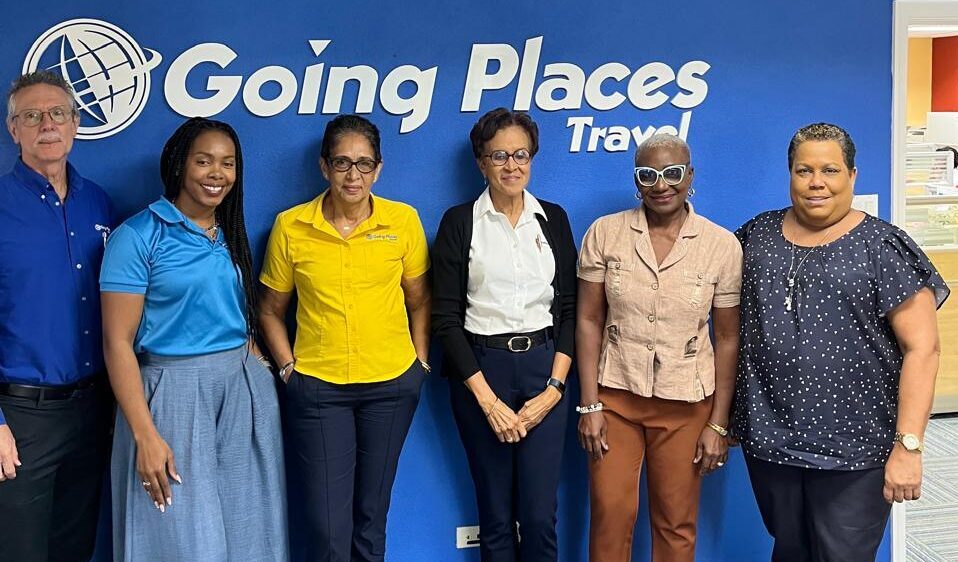
    The Grenada Tourism Authority (GTA) has recently concluded a targeted sales mission to neighboring Barbados, marking another key step in its long-term strategy to deepen regional tourism cooperation and solidify Grenada’s standing as a top travel choice for both Caribbean and international visitors. Unlike broad international outreach, this regional mission prioritizes strengthening bonds with nearby industry stakeholders that play an outsized role in driving intra-Caribbean travel, a fast-growing segment that has gained renewed attention in post-pandemic Caribbean tourism recovery.

    During the mission, GTA representatives held face-to-face discussions with a wide range of core tourism partners, including local travel agents, corporate industry leaders, and airline stakeholders. These on-the-ground engagements gave the GTA team firsthand insight into how Grenada’s travel offering is perceived across regional markets, highlighting existing strengths while uncovering untapped opportunities for expansion in three high-potential segments: luxury getaways, experiential cultural travel, and multi-destination Caribbean itineraries. A major priority of the outreach was raising awareness of Grenada’s lineup of one-of-a-kind annual festivals, headlined by the iconic Spicemas carnival, the popular Grenada Chocolate Festival, and the newly launched Lobster, Lambie and Seafood Festival that showcases the island’s world-class coastal cuisine.

    Stacey Liburd, Chief Executive Officer of the GTA, emphasized the outsized importance of these regional engagement efforts to Grenada’s overall tourism growth strategy. “These regional missions are critical to fostering the partnerships that drive our tourism growth,” Liburd said. “Our discussions with the Barbados Tourism Marketing Inc (BTMI) and other industry leaders have laid a solid foundation for future joint marketing initiatives and improved airlift connectivity, positioning Grenada as a multi-dimensional Caribbean leader.”

    Beyond B2B stakeholder meetings, the GTA delegation expanded its public reach through targeted media partnerships and a collaborative promotional campaign with Virgin Atlantic, one of its key airline partners. The campaign centered on a radio contest that awarded a lucky winner a free round-trip ticket to Grenada, an activation that generated widespread public excitement and increased grassroots awareness of the island’s travel offerings among Barbadian travelers.

    Samantha Thomas, Marketing Executive at the GTA, noted that the mission delivered immediate, tangible results by equipping regional trade partners with the tools to sell Grenada more effectively. “Our mission in Barbados enables information sharing, which gives agents the confidence to effectively speak about Grenada’s evolving products,” Thomas explained. “Through our training sessions and interviews, we saw an immediate surge in interest for our diverse accommodation sector and upcoming festivals. Providing these partners with real-time tools and event details ensures that the high demand we’re seeing translates directly into economic growth for Grenada.”

    Looking ahead, the GTA plans to build on the momentum generated by the Barbados mission, with a full calendar of upcoming events and a continued commitment to expanding regional partnership networks. By closing the gap between the island’s unique on-the-ground experiences and regional travel trade networks, the authority is working to steadily elevate Grenada’s reputation as the premier destination for discerning travelers throughout the Caribbean, with the ultimate goal of driving consistent, long-term growth in visitor arrivals and tourism-related economic activity.

  • Leon Radix outlines reform agenda as GFA election nears

    Leon Radix outlines reform agenda as GFA election nears

    Grenada’s national governing body for soccer, the Grenada Football Association (GFA), has scheduled its upcoming presidential election for May 9, 2026. Three candidates will contest the leadership position: incumbent Marlon Glean, challenger Roger Duncan, a veteran banking professional, and third contender Leon Radix, an academic and long-time football administrator who currently serves as Course Director of the Marine and Wildlife Conservation Department at St George’s University’s School of Arts and Sciences.

    Radix has already formally introduced his full proposed executive slate for the GFA, naming Allan James, Lincoln Elcock, Amanda Scott, Clinton Hamilton, Geverson David, and Denroy Lewis as the team that would join him in leadership should he secure victory at the polls. In outlining his credentials for the role, Radix emphasized his deep, multi-decade roots in football governance across all levels of the sport in Grenada. Beyond his current academic and administrative career, he has previously managed both football and cricket teams for St David’s, held leadership roles with the St David’s Football Club and the St David’s Football League, and advocated for stronger institutional structures and greater accountability in Grenadian football for years. “I’m an educator and administrator with over 20 years of experience in leadership and governance,” Radix noted. “In football, I’ve worked at the club and national level advocating for better structure and accountability. I bring systems thinking and proven leadership to football development.”

    At the core of Radix’s campaign platform is a commitment to building a organized, inclusive, and sustainable football ecosystem across the island, replacing the current instability and inconsistency that he says has held the sport back. His vision calls for a clear, connected development pipeline that supports players from grassroots entry-level play all the way to elite national team competition, paired with robust institutional governance, competitive local leagues, and long-term stable financing. “Structure and sustainability must replace uncertainty and inconsistency,” he said.

    If elected, Radix has laid out three clear priorities for his first 100 days in office to reset the GFA’s operations. First, his administration would launch full financial, technical, and administrative audits of the association to map existing gaps and challenges. Second, it would host widespread engagement sessions with football stakeholders across every region of Grenada to center community input in future planning. Third, it would roll out a standardized national football calendar and a technical development plan aligned with global FIFA and CONCACAF standards. “The priority is restoring order and building confidence in the system,” Radix explained.

    To address longstanding divisions within Grenada’s football community, Radix proposes expanding inclusive decision-making through the creation of a new Football Advisory Council, which would reserve formal seats for representatives from clubs, players, referees, and corporate sponsors to ensure all groups have a voice in shaping the sport’s future. “Inclusion builds trust, and trust builds strong institutions,” he said.

    Grassroots development is another central pillar of Radix’s agenda, with two key focus areas: growing investment in youth player development and expanding access and opportunity for women in football. He plans to upgrade youth academies, increase access to certified professional coaching, and build clear pathways that connect school football programs to club development systems. For women’s football, he pledged consistent sustained investment, organized formal leagues, and equal opportunity for advancement. “Development must be inclusive or it will fail,” he stressed.

    Radix also committed to decentralizing football development to ensure talent in rural communities is not overlooked, saying he will establish regional zonal development hubs, expand national scouting networks, and provide greater support for local community-level competitions. “Talent is everywhere — opportunity must be too,” he noted.

    To scale the GFA’s capacity and secure additional resources, Radix says he will prioritize expanding strategic partnerships with regional and international football governing bodies, the local private sector, and the Grenadian national government. “Partnerships are critical to scaling resources and expertise,” he explained.

    For Grenada’s national teams, Radix argues that improved competitive performance will come from intentional structural reform, not luck. He plans to implement a standardized national talent identification system, reach out to engage Grenadian football talent living in the diaspora, and integrate modern coaching practices, sports science, and performance analytics into national team programming. “Performance is the outcome of good systems — not chance,” he said.

    Radix also made full institutional transparency a non-negotiable part of his platform, promising to publish annual audited financial statements, enforce strict governance policies, and maintain open, consistent communication with all football stakeholders. “Transparency is not optional; it is the foundation of trust,” he said.

    When asked about the most pressing challenges facing Grenadian football today, Radix acknowledged longstanding issues including limited funding gaps, inconsistent institutional systems, and insufficient infrastructure across much of the island. Even so, he expressed confidence that these problems can be resolved with intentional leadership and long-term planning. “But with proper leadership and planning, these are solvable problems,” he said.

    Closing his campaign outline, Radix emphasized that Grenada’s football community holds tremendous untapped potential, and that with the right leadership, structural reform, and accountability, the sport can be transformed to create life-changing opportunities for young Grenadians and benefit the entire nation. “Football in Grenada has tremendous potential. With the right leadership, structure, and accountability, we can transform the game and create opportunities for our youth and our nation. I’m ready to lead that transformation.”

    As candidates prepare for the vote, the 2026 GFA presidential election is expected to draw close attention from across Grenada’s football community, as stakeholders evaluate three competing visions for the future of the sport on the island.

  • PAHO supports regional dialogue on equitable cancer care at ICCGIP 2026 in Grenada

    PAHO supports regional dialogue on equitable cancer care at ICCGIP 2026 in Grenada

    On March 20, 2026, the Caribbean nation of Grenada played host to a pivotal international gathering addressing one of the most pressing gaps in global public health: cancer care access for populations living in geographically isolated regions. The International Conference on Cancer in Geographically Isolated Populations (ICCGIP), convened this year under the core theme “Medical Travel for Cancer Care — Navigating Access, Quality, and Equity,” drew participation from dozens of regional and global health stakeholders, including the Pan American Health Organization (PAHO), a leading public health body for the Americas region.

    The conference was structured to unpack the unique set of systemic, economic and social challenges that shape cancer outcomes in small island nations and remote, isolated communities, while also identifying untapped opportunities to expand care access through collaborative action. In opening remarks delivered on behalf of Dr Amalia Del Riego, PAHO/WHO Representative to Barbados and the Eastern Caribbean Countries, Dr Taraleen Malcolm, Noncommunicable Diseases and Mental Health Advisor at the PAHO/WHO Office for Barbados and the Eastern Caribbean, reaffirmed PAHO’s longstanding commitment to supporting its member states in expanding equitable access to every stage of cancer care, from prevention and early diagnosis through to ongoing treatment and survivorship support.

    During her address, Dr Malcolm centered the lived realities of cancer patients across the Caribbean, a region made up almost entirely of small island developing states. She explained that limited local specialized medical infrastructure and small national patient populations mean the majority of advanced cancer diagnoses require cross-border medical travel to access life-saving treatment. While this medical travel is often essential, Dr Malcolm emphasized that it imposes crippling financial, logistical, and emotional strain on patients and their families, barriers that widen already existing health inequities, particularly for low-income and otherwise vulnerable groups.

    To address these gaps, Dr Malcolm called for a coordinated, region-wide response rooted in a people-first care model. Key priorities she outlined include strengthening local early detection and patient referral systems within individual countries, streamlining coordination and quality assurance for care accessed outside national borders, and guaranteeing uninterrupted continuity of care when patients return to their home countries after receiving treatment abroad. She also stressed the urgent need for expanded cross-country collaboration, including shared service arrangements, expanded access to tele-oncology, and targeted investment in training and retaining a robust local health workforce — all steps that would gradually reduce regional reliance on overseas cancer care over time.

    Joining the conference proceedings virtually, Dr Frederique Dorleans, Advisor for Social and Environmental Determinants for Health Equity and Focal Point for the French Territories of the Americas at the PAHO/WHO Barbados and Eastern Caribbean office, highlighted existing diagnostic and treatment capacity in the French Caribbean territories of Martinique and Guadeloupe. She positioned these territories as valuable regional partners, with the existing expertise to support neighboring isolated communities in expanding access to high-quality cancer care. Dr Dorleans also outlined PAHO’s ongoing work to foster closer cross-Caribbean cooperation, including facilitating the exchange of evidence-based best practices, supporting cross-border knowledge sharing, and advancing more integrated regional models of cancer care delivery — all work aligned with PAHO’s broader mandate to advance equitable health outcomes and strengthen health system resilience across the entire Americas region.

    In closing comments, Dr Del Riego noted that convenings like ICCGIP fill a critical gap in global health governance, providing a dedicated platform for small island states to share lived experiences and co-develop collaborative, people-centered approaches to cancer care that keep equity and quality at the forefront, even in resource-limited small island developing contexts.

    The conference concluded as a key milestone for regional public health, offering a valuable space to align policy frameworks, on-the-ground practice, and cross-sector partnerships to address the unique barriers to cancer care in geographically isolated small island developing states. PAHO’s participation in the event reinforced the organization’s ongoing commitment to working with national governments and global partners to ensure geographic location does not predetermine cancer outcomes, and that all people, regardless of where they live, can access timely, high-quality, and equitable cancer care.