标签: Grenada

格林纳达

  • Niger Timothy Houston graduates as Agricultural Engineer from EARTH University

    Niger Timothy Houston graduates as Agricultural Engineer from EARTH University

    Grenada has marked a significant educational achievement with Niger Timothy Houston’s graduation as an Agricultural Engineer from EARTH University in Costa Rica. The December 5th ceremony recognized 108 graduates from 27 countries, highlighting Grenada’s growing commitment to sustainable agriculture education.

    Houston represents an expanding cohort of Grenadian students choosing EARTH University for advanced training in sustainable agriculture. With four currently enrolled students and one previous graduate, this educational partnership strengthens as Grenada prioritizes agricultural modernization and food security resilience.

    In reflective remarks, Houston described his EARTH University experience as fundamentally transformative, providing both technical skills and personal development. “EARTH has equipped me with the confidence, global perspective, and practical abilities to serve Grenada meaningfully,” he stated, emphasizing the program’s focus on real-world problem solving and leadership development. Houston actively encouraged other young Grenadians to pursue this educational opportunity.

    The graduation ceremony attracted significant support from international education advocates. Dr. Khan Nedd, Chair of the W.K. Kellogg Foundation Board of Trustees and EARTH University director, attended to affirm the importance of educational investments that strengthen communities. Dr. Nedd’s philanthropic leadership aligns with EARTH’s mission to prepare professionals for agricultural, climate, and equity challenges.

    Victor Sánchez of EARTH’s Development and Advancement Division highlighted the university’s comprehensive educational approach, combining technical training with character development. “Our program cultivates persistence, discipline, and environmental responsibility while preparing students for global leadership,” Sánchez noted, expressing particular confidence in Grenadian students’ potential.

    Belmont Estate, through Managing Director Shadel Nyack Compton, has developed a robust partnership with EARTH University, providing internship opportunities for third-year students and graduates. Compton expressed strong endorsement of EARTH’s educational model, stating, “This institution delivers exactly the training Grenada needs to build an innovative, sustainable agricultural future.”

    The graduation celebrations concluded with vibrant cultural presentations featuring active participation from Grenadian students, symbolizing both national pride and global connectivity. This educational milestone represents Grenada’s strategic investment in developing leaders capable of advancing climate-smart agriculture and rural transformation.

  • G-CREWS RfP: Rainwater Harvesting in Schools

    G-CREWS RfP: Rainwater Harvesting in Schools

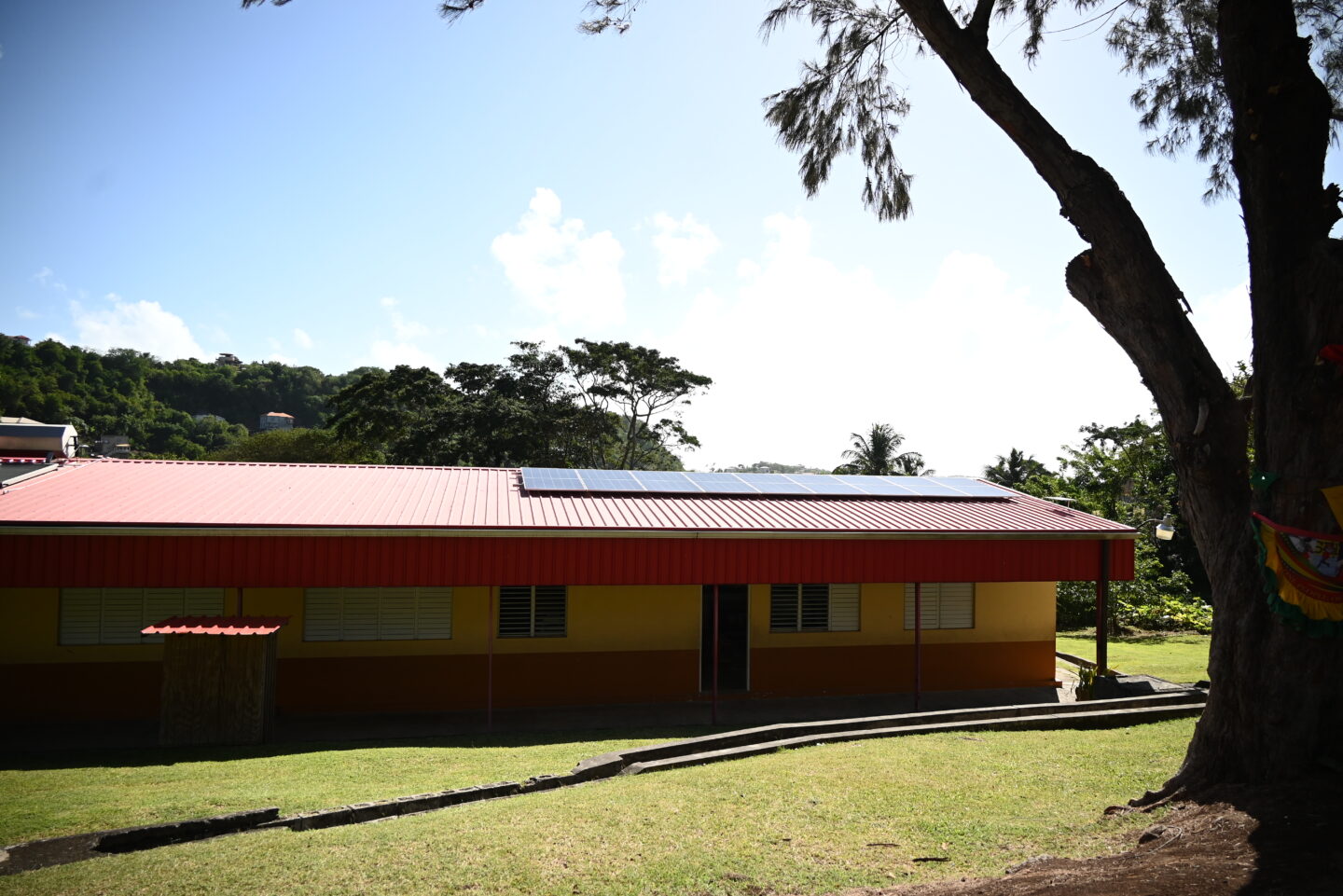
    The German development agency GIZ has issued a formal Request for Proposals seeking qualified consultants for a significant climate resilience project in Grenada. The initiative focuses on implementing advanced rainwater harvesting systems across multiple educational institutions throughout the island nation.

    This consulting opportunity forms a critical component of the Climate-Resilient Water Sector in Grenada (G-CREWS) Project, with field operations scheduled to commence on January 20, 2026. The selected consultant will undertake a comprehensive 129-day assignment extending through July 31, 2026, delivering specialized engineering and construction supervision services.

    The scope of work encompasses two primary dimensions: detailed design development for retrofitting and new installations at 11 schools, followed by direct supervision of construction activities at up to 7 educational facilities. The consultant will bear responsibility for ensuring all infrastructure components meet specified technical standards and design requirements throughout implementation.

    A distinctive feature of this project involves integrating comprehensive environmental and social safeguards into the supervision framework. The consultant must address climate variability considerations and incorporate gender-sensitive approaches throughout project execution. Additionally, the contract includes an optional provision extending supervision services to four additional sites beyond the initial commitment.

    Prospective bidders must submit complete technical proposals and pricing offers as separate PDF documents via email to procurement-gd@giz.de by 4:30 PM Eastern Caribbean Time on January 5, 2026. All submissions must include the precise subject line “RWH in Schools” to ensure proper processing. GIZ will acknowledge electronic bid receipts through automated confirmation messages.

    Interested parties should consult the comprehensive Terms of Reference for detailed specifications and must complete the attached Questionnaire for Architects, Engineers and Contractors to be considered for this significant sustainable infrastructure development opportunity.

  • Grenada to auction EC$10 million Treasury Bill on 15 December

    Grenada to auction EC$10 million Treasury Bill on 15 December

    The Government of Grenada will conduct its final securities auction of 2025 on December 15th, offering a 365-day Treasury Bill seeking to raise EC$10 million through the Eastern Caribbean Securities Exchange. This auction represents the culmination of Grenada’s annual borrowing activities on the regional market.

    The investment instrument features a maximum interest rate of 5.0% and will be available for bidding between 9:00 am and 12:00 pm through the primary market platform. According to official documentation, Grenada has successfully raised over EC$110 million throughout 2025 across seven separate auctions, comprising four 91-day Treasury Bills and three 365-day Treasury Bills.

    Proceeds from these securities offerings are strategically allocated to refinance existing Treasury bills and notes currently circulating in the market. This approach forms an integral component of the government’s comprehensive Debt Management Strategy, specifically designed to minimize borrowing costs by reducing dependency on overdraft facilities.

    A significant advantage for investors lies in the tax-exempt status of yields, which are not subject to any form of taxation, duty, or levy by participating Eastern Caribbean Currency Union (ECCU) governments. This favorable tax treatment enhances the effective return for market participants.

    Concurrently, Grenada has pioneered financial inclusion through its innovative Retail Bond Programme, launching an inaugural EC$5 million offering specifically tailored for individual investors. This initiative features an accessible minimum investment threshold of just $500, coupled with a 2-year investment term and tax-free returns. The program serves dual purposes of facilitating wealth accumulation while promoting financial literacy among first-time and small-scale investors throughout the Eastern Caribbean region.

  • Health Minister speaks about 2 major challenges facing his portfolio

    Health Minister speaks about 2 major challenges facing his portfolio

    Health Minister Phillip Telesford has issued a stark warning to Parliament, identifying a severe labor shortage and rapidly declining vaccination rates as two critical threats to Grenada’s public health system. The minister revealed that the Primary Healthcare division is operating with a deficit of 88 nurses, crippling the nation’s ability to adequately staff its 33 primary healthcare facilities.

    During his address to the Lower House in the 2024 Budget debate on December 5, Minister Telesford presented alarming statistics showing the healthcare system’s staffing crisis extends beyond nursing. The minister detailed that while 250 staff members are required for proper operation of primary healthcare facilities, the current workforce stands at just 162—a shortage that affects medical officers, doctors, pharmacists, and support staff across the board.

    The vaccine hesitancy crisis presents an equally grave concern. Telesford reported a disturbing decade-long trend of growing resistance to vaccination, with rates plummeting from 83% in 2024 to a mere 65% in 2025—far below the 95% threshold required for herd immunity. The minister expressed particular concern about parents who were themselves vaccinated but now refuse to vaccinate their children, citing various unfounded reasons.

    Telesford delivered a powerful statement on the consequences of inaction: “For many of us, Mr. Speaker, we would not be standing here today in this parliament had we not been vaccinated.” He warned that without immediate intervention, Grenada faces the resurgence of uncontrollable diseases within just a few years, urging the nation to take vaccination seriously before the situation deteriorates further.

  • PWU awaits outcome of Labour Commissioner conciliation

    PWU awaits outcome of Labour Commissioner conciliation

    Employees of T.A. Marryshow Community College (TAMCC), backed by the Public Workers Union (PWU), staged a peaceful demonstration outside the institution ahead of a pivotal conciliation meeting with Grenada’s Labour Commissioner. The union expressed firm confidence that documented evidence would secure their demand for a 5% wage increase in 2025 followed by 4% annual raises through 2028.

    PWU President General Daisy Hazzard emphasized that workers expect the conciliation to uphold agreements made during September 2024 negotiations. “We know for a fact that the victims here are the employees,” Hazzard stated, noting their prolonged patience in seeking resolution through social dialogue. While expressing reluctance toward industrial action, she affirmed the union’s determination to pursue all necessary measures until achieving their “just cause.”

    A critical aspect of the dispute centers on current financial losses suffered by staff. Hazzard revealed that employees began 2025 with reduced take-home pay compared to 2024 due to newly implemented deductions. These include a 3% pension contribution enacted without consultation and increased National Insurance Scheme payments. The president noted that for some workers, the requested 5% increase amounts to less than $100 monthly.

    Hazzard connected the college’s institutional stability to national interests, stating: “Without the college, we have no workforce… no tertiary graduates prepared to serve Grenada or the wider world.” She expressed hope this would be the final protest for basic wage fairness.

    The conciliation occurs alongside ongoing industrial action by the Grenada Union of Teachers (GUT), which mobilized significant numbers on December 10, 2025, indicating broader educational sector tensions. The PWU committed to updating members after the conciliation concludes and informing the public if necessary.

  • SGU and TAMCC sign agreement to expand higher education opportunities in Grenada

    SGU and TAMCC sign agreement to expand higher education opportunities in Grenada

    In a landmark development for Caribbean higher education, St. George’s University (SGU) and T.A. Marryshow Community College (TAMCC) have formalized a comprehensive partnership through a Memorandum of Understanding signed on December 10. The agreement establishes an integrated educational framework designed to create seamless academic progression opportunities for Grenadian students.

    The strategic collaboration will enable TAMCC graduates to transition directly into accelerated bachelor’s degree programs at SGU’s School of Arts and Sciences. Beyond articulation pathways, the partnership encompasses joint curriculum development, collaborative research initiatives, and community engagement programs across multiple disciplines including tourism and hospitality, information technology, natural sciences, and creative arts.

    Dr. Marios Loukas, SGU President and Dean of the School of Medicine, emphasized the transformative potential of the alliance: “This partnership represents our commitment to educational accessibility and excellence. By creating structured pathways between institutions, we’re investing in both human capital development and regional advancement.”

    The ceremonial signing at SGU’s Chancellor Charles Modica Campus brought together administrative leadership from both institutions. Dr. Wendy Grenade, Chair of the TAMCC Council, noted the agreement’s significance: “This collaboration allows us to leverage world-class resources while maintaining our commitment to accessible education. We’re building an integrated system that addresses both local needs and regional development goals.”

    Implementation will be managed through a joint working group with representatives from both institutions. The initial agreement remains effective for four years with built-in provisions for renewal, signaling a long-term commitment to educational cooperation in the Eastern Caribbean.

  • SAGE Learning Hub and Network Hardware launches at TAMCC and Newlo

    SAGE Learning Hub and Network Hardware launches at TAMCC and Newlo

    Grenada’s educational landscape is set for a significant transformation with the upcoming inauguration of two pioneering digital learning facilities. The Skills to Access the Green Economy (SAGE) programme will unveil a comprehensive SAGE Learning Hub and Network Hardware installation at T A Marryshow Community College (TAMCC) on December 15, 2025, followed by another hub at the New Life Organisation (Newlo) the subsequent day.

    These cutting-edge educational centers represent a strategic investment in Caribbean sustainable development, engineered to bridge digital divides and accelerate regional transition toward environmentally conscious economic models. Financed through substantial backing from the Government of Canada, the initiative underscores international cooperation in building climate-resilient education infrastructure.

    The newly established hubs feature innovative smart classroom technologies and interactive digital tools that redefine conventional pedagogical approaches. This educational architecture creates dynamic, flexible learning environments specifically designed to cultivate both digital literacy and green economy competencies essential for success in evolving global job markets.

    Pat Bidart, Senior Technical Advisor for the SAGE programme, emphasized the transformative potential of these facilities: “This infrastructure represents a quantum leap in educational methodology, fundamentally integrating sustainability principles with practical skills development. Through Canada’s partnership, we’re empowering Caribbean learners with future-ready capabilities for emerging green industries.”

    Beyond formal education, the hubs will serve as community resources, offering free access to digital equipment and dedicated learning spaces. Local residents will gain opportunities for online education participation, professional certification programs, and digital skill enhancement in supportive environments.

    This community-oriented strategy ensures that technological benefits extend beyond academic institutions to broader societal development. The programme particularly focuses on inclusive access for women and youth populations, addressing historical barriers to technological participation.

    As part of a broader regional transformation effort, SAGE continues to advance technical and vocational education through STEM integration, green learning pathways, and digital inclusion initiatives. The upcoming launch events will gather educators, students, community leaders, and development partners to celebrate these advancements in sustainable education infrastructure.

    The SAGE programme operates under Colleges and Institutes Canada (CICan) with Canadian government funding, working across six Caribbean nations to enhance institutional capacity, develop green sector training programs, and create economic opportunities through demand-driven skills development.

  • WINDREF Invitation to Bid: Design Services for Shoreline Stabilisation Works

    WINDREF Invitation to Bid: Design Services for Shoreline Stabilisation Works

    The Windward Islands Research & Education Foundation (WINDREF) has initiated a landmark coastal preservation project to address severe climate-induced erosion in the Grenadian community of Telescope, St. Andrew. The Telescope Living Shoreline (TLS) Project represents a strategic response to decades of environmental degradation that has threatened both local livelihoods and critical marine ecosystems.

    Historical sand mining operations, once the primary sand source for Grenada’s construction industry, precipitated devastating coastal erosion and habitat destruction until the government enacted a complete ban on beach sand mining in 2009. This environmental crisis has been compounded by the systematic deterioration of the region’s coral reef system, which has historically served as a natural barrier against wave energy. Scientific assessments indicate the reef crest has experienced substantial lowering while live coral coverage has dramatically decreased, crippling the ecosystem’s regenerative capacity.

    The coastal retreat has reached alarming rates of approximately 65 centimeters annually in certain areas, with eroded sediments adversely affecting nearby seagrass beds and remaining coral formations. Additional pressures include agricultural runoff and inadequate drainage systems from informal settlements. These cumulative factors have transformed Little Bay from a premier recreational destination to a landscape of environmental emergency, where homes, infrastructure, and human safety face imminent threat.

    WINDREF is now soliciting professional design and construction supervision services for innovative shoreline stabilization works through a competitive bidding process. The implementation period for the successful bidder is established at 32 weeks, with selection procedures following the Caribbean Biodiversity Fund’s Procurement Guidelines using the Quality Cost Based Selection (QCBS) methodology.

    Interested firms must submit electronic proposals by 3:00 PM on January 12, 2026, with technical proposals to be unveiled virtually at 3:15 PM the same day. Comprehensive bidding documentation is available upon request via specified email channels using the reference code RFP No. TLS/QCBS/CS/03. WINDREF explicitly retains the right to accept or reject any submission without incurring liability for preparation costs incurred by bidders.

  • Close of 2025 Primary School Debate Competition

    Close of 2025 Primary School Debate Competition

    Grenada’s educational landscape witnessed an extraordinary display of youthful intellect as the 2025 IMA Grenada/SPYO Primary School Debate Competition concluded with resounding success. The landmark event, orchestrated through a strategic collaboration between St Patrick’s Youth Organisation and the Investment Migration Agency Grenada, culminated in a grand finale at the GBSS Auditorium on December 3, 2025.

    Nineteen primary institutions from four parishes—St Patrick, St John, St Andrew, and St David—engaged in multiple rigorous debate rounds spanning several weeks. The competition’s framework, built upon the visionary theme “Empowering the Future: Youth Leadership as the Key to Nation Building,” challenged participants to articulate sophisticated perspectives on sustainable development, youth governance, artificial intelligence, and national leadership.

    The championship round featured a compelling resolution: “Be it resolved that Grenada should focus primarily on strengthening its partnerships with African countries for cultural exchange and sustainable development.” After intense deliberation, St Patrick’s RC School claimed the championship title with 1,264 points, securing a $6,000 prize. St John’s Anglican School followed closely with 1,226 points, earning $4,000, while River Sallee Government School captured third place with a $3,000 award.

    Individual excellence shone through Xana Fraser of St Patrick’s RC School, who received the Best Debater honor for her exceptional clarity and persuasive delivery. Nathan Olive, from the same institution, garnered the Best Rebutter award for his analytical prowess and comprehensive understanding of complex issues.

    Rea Burke, Marketing and Communication Officer at IMA Grenada, emphasized the transformative nature of the initiative: “We are not just sponsoring an event, we are shaping futures, creating opportunities and nurturing a generation who will become the leaders, thinkers and innovators of tomorrow.”

    Karena Noel, Vice President of SPYO, praised participants’ courage and intellectual determination, noting that all competitors had already achieved remarkable accomplishments regardless of final rankings.

    The closing ceremony featured special remarks from Honourable Joseph Andall, Minister for Foreign Affairs, Trade & Export Development, who invoked Nelson Mandela’s wisdom: “You’re either a winner or a learner,” encouraging students to value participation above all.

    The event’s success was made possible through support from Rubis Caribbean, Grenada Cooperative Bank, Republic Bank Grenada Limited, Glenelg Spring Water, True Blue Bay Resort, and the National Lotteries Authority. Organizers extended gratitude to teachers, parents, coaches, adjudicators, and volunteers whose dedication proved instrumental in fostering academic excellence and leadership development across Grenada.

  • Official opening of Bonair Bridge: A symbol of progress for St Mark

    Official opening of Bonair Bridge: A symbol of progress for St Mark

    Grenada has achieved a landmark infrastructure advancement with the official commissioning of the Bonair Bridge in St Mark parish, a project realized through strategic collaboration between the Government of Grenada and the Caribbean Development Bank (CDB). This initiative, executed under the Basic Needs Trust Fund (BNTF) Cycle X Programme, replaces an obsolete Bailey bridge with a modern, climate-resilient structure designed to withstand environmental challenges.

    The newly constructed bridge spans 16.2 meters in length and 8.4 meters in width, featuring reinforced concrete girder construction, dual sidewalks with handrails, comprehensive river training works, retaining walls, and gabion basket protection. These engineering enhancements significantly improve water flow capacity and flood mitigation capabilities, ensuring reliable community access during severe weather events.

    Despite design modifications that caused minor delays, the project demonstrated exceptional fiscal management. With an approved budget of EC$2.33 million, the actual expenditure totaled just EC$1.9 million, completing the project within budget while maintaining the highest engineering standards. The construction timeline extended from November 1, 2023, to May 31, 2025, encompassing 579 days of development.

    From inception, the project embraced community-centered design principles. Residents, business owners, and local leaders actively participated in consultations and design discussions, ensuring the infrastructure directly addresses local needs. The collaborative effort involved Gilbert & Partners Engineering Co. Ltd. as contractors, FDL Consult Inc. as consultants, and supervision by the Rural Development Unit within the Ministry of Economic Development, Planning and Cooperatives.

    The bridge delivers transformative benefits including reliable connectivity between Bonair, Victoria, Diamond Estate and neighboring communities, reduced transportation costs, enhanced climate resilience, improved agricultural transport efficiency, business growth opportunities, increased property values, and better access to essential services. While fully operational, minor finishing works including landscaping and signage will be completed in the coming weeks.

    O’Reilly Lewis, CDB’s Director of Projects, commended the partnership during the handover ceremony, highlighting the project as a model of sustainable development achieved through government-partner-community collaboration. The BNTF program, active since 1979, has impacted over 3 million people across the Caribbean region through community-led development initiatives funded by the Special Development Fund and beneficiary governments.