
A significant electrical malfunction on Monday evening led to the suspension of operations across the entire Santo Domingo Metro system. The incident, which occurred at approximately 7:25 p.m., was triggered by an explosion at the Gregorio Gilbert station in Villa Mella, Santo Domingo Norte. The explosion disrupted the power supply along a critical section of Line 1, specifically between the Mamá Tingó and Peña Gómez stations. Initially, only the affected segment was closed, but authorities decided to shut down all Metro stations as a precautionary measure. Emergency teams from the 911 National System and the Santo Domingo North Fire Department swiftly evacuated passengers and secured the area to ensure safety. The Office for the Reorganization of Transportation (OPRET) is investigating the cause of the explosion and assessing the extent of the damage. This incident has raised concerns about the safety and reliability of the Metro system, which is a vital transportation link for thousands of daily commuters in Santo Domingo.
标签: Dominican Republic
多米尼加共和国
-
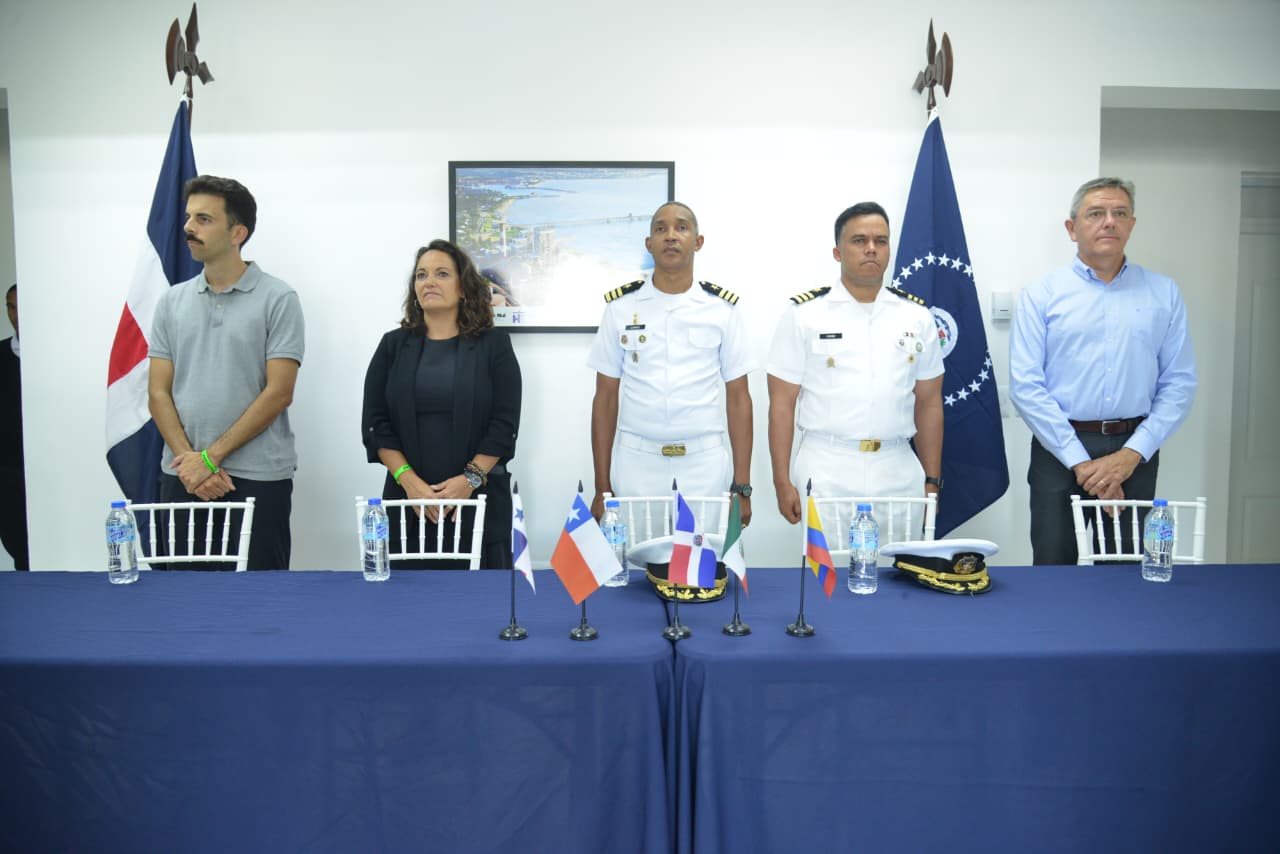
Dominican Navy conducts international maritime navigation training with Spanish collaboration
The Dominican Republic Navy, in collaboration with the Spanish firm Mediterráneo Señales Marítimas SL (MSM), successfully hosted an international training course on Maritime Aids to Navigation (IALA Aton Level 2) from November 3 to 7. The event, held in Santo Domingo, saw participation from the Dominican Navy, local private sector representatives, and delegations from Mexico, Chile, Panama, and Ecuador, marking a significant step in regional maritime safety cooperation. The training program, designed in accordance with the International Association of Marine Aids to Navigation and Lighthouse Authorities (IALA) standards, focused on equipping specialized technicians with the skills necessary to improve the safety and efficiency of maritime navigation. During the course, Vice Admiral Juan B. Crisóstomo Martínez, Commander General of the Dominican Navy, engaged in discussions with MSM instructors and the Director of the Hydrographic, Oceanographic, and Navigation Aids Service to explore current initiatives and future strategies for sustainable maritime management. This initiative underscores the Dominican Navy’s dedication to modernizing its technical capabilities and fostering international partnerships in maritime operations. By adhering to global standards and advancing specialized training, the Dominican Republic solidifies its position as a regional leader in promoting safe and sustainable maritime navigation.
-
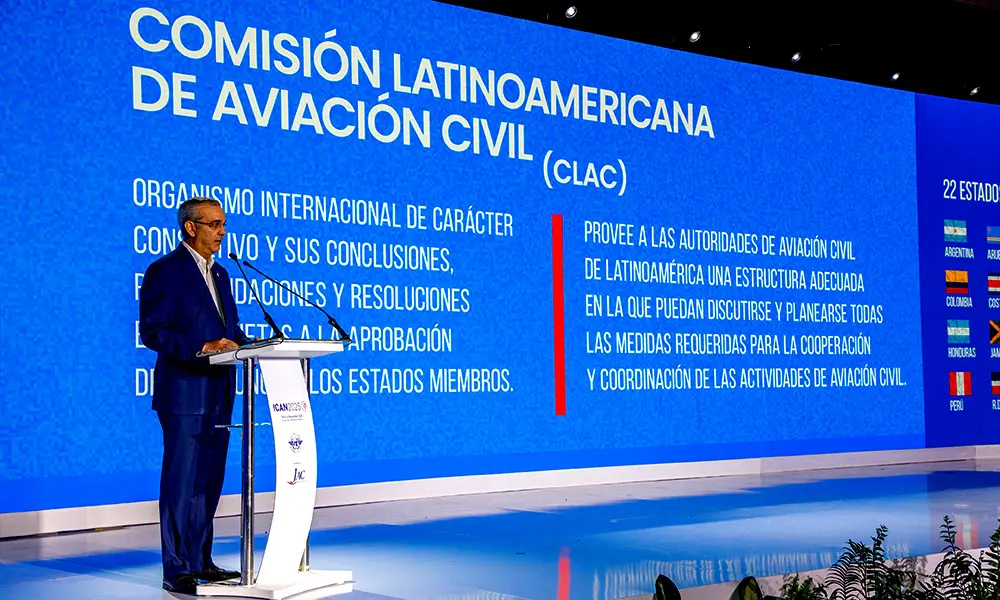
Abinader highlights air connectivity as key to Dominican Republic’s tourism success
The Dominican Republic has solidified its status as a regional leader in civil aviation, thanks to its robust air connectivity, dedication to sustainable development, and continuous modernization of airport infrastructure. President Luis Abinader underscored this achievement during his weekly press conference in Punta Cana, stating, ‘Without air connectivity, there is no success in tourism.’ The International Civil Aviation Organization (ICAO) has lauded the country’s liberalization policy, urging other member states to follow suit. Since joining the Chicago Convention in 1944, the Dominican Republic has maintained a strong partnership with ICAO and remains an active member of the Latin American Civil Aviation Commission (CLAC). As part of the upcoming ICAN 2025 conference, the nation will engage in 18 bilateral meetings to sign or update air services agreements with countries such as Oman, Paraguay, El Salvador, and Greece. Additionally, it will negotiate new agreements with Korea, Malaysia, and Scandinavian states, while leading discussions on memoranda of understanding with Switzerland and Panama. According to the 2024 World Economic Forum, the Dominican Republic ranks first in the region for infrastructure and tourism prioritization and third in air infrastructure. Between 2020 and 2025, 1,310 air routes were authorized, supporting the operations of 305 active airlines and a 49% increase in connectivity across Latin America and the Caribbean. With over 11 million visitors in 2024—equivalent to 103.7% of its population—the Dominican Republic stands as the regional leader in per capita tourism.
-
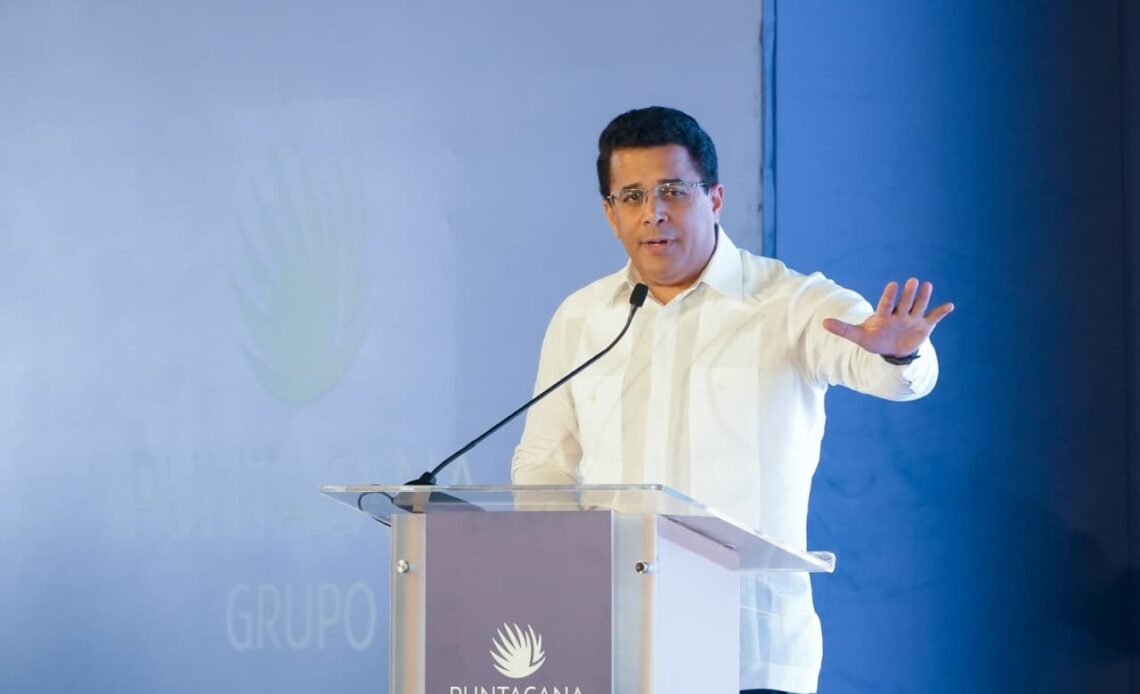
David Collado: Dominican Republic least affected by U.S. flight cancellations
In a recent press briefing during *La Semanal con la Prensa*, Dominican Republic’s Tourism Minister David Collado revealed that the country has emerged as the least affected in the Caribbean region by the recent wave of U.S. flight cancellations triggered by the federal government shutdown. Collado acknowledged the indirect impact on tourism but highlighted the sector’s resilience, with November welcoming 213,000 tourists—a 7% year-on-year increase. The U.S., which accounts for over half of the Dominican Republic’s tourism, remains its primary source market. Despite the grounding of more than 1,000 flights due to the political impasse in Washington, the country’s tourism industry has outperformed its regional counterparts. Collado cited feedback from investors in neighboring nations, who confirmed that the Dominican Republic experienced the least disruption in tourism flows. The U.S. travel crisis, stemming from the partial government shutdown, has left thousands of federal employees, including air traffic controllers, unpaid, leading to widespread flight cancellations and delays. The situation is expected to worsen if Congress fails to resolve the shutdown promptly.
-

Dominican Republic tops Latin American investment rankings in FIU report
Miami, FL – The Dominican Republic has been crowned the leading investment destination in Latin America, according to the 2025 Latin America Country Risk Index and Analysis by Florida International University’s (FIU) Adam Smith Center for Economic Freedom. The report reveals that 76% of experts endorse investing in the country, significantly outpacing Paraguay (66%) and Argentina (63%). The Dominican Republic’s governance, institutional strength, and appeal to foreign investors have earned it recognition as one of the region’s most stable, credible, and low-risk nations. Amidst a backdrop of political polarization, economic volatility, and rising insecurity across Latin America, the Dominican Republic stands out for its democratic stability, reliable institutions, and robust business environment. FIU attributes this success to the nation’s consistent macroeconomic policies, fiscal discipline, and investor confidence. Additionally, the country has capitalized on global economic trends like nearshoring and friendshoring, further solidifying its position as a secure and predictable destination for strategic industries. The report also highlights the Dominican Republic’s lower social and security risks compared to the regional average, bolstered by strong foreign relations and a cooperative foreign policy. Its strategic alliance with the United States has further enhanced external stability. The government has welcomed FIU’s findings, viewing them as a testament to its ongoing efforts to modernize, promote transparency, and enhance competitiveness. The administration has reaffirmed its commitment to sustaining economic growth and solidifying the country’s reputation as one of Latin America’s most trustworthy and dynamic investment hubs.
-

Proposal revives discussion on allowing military and police to vote
The Dominican Republic is once again embroiled in a contentious debate over whether to lift the long-standing ban on voting for military and police personnel. This discussion has been reignited by a proposal from Constitutional Court Judge Sonia Díaz, bringing the issue to the forefront of national discourse. The country remains one of the few in Latin America—alongside Colombia, Guatemala, Honduras, and Paraguay—that continues to prohibit armed forces members from exercising their right to vote.
-

Dominican Republic completes humanitarian mission to Jamaica and Cuba
The Dominican Republic has successfully concluded its humanitarian aid mission, Operation ‘Caribbean Solidarity,’ delivering critical supplies to Jamaica and Cuba in the aftermath of Hurricane Melissa. Spearheaded by President Luis Abinader, the initiative underscores the nation’s dedication to regional solidarity and disaster response. Coordinated by the Ministries of Foreign Affairs, Defense, and Public Health, alongside DASAC and PROMESE/CAL, the operation ensured a rapid and efficient distribution of aid. Utilizing Air Force and Navy resources, the Dominican Republic transported essential items such as food, medicine, mattresses, mosquito nets, and hygiene kits. These supplies were received by local authorities and promptly distributed to the most vulnerable communities in both countries. Operation ‘Caribbean Solidarity’ marks a significant achievement in the Dominican Republic’s foreign and defense policies, showcasing its enhanced capacity to mobilize humanitarian and logistical support across the Caribbean. The government highlighted that this effort not only reinforces the nation’s leadership in regional cooperation but also reaffirms its commitment to fostering peace, solidarity, and integration within the Caribbean.
-

Dominican Republic assumes presidency of Latin American Civil Aviation Commission
In a significant development for regional aviation, the Dominican Republic has been elected to preside over the Executive Committee of the Latin American Civil Aviation Commission (CLAC). This decision was made during the XXVI Ordinary Assembly of the organization, where Héctor Porcella, President of the Dominican Republic’s Civil Aviation Board (JAC), was chosen to lead the committee. The vice-presidencies will be held by Chile, Brazil, Costa Rica, and Panama, reflecting a diverse leadership structure. This appointment underscores the Dominican Republic’s growing influence in the civil aviation sector and its commitment to fostering air connectivity and collaboration across Latin America and the Caribbean. Established in 1973, CLAC serves as a unifying platform for civil aviation authorities in the region, aiming to harmonize aeronautical policies and enhance coordination. With this new role, the Dominican Republic is poised to drive strategic initiatives that will shape the future of air transport and regional integration.
-
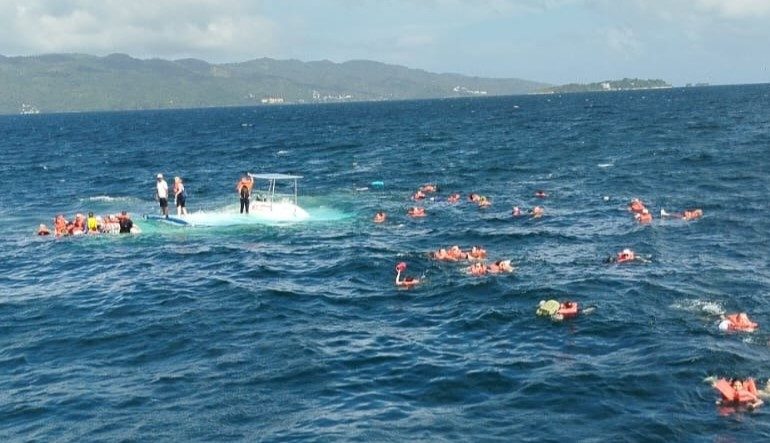
Cruise passengers rescued after catamaran sinks in Samaná Bay
A tourist catamaran carrying 55 passengers capsized in Samaná Bay on Sunday, sparking widespread concern over maritime safety. The vessel was transporting individuals from a cruise ship that had been rerouted to the area due to severe weather conditions. While no fatalities were reported, several passengers sustained minor injuries, according to initial accounts. The incident has prompted calls for a thorough investigation to uncover the root causes of the accident. Prominent producer and communicator Iván Ruiz highlighted the rough sea conditions and raised questions about potential contributing factors, such as structural flaws, overcapacity, or the adverse weather that forced the cruise ship’s diversion. Ruiz also urged authorities to enhance maritime safety regulations to prevent similar occurrences in the future. As of now, local officials have yet to issue an official statement regarding the event.
-

Dominican talent captures two bronzes at WorldSkills
In a remarkable display of technical prowess, the Dominican Republic has achieved a significant milestone at the WorldSkills Americas Santiago 2025 in Chile. The National Institute of Professional Technical Training (INFOTEP) secured two bronze medals, underscoring the nation’s growing expertise in vocational training and skill development. The medals were awarded to young talents in the culinary field: Frandy Romero from Higüey in the Cooking category and Natacha Batista from Santo Domingo in Pastry and Confectionery. Both honed their skills at INFOTEP’s specialized training centers, with Romero attending the Hotel, Gastronomy, and Pastry School, and Batista training at the Metropolitan Regional’s Bakery and Pastry Workshop. INFOTEP’s Director General, Rafael Santos Badía, emphasized that these achievements reflect the institution’s dedication to enhancing practical skills and fostering human talent, which contributes to national productivity. The Dominican delegation, comprising over 400 participants from 20 countries, competed across 25 specialized areas, including Cybersecurity, Web Design, and IT Network Administration. The team received strategic support from partners like Banco Popular and Caribbean Xam. Additionally, the Dominican Republic has been chosen to host the next WorldSkills Americas General Assembly, further cementing INFOTEP’s leadership and the country’s commitment to advancing technical education in the region.