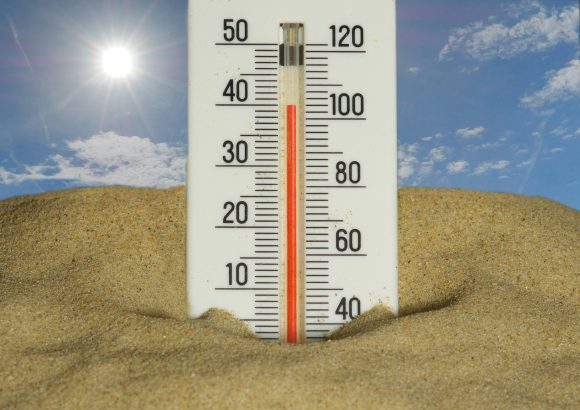
Across the Dominican Republic, a dangerous spell of record-shattering extreme heat has put public health authorities on high alert, with officials issuing urgent guidance to residents as sweltering conditions are projected to hold for the next fortnight. In the hottest parts of the country, the real-feel heat index has already pushed past 40°C, bringing elevated risks of life-threatening heat-related illnesses for vulnerable populations.
标签: Dominican Republic
多米尼加共和国
-

Government lowers fuel prices for July 4–10
In a move designed to ease financial pressure on household and commercial consumers across the Dominican Republic, the nation’s Ministry of Industry, Commerce and Micro, Small and Medium Enterprises (MICM) has rolled out a new round of fuel price cuts for the week spanning July 4 to 10, backed by a 424.53 million Dominican peso (RD) government subsidy.
The adjustments bring a RD$5.00 per gallon reduction to both regular-grade gasoline and standard diesel, while premium variations of both fuels will see a smaller RD$3.00 per gallon drop. Fuel oil will also follow the downward price trend, but two widely used consumer energy sources — liquefied petroleum gas (LPG) and natural gas — will remain at their current price points. According to MICM, holding LPG prices steady is a deliberate policy choice: as the primary cooking and heating fuel for the vast majority of Dominican households, stable pricing protects families from sudden swings connected to turbulence in global energy markets.
Not all fuel products are seeing price cuts, however. The ministry confirmed that aviation fuel and kerosene will see price increases, driven by ongoing upward trends in global crude oil costs. MICM also outlined the broader context shaping the country’s fuel pricing: the Dominican Republic imports nearly all of the fuel it consumes for domestic use, and global refining margins for gasoline and diesel have skyrocketed since the start of 2024, spurred by ongoing conflict in the Middle East. This sustained rise in margins has directly pushed up the country’s import costs for most fuel products, creating the need for targeted government subsidies to keep consumer prices manageable.
-
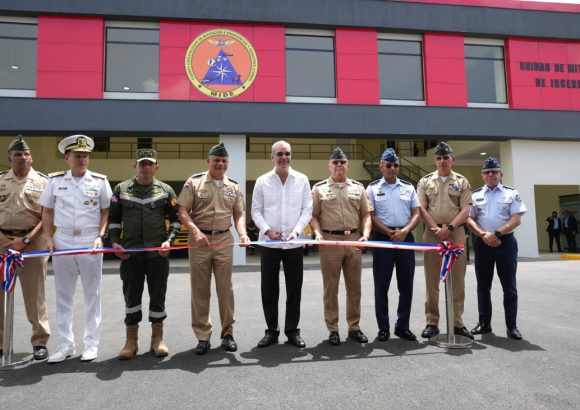
Abinader inaugurates modern CEMED facility to enhance emergency response capabilities
Santo Domingo – In a landmark step to reinforce the Dominican Republic’s ability to handle natural disasters and public emergencies, President Luis Abinader has officially opened the brand-new purpose-built headquarters of the Specialized Emergency and Disaster Mitigation Corps (CEMED), the nation’s leading emergency response body.
Situated within the 16 August Military Camp, the modern 6,061-square-meter complex operates as the central operational hub for the emergency response division under the Dominican Ministry of Defense. Designed to support end-to-end emergency management, the facility hosts a full suite of purpose-built spaces: a dedicated administrative block, personnel barracks, multi-purpose training classrooms, a fully equipped crisis command center, strategic planning areas, a public-access helipad for rapid aerial deployment, climate-controlled specialized storage for emergency gear, and large training zones for emergency preparedness drills.
Alongside the inauguration of the new headquarters, the Dominican government also unveiled a major upgrade to CEMED’s operational toolkit, handing over a wide range of new emergency response assets. These include modern fire trucks, large-capacity water tankers, specialized heavy rescue vehicles, rugged all-terrain units for hard-to-reach affected areas, civilian and search-and-rescue drones, mobile portable communications systems that can operate when ground infrastructure is damaged, advanced search-and-rescue detection technology, and a team of specialized disaster response canine units.
Speaking at the official inauguration ceremony, President Abinader framed the initiative as a critical long-term investment in safeguarding Dominican lives and closing gaps in national emergency preparedness. He emphasized that accelerating climate change has driven a steady increase in the frequency and severity of natural disasters across the Caribbean, making it imperative for governments to shift from a purely post-disaster reactive model to a proactive strategy focused on prevention, advance planning, and rapid deployment capabilities.
The entire project – encompassing both construction of the new headquarters and procurement of all specialized equipment – represents a total public investment of more than 454.6 million Dominican pesos. Beyond strengthening the nation’s domestic disaster response system, the government has outlined a broader strategic goal: to position the new CEMED headquarters as a leading regional hub for emergency response training and cross-border humanitarian assistance coordination, supporting neighboring Caribbean nations facing shared climate-driven disaster risks.
-

Dominican Republic raises tax on electronic transfers and checks to 0.20% this Friday
Starting Friday, July 3, the Dominican Republic will enact an adjusted financial transaction tax, raising the rate on check issuance and select electronic transfers from 0.15% to 0.20% as outlined in the newly enacted Law 30-26. This policy forms a core component of a sweeping national fiscal reform package designed to boost state revenue, against a backdrop of ongoing global economic volatility.
Under the new regulatory framework, Dominican financial institutions will automatically apply the updated tax rate to a broad range of transactions. These include the issuance and clearance of personal and business checks, electronic transfers routed to third-party bank accounts, loan and credit card payments made to accounts held by other individuals, transfers into joint accounts that involve external third-party stakeholders, and third-party cash withdrawals completed via ATM access codes.
Despite the broad scope of the tax increase, a number of critical transaction categories have been granted full exemption. Transfers between separate accounts held by a single individual or entity remain untaxed, as do cash withdrawals completed by the original account holder. Payments made to national government agencies, contributions to social security systems and pension funds, and international transfers also fall outside the tax mandate. Additionally, transfers to brokerage accounts owned by the same individual or entity are exempt, as long as applicants submit valid documentation verifying shared account ownership.
Law 30-26, officially titled the Law on Measures for Economic Growth, Tax Simplification and Mitigation of the International Crisis, counts this adjusted transaction tax among its most impactful revenue-generating provisions. Dominican government projections estimate the policy will deliver between 40 billion and 50 billion Dominican pesos in incremental annual tax revenue, a windfall policymakers say will be used to shore up the nation’s public finances and buffer against global economic headwinds.
However, the new tax has not garnered universal support. Leading national business associations have raised pointed concerns about the policy’s broader economic impacts. Critics warn the higher rate will drive up banking costs for both ordinary consumers and private enterprises, creating a disincentive that could push more economic activity into the informal sector, undermining years of progress toward expanded financial formalization across key industries.
-
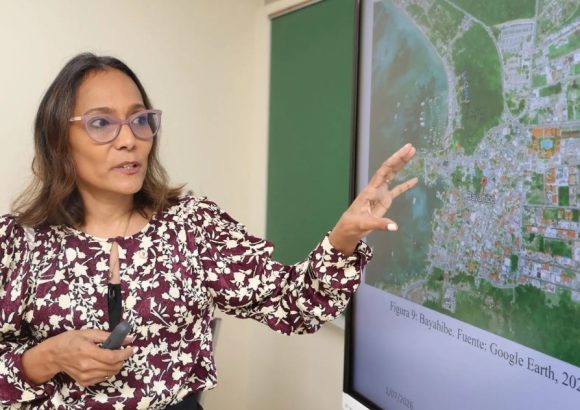
PUCMM study finds building materials and vegetation drive urban heat in Bayahibe
In the Dominican Republic coastal community of Bayahibe, a groundbreaking academic study from the Pontifical Catholic University Madre y Maestra (PUCMM) has uncovered clear causal connections between localized urban temperature fluctuations and three key urban design factors: construction materials, exterior building colors, and the density of green vegetation across the city. This investigation, which focuses on the well-documented Urban Heat Island (UHI) effect – a common environmental phenomenon where developed urban zones register consistently higher temperatures than their undeveloped rural peripheries – was formally unveiled to the global scientific community during the 21st International Congress of Scientific Research, hosted by the Dominican Republic’s Ministry of Higher Education, Science and Technology (MESCyT).
To reach their evidence-based conclusions, the PUCMM research team conducted on-the-ground temperature and infrastructure surveys across 24 distinct city blocks, collecting granular data from 355 individual buildings to map how different urban features shape local heat levels. Their analysis confirmed that urban districts dominated by heat-absorbent materials including asphalt, concrete, and zinc roofing, paired with sparse tree coverage, recorded the highest peak and average temperatures in the entire study area. By comparison, residential neighborhoods with extensive tree planting and large expanses of permeable, water-absorbent ground surfaces stayed significantly cooler throughout the study period, even during peak midday heat. The team also added nuanced findings about building design: light-colored exterior facades, most notably pure white coatings, reflect far more incoming solar radiation away from building structures, preventing excess heat from building up in urban surfaces and air. Darker facade pigments, by contrast, trap solar energy, driving up both surface and ambient air temperatures across surrounding blocks.
The study’s authors issued a urgent warning about the growing risks of the UHI effect for small coastal Caribbean cities like Bayahibe, which already face overlapping climate hazards including accelerating sea level rise, increasing ocean warming, and more frequent, more intense extreme heat events driven by global climate change. To mitigate these rising risks, the research team put forward a set of actionable, accessible policy and design recommendations: expanding the total area of urban green space and street tree planting city-wide, switching to high-reflectance construction materials for new development and retrofits, and investing in shaded public gathering spaces to protect vulnerable communities from extreme heat. These changes, the authors note, would not only improve public thermal comfort and reduce heat-related health risks but also cut overall city energy consumption for air conditioning, creating secondary environmental and economic benefits for local residents.
-

Abinader promotes Dominican Republic as trusted investment hub at AIF 2026
SANTO DOMINGO — On Wednesday, Dominican Republic President Luis Abinader officially opened the 2026 Americas Investment Forum (AIF), using the high-profile opening ceremony to frame the Caribbean nation as a stable, trustworthy destination for international foreign direct investment. Speaking to an assembly of over 2,000 delegates representing 52 nations gathered for the three-day event, Abinader centered his opening address on the Dominican Republic’s core competitive advantages: consistent macroeconomic stability, binding legal certainty, robust institutional frameworks, uncompromising regulatory transparency, and clearly defined operating rules for foreign businesses.
Abinader emphasized that reciprocal trust between governments and investors is the non-negotiable foundation of sustained long-term economic growth. He used his platform to challenge the entire Americas region to rebrand itself not as a zone of untapped potential, but as a global hub that delivers tangible, measurable results for international business partners.
To back his claims, the Dominican president pointed to the nation’s recent record-breaking economic performance metrics, which include more than $5 billion in total foreign direct investment inflows recorded in 2025, an annual tourism footprint of over 11 million international visitors, and more than 200,000 formal jobs created by the country’s network of free trade zones. Abinader stressed that these headline figures do more than boost national economic statistics — they translate directly to expanded employment opportunities, accelerated domestic innovation, and broad-based improved livelihoods for Dominican people.
He also noted that the global shift toward nearshoring and corporate efforts to build more resilient, diversified supply chains have opened a once-in-a-generation economic opportunity for the Americas region, reaffirming the Dominican Republic’s commitment to acting as a strategic, reliable partner for global investors looking to expand their regional footprint.
Eduardo Sanz Lovatón, the Dominican Minister of Industry, Commerce and MSMEs, used his remarks during the opening ceremony to highlight the sweeping improvements the country has made to its investment climate in recent years, as well as its expanding role in global exports, cross-border innovation, and advanced manufacturing. Meanwhile, Biviana Riveiro Disla, Executive Director of ProDominicana, the country’s national investment and export promotion agency, outlined the forum’s core strategic goals: to deepen existing investment ties with partners in the Middle East, Asia, and Europe, while accelerating the development of high-quality, environmentally and socially sustainable investment projects across the Dominican Republic.
Running through July 3 in the capital city of Santo Domingo, the 2026 Americas Investment Forum brings together sitting government leaders, global institutional investors, and C-suite business executives from across the Western Hemisphere and beyond. Attendees will engage in three days of discussions focused on expanding cross-border investment, growing interregional trade, and scaling innovative business development across the Americas.
-
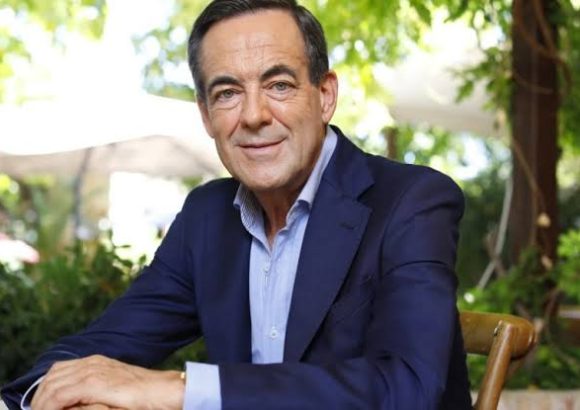
Report links former Spanish Minister José Bono to Dominican energy projects
A new investigative journalism collaboration between Spanish outlet ABC Diario and Dominican reporter Julissa Céspedes from CDN has uncovered alleged hidden business ties between former Spanish Defense Minister José Bono and a controversial Valencian business magnate, linking the ex-official to hundreds of millions of dollars in solar energy contracts in the Dominican Republic.
According to corporate records cited in the probe, Bono holds 105 shares in Robiser Arrendamientos SL, a Spanish-registered company connected to businessman Dimas de Andrés Puyol. This stake makes Bono the single largest shareholder of the firm, a detail that only appears in Dominican business registries and is nowhere to be found in Spain’s national commercial database.
De Andrés, through his Caribbean-based energy firm Medcap Energy Caribe SRL, has secured 25-year government concessions to develop two large-scale photovoltaic projects: the Pimentel Energy facility in Duarte province and the Las Parras Energy project in San Antonio de Guerra. Combined, the total investment planned for these two renewable energy ventures surpasses $400 million, with more than $300 million already awarded in formal contracts to companies linked to the businessman.
This is not the first time De Andrés has drawn public scrutiny. Beyond the energy projects, his companies have secured other public contracts in the Dominican Republic, including a solid waste collection deal for the municipality of Santo Domingo Norte that has faced widespread public backlash over persistent claims of poor service delivery. Back in Spain, both De Andrés and his father faced investigation for alleged financial crimes, though both were ultimately acquitted of all charges in 2022.
Bono has forcefully pushed back against the allegations released in the investigation. In a response to the report, the former Spanish cabinet minister denied having any formal business partnership with De Andrés, and rejected any claim that he holds a financial stake in the Dominican Republic’s renewable energy sector, dismissing the accusations as “an outrage and a lie.”
-
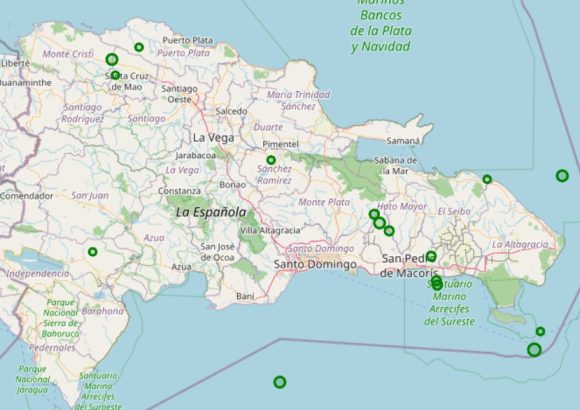
Nine earthquakes recorded across Dominican Republic in one day
The Dominican Republic experienced a cluster of low-intensity seismic activity on Wednesday, when nine minor earthquakes were detected across the island nation by the National Seismological Center, operated by the Autonomous University of Santo Domingo (UASD).
According to the center’s official report, the magnitudes of these tremors fell between 2.2 and 3.5 on the Richter scale. The most powerful of the nine events, registering a 3.5 magnitude, struck just after noon local time in waters southwest of Saona Island. Other seismic events were pinpointed in regions near Catalina Island, San Pedro de Macorís, Miches, Hato Mayor, Sabana Grande de Palenque, Guayubín, and Los Hidalgos, covering both coastal and inland areas of the country.
Geologists noted that the majority of the recent seismic activity originated offshore, in the Caribbean Sea and the Atlantic Ocean, though a small number of tremors were recorded on land. As of Wednesday evening, no official reports of structural damage or bodily harm caused by the cluster of earthquakes had been released by local emergency management agencies.
This new sequence of minor tremors comes less than seven days after a stronger magnitude 5.1 earthquake hit the region on June 26. That earlier event was felt across large swathes of the Dominican Republic, triggering precautionary evacuation protocols at multiple public facilities across the country as a safety measure.
-
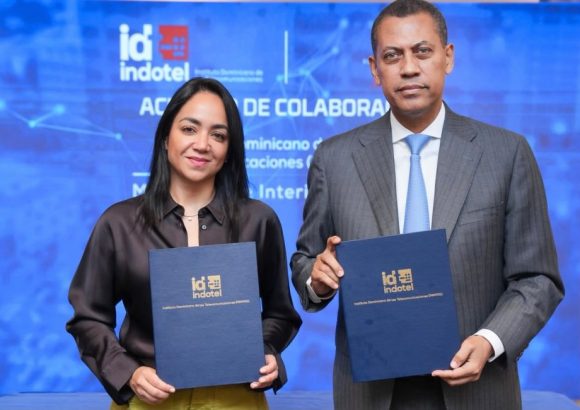
Indotel and Interior Ministry Partner on digital skills and community safety
SANTO DOMINGO – Two key Dominican government institutions have joined forces through landmark cooperation agreements that aim to advance two critical public goals: expanding digital literacy for underserved groups and upgrading community security in a high-need neighborhood of San Cristóbal.
The Dominican Institute of Telecommunications (Indotel) and the Ministry of the Interior and Police formalized the twin partnerships in a recent signing, outlining clear divisions of responsibility to bring the initiatives to life. Under the terms of the first agreement, Indotel will contribute a owned property in San Cristóbal’s Moscow neighborhood to host a new Citizen Prevention and Security Center, which will be operated entirely by the Ministry of the Interior and Police. The ministry will take on all costs and responsibilities related to renovating the facility, outfitting it with necessary equipment, providing ongoing maintenance, and managing on-site security.
Once operational, the center will deliver a wide range of community-centered programming, from public services and safety awareness campaigns to violence reduction workshops that are designed to foster peaceful coexistence among local residents. This initiative marks a deliberate push to increase consistent, supportive state presence in a community that has faced elevated security challenges.
The second agreement lays the groundwork for a national digital skills training initiative targeted explicitly at young people and vulnerable populations across the country. The program is structured to break down barriers to digital access, equipping participants with the technical skills needed to access higher-quality education and competitive employment opportunities that would otherwise be out of reach.
Indotel President Guido Gómez Mazara and Interior Minister Faride Raful jointly emphasized that the cross-agency partnership is designed to deliver holistic social impact. By pairing digital inclusion work with community-centered crime prevention, the institutions frame technology as a core tool for equitable social development, rather than simply an infrastructural upgrade. Leaders of both agencies noted that expanding digital access for marginalized groups addresses a key root cause of social instability, while the new security center will create a local hub for ongoing public safety support that meets the unique needs of the Moscow neighborhood community.
-
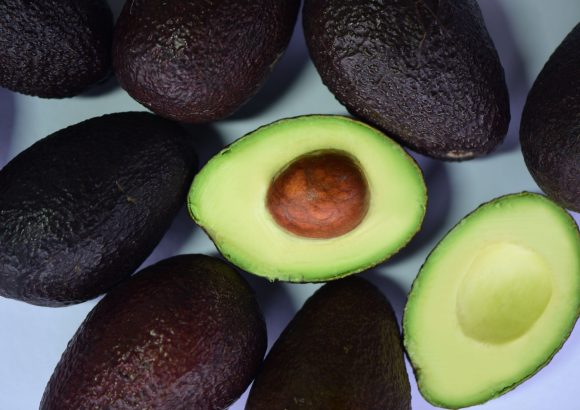
Dominican government invests RD$194 million in Avocado Agroecological Park
The Dominican government has officially launched construction of a landmark agroecological development project, the “Saving the Mountains” Avocado Agroecological Park, located in the southern province of San Cristóbal. Funded by the Special Fund for Agricultural Development (FEDA), the initiative carries a total investment of nearly 194 million Dominican pesos, marking one of the country’s most significant recent investments in integrated sustainable agriculture and tourism.
Championed by incumbent President Luis Abinader, the project leverages the Dominican Republic’s standing as the world’s second-largest avocado producer, a position that has long formed a core pillar of the nation’s agricultural export economy. Unlike traditional single-purpose agricultural sites, this new park is designed as a multifaceted hub that brings three distinct goals together: commercial avocado production, targeted environmental conservation, and expanding regional agritourism offerings.
Project planners expect the development to strengthen every link in the country’s avocado value chain, from on-farm production and research to processing and distribution. It will also create dedicated space for advancing agricultural research focused on climate-resilient avocado farming and agroecological practices. For the local tourism sector, the park is projected to draw both domestic and international eco-conscious visitors, helping to reposition San Cristóbal as a top destination for sustainable travel in the Caribbean. Ultimately, the initiative’s core mission is to stimulate inclusive local economic growth and set a regional benchmark for balanced, long-term sustainable development that benefits both local communities and the natural environment.