标签: Dominican Republic

多米尼加共和国

  • Cap Cana: A well-established tourist destination that contributes to Dominican tourism

    Cap Cana: A well-established tourist destination that contributes to Dominican tourism

    The Dominican Republic’s premier luxury development, Cap Cana, is transforming into a groundbreaking smart city model while simultaneously driving the nation’s economic and tourism growth. This private destination city has evolved beyond its initial concept to become a sustainable, technologically advanced urban center that represents a significant milestone in the country’s development trajectory.

    Over its 23-year history, Cap Cana has attracted substantial investment totaling $4.758 billion, averaging approximately $213 million annually. The development’s infrastructure, valued at over $1.2 billion, now supports the largest luxury real estate cluster in the Caribbean nation. This massive investment has positioned the Dominican Republic as both the region’s largest economy and most developed tourist destination, with visitor numbers increasing significantly due to expanded tourism offerings over the past five years.

    The project’s impact extends beyond economic metrics, generating more than 20,000 direct and indirect jobs while substantially contributing to social well-being in the surrounding area. Cap Cana has established itself as an integrated community where residents and visitors can live, work, and enjoy premium leisure and recreational facilities.

    As a diversified tourism, real estate, and hospitality destination, Cap Cana embodies the country’s advancements in sustainable development. The city’s structured growth strategy emphasizes technological integration alongside environmental consciousness, positioning it as an emerging global benchmark for modern luxury tourism and smart city innovation. This development represents a new paradigm for urban planning in the Caribbean, combining cutting-edge technology with sustainable practices to create a model for future destination cities worldwide.

  • Nearly 2,700 Haitians detained and deported in special operations

    Nearly 2,700 Haitians detained and deported in special operations

    In a sweeping nationwide enforcement action, Dominican migration authorities conducted a large-scale interdiction operation targeting irregular migration in the early hours of January 23. The General Directorate of Migration (DGM) reported the detention and/or deportation of 2,697 Haitian nationals found in violation of the country’s immigration statutes.

    The operation demonstrated significant coordination across multiple regions, with 1,222 individuals promptly repatriated through designated border checkpoints. The geographic distribution of these returns revealed concentrated activity in key border regions: Elías Piña (618), Dajabón (441), Jimaní (85), and Pedernales (78).

    Simultaneous enforcement sweeps resulted in the apprehension of 1,258 undocumented migrants across diverse operational theaters. In Greater Santo Domingo, operations targeted the districts of Villa Mella, Herrera, Villa Duarte, and the National District. The Cibao region witnessed coordinated actions in Santiago, Mao, Hermanas Mirabal, Monseñor Nouel, and Santiago Rodríguez, while southern operations focused on Barahona, Azua, and San José de Ocoa.

    Tourist zones received particular attention, with 217 foreign nationals detained in La Altagracia and La Romana provinces alone. These operations concentrated on high-traffic tourist destinations including Bávaro, Verón, and Uvero Alto, plus adjacent communities, through joint deployments combining military and police resources.

    The operational framework involved 38 rapid response agents, seven intelligence officers, inspectors, drivers, and armed forces personnel collaborating to enforce migration control in areas experiencing substantial population mobility.

    Authority involvement was distributed across multiple agencies: DGM agents directly apprehended 1,095 individuals, while military and police units accounted for 380 detainees—291 by the Army, 45 by the Specialized Corps of Land Border Security (Cesfront), and 44 by the National Police.

    The DGM emphasized in an official communiqué that all operations were conducted with strict adherence to human rights protocols and existing regulatory frameworks, while reaffirming institutional support for national security apparatuses.

  • Why did Juan Pablo Duarte die in exile?

    Why did Juan Pablo Duarte die in exile?

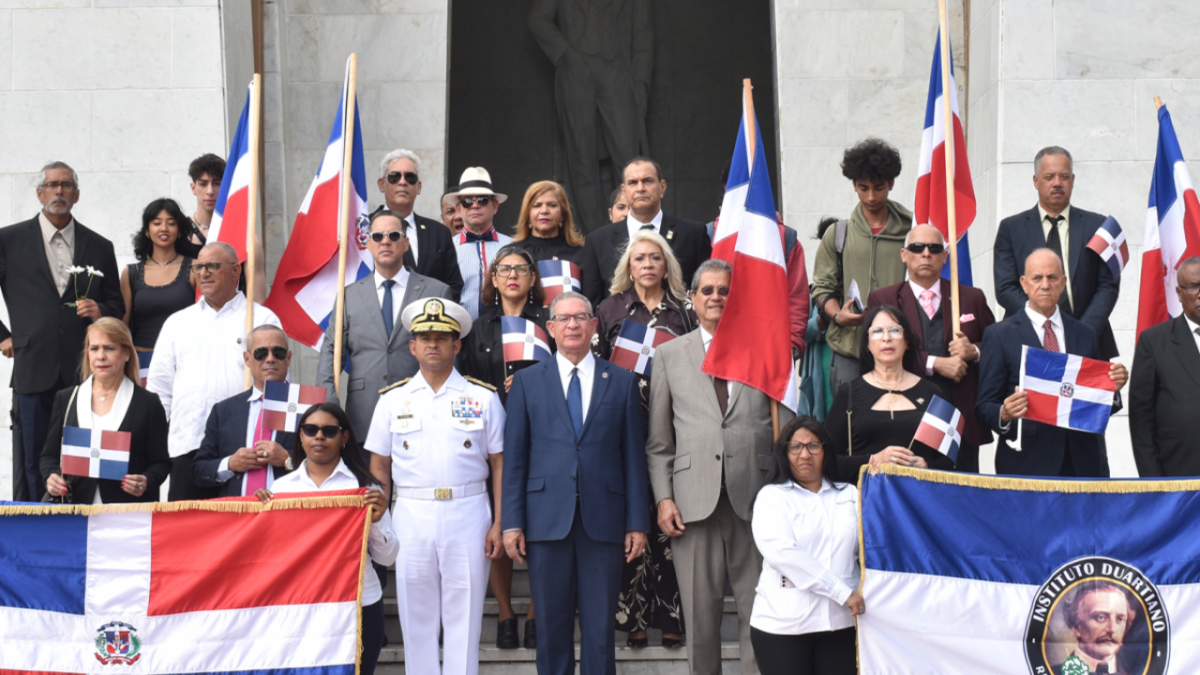
    On the anniversary of patriot Juan Pablo Duarte’s birth, historical revelations emerge about the tragic exile of the Dominican Republic’s principal independence architect. Despite dedicating his youth, fortune, and ultimately his life to the patriotic cause, Duarte drew his last breath far from the nation he helped create.

    Wilson Gómez, president of the Duartian Institute, provides crucial insight into the political circumstances that prevented the revolutionary leader from returning to his homeland. Historical records indicate that following Duarte’s 1864 attempt to join the Restoration War, the governing administration denied him permission to remain on Dominican soil. Instead, officials compelled his return to Venezuela under the guise of a diplomatic appointment as minister plenipotentiary.

    Gómez reveals that Duarte’s multiple exiles resulted from systematic political persecution—first in 1843 under Haitian President Charles Hérard’s repression, then in 1844 by General Pedro Santana’s actions, and ultimately by the Restoration Government’s 1864 decision. Santana particularly targeted Duarte and the Trinitarians, branding them traitors for their unwavering commitment to national sovereignty and resistance to foreign domination.

    The Dominican liberals, led by Duarte, maintained principles of political integrity, religious faith, and trust in their people that directly contradicted the conservative establishment’s agenda. Between 1844 and 1864, authoritarian regimes, corruption, and persistent insecurity created insurmountable barriers to Duarte’s reintegration into national life.

    Contrary to popular belief, Gómez clarifies that Duarte’s exile, while difficult, wasn’t marked by extreme poverty or defeat. Evidence suggests the revolutionary maintained business acumen, with his family owning property in central Caracas and living with dignity. Historical accounts document Duarte’s commercial activities along Venezuela’s eastern coasts and inland waterways, including expeditions along the Orinoco and Negro Rivers toward Brazilian borders.

    Portuguese missionary Sanjení reportedly encountered Duarte on the Rio Negro in 1857, while historians believe the patriot learned of his mother’s 1858 death and his 1848 amnesty declaration during his Venezuelan years. Despite political betrayals and capitulations, Duarte’s ideals of sovereignty continue to inspire Dominican leaders 182 years after the republic’s foundation.

  • For every new vehicle brought from the US, five Chinese units entered the Dominican Republic in 2025.

    For every new vehicle brought from the US, five Chinese units entered the Dominican Republic in 2025.

    Santo Domingo – The automotive landscape in the Dominican Republic has undergone a dramatic transformation, with Chinese vehicles emerging as the dominant force in the new car market. According to data from the United Automotive Industry Group (Guía-RD), China supplied 14,556 new vehicles to the Dominican market in 2025, dwarfing the United States’ contribution of merely 2,944 units. This establishes a remarkable ratio of five Chinese vehicles for every American car entering the country.

    The ascendancy of Chinese automakers is attributed to a dual strategy of competitive pricing and sophisticated design. Modern, attractive vehicle designs coupled with increasingly affordable prices have positioned Chinese brands as the preferred choice for Dominican consumers. The average Free On Board (FOB) value for new vehicles declined to $22,228, making new car ownership more accessible compared to used alternatives. This price advantage has been crucial in shifting consumer preference toward new vehicles from authorized dealerships, which offer manufacturer warranties and eliminate the uncertainties associated with pre-owned vehicles.

    Despite tariff exemptions for American vehicles under the DR-CAFTA free trade agreement, the U.S. maintains leadership only in the used vehicle segment, importing 32,700 units compared to China’s 505. Dominican consumers increasingly view Chinese vehicles as a secure investment with guaranteed dealership support.

    Market dynamics have been further influenced by broader economic conditions. A 4% reduction in overall vehicle imports during 2025 enabled importers to balance supply with diminished demand. The Dominican Central Bank’s restrictive monetary policy, which pushed interest rates on consumer loans to 19.4% annually, reduced purchasing power and compelled consumers to reconsider spending patterns.

    In response to these market shifts, importers have diversified their offerings to include hybrid and super-hybrid vehicles, which saw import growth of 54.7% in the previous year. These models provide enhanced fuel efficiency and superior warranties, adding significant value to the new car market amidst evolving consumer preferences and economic challenges.

  • Power outages affect DGII platforms and paralyze the sale of vehicle registration stickers and online services

    Power outages affect DGII platforms and paralyze the sale of vehicle registration stickers and online services

    The Dominican Republic’s General Directorate of Internal Taxes (DGII) announced a significant service disruption on Saturday due to electrical infrastructure failures that crippled its technological platforms. The outage has severely impacted the agency’s Virtual Office (OFV), preventing citizens from accessing critical digital services including tax payments and vehicle registration sticker purchases.

    According to an official statement released by the tax authority, the electrical issues have rendered key digital services inaccessible. The DGII’s technical teams are actively working to resolve the system failures and restore full functionality, though no specific timeline for complete recovery has been provided.

    The technological breakdown has created tangible problems for Dominican citizens. Multiple authorized banking institutions reported being unable to process vehicle registration sticker sales throughout Saturday due to the system-wide outage. Customers visiting various bank branches received uniform notifications about the DGII’s system failure, leaving them unable to complete mandatory vehicle registration procedures.

    Beyond sticker sales, taxpayers encountered substantial difficulties attempting to fulfill their fiscal obligations digitally. Users attempting to access the DGII’s virtual platform received various error messages, including notifications indicating that requested web pages were non-existent or temporarily unavailable.

    The tax authority has issued a formal apology to taxpayers for the inconveniences caused by the service disruption. The DGII has committed to providing ongoing updates regarding system restoration progress and will announce when services return to normal operational capacity.

  • Sunny skies and rain in some provinces will dominate the weather this Sunday

    Sunny skies and rain in some provinces will dominate the weather this Sunday

    The Dominican Institute of Meteorology (Indomet) forecasts improving weather conditions for Sunday as the meteorological trough previously affecting the nation continues its eastward movement away from the region. Morning hours will feature predominantly sunny skies with intermittent cloud cover developing throughout the day.

    Meteorologists note that wind patterns will contribute to increased cloud formation, potentially generating localized passing showers. The southwestern provinces of Barahona and Pedernales, along with eastern regions including La Altagracia, El Seibo, La Romana, and Samaná, are most likely to experience these scattered precipitation events.

    During afternoon hours, meteorological models suggest possible rainfall development in central and northern territories. Residents in Santo Domingo province, San Cristóbal, Monte Plata, Monseñor Nouel, Sánchez Ramírez, Duarte, and La Vega should remain prepared for potential brief showers.

    Temperature conditions remain within seasonal norms, offering comfortable conditions across the island nation. Minimum temperatures are forecast between 20-22°C (68-72°F), while maximum temperatures will reach 29-31°C (84-88°F). The combination of seasonal temperatures and dispersing weather systems indicates generally favorable conditions for outdoor activities, with only isolated interruptions expected.

  • Juan Pablo Duarte: the political thought behind the father of the nation

    Juan Pablo Duarte: the political thought behind the father of the nation

    Juan Pablo Duarte, founding father of the Dominican Republic, established a profound political philosophy that continues to serve as a moral compass for national leadership centuries after the nation’s independence. His vision positioned politics not as speculative endeavor but as the “purest and most worthy science after philosophy”—a noble pursuit demanding complete dedication to national interests above personal gain.

    According to Wilson Gómez Ramírez, president of the Duartian Institute, the patriot conceptualized politics as an exclusive channel for public service rather than personal enrichment. This approach inherently required sacrifice and commitment to national advancement through transparent, honest governance. Duarte’s famous exhortation—”Let us work for and for the homeland, which is to work for our children and for ourselves”—encapsulates this selfless ideology.

    Duarte personally exemplified this integrity through remarkable accountability practices. As general and deputy commander of the Southern Expeditionary Army, when unexpectedly summoned to account for expenditures, he provided meticulous documentation showing he had spent only 17.3% of allocated funds, returning 82.7% to the national treasury—an unprecedented act of fiscal responsibility that earned him official discharge.

    The revolutionary leader’s fundamental bill extensively outlined his institutional vision, emphasizing unwavering commitment to rule of law, respect for basic rights, legal certainty, and national sovereignty. His constitutional principles continue to shape Dominican governance, with the State maintaining the name he designated, the flag waving with pride, and the national motto “God, Fatherland and Liberty” enshrined in the Constitution.

    When asked how Duarte would view contemporary Dominican Republic, Gómez Ramírez suggested the founder would feel “ashamed at the lack of honesty, commitment and selflessness” among those leading national life, where private interests frequently supersede national priorities. Yet he would simultaneously feel pride seeing aspects of his dream realized through enduring national symbols and institutions.

    Born January 26, 1813 in Santo Domingo to Spanish merchant Juan José Duarte Rodríguez and Manuela Díez Jiménez, Duarte’s political consciousness developed during European studies after the University of Santo Domingo closed during Haitian occupation. Exposure to liberal and nationalist movements in England, France and Spain profoundly shaped his vision for Dominican independence, which he pursued upon returning in 1831.

    The seminal moment arrived July 16, 1838 with Duarte’s establishment of La Trinitaria—a secret society dedicated to independence organizing. Initial members Juan Isidro Pérez, Félix María Ruiz and José María Serra were later joined by crucial figures Francisco del Rosario Sánchez and Matías Ramón Mella, collectively achieving independence proclamation on February 27, 1844. This organization instilled core values of patriotic love, sacrifice and civic commitment that defined the liberation movement and continue to resonate in Dominican political culture.

  • Yeni Berenice on Brianna Genao: “The team hasn’t stopped investigating for a single minute”

    Yeni Berenice on Brianna Genao: “The team hasn’t stopped investigating for a single minute”

    LA VEGA, Dominican Republic – Twenty-four days following the mysterious disappearance of Brianna Genao in Barrero, Puerto Plata, the nation’s top prosecutor has provided a crucial update on the investigative efforts. Attorney General Yeni Berenice Reynoso confirmed that investigative teams remain fully engaged in the case, working relentlessly to uncover the truth behind Genao’s disappearance.

    Reynoso emphasized the uninterrupted nature of the investigation, stating, ‘Our dedicated team has not ceased its work for a single day, continuously pursuing all relevant investigative procedures essential to resolving this case.’ The statement came amid growing public concern about the pace of the investigation.

    Regarding international involvement, the Attorney General clarified that while FBI agents have concluded their on-site operations, the American law enforcement agency continues to provide essential support to Dominican authorities. ‘The completion of field operations by an international agency like the FBI does not signify the end of our collaboration,’ Reynoso explained. ‘The formal request from our office ensures their continued accompaniment throughout the entire investigative process.’

    Although the timeline for receiving the FBI’s comprehensive report remains unspecified, sources familiar with the investigation indicate anticipated delivery within the coming fortnight. Reynoso maintained strict protocol regarding disclosure limitations, noting, ‘Our legal code explicitly prohibits revealing investigative details until formal proceedings are initiated.’

    The security landscape in Barrero has transformed significantly since the disappearance, with military personnel, national police officers, and specialized investigative detectives maintaining constant presence. Access to the local roadway remains restricted to residents only, with security details reduced to three personnel guarding the entrance—a stark contrast to the extensive deployments seen during initial investigation phases.

  • Animal cruelty: Woman burns a dog taking shelter from the rain with her puppies

    Animal cruelty: Woman burns a dog taking shelter from the rain with her puppies

    A shocking case of animal cruelty has emerged from the Villa Juana sector of the National District, where Mildred Margarita Victoriano stands accused of deliberately scalding a protective mother dog with boiling water. The incident occurred on April 11, 2025, when the canine was shielding her puppies from rainfall near the defendant’s residence.

    Judicial proceedings advanced this Thursday as Judge Patricia Padilla of the Second Court of Instruction imposed coercive measures against Victoriano, requiring periodic court appearances and an 8,000 peso economic guarantee. The court has reserved its ruling on whether the case will proceed to full trial, with a decision scheduled for February 5.

    According to animal welfare advocates, this represents an escalation of violence against the defenseless animal. Lourdes Rodríguez of the National Animal Protection Foundation and Rodríguez Canine Shelter revealed that Victoriano had previously attacked the same dog with battery acid just one day before the scalding incident. Even more disturbingly, rescuers claim the woman had previously kicked the dog while pregnant, resulting in the death of her puppies.

    The victimized animal sustained catastrophic injuries, with rescuer William Betances reporting burns covering approximately 80% of its body. The dog currently resides in a foster home undergoing extensive recovery, while her puppies fortunately remained unharmed during the attacks.

    Animal protection organizations faced significant barriers during the legal process. Betances, Rodríguez, Guillermina Selman of Ecoportal Dominicana Foundation, and other advocates were prohibited from attending the preliminary hearing after the judge determined they lacked formal ownership of the animal. This exclusion highlights systemic challenges in pursuing animal cruelty cases within the Dominican justice system.

    The case unfolds under Law 284-12, which establishes penalties of up to one year imprisonment and fines equivalent to fifty times the minimum wage for animal cruelty convictions, with doubled penalties for repeat offenders.

  • At least 20 flights between the United States and the Dominican Republic canceled due to winter storm

    At least 20 flights between the United States and the Dominican Republic canceled due to winter storm

    A powerful winter storm system sweeping across the United States has triggered significant aviation disruptions, resulting in the cancellation of more than twenty flights connecting the Dominican Republic with key American cities. The severe weather conditions have primarily impacted air travel routes throughout the weekend of January 24th-25th, with lingering effects expected to extend into Monday, January 26th.

    According to data from the flight-tracking service FlightAware, the cancellations extensively affect operations at Santo Domingo’s Las Américas International Airport (SDQ) and Punta Cana International Airport (PUJ). Major carriers including JetBlue, Delta Airlines, United Airlines, and American Airlines have been forced to ground numerous flights. The most affected routes connect Dominican hubs to Northeastern US airports such as New York’s JFK and Newark terminals, Boston’s Logan International, and Charlotte.

    From Santo Domingo, canceled departures included multiple JetBlue services to JFK (JBU2510, JBU2110, JBU610, JBU1510) and Delta flights (DAL1829, DAL1942) on Sunday. United Airlines canceled its Newark-bound services (UAL1473, UAL2489). Return flights from US cities to Santo Domingo were similarly affected, with JetBlue (JBU1009, JBU509) and Delta (DAL1908) canceling JFK-originating services, and United canceling Newark-originating flights (UAL2404, UAL1984).

    Punta Cana experienced parallel disruptions, with Sunday cancellations affecting JetBlue (JBU1269, JBU1169), Delta (DAL2985, DAL2974, DAL1833), and American Airlines (AAL3043, AAL2967) on JFK routes. United canceled a Newark-bound service (UAL2122), while Boston-bound services on JetBlue (JBU496) and Delta (DAL1971) were also grounded.

    Airport operator Aeropuertos Dominicanos Siglo XXI (Aerodom) confirmed that extreme weather conditions have necessitated extending flight cancellations through Monday. Additional affected flights include Arajet services to Boston (2005) and another route (2363), Delta’s JFK service (DAL1917), multiple JetBlue flights to Boston (1830), JFK (509, 1009), and San Juan (1637).

    The Gregorio Luperón International Airport in Puerto Plata reported three cancellations for Sunday: United Airlines 1837 from Newark, JetBlue 627 from New York, and American Airlines 2242 from Charlotte.

    While Miami-bound flights from the Dominican Republic remained scheduled without cancellations, several delays were reported. Airlines are strongly advising passengers to monitor flight status directly through their carriers, as deteriorating weather conditions may prompt additional cancellations or delays in the coming hours.