标签: Dominican Republic

多米尼加共和国

  • IMF projects 2026 economic acceleration for the Dominican Republic

    IMF projects 2026 economic acceleration for the Dominican Republic

    SANTO DOMINGO – The International Monetary Fund has concluded its Article IV consultation for the Dominican Republic, delivering a broadly positive assessment of the nation’s economic trajectory through 2025. While acknowledging a recent growth deceleration attributed to global financial tightening and worldwide uncertainty, the Fund projects a robust recovery with growth accelerating to 4.5% in 2026, nearing the country’s long-term potential of approximately 5%.

    The IMF’s preliminary findings highlight the Dominican Republic’s strong economic fundamentals, which include manageable risks and significant policy flexibility to counteract adverse scenarios. This resilience has been bolstered by expansive fiscal and monetary policies that have stimulated a gradual rebound in key sectors. Notably, credit activity, export volumes, and the vital tourism industry have all demonstrated strengthened performance. Inflation remains well-contained, with an estimated average of 3.7% for the year 2025.

    External sector stability is another cornerstone of the assessment. The current account deficit is projected to hold steady at around 2.5% of GDP, a level deemed sustainable as it is fully financed by robust foreign direct investment flows, signaling enduring investor confidence.

    Despite a risk profile where external challenges—including volatile financial conditions and vulnerability to climate events—currently outweigh domestic positives, the IMF asserts the country is well-equipped to handle potential shocks. This capacity stems from substantial international reserves, a stable banking sector, and the existence of fiscal space for countercyclical measures.

    The consultation placed significant emphasis on the critical need for structural reforms. Key recommendations include advancing a comprehensive tax reform designed to boost government revenues by rationalizing generalized subsidies, all while safeguarding essential social spending. The adoption of a medium-term revenue strategy was advised as a framework for broader fiscal modernization.

    Furthermore, the IMF stressed the urgency of fully implementing the national Electricity Pact to reduce substantial sector losses and alleviate fiscal pressures. The Fund also advocated for enhanced governance, labor market flexibility, and social security reforms aligned with the country’s Meta 2036 development plan. Increased public investment in infrastructure, education, and healthcare was identified as vital for fostering more inclusive and competitive growth.

    On monetary policy, the Central Bank’s approach was deemed appropriate. The IMF recommended maintaining exchange rate flexibility, limiting foreign exchange interventions to episodes of severe market disruption, and strengthening the monetary transmission mechanism while gradually phasing out extraordinary liquidity support introduced during past crises.

    The financial system was recognized as sound with low systemic risk. The IMF encouraged authorities to continue bolstering regulatory and supervisory frameworks, fully implement Basel II and III capital standards, and further enhance policies to combat money laundering and terrorist financing.

  • Tourist taxi drivers announce protest against Intrant measures

    Tourist taxi drivers announce protest against Intrant measures

    The Dominican Confederation of Tourist Taxi Drivers (Codotatur) has announced plans to stage street protests in response to the National Institute of Transit and Land Transportation (Intrant) granting tourist licenses to drivers allegedly operating illegally in Arroyo Barril (Samaná) and Bayahibe (La Romana). Codotatur president Santiago Zamora accused Intrant of violating Law 63-17 by issuing these licenses without adhering to the legally mandated procedures. He claimed that the institution bypassed proper protocols to favor undisclosed interests tied to its director. This week, the union intends to file a formal complaint against the decision, which they argue jeopardizes the livelihoods of long-standing licensed drivers. Zamora emphasized that Codotatur members have been operating for over four decades, paying taxes, complying with regulations, and delivering safe, high-quality services. Despite submitting all necessary documentation for license renewals more than three years ago, they have yet to receive their licenses, while so-called ‘pirate’ drivers have allegedly been granted permits. Zamora also highlighted the contradiction between the Ministry of Tourism’s crackdown on unlicensed taxis and Intrant’s alleged support for them. Codotatur has alerted its members and is prepared to block major tourist routes if their demands are not met.

  • Dominican Republic takes part in UNESCO’s 43rd General Conference in Uzbekistan

    Dominican Republic takes part in UNESCO’s 43rd General Conference in Uzbekistan

    The Dominican Republic made a significant impact at the 43rd General Conference of UNESCO, a historic event held in Samarkand, Uzbekistan—marking the first time in 40 years that the conference took place outside Paris. The Dominican delegation, led by Minister of Culture Roberto Ángel Salcedo, actively participated in high-level discussions, emphasizing the nation’s dedication to cultural diversity, heritage preservation, and the expansion of creative industries. Minister Salcedo highlighted the crucial role of youth in driving cultural innovation and called for more equitable international cooperation, particularly advocating for increased Caribbean involvement in UNESCO’s strategic initiatives. Ambassador Larissa Veloz Santana, the Dominican Republic’s Permanent Delegate to UNESCO, played a pivotal role in aligning national priorities with global agendas. She engaged with key stakeholders, participated in working committees, and reinforced partnerships within the multilateral framework. The delegation also included representatives from the Ministry of Culture, the Dominican National Commission for UNESCO, and diplomatic missions in Uzbekistan and Russia, all contributing to the technical and diplomatic efforts. Throughout the conference, the Dominican Republic championed cultural policies aligned with the 2030 Agenda, emphasizing the importance of creativity, heritage protection, and cultural diversity on the global stage.

  • Presidency clarifies digital service disruptions were caused by external providers

    Presidency clarifies digital service disruptions were caused by external providers

    The Dominican Republic’s Presidency has officially addressed the temporary disruptions experienced by users on various digital platforms earlier in the day, attributing the issue to a global technical incident involving Cloudflare, a leading international company that supports numerous websites and online services worldwide. The government clarified that the outages were not caused by failures within its own systems, emphasizing the robustness of its digital infrastructure. Cloudflare confirmed the incident, citing network degradation that temporarily affected platform performance and stability across the region and other parts of the globe. Despite the external outage, the Dominican government’s critical systems, including institutional websites, administrative platforms, service channels, and internal networks, remained fully operational. This resilience was credited to the State’s redundancy mechanisms, backup systems, and continuous monitoring protocols. The Directorate of Strategy and Government Communication (DIECOM) reported that its technical team has been actively monitoring the situation since the incident began, coordinating with local providers to ensure overall connectivity. Government officials reiterated that the disruptions did not originate from State platforms and reaffirmed their commitment to modernization, cybersecurity, and enhancing the country’s digital resilience to provide reliable and accessible services for all citizens.

  • Adoexpo: exports surpassed US$12 billion and grew 10.3% in 2025

    Adoexpo: exports surpassed US$12 billion and grew 10.3% in 2025

    The Dominican Republic has marked a significant milestone in its export sector, closing the first ten months of 2025 with over US$12 billion in exports and a robust 10.3% growth rate. These figures were unveiled by the Dominican Exporters Association (Adoexpo) during the 39th Export Excellence Awards, an event presided over by President Luis Abinader. The ceremony celebrated companies that have made remarkable contributions to international markets. Adoexpo President Karel Castillo highlighted the country’s strong performance, with exports to the United States exceeding US$6 billion and shipments to the Caribbean reaching US$1.7 billion, reflecting a 15% increase. Castillo emphasized the Dominican Republic’s growing influence in both traditional and emerging markets, including India, and called for sustained reforms in logistics, technical education, regulatory modernization, and labor flexibility to solidify the nation’s position as a regional export powerhouse. Roselyn Amaro Bergés, Adoexpo’s Executive Vice President, presented findings from the Export Sector Indicator Study, revealing that exports totaled US$13.8 billion in 2024, creating 144,000 jobs. The study also noted significant growth in key products such as gold (+52%), cocoa (+54%), and steel laminates (+87%), with exports accounting for 29% of all foreign currency entering the country in 2025. The awards ceremony honored outstanding companies across various categories, with Pasteurizadora Rica receiving the prestigious title of Great Dominican Exporter. Other awardees included Plastifar, BotPro, Successment, Ghidora (Blink Esports), Textilab x Angie Polanco, Aparataje Distribution, Grupo RR&T, B Brawn Dominican Republic, Smurfit Westrock, and Nahshar Produce. Special recognitions were also extended to sector veterans, public institutions, private companies, media outlets, and journalists for their contributions to the development of national exports.

  • Abinader: new Summit of the Americas date depends on consensus with U.S. and allies

    Abinader: new Summit of the Americas date depends on consensus with U.S. and allies

    Santo Domingo – President Luis Abinader announced on Monday that a new date for the postponed Summit of the Americas has yet to be finalized. The decision, he stated, will be made in collaboration with the United States and other participating nations. Speaking during ‘LA Semanal con la Prensa,’ Abinader revealed that prior to the postponement, approximately ten to eleven countries had confirmed their attendance, with several others still undecided. The Dominican government is currently evaluating the most opportune timing for the summit, particularly as many nations in the region are engaged in ongoing electoral processes. Abinader highlighted that scheduling the event after these elections would enable newly elected or re-elected presidents to participate with fresh mandates and greater availability. He further stressed that the final decision will be coordinated with key regional partners, including the United States and Brazil.

  • U.S. drops tariffs on Dominican agricultural and industrial exports

    U.S. drops tariffs on Dominican agricultural and industrial exports

    The United States government has enacted a significant tariff reduction, eliminating duties on more than 1,000 products by amending Executive Order 14257. This policy change, signed by President Donald Trump and effective from November 13, updates the Harmonized Tariff Schedule for imported goods and directly benefits the Dominican Republic. The Caribbean nation exports approximately $581 million worth of these goods to the U.S. market annually. The updated list includes a wide range of products such as cocoa, gold, medicines, semiconductors, avocados, bananas, coffee, tomatoes, mangoes, guavas, coconuts, plantains, and papayas. Dominican Minister of Industry, Commerce, and MSMEs, Víctor ‘Ito’ Bisonó, hailed the decision as a major cost-saving measure for Dominican exporters. He emphasized that the government would continue negotiations with U.S. agencies to secure zero tariffs for additional exports. President Trump justified the move by citing a review of trade data, domestic production capacity, and ongoing negotiations with trading partners, deeming the expansion of tariff-exempt products ‘necessary and appropriate.’ The revised order notably removes certain agricultural goods from the list of tariff-affected items, further enhancing trade relations between the two nations.

  • X platform suffers major worldwide shutdown

    X platform suffers major worldwide shutdown

    A significant disruption originating from Cloudflare’s global network infrastructure triggered a widespread internet outage on Tuesday, November 18, 2025, severely impacting millions of users across a multitude of digital platforms. The incident, characterized by a cascade of system failures, rendered core services inaccessible for an extended period, highlighting the internet’s critical dependency on centralized content delivery networks.

    The outage manifested for end-users as an inability to load content, engage with posts, or log into accounts, with platforms displaying persistent ‘500 Internal Server Error’ messages. Cloudflare’s official status page confirmed the severity of the incident, reporting a major global network issue that precipitated widespread ‘500 errors’ and concurrent failures in its administrative dashboard and API endpoints. Engineering teams were immediately mobilized to diagnose the root cause and implement mitigation protocols.

    The scope of the disruption extended far beyond a single service, creating a domino effect that incapacitated a diverse portfolio of high-traffic websites and applications. Notably affected were the social media platform X, the AI-powered chatbot service ChatGPT, and the design tool Canva. The outage also impinged on the digital entertainment sector, hindering access to popular gaming services such as League of Legends, and caused significant downtime for various cryptocurrency exchange front-ends. In a notable irony, Downdetector, a leading service for tracking online outages which itself relies on Cloudflare, was also rendered partially unavailable, complicating real-time reporting of the event’s scale.

    This incident serves as a stark reminder of the interconnected nature of the modern web and the systemic risks associated with concentrated infrastructure, prompting renewed discussions on digital resilience and redundancy.

  • Abinader says Dominican border under control amid Haiti protest call

    Abinader says Dominican border under control amid Haiti protest call

    Santo Domingo – President Luis Abinader of the Dominican Republic addressed escalating tensions along the Haitian border during his weekly press conference on Monday. In response to a protest call issued by Haitian gang leader Jimmy Chérizier, alias ‘Barbecue,’ Abinader affirmed that the nation possesses a ‘sufficient level of intelligence’ and maintains robust control over its border. He underscored the government’s vigilance in monitoring the situation, given the potential repercussions of heightened unrest in Haiti. Abinader revealed that the Dominican government is in continuous coordination with international forces operating in Haiti and domestic security agencies. This collaboration, he explained, enables authorities to anticipate and mitigate any threats to border stability. A special alert was activated on Monday as a precautionary measure. The President emphasized that border security remains a top priority, with daily monitoring and enhanced surveillance efforts. Defense Minister Carlos Luciano Díaz has been provided with detailed intelligence on activities within Haiti to prevent any spillover of violence into Dominican territory.

  • Amnesty International urges Dominican Republic to end health protocol tied to deportations

    Amnesty International urges Dominican Republic to end health protocol tied to deportations

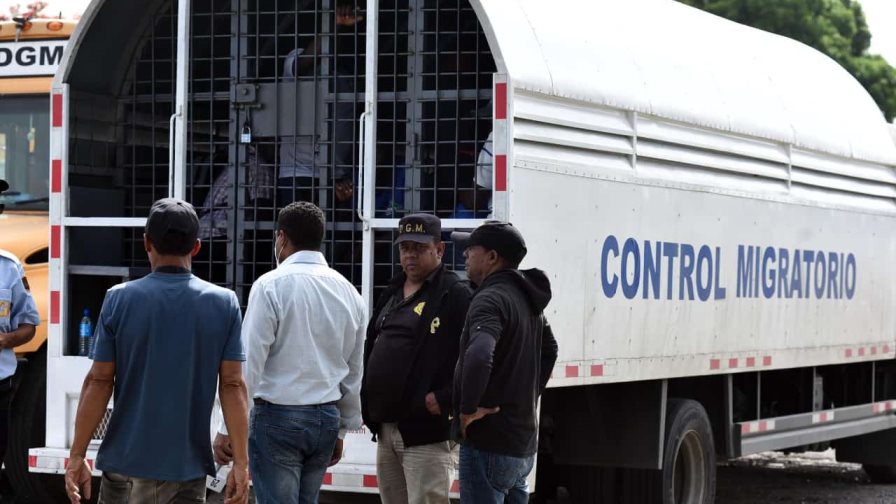
    Amnesty International has once again urged the Dominican government to abolish a controversial health protocol that ties medical treatment for undocumented Haitians to deportation. The organization labeled the policy as ‘unjustified’ and ‘discriminatory’ during the virtual launch of its report titled ‘Health Without Stigma: The Impact of Migration Policies on the Right to Health in the Dominican Republic.’ The report delves into how current migration policies are obstructing Haitian migrants’ access to healthcare.

    The findings are based on a comprehensive analysis of public health data, UNICEF reports, and interviews with health experts and Haitian patients. Amnesty International highlighted that the protocol’s requirements—such as ID verification, proof of residence, employment letters, and post-treatment deportation—contravene international human rights standards. These measures, the organization argues, deter Haitians from seeking medical care, perpetuate racial stereotypes, and amplify anti-Haitian sentiments, thereby undermining the fundamental right to health.

    Implemented in April, the protocol permits undocumented patients to receive medical treatment but mandates their deportation once they are medically stable. Amnesty International contends that this approach not only jeopardizes public health but also disproportionately impacts vulnerable populations. The organization has called on the Dominican government to revoke the protocol, cease the detention and deportation of Haitians seeking medical care, and ensure that immigration status does not hinder access to health services.