标签: Dominican Republic

多米尼加共和国

  • ONESVIE calls for stronger earthquake-resistant construction laws in the Dominican Republic

    ONESVIE calls for stronger earthquake-resistant construction laws in the Dominican Republic

    SANTO DOMINGO – In a critical move to address seismic vulnerability, the Dominican Republic’s National Office for Seismic Evaluation and Vulnerability of Infrastructure and Buildings (ONESVIE) is advocating for comprehensive legislative reforms to modernize the nation’s earthquake-resistant construction standards. The proposed measures aim to replace technical regulations that have remained unchanged since 1978, which officials deem dangerously obsolete given contemporary urban development challenges.

    Leonardo de Jesús Reyes Madera, Director General of ONESVIE, issued a stark warning regarding widespread non-compliance in the construction sector. He revealed that numerous structures have been erected without proper permits or adherence to existing standards, creating substantial public safety hazards. Reyes Madera emphasized that mandatory compliance is essential for both private developers and government-contracted projects, calling for intensified oversight by the Ministry of Housing and Construction.

    The director further criticized certain construction professionals for neglecting their ethical responsibilities, often bypassing even minimum seismic provisions. He argued that the current enforcement framework, based merely on a presidential decree, lacks the necessary legal authority for effective implementation. During an appearance on the AcentoTV program “¿Y tú… qué dices?”, Reyes Madera highlighted ONESVIE’s technical advisory role in assessing structural vulnerability while advocating for a strengthened culture of prevention, regulatory adherence, and professional accountability to safeguard communities in seismically active regions.


  • Company and owner receive RD$60 million penalty for environmental damage in Loma Redonda

    Company and owner receive RD$60 million penalty for environmental damage in Loma Redonda

    In a landmark environmental ruling, the Collegiate Court of San José de Ocoa has imposed substantial penalties against Agroforestal MACAPI, S.A. and its proprietor, agribusiness executive Manuel Castillo Pimentel, for severe ecological damage inflicted in the Loma Redonda region. The judicial decision mandates combined fines and compensation reaching 60 million Dominican pesos (approximately $1 million USD), alongside a two-year suspended prison term for Castillo Pimentel.

    Presiding Judge Alfis Brandeli Castillo Castillo delivered the verdict, which was formally communicated to the Public Ministry in December 2025 via the Specialized Prosecutor’s Office for Environmental and Natural Resources Defense (Proedemaren). The court found conclusive evidence of systematic violations of national environmental and forestry regulations, resulting in a 50 million peso fine payable to the Dominican State and an additional 10 million pesos allocated as civil compensation for moral damages. The suspended incarceration sentence operates under provisions outlined in the Criminal Procedure Code.

    Beyond financial penalties, the judicial order requires comprehensive ecological restoration of approximately 100 tareas (15.7 acres) of degraded land through a scientifically-grounded reforestation initiative using indigenous species. This rehabilitation effort will be conducted under strict supervision by the Ministry of Environment to ensure compliance. Prosecutorial evidence demonstrated that the defendants engaged in extensive deforestation activities, caused significant biodiversity loss, damaged critical water resources, and erected illegal infrastructure without authorization. This case establishes a powerful precedent for environmental accountability, highlighting the Dominican government’s strengthened resolve to prosecute ecological crimes with maximum judicial rigor.

  • Ministry of Culture announces first Cibao Regional Book and Culture Fair

    Ministry of Culture announces first Cibao Regional Book and Culture Fair

    SANTIAGO DE LOS CABALLEROS, DOMINICAN REPUBLIC – In a significant cultural development, the Dominican Ministry of Culture has unveiled comprehensive plans for the inaugural Cibao Regional Book and Culture Fair, scheduled to take place in April 2026. The landmark event was formally announced at the Gran Teatro del Cibao this Wednesday, marking a coordinated effort to promote literary engagement and showcase the diverse cultural tapestry of the nation’s northern region.

    Culture Minister Roberto Ángel Salcedo spearheaded the announcement alongside provincial governors, municipal leaders, legislators, and prominent cultural figures from across the participating provinces. Minister Salcedo characterized the fair as a profoundly democratic initiative designed to ensure equal participation from all 14 provinces comprising the Cibao region. The programming will emphasize regional traditions, cultural heritage, and intellectual discourse, with operational support provided by Vice President Raquel Peña’s office.

    The festival’s official inauguration is set for April 19, 2026, with extensive activities unfolding from April 20-26 across multiple cultural venues in Santiago. Key locations include the Gran Teatro del Cibao, Centro León, Banreservas Cultural Center, and Ercilia Pepín Cultural Center. The ambitious program will feature over 100 distinct events, a central exhibition pavilion representing all participating provinces, and daily dedications honoring two provinces in rotation.

    The 2026 edition will pay special tribute to Ulises Francisco Espaillat, commemorating the bicentennial of his birth. This historic fair represents the first centralized effort to celebrate Cibao’s unique cultural identity through coordinated programming that combines literary promotion with heritage preservation. Organizers anticipate substantial regional participation and international attention for this unprecedented cultural initiative.

  • RD Vial expands solar road lighting on key highways in the South

    RD Vial expands solar road lighting on key highways in the South

    Santo Domingo – In a significant infrastructure upgrade, the Dominican Republic is deploying state-of-the-art solar LED technology to illuminate critical highways in its southern region. This initiative, a core component of the National Road Lighting Plan administered by the RD Vial Trust, targets high-risk corridors historically plagued by poor visibility. The primary objectives are to drastically reduce nighttime traffic accidents and create safer, more efficient driving conditions on these vital national routes.

    Crews are currently executing the ambitious project across multiple segments of Highway 6 de Noviembre, a principal southern access route. The first phase (Section I) encompasses a 12-kilometer stretch from the Abanico de Herrera Bridge to Najayo, with lighting installed for both travel directions. The subsequent phase (Section II) adds another 14 kilometers of fully illuminated roadway. Upon completion, this effort will have outfitted 26 kilometers of highway with an estimated 680 solar-powered LED lamps, marking a transformative improvement in visibility and safety.

    Furthermore, the lighting plan extends to the recently inaugurated Baní Ring Road, a corridor of strategic importance. Here, approximately 360 solar LED lamps will be installed along 13 kilometers. Combined, these interventions in the southern region will illuminate more than 39 kilometers of road infrastructure with over 1,000 sustainable light units. This large-scale project underscores RD Vial’s dedication to implementing eco-friendly, energy-efficient solutions that bolster public safety and promote efficient nationwide mobility.

  • Abinader swears in oversight commission for sports works funded with recovered assets

    Abinader swears in oversight commission for sports works funded with recovered assets

    SANTO DOMINGO – In a significant move against corruption, Dominican President Luis Abinader officially inaugurated an oversight commission on Monday. This high-profile body will supervise sports infrastructure projects funded by more than RD$2 billion recovered from corrupt activities. The establishment of the commission represents a cornerstone of the administration’s pledge to enhance governmental transparency, ensure accountability, and improve the stewardship of public funds.

    The newly formed commission comprises a distinguished panel of national leaders. Its members include Dr. José Joaquín Puello, former head of the Dominican Olympic Committee; Dr. Milton Ray Guevara, ex-president of the Constitutional Court; Monsignor Héctor Rafael Rodríguez Rodríguez, Archbishop of Santiago and president of the Dominican Episcopal Conference; alongside communications experts Luisin Mejía, president of Centro Caribe Sport and an International Olympic Committee member, and Percio Maldonado. President Abinader emphasized the critical role of civilian oversight, asserting that the commissioners’ collective integrity and expertise will ensure transparent management throughout all project phases.

    Concurrent with the swearing-in ceremony, the government initiated the official bidding process for the construction projects. This step follows extensive technical evaluations conducted over several months by the Planning Directorate and the Ministry of Sports. The ambitious development plan encompasses a complete overhaul of the Olympic Center in San Pedro de Macorís, the reconstruction of the sports complex in San Juan de la Maguana, the erection of 23 multipurpose sports roofs in various municipalities, and a comprehensive rehabilitation of the Olympic Center in La Vega. Sports Minister Kelvin Cruz highlighted that these strategic investments are designed to address persistent infrastructure deficits and deliver profound social, cultural, and communal benefits, with a particular focus on empowering the nation’s youth and children.

  • Environment Ministry intervenes illegal Aremax mine after worker’s death

    Environment Ministry intervenes illegal Aremax mine after worker’s death

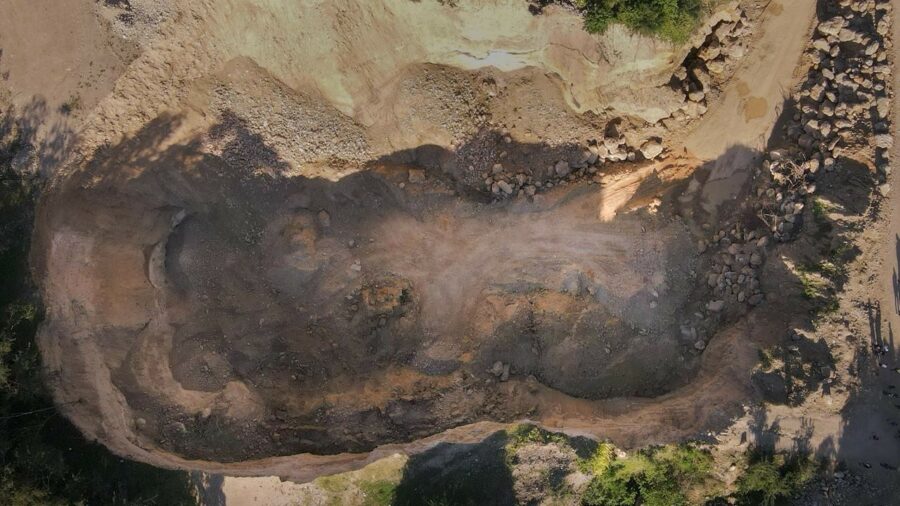
    SAN CRISTOBAL — In a decisive enforcement action, the Ministry of Environment and Natural Resources has intervened at the Aremax aggregate mine, which was found to be operating illegally after having been permanently shut down. This move comes in direct response to the tragic death of a worker last week during ongoing extraction activities at the prohibited site.

    Official records confirm that the mining company had previously been sanctioned and definitively closed in September of last year for two major violations: exceeding its legally authorized exploitation area and breaching the technical conditions stipulated in its environmental permit. Davis Aracena, Acting Deputy Minister of Soils and Water, characterized the company as a repeat offender under the nation’s environmental statutes. The operation now faces formal legal proceedings initiated by the Specialized Prosecutor’s Office for the Protection of the Environment and Natural Resources.

    Aracena emphasized that the National Environmental Protection Service (SENPA) must implement permanent surveillance mechanisms to prevent any resumption of illegal activities. Furthermore, the mine’s proprietors will be held fully accountable for comprehensive environmental remediation, including mandatory land restoration and large-scale reforestation of the damaged area, in strict compliance with existing regulations.

    During the intervention operation, Prosecutor Francisco Contreras confirmed that substantial evidence was secured to pursue criminal charges against those responsible. He noted that the case’s severity is significantly heightened by the worker’s fatality occurring at a facility that was officially non-operational. The enforcement operation received high-level support from SENPA Director Brigadier General Ángel Alfredo Camacho Ubiera and prominent environmentalist Luis Carvajal, both advocating for stringent penalties against environmental crimes.

    The Ministry has reiterated its unwavering commitment to safeguarding natural resources and human life, issuing a stern warning that it will continue to intensify oversight and enforcement measures against all illegal extractive ventures.

  • Observatory Report details structural irregularities in SENASA case

    Observatory Report details structural irregularities in SENASA case

    SANTO DOMINGO – A comprehensive investigation into the National Health Insurance Agency (SENASA) has revealed systematic corruption involving tens of millions of pesos in misappropriated public health funds. The damning findings were presented Tuesday at the Autonomous University of Santo Domingo (UASD) during the unveiling of the Seventh Report from the Observatory of Administrative Corruption Cases.

    Investigative journalist Edith Febles, who spearheaded the research, detailed a complex network of financial irregularities within the Dominican Republic’s healthcare system. The probe originated from an anonymous document that exposed multimillion-peso contracts, recurring payments, and suspicious financial benefits linked to health services.

    Initial assessments indicated approximately 75 million pesos in monthly questionable payments, but subsequent investigation uncovered the scheme’s true scale far exceeded early projections. The report identifies a consistent pattern of administrative opacity and deliberate lack of transparency within SENASA’s operations during the reviewed period.

    Field verification conducted across multiple provinces revealed that numerous contracted health services were never actually delivered to patients. Primary care centers and hospitals confirmed the existence of funded but non-operational structures, suggesting widespread ghost services within the system.

    The Observatory’s analysis concludes that these corrupt practices have directly compromised hospital financing mechanisms and degraded healthcare service quality nationwide. Researchers emphasized the critical need for enhanced oversight measures, greater transparency protocols, and strengthened accountability mechanisms for public health expenditure.

  • Santiago sees tourism and air connectivity gains after FITUR

    Santiago sees tourism and air connectivity gains after FITUR

    SANTIAGO DE LOS CABALLEROS, Dominican Republic – Mayor Ulises Rodríguez has confirmed that the city’s strategic involvement in Madrid’s International Tourism Fair (FITUR) is generating substantial economic returns, marked by enhanced tourism metrics, breakthrough aviation agreements, and elevated global standing. For the second year running, Santiago executed a coordinated presence at the premier event, uniting municipal leadership, private sector representatives, and development institutions in a unified promotional effort.

    The most notable achievement cited by Rodríguez is the definitive emergence of Santiago as a mature tourist destination, characterized by surging visitor numbers and consistently high occupancy rates across accommodation facilities. In a landmark development for regional connectivity, the mayor announced the establishment of three new direct flight routes linking Santiago’s Cibao International Airport directly with Madrid—a first-ever continuous air corridor to Europe. Further expanding its international access, Copa Airlines is commencing operations from Santiago this week, with an additional overseas route scheduled for imminent revelation.

    Beyond transportation infrastructure, Rodríguez emphasized the invaluable diplomatic and promotional value generated by high-level official visits. The recent choice of Santiago by Chile’s President-Elect José Antonio Kast and the Governor of New York State as a priority destination signals growing international confidence in the city’s ongoing revitalization. Transformative improvements in urban cleanliness, public organization, and developmental planning were highlighted as key factors driving this external validation. Concluding his assessment, Rodríguez credited the national administration of President Luis Abinader for providing the strategic vision and stable governance that have positioned both Santiago and the broader Dominican Republic as benchmarks for economic progress and democratic resilience.

  • Law 47-25 on Public Procurement takes effect this Wednesday

    Law 47-25 on Public Procurement takes effect this Wednesday

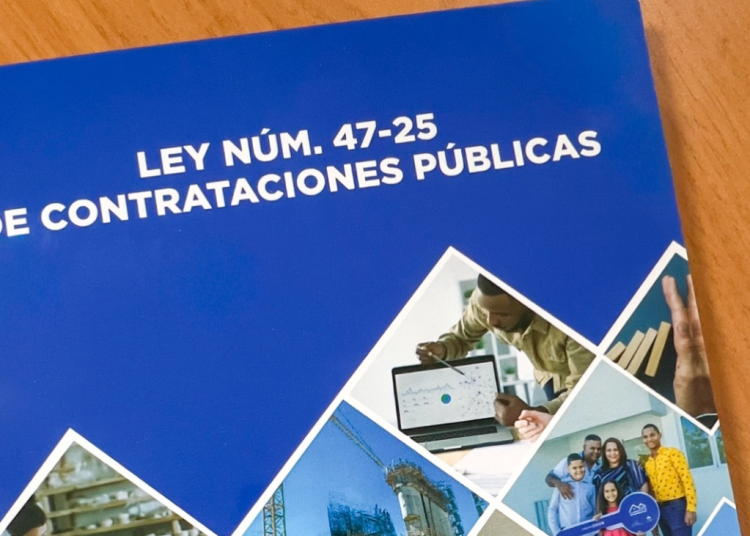
    SANTO DOMINGO – A transformative legal framework for public procurement, Law 47-25, officially takes effect in the Dominican Republic this Wednesday. The legislation, promulgated by President Luis Abinader on July 28 of the previous year, completes its mandatory 180-day waiting period, marking a significant milestone in the nation’s governance and fiscal management.

    To inaugurate the law’s implementation, President Abinader will preside over a ceremony to sign the decree that approves its General Application Regulation. This crucial regulatory document outlines the specific standards, establishes clear timelines, and delineates the responsibilities necessary for the effective execution of the new legal framework across all government entities.

    The General Directorate of Public Procurement (DGCP) has characterized the new regulation as the operational engine that translates the law’s foundational principles into concrete, actionable procedures. The agency has designed a gradual, supportive implementation strategy to ensure a smooth transition. This comprehensive plan includes extensive training programs and continuous technical support from the DGCP to purchasing units within all public institutions, aiming for universal compliance and preventing any administrative lag.

    Carlos Pimentel, the Director of the DGCP, underscored the strategic value of this phased approach, stating it provides essential legal certainty and unambiguous guidance for every participant in the public procurement ecosystem.

    In a further step to cement the rollout, the DGCP is set to issue a detailed resolution this Thursday, which will articulate the subsequent institutional steps required for the law’s proper enforcement.

    Law 47-25 introduces a suite of profound reforms designed to modernize state purchasing. Key provisions include a substantial increase in the procurement budget reserved for Micro, Small, and Medium-sized Enterprises (MSMEs), particularly those owned by women, raising the mandatory allocation from 20% to 30%. The legislation also fortifies sanctions to combat corruption, institutes novel contracting modalities, and mandates the exclusive use of the Electronic Public Procurement System (SECP) to enhance transparency. Furthermore, the law innovatively integrates environmental and sustainability criteria into the government’s procurement decision-making process, aligning national spending with broader ecological goals.

  • President Abinader declares 2026 “the year of Samaná”

    President Abinader declares 2026 “the year of Samaná”

    President Luis Abinader has articulated a bold vision to position the province of Samaná as a cornerstone of the Dominican Republic’s tourism and economic expansion. Speaking via telephone during the inauguration ceremony of the Juan Pablo Duarte Central Park, the president designated 2026 as \”the year of Samaná,\\” a declaration underpinned by a series of transformative infrastructure initiatives.\n\nThe centerpiece of this development strategy involves the complete operational launch of the port in Samaná Bay, coupled with the commencement of activities at a new tourist dock in Arroyo Barril. President Abinader projected that these two maritime projects alone are poised to create a substantial number of employment opportunities, encompassing thousands of both direct and indirect jobs. This infrastructural boost is designed to not only amplify the tourism sector but also to synergize with the existing economic vitality observed in neighboring areas such as Las Terrenas and broader northern territories.\n\nBeyond maritime logistics, the inauguration of the central park itself signifies a critical component of a larger urban revitalization campaign. The president extended commendations to the Ministry of Tourism, provincial officials, and the local community for their roles in this achievement. This project is a dual-purpose endeavor, aiming to elevate the everyday living standards for inhabitants while simultaneously augmenting the province’s appeal to international visitors, thereby creating a more sustainable and attractive destination.