标签: Dominican Republic

多米尼加共和国

  • International experts validate Dominican Republic’s advances in hunger reduction

    International experts validate Dominican Republic’s advances in hunger reduction

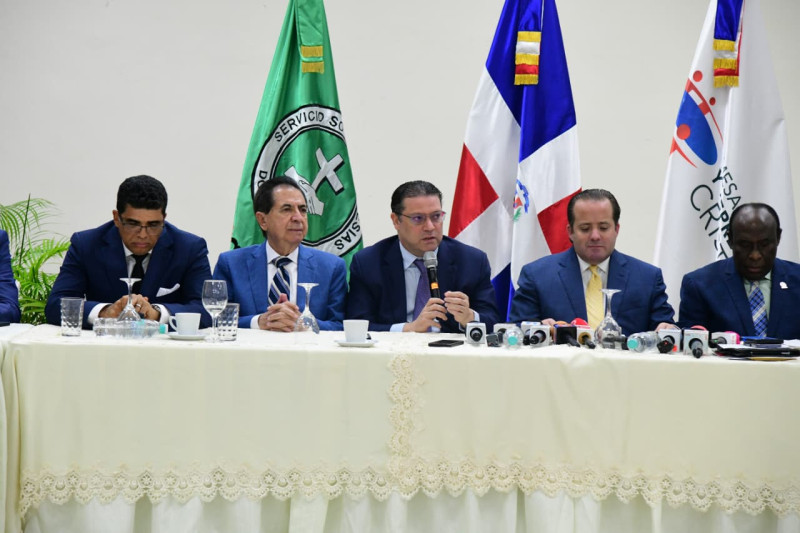
    SANTO DOMINGO – The Dominican Republic’s comprehensive approach to combating food insecurity has garnered international recognition from one of the world’s foremost authorities on hunger eradication. Brazilian economist José Graziano da Silva, former Director-General of the UN Food and Agriculture Organization (FAO), delivered a keynote address at the National Palace this Wednesday with President Luis Abinader and Vice President Raquel Peña in attendance.

    Graziano, a globally respected figure in food security policy, specifically praised the nation’s innovative school feeding program as a replicable model demonstrating significant social and economic benefits. He highlighted the program’s strategic design of sourcing provisions through public procurement from local producers and family farms, which simultaneously addresses child nutrition and stimulates rural economic development.

    Emphasizing the necessity of building equitable and sustainable food systems, Graziano issued a cautionary note on the dangers of rising global consumption of ultra-processed foods, advocating instead for diets rich in fresh, locally-sourced products. His visit, spanning from February 16 to 22, is aimed at bolstering the country’s national strategy to eliminate hunger entirely.

    Providing concrete evidence of progress, Minister of the Presidency José Ignacio Paliza announced a landmark achievement: the national undernourishment rate has plummeted to a historic low of 3.6% in 2025. This figure places the Dominican Republic below the regional average and positions it firmly on course to be removed from the global hunger map before the 2028 deadline.

    Minister Paliza detailed the multi-faceted policies driving this success, which include robust economic growth, a substantial 20% increase in the private-sector minimum wage, and the expansion of key social programs. The ‘Supérate’ initiative, particularly its ‘Aliméntate’ card component, now supports approximately 1.5 million households. Furthermore, the network of Economic Dining Halls has seen a dramatic expansion from 35 to 134 locations across the country.
    A critical statistic underpinning this success is that 90.6% of all food consumed domestically is produced locally. The national School Feeding Program, a cornerstone of the strategy, ensures that over two million students receive 70% of their daily nutritional requirements, cementing food security as a pillar of national development.

  • Dominican Republic ranks second in Latin America for tourist arrivals in 2025

    Dominican Republic ranks second in Latin America for tourist arrivals in 2025

    The Dominican Republic has solidified its status as a tourism powerhouse, achieving the position of Latin America’s second most visited destination in 2025 according to the latest UN Tourism rankings. With an impressive 11.6 million international visitors recorded throughout the year, the Caribbean nation trails only Mexico in regional tourism popularity.

    UN Tourism data reveals that Latin America experienced robust recovery and growth in international arrivals throughout 2025, outperforming many other global regions. This resurgence underscores tourism’s critical function as an economic catalyst across Latin American nations, fueled by exceptional natural landscapes, rich cultural heritage, diverse culinary offerings, and continuously developing tourism infrastructure.

    The Dominican Republic’s tourism sector serves as a fundamental component of national economic strategy, driving substantial foreign exchange earnings and supporting widespread employment. The country’s consistent performance highlights its successful positioning within the competitive global tourism market.

    The regional ranking for 2025 places Mexico at the forefront, followed by the Dominican Republic, Brazil, Colombia, Chile, Argentina, Peru, Guatemala, Costa Rica, and Panama. This distinguished list demonstrates Latin America’s ascending prominence within international tourism circuits, with these ten nations collectively attracting millions of visitors and significantly contributing to regional economic development.

  • Abinader appoints Andrés Modesto Cruz Cruz as new director of the National Police

    Abinader appoints Andrés Modesto Cruz Cruz as new director of the National Police

    SANTO DOMINGO – In a significant leadership overhaul of the nation’s law enforcement apparatus, President Luis Abinader has enacted Decree No. 111-26, orchestrating a high-level transition within the Dominican National Police. The presidential mandate elevates Andrés Modesto Cruz Cruz to the rank of Major General and instates him as the institution’s new Director General.

    The executive decision, grounded in the constitutional authority vested in Articles 255 and 256 of the Constitution and further empowered by Law No. 590-16 (the Organic Law of the National Police), facilitates the President’s prerogative to designate the force’s commander from its active general officers. The decree simultaneously nullifies the preceding Article 1 of Decree No. 557-23. In a corresponding move, the outgoing police chief, Ramón Antonio Guzmán Peralta, was honorably retired upon the conclusion of his tenure and subsequently appointed as a Presidential Advisor on police matters.

    Major General Cruz Cruz ascends to this pivotal role equipped with a distinguished and multifaceted career in institutional command, oversight, and internal regulatory functions. His immediate prior position was Inspector General of the National Police (2023–2026). His extensive resume includes key leadership posts such as Director of Internal Affairs, Southern Regional Director, liaison officer coordinating between the Ministry of Defense and the National Police, and Director of Internal Control.

    Academically, Cruz Cruz is a qualified engineer, an alumnus of the Pedro Henríquez Ureña National University (UNPHU). He further holds a master’s degree in Defense and National Security from the esteemed Higher Institute for Defense “General Juan Pablo Duarte y Díez.” His professional expertise has been honed through specialized international training programs in transformational leadership, criminal investigation, crisis management, energy security, dignitary protection, and international cooperation, with certifications obtained from institutions in the United States, Israel, and Colombia.

    His decorated service has been acknowledged with numerous national honors, including the prestigious Medal of Merit for Public Servants (First Category), alongside distinguished accolades from both the Armed Forces and the National Police, celebrating his unwavering dedication and contributions to fortifying national institutions.

  • Dominican Ambassador Andy Rodríguez Durán presents Credentials to Sultan of Oman

    Dominican Ambassador Andy Rodríguez Durán presents Credentials to Sultan of Oman

    In a landmark development for Caribbean-Middle Eastern relations, Ambassador Andy Rodríguez Durán has formally presented his credentials as the Dominican Republic’s first non-resident ambassador to the Sultanate of Oman. The historic accreditation ceremony took place at Al Baraka Palace, where Ambassador Rodríguez Durán was received by Sultan Haitham bin Tariq Al Said in a meeting characterized by mutual respect and diplomatic warmth.

    The ceremony marked a significant expansion of the Dominican Republic’s diplomatic footprint in the Gulf region, with Ambassador Rodríguez Durán conveying personal greetings from President Luis Abinader to the Omani leadership. The discussions emphasized both nations’ commitment to enhancing bilateral cooperation across multiple sectors of mutual interest.

    The event saw participation from a diverse cohort of international diplomats, with ambassadors from New Zealand, Belarus, Vietnam, Cuba, Australia, Singapore, Greece, Zimbabwe, and the Czech Republic simultaneously presenting their credentials. Sultan Haitham bin Tariq personally welcomed each envoy, expressing gratitude for the messages from their respective heads of state while pledging full support from the Omani government and citizens to facilitate their diplomatic missions.

    The high-profile gathering was attended by key Omani officials including Sayyid Khalid bin Hilal Al Busaidi, Minister of the Royal Palace Office, and Sayyid Badr bin Hamad Al Busaidi, Minister of Foreign Affairs. Ambassador Rodríguez Durán, who maintains additional accreditation as head of mission in Saudi Arabia with concurrent responsibilities for Djibouti and Bahrain, was accompanied by Second Secretary Fadi Haddad during the proceedings.

  • What are Therians and why are they trending in the Dominican Republic?

    What are Therians and why are they trending in the Dominican Republic?

    SANTO DOMINGO – A previously obscure internet subculture has ignited widespread public discourse in the Dominican Republic after plans for the nation’s first therian gathering surfaced online. The phenomenon, centered around individuals who identify spiritually or psychologically as animals, has rapidly transitioned from digital niches into mainstream national conversation.

    The debate was catalyzed by a viral video featuring a young Dominican man announcing a ‘therian meetup’ while visibly wearing a tail. This clip generated a spectrum of reactions across social media platforms, ranging from genuine curiosity and humor to deeper philosophical discussions about identity and generational shifts in self-expression. Accompanying the video, digital invitations for a potential in-person meeting began circulating, signaling the community’s first attempt at physical organization.

    While the actual event remains unconfirmed, its announcement alone has propelled therianthropy into the forefront of public awareness. This development underscores how digital-born trends can rapidly influence offline societal discourse when they bridge the online-offline divide. The therian movement, with roots in 1990s online forums deriving its name from the Greek word ‘thērion’ (beast), has gained international traction through platforms like TikTok and Instagram, where adherents share content mimicking animal behaviors or explaining their deep connections to specific species.

    Therians consistently emphasize that their identity transcends costume or performance, representing instead a profound internal alignment with animals such as wolves, foxes, or felines. Within the Dominican context, societal reactions have revealed significant cultural divisions. Some commentators perceive the trend as a legitimate new form of youth expression and community formation, while others dismiss it as a transient viral phenomenon or view it with open skepticism. This national conversation has effectively transformed therians from an foreign digital curiosity into a subject of local relevance, marking a significant moment in the country’s engagement with global internet subcultures.

  • Archaeologists discover 13 human skeletons at Pueblo Viejo in search for cacique Enriquillo

    Archaeologists discover 13 human skeletons at Pueblo Viejo in search for cacique Enriquillo

    A significant archaeological breakthrough has emerged from the Dominican Republic, where researchers have unearthed 13 complete human skeletons at the Pueblo Viejo archaeological site. The discovery forms part of the scientific initiative “Following the Remains of cacique Enriquillo,” which builds upon over a decade of multidisciplinary investigation combining historical documentation and archaeological fieldwork.

    Under the technical coordination of Dominican archaeologist Kathleen Martínez, the project has implemented rigorous international standards previously absent at Pueblo Viejo. The excavation process involved technically complex stratigraphic recording and comprehensive documentation of ruins, significantly advancing the scientific understanding of the site.

    While definitive conclusions remain premature, the research team has initiated sophisticated analysis protocols. Spanish forensic specialist Víctor Barrera Alarcón is leading anthropological examinations to determine sex, age, and physical characteristics of the unearthed individuals. The investigation will employ ancient mitochondrial DNA analysis through laboratories in the Dominican Republic and potentially Costa Rica to establish lineage and ancestry patterns. Carbon-14 dating methodologies may supplement stratigraphic findings where necessary.

    The project represents a collaborative effort supported by the Macarrulla Foundation and the General Directorate of Strategic and Special Projects of the Presidency (PROPEEP), highlighting its national scientific importance. Beyond the specific objective of locating remains associated with cacique Enriquillo, the initiative aims to preserve and enhance the entire Pueblo Viejo archaeological site while facilitating knowledge transfer to Dominican professionals through internationally recognized methodologies.

    Local community engagement has been instrumental in the project’s advancement, with academic results expected to contribute to both domestic and international scholarly discourse regarding the region’s historical and cultural heritage.

  • Spain extradites Dominican man wanted for murder in the Dominican Republic

    Spain extradites Dominican man wanted for murder in the Dominican Republic

    In a significant international law enforcement collaboration, Spanish authorities have extradited Miguel Ángel Álvarez García to the Dominican Republic to face serious criminal charges. The suspect, who operated under multiple aliases, stands accused of orchestrating the fatal shooting of Cristofer Díaz Rodríguez in Santo Domingo’s Ensanche La Fe neighborhood on November 6, 2024.

    Álvarez García arrived at Las Américas International Airport under heavy security escort by OCN-Interpol Santo Domingo operatives. He was immediately transferred to the National District Prosecutor’s Office where judicial proceedings commenced without delay. The extradition marks the culmination of a complex legal process involving meticulous coordination between European and Caribbean judicial systems.

    According to investigative documents, the alleged murder plot involved multiple accomplices. Sandy Gabriel Alcántara, identified as the triggman nicknamed ‘Chamaco,’ reportedly executed the shooting under Álvarez García’s direction. The criminal network allegedly included Manuel Antonio Mora, currently in pretrial detention, and two additional suspects who remain fugitives from justice.

    The successful transnational operation was coordinated through the Public Ministry’s Directorate of International Legal Assistance, Extraditions and Human Rights in partnership with the National District Prosecutor’s Office. Dominican officials formally expressed gratitude to Spanish authorities for their cooperation in apprehending the fugitive, who had fled to Spain following the commission of the crime.

    Álvarez García now faces comprehensive charges under the Dominican Penal Code including homicide and violations of national firearms regulations. The case demonstrates growing international judicial cooperation in combating transnational criminal networks and ensuring accountability for violent crimes across jurisdictions.

  • Abinader delivers new military and emergency equipment to strengthen national security

    Abinader delivers new military and emergency equipment to strengthen national security

    SANTO DOMINGO – In a landmark ceremony underscoring a significant leap in national defense capabilities, President Luis Abinader has officially commissioned a comprehensive suite of advanced military and emergency response assets for the Dominican Armed Forces. This strategic delivery forms a critical component of the nation’s ongoing, state-led modernization initiative designed to fortify territorial integrity, enhance public safety, and boost operational readiness.

    The event marked the rollout of a new fleet of operational vehicles, the first installment of a procurement program extending to 2026. These vehicles are engineered for a diverse range of duties, including high-risk patrols, efficient troop transportation, and critical logistical support, thereby dramatically improving strategic mobility across diverse Dominican terrain.

    A historic highlight was the unveiling of three FURIA VBD-1 armored vehicles. These units represent a monumental achievement for the domestic defense industry, being the first armored platforms entirely assembled within the Dominican Republic, signaling a new era in local military manufacturing and technological self-reliance.

    President Abinader emphasized the transformative impact of the new assets, stating, “This equipment positions our Armed Forces at an unprecedented level of operational capacity. We are delivering tools that will profoundly contribute to our continuous modernization journey.”

    Beyond ground vehicles, the technological upgrade is substantial. The forces have integrated autonomous reconnaissance drones for enhanced land and maritime surveillance. Complementing this are sophisticated anti-drone systems, providing a critical defensive layer with the capability to detect, track, and neutralize unauthorized unmanned aerial intrusions, thereby solidifying national airspace control.

    The arsenal was further expanded with the provision of specialized weaponry for elite tactical units, including high-precision rifles, grenade launchers, submachine guns, and heavy machine guns.

    Recognizing the dual role of the military in security and civil protection, the government also bolstered the Specialized Disaster Mitigation Corps (CEMED). The new equipment includes a state-of-the-art urban fire truck, a specialized unit for combating forest fires, and a advanced search-and-rescue vehicle, significantly upgrading national emergency response capabilities.

  • U.S. veterans file US$1M lawsuit over medical tourism project in Jarabacoa

    U.S. veterans file US$1M lawsuit over medical tourism project in Jarabacoa

    Two decorated US Army veterans have initiated legal proceedings in Dominican courts against local entrepreneur Gerineldo de los Santos Martínez, alleging fraudulent activities and breach of trust involving over $1 million in investments for a proposed medical and eco-wellness tourism complex in Jarabacoa.

    Alfredo Antonio Cordero Camacho and Terry Wayne Wheat Jr., co-founders of Veterans Community Care Abroad (VCCA), assert that their business partner failed to honor contractual commitments essential for their project’s expansion. VCCA, which has successfully operated healthcare clinics in Bávaro and Punta Cana since 2022, provides comprehensive medical services to US veterans residing in or visiting the Dominican Republic.

    Court documents reveal the plaintiffs suffered substantial financial losses due to multiple contractual violations, including incomplete construction work, suspected structural defects, unfulfilled investment obligations, and the critical failure to transfer approximately 50,000 square meters of land valued at RD$170 million (roughly $2.8 million). This land was intended as Martínez’s contribution to their joint venture developing the specialized medical complex.

    The ambitious project envisioned combining advanced healthcare facilities with eco-friendly accommodations and wellness retreats, leveraging Jarabacoa’s mountainous terrain and temperate climate to create an optimal environment for physical rehabilitation and psychological recovery programs.

    Despite making scheduled payments in both Dominican pesos and US dollars, and initiating preliminary development work, the veterans claim their partner never completed the agreed-upon land transfers or construction, effectively halting the project’s progression. The plaintiffs emphasized their legal action seeks accountability and investment protection rather than casting aspersions on the Dominican Republic’s overall investment climate. The case remains active in Dominican judicial proceedings.

  • Food prices lead January inflation rise in Dominican Republic

    Food prices lead January inflation rise in Dominican Republic

    The Dominican Republic’s Central Bank has reported a 0.4% monthly inflation rate for January, elevating the annual inflation figure to 4.98%. This sustained inflationary pattern continues to operate within the institution’s established target corridor of 4.0% ± 1.0% for an unprecedented 32nd consecutive month.

    The primary catalyst for January’s price escalation emerged from the food and non-alcoholic beverage sector, which experienced a 0.68% increase and contributed nearly half (45.7%) of the overall monthly inflation. Significant supplementary pressures originated from restaurants and hotels (1.13%), education services (1.79%), miscellaneous goods and services (0.34%), and housing costs (0.26%).

    A notable mitigating factor arrived through transportation expenses, which declined by 0.28% during the same period, providing partial counterbalance to the overall Consumer Price Index ascent.

    Monetary authorities highlighted core inflation—excluding volatile components such as food items, fuels, regulated services, alcohol, and tobacco—which maintained a year-on-year rate of 4.89%. This metric, closely monitored by policymakers for underlying inflation trends, demonstrates the economy’s persistent but controlled inflationary environment. The annual inflation closure at 4.95% for 2025 confirms the Dominican Republic’s continued macroeconomic stability within its targeted parameters.