标签: Dominican Republic

多米尼加共和国

  • U.S. Ambassador hosts Dominican delegation aboard USS Nimitz

    U.S. Ambassador hosts Dominican delegation aboard USS Nimitz

    A senior cross-government delegation from the Dominican Republic has conducted an official visit to the USS Nimitz (CVN-68), the U.S. Navy’s iconic nuclear-powered aircraft carrier, during the vessel’s 2026 Southern Seas deployment in the Caribbean. The trip marks a clear step forward in deepening longstanding bilateral cooperation and strategic security links between the Dominican Republic and the United States.

    The visit was jointly organized by Leah Campos, the U.S. Ambassador to the Dominican Republic, and senior leadership from U.S. Southern Command. The Dominican delegation brought together top civilian and military officials from across the country’s security and economic agencies, including Tourism Minister David Collado, Defense Minister Lieutenant General Carlos Antonio Fernández Onofre, National Drug Control Directorate President Vice Admiral José Manuel Cabrera Ulloa, and National Intelligence Directorate Executive Director Luis Soto, alongside senior members of the Dominican Armed Forces General Staff.

    The official program launched at San Isidro Air Base in the Dominican Republic, where the delegation gathered before being transferred by air to the anchored Nimitz. On arrival, the group was formally greeted by Captain Joseph J. Furco, the commanding officer of one of the U.S. Navy’s most strategically critical capital ships. Over the course of a comprehensive guided tour of the 100,000-ton vessel, Dominican officials held closed-door working meetings with senior U.S. naval commanders, and gained first-hand insight into the carrier’s advanced operational capabilities, day-to-day deployment protocols, and core strategic role within the broader U.S. Atlantic fleet.

    In remarks delivered during the tour, Ambassador Campos underscored the depth of the bilateral relationship between the two nations, stressing that ongoing collaboration across priority areas remains central to shared regional goals. “The bond between the United States and the Dominican Republic is unshakable,” Campos stated. “Our aligned work on security, cross-border trade, inclusive economic development, and people-to-people exchange lays the groundwork for a safer, more prosperous future for the citizens of both our countries.”

    She further noted that the high-profile visit to the Nimitz is a tangible demonstration of the United States’ sustained commitment to partnering closely with Dominican counterparts to tackle transnational shared challenges, from irregular migration to drug trafficking, and advance broader stability across the Caribbean and Latin American region.

    According to senior officials from both sides who participated in the event, the entire visit unfolded in an atmosphere of open goodwill and mutual cooperation. The engagement is expected to further solidify the decades-long friendship and strategic partnership that has defined relations between the United States and the Dominican Republic for generations.

  • Abinader guarantees support for flour industry to help stabilize bread costs

    Abinader guarantees support for flour industry to help stabilize bread costs

    On the occasion of the 37th Ordinary General Assembly of the Union of Medium and Small Flour Industries (UMPIH) held in Santo Domingo, Dominican Republic President Luis Abinader stood before industry stakeholders to restate his administration’s unwavering backing for the nation’s flour-processing industry. In his address, he outlined a continued package of government assistance, encompassing upgraded equipment access, targeted technical guidance, and coordinated public-private collaboration—all designed to preserve accessible bread prices for households across the country.

    Abinader emphasized that the domestic flour sector holds significant weight in the Dominican Republic’s broader economic ecosystem, noting that its stable operation directly impacts the food security and cost of living for millions of citizens. He committed to ongoing joint problem-solving between the government and flour producers, working collectively to navigate emerging industry challenges and guarantee a consistent, reliable supply of this staple food product. Beyond the flour sector, the president also expressed guarded optimism about the country’s overall economic trajectory, highlighting sustained expansion across key growth drivers including international tourism, export-focused free trade zones, and incoming foreign direct investment.

    Eduardo “Yayo” Sanz Lovatón, the nation’s Minister of Industry, Commerce and Micro, Small and Medium-sized Enterprises (MSMEs), expanded on the administration’s collaborative approach with the flour industry. He detailed that more than 500 targeted training programs focused on business automation have already been rolled out to small and medium flour producers, equipping them with tools to modernize operations and boost long-term competitiveness. Sanz Lovatón framed the domestic flour-processing sector as a strategically critical component of national development, noting that intentional government support will allow firms to scale their output while keeping bread prices fair and sustainable for consumers.

    During the course of the general assembly, UMPIH President José Radhamés Bruno extended public gratitude to the administration for its consistent backing of the sector. He also announced that this year’s gathering is dedicated to Rafael Sánchez, the organization’s pioneering historic leader. Fernando Pinales, president of the Dominican Confederation of Micro, Small and Medium Enterprises (CODOPYME), further commended Abinader for maintaining an open, transparent channel of dialogue between the government and small-scale food producers. In a closing recognition ceremony, President Abinader, Minister Sanz Lovatón, and National Institute of School Meals (INABIE) Executive Director Rafael Adolfo Pérez all received honorary plaques in acknowledgment of their key contributions to the growth and development of the Dominican flour industry.

  • Toll revenues reach RD$5.78 billion between January and May

    Toll revenues reach RD$5.78 billion between January and May

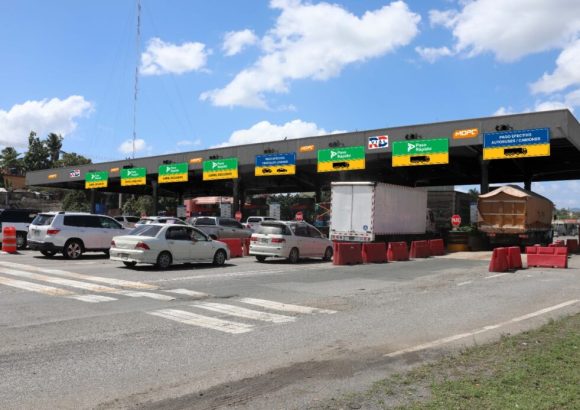
    In the Dominican Republic’s capital of Santo Domingo, the RD Vial Trust has released new revenue data showing strong growth in toll collections through the first five months of 2026, marking a steady stream of funding for the nation’s ongoing road infrastructure overhaul. The trust announced that total toll revenue hit RD$5.78 billion between January and May, generated by more than 42.3 million vehicle passages across the country’s 17 active toll stations.

    Hostos Rizik, the director of RD Vial, shared that monthly averages for both revenue and traffic have held consistent through the opening months of the year. Average monthly toll collections come out to more than RD$1.15 billion, while the network sees an average of 8.4 million vehicle crossings each month. Rizik emphasized that the vast majority of these toll funds are earmarked for financing, expanding, and building critical roadway projects managed by the Dominican Ministry of Public Works and Communications (MOPC).

    From January to April 2026 alone, total infrastructure investments drawn from RD Vial toll collections topped RD$3.08 billion. Looking back to 2021, cumulative infrastructure investments funded by the trust have reached approximately RD$59.3 billion, supporting major roadway upgrades and new constructions in every region of the country. Current active projects receiving funding include the Navarrete Bypass, which has secured RD$1.57 billion in allocations, a comprehensive improvement plan for Ecological Avenue with RD$777.2 million in funding, and upgrades to the Las Américas Highway with RD$560.2 million. Additional ongoing works are the La Otra Banda Bypass in the La Altagracia region and the Azua Bypass.

    Overall, the full portfolio of upcoming and active infrastructure projects overseen by RD Vial carries a total valuation of RD$38.7 billion. Flagship projects in the pipeline include the large-scale Amber Highway, which has an allocated budget of RD$32 billion, alongside plans for new overpasses along the busy Duarte Highway and the expansion of Sánchez Avenue. When breaking down revenue by individual toll plazas, the Duarte Highway facility outperformed all others in the five-month period, pulling in RD$784.2 million from more than six million vehicle crossings. It was followed in revenue by the Las Américas toll plaza and Section I of the Santo Domingo Ring Road.

    For the Dominican Republic, the national toll network remains a foundational, reliable source of funding for the ongoing modernization and expansion of the country’s road system, supporting long-term connectivity and economic development across the nation.

  • Carolina Mejía declares herself ready to take on the presidency

    Carolina Mejía declares herself ready to take on the presidency

    In a gathering of party leadership and grassroots supporters focused on accountability held in San Cristóbal, Carolina Mejía — general secretary of the Modern Revolutionary Party (PRM) and a leading contender for the party’s upcoming presidential nomination — has publicly reaffirmed her readiness to embrace new national political challenges and sustain her work to advance the Dominican Republic’s progress.

    Speaking directly to assembled PRM members at the event, Mejía pushed back against narratives that frame internal party ambition as a top priority, outlining that the organization’s core mission is rooted in two non-negotiable goals: protecting the PRM’s long-term institutional future and driving inclusive national development. She underscored that activists who have worked tirelessly to deliver the PRM’s electoral wins deserve equal access to the benefits of those victories, and restated her unwavering commitment to upholding the foundational values that have allowed the party to expand its influence and legitimacy across the country.

    Mejía reflected on her eight-year tenure as the PRM’s general secretary, a period during which she worked closely with party figure José Ignacio Paliza to build out the party’s national organizational infrastructure. She noted that this collaborative institutional strengthening directly paved the way for the PRM’s two consecutive presidential election victories, which have put incumbent President Luis Abinader in office. She also made a formal pledge to continue supporting the Abinader administration’s policy achievements, while working to build a more cohesive, connected political organization that bridges gaps between national leadership and local communities.

    The accountability event drew a cross-section of key political stakeholders from across the San Cristóbal region, including sitting local officials, national legislators, municipal government leaders, and grassroots party organizers. Mejía attributed the PRM’s steady national expansion not to top-down leadership alone, but to the consistent dedication of the party’s base: grassroots members, young activists, women organizers, and local community leaders. She closed by emphasizing that the loyalty and commitment of these on-the-ground actors will remain indispensable to both strengthening the PRM as an institution and moving forward transformative national development goals.

  • Iberojet launches direct flights between Barcelona and Punta Cana for summer 2026

    Iberojet launches direct flights between Barcelona and Punta Cana for summer 2026

    Caribbean tourism’s leading sun-and-sea destination, Punta Cana, is set to gain a new direct air link to Europe this summer, as Spanish leisure carrier Iberojet prepares to launch its first nonstop service between Barcelona and the Dominican resort hub starting June 21. The new route, timed to expand connectivity between Spain and the Dominican Republic ahead of the 2026 peak summer travel season, will operate on a weekly Sunday schedule through the end of September, giving vacationers and other travelers a seamless, connection-free route to one of the Caribbean’s most sought-after getaways.

    This new Barcelona departure marks the third Iberian Peninsula gateway to the Dominican Republic in Iberojet’s growing route network, which already offers year-round nonstop flights from Madrid (Spain) and Lisbon (Portugal). By adding the Catalan capital to its route map, the airline is positioning itself to meet surging demand across three distinct traveler segments: international tourists seeking easy access to Punta Cana’s beaches, business travelers moving between the two markets, and Dominican diaspora members residing across Spain who want more convenient travel options to visit home.

    The new service carries particular significance for the large Dominican community based in Catalonia, who previously had to travel to Madrid or connect through other European hubs to reach the Dominican Republic. The nonstop route cuts out layover delays and extra travel time, creating a far more convenient journey between the two countries. Beyond serving resident communities, industry leaders expect the new flight to drive a measurable uptick in tourist arrivals to Punta Cana during the busiest summer travel months, supporting local hospitality and service businesses.

    As a subsidiary of Ávoris Corporación Empresarial, the travel division of global tourism group Barceló Group, Iberojet operates a contemporary fleet of Airbus commercial aircraft spanning wide-body models including the A350 and A330, plus the narrow-body A320 for shorter-haul services. Company representatives emphasized that the launch of the Barcelona-Punta Cana route aligns with the carrier’s long-term strategy to strengthen strategic air connections between the Dominican Republic and key source markets across Europe, cementing its position as a leading provider of transatlantic leisure travel to the Caribbean.

  • AMCHAMDR joins regional leaders at BFA 2026 Conference

    AMCHAMDR joins regional leaders at BFA 2026 Conference

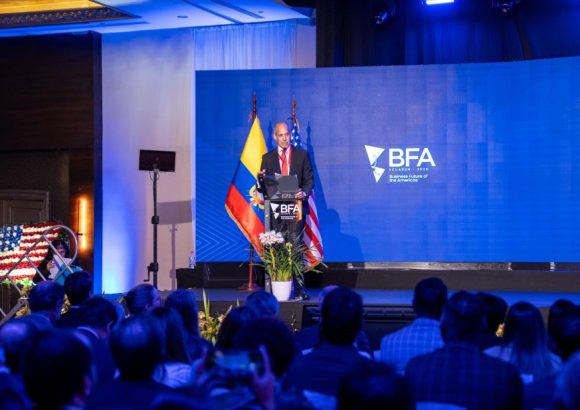
    The 2026 Business Future of the Americas (BFA) summit, one of the Western Hemisphere’s most high-profile collaborative business gatherings, has brought over 300 cross-sector leaders from more than 20 nations to Quito, Ecuador, with the American Chamber of Commerce of the Dominican Republic (AMCHAMDR) among the key participating delegations. This year’s convening, focused on tackling pressing topics ranging from cross-border trade to regional investment and hemispheric security, was hosted by AMCHAM Quito in strategic partnership with the U.S. Chamber of Commerce and the Association of American Chambers of Commerce in Latin America and the Caribbean (AACCLA).

    High-level stakeholders anchored the summit’s opening and core discussions, including Ecuadorian President Daniel Noboa, senior members of Ecuador’s national government, and official representatives from the U.S. Department of State and the U.S. Embassy in Ecuador. Central to the summit’s agenda was the goal of deepening robust economic ties between the United States and the broader Latin American region, while framing intentional public-private partnership as the most impactful engine for inclusive growth and long-term regional stability.

    In his keynote remarks, Edwin De los Santos, current AACCLA Chairman and former president of AMCHAMDR, underscored three non-negotiable pillars for lasting economic progress: consistent regional security, institutional trust that fosters stakeholder confidence, and unwavering adherence to the rule of law. All three, he emphasized, are foundational to attracting foreign direct investment and supporting equitable, sustainable development across the hemisphere. Beyond these core themes, targeted panel sessions delved into a range of timely, high-stakes topics: building more resilient global supply chains, strengthening cross-regional energy security, accelerating inclusive digital transformation, upgrading cross-sector cybersecurity infrastructure, and leveraging the growing influence of artificial intelligence to boost Latin America’s global competitive standing.

    William Malamud, Executive Vice President of AMCHAMDR, noted that every topic on the 2026 BFA agenda aligns directly with the Dominican chamber’s core long-term strategic priorities. He reiterated that sustained progress across the hemisphere depends on collective action to build secure, transparent, and consistently reliable investment climates in every market across the Americas. Malamud also pointed to a unique, time-sensitive opportunity for Latin America: as global corporations and governments reconfigure their global supply chain networks, the region is well-positioned to establish itself as a competitive, trustworthy global trade and manufacturing partner.

    The Dominican Republic’s delegation also included Rocío Velarde, general manager of Citibank N.A. in the Dominican Republic and a sitting member of AMCHAMDR’s board of directors, who contributed to the summit as an invited panelist. Through its active participation in the 2026 BFA summit, AMCHAMDR has reaffirmed its ongoing commitment to advocating for policies that elevate the Dominican Republic’s global competitiveness, while working toward a shared vision of a more integrated, secure, and broadly prosperous Western Hemisphere.

  • Superintendency of Banks warns public about fake ‘Pro Renta’ investment platform

    Superintendency of Banks warns public about fake ‘Pro Renta’ investment platform

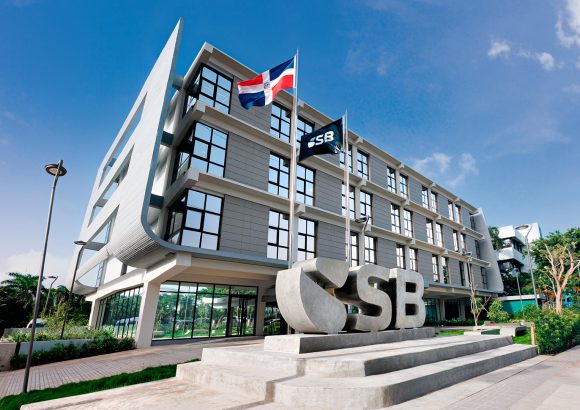
    In the Dominican Republic’s capital Santo Domingo, the country’s top banking oversight body has issued an urgent public alert over a brazen fraudulent investment scam that is misleading social media users by impersonating the regulator. The scheme, which operates under the brand name “Pro Renta”, illegally co-opts the official branding and public credibility of the Superintendency of Banks (SB) to sell unvetted, non-existent financial management and investment services to unsuspecting consumers.

    In an official public statement released Wednesday, the regulator confirmed that the scammers have replicated the agency’s official visual identity down to precise details, and have even falsely used the likeness of current Superintendent Alejandro Fernández W. to lend the scheme an air of legitimacy. The watchdog characterized the fraudulent social media campaign as deliberately misleading, false, and malicious in its intent to defraud consumers.

    The Superintendency of Banks emphasized that all of its official statements, regulatory updates, and public communications are only distributed through verified, pre-authorized institutional channels and its official government website. No unapproved third-party offers bearing the agency’s branding should be treated as legitimate, the regulator added.

    To protect consumers from financial harm, the agency has urged all Dominican citizens to practice due diligence by cross-checking the authenticity of any online investment offer before sharing it across social platforms or committing any personal funds to the opportunity. The regulator also reaffirmed its ongoing commitment to safeguarding all participants in the Dominican Republic’s financial system, rooting out financial fraud, and holding bad actors accountable for deceptive practices.

    In closing, the Superintendency called on the public to maintain heightened vigilance against any fraudulent operation that leverages the public trust in government regulatory institutions to carry out scams, reminding consumers that legitimate financial regulators do not endorse private investment schemes through unsolicited social media content.

  • Council of Captains calls for NTSB to lead La Romana plane crash investigation

    Council of Captains calls for NTSB to lead La Romana plane crash investigation

    In the wake of a deadly private plane crash near the Dominican Republic’s La Romana International Airport, the country’s Council of Captains is pushing for a radical shift in how the incident is investigated: the union is formally requesting that the U.S. National Transportation Safety Board (NTSB) take the lead on the probe, arguing that only an independent international process can deliver transparent, trusted results for victims’ families and the aviation community at large.

    The Sunday crash claimed the lives of two pilots flying a Gulfstream G200 business jet registered as N318JF. In an official statement released this week, the Council of Captains first extended its deepest condolences to the families and loved ones of the deceased pilots, before laying out its formal request for international oversight of the investigation.
    Union leaders say their demand is grounded in existing international aviation regulations: recent updates to Annex 13 of the International Civil Aviation Organization (ICAO) framework explicitly permit the transfer of accident investigation authority to another nation or independent body when specific conditions are met. Those conditions are satisfied in this case, the union argues, not only because of longstanding local credibility issues but also because the crashed jet carries United States registration.

    The core of the union’s concern stems from a years-long unresolved aviation disaster in the Dominican Republic. In December 2021, a fatal crash involving a Helidosa aircraft claimed lives, and more than four years later, no final public investigative report has been released. That lack of closure, the Council of Captains says, has sown widespread doubt across the country’s aviation sector and left victims’ relatives without answers, eroding trust in local investigative capacity.
    This case is not an isolated exception either, the union notes. It would mark the second fatal aviation accident involving U.S. citizens in the Dominican Republic that remains under active investigation, making independent oversight even more critical to upholding global standards.

    The Council of Captains has made clear that it will maintain close, ongoing monitoring of the crash investigation process, and will continue pressing for a probe that adheres to the core principles of full transparency, complete independence, and public accountability. The union’s call has put a spotlight on longstanding concerns over investigative accountability in Dominican aviation, and sets up a potential decision for Dominican authorities on whether to cede lead investigation authority to the U.S. NTSB.

  • DNCD seizes over 3,000 suspected Marijuana plants in Ocoa operation

    DNCD seizes over 3,000 suspected Marijuana plants in Ocoa operation

    In a coordinated multi-agency anti-narcotics raid, law enforcement officials have taken down a massive illegal marijuana growing operation tucked away in the rugged remote highlands of the Dominican Republic’s San José de Ocoa province, arresting three people connected to the drug ring, the country’s National Drug Control Directorate (DNCD) announced this week.

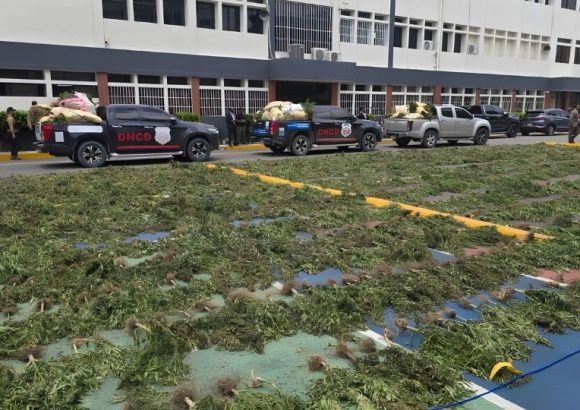
    The operation, which brought together DNCD enforcement agents, public prosecutors, air support from the Dominican Air Force, and tactical intelligence from national intelligence agencies, targeted an active agricultural plot located in El Pinar, a semi-rural municipal district in the province. When agents moved in on the target property, they uncovered more than 3,000 mature cannabis plants already in cultivation, alongside five pre-packaged containers of processed marijuana, batches of young germinating seedlings, and a full suite of gear purpose-built for every stage of the drug’s production chain.

    Investigators detailed that the remote property included a permanent residential structure that the operation’s leaders had repurposed into a dedicated storage and processing hub. Confiscated assets found on site range from off-grid power infrastructure (solar panels to support the operation in its isolated location) to specialized cultivation and processing equipment: fans for ventilation, a functional water pump for crop irrigation, commercial drying racks and tools, vacuum-seal packaging supplies for distribution, encrypted communication devices, a personal cellphone, and a motorcycle used for navigating the area’s rough terrain.

    Three individuals suspected of involvement in the ring were taken into custody at the scene, with two of the detainees confirmed to be Haitian nationals. All three suspects have already been transferred to the Dominican Public Ministry to face formal criminal prosecution. DNCD officials confirmed that the investigation is far from over, with active work ongoing to track down and apprehend additional co-conspirators who may be tied to the large-scale growing operation.

    Due to the extremely challenging, mountainous terrain where the plantation was hidden, DNCD teams reported that removing the thousands of seized plants and transporting all evidence back for processing took more than 12 full hours of work. Mules and horses had to be used to move the large volume of contraband out of the remote site, as standard motorized vehicles could not access the location. All seized cannabis plants have been shipped to the National Institute of Forensic Sciences (INACIF), where forensic analysts will conduct official testing to confirm the exact total weight and count of the contraband.

  • Dominican Republic strengthens climate leadership by assuming presidency of SBSTA 64

    Dominican Republic strengthens climate leadership by assuming presidency of SBSTA 64

    In a landmark moment for Caribbean and small island state engagement in global climate governance, the Dominican Republic has secured the chairmanship of the 64th session of the Subsidiary Body for Scientific and Technological Advice (SBSTA 64), a core subsidiary body of the United Nations Framework Convention on Climate Change (UNFCCC). This appointment marks an unprecedented milestone in the country’s decades-long participation in international climate diplomacy.

    The critical leadership role will be filled by Dr. Carol Franco, a seasoned technical advisor to the Dominican Republic’s Ministry of Environment and Natural Resources. A leading specialist in ecosystem services, climate adaptation and nature-based solutions, Dr. Franco will steer all technical discussions and multilateral negotiations for the UNFCCC body during the upcoming session to be held in Bonn, Germany.

    International climate policy observers and Dominican officials alike frame the appointment as a formal international recognition of the Dominican Republic’s expanding leadership and growing technical proficiency in global climate negotiations. As one of the UNFCCC’s two primary permanent subsidiary bodies, SBSTA carries a foundational responsibility: it provides evidence-based scientific, technical and methodological guidance on a full spectrum of core climate issues, ranging from adaptation and greenhouse gas mitigation to technology development, climate action transparency, and global climate research collaboration.

    Dominican Environment Minister Paíno Henríquez emphasized that the designation underscores the country’s long-standing commitment to centering science-driven solutions in climate action, while also amplifying the nation’s voice in shaping the future of international climate governance. Henríquez added that the appointment also serves as a global acknowledgment of the Dominican Republic’s skilled technical workforce and the meaningful contributions national experts have already made to global efforts to counter the accelerating climate crisis.

    As the official national focal point for UNFCCC engagement, the Dominican Ministry of Environment will lead the country’s delegation to not just SBSTA 64, but also the 31st Conference of the Parties (COP31), scheduled to take place this November in Antalya, Türkiye. Throughout both events, the Dominican delegation will prioritize advancing action on a set of core priorities aligned with the needs of climate-vulnerable small island developing states: scaled-up climate adaptation, sufficient and accessible climate finance, robust action transparency frameworks, equitable technology transfer to developing nations, targeted capacity building support, and full implementation of national Nationally Determined Contributions (NDCs) under the Paris Agreement.

    Senior Dominican officials note that holding the SBSTA 64 presidency further solidifies the country’s active presence in global climate governance forums and reinforces its ongoing commitment to advancing collaborative, inclusive international solutions to the shared challenge of climate change.