标签: Dominica

多米尼克

  • OP-ED: Beyond passports & visa pauses – Why the Caribbean must reclaim the narrative power in Washington

    OP-ED: Beyond passports & visa pauses – Why the Caribbean must reclaim the narrative power in Washington

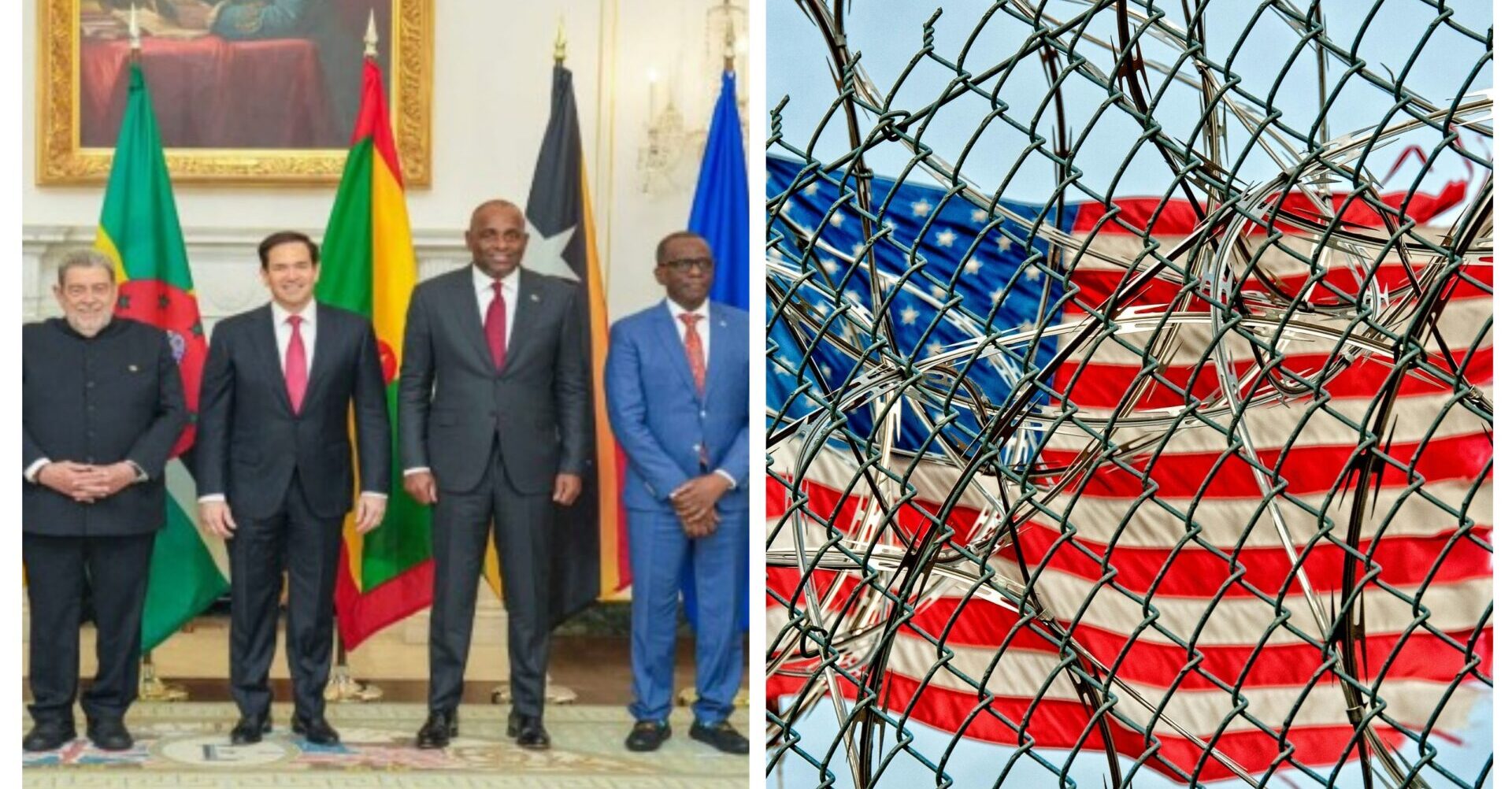
    The Caribbean’s ongoing Citizenship by Investment (CBI) program crisis reveals a fundamental power imbalance in international relations that extends far beyond superficial discussions about due diligence and security compliance. At its core, this confrontation represents the region’s systemic loss of narrative control within Washington’s policy ecosystem, where Caribbean nations are being defined through standards they didn’t create and judged in forums where they lack representation.

    This pattern of economic reclassification—where once-viable activities are progressively recast as risky or non-compliant—has historical precedents from banana exports to banking services. The outcome consistently demonstrates economic disqualification through regulatory means rather than market failure, with CBI representing merely the latest manifestation.

    The traditional diplomatic approach—relying on ambassadors, foreign ministries, and multilateral appeals—has become inadequate in today’s policy landscape. Contemporary legitimacy frameworks are increasingly shaped outside formal diplomatic channels within Congressional offices, regulatory agencies, think tanks, and policy advocacy networks where narratives are established long before Caribbean representatives are consulted.

    The region’s critical deficit lies in its absence from Washington’s idea economy. While the United States benefits from established idea engines like the Heritage Foundation, Brookings Institution, and CSIS that systematically cultivate and normalize policy concepts, the Caribbean lacks equivalent institutional presence. This idea infrastructure gap leaves the region perpetually defensive, explaining itself against narratives it didn’t author.

    The convergence of heightened U.S. and EU CBI scrutiny, visa bond regimes, immigrant visa pauses, and disproportionately applied public-charge doctrines signals how Caribbean economies are being systematically ranked within the global system. Simultaneously, CARICOM faces internal strains as geopolitical pressures test regional unity.

    A strategic pivot requires expanding engagement beyond traditional diplomacy into narrative formation—engaging Congressional committees alongside executive desks, addressing regulatory agencies that shape outcomes, investing in idea production rather than mere negotiation, and repositioning the Caribbean as a strategic region rather than a compliance problem.

    The fundamental question isn’t whether CBI survives in its current form, but whether the Caribbean will continue allowing external actors to define legitimacy parameters for small states’ economic survival. Without claiming space in Washington’s idea economy, every sector—from finance and mobility to education and digital services—remains vulnerable to similar reclassification and exclusion cycles.

    The Caribbean possesses its most valuable export not in passports or commodities but in intellectual talent—thinkers, diplomats, technocrats, and policy professionals who understand global systems and Caribbean realities. The existing diaspora represents an untapped resource that requires institutional harnessing through establishments like the Institute for Caribbean Studies in Washington, D.C.

    This transformation demands a fundamental shift in how CARICOM, OECS, and individual governments engage with diaspora expertise—moving beyond transactional relationships toward trust-based, sustained collaborations. Modern sovereignty defense requires not just borders and diplomacy but ideas and the capability to shape them, presenting the region with an opportunity to build idea infrastructure worthy of its talent and adequate to contemporary challenges.

  • Portsmouth mayor condemns violence ahead of community’s ‘ Possie Town Mas’

    Portsmouth mayor condemns violence ahead of community’s ‘ Possie Town Mas’

    Portsmouth Mayor Kerry Breedy-Prince has issued a firm condemnation of gun violence while assuring residents and visitors of enhanced security measures for the upcoming ‘Possie Town Mas’ carnival celebrations. The mayor’s statement comes in direct response to escalating community concerns following a recent shooting incident in the Lagoon area last week.

    Addressing public anxieties head-on, Mayor Breedy-Prince acknowledged the legitimate fears surrounding the spike in firearm-related incidents but emphasized that criminal behavior would not be allowed to define the community’s identity. “Violence has no place in our community, and it would never define who we are as a people,” she declared, reinforcing Portsmouth’s historical reputation as a town built on cultural pride, unity, and peaceful coexistence.

    The municipal government has implemented a comprehensive security strategy through coordinated efforts with multiple stakeholders. This collaborative approach involves the Dominica Police Force, community leadership representatives, and event organizing committees working in unison to bolster safety protocols. These measures are specifically designed to create a protected environment where participants can engage in carnival activities without apprehension.

    Mayor Breedy-Prince passionately described the essence of Possie Town Mas as a celebration of life, musical tradition, and communal solidarity. She explicitly rejected the notion that fear should suppress cultural expression or erase longstanding traditions. The festivities are scheduled to commence at 3:00 PM on Saturday, January 17, with officials encouraging full public participation in what promises to be a vibrantly secure cultural experience.

  • Dominica’s Duke of Edinburgh’s International Award Executive pays courtesy visit to President Sylvanie Burton

    Dominica’s Duke of Edinburgh’s International Award Executive pays courtesy visit to President Sylvanie Burton

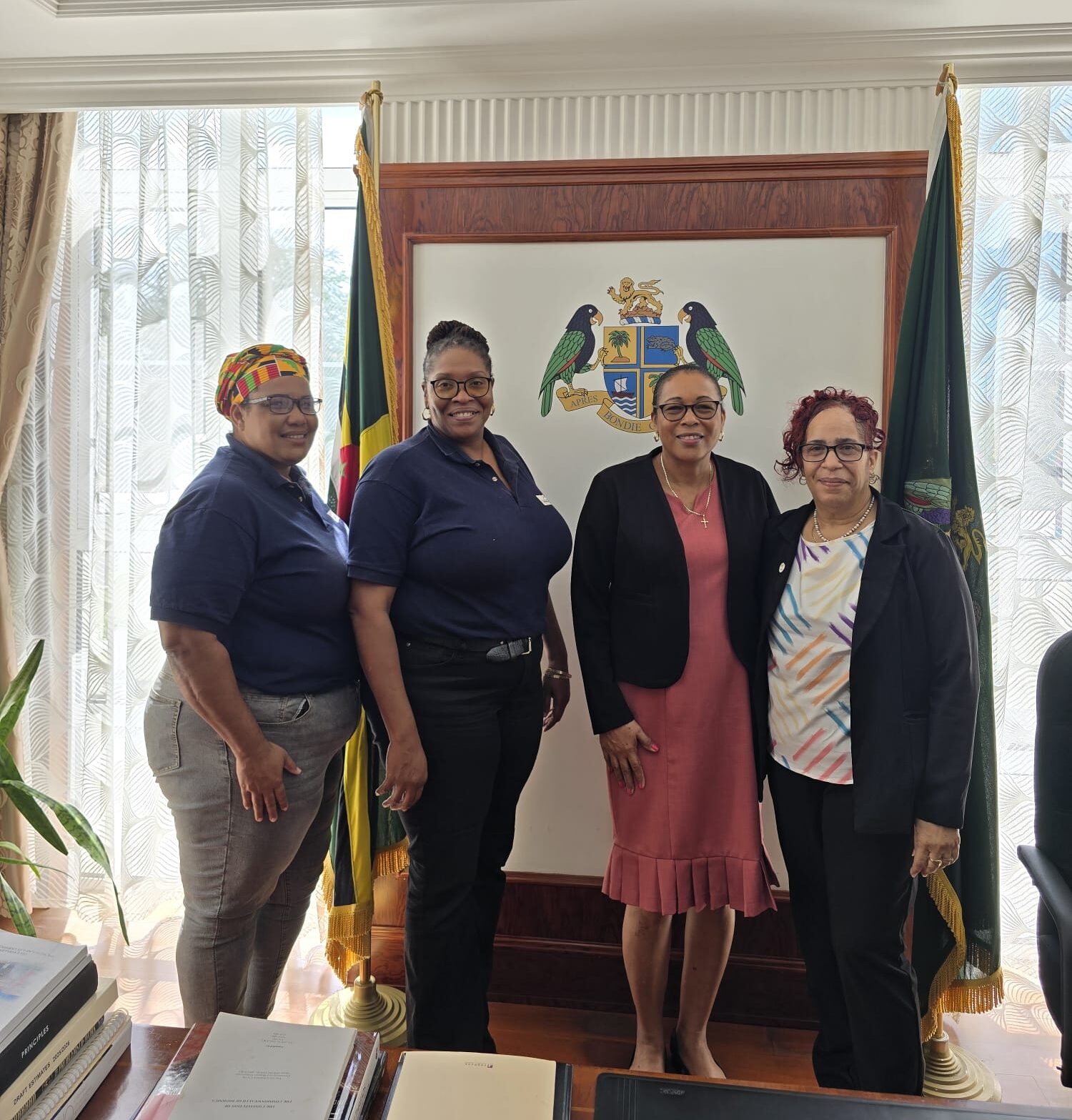
    In a significant demonstration of institutional collaboration, senior representatives of The Duke of Edinburgh’s International Award program in Dominica conducted an official courtesy visit to Her Excellency President Sylvanie Burton on January 14, 2026. The high-level delegation included Deputy Chairperson Linda Gonzalez-Peltier, National Director Kerry-Ann Remie Timothy, Youth Development Coordinator Lilia Durand, and Gold Award recipient Brandon Remie.

    The primary purpose of the meeting centered on delivering a detailed briefing regarding Dominica’s participation in two major international conferences held in Lagos, Nigeria during November 2025. These gatherings—the International Gold Event (November 15-18) and Forum 2025—convened under the patronage of HRH Prince Edward and attracted more than 300 youth leaders and program administrators from across the global network.

    The International Gold Event, a biennial celebration recognizing exceptional youth achievement, provided a dynamic platform for Gold Award recipients to share experiences, establish international connections, and inspire collective progress. Concurrently, Forum 2025 assembled global Award leaders to strategically shape the program’s future trajectory, with particular emphasis on innovative approaches to youth empowerment and development methodologies.

    During the presidential briefing, Mr. Brandon Remie provided firsthand insights gained from his interactions with international delegates and experts at the Nigerian conferences. The delegation further utilized the opportunity to present recent program accomplishments, address operational challenges, and outline future initiatives designed to expand the Award’s national impact.

    Executive leadership expressed profound gratitude to President Burton for her sustained patronage and commitment to facilitating substantive dialogue on youth development priorities, reinforcing the program’s vital role in shaping Dominica’s next generation of leaders.

  • Caribbean Court of Justice president visits Barbados to strengthen regional ties

    Caribbean Court of Justice president visits Barbados to strengthen regional ties

    Barbados is preparing to host a significant judicial delegation from the Caribbean Court of Justice (CCJ) from January 15-20, 2026. The high-level visit will be led by CCJ President Honourable Mr. Justice Winston Anderson and includes Mrs. Gabrielle Figaro-Jones, the Court’s Registrar and Chief Marshal.

    The centerpiece of the diplomatic mission will be President Anderson’s keynote address at the Caribbean Natural Resources Institute’s (CANARI) Partners Forum, where he will address critical climate justice concerns impacting Caribbean nations. This emphasis on environmental jurisprudence comes at a crucial time for the region facing increasing climate-related challenges.

    Beyond the environmental focus, the delegation has arranged courtesy meetings with Barbados’s highest government officials, including Prime Minister Mia Mottley, SC, MP; Chief Justice Leslie Haynes; and Opposition Leader Ralph Thornes, KC, MO. These strategic engagements form part of the CCJ’s institutional outreach initiative to strengthen relationships with national authorities across member states.

    This Barbados visit represents a continuation of President Anderson’s regional diplomatic efforts since assuming leadership in July 2025. His previous official travels included October 2025 courtesy calls in Guyana, where he met with President Irfaan Ali, acting Chancellor of the Judiciary Yonette Cummings-Edwards, Attorney General Anil Nandlall, and CARICOM Secretary-General Dr. Carla Barnett.

    The current mission operationalizes objectives outlined in the CCJ’s Strategic Plan 2025-2032, specifically focusing on enhancing judicial accessibility, developing regional legal partnerships, and promoting institutional transparency. Through these high-level exchanges, the CCJ aims to reinforce its role as a pivotal institution in Caribbean governance and legal integration.

  • St Vincent & the Grenadines’ newly renovated volcano observatory officially handed over

    St Vincent & the Grenadines’ newly renovated volcano observatory officially handed over

    The Eastern Caribbean nation of St. Vincent and the Grenadines has officially commissioned its comprehensively upgraded Belmont Volcano Observatory, marking a transformative advancement in its geological disaster response capabilities. Michelle Forbes, Director of the National Emergency Management Organisation (NEMO), hailed the facility as “remarkable” during this week’s formal handover ceremony attended by senior government officials including Deputy Prime Minister Major Hon. St. Clair Leacock.

    Funded through a World Bank concessional loan totaling EC$4.696 million (approximately US$1.74 million), the ambitious infrastructure project commenced construction in March 2024. Despite encountering implementation delays due to adverse weather conditions and unforeseen complications, contractors successfully completed the renovation by December 2025.

    Forbes emphasized the observatory’s critical role in enhancing the nation’s capacity to monitor volcanic activity at La Soufrière, which last erupted in 2021 forcing widespread evacuations. “We now possess significantly improved facilities for our scientists and local monitoring team to perform their essential work,” she stated, acknowledging the collaborative efforts of seismologists, architects, engineers, and construction teams who overcame numerous challenges through coordinated problem-solving.

    The modernization initiative forms a cornerstone of the Vincentian government’s strategic framework for disaster risk reduction and climate resilience enhancement. Officials confirm the upgraded installation will provide substantially enhanced early warning capabilities, integrated data analysis systems, and improved working conditions for the Soufrière Monitoring Unit and international researchers collaborating on volcanic studies.

    While expressing hope that another eruption wouldn’t occur imminently, Forbes noted the inevitability of future volcanic events and stressed that the nation is now fundamentally better equipped to safeguard both human lives and critical infrastructure when such events eventually transpire.

  • Dominica appoints three new magistrates to tackle case backlog

    Dominica appoints three new magistrates to tackle case backlog

    Dominica’s judicial system has reached a significant milestone with the appointment of three new magistrates in late 2025, bringing the country’s total to a full complement of eight judicial officers. Chief Magistrate Candia Carrette-George made the announcement during the New Law Year opening ceremony at the State House Conference Centre, marking a transformative development for the nation’s legal infrastructure.

    The newly appointed magistrates bring diverse legal expertise to their positions. Marie-Louise Pierre Louis, sworn in October 2025, transitions from the Office of the Director of Public Prosecutions with substantial criminal law experience and will primarily handle criminal matters. November saw the appointment of Pearlisa Morvan, previously from the Attorney General’s chambers, who will preside over case management hearings, civil litigation, and coroner’s court proceedings. Kimala Alfred, sworn in December 2025, joins from the legal aid clinic and will primarily oversee family and criminal cases.

    Chief Magistrate Carrette-George emphasized that this judicial expansion represents a strategic advancement in addressing systemic challenges within Dominica’s court system. The appointments are expected to significantly enhance court efficiency through improved case management protocols and specialized case allocation. This development directly targets the reduction of case backlogs that have hampered judicial timeliness, ensuring more effective disposition of legal matters across criminal, civil, and family court divisions.

    The achievement of a full magistrate complement underscores the government’s commitment to strengthening judicial capacity and access to justice. This structural enhancement positions Dominica’s legal system for improved service delivery and operational effectiveness throughout 2026 and beyond.

  • LIVE: National Security Press Conference 15th January 2026

    LIVE: National Security Press Conference 15th January 2026

    China’s National Space Administration (CNSA) has successfully concluded its groundbreaking Chang’e-6 lunar mission, marking a historic milestone in space exploration. The spacecraft’s return capsule touched down precisely in Inner Mongolia’s Siziwang Banner landing zone at approximately 2:07 p.m. local time on Tuesday, carrying the first-ever geological samples collected from the moon’s far side.

    The 53-day mission demonstrated exceptional technological prowess as the spacecraft navigated the complexities of operating on the lunar hemisphere that permanently faces away from Earth. The mission architecture required a relay satellite for communications and involved sophisticated autonomous operations in the challenging terrain of the South Pole-Aitken Basin, one of the solar system’s largest and oldest impact craters.

    Scientific community worldwide anticipates unprecedented insights from these pristine samples, which are expected to reveal new understanding about lunar formation, the early solar system’s evolution, and planetary differentiation processes. The mission’s success significantly advances China’s lunar exploration capabilities and establishes new benchmarks for sample-return technology.

    International space agencies have extended congratulations, recognizing the mission’s contribution to global planetary science. The carefully preserved samples will undergo initial processing at specialized facilities before being distributed to research institutions for comprehensive analysis, potentially unlocking mysteries that have perplexed astronomers for decades.

  • Business Training Center and St Joseph’s University in Dominica collaborate to offer new nursing path for students

    Business Training Center and St Joseph’s University in Dominica collaborate to offer new nursing path for students

    In a strategic response to the escalating global nursing crisis, Dominica’s Business Training Center (BTC) has forged an innovative alliance with St. Joseph University. This collaboration, announced by the 27-year-old educational institution, establishes an accessible educational pipeline for nursing aspirants worldwide.

    The initiative arrives at a pivotal moment as the World Health Organization’s 2025 report acknowledges persistent disparities in healthcare workforce distribution despite overall growth in nursing numbers. Concurrently, impending U.S. policy changes set to take effect in July 2026 will dramatically restrict federal student loan funding for graduate nursing programs, imposing a $20,500 annual cap and $100,000 lifetime borrowing limit.

    BTC President Lucia Stedman characterized the partnership as “a significant milestone in our mission to provide accessible, quality education.” The institution specializes in second-chance education, with numerous graduates having advanced to obtain Bachelor’s degrees in Midwifery and other healthcare disciplines.

    The program architecture enables international students to pursue Licensed Practical Nursing (LPN) qualifications through BTC’s foundational programs, which articulate directly into St. Joseph University’s LPN curriculum. Students requiring preliminary training may enroll in BTC’s Diploma in Nursing Assistant and Patient Care, which prepares them for rigorous professional nursing education.

    Beyond addressing global needs, the partnership specifically targets Dominica’s domestic healthcare education gap, where local institution capacity has failed to meet demand for nursing professionals. The collaboration also leverages BTC’s certification courses offered with UK-based Training Express, providing internationally recognized credentials that enhance employment prospects throughout the Caribbean and beyond.

    The initiative simultaneously promotes educational tourism in Dominica, offering international students affordable tuition within a supportive learning environment enriched by the island’s natural beauty and vibrant culture. Stedman extended invitations to prospective students from the United States, Canada, the United Kingdom, and across the Caribbean to consider Dominica as their destination for building healthcare careers.

  • Environment Minister says Dominica gov’t is ensuring follow-up actions at Deux Branches quarry amidst public criticism

    Environment Minister says Dominica gov’t is ensuring follow-up actions at Deux Branches quarry amidst public criticism

    The Dominica government is facing mounting public scrutiny over quarrying operations in the environmentally sensitive Deux Branches area, with officials maintaining that environmental protections remain paramount despite growing opposition.

    Environment Minister Cozier Frederick conducted a site inspection Tuesday to address public anxieties surrounding the extraction activities linked to the International Airport project. Frederick acknowledged the government’s awareness of public concerns while emphasizing the ministry’s commitment to implementing comprehensive mitigation strategies. “We’re taking this intervention very, seriously,” Frederick stated, recognizing the visible environmental impacts inherent in quarry operations.

    The minister revealed that Deux Branches was selected based on historical precedent and material quality assessments, noting the area had been previously quarried in the 1970s for Douglas-Charles Airport improvements. Current operations border a national park and proximity to river systems and indigenous communities adds complexity to the project.

    Environmental critics, including former Chief Physical Planner Annie Edwards, have called for immediate suspension of operations, citing potential damage to river ecosystems, biodiversity, and nearby communities. These concerns reflect broader anxieties about preserving Dominica’s “Nature Island” reputation amid development pressures.

    The Forest Division has implemented a 50-meter buffer zone between quarry activities and the Northern Forest Reserve, with Assistant Forest Officer Kelvin Felix detailing specific technical measures including sediment ponds (minimum 2m wide × 3m deep) and terracing designs to control water flow and minimize sedimentation. Regular maintenance and monitoring protocols have been established to address environmental impacts.

    Prime Minister Roosevelt Skerrit reinforced the government’s position during a December 2025 press conference, characterizing the airport as a strategic investment crucial for economic resilience and global connectivity. The administration maintains that halting quarrying would eliminate the only viable material source, potentially forcing environmentally harmful imports from other developing nations while increasing costs, creating supply chain uncertainties, delaying construction, and reducing local employment opportunities.

  • U.S. suspends immigrant visa processing from 75 countries

    U.S. suspends immigrant visa processing from 75 countries

    The United States is implementing an indefinite suspension of immigrant visa processing for citizens from 75 countries effective January 21, significantly expanding the Trump administration’s immigration policy framework. This development, reported by multiple international media outlets, represents one of the most comprehensive immigration restrictions enacted in recent years.

    The suspension specifically targets immigrant visas including employment-based immigration categories, while explicitly exempting non-immigrant visas such as student, tourist, and business travel documents. This distinction ensures that short-term visitors, including those attending the upcoming World Cup events, will remain unaffected by the new measures.

    This policy shift stems from a State Department directive issued last year enhancing scrutiny under the ‘public charge’ provision of immigration law. This longstanding regulatory framework permits immigration officials to deny entry to individuals considered likely to depend on public assistance programs.

    State Department spokesperson Tommy Pigott clarified the administration’s position in an official statement: ‘The Department will exercise its established authority to deem ineligible those potential immigrants who would potentially become public charges and exploit the generosity of American taxpayers. Visa processing from these 75 nations will remain paused while we conduct comprehensive reassessments of immigration procedures to prevent the entry of foreign nationals who might utilize welfare and public benefits.’

    The affected nations span multiple continents, with several countries previously subject to the administration’s expanded travel ban now facing additional restrictions. The comprehensive list includes 27 African nations, 22 Asian countries, 8 European states, 13 North American and Caribbean territories, 3 South American countries, and one Oceanian nation.

    Notably affected countries include Brazil, Colombia, Egypt, Haiti, Somalia, Russia, Nigeria, Pakistan, Saudi Arabia, and Venezuela among others. The policy maintains consistency with the administration’s America First immigration philosophy while generating significant implications for global mobility and international relations.