
This brief prompt invites users to access additional engaging content via the official Entertainment Hot Spot page. It opens with standard social media sharing options, including native sharing functions, the ability to tweet the content to a Twitter/X audience, share the post across other platforms, and pin the item for later access, before directing users to the page to browse more trending entertainment-focused posts.
标签: Dominica
多米尼克
-

Fuel price increase hits Dominica amidst US-Iran conflict
Residents of the Caribbean island nation of Dominica are facing immediate financial strain after government officials announced sharp increases to all petroleum product prices, set to take effect on May 5, 2026. Matthan Walter, the country’s Director of Trade, attributed the dramatic price adjustments to the escalating ongoing conflict between the US, Israel and Iran, which has disrupted global energy supply chains and pushed up crude and refined fuel costs worldwide.
Walter officially outlined the new regulated price points for all major fuel grades in a public statement. Regular gasoline will now sell for $17.98 per unit, while High Sulfur Diesel (HSD) is priced at $19.23, kerosene at $18.21, and Ultra-Low Sulfur Diesel (ULSD) – the most widely used road transport fuel in the country – has reached $20.53. Compared to the last official price adjustment, these jumps represent dramatic percentage increases: 26.7% for gasoline, 33.87% for HSD, 23.33% for kerosene, and a near 39% rise for ULSD.
In his address, Walter stressed that the price surge is not an isolated issue unique to Dominica. The global energy market disruption has pushed up fuel prices across the globe, he noted, with other member states of the Caribbean Community (CARICOM) already reporting similarly elevated costs for the same petroleum products. Walter called on the Dominican public to practice patience as the country collectively works through the economic fallout of the distant geopolitical conflict.
To help consumers offset the impact of higher fuel costs on household budgets, Walter outlined a series of practical steps the public can take to reduce energy consumption and lower overall spending. He recommended that residents adopt carpooling for daily travel, cut back on non-essential trips, and reduce unnecessary electricity use at home – measures that he says will ultimately ease financial pressure on individual households while supporting broader national economic stabilization efforts.
The announcement also addressed growing speculation over potential increases to public bus and taxi fares. Walter reminded transport operators that any fare adjustment must follow official protocol: any request for a rate hike must first be submitted as a formal written request to the national transport board, which holds sole authority to review and approve revised fare pricing for public and private commercial passenger transport. Closing his statement, Walter expressed confidence that with prudent personal decision-making and collective patience, the country can successfully navigate this period of elevated energy costs.
-

Gachette Jewellers expresses condolences on death of long-time employee
The Caribbean island nation of Dominica is mourning the unexpected loss of one of its most respected master craftspeople, renowned local goldsmith Russel Lucien, who passed away suddenly on Thursday, May 7, 2026.
Lucien spent nearly three and a half decades as a valued member of the team at Gachette Jewellers, one of the island’s well-known jewelry establishments. In an official public statement released following Lucien’s passing, leadership at Gachette Jewellers paid tribute to the lifelong artisan, highlighting the profound impact he had on colleagues, customers, and the entire local community throughout his 35-year tenure.
The statement emphasized that beyond Lucien’s world-class skill as a goldsmith, his personal character left an enduring mark on everyone he encountered. “More than a master goldsmith, Russel was family to us,” the statement read. It went on to praise his unwavering dedication to his craft, extraordinary attention to detail, steady loyalty to the brand, and genuine warm demeanor that made him a beloved figure across Dominica. The statement added that he will forever be remembered for his consistent kindness, quiet generosity, contagious joyful spirit, and lifelong commitment to achieving excellence in every piece he created.
Gachette Jewellers closed by expressing gratitude to the broader community for the outpouring of prayers and support the team and Lucien’s family have received in the wake of this loss. Following the announcement of Lucien’s passing, Dominica’s leading local media outlet Dominica News Online (DNO) also issued a message of condolence, extending its deepest sympathies to Lucien’s immediate family, close friends, and all loved ones who are grieving his passing.
-
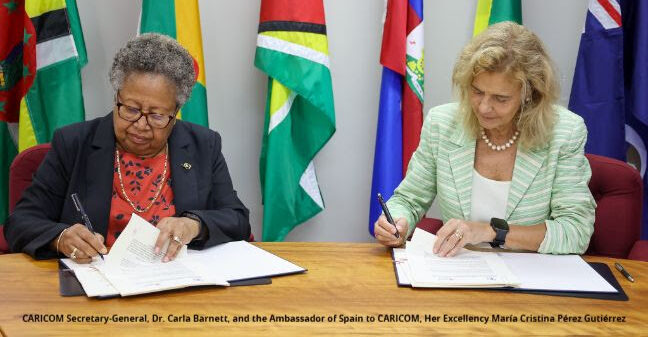
CARICOM and Spain sign new agreement to boost regional health response
On May 6, 2026, a landmark new cooperation agreement between the Caribbean Community (CARICOM) and the Government of Spain was formally signed during the 10th convening of the Joint Technical Committee (JTC) for the CARICOM-Spain Joint Fund for Scientific and Technical Cooperation, unlocking expanded regional support for Caribbean healthcare systems and marking a new milestone in decades of cross-regional partnership. Dr. Carla Barnett, CARICOM Secretary-General, and María Cristina Pérez Gutiérrez, Spain’s Ambassador to CARICOM, put their signatures to the agreement in an official signing ceremony held alongside the meeting.
Under the terms of the new pact, the Spanish government is committing €400,000 in funding to a targeted regional health initiative named “Strengthening Regional Leadership, Governance and Coordinated Action in Health to Address New and Existing Health Challenges in the Caribbean Community (CARICOM).” The multi-stakeholder project will be executed collaboratively by the CARICOM Secretariat and the Caribbean Public Health Agency, with the ultimate goal of shoring up fragmented local healthcare infrastructure and improving regional capacity to respond to both persistent public health gaps and emerging health threats across the bloc’s member states.
Opening the JTC meeting, co-Chair Elizabeth Solomon, who also serves as Assistant Secretary-General of CARICOM’s Foreign and Community Relations Directorate, emphasized the deep, long-standing collaborative ties between the regional bloc and the European nation. Solomon noted that the CARICOM-Spain Joint Fund has grown far beyond a basic financing mechanism, evolving into a results-driven support program that prioritizes practical, demand-aligned action to advance Caribbean-led regional priorities, delivering measurable, on-the-ground benefits to residents across all CARICOM member states. “The CARICOM-Spain Joint Fund continues to play an important role in advancing regional priorities through cooperation that has evolved into a results-oriented programme of support that is both practical and responsive delivering tangible benefits to the people of the Caribbean Community,” Solomon stated in her opening remarks.
Ambassador Pérez Gutiérrez echoed these remarks, reaffirming Spain’s unwavering commitment to long-term partnership with the Caribbean bloc. “Spain values its partnership with CARICOM and remains committed to supporting initiatives that strengthen resilience, sustainability and regional cooperation,” she said, underscoring the Spanish government’s continued focus on supporting Caribbean development priorities.
Beyond the health agreement, meeting participants also conducted a comprehensive review of two additional proposed regional development projects that have a combined total valuation of $700,000 U.S. dollars. The first proposal, the Greening Caribbean Ports Programme (GCPP), centers on advancing sustainable maritime infrastructure across Caribbean Small Island Developing States, and is slated to be implemented by the Caribbean Centre for Renewable Energy and Energy Efficiency in partnership with the Port Management Association of the Caribbean if approved. The second proposal, focused on disaster preparedness, aims to “Strengthen the Caribbean Emergency Response Capabilities through the Next Level Regional Response Mechanism (RRM),” with the Caribbean Disaster Emergency Management Agency tapped as the lead implementing body for the initiative.
By the close of the meeting, representatives from both CARICOM and Spain issued a joint reaffirmation of the critical role the CARICOM-Spain Joint Fund plays in driving inclusive regional development. Both sides described the fund as an indispensable mechanism for advancing shared development priorities and deepening technical cooperation between the Caribbean bloc and Spain, with future collaborative projects expected to continue targeting climate resilience, public health, and sustainable infrastructure across the region.
-
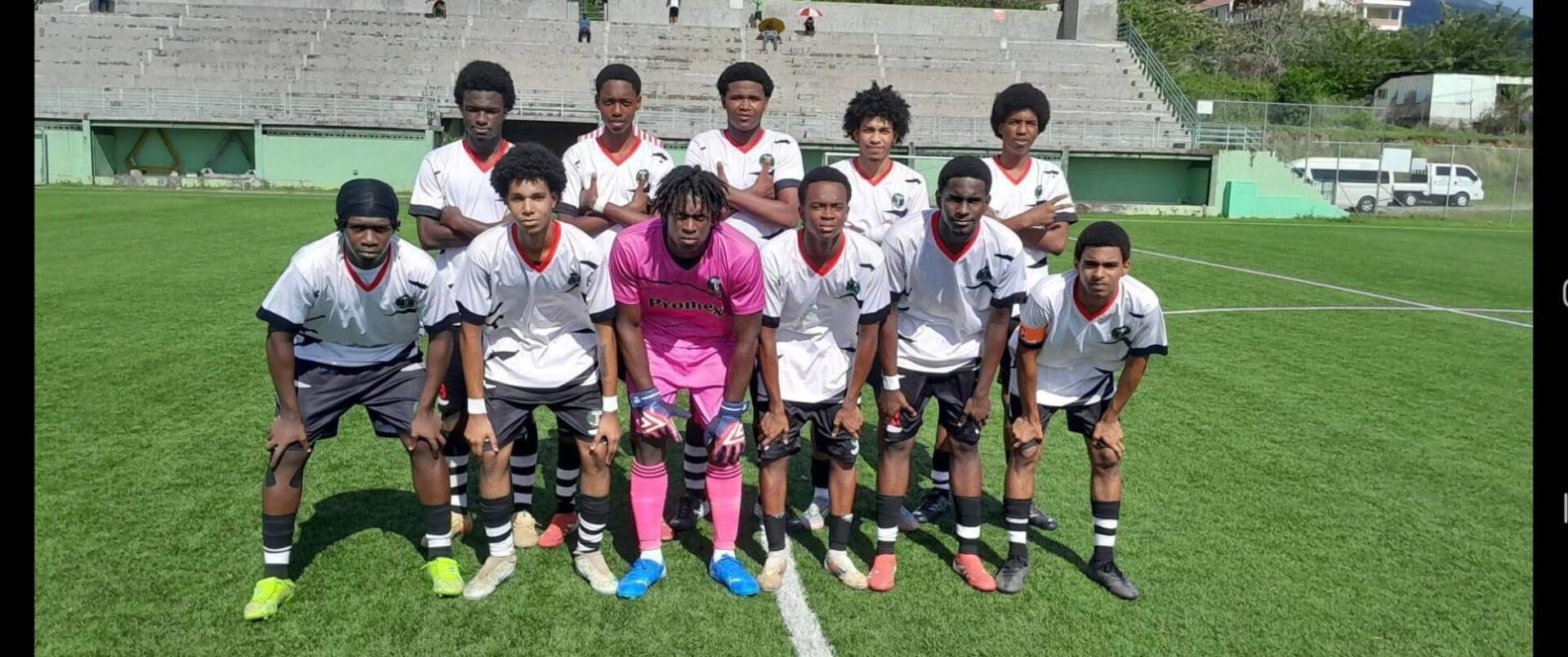
Harlem takes win against police in friendly match
On Wednesday, May 6, 2026, a unique community-focused friendly football match took place at the Dominica Football Association (DFA) Technical Center, bringing together law enforcement and local residents through athletic competition. The game was organized by the Commonwealth of Dominica Police Force (CDPF) Community Policing Initiative, in partnership with the force’s own Police Sports Club, which went head-to-head with the local Harlem Football Club.
What began as a competitive 90-minute contest quickly evolved into a demonstration of cross-group connection, with police officers and community members building rapport through shared enthusiasm for the sport. The event was designed to leverage the unifying power of athletic competition to break down barriers between law enforcement and the communities they serve, aligning with the CDPF’s broader community outreach strategy.
After a tightly contested match, Harlem Football Club claimed the win with a final score of 5-1. Despite the less-than-favorable outcome for the Police Sports Club, the team remained undeterred, with players and coaching staff reaffirming their commitment to ongoing preparations for the upcoming DFA League season. The side has continued training with consistent focus and strong collective team spirit as they gear up for formal league competition.
In a post-match statement, a CDPF spokesperson emphasized that the force will continue centering community engagement through accessible, inclusive programming. Beyond traditional policing work, the CDPF plans to expand its use of recreational and sports-based initiatives to strengthen trust, foster positive interactions, and build lasting collaborative relationships between police officers and Dominica’s local communities.
-

KestheBand makes NPR Tiny Desk debut ahead of international ‘Roots, Rock, Soca’ tour
One of the Caribbean’s most dynamic musical forces, KestheBand, has exploded into global online conversation following their first-ever appearance on NPR’s iconic Tiny Desk Concerts, the long-running, internationally acclaimed performance series based at NPR Music’s Washington, D.C. headquarters.
Now in its 18th year, the Tiny Desk Concerts series has built its reputation on showcasing emerging and established artists from every corner of the globe, delivering intimate, stripped-down sets that prioritize authentic musical storytelling over large-scale production. For their highly anticipated debut, KestheBand crafted a nonstop, high-energized continuous performance structured as a seamless medley, designed to trace the dynamic evolution of the group’s signature Caribbean sound.
The set reimagined a diverse lineup of fan-favorite tracks spanning genres and generations, including the group’s own hits alongside creative reinterpretations of well-known songs such as *Hello*, *Fallin’*, *Rum and Coca Cola*, *Jolene*, *Cocoa Tea*, *Wotless*, and *Savannah Grass*.
Centering the performance around a celebration of shared Caribbean cultural identity, with soca music framed as a unifying cultural force, the group invited two standout regional guest artists to join them: Teddyson John, the acclaimed vocalist from Saint Lucia, and Terri Lyons, the newly crowned 2026 Calypso Monarch of Trinidad and Tobago, who delivered powerful backing vocals throughout the set.
Musically, the performance featured a full live ensemble that masterfully blended traditional Caribbean instrumentation with modern contemporary arrangements. Legendary pannist Dane Gulston brought authentic Caribbean tonality with his steelpan work, while Denilson Gulston added layered rhythmic depth on percussion. These traditional elements wove together seamlessly with the band’s core vocals and modern instrumentation to create a rich, textured live sound that felt both rooted in heritage and fresh for global audiences.
For frontman Kees Dieffenthaller, a Trinidad and Tobago native who has led the band for its entire career, the Tiny Desk debut stands as a defining career milestone. He described the moment as “a full-circle moment of fulfilment” in comments shared as part of the band’s official announcement.
“Performing at Tiny Desk is an incredible honour that we’ve dreamed of for a very long time,” Dieffenthaller said. “This moment is a powerful reminder of how far Caribbean music can travel when it stays true to its roots. To strip it down, feel every note, and share that energy with the world in such an intimate space—it’s something we’ll carry with us for the rest of this journey.”
Dieffenthaller also highlighted the platform’s unmatched global reach, which draws roughly 20 million monthly viewers across streaming and digital platforms, noting that Tiny Desk’s commitment to authentic, unfiltered musical storytelling aligns perfectly with KestheBand’s artistic mission. “We are vessels of sound and song, and this moment is so much bigger than us: it’s about our culture, our people, and our joyful connection we bring through music,” he added.
Bobby Carter, the veteran host and producer of NPR Tiny Desk Concerts, praised KestheBand’s groundbreaking debut in a statement, noting that the group brought a one-of-a-kind energy to the storied studio space. “KestheBand brings something truly special to the NPR Tiny Desk — a sound that feels both deeply rooted and globally resonant,” Carter said. “Ahead of Caribbean American Heritage Month that’s celebrated across the United States throughout June, this performance is a celebration of Caribbean culture in its most dynamic form.”
The release of KestheBand’s Tiny Desk performance coincides perfectly with the wrap-up of the European and United Kingdom leg of the group’s ongoing *Roots, Rock, Soca* world tour. Launched in Paris on April 30, the first leg included sold-out shows in London and two back-to-back packed performances in Amsterdam, produced in partnership with global entertainment leaders Live Nation and WME. The tour will next launch its North American leg on May 28 in Seattle, Washington, expanding the band’s already extensive global itinerary.
Before kicking off the North American run, KestheBand is scheduled to perform at the 2026 Saint Lucia Jazz & Arts Festival on May 8 at Pigeon Island, continuing their tradition of connecting with Caribbean audiences ahead of international tours. The full official lineup for the historic Tiny Desk performance features lead vocalist Kees Dieffenthaller, Jon Dieffenthaller on guitar, Riad Boochoon on bass, Dean James on drums, Mario Callender and Geiron Mang on keyboards, Robert “Robby Styles” Persaud on cuatro and shakers, Dane Gulston on steel pan, Denilson Gulston on percussion, and backing vocalists Terri Lyons and Teddyson John.
The confirmed North American leg of the *Roots, Rock, Soca* tour includes stops across the United States and Canada: May 29 at Portland’s Wonder Ballroom, May 30 at Vancouver’s Commodore Ballroom, June 2 at Sacramento’s Ace of Spades, June 3 at San Francisco’s The Fillmore, June 5 at Santa Ana’s The Observatory, June 6 at Los Angeles’ The Bellwether, June 7 at San Diego’s House of Blues, June 21 at Virginia Beach’s Point Break Festival, June 26 at Baltimore’s Pier Six Pavilion, June 27 at New York’s Forest Hills Stadium, July 2 at Boston’s Leader Bank Pavilion, and July 4 at Toronto’s RBC Amphitheatre. As the band continues traversing multiple continents, they remain focused on sharing their soca-driven rhythms, virtuosic live musicianship, and heartfelt cultural storytelling with audiences of all backgrounds.
-

STATEMENT: The president of the Dominica Red Cross Society on World Red Cross and Red Crescent Day 2026
ROSEAU, DOMINICA – As the global community prepares to mark 2026 World Red Cross and Red Crescent Day, Reginald Winston, President of the Dominica Red Cross Society, has delivered a stirring call for collective solidarity rooted in the 2026 global theme “United in Humanity”, addressing rising division and attacks on humanitarian volunteers worldwide.\n\nIn his official statement marking the annual observance, Winston drew attention to a growing global crisis: the marginalization and violent targeting of people across divides, including the volunteer humanitarian workers who dedicate their time to serving public good. These harmful acts, he emphasized, deepen rifts within already fractured communities and put life-saving humanitarian work at greater risk for everyone involved.\n\nWinston stressed that the 2026 theme is far more than a symbolic slogan—it is a core conviction shaped by the founding fundamental principles of the International Red Cross and Red Crescent Movement. He offered a poignant reframing of the movement’s work: volunteers are not just detached service providers, but neighbors, friends, and family members to the communities they serve. Meanwhile, the people who rely on Red Cross support are not statistics or faceless victims, they are fellow human beings deserving of dignity. By centering shared humanity, Winston explained, the movement closes the artificial gap between those who give aid and those who need it, erasing the unhelpful divide of “us” and “them”.\n\nTo ground this vision in local action, Winston pointed to the Dominica Red Cross’s response to recent severe flooding across the island. Throughout the emergency response, the organization’s local volunteers put shared humanity into practice, embodying the close proximity to communities that has long been a defining strength of the Red Cross movement.\n\nWinston shared the firsthand testimony of a flood beneficiary from Dominica’s Kalinago territory, whose words capture the impact of the organization’s work. The woman recounted moments of overwhelming despair after the disaster, when she felt entirely invisible to the outside world. She and her family extended profound gratitude to the Dominica Red Cross, highlighting one volunteer in particular who extended extraordinary kindness: that volunteer recognized her humanity at a time she felt forgotten, bringing a comfort to her spirit that cannot be put into words.\n\n“We, the less privileged, or poor, or displaced, who are unable to help ourselves, who sit quietly and wait, are still there,” she said. Closing her message, she expressed hope that the Red Cross will remain a steadfast beacon of hope for every community across Dominica, particularly for those living in the island’s hardest-to-reach areas.\n\nReflecting on her testimony, Winston said her words say more than any organizational leader could. He closed by urging all Dominica Red Cross volunteers to continue demonstrating courage and radical humanity in their work, centering care for individual people and upholding the core principles of the movement through action. He emphasized that all volunteers share the profound privilege of serving their fellow human beings.\n\nFinally, Winston extended wishes of a happy World Red Cross and Red Crescent Day to all volunteers, supporters, and partners across the globe.
-

DAA confirms nominations ahead of May 23 elections as executive process moves forwards
The leadership transition process for the Dominica Athletics Association (DAA) is progressing steadily, with returning officer Tania Burnett completing the verification of all executive candidate nominations ahead of the body’s upcoming Annual General Meeting.
By the 5:00 PM deadline on Wednesday, May 6, 2026, all submitted nominations for DAA’s executive council positions had undergone thorough review, and every candidate that made the final slate met all of the association’s eligibility requirements. The full list of validated candidates was officially announced via a DAA press statement.
Brendan Williams is the sole nominee for the presidency, while Walson Pacquette has been put forward for vice president. Phillip White is nominated to serve as secretary general, with Felicien Antoine standing for assistant secretary/treasurer, Jermasha Mellow for treasurer, and Judy Larocque for public relations officer.
This full slate of executive candidates will face formal confirmation through the scheduled election process, which will be held during the DAA Annual General Meeting on Saturday, May 23, 2026. The gathering is set to kick off at 10:00 AM local time at the Dominica Olympic Committee Conference Room.
However, the DAA has clarified that not all leadership positions within the association will be finalized during the May 23 AGM. In alignment with Section 14.1 of the DAA Constitution, four specific representative roles – School Representative, Club Representative, Male Athlete Representative, and Female Athlete Representative – will not be filled at the annual meeting.
Instead, election for these grassroots representative positions will be conducted at a Special General Meeting, which is mandated to convene within four weeks after the AGM concludes. The association noted that further logistical details, including the date, time, and venue for the Special General Meeting, will be released to members and the public in the coming weeks after the AGM is held.
-

British Virgin Islands official commends OECS, explores full membership
Nearly 42 years after joining as an associate member, the British Virgin Islands (BVI) is moving forward with plans to attain full membership in the Organisation of Eastern Caribbean States (OECS), reaffirming its longstanding commitment to regional integration during the bloc’s latest commission gathering.
BVI Special Envoy and OECS Commissioner Benito Wheatley laid out the territory’s position at the 49th Meeting of the OECS Commission, held April 30, according to an official release from the BVI government. The high-level gathering brought together OECS Director General Didacus Jules, the organization’s senior leadership cohort, and ambassador-level commissioners from all member governments. Wheatley also attended the 3rd Meeting of OECS Associate Members held one month prior on March 31 in his official capacity.
In his address to the commission, Wheatley highlighted the decades of mutual value BVI has gained from OECS affiliation, dating back to its acceptance as an associate member in 1984. He commended the wide-ranging benefits delivered through the organization’s regional cooperation frameworks, pointing to core OECS institutions and collaborative initiatives as transformative for both the BVI and the broader subregion. These include the Eastern Caribbean Supreme Court, the unified Eastern Caribbean currency system, the OECS Economic Union, and cross-sector partnerships covering public health, education, civil aviation, agriculture, sports, and more.
Today, the BVI hosts the Commercial Court Division of the Eastern Caribbean Supreme Court, a development that has strengthened the territory’s critical financial services sector, boosted its overall economy, and improved judicial access for the entire OECS subregion, Wheatley explained. He also noted that the BVI’s participation in the OECS Pool Procurement Services allows the territory to source high-quality pharmaceuticals and health supplies at far lower prices than independent procurement, delivering direct, tangible savings and benefits to BVI residents.
Wheatley also recalled the critical support the OECS extended to the BVI in the aftermath of Hurricanes Irma and Maria, the 2017 category 5 storms that left widespread catastrophic destruction across the territory. Beyond disaster response, he emphasized that the OECS continues to play an indispensable role in coordinated regional action and global advocacy for pressing shared priorities, including climate change adaptation, biodiversity protection, and inclusive sustainable development.
Formally signaling the BVI’s next step in its relationship with the organization, Wheatley confirmed that the territory now seeks to transition from associate member status to full membership after 42 years of association. He outlined that deeper integration through full membership, including participation in the OECS Customs Union, would open new opportunities for the BVI by expanding the territory’s access to affordable, high-quality agricultural goods and food products from across the entire OECS region.
“We are very pleased with the ongoing exploratory discussions between the BVI and OECS on Full Membership and grateful to all OECS Member States for their encouragement and support as we continue dialogue on this important endeavour,” Wheatley said. He closed his address by extending formal gratitude to the OECS for its decades of contribution to the BVI’s sustained growth and institutional development.
-

DABA launches two-day referee clinic to strengthen basketball officiating in Dominica
The Dominica Amateur Basketball Association (DABA) has launched a targeted two-day Referee Clinic on Wednesday, marking a key milestone in the organization’s ongoing work to elevate officiating standards and grow competitive basketball across the Caribbean island nation.
In an official press statement announcing the initiative, DABA noted that the training program gathers seasoned veteran referees, promising new aspiring officials, and other key stakeholders from Dominica’s local basketball ecosystem for a packed schedule of rigorous skill-building activities. The core goal of the gathering is to refine existing officiating capabilities and deliver greater consistency in decision-making across all levels of domestic play.
Throughout the clinic, participating officials are receiving specialized, up-to-date instruction across a full spectrum of professional officiating competencies. Topics covered include the latest interpretations of international basketball rules, strategies for maintaining tight control during high-stakes games, optimal on-court positioning for referees, standardized officiating mechanics, effective communication between crew members, and other critical elements of elite game management. Per DABA, this clinic is not an isolated training event, but rather a core component of a wider, multi-year strategy to strengthen the quality of refereeing for every tier of basketball competition on the island.
The two-day agenda blends multiple learning formats to cater to different skill levels and learning styles: attendees will complete structured classroom-based theory sessions, hands-on practical drills held directly on court, detailed video reviews of past game calls to identify areas for improvement, and collaborative group discussions to address shared challenges faced by local officials. Organizers explain that combining theoretical learning with applied, on-site practice is designed to help officials build both the confidence and technical expertise required to perform at a higher competitive level.
DABA leadership emphasized that consistent investment in referee development remains non-negotiable for the long-term growth of basketball in Dominica. High-quality, well-trained officiating, the association notes, plays an outsize role in fostering healthy player development, ensuring smooth and fair game management, and lifting the overall level of professionalism across the sport nationally.
Association officials also reaffirmed their ongoing commitment to creating accessible, high-quality training opportunities for all key groups within the national basketball community, including referees, head coaches, players, and league administrators. This commitment aligns with DABA’s long-term strategic vision for sustained, inclusive growth of basketball across Dominica.
As the clinic got underway, DABA extended a reminder to all participants to take full advantage of the access to expert training and networking opportunities the event provides. The organization also offered public gratitude to the lead facilitators, participating officials, and community partners who worked to bring the clinic to fruition and support its successful execution.