标签: Cuba

古巴

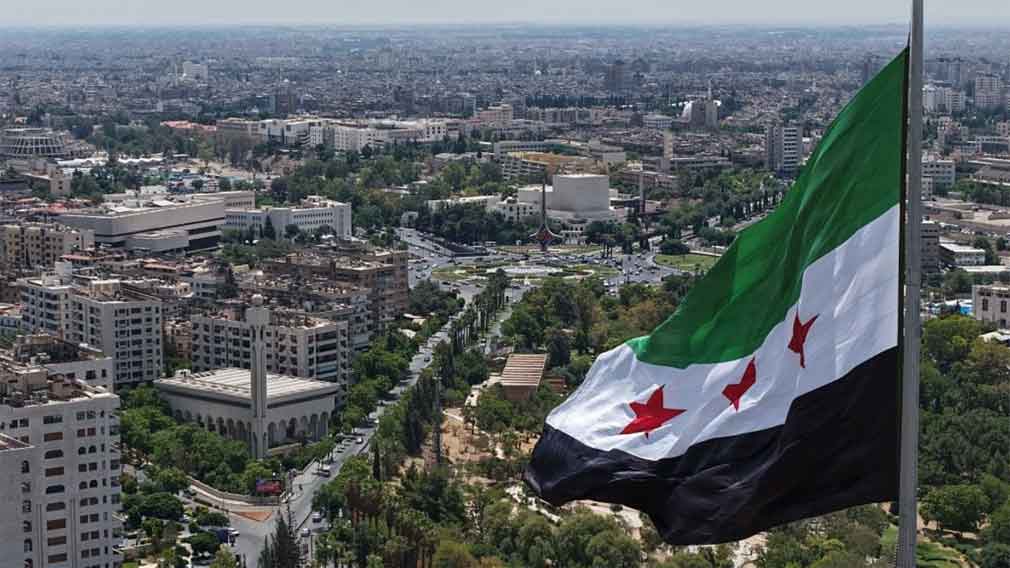
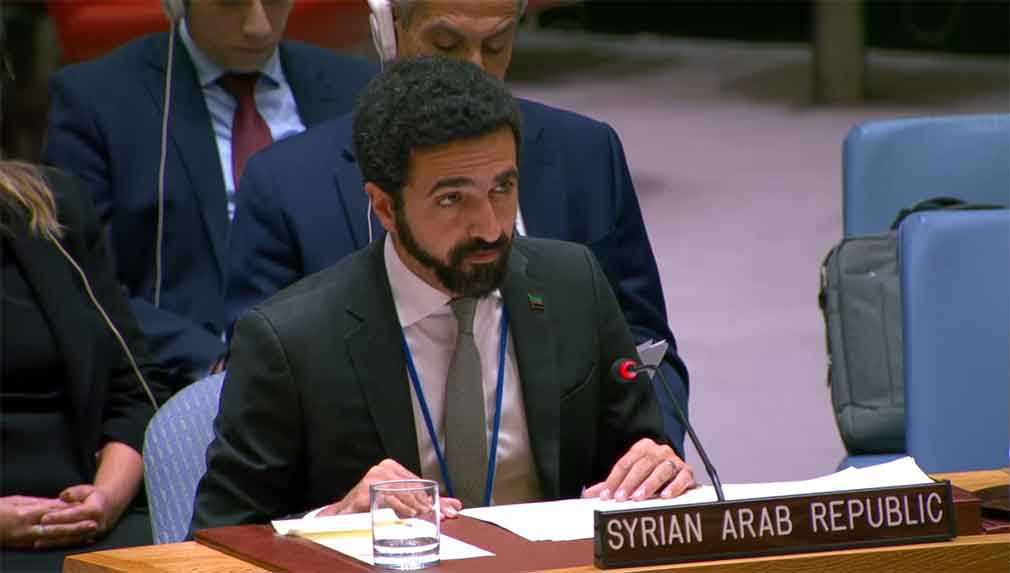
  • Syria denounces to UN recent Israeli aggression

    Syria denounces to UN recent Israeli aggression

    In a recent interview with Al-Arabiya Al-Hadath, Syrian diplomat Olabi articulated Damascus’s firm stance on maintaining national advancement while countering external threats. The official emphasized that Syria would continue progressing “at all levels” without yielding to destabilizing provocations.

    Olabi clarified that any response from Damascus would be meticulously coordinated through established international channels, with the paramount priority being the protection of Syrian civilians. This approach underscores the government’s commitment to measured diplomacy amid regional tensions.

    The Syrian government is concurrently intensifying diplomatic campaigns to isolate Israel internationally and diminish support from its allied nations. This strategic initiative aims to reshape geopolitical dynamics through multilateral engagement rather than unilateral action.

    Referencing recent developments at the United Nations, the diplomat highlighted that during the latest Security Council session, the Israeli ambassador witnessed unanimous consensus among all fifteen member states. The council collectively condemned acts of aggression and reaffirmed support for Syria’s sovereignty and territorial integrity.

    Furthermore, Syrian representatives are actively engaged in efforts to renew the United Nations Peacekeeping Force’s mandate. This initiative seeks to enhance security mechanisms along separation lines and contribute meaningfully to long-term regional stability, demonstrating Syria’s commitment to diplomatic solutions within international frameworks.

  • FIHAV 2025 ends with Cuba’s economic highlights

    FIHAV 2025 ends with Cuba’s economic highlights

    Havana’s International Trade Fair has become the focal point for significant foreign investment policy revelations, with government officials detailing an ambitious macroeconomic stabilization program. Deputy Prime Minister and Minister of Foreign Trade and Foreign Investment Oscar Perez-Oliva presented these transformative measures during the 8th Investment Forum, capturing the attention of international companies and economic experts alike.

    The comprehensive reforms include the strategic expansion of Special Economic Zones beyond the established Mariel Special Development Zone (ZEDM) model. These new zones will target specific sectors including technology parks and real estate development, creating specialized hubs for foreign investment.

    Financial innovation forms a cornerstone of the new policy framework, particularly through Selective Swap Operations. This sophisticated financial mechanism enables targeted debt restructuring to generate foreign currency earnings and secure international financing. The government simultaneously introduced a groundbreaking real estate initiative that allows foreign investors to fund residential projects under specific conditions.

    All proposed business ventures must demonstrate financial self-sufficiency in foreign currency while adhering to stringent requirements for heritage conservation, energy efficiency standards, and implementation of renewable energy sources. These environmental and cultural protections form an integral part of the investment criteria, ensuring sustainable development aligns with economic objectives.

  • Turkiye reaffirms its firm support for Palestinian cause

    Turkiye reaffirms its firm support for Palestinian cause

    The Turkish Ministry of Foreign Affairs has issued a decisive statement through its official social media channels, marking the International Day of Solidarity with the Palestinian People. The diplomatic communiqué emphasized Ankara’s continued and resolute backing of Palestinian aspirations for self-determination and statehood.

    In the declaration, Turkish authorities articulated their persistent advocacy for the establishment of an independent, sovereign Palestinian nation with territorial integrity. The proposed state would be founded upon pre-1967 borders with East Jerusalem serving as its designated capital, aligning with numerous United Nations resolutions that have historically addressed the Palestinian question.

    This annual observance, formally recognized by the United Nations General Assembly since 1977, serves as a global platform for nations to voice their support for Palestinian rights and condemn ongoing violations stemming from occupation. Turkey’s participation joins a chorus of international voices that utilize this date to reaffirm their diplomatic positions regarding one of the world’s most protracted geopolitical conflicts.

    The Turkish statement notably avoids any direct mention of Israel while simultaneously reinforcing the nation’s longstanding policy orientation toward the Palestinian cause. This positioning reflects Ankara’s careful diplomatic balancing act in the region while maintaining its principled stance on Palestinian self-determination.

  • Solidarity Meeting with Cuba begins with a march in Valparaiso

    Solidarity Meeting with Cuba begins with a march in Valparaiso

    Across multiple Chilean cities, a powerful coalition of solidarity activists united in a vibrant demonstration against the United States’ longstanding economic embargo against Cuba. The two-day event, organized by solidarity movement groups from Coquimbo, La Serena, Santiago, Talca, Valdivia, Ovalle, Concepcion, Valparaiso, and Viña del Mar, featured a spirited march through the streets followed by a political and cultural gathering at the Insomnia Theater.

    Protesters carried signs and waved flags while chanting slogans such as “A Tumbar, a Tumbar el Bloqueo Criminal” (Do Away, Do Away The Criminal Blockade), “Cuba Si, Bloqueo No” (Cuba Yes, Blockade No), and phrases honoring Fidel Castro’s legacy of resistance against American imperialism.

    Marisol Molina, head of the movement’s southern region, expressed both joy at the reunion of activists and deep concern about recent developments. She specifically highlighted President Donald Trump’s escalating threats in the Caribbean region, his administration’s tightening of the economic, commercial, and financial siege against Cuba, and the additional hardship caused by Hurricane Melissa’s recent impact on the island’s eastern region.

    The event attracted significant diplomatic presence, including Cuban Ambassador to Chile Oscar Cornelio Oliva, alongside other members of the diplomatic corps, city council members, academics, and representatives from various political and social organizations who gathered to show their support for the Caribbean nation.

  • Cuba and St. Petersburg strengthen historic bonds of brotherhood

    Cuba and St. Petersburg strengthen historic bonds of brotherhood

    In a significant diplomatic engagement, St. Petersburg Governor Alexander Beglov met with Roberto Morales, a high-ranking official from the Communist Party of Cuba, on Friday, solidifying the strategic alliance between Russia and Cuba. Governor Beglov emphatically declared that Russia would perpetually stand in solidarity with Cuba, reinforcing his nation’s commitment to defending what Russian officials frequently refer to as the ‘island of freedom.’

    The high-level discussion, part of Morales’ official visit to Russia, served as a platform to deepen bilateral ties. Beglov extended specific gratitude to Cuban President Miguel Diaz-Canel for the warm hospitality during recent exchanges, which facilitated productive dialogues on critical joint initiatives. The Governor emphasized the mutual dedication to preserving Cuba’s independence and sovereignty.

    In reciprocal remarks, Morales, the Secretary of Organization of the Central Committee of the Communist Party of Cuba, acknowledged the substantial advancements in relations linking St. Petersburg with key Cuban provinces, including Havana, Matanzas, and Santiago de Cuba. A central point of his address was the profound appreciation for the consistent political and material support from both the Russian government and its citizens. This support is crucial for Cuba’s ongoing struggle against the long-standing U.S. commercial and financial blockade, a policy maintained across multiple American administrations. Morales also thanked Russia for its prompt humanitarian assistance following the devastation of Hurricane Melissa.

    Prior to this meeting, the Cuban delegation was formally received at the St. Petersburg Legislative Assembly by its President, Alexander Belsky. Morales’ official tour, which commenced in Moscow on November 25 under the invitation of the United Russia party and the Communist parties of the Russian Federation, is scheduled to conclude on November 30. The visit underscores a shared objective to further broaden and intensify the strategic cooperation between the two nations.

  • Neither Cayo Granma nor Santiago de Cuba are alone

    Neither Cayo Granma nor Santiago de Cuba are alone

    Cuban President Miguel Díaz-Canel Bermúdez conducted a comprehensive inspection tour of Santiago de Cuba, the province most severely impacted by Hurricane Melissa’s recent devastation. The presidential visit included Cayo Granma, a historic fishing community situated three nautical miles inland from Santiago Bay, where the hurricane’s destructive forces wreaked particular havoc on the island’s infrastructure.

    The presidential delegation, comprising deputy prime ministers, ministers, and key sector directors coordinating recovery efforts, assessed the extensive damage across coastal communities including La Socapa, Caracoles, and Aguadores. Local residents compared Melissa’s destruction to Hurricane Sandy’s impact thirteen years prior, with many describing the recent storm as equally or more devastating.

    Remarkably, comprehensive evacuation procedures prevented casualties or injuries—a point of local pride shared with the visiting president. This marked the first presidential visit to Cayo Granma according to island residents, symbolizing the administration’s commitment to affected regions.

    The tour included Juan Gualberto Gómez Primary School, which had lost its entire roof during the October 29th storm but has since been reroofed and reopened for its 61 students. President Díaz-Canel engaged with students and faculty, discussing educational continuity, meal programs, and athletic facilities. When the president suggested basketball court installation, students unanimously requested soccer facilities instead—a request the president laughingly committed to fulfilling.

    Damage assessments reveal 170 of Cayo Granma’s 256 homes sustained damage, with 15 completely destroyed and 20 partially destroyed. Roof damage affected 115 structures, while 170 mattresses required replacement. Recovery assistance has included approximately 1,000 roofing tiles and food kits from the Cuban government, World Food Programme, Venezuela, and private donations from MSMEs and Cuban citizens.

    At a subsequent Provincial Defense Council meeting, President Díaz-Canel reviewed recovery progress, noting electrical service restoration at 84% completion and damage validation for 48,768 of 141,000 initially reported damaged homes. The president committed to deploying national resources for final recovery pushes, emphasizing that Santiago de Cuba—the cradle of the Cuban Revolution—deserves and will receive full national support in rebuilding efforts.

  • Measures announced to make foreign investment more flexible and dynamic

    Measures announced to make foreign investment more flexible and dynamic

    In a significant policy shift, the Cuban government has unveiled comprehensive measures to revitalize foreign investment as a cornerstone of its economic strategy. The announcement came during the 8th Investment Forum at the 41st Havana International Fair, where Deputy Prime Minister Oscar Pérez-Oliva Fraga outlined sweeping reforms designed to create a more dynamic business environment.

    The new framework introduces substantial monetary flexibility, allowing dual currency operations in both national and foreign currencies according to investor needs. Foreign investment enterprises will be encouraged to focus on generating foreign income through exports or sales to domestic sectors with foreign currency capabilities. The government will establish ‘more competitive and realistic’ foreign exchange rates across certain sectors and permit companies to maintain offshore bank accounts to circumvent blockade-related financial restrictions.

    Procedural simplifications represent another major component of the reform package. The requirement for feasibility studies has been eliminated in favor of business plans, evaluation timelines have been halved from 15 to 7 days, and ‘positive silence’ provisions will automatically approve applications if agencies fail to respond within specified periods. Documentary requirements have been streamlined to essential documents only, and property appraisal validations have been extended beyond one year.

    Novel investment modalities include automatic establishment of wholly foreign-owned companies for hotel leasing tenders, reactivation of underutilized national assets with profit-sharing arrangements, unrestricted wholesale trading rights, and direct fuel import authorization when domestic supplies are unavailable. Labor reforms grant investors final hiring decisions, while permitting foreign currency bonus payments from profits generated through external income.

    The government is actively promoting foreign participation in banking and financial services while continuing development of special economic zones for targeted sectors like real estate and technology parks. Innovative financial instruments include selective swap operations—not merely for debt repayment but structured around sustainable businesses generating foreign currency income.

    Deputy Prime Minister Pérez-Oliva identified food production and knowledge economy sectors as strategic priorities, citing successful Vietnamese rice production partnerships as models. The administration is promoting ‘flexible and simpler business models’ to rapidly increase food output while leveraging Cuba’s skilled workforce in IT, biotechnology, and pharmaceutical industries.

    The updated investment portfolio features 426 projects across all provinces, with emphasis on food production, industry, tourism, and energy—particularly oil exploration and extraction. Eighty-three high-priority projects have been selected for their export potential.

    Yanet Vázquez Valdés, Deputy Minister of Foreign Trade and Foreign Investment, clarified that while direct hiring remains exceptional, the state employment agency system remains the general rule. These measures will inform a new Foreign Investment Law creating legal frameworks for partnerships between state-owned enterprises and non-state sectors, combining resources to rescue installed capacities and drive economic growth.

    Regarding debt management, officials emphasized that swap operations won’t involve asset-for-debt exchanges but rather negotiate medium-to-long-term business arrangements that simultaneously reduce foreign company debts while contributing to economic expansion.

  • Dignity and memory in white coats

    Dignity and memory in white coats

    On November 27th, 2025, Cuba solemnly observed the 154th anniversary of the execution of eight medical students by Spanish colonial forces in 1871. The streets of Havana filled with commemorative activities as citizens gathered to honor the memory of these young martyrs who became symbols of Cuban resistance.

    The ceremony commenced at the University of Havana, where participants descended the steps toward the La Punta monument. The event was presided over by Miguel Díaz-Canel Bermúdez, First Secretary of the Party’s Central Committee and President of the Republic, alongside senior government and party officials.

    Thalía Beatriz Morell García, an ideological representative from the National Secretariat of the Federation of University Students (FEU), emphasized the historical significance of the march. “We march not only in remembrance but for this homeland, built with the blood of its finest sons and daughters,” she stated during the ceremony.

    The commemorative event highlighted the transformation of historical pain into progressive action. Morell García noted that the Cuban Revolution, under the leadership of Fidel Castro Ruz, converted tragedy into inspiration, establishing educational institutions and healthcare systems that honor the students’ original aspirations.

    Additional floral offerings were placed at the monument of Julio Antonio Mella, the student leader and anti-imperialist activist, near University Hill. The ceremony brought together prominent figures including Yuniasky Crespo Baquero, Head of the Ideological Department of the Party’s Central Committee, Rolando Yero Travieso from the Department of Social Sector Affairs, Deputy Prime Minister Inés María Chapman, and leaders from the Young Communist League and student federations.

    The gathering echoed with chants of “Neither dead nor forgotten!”—a powerful refrain demonstrating Cuba’s enduring commitment to preserving historical memory and national dignity against colonial and imperial forces.

  • Syria Highlights Fidel’s legacy

    Syria Highlights Fidel’s legacy

    In a significant diplomatic gathering, Syrian and Cuban representatives convened to commemorate the profound legacy of the late Cuban revolutionary leader Fidel Castro, focusing on his pivotal role in fostering bilateral relations and advancing Global South solidarity.

    The assembly highlighted the remarkable outpouring of admiration from the Syrian populace following Castro’s passing, noting how his visionary leadership continues to resonate across international boundaries. Participants examined Castro’s strategic diplomacy that significantly strengthened Cuban-Syrian ties while simultaneously reshaping the Caribbean nation’s relationships with developing countries worldwide.

    A particularly poignant moment came with the reading of an official statement from the Association of Syrian Graduates of Cuban Universities, which delivered an emotional tribute to the Commander’s enduring influence. The document emphasized how Castro’s principles of social justice, equality, and international cooperation left an indelible mark on generations of Syrian professionals educated in Cuba.

    The declaration recalled Cuba’s steadfast support for Syria and other Global South nations during their most challenging historical periods, asserting that Castro’s ideological framework remains vibrantly alive among Syrian professionals who studied on the island. The Association further reaffirmed its commitment to perpetuating Castro’s vision by continuing to strengthen fraternal bonds between the two nations, inspired by the leader’s conviction that global justice, peace, and human dignity can only be achieved through international unity and mutual solidarity.

  • International Congress on Maths and Computing concludes in Cuba

    International Congress on Maths and Computing concludes in Cuba

    Despite facing significant logistical challenges, Cuba recently hosted a successful scientific conference that showcased innovative approaches to mathematical education and talent development. Luis Ramiro Piñeiro, President of the Cuban Society of Mathematics and Computing, confirmed the event’s achievement while emphasizing its international significance.

    A highlight of the conference was the presentation by Eduardo Miguel Pérez of Granma, who introduced a groundbreaking sustainable model for cultivating mathematical talent. The innovative framework centers on knowledge management principles that transform students from passive recipients of information into active creators within their communities. “Scientific literacy represents the fundamental pathway toward equitable development,” Pérez asserted during his address.

    The comprehensive strategy incorporates multiple dimensions including initial strength assessment, strategic implementation of information and communication technologies (ICT), and critical socialization of knowledge among participants. Pérez explained that the model aims to “establish reciprocal relationships between academic groups and their communities, thereby fostering environments built on trust and mutual solidarity.”

    Conference organizers identified teacher preparation and institutional partnerships as critical components for creating dynamic learning ecosystems. Piñeiro particularly highlighted the conference’s value as “an exemplary model for the nation” in preparing for international knowledge competitions and mathematics olympiads.

    The event’s academic program featured diverse workshops including cryptography sessions led by Cybersecurity students from the University of Camagüey. Additional workshops covered mathematics pedagogy, computer science, applied mathematics, and artificial intelligence applications.

    All presented research papers will be archived in the conference proceedings, with selected contributions scheduled for publication in the prestigious journal Ciencias Matemáticas. Sponsored by the University of Camagüey, the conference demonstrated the continued vitality of Cuban scientific institutions and their dedicated commitment to nurturing exceptional talent.