标签: Cuba

古巴

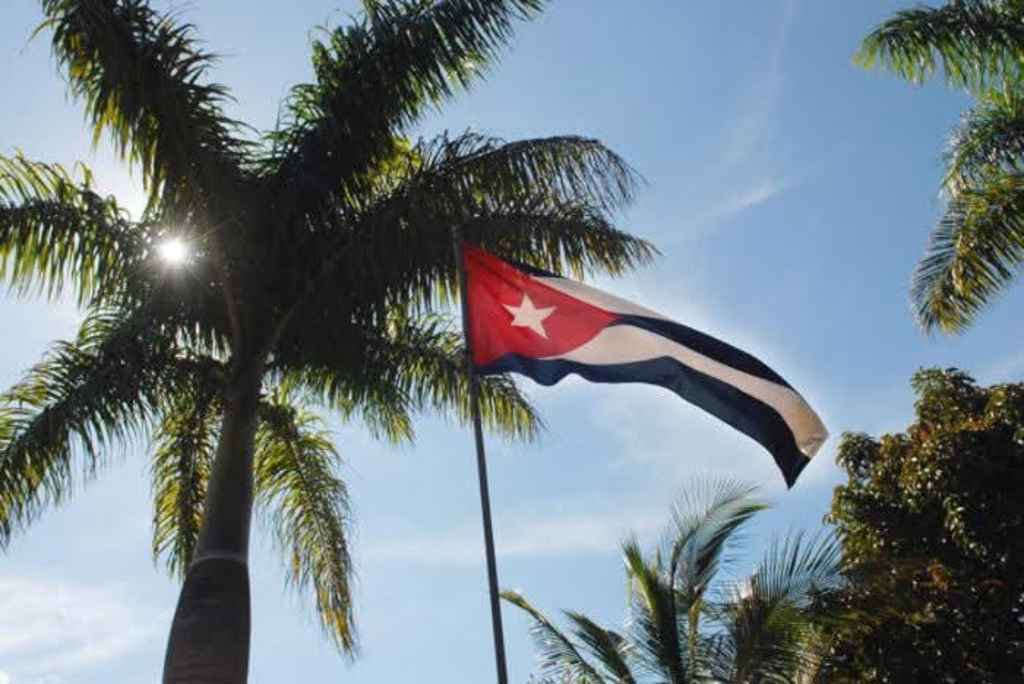
  • Today, for Cuba, there is no other path than the one it has always followed

    Today, for Cuba, there is no other path than the one it has always followed

    In a significant escalation of geopolitical tensions, the United States administration has issued a stark ultimatum to Cuba amid broader regional instability following recent military operations against Venezuela. President Donald Trump has employed inflammatory language suggesting military action as a probable option, while Secretary of State Marco Rubio presented Havana with a political demand: either transition to what he termed a “real economy” and alter its political system, or face intensified blockade measures and unprecedented pressure.

    This aggressive posture represents a dramatic departure from diplomatic norms, with Washington employing tactics including threats against sovereign nations, presidential kidnappings, and military interventions that fundamentally undermine established international relations frameworks. The administration appears to have abandoned conventional diplomatic pretenses, openly acknowledging its intention to economically strangle the Cuban people rather than maintaining previous rhetoric about democracy and human rights.

    Historical parallels emerge to the Reagan era, when similar threats were met with resolve by Commander-in-Chief Fidel Castro, who advocated unwavering firmness as the only appropriate response. Contemporary Cuban leadership appears to be embracing this same philosophy, indicating they will confront, resist, and ultimately defeat whatever challenges the U.S. imposes across any domain of conflict.

    Analysts suggest these aggressive maneuvers may reflect desperation from a declining power attempting to reassert hegemonic control through fear amid internal domestic crises, potentially pushing global stability to the brink.
  • Sheinbaum: Mexico can be a vehicle for US-Cuba communication

    Sheinbaum: Mexico can be a vehicle for US-Cuba communication

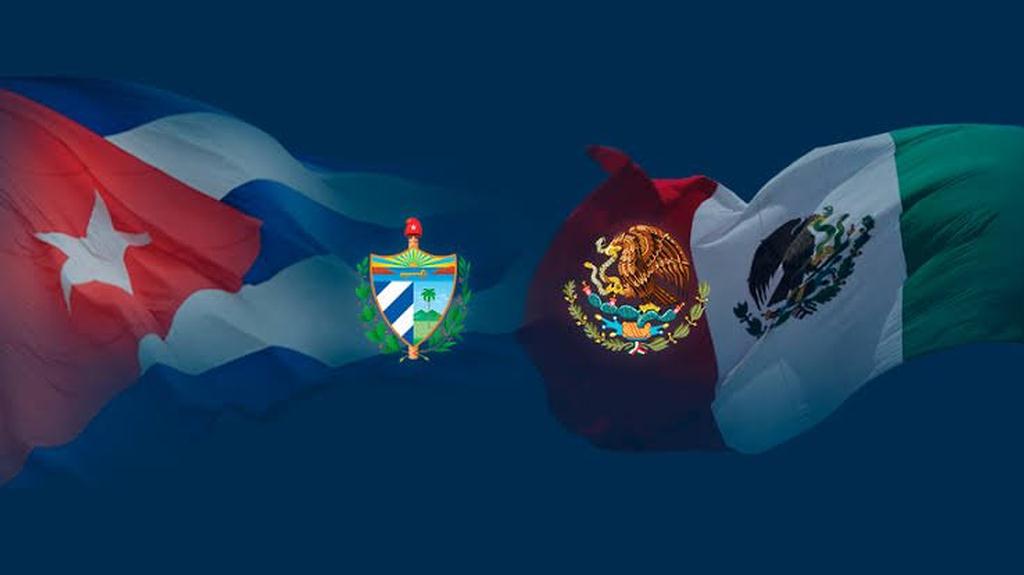
    Mexican President Claudia Sheinbaum has reaffirmed her nation’s longstanding diplomatic relationship with Cuba, emphasizing that bilateral ties transcend political party affiliations in both countries. The statement came during a press engagement where Sheinbaum addressed questions regarding potential oil shipments to Cuba and broader geopolitical dynamics.

    President Sheinbaum highlighted that Mexico consistently opposed the United States’ economic blockade against Cuba from its inception, establishing a historical precedent for diplomatic solidarity. “The Mexico-Cuba relationship is historic,” Sheinbaum stated on December 22. “Mexico was the only country that opposed the blockade imposed by the United States from the outset. Therefore, regardless of the political party in power, there has always been a Mexico-Cuba relationship.”

    The comments followed Sheinbaum’s recent telephone discussion with former US President Donald Trump, wherein the Republican figure announced intentions to initiate ground operations against cartels. This development occurs against a backdrop of escalating US aggression toward Venezuela and continued threats against Cuba and other nations.

    Sheinbaum elaborated on the multidimensional cooperation between Mexico and Cuba, citing energy collaboration and frequent diplomatic exchanges spanning decades. These interactions have persisted irrespective of changing political leadership in Washington, demonstrating the resilience and continuity of Mexico-Cuba relations despite external pressures.

    The Mexican leader’s remarks directly addressed inquiries about sustaining oil exports to Cuba, which continues to endure a comprehensive economic, commercial, and financial embargo imposed by Washington over sixty years ago. Experts universally recognize this embargo as the primary impediment to Cuba’s economic development and international integration.

  • Colombian Solidarity Movement decry US threats on Cuba

    Colombian Solidarity Movement decry US threats on Cuba

    A prominent international solidarity movement has issued a forceful condemnation of United States policies toward Cuba, characterizing recent US government declarations as “fascist” attempts to undermine Cuban self-determination. The organization expressed unwavering support for Cuba’s sovereignty and endorsed calls by Cuban intellectuals and artists to resist perceived threats from Washington.

    The movement specifically endorsed the Cuban Chapter of the Network of Intellectuals and Artists in Defense of Humanity’s position regarding escalating tensions between the two nations. In its comprehensive statement, the group reaffirmed its steadfast commitment to defending Cuba’s sovereign rights and national integrity.

    Beyond mere condemnation, the movement issued a broad mobilization appeal to Colombian civil society, urging social organizations, labor unions, artistic communities, student groups, and the general public to unite in defense of Cuba. The solidarity platform specifically acknowledged gratitude for Cuba’s “tireless struggle to achieve peace” in Colombia, highlighting the island nation’s historical role in regional conflict resolution.

    The statement concluded with a historical reference to Cuban revolutionary leader Fidel Castro, whose centennial year is currently being commemorated. Invoking Castro’s “absolute conviction and faith in victory,” the movement drew inspiration from Cuba’s 1961 victory at the Bay of Pigs (known as Giron in Cuba) as motivation to resist what it termed “the barbarity that surrounds us.”

    This development follows earlier condemnation from Cuban President Miguel Diaz-Canel, who characterized recent US government statements as immoral. Responding to remarks attributed to former US President Donald Trump, Diaz-Canel questioned America’s moral authority to criticize Cuba, asserting that “those who turn everything into a business, even human lives, have no moral authority to point the finger at Cuba in any way.” The Cuban leader reaffirmed his nation’s readiness to defend itself against external pressure.

  • Network in Defense of Humanity calls for defense of Cuban sovereignty

    Network in Defense of Humanity calls for defense of Cuban sovereignty

    A Cuban publication has issued a stark warning against what it characterizes as imperialist and fascist tendencies within the United States government, asserting that these developments represent a grave threat rather than isolated extremist rhetoric. The analysis presents a comprehensive indictment of current U.S. foreign policy under the Trump administration, drawing direct historical parallels to fascist regimes.

    The publication contends that recent evidence demonstrates the American government, facing multiple domestic crises including the Epstein scandal, Immigration and Customs Enforcement (ICE) controversies, and declining international credibility, is adopting Hitler-like tactics to divert attention from internal problems. This strategic shift occurs against the backdrop of what the article identifies as the irreversible emergence of a multipolar world order.

    Emphasizing Cuba’s sovereign rights, the text accuses the Trump administration and Senator Marco Rubio of consistently disregarding established international legal frameworks. The article further develops its critique through an extended metaphor, comparing U.S. imperialism to a ‘predatory dog’ that attacks with ‘brutal rage’ at the slightest perception of weakness in other nations.

    From this perspective, the publication argues that American foreign policy treats populations in developing nations and economically disadvantaged communities as expendable assets in geopolitical calculations. In response to what it terms the current administration’s ‘genocidal and aggressive course,’ the Cuban chapter of the Network in Defense of Humanity (REDH) has issued a mobilization call. The organization urges intellectuals, artists, and social movements worldwide to unite in solidarity and strengthen defensive alliances to protect national sovereignty against perceived American aggression.

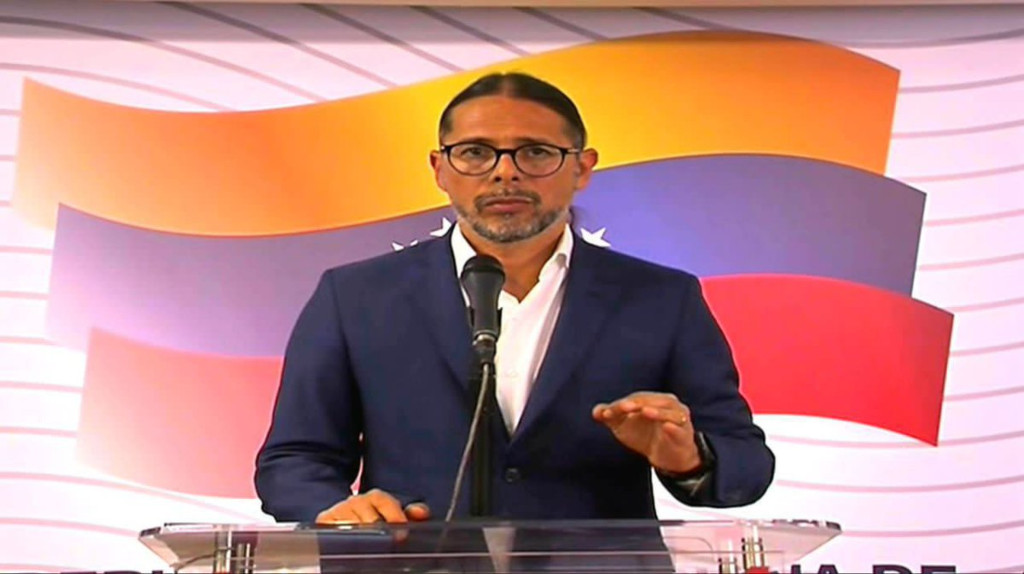
  • Venezuela thanks international solidarity from the Culture sector

    Venezuela thanks international solidarity from the Culture sector

    The international literary community has rallied behind Venezuela following what prominent writers describe as an unlawful U.S. intervention resulting in the abduction of President Nicolás Maduro and First Lady Cilia Flores. A powerful declaration endorsed by Venezuelan intellectuals condemns the operation that precipitated significant human casualties and material devastation.

    This coordinated statement, backed by the World Poetry Movement, emphasizes the global poetry community’s firsthand experience with Venezuela’s peaceful and democratic character. The document celebrates Venezuela’s participatory democracy framework, anchored by a constitution ratified through overwhelming popular mandate in 1999. It highlights the nation’s robust electoral systems and recently revitalized community participation mechanisms as evidence of its democratic legitimacy.

    The author categorically refutes ideological justifications for foreign aggression, identifying economic motives—specifically Venezuela’s substantial natural resource wealth—as the true driver behind international stigmatization. The statement contextualizes current hostilities within a historical pattern of external interference affecting Venezuelan leaders across the political spectrum.

    Despite ongoing threats to national sovereignty, the writer affirms the constitutional continuity of the Venezuelan state through the establishment of an interim presidency, presenting this as a testament to the nation’s resilience against external pressures.

  • Mexico on alert for adverse weather conditions

    Mexico on alert for adverse weather conditions

    Mexican authorities have escalated emergency preparedness measures as two formidable winter systems converge to create severe weather conditions across multiple regions. The National Meteorological Service confirms Cold Front 27 has established stationary positioning over the Yucatan Peninsula and southeastern territories, triggering intense precipitation patterns with isolated torrential downpours particularly impacting Veracruz’s Los Tuxtlas and Olmeca regions.

    Simultaneously, an associated polar air mass continues to drive temperatures to frigid levels throughout central, eastern, and southeastern Mexico. This atmospheric combination has generated powerful ‘Norte’ wind events along the Gulf of Mexico coastline and through the Isthmus and Gulf of Tehuantepec, with wind intensities ranging from strong to severe.

    Compounding the situation, the season’s second winter storm—active since the weekend—continues to batter northern Mexico with freezing temperatures, gale-force winds, and sustained precipitation. Meteorological experts warn of probable snow and sleet accumulation across Chihuahua, Durango, Sinaloa’s mountainous terrain, Coahuila, Nuevo Leon, and Zacatecas. Additionally, dangerous freezing rain events are anticipated in Chihuahua, Durango, Zacatecas, and Nuevo Leon.

    Civil protection agencies have issued urgent advisories regarding potential river swelling and flash flooding in vulnerable watersheds. The compounded risks include heightened landslide susceptibility, urban waterlogging in low-lying areas, and wind-related hazards including tree uprooting and structural damage to signage and infrastructure. Officials emphasize continuous monitoring of official channels for emergency updates.

  • A quarter of Cuba’s inhabitants are over 60 years old

    A quarter of Cuba’s inhabitants are over 60 years old

    Cuba is experiencing a profound demographic transformation, establishing itself as one of the world’s most rapidly aging societies. Recent data from the National Office of Statistics and Information (ONEI) reveals that the Caribbean nation now demonstrates higher aging rates than several European countries traditionally associated with elderly populations, including Italy (24.1%), Bulgaria (23.8%), Finland (23.4%), Greece (23.3%), and Croatia (23.0%).

    The report, titled “Population Aging, Cuba and its Territories 2024,” employs a comprehensive methodology that calculates the effective population. This approach incorporates all individuals born within the country during a calendar year, plus permanent residents who have accumulated 180 days or more of stay in Cuba within the past 365 days, excluding those who have died.

    Significant regional disparities exist across the island. Villa Clara province in central Cuba records the highest aging rate at 29.1 percent, followed closely by the capital Havana at 28.1 percent. In contrast, Guantánamo province in eastern Cuba maintains the lowest rate at 22.5 percent.

    At the municipal level, Plaza de la Revolución in Havana emerges as the area with the oldest demographic profile at 36.8 percent, while Yateras in Guantánamo province maintains the youngest population structure at 17.1 percent.

    A particularly telling metric reveals the scale of Cuba’s demographic inversion: the ratio of population aged 60 and over to those under 15 reached 1,625 older adults for every 1,000 children and young people aged 0-14 by the end of 2024. This ratio has increased by 247 points compared to the previous year, highlighting the accelerating pace of Cuba’s population aging.

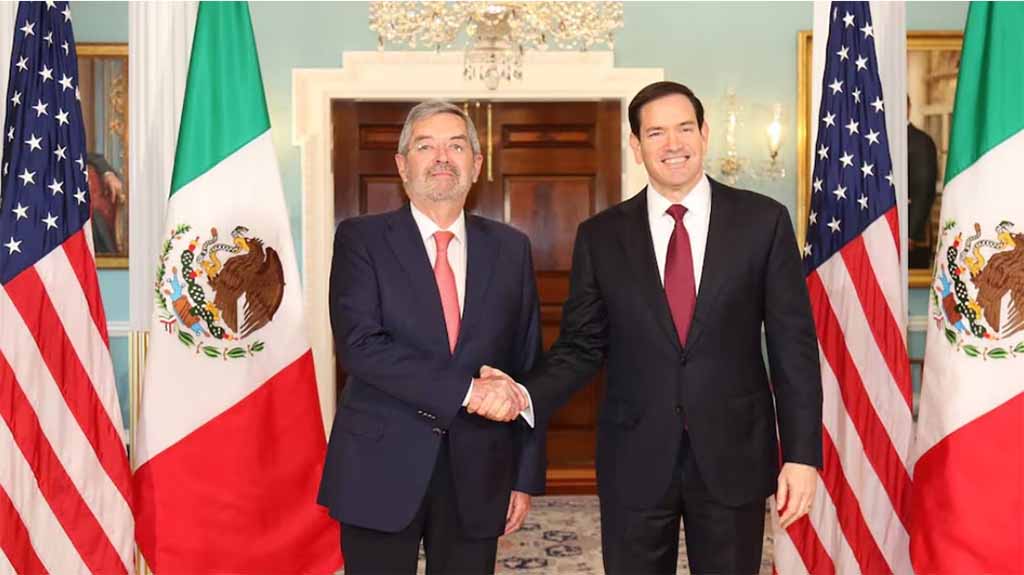
  • Top Mexican and US diplomats meet

    Top Mexican and US diplomats meet

    In a strategic diplomatic move, Mexican Foreign Minister Juan Ramon de la Fuente has engaged in high-level discussions with U.S. Secretary of State Marco Rubio, following direct instructions from President Claudia Sheinbaum. The dialogue, confirmed through official communications from Mexico’s Secretariat of Foreign Affairs via social media platform X, represents a concerted effort to navigate escalating tensions regarding cross-border security cooperation.

    The conversation specifically addressed the Border Security and Law Enforcement Cooperation Program, with Mexican officials emphasizing that all collaboration must operate under strict adherence to fundamental principles including unconditional respect for national sovereignty, territorial integrity, and a framework of shared responsibility. The Mexican government further underscored the importance of mutual trust and collaborative engagement without subordination as non-negotiable components of any bilateral agreement.

    This diplomatic outreach comes as a direct response to recent statements from former U.S. President Donald Trump suggesting potential ground operations against Mexican drug cartels. President Sheinbaum has affirmed Mexico’s commitment to strengthening communication channels with United States officials while maintaining the nation’s sovereign rights. When questioned about Trump’s comments, Sheinbaum indicated openness to potential dialogue with the Republican figure to enhance coordination within established diplomatic frameworks.

    The political context surrounding these developments includes recent aggressive actions by Washington against Venezuela, where President Nicolás Maduro and First Lady Cilia Flores were reportedly apprehended and transported to U.S. territory to face narcoterrorism allegations. This incident has heightened sensitivities throughout Latin America regarding cross-border military and law enforcement operations, making Mexico’s firm stance on sovereignty particularly significant in current geopolitical dynamics.

  • European agreement with Mercosur in the spotlight

    European agreement with Mercosur in the spotlight

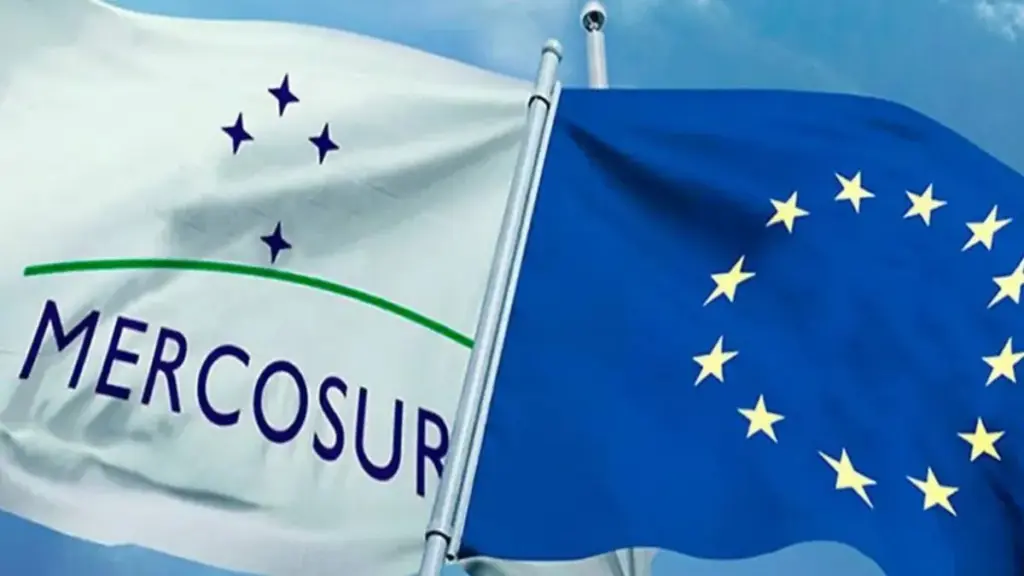
    In a landmark decision concluding over a quarter-century of negotiations, the European Union has formally approved a comprehensive trade agreement with the Southern Common Market (Mercosur). The Council of the European Union secured the necessary majority from its 27 member states, overcoming vocal opposition from several nations including France, Poland, and Ireland.

    The breakthrough follows intensive negotiations that incorporated specific clauses to address European agricultural concerns, a primary sticking point throughout the lengthy discussions. European Commission President Ursula von der Leyen is now set to travel to Paraguay to formally sign the accord with Mercosur leadership.

    This agreement establishes the framework for what will become the world’s most extensive free trade zone upon full implementation. However, the process requires one additional ratification step: following the signing ceremony, the pact must return to Europe for approval by the European Parliament, with a vote anticipated in the coming weeks.

  • The AU Committee of Permanent Representatives will meet in Ethiopia

    The AU Committee of Permanent Representatives will meet in Ethiopia

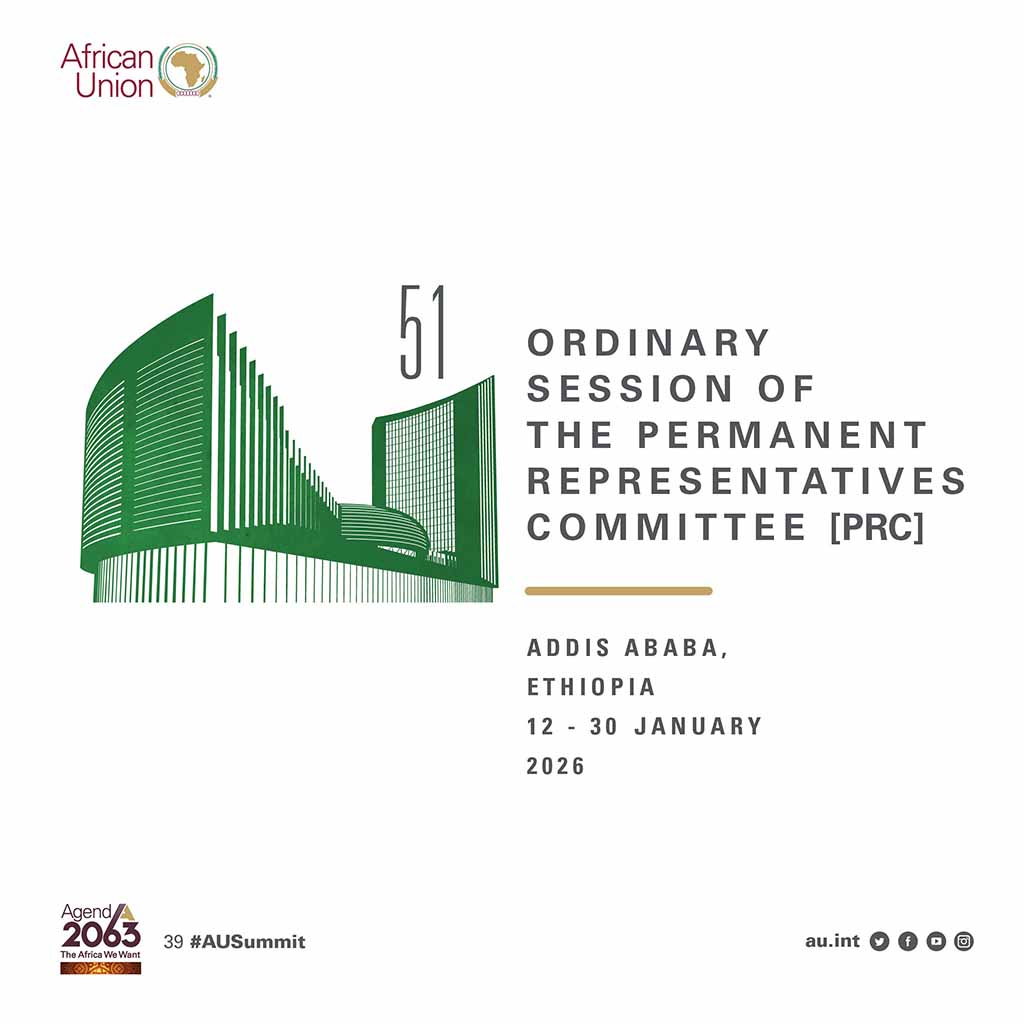
    The African Union has commenced a crucial series of preparatory meetings in Addis Ababa, marking the beginning of intensive diplomatic engagements leading to the 39th Ordinary Session of the Assembly of Heads of State and Government. The Committee of Permanent Representatives, comprising ambassadors from all member states accredited to the AU, alongside senior officials from the Commission and various continental bodies, convened on January 30 to deliberate on an extensive agenda of pan-African significance.

    Central to their discussions are comprehensive evaluations of the implementation progress regarding last year’s thematic focus on reparatory justice for Africans and people of African descent. The assembly will also examine strategic roadmaps for achieving sustainable water security and safe sanitation infrastructure across the continent by 2026, addressing critical development challenges.

    The diplomatic agenda further encompasses multifaceted issues including continental humanitarian response mechanisms, the advancement of free movement protocols for African citizens, and operational reviews of specialized technical committees. Particular attention will be given to the activities of the China Subcommittees, reflecting the AU’s strategic international partnerships, along with performance assessments of the AU Commission and its specialized agencies.

    This preliminary meeting establishes the foundational framework for the subsequent Executive Council’s 48th Ordinary Session scheduled for February 11-12, where African foreign ministers and designated officials will convene to refine policy recommendations and oversee implementation mechanisms. These ministerial deliberations will directly inform the final agenda and decision-making processes for the heads of state summit on February 14-15, where continental policies receive ultimate ratification and strategic direction for the coming year.