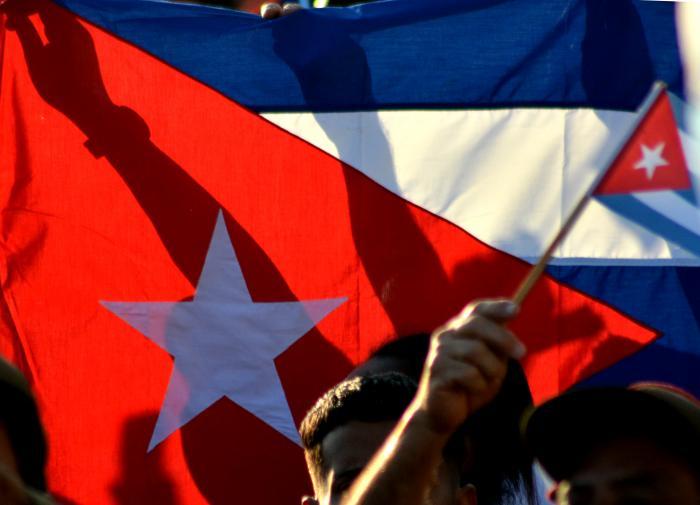
标签: Cuba

古巴

  • Gaza authorities denounce Israeli blockade and warn of crisis

    Gaza authorities denounce Israeli blockade and warn of crisis

    The healthcare system in the Gaza Strip is facing catastrophic failure as critical shortages of medical supplies and medications threaten to suspend approximately 10,000 scheduled surgical procedures, according to a senior health official. Alaa Halas, Director of the Care and Pharmacy Department within the Ministry of Health, issued an urgent warning that this developing crisis represents a severe crime endangering tens of thousands of vulnerable patients.

    Speaking to the Safa news agency, Halas revealed that multiple medical facilities that survived recent military operations have already suspended both scheduled and emergency surgeries. Among affected institutions is the Kuwait Specialized Hospital, a critical healthcare provider serving thousands of wounded civilians and patients requiring specialized care.

    The official emphasized that even emergency surgical interventions will face severe limitations if supply shortages persist. Current crisis levels have reached unprecedented severity according to health authorities monitoring the situation.

    Halas attributed the medical supply crisis to insufficient aid delivery despite ceasefire agreements. Since the October 10 truce took effect, Israel has permitted only 30% of agreed-upon supplies to enter the coastal territory, creating dire shortages across healthcare infrastructure.

    Comprehensive data from the Government Press Office reveals significant aid delivery discrepancies: only 17,819 trucks have entered Gaza out of 43,800 planned deliveries, averaging merely 244 daily shipments instead of the required 600. The fuel shortage proves particularly devastating, with only 394 fuel trucks arriving versus 3,650 promised, paralyzing hospital operations, bakeries, and water treatment facilities.

    The cumulative effect threatens approximately 200,000 patients requiring ongoing medical care, including 700 monthly intensive care patients and roughly 10,000 individuals awaiting surgical intervention.

  • US delivers Trump’s peace plan to Russia

    US delivers Trump’s peace plan to Russia

    The Kremlin has entered a critical waiting period as Russian presidential envoy Dmitriev returns from high-level negotiations in the United States. Presidential advisor Yuri Ushakov confirmed Tuesday that Moscow will withhold judgment on a proposed peace plan for Ukraine until receiving Dmitriev’s comprehensive briefing.

    The diplomatic discussions, held in Miami over two days, featured notable participation from the American side including presidential envoy Steve Witkoff and Jared Kushner, the businessman and former presidential son-in-law. This high-profile involvement underscores the significance Washington places on finding a resolution to the ongoing conflict.

    Ushakov emphasized that Dmitriev’s firsthand account of the negotiations will be essential for President Putin’s administration to evaluate the viability of the proposed settlement. The plan, developed collaboratively between Ukrainian officials and their European allies, represents the latest international effort to broker peace between the warring nations.

    The Kremlin’s deliberate approach signals both the complexity of the proposed agreement and Russia’s cautious stance toward any settlement that would require substantial concessions. The waiting period allows Russian leadership to thoroughly analyze the negotiation outcomes before formulating their official response, maintaining strategic ambiguity in the interim.

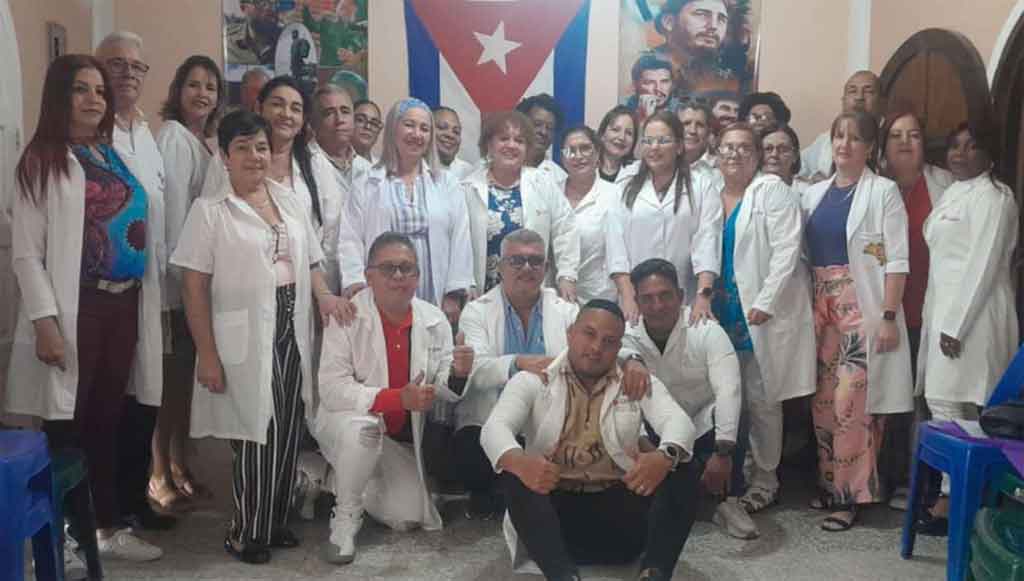
  • Specialized clinic in Cuba for post-chikungunya care opens

    Specialized clinic in Cuba for post-chikungunya care opens

    Cuba’s healthcare system has initiated a groundbreaking response to the ongoing chikungunya epidemic with the establishment of the nation’s first dedicated treatment facility. The Institute of Neurology and Neurosurgery in Havana’s Vedado district is leading this comprehensive care program for patients suffering from the mosquito-borne viral disease.

    Dr. Orestes Lopez, director of the institution, announced the initiative through an official statement released by the Ministry of Public Health (MINSAP). The specialized clinic will provide integrated medical services including detailed neurological evaluations, advanced imaging studies, targeted physical therapy regimens, and customized pain management protocols.

    The treatment approach incorporates anesthetic interventions for severe pain cases alongside rehabilitative therapies designed to enhance functional recovery and improve overall quality of life for patients experiencing the debilitating after-effects of chikungunya infection. While the Vedado-based facility has been fully equipped to handle incoming cases, health authorities have not projected specific patient numbers for this pioneering clinical service.

    This specialized medical response comes as Cuba confronts widespread transmission of the chikungunya virus that began in mid-year. The outbreak initially emerged as a localized cluster in Matanzas province in western Cuba before rapidly evolving into a nationwide epidemic affecting most regions of the country.

  • Perez Esquivel: Attacking Venezuela is attacking the entire continent

    Perez Esquivel: Attacking Venezuela is attacking the entire continent

    Nobel Peace Prize recipient Adolfo Pérez Esquivel has issued a severe condemnation of United States foreign policy toward Latin America through his organization, the Service for Peace and Justice (SERPAJ). The statement characterizes former President Donald Trump’s repeated threats to seize Venezuelan oil and national assets as founded on falsehoods, facilitated by the \”complicit silence\” of European allies and major international institutions including the United Nations, the Organization of American States (OAS), and the U.S. Congress. Pérez Esquivel accuses Washington of adopting a posture of \”fierce hostility\” that endangers the entire Latin American region. The critique further describes Trump as behaving like a \”great dictator\” who systematically disregards established international law, binding treaties, and the Universal Declaration of Human Rights. SERPAJ’s document highlights the enduring U.S. economic embargo against Cuba, now in its seventh decade, alongside contemporary threats directed at nations such as Colombia, Mexico, Brazil, and Nicaragua. It also alleges American interference in regional electoral processes, citing Honduras as a specific example. The statement contextualizes current U.S. actions within a long and violent history of supporting military dictatorships and orchestrating interventions across the continent to preserve its global hegemony. SERPAJ concludes that as U.S. power is increasingly contested by other nations on the world stage, it is aggressively seeking to secure its interests and maintain dominance within its traditional sphere of influence in Latin America through blockades, destabilization attempts, military posturing, and overt threats.

  • DRC: More than 500 incidents against humanitarian actors reported

    DRC: More than 500 incidents against humanitarian actors reported

    A recent analysis of security data from the Democratic Republic of Congo reveals a complex and volatile situation across its eastern provinces. While November witnessed a significant reduction in security incidents, dropping from 55 in October to 37 cases, the region continues to grapple with persistent violence and instability.

    Geographic distribution patterns show North Kivu remains the epicenter of insecurity, accounting for nearly half (48%) of all documented incidents throughout 2025. This troubled province is followed by South Kivu (27%), Ituri (14%), Tanganyika (8%), and Maniema (3%) in the annual rankings, demonstrating the widespread nature of the security challenges.

    The most prevalent security violations include property crimes such as thefts, robberies, and break-ins, alongside frequent obstructions and restrictions on civilian movement. While still occurring, more direct personal violence including intimidation, threats, and physical assaults represented a smaller proportion of total incidents.

    This persistent insecurity stems primarily from the proliferation and frequent clashes between numerous armed groups operating throughout eastern Congo. The resulting violence has triggered massive population displacements, creating a deepening humanitarian crisis that strains local resources and international response capabilities.

    Despite the dangerous operating environment, humanitarian organizations continue their critical work in the region. These agencies are implementing coordinated efforts to reach affected communities with emergency medical services, essential food supplies, and other life-saving assistance, often working under extremely challenging conditions to deliver aid to those most in need.

  • Japan will reform its employment policy for foreigners

    Japan will reform its employment policy for foreigners

    The Japanese government is implementing a significant restructuring of its foreign worker admission framework, introducing a new training system to replace the contentious Technical Internship Program. Under this revamped approach, authorities plan to cap employee admissions at approximately 426,000 participants during the initial two-year implementation phase.

    This policy shift, directed by Prime Minister Sanae Takaichi, seeks to alleviate critical labor shortages across essential industries while implementing stricter enforcement measures against visa overstays. The updated program creates a pathway for participants to advance to Specified Skilled Worker status, facilitating extended residency periods.

    Japan’s revised immigration strategy projects admitting 805,000 workers by March 2029—a reduction from the originally planned 820,000—reflecting the nation’s ongoing struggle with demographic aging and persistent workforce deficits. The restructured system will encompass 17 sectors, including agriculture and construction, representing a consolidation from the current 19 covered industries.

    The visa framework introduces two distinct categories: Type I visas permitting stays of up to five years, and Type II visas offering unlimited renewal opportunities alongside eligibility for permanent residency. Current Immigration Services Agency data reveals 333,000 Type I visa holders and 449,000 technical interns residing in Japan as of June 2025, highlighting the substantial scale of Japan’s foreign workforce initiative.

  • China rejects US restrictions on DJI

    China rejects US restrictions on DJI

    The Chinese government has issued a formal diplomatic protest against what it characterizes as discriminatory economic measures targeting its technology sector. Foreign Ministry spokesman Lin Jian articulated Beijing’s position that the United States has inappropriately broadened national security definitions to justify creating restrictive lists against Chinese corporations.

    Lin asserted that these actions represent unjustified suppression that fundamentally violates established principles of market fairness and international competition standards. The spokesman emphasized that such measures disrupt normal commercial operations and create artificial barriers in global technology markets.

    Official communications from Beijing specifically urged American authorities to rectify these contested practices and establish equitable operational conditions for Chinese enterprises. The statement highlighted the expectation for non-discriminatory treatment that aligns with international trade norms and bilateral agreements.

    The diplomatic exchange references ongoing tensions surrounding Chinese technology giants, particularly DJI, recognized as the global leader in civilian and commercial drone manufacturing with extensive international market penetration. This development occurs against the backdrop of increasing Washington-led restrictions imposed on multiple Chinese technology firms under national security pretexts, signaling a deepening technological divide between the two economic superpowers.

  • Prensa Latina selects Latin America’s Best Athletes for 2025

    Prensa Latina selects Latin America’s Best Athletes for 2025

    Cuba has accomplished a remarkable feat in sports recognition by securing all three major categories in the prestigious Prensa Latina Latin American Sports Survey for only the second time in history. The island nation’s athletes dominated the 61st edition of the annual poll, capturing honors in individual and team competitions against strong regional competitors.

    Triple jump sensation Leyanis Pérez emerged as the undisputed favorite in the female athlete category, commanding an impressive 73 votes from the outset of polling that began November 21. The track and field star outperformed 16 other nominated female athletes who each received at least one nomination.

    In a groundbreaking achievement, left-handed pitcher Livan Moinelo made history by becoming the first Cuban baseball player to claim the Latin American Male Athlete of the Year title. The Japanese league champion secured 42 votes, decisively outpacing Argentine football legend Lionel Messi, who trailed with 19 votes.

    The Cuban National Baseball 5 team provided the most dramatic victory, mounting a last-minute surge to claim the team award with 37 votes. The youth champions from the Nayarit World Championship edged out their Argentine rivals by a narrow four-vote margin following an intensive campaign supported by national media outlets.

    This triple victory marks only the second time Cuba has achieved such comprehensive recognition since 1989, when high jumper Javier Sotomayor, runner Ana Fidelia Quirot, and the women’s volleyball team simultaneously topped their categories.

    The 2023 survey carried special significance, commemorating two major sporting milestones: the centenary of Commander Fidel Castro’s birth, recognized as the architect of Cuba’s sports movement, and the fifth anniversary of Argentine football icon Diego Armando Maradona’s passing. Maradona himself had won the Sports Survey in 1986.

    This year’s edition demonstrated extensive international participation with 70 foreign media organizations and 43 Cuban outlets contributing to the voting process, reflecting the continued importance of these awards in Latin American sports journalism.

  • At least 46 Palestinians arrested in Israeli raids in the West Bank

    At least 46 Palestinians arrested in Israeli raids in the West Bank

    Israeli military forces engaged in a series of operations across the West Bank, resulting in both violent confrontations and widespread arrests. According to the Palestinian Red Crescent, soldiers opened fire on a civilian vehicle near the Awarta checkpoint adjacent to Nablus in the northern West Bank. The incident left one occupant with bullet wounds while two others sustained injuries from the subsequent overturning of their car.

    Concurrently, the Israel Defense Forces conducted extensive raids throughout multiple West Bank regions. Official Palestinian news agency Wafa documented these operations across three separate governorates. In Tulkarm Governorate, seven Palestinian individuals were apprehended across the villages of Deir al-Ghusun, Baqa al-Sharqiya, and Qaffin.

    The military operations extended to Qalqilya Governorate where five additional detentions occurred, while Hebron territory saw the most significant arrest numbers with twenty-two Palestinians taken into custody from the villages of Dura and Al-Tabaqa, alongside the Al-Fawwar refugee camp.

    These developments occur within the context of substantially increased Israeli security operations since October 2023. Official statistics indicate that Israeli forces have detained more than 12,000 Palestinians in the West Bank since the escalation of hostilities that began on October 7, 2023, marking one of the most intensive arrest campaigns in recent years.

  • Without education, there can be no revolution

    Without education, there can be no revolution

    Cuba has launched comprehensive nationwide celebrations honoring its educators, recognizing them as fundamental pillars in shaping the nation’s future. The ceremonies highlighted the extraordinary dedication of teachers who persevere through daily challenges and material limitations, driven not by reward but by profound vocational commitment to educating future generations.

    At the Higher Education awards ceremony, Rolando Pascual Fundora La Rosa, General Director of Services at Marta Abreu Central University of Las Villas, received the prestigious Hero of Labor of the Republic of Cuba title directly from President Miguel Díaz-Canel Bermúdez. This highest honor acknowledges Fundora’s exemplary revolutionary rigor, unwavering patriotism, and educational dedication that knows no rest.

    The celebrations extended across multiple educational sectors with numerous distinctions awarded. The Frank País Order (first and second degrees) recognized veterans with extensive careers significantly contributing to Cuba’s educational development. Additional honors included the José Tey medal and the For Cuban Education distinction.

    Professor Estrella María de la Paz Martínez, PhD in Sciences from UCLV, embodied the educators’ spirit with her humble acceptance speech, questioning whether any recognition could truly match their societal contributions. “We have done something for society and for our country,” she stated, referencing the training of youth and elevation of professional scientific standards.

    Education Minister Walter Baluja García emphasized the historical continuity from Cuba’s “illustrious teachers” who fostered love for a sovereign nation to contemporary educators who now drive ideas of a strong, independent country. He connected current efforts to upcoming milestones—the Fidel Castro centenary and Ministry of Higher Education’s 50th anniversary—interpreting Castro’s 1959 vision as foundational to Cuba’s current science and innovation-based governance.

    Parallel ceremonies honored health sector educators, with Deputy Health Minister Dr. Julio Guerra Izquierdo praising their role in building Cuba’s internationally recognized solidarity-based health system. The celebrations also recognized professionals with Professor Emeritus titles from Havana’s University of Medical Sciences.

    Throughout all events, officials consistently emphasized that education remains the fundamental pillar of Cuba’s revolutionary transformations, with schools serving as bastions of ideas and resistance in a challenging global context.