标签: Cuba

古巴

  • Panama:Social organization express solidarity with Cuba and Venezuela

    Panama:Social organization express solidarity with Cuba and Venezuela

    In a formal demonstration of solidarity, representatives from the National Front for the Defense of Economic and Social Rights (Frenadeso) have submitted a strongly-worded communiqué to diplomatic officials in Panama. The document was addressed to Cuban Ambassador Orestes Pérez and Venezuelan Consular Head Julio Chávez, condemning what they describe as imperialist attacks that resulted in significant casualties among Cuban internationalists and Venezuelan citizens.

    The correspondence honors the 32 Cuban military personnel who perished while executing internationalist duties in Venezuela, characterizing them as martyrs who sacrificed their lives defending national sovereignty and providing solidarity support to the Venezuelan people. According to the communication, these individuals demonstrated exceptional honor and dignity in fulfilling their mission to protect the sovereignty of nations.

    The message further emphasizes that Venezuelan military and civilian personnel also suffered casualties as direct consequences of these aggressive actions. Frenadeso asserts that these events demonstrate that the Bolivarian Revolution maintains substantial international support and that the Venezuelan populace remains prepared to resist external pressures and ultimately prevail.

    Frenadeso’s analysis positions these incidents within a broader pattern of systematic aggression rather than isolated events. The organization contends that these actions represent components of a coordinated policy involving warfare, destabilization efforts, economic blockades, and psychological operations allegedly promoted by U.S. imperialist interests. The communication specifically identifies the administration of former President Donald Trump and associated hardline policymakers as having intensified threats against sovereign governments throughout the region, including Venezuela and Cuba.

    The organization further maintains that this escalation of hostilities constitutes a flagrant violation of established international legal frameworks, particularly the principle of self-determination for sovereign nations. Frenadeso specifically references the 2014 Havana Proclamation, which formally designated Latin America and the Caribbean as a Zone of Peace, arguing that current aggressive policies directly contravene this regional commitment to peaceful coexistence.

  • DRC: OCHA is concerned about civilian deaths and lack of assistance

    DRC: OCHA is concerned about civilian deaths and lack of assistance

    A recent United Nations Office for the Coordination of Humanitarian Affairs (OCHA) report reveals a severe humanitarian emergency unfolding in the eastern Democratic of Congo. Intensified armed conflict centered around the city of Bule and its environs since early December has precipitated a large-scale crisis characterized by substantial civilian casualties and mass displacement.

    According to the assessment, the persistent violence has directly claimed the lives of at least 25 non-combatants and left 40 others wounded. The instability has forcibly uprooted over 87,000 individuals from their homes, creating a vast displaced population that remains entirely cut off from critical aid supplies for over a month. The precarious security landscape has rendered humanitarian access impossible, preventing any aid organization from operating in the affected zones.

    The consequences of this aid suspension are dire. Displaced families are confronting extreme shortages of essential resources, including food, potable water, and medical services. The report grimly notes that an estimated 17 additional deaths have already been attributed to these harsh conditions, stemming from starvation, disease, and an utter lack of medical care. Many of those affected have been forced to flee multiple times, increasing their vulnerability.

    OCHA’s report underscores a fundamental breach of international humanitarian law, emphasizing that all parties engaged in the conflict are obligated to guarantee the protection of civilians and ensure the safe, unhindered passage of humanitarian personnel and assistance. These protections, the agency states, are being consistently violated in the volatile eastern regions of the Congo, exacerbating the suffering of the local population.

  • US attacks Venezuela, disrespecting Latin America as a zone of peace

    US attacks Venezuela, disrespecting Latin America as a zone of peace

    A senior official from India’s Communist Party has issued a scathing condemnation of United States foreign policy toward Venezuela, characterizing recent actions as imperialist aggression driven by resource exploitation motives.

    Arun Kumar, a Political Bureau member of the Communist Party of India (Marxist) or CPI(M), delivered sharp criticisms in statements to Prensa Latina, denouncing what he termed the “kidnapping” of Venezuelan President Nicolas Maduro and First Lady Cilia Flores. Kumar asserted this action aligns strategically with the recently unveiled US National Security Strategy 2025, which he claims explicitly treats Latin America as American territory.

    The Indian communist leader elaborated that the US administration now considers any nation establishing trade relationships outside Washington’s approved network as aggressors subject to punitive measures. “This doctrine explains why Venezuela, with its substantial petroleum reserves and natural wealth, has become a primary target,” Kumar stated, characterizing US imperialism as “brazen, ambitious, and aggressive” in its openly declared intentions to control Venezuelan oil resources.

    Kumar framed the situation within broader global power dynamics, accusing former President Trump of seeking to impose worldwide hegemony. “We must oppose imperialism and protect the right of nations to sovereignty,” he emphasized, “ensuring countries can govern according to their people’s will without external coercion.”

    The CPI(M) official confirmed these principles motivate his party’s organized protests against US policies toward Venezuela, positioning the struggle as part of a larger resistance against American imperial overreach in global affairs.

  • Bangladesh condemns US aggression against Venezuela

    Bangladesh condemns US aggression against Venezuela

    In a powerful display of international solidarity, left-wing political organizations from Bangladesh have issued a joint declaration condemning perceived American aggression against Venezuela while honoring fallen Cuban security personnel. The groups expressed profound condolences for the Cuban guards who perished during a recent protective operation for President Nicolás Maduro in Caracas, describing their sacrifice as historically significant. “The lives of these brave revolutionary comrades will occupy a prominent place in contemporary history,” the declaration stated. The organizations further reaffirmed their unwavering support for Cuban President Miguel Diaz-Canel and the Venezuelan government. Demonstrating their commitment through action, the coalition revealed ongoing mobilization efforts including peasant demonstrations in Barisal and nationwide protests against what they termed “US attack and kidnapping attempts” targeting President Maduro. Additionally, the groups announced plans to commemorate the 67th anniversary of the Cuban Revolution’s triumph through a special meeting at the Cuban consulate in Dhaka, further cementing their ideological alignment with the socialist nations.

  • Italy calls for a march against US airstrike on Venezuela

    Italy calls for a march against US airstrike on Venezuela

    A broad coalition of Italian political parties and social organizations has announced a major demonstration scheduled for January 10th in Rome, marching from Esquilino Square to the US Embassy. The protest represents a significant show of international solidarity with Venezuela’s government amid escalating tensions with the United States.

    The organizing coalition includes an impressive array of groups spanning Italy’s political spectrum: the Power to the People party, Socialist Homeland party, Communist Network party, Cambiare Rotta youth organizations, Alternative Student Opposition (OSA), Historical Pact of Italy, and the Latin American Progressive Platform. They have been joined by additional social organizations including ARCI and CRED, the Palestinian Student Movement, and the La Villetta per Cuba Association.

    Protest slogans center on three core demands: “Hands off the Bolivarian Republic of Venezuela!”, “Stop US imperialism and Zionism!”, and “Freedom for Nicolas Maduro and Cilia Flores!” The movement’s foundation stems from what organizers characterize as “the latest and extremely serious escalation of hostilities” following military actions against Venezuela by the Trump administration.

    In a proclamation read during preliminary rallies, organizers condemned “the expansion of war as a tool for resolving conflicts between States” and specifically denounced what they termed the “kidnapping” of Venezuela’s president. This weekend already witnessed significant demonstrations across Italy, with thousands of citizens participating in marches through major cities including Rome, Milan, Bologna, Naples, and Turin, as well as smaller municipalities such as Rimini, Cuneo, Salerno, Savona, Imperia, and Empoli.

    The protests, which began on January 3rd, represent growing European concern over US foreign policy toward Venezuela and reflect deepening geopolitical divisions regarding appropriate international responses to the ongoing Venezuelan political crisis.

  • Italian farmers remain opposed to EU-MERCOSUR agreement

    Italian farmers remain opposed to EU-MERCOSUR agreement

    Leading Italian agricultural consortiums Coldiretti and Filiera Italia have issued a joint declaration calling for stringent regulatory alignment in international trade agreements. The organizations, representing farmers, agri-food producers, and distribution networks, assert that all producers exporting to the European Union must adhere to identical standards imposed on EU-based operators.

    This principle of regulatory reciprocity should form the cornerstone of all trade agreements and apply comprehensively to all imported agricultural and food products. The central objective is to prevent the entry into EU markets of “food items manufactured using substances and techniques long prohibited within European agricultural practices.”

    The consortiums have dismissed the European Commission’s recent proposal to enhance border controls as fundamentally inadequate. While the Commission suggested strengthening inspection protocols last Wednesday to facilitate an impending trade agreement, the proposed measures would only increase examination rates from approximately 3% to merely 4% of incoming goods. This marginal improvement, according to the organizations, continues to pose significant threats to consumer health and fails to ensure compliance with production standards mandatory for European farmers.

    Furthermore, Coldiretti and Filiera Italia have renewed their campaign to establish Rome as the headquarters for the European Customs Authority, citing Italy’s exemplary record in food safety enforcement across the bloc. They have simultaneously urged the Italian government to implement immediate 100% controls on food imports originating from Mercosur nations and other high-risk regions, advocating for complete regulatory reciprocity with European standards to ensure absolute protection of citizen health.

  • The difficulties and the much that remains to be done continue to be the guiding principles of the Revolution

    The difficulties and the much that remains to be done continue to be the guiding principles of the Revolution

    On the 67th anniversary of the Cuban Revolution’s triumphant entry into Havana, the nation reflects on Fidel Castro’s enduring legacy amidst contemporary geopolitical pressures. January 8, 1959, marked the historic moment when Commander-in-Chief Fidel Castro Ruz led the Caravan of Liberty through the capital, greeted by millions of citizens celebrating what they perceived as their ultimate independence.

    This year’s commemoration coincides with the centenary of Castro’s birth, reviving his prophetic warnings about the difficulties inherent in revolutionary governance. His famous address—’Tyranny has been overthrown. The joy is immense. And yet, much remains to be done’—resonates profoundly in current circumstances, as Cuba faces renewed external pressures and internal challenges.

    The article draws parallels between historical and contemporary struggles, emphasizing how the United States has persistently attempted to undermine Cuba’s revolutionary project through various means. Recent developments in Venezuela, including alleged military aggression and the political targeting of President Nicolás Maduro, are presented as evidence of continued imperial ambitions in the region.

    Despite these challenges, the piece emphasizes Cuba’s resilience, attributing its endurance to the ideological foundation established by Castro and the revolutionary generation. The narrative portrays Cuba as maintaining its commitment to sovereignty and resistance against foreign domination, with Castro’s teachings continuing to guide the nation’s response to contemporary adversities.

    The commemoration serves as both a historical reflection and a call to action, invoking José Martí’s concept of ‘Our America’ while reaffirming Cuba’s revolutionary principles in the face of modern geopolitical realities.

  • An immune shield for our elderly

    An immune shield for our elderly

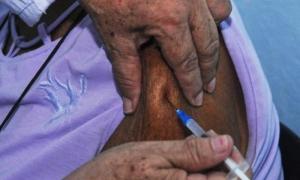
    Cuban health authorities have launched a groundbreaking medical intervention utilizing domestically developed Biomodulin-T to combat the Chikungunya virus outbreak, particularly targeting vulnerable elderly populations. The initiative, centered at Havana’s Abelardo Ramírez polyclinic, represents a scientifically rigorous approach to addressing both prevention and treatment of the virus’s debilitating inflammatory sequelae.

    The strategic focus on seniors aged 70-74 stems from their heightened vulnerability due to immunosenescence—the natural aging process of the immune system that reduces infection resistance while increasing inflammatory responses. According to Dr. Alexis Labrada Rosado, Research and Development Director at Cuba’s National Center for Biopreparations (BioCen), this physiological phenomenon necessitates specialized immunological interventions for optimal protection.

    Biomodulin-T operates through a sophisticated mechanism that enhances the body’s adaptive immune response rather than directly attacking the virus. The immunomodulator regenerates T-cells—the immune system’s memory components—effectively priming the body’s defenses to better control viral replication and mitigate disease severity. This approach potentially reduces both acute symptoms and long-term complications.

    The study employs innovative comparative methodology, pitting Biomodulin-T against its Belarusian analogue Timalin across two distinct administration regimens: an experimental short-cycle (5 days) and an established extended protocol (6 weeks) previously validated during COVID-19 pandemic response. Nearly 700 participants are enrolled in this real-world assessment, selected based on the community’s high elderly demographic density and recent arbovirus activity.

    Notably, the intervention extends beyond preventive measures to therapeutic applications for existing Chikungunya sufferers experiencing persistent joint inflammation and arthralgia. The drug’s three-decade safety record in treating pediatric thymic hypoplasia and ongoing oncology applications provides substantial confidence in its risk profile, with researchers noting minimal adverse reactions historically.

    This comprehensive strategy exemplifies Cuba’s integrated approach to public health challenges, combining preventive care with therapeutic innovation while generating valuable scientific data for future epidemiological responses. The initiative operates under strict ethical supervision and regulatory oversight, potentially establishing new protocols for arbovirus management globally.

  • Cuba: Failed state or state desired by the empire?

    Cuba: Failed state or state desired by the empire?

    The persistent characterization of Cuba as a ‘failed state’ by United States authorities presents a profound contradiction when examined against the island nation’s documented achievements across multiple sectors. Despite facing what historians describe as the longest-running economic embargo in modern history, Cuba maintains globally recognized education and healthcare systems that serve as models for developing nations.

    The Caribbean nation’s scientific capabilities were demonstrated during the COVID-19 pandemic through the rapid development of sovereign vaccines, while its cultural contributions continue through internationally acclaimed ballet companies, literary figures, and athletic achievements across more than 15 Olympic disciplines.

    This disparity between perception and reality stems from a deliberate campaign of economic warfare dating to 1961, including the failed Bay of Pigs invasion and Operation Mongoose. Declassified documents reveal extensive covert operations encompassing 32 specific tasks targeting Cuba’s economy, political stability, military infrastructure, and psychological welfare. Biological warfare tactics included introducing sugarcane rust, African swine fever, tobacco blue mold, and even hemorrhagic conjunctivitis targeting agricultural workers.

    Contemporary pressure mechanisms include comprehensive financial restrictions preventing fuel imports, inclusion on the State Sponsors of Terrorism list, and systematic obstruction of medical resources including life-saving oxygen during pandemic emergencies. Recent statements from former President Donald Trump regarding Cuba’s hypothetical collapse following Venezuelan sanctions reinforce this persistent regime change agenda.

    Despite creating severe energy shortages that impact industrial production and household welfare, Cuba maintains functional governance structures absent the power vacuum characterizing genuine failed states. Canadian political scientist Kalevi Holsti’s definition of state failure as inability to generate loyalty suggests Cuba’s resilience stems from maintained public support despite external pressure. The nation’s continued stability amidst unprecedented economic warfare represents not failure but remarkable endurance against hegemonic power.

  • Cuba honors 32 soldiers killed in aggression against Venezuela

    Cuba honors 32 soldiers killed in aggression against Venezuela

    Cuba has issued a formal condemnation of what it describes as an act of ‘state terrorism’ following a lethal assault that resulted in the deaths of numerous Cuban military and intelligence personnel stationed in Venezuela. The deceased, comprising officers from both the Revolutionary Armed Forces (FAR) and the Ministry of the Interior (Minint), were present in the South American nation under a bilateral security and defense cooperation agreement, responding to an official request from the Venezuelan government.

    The extensive list of casualties includes high-ranking officers such as Colonels Humberto Alfonso Roca Sánchez (67) and Lazaro Evangelio Rodriguez Rodriguez (62), alongside several majors and captains. The attack also claimed the lives of numerous lieutenants and first officers, including Lieutenant Colonel Orlando Osoria Lopez (45) and First Officer Giorki Verdecia García (30). Additionally, reserve soldiers and non-commissioned staff were among the victims, highlighting the significant loss experienced by Cuba’s security apparatus.

    The Cuban government has explicitly attributed responsibility for this escalation to Washington, condemning the United States for promoting military and political actions that threaten the sovereignty and stability of Venezuela. This incident represents a severe deterioration in the already tense relations between Cuba and the United States, potentially signaling a new phase of confrontation in the Caribbean region with far-reaching implications for international diplomacy and regional security arrangements.