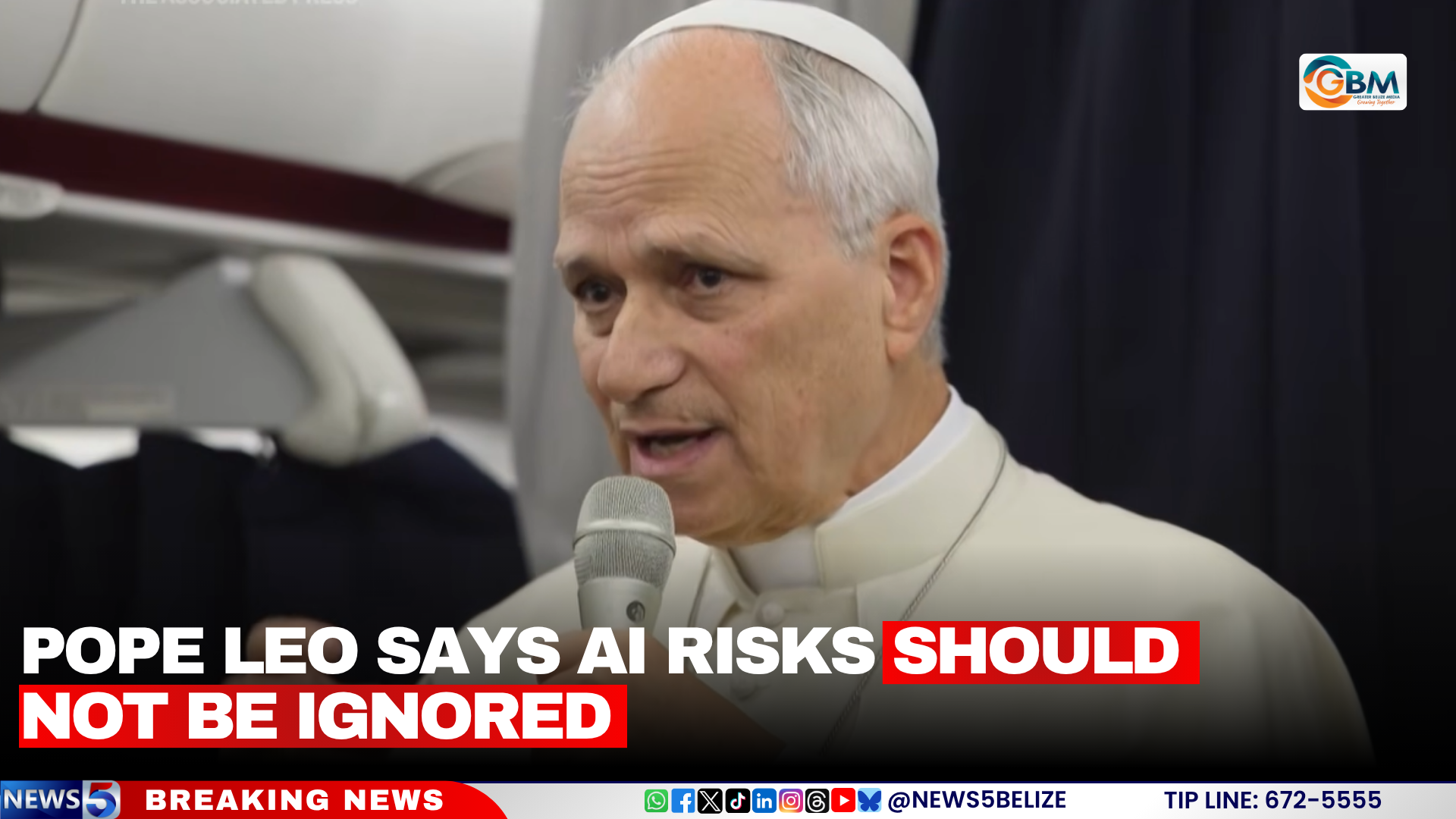
In a recent press briefing aboard the papal aircraft following an official visit to France, Pope Leo XIV has delivered a measured but urgent call for global stakeholders to take the growing risks of unregulated artificial intelligence seriously, pushing back against the complacent attitude that assumes advanced AI systems will never pose tangible harm to humanity. The pontiff clarified that his stance is not rooted in panic, but in a deliberate recognition that expert warnings about AI’s potential dangers deserve serious consideration from global leaders and tech developers alike.\n\n”If someone were to ask me, am I in panic mode? No, I’m not. I sleep at night,” Pope Leo told reporters, emphasizing that his concern is grounded in responsibility rather than fear. He rejected claims that the alarms raised by leading AI researchers are unfounded “fake news”, stressing that these concerns demand deliberate, collaborative engagement rather than dismissal.\n\nDrawing on recent public comments from Nvidia CEO Jensen Huang, who has repeatedly advocated for placing intentional guardrails around AI development, Pope Leo highlighted the ongoing global debate over what safeguards are needed to limit high-risk AI capabilities. He articulated a clear vision for cross-sector collaboration, arguing that political leaders, top AI industry executives, civil society organizations, and religious groups must convene to assess both current AI developments and long-term risks that could emerge as the technology grows more powerful.\n\n”We need to continue to invite political leaders, the leaders of AI, social organizations, associations to come together and look at what is happening already and what could be put down the road,” he said. “Simply closing one’s eyes to possible risks and saying ‘it’s not gonna happen’ would not be the most responsible approach.”\n\nIn a surprise reveal during the briefing, Pope Leo confirmed that the Vatican has launched its own internal commission focused exclusively on artificial intelligence, marking the Holy See’s formal institutional response to the ethical and societal challenges posed by advancing AI technology. This move aligns with the pontiff’s deepening focus on AI governance since he assumed the role of pope: just months earlier in May 2026, he released his first encyclical centered on the critical topic of protecting human dignity and autonomy in the AI era.\n\nPope Leo’s intervention comes at a time of intensifying global debate over AI regulation, as leading tech figures and researchers have repeatedly called for coordinated international action to mitigate catastrophic risks from unregulated advanced AI development. The pontiff’s call for cross-sector collaboration adds a prominent global moral voice to the growing chorus of advocates for proactive risk management.
标签: Belize
伯利兹
-

BREAKING: Men Accused of Killing “Tanga” Walk Free After Key Witness Vanishes
In a stunning development out of Belize District, two men charged in the high-profile 2022 shooting death of Winston Joseph James, widely known by his street name “Tanga,” have been released from custody after prosecutors discontinued their case. The sudden termination of proceedings comes after the prosecution’s critical star witness vanished without a trace just days before the start of the long-awaited trial.
The accused—23-year-old Azzane Domingo and 36-year-old Eustace Lewis, both linked to the George Street area—were formally served with a nolle prosequi, a legal order halting prosecution, shortly before 10 a.m. on September 29, 2026. Domingo was identified early in the investigation as the suspected gunman, while Lewis was only charged in 2024 on abetment to murder charges connected to the killing. The case also included an attempted murder charge for the attack on James’ girlfriend, who was in the vehicle with him during the shooting.
Authorities launched a urgent five-day search for the key witness, Shemaud “Sabe” Nunez, after he failed to appear for court. The search was triggered last Thursday, when Crown prosecutors first requested a delay from Justice Candace Nanton to locate Nunez. Despite exhaustive efforts by law enforcement, no trace of the witness has been found, leaving the prosecution without its core evidence to secure a conviction.
It is important to note that a nolle prosequi is not equivalent to a formal acquittal. Under Belizean legal rules, prosecutors retain the right to reactivate the criminal charges against both men at any point in the future if new evidence, including the reappearance of Nunez, becomes available.
The tragic killing that sparked the case took place on January 21, 2022. James was driving a Nissan Pathfinder with his girlfriend when multiple gunshots struck his vehicle, killing him at the scene. The disabled car ultimately crashed into a building located near a local canal. While surveillance video of the area exists, it has proven insufficient to secure a conviction on its own. The footage only captures James leaving his attorney’s office on Church Street, crossing a nearby bridge, and entering his vehicle moments before the shooting began. The significant distance between the camera’s position and the actual shooting site means even enhanced video analysis cannot definitively confirm the shooter’s identity.
-
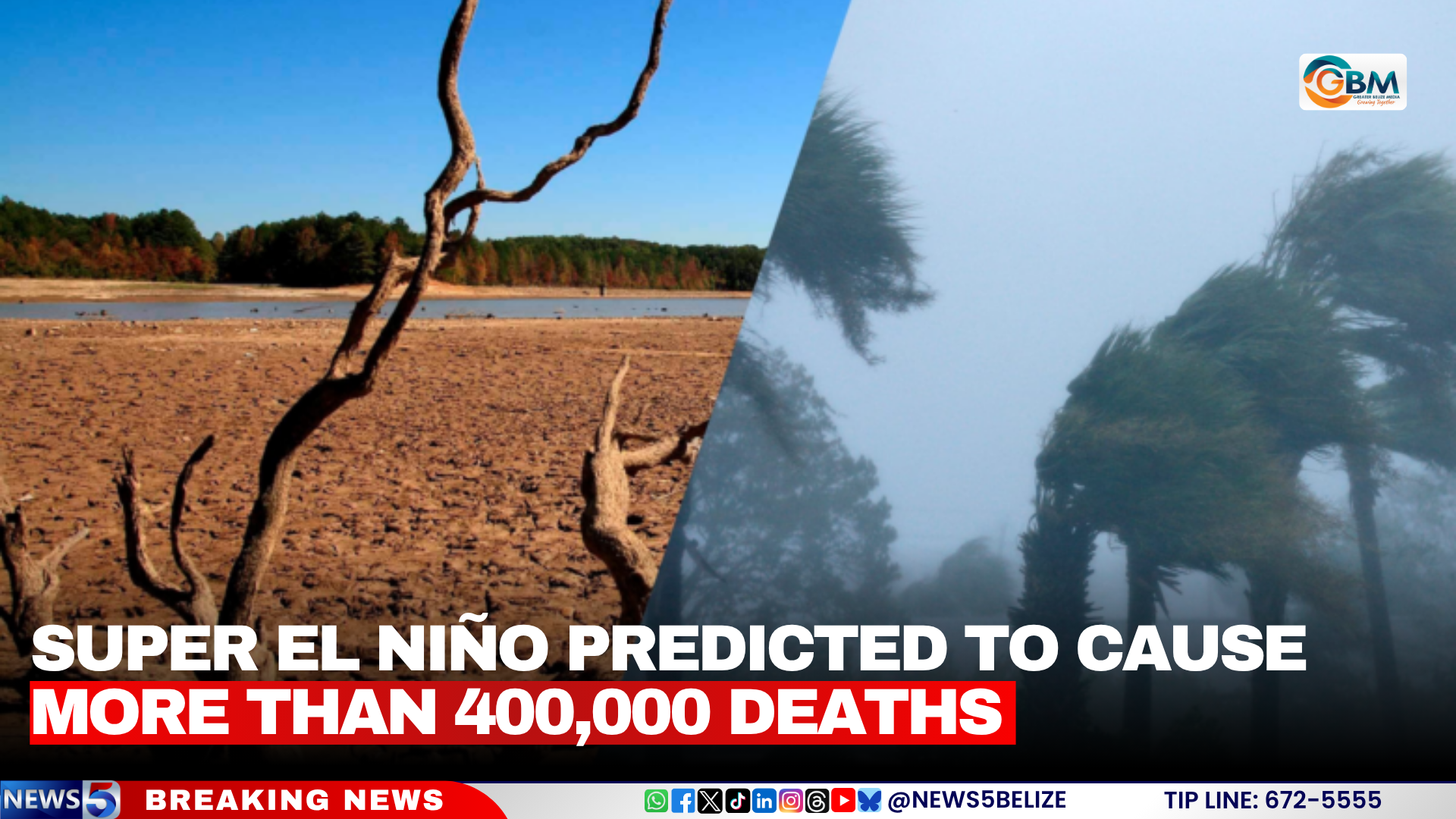
Super El Niño Predicted to Cause More Than 400,000 Deaths
As mid-September 2026 arrived, climate monitors recorded a worrying milestone in the tropical Pacific: sea surface temperatures in the key Niño-3.4 monitoring region hit 3°C above long-term averages, pushing an already strengthening El Niño event toward unprecedented intensity. Forecasters from leading global climate institutions are now sounding the alarm that this weather phenomenon is on track to become one of the most powerful El Niños recorded in modern climate history, with far-reaching consequences for global weather patterns and human life.
The most recent data analysis from the International Research Institute for Climate and Society (IRI) confirms the sharp rise in the Niño-3.4 index, the standard metric for tracking El Niño conditions. Every single one of the 22 climate models tracked by IRI points to the event maintaining exceptional strength through the 2026-2027 Northern Hemisphere winter, with multiple models projecting peak sea surface temperatures will remain above the 3°C threshold that defines an extreme El Niño. Echoing this warning, the World Meteorological Organization (WMO) has stated that El Niño conditions are likely to persist through at least February 2027, reshaping global climate systems for months to come.
Strong El Niño events are well-documented for their ability to disrupt global rainfall and temperature distributions, amplifying the risk of concurrent climate extremes: prolonged drought in some regions, catastrophic flooding in others, and widespread extended heatwaves across much of the globe. A new study from the University of Chicago’s Climate Impact Lab has now quantified the staggering human toll that this upcoming extreme event could bring. The research projects that between June 2026 and February 2027, the additional heat driven by this Super El Niño will lead to roughly 451,000 excess heat-related deaths worldwide, when compared to mortality figures for a typical non-El Niño year.
According to the report’s projections, average global land temperatures over the coming months will settle around 1.2°C above the long-term baseline, with the number of extreme heat days set to be 44% higher than what populations normally experience. The burden of these impacts will not be shared equally: the Climate Impact Lab researchers warn that low- and middle-income nations in the Global South, particularly across Africa, South Asia and Southeast Asia, will bear the heaviest consequences due to higher vulnerability to heat and limited access to adaptive infrastructure like widespread air conditioning and early warning systems.
Beyond the direct human health impacts, the event is already disrupting global commodity markets. As Reuters reports, heavier-than-usual rainfall tied to El Niño in Brazil — the world’s top sugarcane producer — has delayed harvesting operations and forced producers to shift their processing balances between sugar and ethanol, creating uncertainty for global food and energy supply chains.
With the event predicted to hold its strength through the end of 2026 and influence weather patterns well into 2027, climate scientists are continuing to closely monitor the evolution of the unusually warm Pacific sea surface temperatures, as governments and humanitarian organizations prepare for the widespread impacts of what the UN has described as a ‘supersized’ El Niño — the strongest event the world has seen in more than 70 years.
-
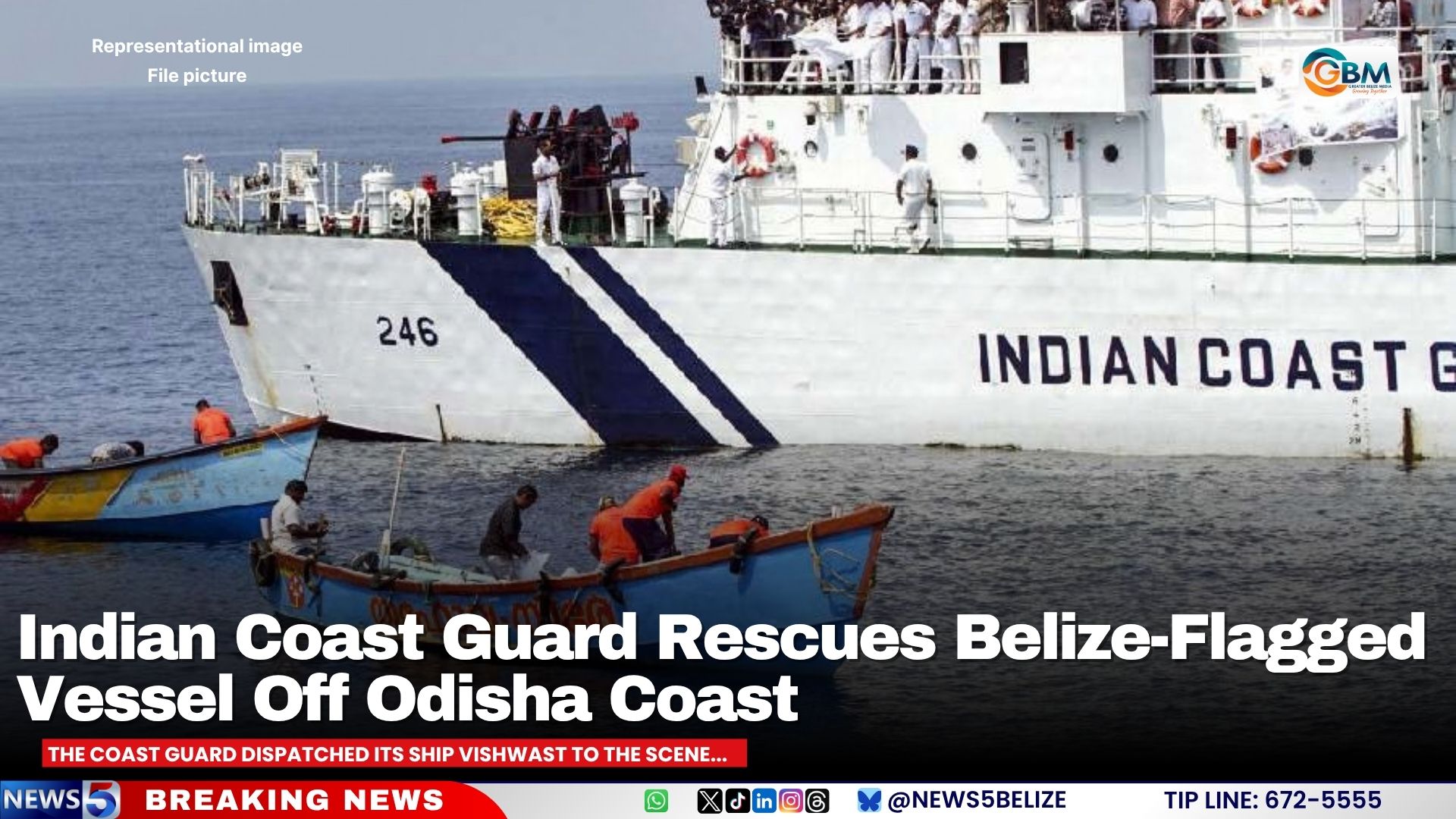
Indian Coast Guard Rescues Belize-Flagged Vessel Off Odisha Coast
In a large-scale coordinated maritime emergency operation that concluded successfully off India’s eastern coast, the Indian Coast Guard has pulled off the full rescue of a disabled Belize-registered cargo tanker carrying 23 crew members, eliminating major risks of a shipwreck and large-scale palm oil pollution, authorities confirmed this week.
The incident unfolded at approximately 7:30 a.m. local time on Sunday, September 27, 2026, when the 9,000-metric-tonne palm oil tanker MT Seagull 9 issued an urgent distress signal from its position roughly 37 nautical miles east-southeast of Paradip, a major port in the eastern Indian state of Odisha. The vessel had suffered catastrophic main engine failure that left it dead in the water, followed by uncontrolled flooding in its ballast tanks that caused the ship to tilt at a dangerous angle, putting all on board at immediate risk of sinking.
Within minutes of receiving the distress call, the Indian Coast Guard mobilized a multi-asset response team, dispatching its offshore patrol vessel Vishwast to the incident site at full speed. A specialized damage control team was deployed to board the listing tanker, where technicians immediately got to work containing the flooding: submersible pumps were brought on board to remove excess water, two severely damaged seawater pipelines were completely sealed off, and a third fractured line was successfully contained to stop further leakage into the vessel’s hull.
To prepare for the potential risk of an oil spill into the Bay of Bengal, a dedicated pollution control vessel and a second offshore patrol vessel were rerouted from nearby operations to the scene to stand by for rapid response and continuous environmental monitoring. A Dornier reconnaissance aircraft operated by the Indian Coast Guard also launched from the regional hub in Bhubaneswar to carry out round-the-clock aerial surveillance of the incident zone and monitor any signs of pollution.
Over the following hours, teams carried out coordinated controlled cargo transfer and systematic de-flooding operations that gradually stabilized the listing tanker, completely eliminating the imminent risk of capsizing. While a small, thin palm oil sheen was detected in waters adjacent to the vessel during the first day of operations, full aerial and surface surveys conducted by Monday confirmed the minor sheen had dissipated completely with no lasting environmental impact.
Following the successful stabilization of the MT Seagull 9, the Paradip Port Authority’s tugboat Dolphin took over the operation, towing the disabled vessel to the designated anchorage area off Paradip Port, where repair work on the failed main engine is now underway. All 23 crew members aboard the tanker remained safe throughout the entire rescue operation, with no reported injuries.
-

Elite Basketball Player Shot Dead Near Antelope Extension
On a Sunday night in late September 2026, a promising young sporting talent in Belize was killed in a targeted shooting that has left the nation’s tight-knit basketball community and the victim’s family engulfed in grief. Twenty-five-year-old Antonio Flowers, a celebrated elite player hailing from Dangriga, was ambushed from behind while walking on a side street near Antelope Street Extension in Belize City. According to official law enforcement details, an unidentified male assailant wearing a black shirt and a face covering followed Flowers before opening fire at close range, striking the athlete multiple times. Though Flowers attempted to flee the attack, he collapsed on the street nearby and succumbed to his injuries before medical personnel could save him.
Authorities have launched a full investigation into the fatal shooting, working to identify the attacker and uncover the motive behind the killing. ACP Hilberto Romero, head of Belize’s National Crimes Investigation Branch, confirmed that law enforcement is currently reviewing all surveillance footage captured by cameras in the Antelope Extension area to generate leads and identify the suspect. As of the latest update, no suspects have been taken into custody, and no clear motive has been publicly confirmed.
The victim’s mother, Tanya Lobo, recalled the devastating moment she received news of her son’s death. She was at home when her younger daughter called with the alert, urging her to rush to the shooting site. By the time Lobo arrived, crowds had already gathered, and witnesses confirmed Flowers had been shot. Lobo was later called to identify her son’s body after police confirmed he had died from his injuries.
Beyond his athletic talent, Flowers is remembered by his community as a warm, joyful presence that lifted up everyone around him. As an Independence Day baby born September 21, Flowers grew up known for his playful sense of humor and ability to make any gathering lighter. Carolyn Jang, an executive member of the Griga Dream Ballers basketball program, told reporters that Flowers was a core member of the local basketball community, serving as the team’s star sixth man who consistently stepped up off the bench to secure wins for the team. Off the court, he turned routine team workouts into fun events and made a point of motivating teammates to perform their best. “No matter what happens with the team, he was always there to motivate everyone to let them do better on game days,” Jang said. “Everybody’s just remembering him as that person who was always there to make us smile and to push us.”
Tributes and condolence messages have flooded in from across Belize’s sporting community, with friends, opponents, and fans sharing memories of Flowers’ kindness and competitive spirit. The killing marks yet another senseless loss of life to gun violence in the country, leaving another family shattered as investigators work to deliver answers and justice.
-
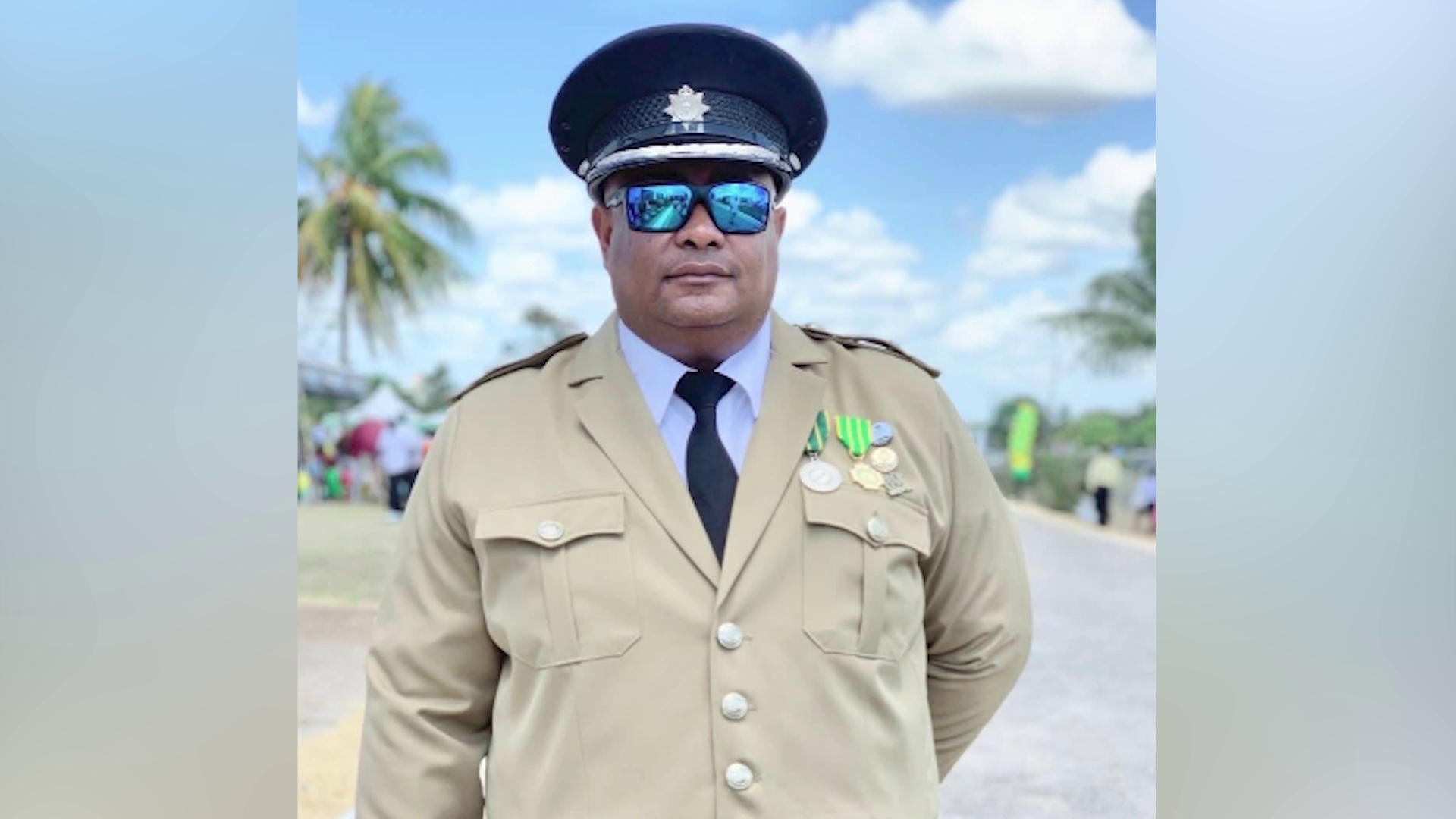
Senior Superintendent Chris Noble Confronts Ladyville Burglars
In the pre-dawn hours of Sunday, September 28, 2026, a routine response to a neighborhood alarm erupted into a violent exchange of gunfire in Ladyville, Belize, leaving a 30-year-old man wounded and law enforcement authorities working to untangle the details of the botched break-in attempt.
The incident began when nearby residents alerted police to two individuals acting suspiciously and attempting to force entry into a private residence on Compassion Lane. Senior Superintendent Christopher Noble, a high-ranking local police official, was the first to reach the scene and confronted the pair as they pried at the property’s bedroom window with a crowbar, damaging the home’s external burglar bars.
According to official accounts from the National Crimes Investigation Branch, when Noble ordered the men to stop, one of the suspects drew a weapon and fired multiple shots in the senior officer’s direction. Noble took cover immediately before returning fire at the suspects. Remarkably, the senior officer emerged from the encounter unharmed, but both suspects managed to flee the scene before additional units arrived.
When forensic teams processed the site, they recovered the abandoned crowbar left wedged against the targeted window, a section of cut burglar bars that had been dislodged and fallen to the ground, and multiple spent bullet casings scattered across the residential property.
The investigation expanded hours later when 30-year-old Devon Grant of Belize City arrived at the Karl Heusner Memorial Hospital (KHMH) seeking medical treatment for gunshot wounds. Police have not yet officially linked Grant to the Ladyville burglary attempt, but investigators are working to confirm his connection to the incident. As of the latest update, Grant remains in stable condition at the hospital, per Assistant Commissioner of Police Hilberto Romero, head of the National Crimes Investigation Branch.
“On Sunday around four a.m. police responded to a shooting at Compassion Lane in Ladyville,” Romero stated in an official briefing. “Upon the arrival they received information from a senior officer in the area who reported he responded to a burglary in progress where he saw two male persons armed with crowbars. He shouted at them to stop. Thereafter, one of the male persons fired shots towards his direction. He then took cover and returned fire. Thereafter, a male person showed up at the KHMH with gunshot injuries. He was identified as Devon Grant of Belize City. We are carrying out an investigation into this report. The scene was processed where several expended shells were found. Grant remains in stable condition at the KHMH. The crowbars were recovered, expanded shells and there are damages on the window and the door.”
The unfolding incident has already drawn comparisons to two previous fatal police shootings in the Ladyville area. Back in 2013, law enforcement officers fatally shot Travis McKay and Ryan Lozano in separate incidents after the pair were allegedly caught attempting to steal private property. Local community observers have noted the parallels between the older cases and the current shooting, though investigations into the 2026 encounter are still in early stages.
This report is adapted from a transcript of an evening television news broadcast, with all original statements preserved in their official context. Authorities have asked anyone with additional information about the Compassion Lane burglary attempt or the identity of the second suspect to contact the Belize District Police Department immediately.
-
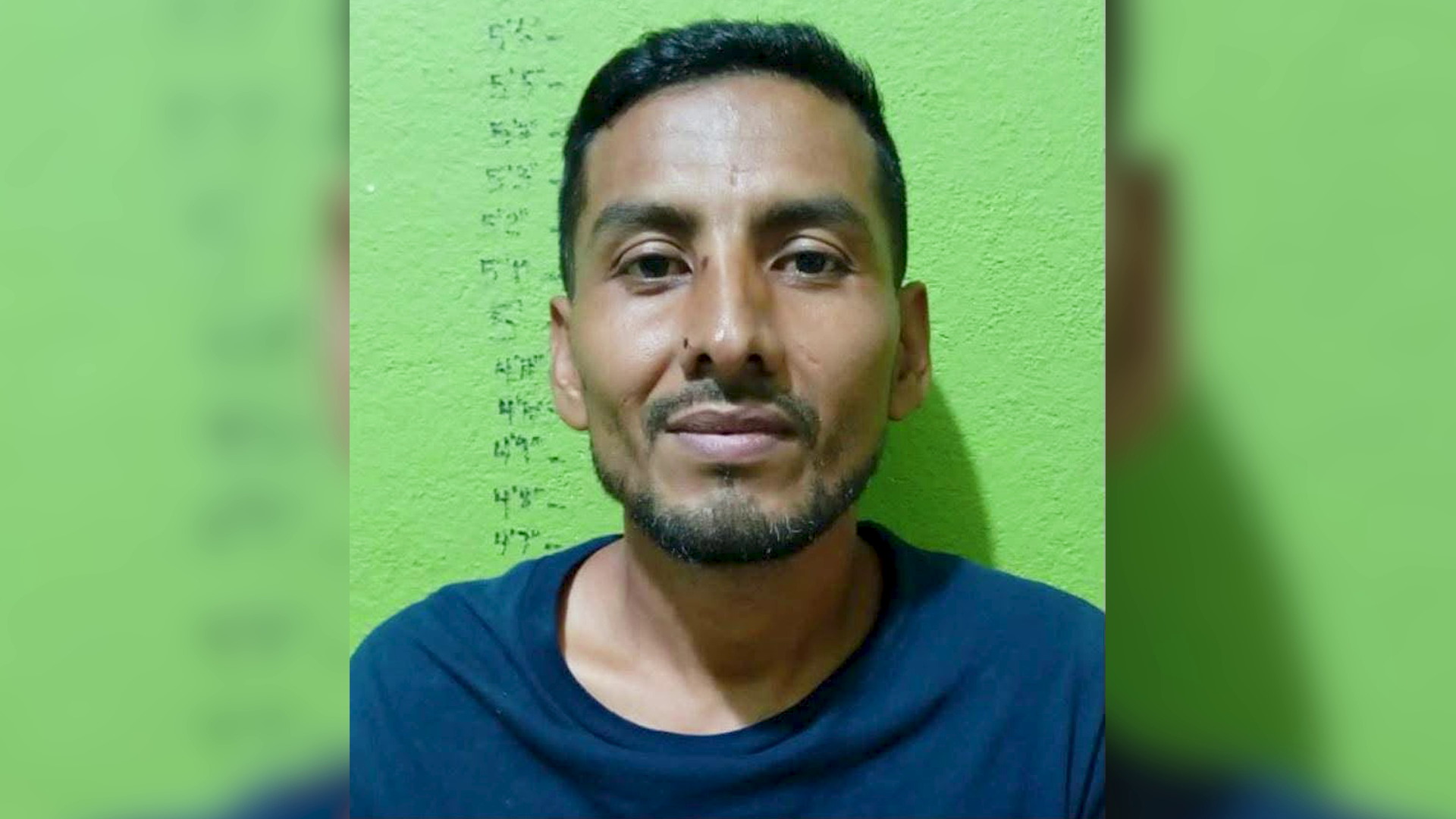
Dan Lopez Charged in Land Manager Shooting
A long-simmering land conflict in western Belize has erupted into violence once again, leading law enforcement officials to charge local figure Dan Lopez in the shooting of property manager Alfred Mahler. The latest incident dates back to last week, when Mahler was wounded while carrying out a routine inspection of land under his oversight. He has since remained hospitalized, with medical teams confirming he is in stable condition as of the latest updates.
Lopez’s arrest thrusts him back into public attention, marking at least the second time this year he has faced serious criminal charges tied to the ongoing dispute over Maya Ranch lands. Earlier in 2026, he was charged with attempted murder following a confrontation with Police Sergeant Dalon Kelly during a law enforcement operation on the contested property. Police have maintained Lopez opened fire on Kelly during an attempted arrest, but Lopez’s legal team has pushed back against that narrative, arguing the officer’s injury occurred when officers attempted to seize Lopez’s legally licensed firearm.
This is far from the first time tensions over the Maya Ranch property have flared. Lopez has been a central figure in repeated clashes over ownership and access to the land for years, with prior incidents involving confrontations with other land managers and forestry department officials. The persistent conflict has required repeated police intervention and spawned multiple court proceedings dating back long before the 2026 shooting of Mahler.
In an on-the-record confirmation with local journalists, ACP Hilberto Romero, head of Belize’s National Crime Investigation Unit, outlined the charges against Lopez: attempted murder, endangerment of harm, and use of deadly force to inflict harm. “And reference the shooting of Alfred Mahler, we have since arrested and charged Dan Lopez for the crimes of attempt murder, danger of harm, and use of deadly means of harm. A point 223 rifle was recovered, which was the weapon used,” Romero stated in the televised interview, confirming that Lopez was arraigned in court earlier the same day the announcement was made.
Notably, Mahler’s family has pushed back on any implication that he is entangled in the ownership dispute, emphasizing that he was working purely as a hired manager contracted to oversee the property and had no personal stake in the conflict over the land’s title or access.
This report is adapted from a live evening television news broadcast transcript, with original Kriol language quotes standardized to conventional English spelling for clarity.
-

Armed Men Hijack Businessman on Philip Goldson Highway
A shocking daylight carjacking carried out by two armed men has rattled Belize, after the assailants ambushed a local businessman on the Philip Goldson Highway just outside Sandhill Village, according to Belizean law enforcement authorities. The violent incident, which unfolded on September 26, 2026, represents an unusually bold criminal act on a major Belizean highway, and investigators are still working to track down the two attackers who remain at large as of Monday.\n\nAssistant Commissioner of Police Hilberto Romero, head of the National Crimes Investigation Branch, confirmed the details of the terrifying attack in a press briefing. The victim, identified as Sandeep Kumar, told police he was traveling along the highway when another vehicle began tailoring his car, and he soon heard gunshots fired in his direction. The suspects’ vehicle then pulled directly in front of Kumar, forcing him to stop. Two armed men exited their vehicle, struck Kumar in the head with a firearm, dragged him out of his own car, and fled the scene in the stolen vehicle heading toward Belize City.\n\nResponding officers launched an immediate manhunt and search operation, and recovered both the stolen car and the suspects’ getaway vehicle abandoned in the Maxboro area shortly after the attack. Forensic investigators have already processed both vehicles for DNA, fingerprint, and other forensic evidence, Romero confirmed. The getaway car, which belongs to a rental company based in Belize’s Cayo District, has already been formally identified by authorities, though the two suspects remain missing.\n\nLaw enforcement has issued a public warning that the two attackers are considered armed and extremely dangerous, and urged residents across Belize District to remain vigilant in the coming days as the investigation moves forward. Community members are asked to contact Belizean police immediately if they observe any suspicious activity in their neighborhoods or have information that could help lead to the arrest of the suspects.\n\nWhile highway carjackings remain rare in Belize, investigators say they are working to determine whether this brazen public attack signals a worrying shift in the pattern of criminal activity across the country. This report is adapted from a transcribed evening television news broadcast originally published online.
-
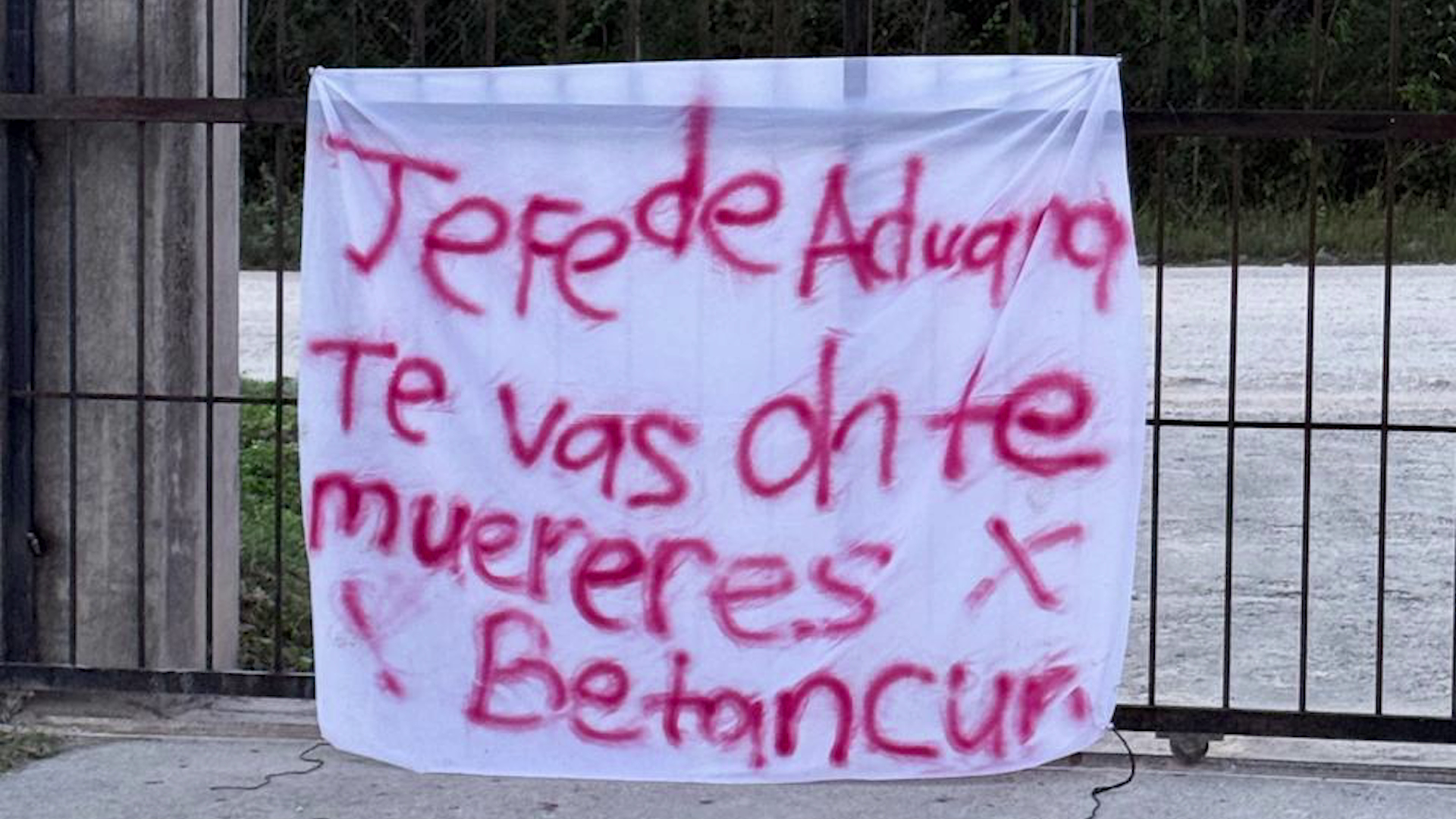
Deadly Warning at Western Border; Customs Officer Threatened
A brazen death threat targeting a senior Belizean customs official has triggered an urgent cross-agency criminal investigation at one of the country’s most high-traffic western border crossings, with authorities ramping up security amid ongoing uncertainty over who is behind the intimidation attempt.
When staff reported for duty at the border checkpoint on the morning of September 28, 2026, they discovered a handwritten chilling message pinned at the entry point. The warning, written in Spanish, was explicitly addressed to veteran customs officer Luis Betancourt, who only weeks earlier assumed leadership of operations at the strategic crossing. The note read simply: “You leave or you die.”
The western border between Belize and Guatemala has long been a hotspot for rampant smuggling operations and other cross-border illicit activity, a reality that has put enforcement officers posted to the region at heightened risk of retaliation from criminal networks. Investigators have not yet confirmed whether the threat originated on the Belizean side of the boundary or from Guatemalan territory, but law enforcement officials have classified the incident as a severe security risk that requires full investigative resources.
In comments to reporters, Assistant Commissioner of Police Hilberto Romero, who leads the National Crimes Investigation Branch, outlined the early steps of the probe. “This morning, police responded to the call at the customs cargo area, where they found a threatening message scrawled on a piece of cloth placed at the gate,” Romero explained. “Forensic teams have already processed the scene for evidence, and we are now working through surveillance footage to identify who left the material.” When asked if monitoring systems covered the location where the threat was found, Romero confirmed that cameras are active in the area, and all footage is currently under review by investigative teams.
Rear Admiral Elton Bennett, CEO of Belize’s Ministry of Home Affairs, noted that the investigation remains in its early stages, with dozens of open questions remaining about the origin and motivation for the threat. “At this point, there is still a great deal of uncertainty,” Bennett stated. “The Belize Police Department is collaborating closely with customs authorities and other partner agencies to canvass the area, collect witness statements, and pull intelligence from both surveillance footage and on-the-ground interviews.”
When pressed about whether the threat likely originated from criminal groups operating across the Guatemalan border, Bennett declined to speculate, saying it would be premature to draw conclusions before evidence is reviewed. “Regardless of where the threat came from, this incident has prompted a significant boost in security vigilance across the entire border region,” Bennett added. “When incidents of this nature occur in such a sensitive, high-stakes location, we coordinate closely with all relevant stakeholders and share information as it develops to protect our personnel and secure the border.”
As the investigation progresses, Betancourt has not yet issued a public statement on the threat. Local security observers note that the intimidation attempt comes amid a renewed crackdown on smuggling at the crossing that Betancourt was brought in to lead, raising unconfirmed speculation that the threat may be retaliation for the officer’s enforcement work, a theory investigators are expected to explore as part of their ongoing inquiry.
-

Illegal Guatemalan Military Flight Reignites Border Tensions
# Unlawful Guatemalan Military Flight Reignites Long-Simmering Border Tensions Between Belize and Guatemala Ahead of ICJ Hearings
Published: September 28, 2026
A decades-long territorial dispute between neighboring Central American nations Belize and Guatemala has flared into a new international confrontation after Belize accused Guatemala of sending an unauthorized military aircraft into its sovereign airspace — an incident that has already reshaped the diplomatic landscape ahead of a landmark International Court of Justice (ICJ) ruling scheduled for 2027.
The incident unfolded on September 25, when a Guatemalan military Pilatus PC-12 NG aircraft entered Belizean airspace without prior authorization or clearance. According to Belizean officials, the aircraft disabled its transponder mid-flight, causing its radar signal to vanish while it traversed airspace near popular coastal areas Caye Caulker and Lighthouse Reef, before exiting Belizean territory without any explanation from Guatemalan authorities.
Less than 48 hours after the incursion, Belizean Prime Minister John Briceño brought the accusation directly to the United Nations General Assembly, framing the incident as more than an isolated violation of international aviation rules. In his formal address, Briceño emphasized that the unauthorized flight is part of a broader pattern of provocative actions by Guatemala along the contested Sarstoon River border, where Guatemalan state vessels and personnel have repeatedly operated in what Belize recognizes as its territorial waters.
“This incursion is not an isolated one. It forms part of a continuing pattern in which Guatemalan state vessels and personnel operate unlawfully in Belizean territorial waters of the Sarstoon River, which forms part of Belize’s border with Guatemala, in defiance of obligations binding on both parties to refrain from any action capable of aggravating or extending the dispute presently before the International Court of Justice,” Briceño told the assembly.
The Prime Minister warned that the escalating provocative actions threaten to undermine the authority of the ICJ ahead of oral hearings scheduled to begin in February 2027, and erode ongoing efforts to reach a peaceful, binding resolution to the territorial conflict that has divided the two nations for more than a century. He called on Guatemala to immediately end all cross-border incursions across air, land and sea, comply fully with its obligations under the UN Charter, the Chicago Convention on International Civil Aviation, and Organization of American States (OAS) confidence-building agreements, and respect the integrity of the upcoming ICJ judicial process. Briceño also requested increased monitoring from both the UN and OAS to prevent any member state from using military intimidation to sway judicial proceedings.
In a swift rebuttal delivered from the UN floor, Guatemala categorically denied the entire allegation. Paola Andrea Morris Garrido, an advisor with Guatemala’s Permanent Mission to the UN, rejected the accusation outright, stating “This flight never happened. At all times, Guatemala has respected its obligations on the basis of the UN Charter, including Article two, paragraph four.”
Guatemala has called on the OAS’s local border office to launch a formal investigation into what it calls a “supposed incident,” and has accused Briceño of deliberately spreading misinformation to influence public opinion ahead of the ICJ hearings. Garrido further countered that Belize’s decision to raise the issue at the UN General Assembly is itself a violation of the 2005 confidence-building agreement between the two nations, arguing that the UN body is not the proper forum for disputes already pending before the ICJ. To date, the Guatemalan government has not released any official records or details addressing the flight to refute or confirm Belize’s claims.
This latest confrontation follows a string of rising tensions along the Sarstoon River border in recent months, as both nations prepare for the ICJ’s binding ruling. Briceño reaffirmed Belize’s full confidence in the judicial process, stating the country expects a final ruling that will establish internationally recognized, secure borders between the two states. In his broader address to the General Assembly, the Prime Minister also highlighted priorities for small developing nations, including climate change action, reparatory justice, and greater global representation for small states, while voicing support for international action on issues including the crises in Haiti, the situations in Cuba and Palestine, and cross-strait relations involving Taiwan.
News Five’s Britney Gordon contributed to this report from the field.