标签: Belize

伯利兹

  • 72 Children, One Reality: Cancer in Belize

    72 Children, One Reality: Cancer in Belize

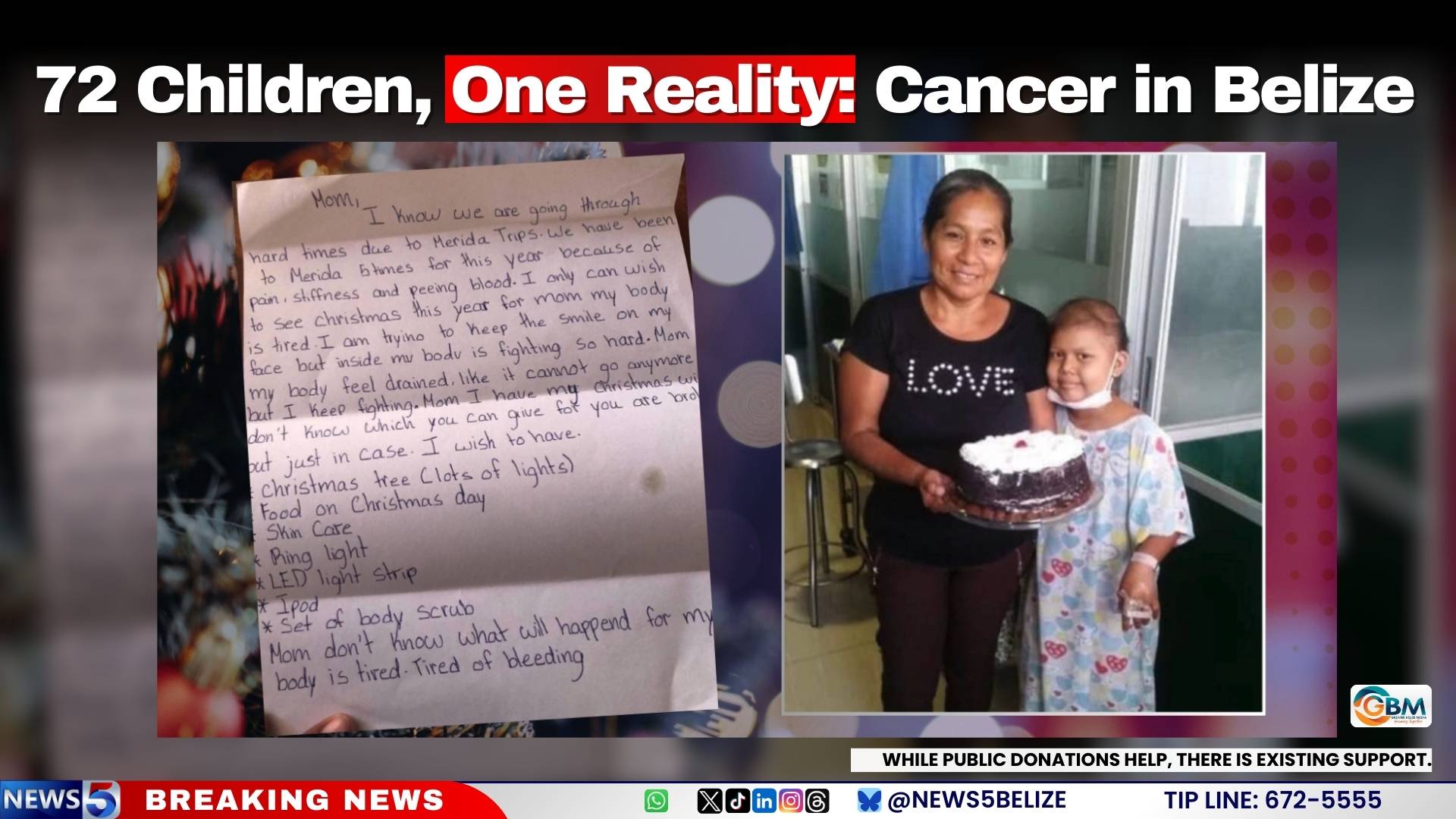
    BELIZE CITY – A deeply personal story of one child’s cancer battle has catalyzed national awareness around pediatric oncology in Belize, where official health data reveals 72 children have received cancer diagnoses over the past five years. These diagnoses create profound emotional distress and impose severe financial burdens on affected families, exposing systemic healthcare challenges in the Central American nation.

    Amidst this crisis, structured support mechanisms are emerging. The Belize Cancer Society has positioned itself as a critical intervention agency, providing comprehensive assistance with medical logistics, international travel coordination, and financial aid. “The moment a child receives a cancer diagnosis, families experience complete overwhelm. Our mission at the cancer center is to immediately step into that chaos with structured support,” explained Kim Simplis Barrow, President of the Belize Cancer Society.

    The organization facilitates navigation through complex healthcare systems and ensures timely access to treatment. “We deliver essential information and guide families through every step—from Belize to overseas care centers. Our response is typically immediate, without unnecessary delays,” Barrow emphasized.

    On the governmental front, Dr. Natalia Largaespada Beer, Technical Advisor at the Ministry of Health and Wellness, confirmed that chemotherapy treatments are fully funded at the Karl Heusner Memorial Hospital, with the government having eliminated the General Sales Tax on cancer medications to reduce financial barriers.

    Significant treatment advancements have emerged from pandemic-driven innovations. A coalition of healthcare providers now delivers specialized chemotherapy within Belize—a development initially necessitated by international border closures but now becoming a permanent enhancement to domestic care capabilities.

    Despite these improvements, critical limitations persist. Complex diagnostics and long-term treatment protocols still require international referrals, creating additional strain on families. Addressing this gap, a transformative project is underway: construction of a new pediatric cancer wing, supported by St. Jude Children’s Research Hospital, scheduled for completion in 2027. This facility promises to localize comprehensive childhood cancer care, fundamentally transforming treatment accessibility in Belize.

    “This initiative represents a monumental shift—it’s about bringing complete childhood cancer care home to Belize,” Barrow stated, highlighting the project’s potential to revolutionize pediatric oncology in the nation.
  • Ombudsman Swazo Reacts to Exit

    Ombudsman Swazo Reacts to Exit

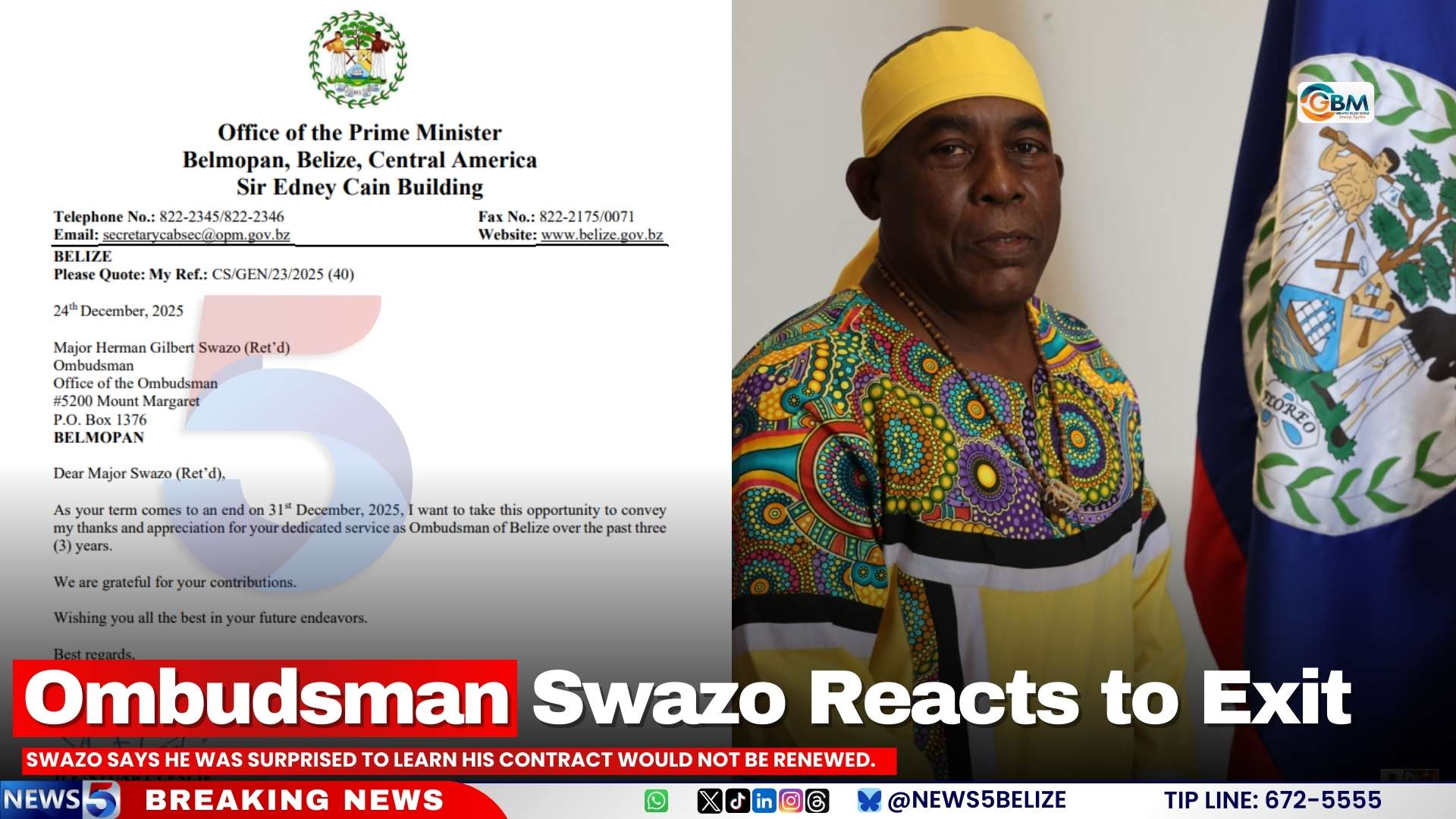
    In a development that has raised questions about governmental transparency, Belize’s outgoing Ombudsman Major Herman Gilbert Swazo (Ret’d) has expressed surprise at the non-renewal of his contract, which concludes on December 31, 2025. The seasoned official learned of the decision through an email delivered on December 24 from Cabinet Secretary Stuart Leslie, who conveyed the government’s appreciation for Swazo’s three years of dedicated service without addressing contract renewal prospects.

    Swazo revealed to News 5 that the correspondence made no mention of reengagement possibilities despite his prior requests for continuation. “The letter did not in any way or form, in my view, address reengagement,” Swazo stated. “To me, that implies then that I am not going to be reengaged.” The timing and delivery method of the notification added to the unexpected nature of the communication.

    During his tenure, Swazo maintained several public positions on governance matters, including freedom of information requests. When questioned whether these actions might have influenced the non-renewal decision, Swazo emphasized his strict adherence to legal parameters. “I took a solemn oath to abide by the Constitution and to do right in all manner of people,” he affirmed. “I operated within the confines of the law, and that is what I did.”

    Contradicting Swazo’s interpretation, Cabinet Secretary Stuart Leslie provided clarification to News Five, characterizing the letter as standard procedural communication marking the conclusion of an existing agreement. Leslie indicated that no definitive decision regarding Swazo’s potential contract renewal has been finalized by the National Assembly, suggesting the situation remains fluid rather than conclusively terminated.

    Despite the uncertainty surrounding his professional future, Swazo maintains no regrets about his tenure, asserting that his commitment to constitutional principles and rule of law guided every action during his service as Belize’s Ombudsman.

  • Several Archeological Sites Across Belize Defaced

    Several Archeological Sites Across Belize Defaced

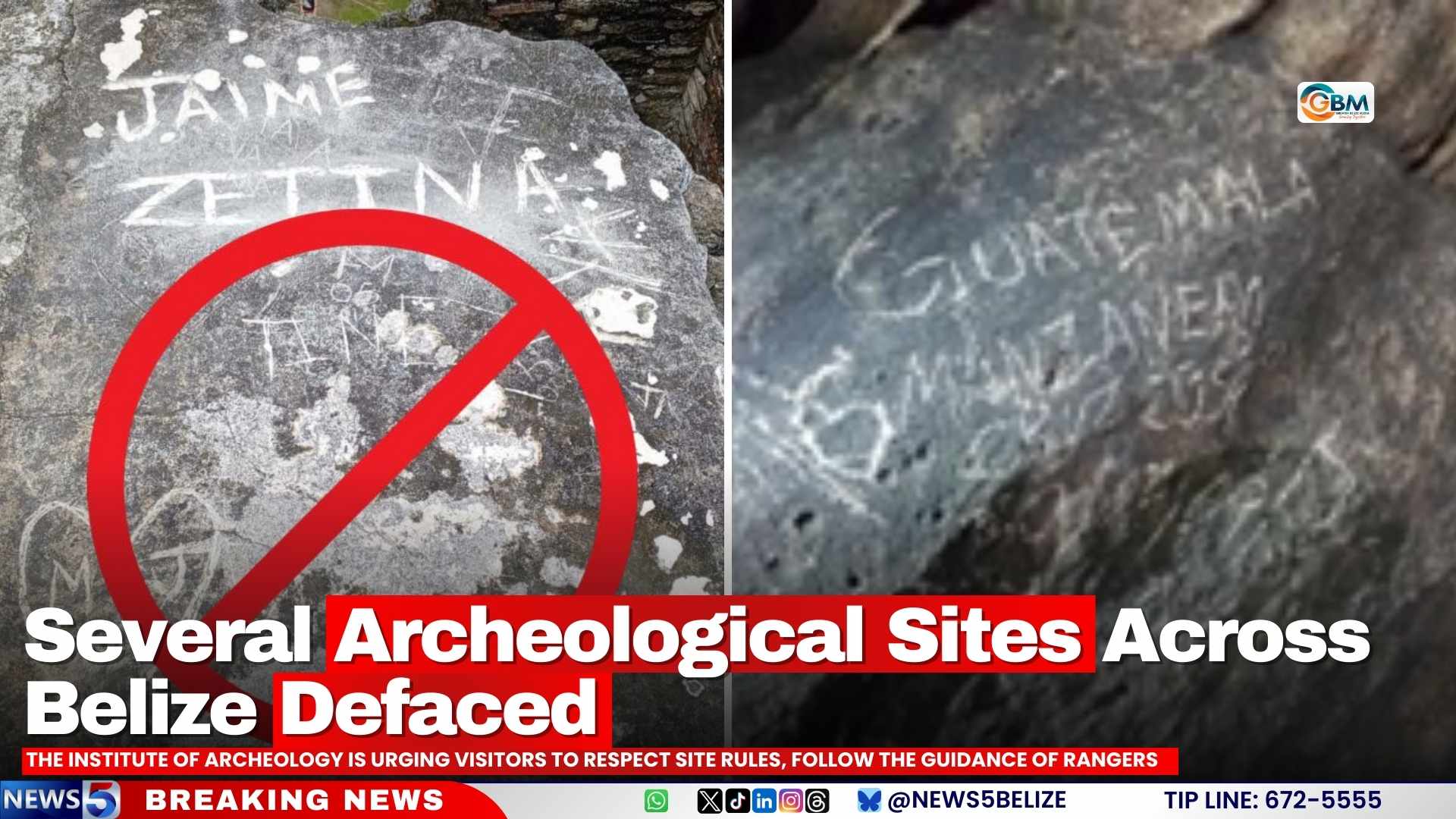
    Belize’s archaeological authorities have issued a forceful public warning following a series of vandalism incidents at protected historical sites, with the ancient Mayan complex of Xunantunich becoming the latest target of destructive graffiti tagging. The Institute of Archaeology emphasized that such acts inflict permanent damage on the nation’s cultural heritage and violate strict preservation laws.

    Dr. Melissa Badillo, Director of the Institute of Archaeology, expressed profound disappointment at the recurring vandalism despite ongoing educational initiatives. “It is deeply disheartening to witness visitors engaging in such destructive behavior,” Dr. Badillo stated. “We maintain continuous awareness programs with schools, tour operators, local communities, and researchers precisely to prevent these occurrences.”

    The Institute highlighted the severe legal consequences for damaging protected monuments, including fines reaching $75,000 Belize dollars or imprisonment for up to five years. Dr. Badillo acknowledged the challenges of monitoring visitor behavior, particularly in high-traffic tourist areas, while emphasizing the shared responsibility of both local and international visitors.

    “We’ve documented incidents involving both Belizean citizens and foreign tourists,” Dr. Badillo noted. “Our message is unequivocal: this destructive behavior is universally unacceptable and carries serious legal ramifications.”

    The Institute urges all visitors to respect site regulations, follow guidance from archaeological rangers and certified tour guides, and immediately report any suspicious activity to help preserve Belize’s irreplaceable archaeological treasures for future generations.

  • Family of Ten Left Homeless After Early Morning Fire

    Family of Ten Left Homeless After Early Morning Fire

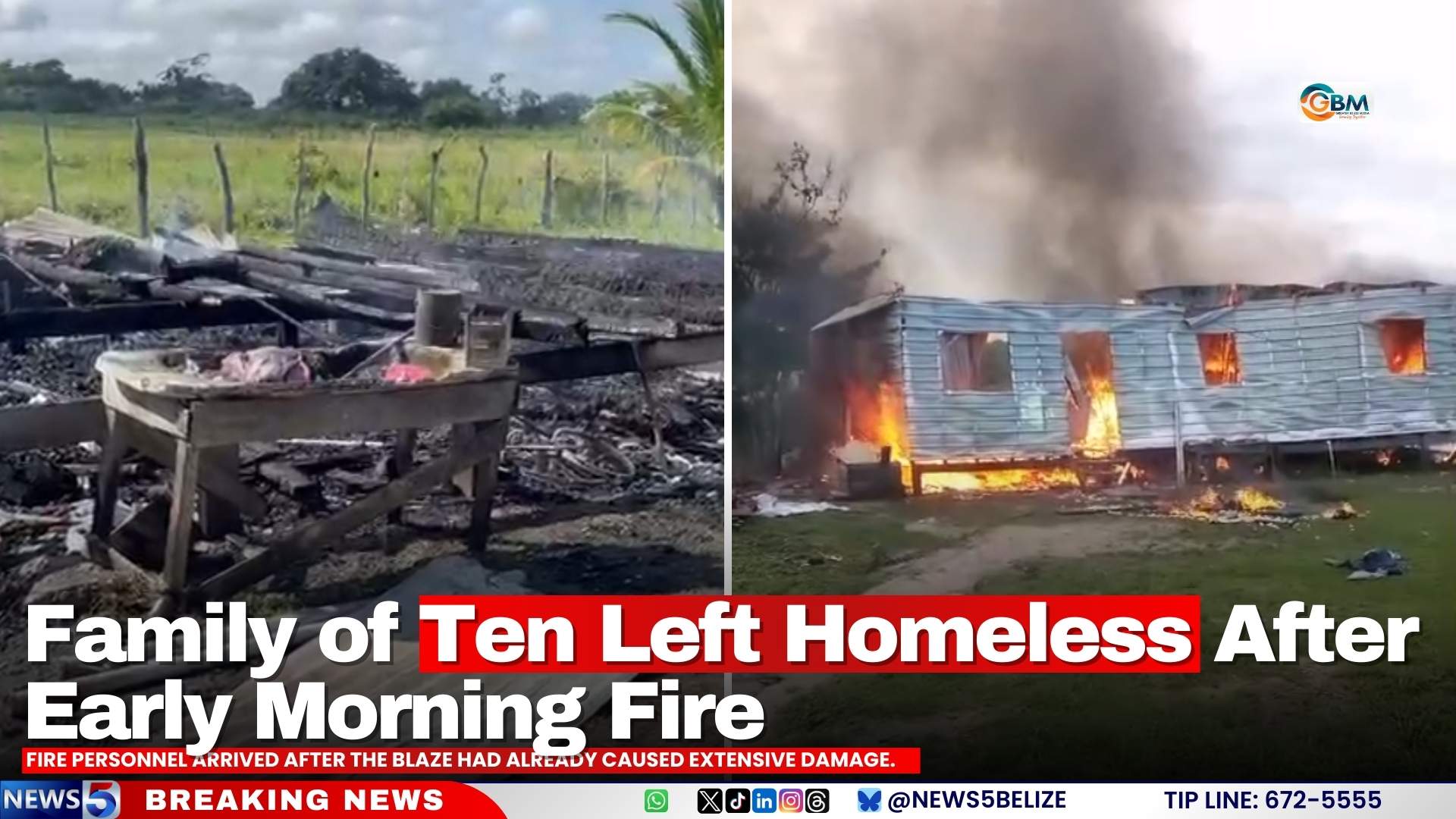
    A devastating early morning fire has left a ten-member family homeless in Guinea Grass Village, Orange Walk, destroying their residence and all personal possessions. The blaze erupted approximately at 6:00 AM on December 30, 2025, when resident Jose Mejia, 25, awoke to the smell of smoke and discovered flames emerging from an unoccupied bedroom.

    Mejia recounted the rapid escalation of the emergency in a telephone interview, describing his frantic efforts to evacuate nine other family members including multiple young children and a 45-year-old father-in-law. Despite the swift spread of the fire, all occupants managed to escape with only minor injuries reported, including a slight burn to Mejia’s foot sustained during the rescue operation.

    The family attributes the fire’s origin to an electrical malfunction involving an outlet on a structural post. Fire department personnel arrived after the structure had sustained extensive damage, preventing salvage of any belongings. Mejia described attempts to rescue clothing and other items that were ultimately consumed by the advancing flames.

    The household, comprising children ranging from four to fifteen years old alongside young adults, now faces complete destitution. With no possessions remaining, the family has issued a public appeal for assistance as they confront the overwhelming task of rebuilding their lives. Community members wishing to provide support may contact the family at +501 656-2143 or +501 606-0666.

  • Calcutta Village Condemns Vandalism of Christmas Tree

    Calcutta Village Condemns Vandalism of Christmas Tree

    The Calcutta Village Council has issued a strong condemnation following the deliberate destruction of the community’s Christmas tree in a pre-dawn act of vandalism on December 30, 2025. Council Chairperson Alex Tzub confirmed the incident occurred between 3:00 AM and 3:45 AM, during which the publicly decorated tree was forcibly torn down and extensively damaged.

    Eyewitness accounts indicate the tree remained fully intact at 3:00 AM but was discovered shattered on the ground shortly before 4:00 AM. The vandalism resulted in broken branches, shattered ornaments, and decorations violently removed from the tree. Many of these decorations had been donated by local residents as part of community holiday celebrations.

    Chairperson Tzub characterized the perpetrators as ‘bad minded people’ and confirmed ongoing efforts to restore the tree using salvageable decorations. ‘We are trying to put back everything together if possible,’ Tzub stated during a telephone interview. ‘But if not, we’ll still put it up again.’

    The Christmas tree incident appears connected to a broader pattern of vandalism affecting the village in recent weeks. Tzub reported multiple incidents occurring near the community center, including vehicle windshields and glass doors being damaged by projectiles. ‘This vandalism has been happening a while, and we cannot catch them red-handed,’ Tzub acknowledged, highlighting the challenge facing village authorities.

    The council chairperson has issued a public appeal for residents to assist in monitoring and reporting suspicious activities to help prevent future incidents of property destruction.

  • Family Seeks Justice After Dangriga Machete Killing

    Family Seeks Justice After Dangriga Machete Killing

    A Stann Creek family is confronting profound grief and mounting frustration as they seek resolution in the brutal machete killing of 41-year-old Linden Kelly, whose death has exposed deepening concerns about community safety and judicial delays in Dangriga Town.

    Seven days following Kelly’s tragic passing from injuries sustained during a December 19th altercation in the Rivas Estate area, his relatives have issued an urgent appeal to law enforcement authorities. Despite the initial detention of two individuals connected to the violent incident, no formal charges have been filed, leaving the family in a state of anguish and uncertainty.

    Austin Williams, brother of the deceased, articulated the family’s distress in an emotional telephone interview. “We are looking at people who just killed a man and they’re walking around like killing in Dangriga is legal,” Williams stated, highlighting the perceived impunity that has compounded their trauma. The situation has been particularly devastating for Kelly’s elderly mother, who simultaneously grieves her son’s death while experiencing genuine fear for her personal safety.

    While acknowledging his brother’s previous encounters with the justice system, Williams emphasized that past transgressions should not negate the pursuit of justice. “Everyone to their family, they’re good. We don’t know what he was doing on the streets, but yes, he did serve his time,” he remarked, drawing a distinction between Kelly’s completed past sentences and the current unresolved homicide.

    The investigation’s progress has stalled according to family accounts, with police reportedly attributing delays to the Office of the Director of Public Prosecutions. This bureaucratic impasse has left the Kelly family caught between mourning their loss and demanding accountability, with Linden Kelly’s funeral scheduled for the approaching Sunday amid these unresolved circumstances.

  • News 5 2025: The Stories That Shaped Belize

    News 5 2025: The Stories That Shaped Belize

    The year 2025 emerged as a definitive chapter in Belize’s national narrative, characterized by profound societal challenges and significant milestones. This comprehensive analysis examines the pivotal developments that shaped the Central American nation across twelve transformative months.

    January initiated the year with dual tragedies: the haunting double homicide of Adelita and Felix cast a pall over the nation, while political turbulence within the United Democratic Party revealed deepening internal fractures. Concurrently, the inauguration of a new National Health Insurance clinic in Belama signaled healthcare advancements, and the controversial redesign of national banknotes ignited vigorous public discourse concerning cultural representation.

    February witnessed civic engagement through Belize National Teachers’ Union demonstrations advocating for improved working conditions. Simultaneously, public safety concerns intensified following the Baptist murder case and the Orellano drowning incident. The People’s United Party convened its convention while disturbing patterns emerged, including fraudulent automotive schemes and security lapses at Royal Kahal properties.

    March proved particularly consequential with Prime Minister John Briceño’s inauguration for a second term, ensuring governmental continuity amidst declining consumer confidence and inflationary pressures. The nation mourned the passing of cultural icon Aurelio Martínez while processing former leader Shyne’s political resignation and significant Caribbean Court of Justice rulings.

    April introduced multifaceted controversies with the appointment of a new Police Commissioner generating substantial public debate. Health authorities confirmed Belize’s first measles case in thirty-four years, triggering nationwide epidemiological alerts. A gruesome animal cruelty case involving equine dismemberment provoked widespread outrage, accompanied by an unprecedented aircraft hijacking incident and the arrest of a sitting area representative.

    May’s judicial landscape shifted dramatically through a High Court verdict affecting opposition party dynamics. The government’s implementation of a State of Emergency aimed at curbing criminal activity sparked civil demonstrations, while environmental concerns emerged regarding Boots Beach Front development projects. Media evolution continued with the establishment of a new journalistic enterprise.

    June delivered inspirational narratives through a burn survivor’s remarkable achievement of a medical degree, contrasting with serious allegations against public figures for sexual assault. Agricultural sectors faced mounting concerns regarding Fusarium pathogen outbreaks, while coastal communities intensified efforts against sargassum seaweed invasions.

    July juxtaposed horrific criminal incidents including the murders of Evadnie and Luke against groundbreaking archaeological discoveries at Caracol. Belize celebrated the historic appointment of its first female military commander amid constitutional debates surrounding proposed amendments. Implementation of national identification systems and rodent infestations occupied administrative attention.

    August’s security landscape deteriorated with the Meighan homicide case, multiple drowning incidents, and a violent residential invasion. Environmental anomalies included unprecedented devil fish sightings and livestock management challenges, while technological discussions centered on artificial intelligence relationships. Public health authorities confirmed rare human screwworm cases alongside the shocking Budna kidnapping.

    September emphasized judicial processes with detailed investigations into infant mortality cases and the extradition of Ellis Meighan. Infrastructure development debates focused on the Tren Maya project alongside taxation reforms and traditional Carnival celebrations demonstrating cultural resilience.

    October unveiled disturbing criminal revelations including the assassination of Big Tom, drum-contained human remains, and the devastating San Lázaro inferno. Policy developments featured Caye Caulker’s cannabis regulation framework and governmental intentions to acquire Fortis energy assets. The Hangar area privatization dispute ignited fervent public access debates.

    November prompted national introspection through cabinet reorganizations and high-profile resignations questioning political stability. Belize City endured its most prolonged electrical outage in recent history, while targeted shootings near the Free Zone renewed firearms concerns. International territorial deliberations involving Belize, Guatemala, and Honduras reached judicial forums, contrasted by Phillip Wright’s historic installation as the first Belizean Archbishop of the West Indies.

    This annual retrospective demonstrates Belize’s enduring resilience through complex challenges, reflecting a society continuously negotiating its identity between tradition and transformation. The accumulated experiences of 2025 establish critical foundations for the nation’s ongoing development as it progresses toward 2026.

  • From Elite Military Service to Global Business Vision: The Journey of Alfonso Magaña

    From Elite Military Service to Global Business Vision: The Journey of Alfonso Magaña

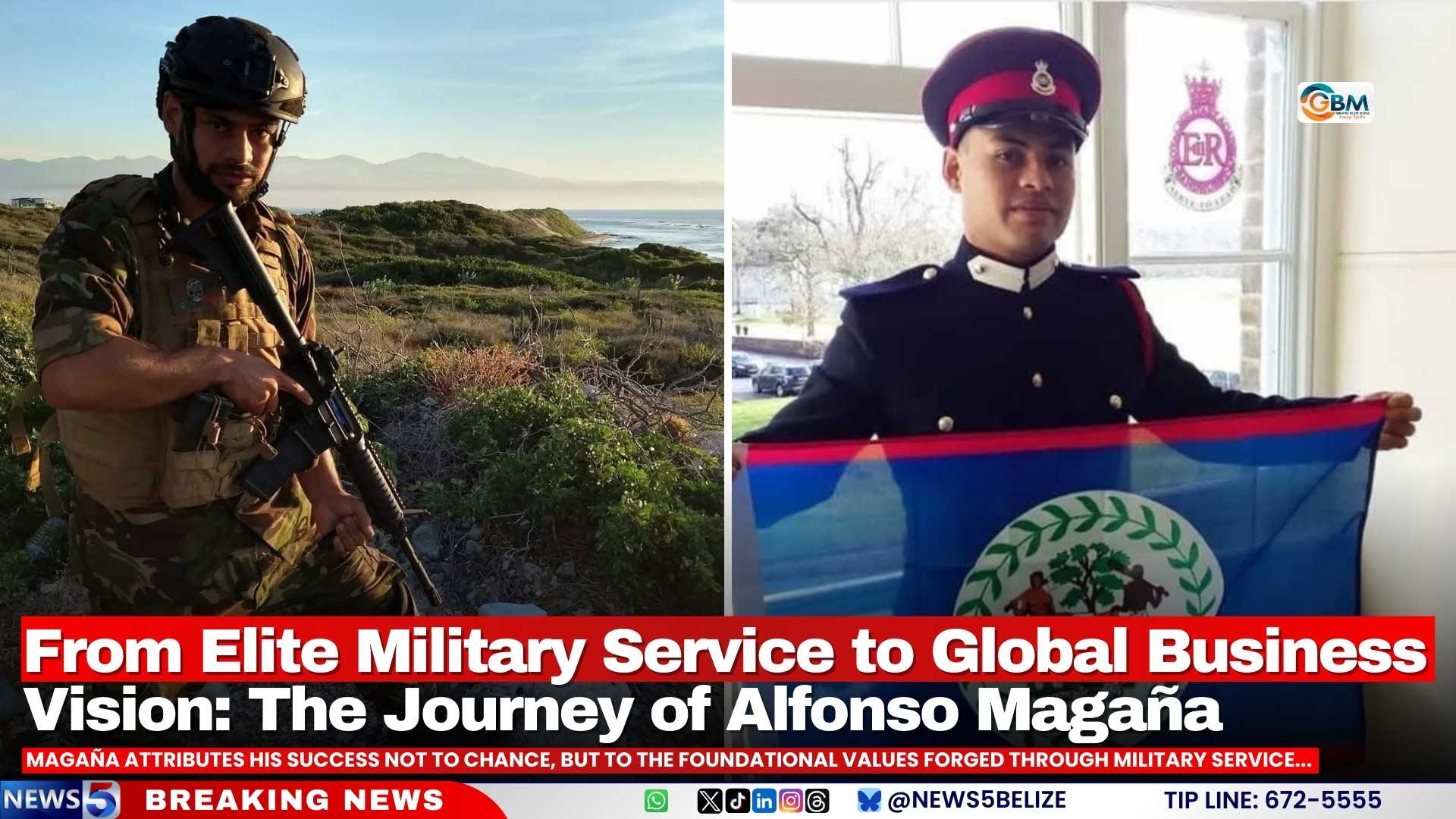
    A remarkable transformation from military excellence to business leadership is unfolding in Belize through the journey of Alfonso Magaña, whose elite Special Forces background now fuels one of the nation’s most dynamic luxury real estate ventures.

    Magaña’s path to entrepreneurship began with one of Belize’s most rigorous selection processes. Of approximately 40 candidates entering the Belize Defence Force officer selection, only three succeeded—Magaña among them. His military career became a testament to exceptional performance, ranking first academically and across multiple performance metrics during intensive recruit training that tested physical endurance, mental fortitude, and leadership capabilities.

    His distinguished service earned him placement at the prestigious Royal Military Academy Sandhurst, where he trained alongside international officers and further honed strategic thinking and adaptive leadership skills. Upon returning to Belize, Magaña joined the elite Belize Special Forces, spending approximately one year operating in high-stakes environments that demanded precise judgment and absolute accountability.

    The transition to civilian life marked not an abandonment of military principles but their strategic application. In 2025, Magaña founded Alpha Real Estate, leveraging the same discipline, risk assessment methodologies, and execution excellence that defined his military career. The company has rapidly emerged as a dominant force in Belize’s luxury property market, specializing in premium residential, commercial, and resort properties while also facilitating large-scale development projects.

    Beyond domestic operations, Alpha Real Estate now represents high-value Belizean assets in international markets, positioning the country within global investment conversations. Magaña attributes his business success directly to military values: “My background taught me that results come from discipline and clarity under pressure. Whether in the military or in business, excellence is never accidental.”

    His journey represents a growing trend of elite military professionals transitioning their leadership skills to the business sector, demonstrating how specialized training in high-pressure environments can create competitive advantages in civilian entrepreneurship. The company continues to expand with a focus on global competitiveness while maintaining roots in Belizean leadership standards and trusted execution.

  • U.S. Remittance Tax Set to Pinch Belizean Wallets

    U.S. Remittance Tax Set to Pinch Belizean Wallets

    A newly enacted U.S. legislative measure is poised to create significant financial pressure for numerous Belizean households reliant on international monetary support. Effective January 1, a uniform one-percent levy will be imposed on select outbound remittances from the United States, directly impacting transfers destined for Belize.

    This fiscal policy, embedded within President Trump’s comprehensive ‘One Big Beautiful Bill’ legislation, will have tangible consequences in Belize despite being implemented stateside. Remittances constitute an essential economic lifeline for thousands of Belizean families, frequently serving as their primary means of securing basic necessities.

    Financial service providers including Western Union and money order systems will transmit reduced amounts to recipients. These diminished transfers will inevitably affect household capacities to cover fundamental expenses including nutritional requirements, housing costs, educational expenditures, and healthcare services.

    The macroeconomic implications extend beyond individual families to Belize’s national economic landscape. Data from the Inter-American Development Bank reveals that Belize received approximately $173 million in remittances through November this year, with 84% originating from U.S. sources. The traditionally high-volume Christmas transfer period amplifies the potential impact of this taxation measure.

    While a one-percent reduction might appear negligible initially, its aggregate effect could generate substantial economic reverberations throughout Belize. Reduced household income typically correlates with decreased local consumer spending, potentially creating downstream effects on businesses and public services across the nation.

  • China Launches Massive Military Drills Around Taiwan

    China Launches Massive Military Drills Around Taiwan

    In a significant escalation of regional tensions, China has initiated comprehensive military maneuvers encircling Taiwan, deploying combined forces from its army, navy, air, and rocket divisions. The extensive two-day exercises, officially designated “Justice Mission-2025,” commenced on December 30, 2025, featuring live-fire artillery drills and precision rocket launches that reportedly landed in closer proximity to Taiwanese territory than previous operations.

    The provocative military demonstration comes as a direct response to Washington’s recent authorization of an $11.1 billion defensive arms package to Taipei, including advanced HIMARS rocket systems and surveillance drones. Chinese authorities characterized the drills as a necessary warning against what they term ‘Taiwan independence separatist activities’ and foreign interference in China’s internal affairs.

    Taiwan’s defense ministry reported tracking approximately 130 Chinese military aircraft and 22 naval vessels throughout the operation, with an unprecedented 90 warplanes crossing the median line of the Taiwan Strait. Taiwanese armed forces responded with heightened alert status, scrambling fighter jets, deploying naval patrols, and activating coastal missile defense systems.

    The exercises generated substantial disruption to civilian air traffic, compelling the cancellation of dozens of commercial flights and affecting over 6,000 travelers. Military analysts observed that the complexity and scale of the drills appear designed to simulate effective blockade scenarios, potentially signaling China’s evolving strategy to deter foreign military intervention in the Taiwan Strait.

    International reaction emerged promptly, with Belize’s foreign ministry issuing a formal condemnation of China’s ‘military intimidation’ against Taiwan, emphasizing the undermining of peaceful dialogue and stability in the region. The United States and Taiwanese officials have reiterated the legitimacy of defensive arms agreements and the right to self-defense under international norms.