标签: Belize

伯利兹

  • Two Motorcyclists Killed in Chain-Reaction Crash

    Two Motorcyclists Killed in Chain-Reaction Crash

    A late-night chain-reaction collision on a major southern Belize highway has left two men dead, sending shockwaves through their small local communities and prompting an ongoing official investigation into the tragedy.

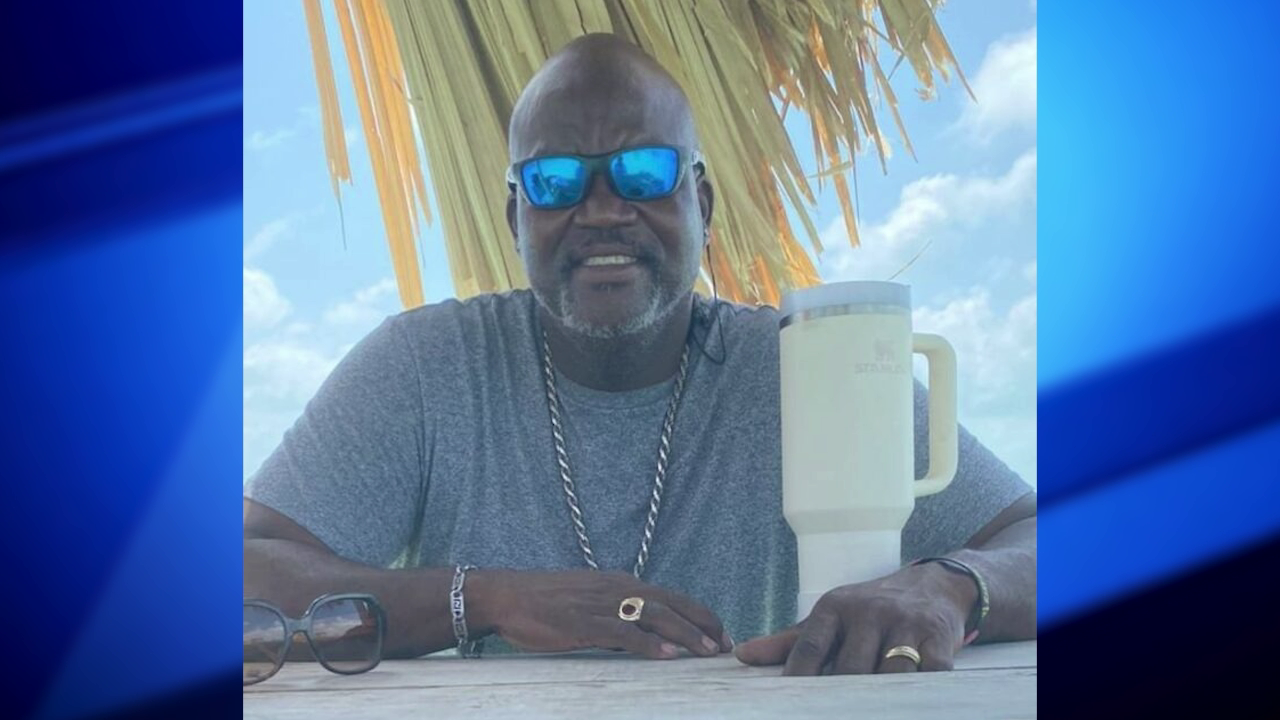
    The fatal incident unfolded Saturday night along the Thomas Vincent Ramos Highway, just a short distance from the Punta Gorda junction in the Toledo District. Senior Superintendent Stacy Smith, a senior law enforcement official, has publicly confirmed the identities of the two victims: 51-year-old Willie Cruz, a Belizean customs officer who resided in Independence Village, and 26-year-old Elmer Cal, a local laborer from Red Bank Village.

    Early findings from the ongoing police probe outline how the series of collisions unfolded. According to preliminary reports, the crash sequence began when a Mazda Tribute SUV, operated by driver Andy August, struck a motorcycle that Cal was riding. The force of the initial impact threw Cal off of his vehicle onto the roadway.

    Following the first collision, August pulled his SUV to a stop on the active highway and exited the vehicle to check on Cal, leaving the driver’s side door propped open into the travel lane. Moments later, a second motorcyclist—Cruz, who was traveling along the highway on his own separate two-wheeler—failed to stop in time and crashed directly into the open door of August’s stationary SUV.
    This second impact also threw the rider from his motorcycle, leaving both Cruz and Cal with critical, life-threatening injuries. Emergency responders pronounced both men dead at the scene from the traumatic injuries they sustained in the linked collisions.

    As investigators continue to piece together the full details of the crash, law enforcement officials have issued a formal Notice of Intended Prosecution to August, a standard procedural step that keeps legal options open as the inquiry progresses. In the wake of the deadly incident, the mother of one of the deceased victims has spoken publicly about her overwhelming grief, telling local media “I miss him so bad,” as communities across the Toledo District mourn the loss of the two local men.

  • Teen Murdered in Gardenia

    Teen Murdered in Gardenia

    A quiet, routine family gathering in northern Belize’s Gardenia Village ended in senseless tragedy on Sunday evening, when an unidentified lone gunman opened fire without warning, killing 15-year-old Rackeem Armstrong and leaving his 18-year-old cousin Justin Young hospitalized with life-threatening injuries. Local law enforcement has launched an active homicide investigation into the attack, which has left the tight-knit community reeling from the loss of a young life and left one promising graduate fighting for recovery.

    According to accounts from family members who survived the attack, the pair of cousins were among a larger group of relatives gathered for a weekly Sunday barbecue at their family home when the shooter approached the property shortly after 8:00 p.m. No confrontation or altercation preceded the gunfire, leaving those present completely unprepared for the violence that unfolded.

    Kayla Young, Justin’s mother, spoke to local outlet News 5 about the chaotic moments immediately after the first shots rang out. She had just arrived at the family gathering when the attack began, recalling: “All I see was light, pop, pop… I couldn’t even realise what was going on.” In the panic that followed, family members scattered for cover, and it was only after the gunman fled that Young was able to locate the two downed teenagers—one of whom was her own son.

    Justin, who had just completed an information technology vocational training program at AC Level Two in Belize City, was just hours away from starting his first scheduled job training when the shooting occurred. Remarkably, he remained conscious in the immediate aftermath of the attack, and even whispered to his mother: “Mom, I was supposed to go to work today.”

    Young emphasized that both teenagers were entirely innocent and had no known conflicts with anyone in the community. “They had no type of issue with anybody,” she said. “As I tell you, they are young teenagers, just growing up.”

    As of the latest update, Belizean police have not made any arrests in connection with the shooting, nor have they released the names of any persons of interest. News 5 has confirmed it will continue to provide updates as new details emerge from the ongoing investigation.

  • They Adjusted the Percentage. The Dollar Amount?

    They Adjusted the Percentage. The Dollar Amount?

    Belize’s leading business advocacy group is pressing the national government to deliver broader relief to strained consumers and enterprises, after a months-long push for fuel pricing transparency yielded only partial progress. Over the past two months, the Belize Chamber of Commerce & Industry (BCCI) has sent two formal communications to Prime Minister and Finance Minister John Briceño, centered on longstanding public and business frustration over the opaque system that sets retail fuel prices across the country.

    The first advocacy effort came in an April 21, 2026 letter, where the BCCI laid out its core demands: the government should provide a full breakdown of how domestic pump prices are calculated, detailing the individual contributions of excise taxes, General Sales Tax (GST), environmental charges, fuel supplier commercial margins, and imported landed costs. The business group also called for the resumption of regular public publication of detailed fuel price structure schedules, a practice that had previously been discontinued.

    In the letter, BCCI President Giacomo Sanchez emphasized that greater transparency would serve all stakeholders: it would allow the chamber to accurately update its member businesses, facilitate constructive public dialogue around energy policy, and empower ordinary Belizean households to make financial decisions based on clear, reliable information. He also requested a formal technical explanation of any active fuel price stabilization programs, including how the policies are activated, managed, and reflected in final prices paid by consumers.

    By late May, the government had partially responded to the BCCI’s request, reinstating the publication of fuel price composition breakdowns. The chamber welcomed this step in a follow-up letter dated May 27, 2026, but made clear that core problems with the country’s fuel pricing system remain unaddressed. Fuel costs still rank as one of the top drags on household finances and business competitiveness across Belize, the chamber stressed.

    The most pressing issue highlighted in the May correspondence is the disconnect between shifts in global crude oil markets and the retail prices Belizeans see at the pump. In recent adjustments, policymakers have cut the percentage-based tax burden on fuel, but the BCCI found that absolute dollar-denominated excise duties have held steady. This structure means that when global oil prices decline, the full benefit of those drops never reaches consumers or businesses at the pump.

    According to the BCCI’s analysis, this pricing dynamic has kept transportation and energy costs artificially high across the country, feeding into broader nationwide inflation and raising operating expenses for every economic sector from agriculture to tourism. To address this imbalance, the chamber is urging the government to implement targeted short-term interventions to ease pressure on the productive sector and ordinary households. Its key proposal is a temporary cut to fuel excise duties, a change that would allow more of the savings from falling international oil prices to pass through to retail consumers.

  • Preparing for Hurricane Season? Start with a Bucket

    Preparing for Hurricane Season? Start with a Bucket

    As the 2026 Atlantic hurricane season approaches, households across Belize are already beginning the annual rush to stock up on emergency supplies, a process that can quickly strain budgets already stretched thin by rising living costs. But during an appearance on the popular *Open Your Eyes* morning news program, Chief Hydrologist Tenille Hendy is highlighting a simple, low-cost, and often overlooked preparedness step that could save lives when disaster strikes: securing access to clean drinking water ahead of time.

    Hendy emphasized a critical public health fact that many emergency prep novices overlook: the human body can only maintain safe hydration levels for a maximum of three days without clean water. Unlike many pricey emergency supplies, the solution she recommends relies on items most Belizean households already own, or can purchase for just a few dollars.

    Drawing on long-standing local tradition, Hendy pointed to the common practice of repurposing used food buckets, such as the classic “pigtail bucket” or lard storage buckets that many families keep after emptying. The preparation process is straightforward: wash the container thoroughly with soap powder and a small amount of chlorine bleach (Clorox) to eliminate contaminants, then fill it with clean water once the Meteorological Service issues an incoming storm alert. This simple pre-storage step drastically reduces the stress of water scarcity after a storm hits, Hendy explained.

    For households looking to store larger volumes of water, Hendy said repurposed food barrels work equally well. To harvest natural rainwater, residents can secure a layer of fine mesh netting (often referred to locally as cheese cloth) over the opening of the barrel to filter out debris, add a small measured amount of chlorine bleach to purify the water, and store it for emergency use. This method not only provides free emergency water but also reduces strain on public water systems that often struggle to meet demand in the lead-up to a major storm, she added.

    Hendy also outlined the simple purification steps that make stored water safe for consumption: a controlled amount of bleach, or water purification tablets distributed for free or low-cost by the Ministry of Health and Wellness, is enough to eliminate harmful pathogens. This is particularly critical after a storm, when floodwaters filled with debris and sediment contaminate river systems, compromising public drinking water supplies for days or even weeks.

    Beyond the direct impacts of hurricanes that make landfall in Belize, Hendy warned of a lesser-known but persistent flood risk that makes early water preparation non-negotiable: transboundary flooding. This phenomenon occurs when heavy rainfall falls in neighboring Mexico and Guatemala, even when Belize records no rain at all. The excess runoff flows downhill through shared cross-border river systems, triggering widespread flooding in Belize without any local warning signs.

    Hendy pointed to past flooding events in the Benque region as a key example: residents were often caught completely off guard because the storm activity that caused the flood was hundreds of miles away in neighboring countries. Waiting for a storm to be approaching Belize’s coast to start preparing, she stressed, is already too late. By prepping clean water storage containers weeks or even months ahead of hurricane season, households can cut down on last-minute expenses and avoid the risk of being left without safe drinking water when disaster strikes.

  • Government Supports 21 Graduates Under “I Am Belize” Programme

    Government Supports 21 Graduates Under “I Am Belize” Programme

    On June 1, 2026, a landmark graduation ceremony was held in Belize to celebrate the accomplishment of 21 young scholars who completed their studies through the Restore Belize “I Am Belize” Scholarship Programme. The event brought together a cross-section of stakeholders, from senior government representatives and programme organizers to proud family members and supporting community members, where the graduating cohort was hailed as resilient survivors and co-creators of Belize’s emerging next chapter of progress.\n\nNarda Garcia, Chief Executive Officer of the Office of the Prime Minister, delivered remarks on behalf of the prime minister’s office, framing the scholarship initiative as a core component of the Belizean government’s broader national strategy to prioritize youth development and expand equitable access to opportunity across the country. Garcia emphasized that the programme’s guiding philosophy rejects the common requirement for young people to prove their worth before receiving investment, instead centering resilience as a valuable trait worthy of support. “We say we will not wait for you to prove you’re perfect. We will invest in you because you are resilient. And look at the return on that investment today,” Garcia stated, noting that sustained national growth is only possible when no generation of young Belizeans is left behind.\n\nTo highlight the programme’s real-world impact, past scholarship recipients took the stage to share their personal journeys, many describing Restore Belize as more than a funding source: it served as a consistent source of mentorship, emotional support and encouragement during periods of academic and personal hardship. One graduate shared that the scholarship was a critical anchor during moments of self-doubt, saying “It served as a reminder that people believed in my potential, even during moments when I doubted myself.”\n\nAnother graduate, who receives sponsorship from Belize Electricity Limited through the programme, is currently balancing part-time work as a cleaner with full-time studies at the University of Belize, working toward his long-term career goal of becoming a professional pilot. He shared that the programme provided practical, on-the-ground support beyond financial assistance, noting “Whenever I had projects or schoolwork to complete, I could always come to Restore and gather up supplies and other stuff that I needed.” In his address to the 2026 graduating cohort, he advised that the formal institutional support students received during secondary education must now be paired with personal discipline and self-motivation as they transition to higher education and the workforce.\n\nLooking ahead, the Office of the Prime Minister has formally committed to ongoing financial and administrative support for the “I Am Belize” programme, confirming that the initiative will continue to open doors for resilient young Belizeans in coming years.

  • Iran Warns Israeli Strikes in Lebanon Could Threaten U.S. Ceasefire

    Iran Warns Israeli Strikes in Lebanon Could Threaten U.S. Ceasefire

    On June 1, 2026, a sharp escalation of cross-border tensions in the Middle East has put a fragile indirect ceasefire between Iran and the United States at severe risk, after Israeli military forces launched targeted strikes on alleged Hezbollah positions in southern Beirut.

    Israeli Prime Minister Benjamin Netanyahu authorized the attacks on sites in Beirut’s densely populated Dahieh district, framing the operation as a defensive response to a wave of rocket and drone assaults that Israeli officials have pinned on the Iran-aligned militant group Hezbollah. In the immediate aftermath of the strikes, Iranian Foreign Minister Abbas Araghchi issued a stark public warning to all parties, emphasizing that the existing ceasefire between Tehran and Washington remains binding across every regional theater – including Lebanese territory. Araghchi clarified that any breach of the truce in Lebanon would be treated as a total collapse of the entire agreement between Iran and the U.S.

    Following the flare-up, U.S. President Donald Trump announced that he had held separate discussions with both Netanyahu and representatives of Hezbollah, claiming the two opposing sides had committed to a full halt to hostilities. As of the latest update, however, neither the Israeli government nor Hezbollah’s leadership has issued an official confirmation of Trump’s announcement, leaving the status of any de-escalation uncertain.

    Iran’s state-owned Tasnim News Agency further underscored Tehran’s position, noting that the country could move to suspend all indirect diplomatic negotiations with Washington if Israeli military operations in Lebanon continue. Additional commentary from Iranian state media echoed this threat, warning that the months-old ceasefire could disintegrate entirely if Israeli strikes persist across Lebanese territory.

    The Iran-U.S. ceasefire, which first entered into force on April 8 of this year, was hailed as a small but critical step toward reducing regional tensions, but friction between competing factions across the Middle East has remained elevated throughout the intervening months. The latest volatile developments have already sent ripple effects through global energy markets, as traders braced for potential disruptions to shipping through the Strait of Hormuz – the world’s most critical chokepoint for global oil and natural gas supplies. In response to the rising geopolitical risk, crude oil prices have climbed in early trading.

    Despite Trump’s repeated public assertions that ongoing diplomatic talks with Tehran are making steady progress toward a sweeping, long-term agreement, no formal binding deal has been finalized between the two governments to date, leaving the broader trajectory of regional diplomacy hanging in the balance.

  • Belize’s Weather Tech Is More Advanced Than You Think

    Belize’s Weather Tech Is More Advanced Than You Think

    As the 2026 Atlantic hurricane season officially kicks off on June 1, the Central American nation of Belize has announced major upgrades to its weather monitoring infrastructure, positioning it as one of the best-prepared countries in the Caribbean and Central American region for storm tracking, according to the country’s top meteorological official.

    Chief Meteorologist Ronald Gordon confirmed in a Monday morning interview on the public affairs program *Open Your Eyes* that Belize’s expanded, high-density weather observation network now outpaces many peer nations in the region, delivering far more accurate and granular data to forecasters tracking developing Atlantic storm systems. When asked whether the country is ready to face the next five months of cyclone activity, Gordon stated that the nation’s monitoring capacity is fully prepared to handle whatever storms develop.

    A key new addition to the country’s monitoring infrastructure is a purpose-built Storm Surge Monitoring station housed at the Belize Fisheries Department. Unlike general wind and rainfall tracking tools, this new station is specifically designed to measure the rising coastal flood waters that come with major hurricanes – a critical upgrade, as historical data shows storm surge, rather than high wind, is the deadliest hazard associated with Atlantic hurricanes.

    The new technology is not limited to government forecasters, Gordon emphasized: everyday Belizeans can now access hyper-local, real-time forecast data through the official Belize Weather app, available for download on both Android and Apple iOS devices. However, Gordon noted that the biggest remaining challenge is not building accessible forecasting tools, but encouraging the public to rely on these verified official resources instead of unvetted information shared on social media and unofficial platforms. During hurricane events, misinformation from unaccountable sources can spread rapidly, creating unnecessary confusion and putting lives at risk when communities need to make time-sensitive safety decisions.

    “We are tasked and are responsible for providing weather forecasts for Belize. Therefore, we are accountable,” Gordon said. “If you’re looking at some other person out there, that person is not accountable.”

    Forecasters from the U.S. National Oceanic and Atmospheric Administration (NOAA) are predicting a below-normal 2026 hurricane season, with an expected range of 8 to 14 named storms forming across the Atlantic basin. Of those, 3 to 6 are projected to strengthen into full hurricanes. The milder forecast is tied to the expected development of El Niño ocean conditions in the Pacific, which typically suppress Atlantic hurricane activity through increased wind shear that disrupts storm formation.

    While the overall seasonal outlook is milder than average, meteorologists stress that even one major hurricane making landfall can cause devastating damage, and all coastal communities in Belize should remain prepared throughout the five-month season that runs through November.

  • ‘I Played Dead’: How a Dying Woman’s Final Statement Got Elmer Nah Convicted

    ‘I Played Dead’: How a Dying Woman’s Final Statement Got Elmer Nah Convicted

    In a landmark murder trial that has gripped Belize, former Belize Police Department officer Elmer Nah has been found guilty of three counts of murder and one count of attempted murder, closing a more than three-year-long case built on extraordinary evidence from a fatally wounded victim. The convictions stem from a brutal New Year’s Eve 2022 attack in Belmopan that claimed the lives of Jon Ramnarace, David Ramnarace, and Vivian Ramnarace, and left a fourth victim, Yenie Alberto—David Ramnarace’s common-law partner—with life-altering injuries.

    The sequence of violence unfolded shortly after 7:30 p.m. on December 31, 2022, when the Ramnarace family’s dog began barking unexpectedly. Jon and David Ramnarace stepped outside to investigate the disturbance, followed by Vivian Ramnarace (Jon’s wife) and Alberto. A masked gunman never was in this case: the attacker, clad entirely in dark clothing, approached the home unmasked and opened fire in a 25-second assault captured entirely by the family’s home security system. Jon and David were killed instantly; Vivian was shot multiple times and Alberto, hit in the abdomen, managed to escape through the home’s back entrance to get help.

    Vivian Ramnarace survived the initial gunfire but ultimately died on January 15, 2023, from complications caused by her gunshot wounds. What made her survival between the attack and her death extraordinary, however, was the critical evidence she collected and shared with authorities before she died. Even with four life-ending gunshot wounds, she managed to retrieve her mobile phone, alert a neighbor, contact family via WhatsApp, and call emergency services before first responders arrived. Less than 48 hours after the attack, while recovering in intensive care at Belize City’s Karl Heusner Memorial Hospital, she gave a formal, detailed statement to police that would become the linchpin of the prosecution’s case.

    In her statement, which was admitted to court as hearsay evidence due to her passing before trial, Vivian recalled that she saw the attacker for a combined 8 to 10 seconds: first 15 feet away outside the home, illuminated by streetlamps and the family’s Christmas decorations, and again 8 feet away inside the home under kitchen lighting. She told investigators the gunman wore no mask, allowing her to see his face clearly. She described him as a 5’6” light-complexioned young man in full dark clothing, with a small light-emitting device mounted on his head. Most critically, she told police she recognized him from media coverage: he was the nephew of former senior police superintendent Marco Vidal, a former officer who had been publicly charged in a 2021 drug trafficking plane landing case. That description, the court ruled, was an unmistakable reference to Elmer Nah, who fit every detail of the account and had been widely featured in Belizean media and social media following his 2021 drug charge.

    Later that same day, still bedridden in her hospital room, Vivian participated in a photo array procedure. After reviewing 12 photos of men with similar physical characteristics, she immediately and without hesitation pointed to photo number 10: a photo of Elmer Nah.

    Nah’s defense team launched an aggressive challenge to the identification evidence, arguing that extreme duress had compromised Vivian’s ability to accurately identify her attacker, that her comment “it looked like Number 10” betrayed uncertainty, that the failure to conduct a formal in-person identification parade made the identification unreliable, and that no physical evidence—including DNA, fingerprints, or gunshot residue—linked Nah to the crime scene. The defense also noted that Nah has a prominent tattoo stretching from his wrist to his knuckles on one hand, which was not visible on the shooter in the grainy surveillance footage.

    Presiding Justice Nigel Pilgrim rejected every one of the defense’s arguments, upholding the conviction in a ruling that relied heavily on the consistency between Vivian’s account and the surveillance footage she had never seen before giving her statement. Justice Pilgrim identified nine specific points where Vivian’s written description matched the video record exactly: the timing of the dog’s barking, the order in which family members stepped outside, the attacker’s fast approach, the sequence in which victims were shot, the attacker forcing open the front door, the light on his head, the outdoor light sources she described, and the indoor kitchen lighting.

    On the question of her phrasing “it looked like Number 10”, Justice Pilgrim noted that this reflected common colloquial speech patterns in Belize, and came immediately after an unprompted, firm identification of the photo. On the tattoo, he ruled the surveillance footage was too grainy to confirm whether a tattoo was present or not. On the absence of a formal identification parade, he accepted the prosecution’s explanation that Vivian was bedridden in intensive care and physically incapable of attending, and cited binding judicial precedent holding that such parades are unnecessary when a witness has already provided a full, specific identification that allows police to apprehend a suspect.

    Even without additional circumstantial evidence, Justice Pilgrim ruled, the combination of Vivian’s hearsay statement and corroborating surveillance footage was enough to confirm Nah’s guilt beyond a reasonable doubt. That said, multiple pieces of circumstantial evidence further supported the conviction. When police arrived at Nah’s home on Messam Street—just five to seven minutes’ walking distance from the Ramnarace residence—shortly after the attack, they found him standing at his front door wearing a lit headlamp, exactly matching the light source Vivian described and visible on the attacker in the surveillance footage. The court also found Nah deliberately lied about his whereabouts during the critical 7 p.m. to 8 p.m. window when the killings occurred. Initially, Nah told police he was at the nearby Wei Li bar during that time, but bar surveillance footage showed no sign of him between 5 p.m. and 8:30 p.m. By the time of trial, Nah changed his account, claiming he visited the bar after 9 p.m., a shift the court ruled was a deliberate fabrication to create a false alibi.

    The defense called multiple witnesses to corroborate Nah’s alibi, including his cousin Amin Nah, his common-law wife Epifania Caliz, and former colleague Dervin Sambula. Justice Pilgrim rejected all alibi testimony, noting that Amin and Caliz are close family members with a clear incentive to lie for Nah, and that Nah’s proven lie about his whereabouts had already destroyed his credibility. Even if Sambula’s claim that Nah sounded calm during an 8:30 p.m. phone call was accepted at face value, the justice ruled, it could easily be explained by Nah’s confidence that his crime would not be discovered. The court declined to give weight to forensic evidence linking a pair of rubber boots seized from Nah’s pickup to a boot print found at the Ramnarace home, noting the forensic analysis only confirmed a class match, not a definitive individual match.

    Nah maintained his innocence throughout the trial, arguing in his dock statement that he was at home with family when the attack happened, that he had been washing tennis shoes in his yard and mistook the gunshots for New Year’s Eve firecrackers, and that he later went to collect his sheep on a dirt bike with his cousin. Those claims were entirely rejected by the court.

    A sentencing hearing is scheduled for June 18, 2026. Under Belizean law, a murder conviction carries a mandatory sentence, so Nah will face a fixed punishment for his crimes.

  • Wildlife Rescue Monkey Dies After Sudden Collapse in Rehabilitation

    Wildlife Rescue Monkey Dies After Sudden Collapse in Rehabilitation

    For wildlife conservation teams working to return injured native species to their natural habitats, every small victory is hard-won, and every loss cuts deep. That harsh reality was driven home in late May 2026, when a beloved rescued howler monkey named Georgie died suddenly during the final stages of his rehabilitation in Belize, just months after he beat overwhelming odds to survive a devastating parasitic infestation.

    Georgie’s journey to recovery began in 2025, when he was first brought to the Belize Wildlife & Referral Clinic. The young howler monkey had been infested by thousands of New World Screwworm maggots, the parasitic larvae of Cochliomyia hominivorax — a species that feeds on the living tissue of warm-blooded animals. Infestations as severe as Georgie’s are rarely survivable, and even animals that do pull through often face long-term, hidden health complications, including permanent vascular and neurological damage.

    Against all expectations, Georgie pulled through after nine months of round-the-clock intensive medical treatment at the clinic. His remarkable progress earned him a transfer to Wildtracks, a Belize-based rehabilitation organization that specializes in preparing the country’s two native howler monkey species for release into protected natural forests. For months, caretakers at the facility reported steady, encouraging improvement: Georgie was active, participated in the signature howling sessions that define howler monkey social life, and even engaged in social bonding with female monkeys at the sanctuary.

    “At that time, all looked well, he transferred into rehab, enjoyed howling sessions and flirting with the females at Wildtracks,” the Belize Wildlife & Referral Clinic shared in a social media post announcing Georgie’s death.

    But nearly 10 months into his rehabilitation, as teams were finalizing plans for his long-awaited release back to the wild, tragedy struck. Georgie collapsed suddenly and began experiencing severe seizures. Veterinary staff fought frantically to save him, but the monkey could not be resuscitated. Caretakers currently suspect that a stroke caused his sudden death, though official results from a necropsy are still pending to confirm the underlying cause.

    The loss has hit the conservation community in Belize hard. For many on the Wildtracks team, Georgie’s death ranks among the most difficult losses the rehabilitation program has ever faced. Even so, staff say they take small comfort in the knowledge that Georgie spent his final months surrounded by care.

    “Just as our hopes for an eventual return to the wild were growing, Georgie showed us the real risks of long-term consequences of severe injuries,” the clinic noted in its statement, echoing a quiet truth that all wildlife rehabilitation teams must confront: even after survival, recovery does not always erase the damage done by severe trauma and illness. “In a statement, staff said they took solace in knowing Georgie spent his final months surrounded by monkeys and people who cared.”

  • Former Turks and Caicos Premier Jailed in Landmark Caribbean Corruption Case

    Former Turks and Caicos Premier Jailed in Landmark Caribbean Corruption Case

    Nearly two decades after systemic political corruption was first exposed in the Turks and Caicos Islands (TCI), one of the Caribbean’s most high-profile and long-running public integrity scandals has reached a defining milestone: former TCI Premier Michael Misick has been handed a custodial prison sentence following his conviction on multi-count corruption charges.

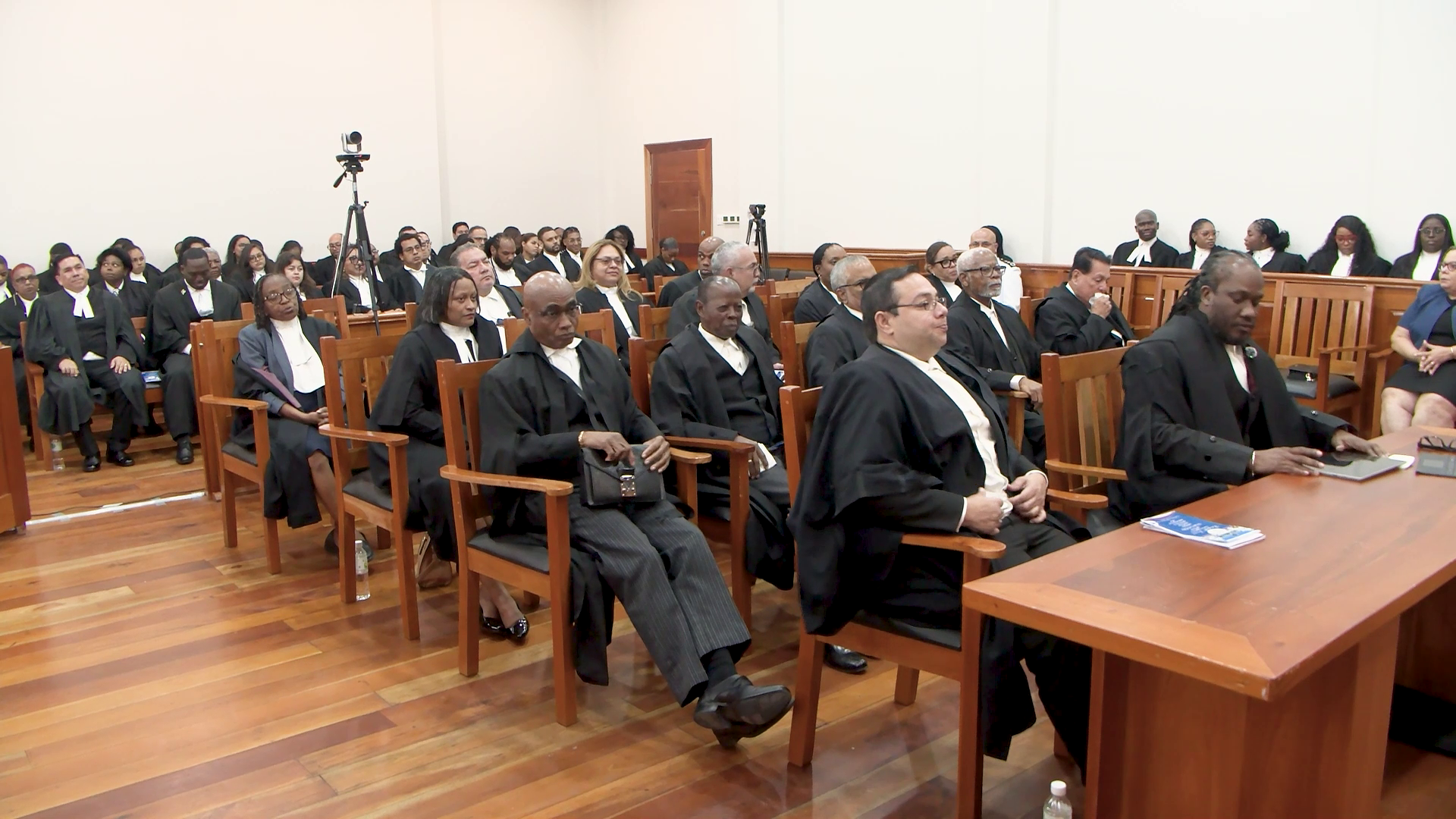
    In a packed Supreme Court hearing held Friday, Justice Rajendra Narine imposed a sentence of four years and 26 days behind bars. The conviction itself was handed down on February 4, 2026, when the judge found Misick guilty on three counts of bribery tied to fraudulent government land and development agreements. Misick was not convicted alone: his co-defendants, former Cabinet minister McAllister Hanchell and attorney Thomas Chalmers Misick, were also found guilty in the same ruling.

    Misick held the highest elected office in TCI from 2006 to 2009, when the scandal first upended the territory’s government. The scheme at the heart of the case relied on complex, opaque multinational corporate structures and hidden cross-border banking transfers totaling more than $21 million U.S. dollars, all connected to large-scale luxury tourist development projects across the island chain.

    In his sentencing remarks, Justice Narine emphasized that corruption among elected public officials amounts to a severe breach of the fundamental trust that citizens place in their leaders. He noted that the public interest unequivocally demands prison time for such offenses, serving both as punishment for the wrongdoing and a deterrent to other officials who might consider similar illegal conduct. The judge categorized Misick’s offending as falling into the highest tier of severity, pointing to three key aggravating factors: the massive personal financial gain obtained through the scheme, the deliberate abuse of a senior public office, and the sophisticated, layered tactics the co-conspirators used to carry out and hide their criminal activities. In his earlier February conviction ruling, Narine went further, stating plainly that public office “is not a licence for personal enrichment” and confirming that Misick’s actions directly violated the basic standards of honesty and integrity that the public is owed by elected representatives.

    The case stretches back almost 20 years to its initial exposure. In the mid-2000s, a public Commission of Inquiry commissioned by the United Kingdom — which holds sovereign responsibility for TCI as an overseas territory — and led by retired judge Sir Robin Auld uncovered conclusive evidence of systemic corruption and widespread abuse of office among TCI’s top senior officials. The scale of the findings was so severe that the UK government took the extraordinary step of suspending key provisions of the territory’s constitution in 2009, imposing temporary direct British rule while law enforcement launched full criminal investigations into the wrongdoing.

    To pursue the complex case, authorities established a dedicated Special Investigation and Prosecution Team. Over the course of more than 15 years, the team navigated tangled international legal processes, countless legal challenges from defendants, and multi-country extradition proceedings before finally securing the historic convictions against Misick and his co-conspirators. Friday’s sentencing closes one of the final major chapters in a scandal that reshaped public accountability expectations for small island governments across the Caribbean region.