标签: Belize

伯利兹

  • How Intelligence Stopped the Neuland Drug Flight

    How Intelligence Stopped the Neuland Drug Flight

    On April 14, 2026, new details have emerged of a major drug plane interdiction operation in Neuland, Belize, revealing that the successful bust was not a random stroke of luck, but the culmination of months of deliberate intelligence work, seamless inter-agency coordination, and critical cross-border partnership with United States law enforcement entities.

    Following a joint public briefing held by Belize’s combined law enforcement teams this week, officials have pulled back the curtain on the operational workflow that led to the intercept. Belize Police Commissioner Dr. Richard Rosado emphasized that the operation dismantles the narrative that the country serves as an unchallenged transit hub for transnational drug trafficking networks.

    “This successful operation sends a clear message: Belize is not an open transit route for illegal narcotics,” Rosado stated in the briefing. “We have built out the full capabilities to detect, track, and intercept illicit shipments, backed by robust intelligence and strong global partnerships. We have the tools and the coordination to get the job done.”

    When asked about the level of support provided by U.S. counterparts, Rosado confirmed that American agencies were involved at every stage of the operation, from the initial intelligence gathering that flagged the suspicious flight through to the final arrest of the individuals involved. Under Belize’s current counter-narcotics framework, any confirmed alert of an illicit trafficking movement triggers an automatic referral to the Joint Interagency Coordination Committee (JIAC), which brings together all relevant national security entities including the Belize Police Department, Belize Defense Force, Belize Coast Guard, and the national Customs Department. Rosado noted that this operation marked a landmark demonstration of this coordinated system working in perfect unison.

    Belize Coast Guard Commandant Captain Gregory Soberanis also detailed his service’s role in the operation, reaffirming the branch’s ongoing commitment to deepening collaborative ties with national partner agencies. “The Belize Coast Guard remains fully dedicated to strengthening our partnership with the Police Department and the Belize Defense Force,” Soberanis said. “This is a relationship we will continue to build on, as we work side by side to guarantee the safety and security of all Belizean citizens.”

    The successful intercept highlights the growing effectiveness of Belize’s counter-narcotics infrastructure, and underscores the critical role of both inter-agency coordination and international cooperation in disrupting transnational drug trafficking operations before illicit substances can enter regional supply chains.

  • Government Seeks Funds for National Fire Service Headquarters

    Government Seeks Funds for National Fire Service Headquarters

    For decades, one critical infrastructure gap has undermined the operational effectiveness of Belize’s National Fire Service: the service has never had a purpose-built, centralized national headquarters to coordinate its activities across the country. This longstanding absence has created cascading challenges, from fragmented inter-station coordination and subpar standardized training to limited capacity for vehicle and equipment maintenance, all of which have dragged down departmental morale over the years.

    Successive national governments have publicly recognized the urgent need for a centralized headquarters facility, and numerous blueprints and political pledges have been put forward over time. However, the initiative has remained stalled at the planning stage, never moving to actual construction. Today, while the project has not been completely abandoned, funding remains the single largest barrier to breaking ground, even with a suitable plot of land already secured.

    The allocated site sits along Lake Independence Boulevard, adjacent to the Eleanor Hall Building in a readily accessible area. Disaster Risk Management Minister Henry Charles Usher confirmed that the administration still views the headquarters as a key priority under its national development initiative Plan Belize, but domestic budget allocations for the upcoming cycle do not include the funds required for construction. To move the project forward, the government is now reaching out to international partners for financial and logistical support.

    In a public statement confirming the government’s approach, Minister Usher emphasized that the facility will serve as a permanent operational home for the National Fire Service, addressing critical unmet needs. “We don’t have the domestic funds to undertake this project right now,” Usher explained. “We already have the land set aside right next to the Eleanor Hall Building, so we are actively seeking external funding. Our hope is to form a partnership with the U.S. Embassy in Belize to secure the resources needed to build the headquarters.”

    He went on to outline the core functions the new facility will fulfill, noting that it will provide dedicated space for national-level training programs, a centralized mechanical unit for fire truck maintenance and repair, and a coordination hub for emergency response across Belize. “The National Fire Headquarters is an essential investment to ensure our fire service has all the resources it needs, and a permanent base to operate from,” Usher said. “It is a key part of Plan Belize, and we are committed to getting it built. It just isn’t included in this year’s budget. Rest assured that once we secure the funding and set a construction timeline, the public will be the first to receive that update.”

    This report is a transcribed excerpt from an evening television newscast, with all non-English remarks formatted using a standardized spelling system for accessibility.

  • Henry Charles Unaware of Fire Department’s Media Dodge

    Henry Charles Unaware of Fire Department’s Media Dodge

    As Belize enters the hottest, driest phase of its annual dry season, the threat of destructive wildfires and residential blazes has spiked once again — creating an urgent need for clear public communication and transparent updates from emergency responders. But over recent months, a puzzling pattern has emerged: frontline firefighters have repeatedly turned down requests for media interviews, even in the aftermath of large-scale fire incidents. This consistent silence has sparked growing public debate over whether the lack of outreach is a deliberate institutional policy, leaving communities underserved with critical safety information at a high-risk time.

    Local journalists recently pressed Henry Charles Usher, Belize’s Minister of Disaster Risk Management, directly on these growing public concerns, asking explicitly whether a formal ban on media engagement for fire department personnel was in place. Usher told reporters he had no prior knowledge of any such directive, and flatly denied that any official policy prohibiting firefighters from speaking with press outlets exists.

    Amid the rising danger, Usher acknowledged that the country is already facing a sharp uptick in fire activity. “We are seeing a lot of bush fires, certain forest fires. We’re seeing a lot of residential fires as well, so it’s still an ongoing effort to make sure that we are able to respond to those as best as we can,” he said.

    When pressed again to confirm whether a no-comment policy was active, Usher reaffirmed that he was hearing the allegation of a formal media ban for the first time during the interview, and pledged to launch an internal inquiry to get to the bottom of the consistent refusals. He did, however, offer a potential explanation for the trend, noting that existing investigative protocols may be driving the silence.

    Under Belize’s current procedures, when a fire is suspected to be arson or another criminal act, the fire department conducts an initial scene investigation before passing all findings to the police service, which takes over as the lead investigating agency. In these cases, Usher explained, frontline firefighters at the scene are not in a position to share formal conclusions about the cause of the blaze, as that responsibility falls to police lead investigators.

    “So maybe that’s the case, but certainly it’s not a policy for them not to speak to the media,” Usher emphasized.

    This report is adapted from a transcribed evening television newscast, with transcribed Kriol language comments standardized to consistent spelling for published distribution.

  • Communication Breakdown Clouds Caye Caulker Police Station Plans

    Communication Breakdown Clouds Caye Caulker Police Station Plans

    A planned new police station for the small Belizean island of Caye Caulker has escalated from a local community disagreement to a growing political controversy, after recent electoral redistricting shifted the island into the Fort George parliamentary constituency, drawing regional political attention to the conflict. While local residents do not oppose the construction of a new police facility itself, widespread frustration has emerged over the lack of transparent engagement and early consultation from central authorities, turning procedural disagreements into a test of local governance. Henry Charles Usher, the elected Area Representative for the newly reconfigured Fort George constituency, has confirmed he is closely tracking the evolving situation as community concerns continue to mount. In comments carried on local broadcast news, Usher acknowledged that critical missteps from the start of the planning process created the current rift. “I certainly agree that there was a lack of communication in the beginning,” Usher stated. “I do believe that the duly elected village council should have been consulted. There should have been a meeting to discuss the plans.” Usher emphasized that the core project itself enjoys broad support, noting that a modern, upgraded police presence is a needed addition for the island community. “I don’t necessarily think that it’s a bad idea what is happening. I think that the police station will be built. Whether it is built there or built somewhere else, the island will be getting a modern police station,” he explained. The representative also noted that local residents have raised separate requests for additional public amenities, including a new visitor welcome center, and that these priorities will require separate, dedicated discussion with community leaders. “Now, if you want to look at other amenities at the island that the residents of Caye Caulker are looking at, ’cause I’ve heard that they’re speaking about a welcome center or something to that effect then certainly that discussion has to happen,” Usher said. “But where the police station is built is less important than the fact that it’s going to be built. And I think that is important. But in the beginning, that information should have been communicated and there should have been a proper dialogue with the relevant authorities out there.” This report is adapted from a transcribed evening television news broadcast, with all quoted content retained in its original context for accuracy.

  • Belize Tackles One of Hurricanes’ Deadliest Threats

    Belize Tackles One of Hurricanes’ Deadliest Threats

    As the 2026 Atlantic hurricane season draws near, the small low-lying Central American nation of Belize has brought one of hurricanes’ deadliest and most underrecognized hazards — storm surge — to the top of its regional climate adaptation agenda. This week, Belize is hosting a three-day high-level international workshop in Belize City, uniting leading meteorologists, national disaster response managers, and climate resilience experts from across the globe to refine storm surge forecasting and early warning capabilities for coastal communities throughout the Caribbean.

    Storm surge, the rapid rise of seawater pushed inland by a hurricane’s strong winds, is responsible for roughly half of all hurricane-related fatalities in the Atlantic basin, and it poses an existential risk to low-lying coastal nations like Belize. The country has carried the collective memory of devastating storm surge damage for more than half a century, ever since Hurricane Hattie destroyed most of Belize City’s coastline in 1961, leaving hundreds dead and reshaping the nation’s urban development. Today, as climate change accelerates sea level rise and intensifies the strength of tropical cyclones, the threat of catastrophic storm surge has grown more urgent than ever.

    The workshop, supported by long-term global partners including the U.S. National Hurricane Center (NHC) and the University Corporation for Atmospheric Research, builds on a 10-year regional capacity-building initiative to bring advanced storm surge modeling to vulnerable Caribbean nations. Belize was one of the first countries in the region to gain access to this cutting-edge modeling technology, which simulates potential storm surge impacts across the country’s varied coastline topography.

    Ronald Gordon, Belize’s chief meteorologist, explained that the modeling framework does not focus on long-term climate projections; instead, it generates hundreds of synthetic hurricane scenarios that test how different storm intensities, forward speeds, and approach angles would interact with Belize’s unique coastal terrain to produce storm surges of varying heights. Over a decade of refinement, the models have become far faster, more geographically detailed, and more accessible to national forecasters across the Caribbean, thanks to U.S. government funding through the NHC.

    Jamie Rhome, deputy director of the NHC, outlined the core goals of the week-long gathering: training local teams to identify at-risk communities before a storm forms, pre-position emergency resources, and issue accurate, timely warnings when a threat emerges. Technological advances have transformed the pace of capacity building, he noted: where it once took two to three years to deploy customized modeling systems for a single country, experts can now roll out the tools far more quickly, allowing the initiative to scale across the entire Caribbean region at an accelerated rate.

    For Belize’s disaster leadership, the workshop also offers a critical opportunity to learn from recent real-world experience. Henry Charles Usher, Belize’s Minister of Disaster Risk Management, highlighted that delegates from Jamaica — which suffered a direct hit from Category 5 Hurricane Melissa just one year prior — are sharing on-the-ground lessons about storm surge impacts and response. “This gathering lets us draw from the hard-won experience of our neighbors,” Usher said. “Our goal is to use this advanced modeling and early warning technology to keep our communities informed, protect lives and property, and help our nation recover faster if a major storm strikes.”

    Workshop organizers and participants stress that stronger scientific data and clearer, faster communication of warnings will be the deciding factor between life and death when the next major storm makes landfall. As climate change amplifies hurricane risk across the Caribbean, regional collaborative efforts like this initiative have become an essential tool for building climate resilience in the world’s most vulnerable coastal nations.

  • Chief Meteorologist Debunks Viral Heatwave Warning

    Chief Meteorologist Debunks Viral Heatwave Warning

    A false warning claiming an extreme, record-breaking heatwave is imminent in Belize has spread rapidly across social media platforms, sparking unnecessary anxiety among local residents already adjusting to the elevated temperatures of the annual dry season. To counter the misinformation, the country’s top meteorological official has stepped forward to correct the record and guide the public toward reliable weather updates.

    Ronald Gordon, Belize’s Chief Meteorologist, clarified in an official briefing that while the nation is currently in its annual hot season, official forecast models do not predict extreme heat or record-breaking temperatures over the coming four days. “We are in the typical hot season, however, looking out for the next four days based on our forecast, we are not looking at extreme heat,” Gordon explained. “We are gonna be warm and we expect that, but we are not looking at extreme heat. I know that there was an article published on social media, didn’t come from us, indicating there’ll be a heat wave and extreme heat. We’re not looking at extreme heat and we’re not looking at any record breaking for the next, at least four days.”

    Gordon also provided context on Belize’s recent heat trends, recalling that 2024 saw the most extreme recent heat event, with temperatures exceeding 100 degrees Fahrenheit for multiple consecutive days. While 2025 brought a small number of heatwave events, they were far less severe and frequent than the 2024 heat event, he added.

    Looking ahead through the end of April and into early May, Gordon confirmed that long-term climate patterns do indicate heatwaves are likely to occur in the coming weeks. “We do expect that from climatology, that is the average over many years, that going into May, we will get some heatwaves,” he said. “We can say that definitely we will get some, and we cannot say when for sure at the moment, but we will get some heatwaves before the end of this month and into early May.”

    The chief meteorologist urged Belizeans to only seek weather information from official national meteorological sources to avoid falling prey to misinformation that can spread quickly through unvetted social media posts. Even though no immediate extreme heat is on the horizon, residents are still encouraged to prepare for gradually warming conditions as the dry season progresses.

  • Overwhelming Turnout for Free Medical Services

    Overwhelming Turnout for Free Medical Services

    On a bright April morning in 2026, crowds began gathering long before the sun crested the horizon in Belize City, all drawn to a rare offering: completely free, comprehensive healthcare hosted at the city’s Civic Center. The four-day outreach, organized by the Belize Union of Seventh-day Adventist Church in partnership with U.S.-based ministry Amazing Facts International, has seen an outpouring of community demand that has already stretched the volunteer clinic to its maximum capacity.

    Hundreds of patients began lining up as early as 6 a.m. on the opening day of the mission, many traveling from outlying communities to access the free services. Esmeralda Moralez, a resident of Gardenia Village who arrived at 6:25 a.m., explained her early arrival reflected the harsh reality of healthcare access in the country. “Medical is expensive here,” she noted, a sentiment shared by many low-income and uninsured Belizeans who have turned to the mission for care they could not otherwise afford.

    The event brings together a combined force of more than 200 international medical volunteers from the United States alongside dozens of local healthcare providers, covering a far wider range of services than most free clinics in the region. From routine general health consultations and basic check-ups to specialized care in dentistry, gynecology, pediatrics, ophthalmology, physical therapy, nutrition, and pharmacy services, the mission offers full-cycle care at no cost to patients. For the dental wing alone, the clinic has assembled five dentists and three dental hygienists in a dedicated space at the Civic Center—a scale of free specialized care that Al Powell, president of the Belize Union of Seventh-day Adventist, says is unprecedented for the area.

    “This is just what God is doing for us, opening this avenue,” Powell shared. “We don’t take any credit for it. We just try to facilitate his blessings on our community. We have had a full house since this morning, persons trying to get into the service and we are maxed out to capacity.”

    Clinic director Roger Chene, who leads the Amazing Facts International volunteer team, added that for the participating providers, the mission is more than a community initiative—it is a privilege to share their skills with a community in need. “All of our team members are working professionals, and they are taking time out of their own busy schedules to use their skills and God-given ability to serve the community here in Belize,” Chene explained. “There is no charge for any of the services. We will still be here on Wednesday and Thursday, but we want to encourage everyone to come early, because it is first come, first serve.”

    Dr. Zoraida Powell, health ministry assistant for the Belize Union, who coordinated logistics between the local church and the international volunteer team, outlined the breadth of care on offer. “These are medical doctors, dentists, gynecologists, pediatricians, pharmacists, nurses, nutritionists, physiotherapists, ophthalmologists, so all of these people along with some local doctors and dentists,” she said. “We have this health brigade where we can serve the community in Belize.”

    For patients, the long wait in line is a small price to pay for care that would otherwise be out of reach. Joyce Villafranco, a Belize City resident, called the experience life-changing for local residents. “Hundred percent, because it is free,” she said. “You know how Belizeans like free thing.”

    As demand continues to surge beyond organizers’ initial projections, event leaders are urging any residents seeking care to arrive early to secure a spot before the clinic reaches daily capacity. The mission is scheduled to conclude at the end of the fourth day, having brought thousands of Belizeans their first affordable healthcare interaction in years.

  • Are Some Bus Operators Charging Higher Fares Without Approval?

    Are Some Bus Operators Charging Higher Fares Without Approval?

    In Belize, growing anger and uncertainty have gripped the country’s public bus sector as multiple reports emerge of unapproved fare increases being imposed on daily commuters, while independent operators warn they could cease operations within days without urgent government financial support.

    The controversy first came to light when a Belize-based commuter shared their experience with local outlet News Five, confirming they were charged $5 for a standard route between Belmopan and their origin point — a trip that is officially regulated to cost just $4. Under current government pricing rules, only premium express services on the same route are permitted to charge the $5 rate. The passenger provided an official receipt as evidence of the overcharge, and is now joining a growing chorus of riders questioning how some operators are able to charge above the legal price cap despite explicit public statements from transport officials confirming no fare adjustments have been authorized.

    Beyond the immediate frustration of commuters over rising travel costs, the unapproved fare hikes are tied to a deeper, ongoing restructuring of Belize’s bus industry. On Monday, representatives of independent bus operators told News Five they are drafting an open letter to the Office of the Prime Minister, after growing frustrated that the Ministry of Transport has failed to address their mounting financial pressures. Operators say that without either a government-approved fare increase or targeted financial relief, many small independent companies will be forced to give up their independent status and join the newly launched National Bus Company (NBC), a state-aligned entity established to restructure the sector.

    Transport Minister Dr. Louis Zabaneh has publicly responded to the operators’ demands, clarifying that while independent operators retain full constitutional right to request a meeting with the Prime Minister and raise their concerns, his ministry does not have the authority to grant exemptions from goods and services tax or issue emergency subsidies to struggling independent operators. He also pushed back against claims that the NBC is a tool for forced nationalization of the bus sector, noting that when the new entity was established, all independent operators were extended an invitation to join and access perks including free operational audits. To date, 19 operators have accepted the invitation, while dozens more chose to retain their independent status. “This is not a forced nationalization,” Zabaneh emphasized in his statement. “If operators say they can stand on their own, we respect that position entirely.”

    Despite the minister’s reassurance, the Independent Bus Operators Association has issued an urgent warning that many of its member companies do not have the working capital to continue operating beyond the end of this week if no government support is forthcoming. The crisis has left both commuters and small operators in limbo: riders face unplanned cost increases for essential travel, while independent operators face an impossible choice between breaking government fare rules or shutting down their businesses entirely.

  • News 5 Named Semi‑Finalists for UB Investigative Journalism Prize

    News 5 Named Semi‑Finalists for UB Investigative Journalism Prize

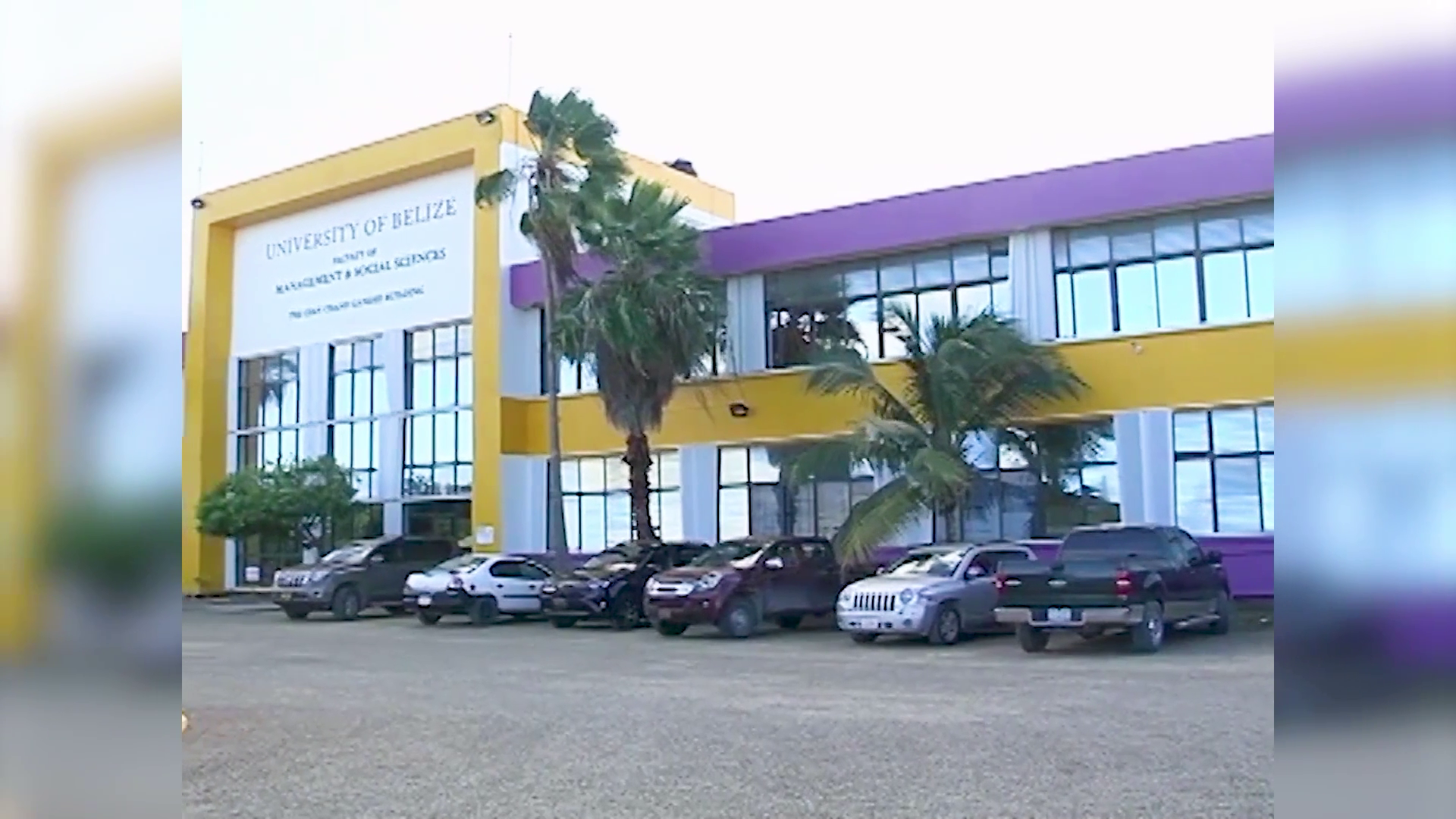
    As the fourth iteration of its prestigious annual Investigative Journalism Prize approaches, the University of Belize has unveiled the three shortlisted teams competing for this year’s award, an honor created to highlight impactful reporting that confronts Belize’s most urgent unaddressed public issues.

    Among the semi-finalists is a flagship investigation from News Five, *Stella Maris Child Drowning*, reported by a team of seven journalists led by Paul Lopez. The piece centers on the tragic 2026 drowning death of six-year-old Gabriel Orellano, an autistic student at Belize’s Stella Maris School. Unlike standard accident reporting, the News Five team went far beyond surface-level facts to expose deep-rooted systemic failures and long-overlooked accountability gaps at the institution.

    Through months of on-the-ground reporting, the team uncovered that Gabriel’s death was not the unforeseeable tragedy it was initially framed as. Drawing from exclusive interviews with a sanitation worker who was the last person to see Gabriel before his death, as well as a parent who reported their own child had slipped off campus unnoticed just weeks prior, the investigation revealed repeated prior security breaches, chronic underfunding of campus safety infrastructure, broken perimeter fencing, insufficient on-campus supervision, and unaddressed internal safety concerns that never triggered urgent corrective action. Lopez also cross-referenced witness accounts with surveillance footage to map the full timeline of Gabriel’s final hours, bringing irrefutable clarity to the series of institutional missteps that led to the child’s death.

    The reporting triggered immediate national outrage and sparked urgent public debate across Belize around school safety standards, emergency response protocols, and the collective responsibility to protect vulnerable children with special educational needs. Within weeks of the investigation’s publication, Belize’s Ministry of Education launched a full independent inquiry into the incident, committed public funds to rebuild and secure the Stella Maris campus with updated safety fencing, and announced nationwide structural education reforms designed to improve protections for neurodivergent students.

    The two other shortlisted investigations include *Marine Protected Areas Are Everybody’s Business*, a climate-focused report by Andre Habet and Marco Lopez of *Climate Spotlight*, and *Taken: The Budna Abduction and the Police Cover-Up*, an investigative series from Jules Vasquez, Brian Castillo, and Denver Fairweather of Tropical Vision Ltd.

    All entries were evaluated by an independent panel of regional and international media professionals, drawn from news outlets and institutions across the Caribbean and the United States, to ensure impartial judging.

    The winning team will walk away with a BZ$10,000 cash prize, while the two remaining semi-finalists will each receive BZ$5,000 in recognition of their work. The final results will be revealed during a public awards ceremony hosted on May 2 at the House of Culture in Belize City.

  • Five Detained in Suspected Kidnapping of Indian Creek Alcalde

    Five Detained in Suspected Kidnapping of Indian Creek Alcalde

    A high-profile missing person case has sent shockwaves through the small community of Indian Creek Village in Toledo District, with local authorities confirming five detentions connected to the suspected abduction of 41-year-old Marcos Canti, the community’s First Alcalde. The incident unfolded on a Monday afternoon in 2026, when Canti left his family residence shortly after 2 p.m. to carry out routine work on his agricultural plot located near neighboring Pine Hill Village.

    When Canti failed to return home by early evening, concerned family members and a close friend launched an immediate search. Their search effort uncovered a troubling scene: Canti’s bicycle, working machete, and a basket he had filled with freshly harvested tomatoes were all left abandoned on the ground. Investigators also documented clear evidence pointing to a potential struggle at the site, but there was no sign of Canti himself.

    In statements to law enforcement, Elfina Canti, the missing alcalde’s wife, emphasized that her husband’s unexplained disappearance was completely out of character. She revealed that Canti had received explicit threats just one day before he went missing, and she told investigators she is convinced the incident is directly tied to long-simmering land conflicts that have divided the Indian Creek Village community for months.

    As news of Canti’s disappearance spread, already high tensions within the village boiled over into public unrest, culminating in a riot that forced authorities to intervene to restore order. In the wake of the unrest, police confirmed that five individuals have been taken into custody as part of the ongoing investigation into Canti’s suspected kidnapping. Local law enforcement has not yet released further details about the detainees or any potential charges they may face, and the search for Marcos Canti remains an active priority for investigating officers.