标签: Belize

伯利兹

  • Three Years or Seven? Sugar Crop Hinges on Deal

    Three Years or Seven? Sugar Crop Hinges on Deal

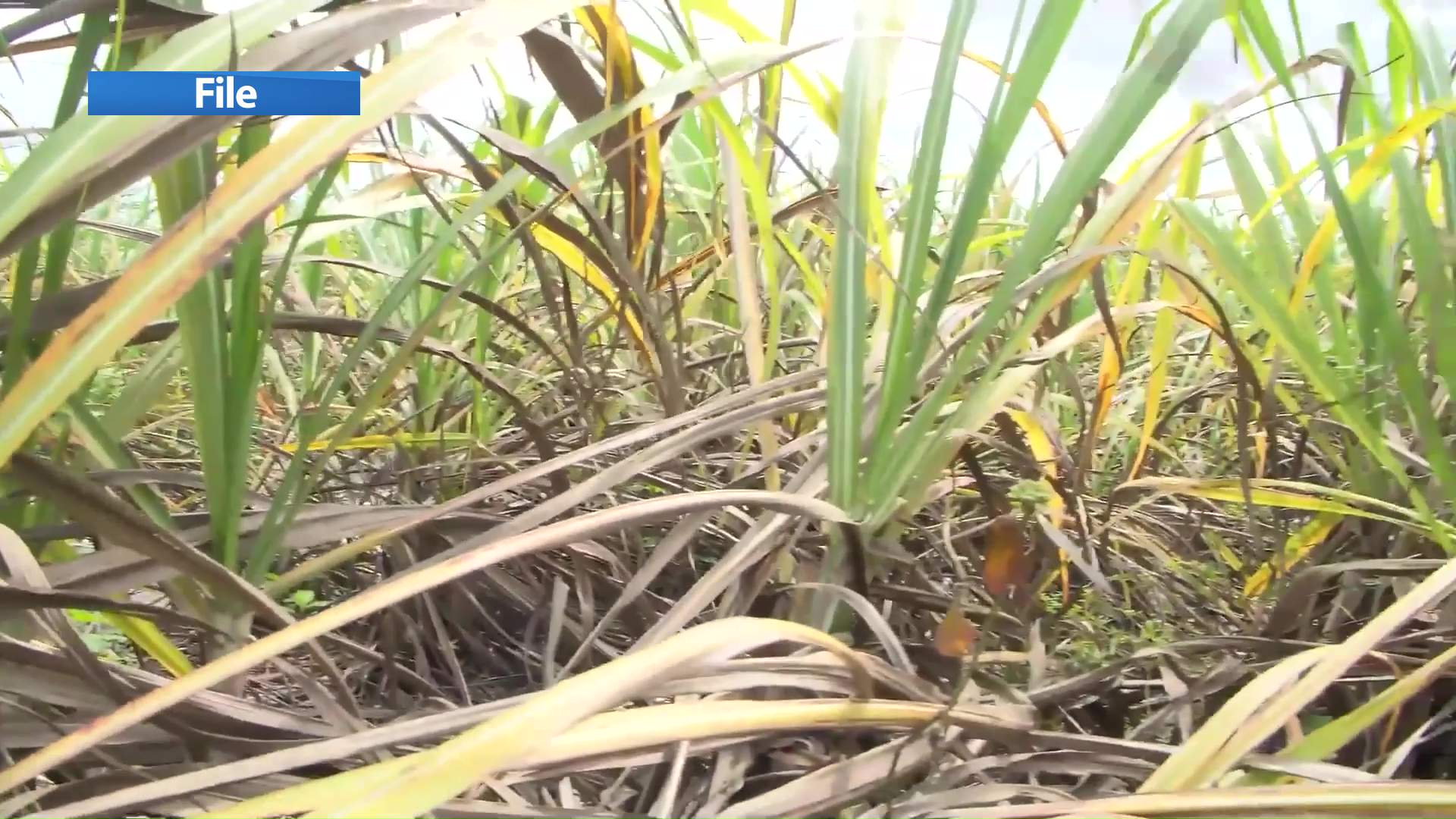
    The Belize sugar industry stands at a pivotal crossroads as negotiations between cane farmers and processing mills approach a critical phase. With the harvesting season imminent, stakeholders are working to resolve a fundamental disagreement over contract duration that could determine the sector’s stability for years to come.

    Belize Sugar Industries Limited (BSI), the primary processing facility, has proposed a seven-year commercial agreement seeking long-term operational certainty. This position contrasts sharply with the Belize Sugar Cane Farmers Association (BSCFA), which reports its members have unequivocally mandated leadership to accept no arrangement exceeding three years.

    Association Chairman Salvador Martin emphasized the farmers’ position: “Our membership has clearly expressed the need for a safe crop window of two to three years during our general meeting. This directive has been formally communicated to BSI-ASR, and we await their response.”

    The disagreement occurs against a backdrop of historical tensions that have previously led to operational standoffs and production shutdowns. Both parties now appear more motivated than in previous years to find common ground and avoid further disruption to the economically vital industry.

    Vice Chairman Alfredo Ortega noted the historical context, explaining that three-year agreements with rollover provisions had been customary practice in the past. “Our farmers specifically instructed us not to exceed this traditional timeframe unless renegotiation clauses are invoked by either party,” Ortega stated.

    The association leadership has characterized the current situation as having “the ball in the factory’s court,” indicating they’ve fulfilled their procedural obligations by submitting the farmers’ position in writing. The industry now awaits BSI’s response, which will determine whether the parties can bridge their differences or face another potentially damaging impasse.

    The outcome carries significant implications for Belize’s agricultural economy, as sugar production remains a cornerstone of rural employment and export revenue. The resolution of this contractual dispute will directly affect harvesting schedules, international export commitments, and the financial stability of thousands of farming families.

  • Sugar Farmers Reject PM’s Peacekeeping Claim, Demand Real Reforms

    Sugar Farmers Reject PM’s Peacekeeping Claim, Demand Real Reforms

    BELIZE CITY – Belize’s sugarcane industry faces renewed tensions as farmers directly contradict the Prime Minister’s assertion that his intervention has stabilized sector relations. The Belize Sugarcane Farmers Association (BSCFA) has publicly rejected governmental claims of improved dialogue, demanding concrete policy reforms rather than diplomatic overtures.

    Alfredo Ortega, Vice-Chairman of the BSCFA, provided unequivocal commentary regarding the current administration’s handling of the sugar industry. “We have not seen changes as yet,” Ortega stated during a recent interview. “We have been asking for changes that will really assist all players – the farmers, the millers, and the government.”

    The association’s leadership emphasized the need for structural reforms that establish equitable conditions across the industry value chain. This development follows the Prime Minister’s assumption of direct oversight responsibilities previously managed through the Ministry of Agriculture.

    Notably, farmers expressed appreciation for former Agriculture Minister Jose Abelardo Mai, whose resignation created the current administrative vacuum. Ortega acknowledged Mai’s continued advocacy despite no longer holding official responsibility for sugar affairs, while also extending wishes for the former minister’s health recovery and potential return to government service.

    The industry’s restructuring places daily operations under the joint supervision of the Prime Minister’s Office and Minister of State Martinez, who have claimed ongoing dialogue with both agricultural and processing stakeholders. However, farmer representatives maintain that these discussions have yet to produce meaningful progress toward addressing fundamental imbalances in the sector.

    The sugarcane industry remains a critical component of Belize’s agricultural economy, with its stability directly affecting numerous rural communities and national export earnings. The current impasse reflects deeper structural challenges in balancing the interests of agricultural producers, industrial processors, and governmental regulators.

  • Big Crowds, Small Bids at Police End-of-Year Auction

    Big Crowds, Small Bids at Police End-of-Year Auction

    The Queen Street Police compound in Belize opened its gates this December for a much-anticipated annual tradition: the end-of-year auction of abandoned, impounded, and unclaimed property. Despite the event typically occurring biannually, 2025 marked only a single auction occasion, featuring over six hundred items primarily consisting of bicycles and motorcycles.

    Hundreds of attendees—from commuters seeking affordable transportation to resellers hunting for parts—gathered early, creating a competitive bidding environment under strict police supervision. Assistant Superintendent of Police Bonifacio Rash, who oversees the proceedings, explained that all items originate from across Belize and become government property after remaining unclaimed. The auction serves dual purposes: clearing storage space for law enforcement while providing the public access to reasonably priced goods.

    The event’s significance extends beyond mere commerce. In a year characterized by rising fuel costs and increased living expenses, these auctions represent a critical opportunity for affordable mobility solutions. Interviews with participants revealed diverse motivations: Yeslyn, a mother, purchased a $15 bicycle for her daughter’s school commute; Miss Burke acquired multiple bikes for repair and donation to those in need; and Anna, a reseller, planned to refurbish and profit from her $15 purchase. Another bidder, Aiden, sought a personal project bike for eventual use and resale.

    While the police emphasize the practical benefits of property disposition and case resolution, the public has embraced the auction as a distinctive year-end tradition combining economic opportunity with community engagement and entertainment.

  • $300 Motorcycle Course Under Fire as Police Auction Draws Crowds

    $300 Motorcycle Course Under Fire as Police Auction Draws Crowds

    The Belizean government is reconsidering its contentious proposal for a nationwide $300 motorcycle training course following public backlash. Prime Minister John Briceño acknowledged the policy may have been “excessive” during cabinet discussions this week.

    The reconsideration comes amid the Belize Police Department’s annual end-of-year auction, which attracted significant public interest with motorcycles, bicycles, and electronics available for bidding. This event unfolded alongside ongoing government efforts to address road safety concerns through regulatory measures.

    Prime Minister Briceño revealed alternative approaches under consideration, including implementing mandatory written tests upon license renewal for all vehicle operators—not just motorcyclists. This system would mirror practices in the United States where license renewal requires re-testing.

    Additionally, the government is exploring tiered requirements that would exempt experienced riders with clean safety records. “Cyclists that have had a license for more than two years and have not gotten into any accident—maybe we don’t need to require them to take the lessons,” Briceño stated, suggesting the mandate might primarily target new riders entering the system.

    The proposed $300 course had faced substantial criticism from Belizeans who acknowledged road safety importance but questioned the financial burden of the mandatory training. The government’s pivot indicates responsiveness to public concern while continuing to seek solutions for transportation safety improvements.

  • National Assembly Unveils Modern Logo, Retires Coat of Arms

    National Assembly Unveils Modern Logo, Retires Coat of Arms

    In a significant symbolic shift, Belize’s National Assembly has officially retired its traditional coat of arms in favor of a contemporary new logo. The modernization initiative received rare bipartisan endorsement, with both government and opposition leaders praising the redesign. Prime Minister John Briceño characterized the new emblem as ‘classy’ during the official unveiling on December 12, 2025. Briceño emphasized the extensive consultation process that preceded the change, involving both the House of Representatives and the Senate. The Prime Minister specifically commended the leadership of both legislative chambers and their staff for spearheading the initiative. Opposition Leader Tracy Panton similarly endorsed the rebranding effort, expressing hope that the updated visual identity would signal a more accessible and publicly engaged National Assembly. Panton noted that the modernization should accompany increased civic engagement and improved public accessibility to legislative proceedings. The move represents one of the most visible symbolic changes to Belize’s legislative identity in recent history, potentially signaling a broader transformation in how the country’s democratic institutions present themselves to citizens and the international community. The design refresh occurs amid ongoing efforts to modernize governmental operations and public communications across Belize’s political landscape.

  • GOB Pushes Local Manna Noodles Amid Opposition Criticism

    GOB Pushes Local Manna Noodles Amid Opposition Criticism

    The Belizean government has enacted a significant trade policy shift by implementing a twenty-percent import tariff on foreign-made soups and broths, with ramen noodles being the primary target. This strategic move, championed by Prime Minister John Briceño’s administration, is designed to bolster the domestic market position of the locally manufactured ‘Manna’ noodles, produced by the Caribbean Organic Food Stuff Company—the same entity behind the popular Mine Beer and Manna flour.

    Prime Minister Briceño defended the policy, framing it as essential economic protectionism. He clarified that the tariff is not a defensive measure against imports but a proactive initiative to safeguard Belizean production. Contrary to assumptions, Briceño asserted that the local alternative is already priced more competitively than its imported counterparts. The policy received the necessary approvals through Cabinet and CARICOM, in alignment with the Single Market Economy protocols to which Belize is a signatory.

    However, the policy has drawn sharp criticism from opposition leader Tracy Panton. While she expressed support for the government’s broader objective of empowering local food processors, she vehemently questioned the choice of product. Panton condemned ramen noodles as ‘the worst food on the market’ and ‘the food of choice for the working poor,’ arguing that the policy inadvertently promotes an unhealthy dietary staple. She challenged the administration to instead create frameworks that enable local producers to compete with nutritious, affordable food options that support public health and wellness.

  • Prime Minister Mum on Speednet Sale Speculation

    Prime Minister Mum on Speednet Sale Speculation

    Belizean Prime Minister John Briceño has maintained his position of non-involvement regarding mounting speculation about telecommunications company Speednet’s potential acquisition by government-owned Belize Telemedia Limited (BTL). During recent press inquiries, the Prime Minister consistently redirected questions to his brother, Jaime Briceño, who holds connections to Speednet’s operations.

    When pressed for specifics regarding the rumored buyout timeline, Briceño offered neither confirmation nor denial of the transaction’s existence. He emphasized his separation from family business matters, stating respectfully that journalists should approach his brother directly for information pertaining to Speednet’s corporate affairs.

    The Prime Minister elaborated on the government’s relationship with public utilities, noting that while BTL remains government-owned, it operates alongside Belize Electricity Limited (BEL) and Belize Water Services Limited (BWSL) as private entities. Briceño suggested that should such an acquisition proceed, the involved companies would bear responsibility for transparently justifying how the transaction serves national interests.

    The conversation intensified when a reporter highlighted concerns about perceived conflict of interest, noting the Briceño family potentially stands to gain approximately fifty million dollars from the deal. The Prime Minister dismissed awareness of such financial arrangements, jokingly remarking that he might need to confront his brother about these alleged figures.

  • Ministry of Home Affairs to Announce NEW CEO on Monday

    Ministry of Home Affairs to Announce NEW CEO on Monday

    The Belizean government is poised to unveil a new Chief Executive Officer for the Ministry of Home Affairs this coming Monday, following an extensive selection process. Prime Minister John Briceño has confirmed the impending announcement while maintaining suspense about the final appointment.

    Contrary to widespread speculation favoring Rear Admiral Elton Bennett of the Belize Coast Guard for the position, Prime Minister Briceño revealed that multiple distinguished public figures were under consideration. The selection pool reportedly included four to five prominent candidates, among them former Police Commissioner Chester Williams and Admiral Bennett himself.

    The comprehensive appointment process involved thorough consultations and culminated in a formal recommendation to the Prime Minister. While the final decision has been reached, Briceño emphasized the importance of proper protocol, stating he would withhold the official announcement until personally meeting with the selected individual.

    Currently, National Security CEO Francis Usher continues to serve in an acting capacity, ensuring continuity in the ministry’s operations until the transition. The upcoming leadership change represents a significant development in Belize’s national security infrastructure, with the new CEO expected to address critical home affairs responsibilities including border security, immigration management, and public safety initiatives.

    The Prime Minister’s deliberate approach to the announcement reflects the government’s commitment to transparency while respecting proper appointment procedures for this crucial security position.

  • PM Explains Police Involvement in Budna Investigation

    PM Explains Police Involvement in Budna Investigation

    Prime Minister John Briceño has reaffirmed his administration’s position regarding the ongoing investigation into the Joseph Budna kidnapping case, maintaining that the Belize Police Department retains sole jurisdiction over the matter. During a recent press engagement, Briceño emphasized that Belizean legislation currently lacks provisions for independent investigative bodies to assume control of such cases.

    The Prime Minister’s statements come amid growing public scrutiny surrounding allegations of procedural misconduct within the police force. Online speculation has suggested that officers involved in the investigation may have provided falsified statements during questioning, raising concerns about the integrity of the investigative process.

    When pressed about potential conspiracy theories regarding a cover-up in the kidnapping case, Broneño adopted a measured stance. “I don’t know if police officers—if it was just police officers,” he stated, suggesting that public service personnel sometimes resist administrative transfers and might make unfounded claims accordingly. The Prime Minister deferred specific operational questions to Police Commissioner Chester Williams, acknowledging that the commissioner would be better positioned to address detailed inquiries about the investigation’s conduct.

    Briceño expressed particular disappointment with the Director of Public Prosecutions’ (DPP) public criticism of the investigation, while simultaneously affirming Belize’s democratic principles that allow for such expressions of dissent. He emphasized that the current priority remains ensuring police conduct a thorough and proper investigation into the Budna case.

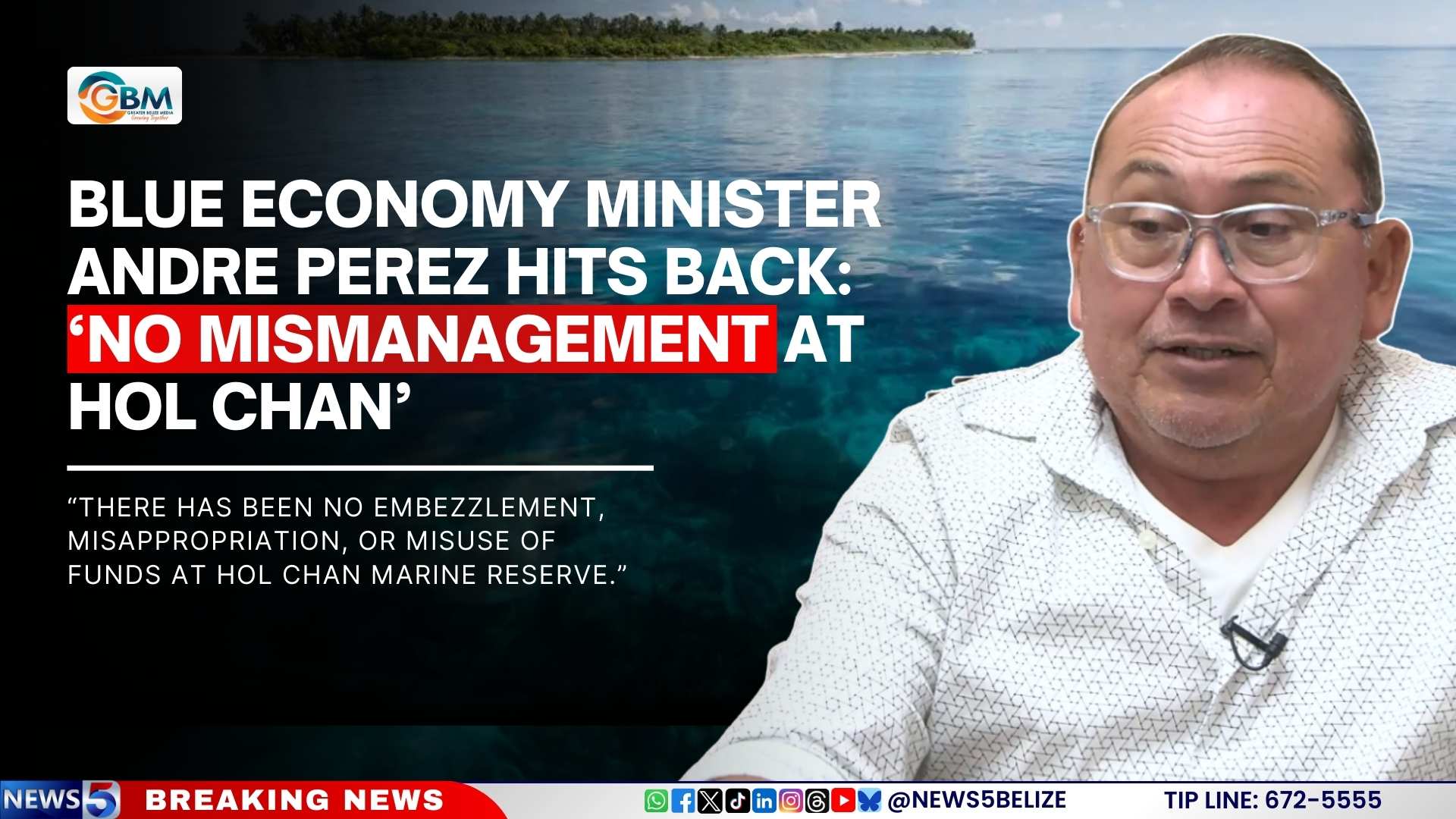
  • Blue Economy Minister Andre Perez Hits Back: ‘No Mismanagement at Hol Chan’

    Blue Economy Minister Andre Perez Hits Back: ‘No Mismanagement at Hol Chan’

    Belize’s Minister of Blue Economy and Marine Conservation, Andre Perez, has issued a forceful rebuttal against allegations of financial misconduct at the Hol Chan Marine Reserve. The minister characterized recent claims of fund mismanagement as “false, unfounded, and irresponsible” while defending his administration’s record.

    In an official statement released Friday, Minister Perez asserted that since his ministry assumed oversight in November 2020, no evidence of embezzlement, misappropriation, or misuse of funds has been discovered. He emphasized that all financial operations at the marine reserve strictly adhere to established governance protocols and audit procedures.

    The controversy emerged after the Association of Conservation and Community Development (ACCSD) expressed concerns regarding the abrupt removal of the Board of Trustees Chair and her subsequent replacement by the current Lions Club Chair. The conservation watchdog organization has called for a comprehensive six-year independent financial audit to ensure transparency.

    ACCSD further questioned whether the statutory instrument governing Hol Chan is being properly implemented, particularly regarding maintaining genuine community representation. The organization highlighted that the reserve was founded on principles of “openness, accountability, and authentic community involvement.”

    Minister Perez dismissed the allegations as politically motivated, challenging critics to present verifiable evidence rather than engaging in speculation. He revealed that when his leadership assumed control of Hol Chan in November 2020, the reserve was nearly bankrupt and burdened by significant debt. After five years of management, Perez maintains the marine reserve has been transformed into a “stronger, solvent, and thriving” institution.

    The escalating dispute highlights ongoing tensions between government management of natural resources and conservation groups’ calls for increased transparency in Belize’s protected areas.