标签: Belize

伯利兹

  • Hattieville Mother Loses Home in Fire, Suspects Foul Play

    Hattieville Mother Loses Home in Fire, Suspects Foul Play

    On April 9, 2026, a devastating fire ripped through the residential home of Therese Jacobs, a mother living in Hattieville, leaving her with nothing but a handful of personal possessions and no place to call home. Now, local law enforcement has launched a full investigation into the blaze, as Jacobs herself is convinced the fire was no accident – she believes it was intentionally set amid long-simmering conflict within her family.

    Jacobs was hundreds of miles away, working a shift in Punta Negra, when she got the frantic phone call that would upend her life. By the time she could return to Hattieville, her home had already been reduced to ash and charred debris. In an interview with local outlet News Five, the devastated mother described the overwhelming pain of losing everything she had built. “I’m crying because I cannot do nothing… It’s like someone push their hands in my chest and open it,” she shared, her grief raw for the public to see.

    Jacobs has pointed to multiple red flags that lead her to suspect foul play. Long-running family tensions have plagued her household for months, and she says there has been repeated suspicious activity near her property in the weeks leading up to the fire. Most notably, a young man who had been staying at her home had been targeted with threats from unknown parties. Jacobs also added that she had noticed suspicious tampering with her home’s electrical meter long before the fire broke out. “He was doing it for a long time because I used to hear the noise and I’m always wondering, what is that noise?” she explained.

    With almost all of her belongings, including her entire wardrobe, destroyed in the blaze, Jacobs has nothing left to help her get back on her feet. She has issued a public plea for any support community members can offer, from clothing to basic household goods as she works to rebuild her life from scratch. The process of starting over has already taken a heavy toll, Jacobs says, with both her emotional and physical health strained by the sudden loss. Local police have not yet released any updates on potential persons of interest or new developments in the investigation as of Wednesday.

  • $1.6M Drug Bust Raises Bigger Questions in Lord’s Bank

    $1.6M Drug Bust Raises Bigger Questions in Lord’s Bank

    On April 9, 2026, one of the largest drug seizures in Belize’s history has thrown the small community of Lord’s Bank into the spotlight, as law enforcement investigates potential connections between the $1.6 million cannabis bust and a string of recent unsolved murders in the surrounding area.

    Acting on intelligence, police executed a search warrant at a local residential property, where they uncovered over 1,100 pounds of marijuana stashed on site. The staggering scale of the seizure has sent shockwaves through the close-knit village, leaving community leaders and legal advocates raising critical questions about both local crime trends and the execution of the police operation itself.

    Prominent local attorney Audrey Matura has been one of the most vocal critics of how the raid was carried out. In a public statement released online, Matura questioned the timing of the police intervention, arguing that law enforcement moved in prematurely before building a full picture of the smuggling network tied to the stash. She argued that a more deliberate approach, including extended surveillance to capture the individuals actually connected to the drug cache when they arrived at the property, would have yielded far more valuable intelligence for long-term crime fighting. Matura’s criticism has opened a broader conversation about police procedure in large-scale drug investigations in Belize’s rural and suburban communities.

    For village chairman Daniel Salinas, the discovery was completely unexpected. In an interview ahead of a full primetime news interview, Salinas shared that residents were blindsided by the sheer volume of drugs found within their community boundaries. “I was quite surprised with the amount of drugs that was found in the village,” he said. “I didn’t expect that quantity of marijuana to be in the village.”

    What has deepened local unease is the location of the seizure itself. Law enforcement officials have already confirmed they are actively exploring potential ties between the drug stash and multiple recent killings in the broader Ladyville and Lord’s Bank region, a connection that has left many residents on edge. Even as concerns grow over potential cross-links between drug trafficking and violent crime in the area, Salinas sought to ease some community anxiety, noting that heightened regular police patrols and ongoing collaborative community safety efforts are already in place to address emerging threats.

    Full comments from Chairman Salinas on the bust and its impact on the Lord’s Bank community will air during the 6 o’clock evening newscast later today.

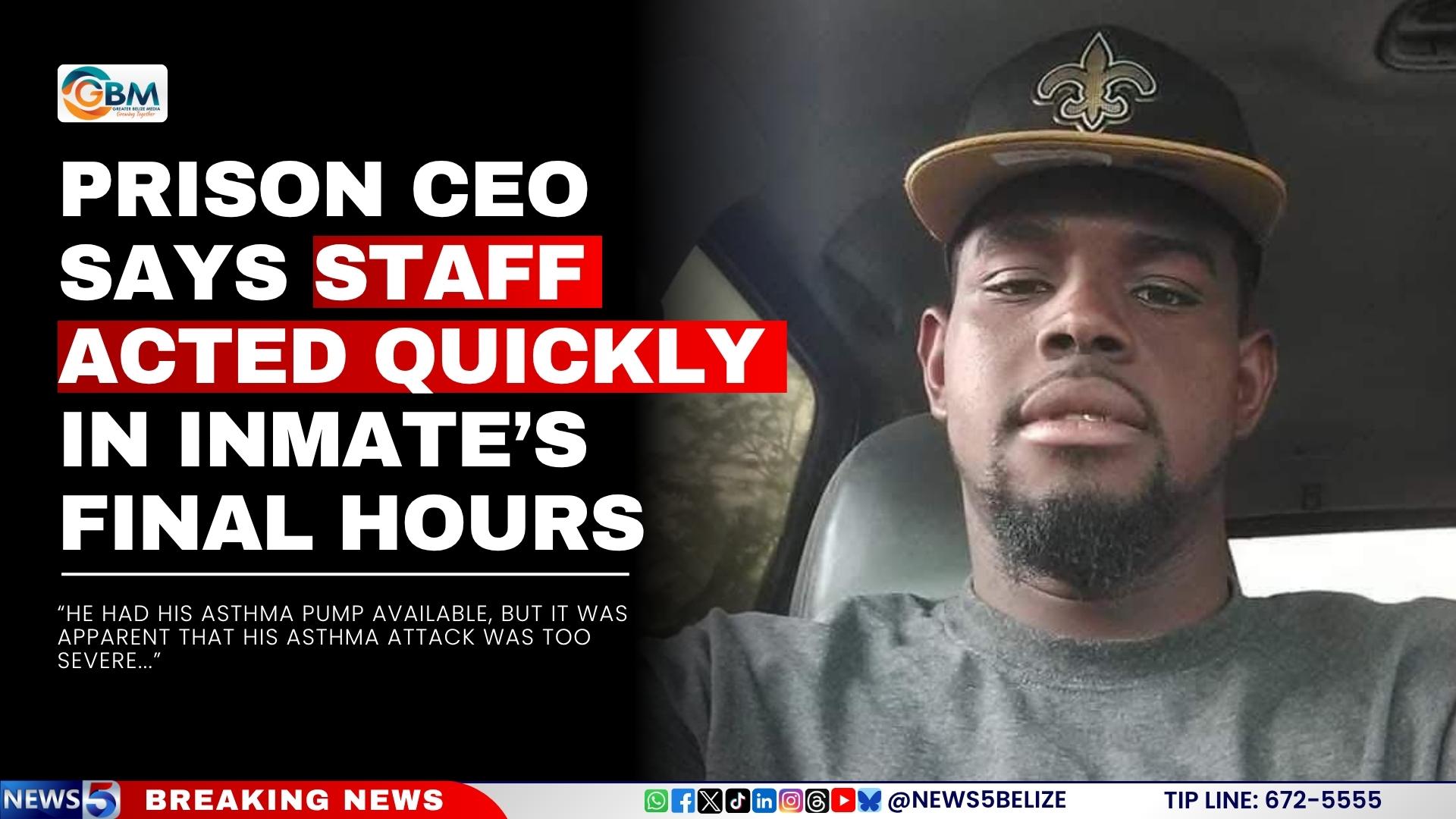
  • Prison CEO Says Staff Acted Quickly in Inmate’s Final Hours

    Prison CEO Says Staff Acted Quickly in Inmate’s Final Hours

    Public debate over the standard of medical care provided to incarcerated people in Belize has been reignited following the recent death of an awaiting-trial inmate at Belize Central Prison.

    Phillip Bowen, a 40-something man with a chronic asthma diagnosis who was awaiting trial on 2020 double murder charges linked to an incident in Hopkins Village, suffered a life-threatening asthma attack in the prison early on the morning of April 8, 2026, and died before he could reach a public hospital for emergency care.

    Belize Central Prison is operated under contract by the Kolbe Foundation, whose chief executive officer Virgilio Murillo has publicly pushed back against growing concerns from Bowen’s family and the general public, defending the speed and competency of on-site prison staff’s response to the incident.

    According to Murillo’s official account of the event, staff first received word that Bowen was experiencing respiratory distress at approximately 7:20 a.m. immediately after Bowen himself requested medical assistance. He was quickly escorted to the prison’s on-site medical center, where he accessed his own asthma inhaler — but the attack proved far more severe than the device could manage. “His asthma attack was too severe that even with the pump it was not adequate to help him,” Murillo explained in a press briefing.

    Following the failure of on-site intervention, prison staff moved immediately to transfer Bowen to the Karl Heusner Memorial Hospital (KHMH), Belize’s main public tertiary care facility. Murillo emphasized that the entire transfer process proceeded without any avoidable holdup: the prison maintains a dedicated standby ambulance for emergencies, and Bowen was loaded into the vehicle for transport just seven minutes after staff first became aware of his condition. Unfortunately, he died while the ambulance was still en route to the hospital, just moments from the facility’s entrance, Murillo confirmed.
    “Based on what I have been told so far, it was very timely and there was no delay,” Murillo told reporters, reaffirming that every correctional and medical staff member on site followed emergency protocol to the letter.

    Bowen’s death has not only left his family grieving but also brought long-simmering questions about correctional health care back to the forefront of public discourse in Belize. Critics and loved ones of incarcerated people with pre-existing chronic conditions have repeatedly called for more rigorous inspections, expanded on-site care resources, and clearer accountability frameworks to prevent preventable deaths behind bars. For now, Murillo’s statements confirm that an internal review of the incident is ongoing, but the prison leadership stands by the actions of its staff in Bowen’s final hours.

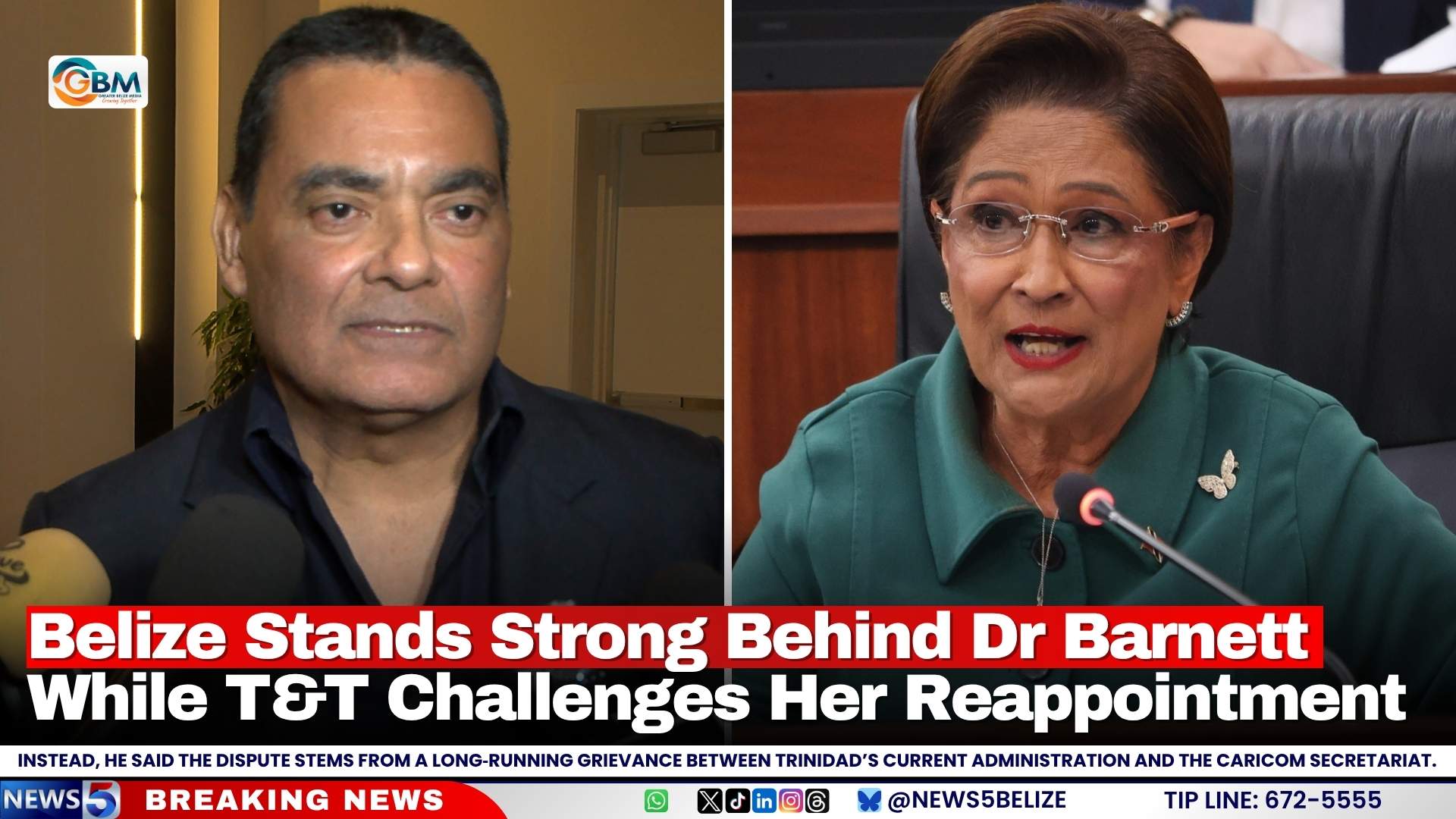
  • Belize Stands Strong Behind Dr Barnett While T&T Challenges Her Reappointment

    Belize Stands Strong Behind Dr Barnett While T&T Challenges Her Reappointment

    A regional political dispute has emerged within the Caribbean Community (CARICOM) over the reappointment of current Secretary-General Dr. Carla Barnett, with Belize standing firmly in support of her second term while Trinidad and Tobago has formally raised objections to the move.

    Belize’s Minister of Foreign Affairs Francis Fonseca confirmed the unwavering stance of his government in a press briefing, acknowledging that Trinidad and Tobago has raised specific concerns that will need to be addressed through internal CARICOM processes, but emphasizing that Belize’s endorsement of Dr. Barnett remains unchanged.

    Dr. Barnett’s current five-year term as the head of the CARICOM Secretariat is set to conclude in August 2026. While regional heads of government already discussed the reappointment during their most recent collective meeting, the formal vote and confirmation of her second term will not take place until the next scheduled CARICOM Heads of Government Conference set for July 2026. According to Fonseca, a majority of regional leaders have already signaled their verbal support for extending Barnett’s tenure, and the upcoming July meeting will only serve to formalize that broad backing.

    Fonseca pushed back against suggestions that Trinidad and Tobago’s opposition amounts to a targeted attack on Belize, noting that the criticism has no connection to Barnett’s nationality or her individual performance in the role. He explained that the grievance held by Trinidad and Tobago’s current administration traces back to a 2022 incident, when a Trinidadian national was arrested as part of an ongoing criminal investigation. The Caribbean nation has held the CARICOM Secretariat accountable for its handling of that incident, and the current dispute over reappointment stems from that long-running tensions, not Barnett’s work.

    In addition, Fonseca clarified the institutional role of the CARICOM Secretary-General to reporters, noting that while the position carries critical responsibility for informing regional policy and supporting member state leaders, all major collective decisions rest with the leaders of the organization’s member countries. “Secretaries-General play a critical role in informing and supporting leaders so that we are better positioned to make proper decisions,” he said.

    As the region prepares for the formal reappointment vote in July, early indications suggest that Dr. Barnett retains the support of a large majority of CARICOM’s 15 member states, putting her on track to secure a second term despite the public opposition from Trinidad and Tobago.

  • What Will The Briceño Administration Do With Cuban Doctors?

    What Will The Briceño Administration Do With Cuban Doctors?

    As a decades-old bilateral medical cooperation agreement between Belize and Cuba reaches its end date, the Briceño administration is actively pursuing new frameworks to keep 92 Cuban medical professionals — including 45 practicing physicians — working within Belize’s public health system, Foreign Affairs Minister Francis Fonseca has confirmed.

    Fonseca told reporters this week that the national Cabinet has formally directed his ministry and the Ministry of Health and Wellness to develop alternative arrangements to extend the doctors’ tenure in the country, underscoring the irreplaceable role the Cuban medical team plays in closing critical care gaps across Belize. “They are a cornerstone of our health system, particularly for underserved rural communities that have long struggled to attract permanent local medical staff,” Fonseca said of the contingent that has served under the agreement for years.

    The original cooperation deal has already expired, so any extension of the doctors’ work will require a new legally binding agreement between Belize City and Havana. Negotiations between the two governments are currently underway to hash out mutually acceptable terms for the continued deployment, with Belize’s top priority being preserving the current medical presence.

    Beyond the discussions around Cuban medical staff, the Belizean government is also grappling with a separate, persistent shortage of nursing professionals across the country. To address this gap, Fonseca said health authorities are evaluating international recruitment options, with nursing candidates from the Philippines and Nicaragua currently under active consideration.

    Belize’s push to retain Cuban doctors comes as a notable shift from recent regional trends. Several neighboring and nearby Latin American and Caribbean nations, including Jamaica, Guatemala, Guyana, and Honduras, have already moved to end their own similar Cuban medical cooperation programs, phasing out stationed Cuban medical personnel over recent months. No final decision has been signed off on by Belize’s Cabinet yet, but government leadership has made clear that retaining the medical contingent is its core negotiating goal.

  • DOE Grants Conditional Environmental Clearance for Port of Belize Expansion Project

    DOE Grants Conditional Environmental Clearance for Port of Belize Expansion Project

    In a landmark decision announced on April 9, 2026, Belize’s Department of the Environment (DOE) has issued conditional environmental approval for the large-scale cargo expansion and cruise terminal development project led by Port of Belize Ltd., located in the Port Loyola district of Belize. This green light follows months of technical review and public consultation, marking a key milestone for what is expected to be one of the country’s most significant infrastructure investments in recent years. The project’s path to approval included rigorous evaluation by the National Environmental Appraisal Committee (NEAC), which convened on April 2 to conduct a comprehensive assessment of the project’s updated Environmental Impact Assessment (EIA). After careful examination of the revised technical documentation and thorough consideration of concerns raised by local communities and environmental stakeholders, the committee delivered a majority vote in favor of conditional approval, which the DOE formally adopted and communicated to the project developer this week. One of the most heavily scrutinized components of the project is the planned dredging work for the shipping access channel and vessel turning basin, a process that has long raised alarms over potential harm to Belize’s fragile coastal ecosystems. To address these risks, NEAC has laid out binding requirements that the developer must follow, including robust containment systems to control the spread of suspended sediment during dredging operations, installation of fit-for-purpose dewatering infrastructure, and categorized handling and disposal of all dredged materials based on their contamination level. Beyond dredging-specific regulations, the committee also flagged potential risks to water, terrestrial, and air quality across both the construction and long-term operational phases of the project. Of particular note is the developer’s proposal to use a newly created mangrove island as a disposal site for dredged material. To ensure this does not cause lasting ecological harm, NEAC has mandated that all construction of the island adhere to strict engineering and safety standards, with required long-term ecological monitoring to track the health and growth of mangrove and littoral forest habitats on site. In addition to stringent environmental protections, the approval includes a suite of social conditions designed to deliver tangible benefits to adjacent communities and mitigate local disruptions. These mandatory requirements cover everything from targeted traffic management plans to reduce congestion in Port Loyola to infrastructure upgrades for flood mitigation, a commitment to prioritize local hiring for project jobs, targeted support for local small business and entrepreneurship opportunities, and the creation of a formal, accessible grievance mechanism for community members to raise concerns throughout the project’s lifecycle. To formalize all these requirements, the DOE confirmed that a binding Environmental Compliance Plan will be finalized and signed by both the regulator and the developer in the coming weeks, outlining specific mitigation measures that will be legally enforced to minimize any adverse social and environmental impacts. Officials also emphasized that the 2026 EIA submission reviewed by NEAC includes substantial revisions that address gaps identified in earlier proposals, bringing the project into alignment with current national environmental standards before the committee’s vote.

  • GOB Rolls Out Education Plan with $300 Million Budget Commitment

    GOB Rolls Out Education Plan with $300 Million Budget Commitment

    As the 2026 fiscal year kicks off, Belize’s Ministry of Education, Culture, Science and Technology has officially unveiled its ambitious Education Sector Plan 2.0, a four-year initiative designed to reshape learning outcomes across the entire education spectrum—from primary campuses to tertiary institutions, running from 2026 through 2030. Backing the far-reaching reforms is a $300 million budget allocation earmarked specifically for the education sector in the government’s latest national spending plan, cementing the country’s long-held dedication to advancing learning opportunities for all Belizeans.

    At the official launch ceremony, Education Minister Francis Fonseca emphasized that the substantial budget commitment aligns with the priorities of the Belizean public, who have consistently pushed for greater governmental investment in education. “The Belizean people have always attached great importance to education,” Fonseca told attendees. “Year after year, they demand that their government invest in education. So we have a proud history in this country of investing in education.”

    Crucially, Fonseca noted that financial resourcing alone is not sufficient to deliver meaningful change. Echoing widespread public scrutiny of public spending, he pointed out that questions around the real impact of education investment on both the schooling system and broader national development are not just valid—they are essential to holding policymakers accountable. “We have often asked, quite rightly… What impact is this investment having on our education system, on the development of our country? These are questions that are important,” he said.

    The new four-year plan builds directly on the framework of its 2021–2025 predecessor, which the ministry credits with guiding the education sector through the widespread disruptions caused by the COVID-19 pandemic. Building on that foundation, Plan 2.0 includes three key, immediate priorities: extending free education coverage to more learners, integrating greater digital and technological resources into everyday classrooms, and carrying out much-needed structural upgrades to school facilities across the country.

    Fonseca laid out five core objectives that anchor the entire plan, with equitable access and successful program completion at every education level topping the list. “We want to make sure that when our students enter the education system, they don’t only access it, but they complete it successfully,” he explained. Reaffirming the plan’s commitment to closing geographic and socioeconomic gaps, he added: “Every child in this country, every student in this country, wherever they live, Belize City or in the most remote rural communities of our country, should have equal access to quality education.”

  • Governments Are Starting to Ban Children from Social Media. Here is why.

    Governments Are Starting to Ban Children from Social Media. Here is why.

    A growing global movement to restrict underage access to social media is accelerating, driven by mounting public and policy concerns over the documented harms of excessive platform use on children’s mental health and development. The most recent policy action comes from Greece, where Prime Minister Kyriakos Mitsotakis has formally announced a nationwide ban on social media access for all children under the age of 15, set to take effect on January 1, 2027.

    Mitsotakis framed the policy as a targeted response to three growing crises linked to unregulated social media use among minors: rising youth anxiety rates, disordered sleep patterns, and the intentionally addictive design of most major online platforms. In a public video address addressing young people directly, the prime minister emphasized that extended screen time on social media prevents the developing brain from getting the adequate rest it needs to grow and function properly. Greek officials note that the policy emerged in response to widespread parental advocacy, with thousands of caregivers raising alarms about children staying up late scrolling through platforms, struggling with unmanaged anxiety, and prioritizing social media engagement over in-person activities and schoolwork.

    Public opinion in Greece strongly backs the new restriction, according to a recent poll conducted by ALCO. The survey found that nearly 80 percent of respondents support the under-15 ban, reflecting broad public agreement on the need for regulatory intervention. This is not Greece’s first step to curb childhood social media overuse: the country has already implemented full bans on mobile phone use in primary and secondary schools, and rolled out parental control tools to help families monitor and limit children’s platform time.

    Greece is far from the only nation advancing these restrictions, as policymakers around the world increasingly prioritize protecting minors from social media harms. Australia led the global movement in 2025, becoming the first country in the world to implement a total block on social media access for children under 16. Since then, a growing list of European nations have moved to draft similar rules, including the United Kingdom, Spain, Austria, and Slovenia.

    In the United Kingdom, policymakers have already launched an empirical trial to test the impact of targeted social media limits. Roughly 300 teenagers are participating in a six-week study that places capped time limits on participants’ social media use, with researchers tracking how the restrictions affect sleep quality, academic performance, and family dynamics. The data collected from this trial will inform the drafting of the UK’s future national regulations.

    The momentum for regulatory action has also been boosted by a landmark U.S. legal ruling from recent months. A U.S. court found Meta Platforms and YouTube legally liable in a high-profile case over social media addiction, ruling that the companies deliberately designed their platforms with algorithmic features intended to hook young users, resulting in proven harm to the plaintiff’s mental health. That ruling has set a legal precedent that strengthens the case for government regulation around the world, as policymakers point to the court’s finding that platforms are actively engineering products that harm children.

  • Russia’s Oil Revenues Expected to Double as US/Israeli War on Iran Drives Prices Up

    Russia’s Oil Revenues Expected to Double as US/Israeli War on Iran Drives Prices Up

    Tensions stemming from U.S. and Israeli strikes on Iran have triggered a cascading series of disruptions to global energy markets, delivering an unexpected windfall to Russian oil exports while creating new momentum for challenges to the U.S. dollar’s dominance in global energy trade, according to industry and policy sources cited by Reuters.

    The crisis began with coordinated strikes targeting Iranian assets on February 28, and in the months since, global crude prices have climbed nearly 50% following Iran’s decision to severely restrict traffic through the Strait of Hormuz, the world’s most critical chokepoint for seaborne oil shipments. In a typical 24-hour period, the narrow Persian Gulf passage accommodates roughly 140 vessels carrying nearly 20% of the world’s daily oil supply. But as of mid-April 2026, just six ships made the transit through the strait’s main lanes in one day, after Iran’s Revolutionary Guard redirected most vessels to an alternate route near Larak Island and warned of naval mines deployed in primary shipping lanes.

    Even after a two-week ceasefire was implemented to ease tensions, more than 180 oil tankers remain stranded in the Persian Gulf. Major shipping firms have refused to resume full regular operations until they receive binding, long-term safety guarantees for crews and vessels. Mitsui O.S.K. Lines, one of Japan’s largest shipping conglomerates, confirmed Thursday that it had successfully moved three tankers through the passage during the ceasefire window, but the company remains on pause for full operations pending official guidance from the Japanese government.

    As global buyers that rely on Gulf oil exports are left scrambling for alternative supplies, Russia – the world’s second-largest oil exporter – has seen a dramatic surge in demand for its crude, translating to a near doubling of monthly oil tax revenues for the Kremlin. Independent calculations from Reuters show that Russia’s core oil extraction tax revenue is projected to hit roughly $9 billion in April 2026, up from just $4.7 billion in March of the same year. The average price of Russia’s flagship Urals crude has also jumped to $77 per barrel, a peak not seen since October 2023 and far higher than the $59 per barrel benchmark the Russian government used to draft its 2026 national budget.

    Beyond energy market volatility, the crisis has accelerated long-simmering efforts by Iran and China to reduce global reliance on the U.S. dollar for energy transactions. For decades, the vast majority of international oil deals have been settled in U.S. dollars, a pillar of Washington’s global financial influence. But with control of the Hormuz passage, Iran has begun requiring some shipping firms to settle oil trade payments in Chinese yuan instead of U.S. dollars. China’s Ministry of Commerce has publicly confirmed the yuan-based transactions, while Iran’s embassy in Zimbabwe framed the shift as a long-overdue addition of the “petroyuan” to the global oil trading system.

    Harvard economist Kenneth Rogoff, a leading expert on global currency dynamics, explained the dual motivation behind Iran’s policy shift in comments to Al Jazeera. “At one level, Iran is aiming to poke its thumb in the United States’s eye, adding insult to injury,” Rogoff said. “At another level, Iran is dead serious about preferring yuan to avoid US sanctions and to cultivate its ally, China.”

  • Major Drug Bust Strikes at Heart of Lord’s Bank Violence

    Major Drug Bust Strikes at Heart of Lord’s Bank Violence

    After weeks of spiraling deadly violence tied to drug turf wars in Belize’s Ladyville and Lord’s Bank communities, law enforcement has delivered a major blow to the organized criminal networks driving the bloodshed. On April 8, 2026, a multi-unit intelligence-led operation uncovered one of the largest narcotics hauls in recent Belizean history, with an estimated street value of $1.6 million.

    Investigators had long linked the string of recent targeted murders in the region not to random violence, but to escalating conflicts over drug distribution territory. For months, residents have lived under the shadow of persistent killings, with illegal narcotics and unregistered firearms turning quiet neighborhoods into hubs of deadly criminal activity. Wednesday’s operation marked a dramatic breakthrough in the authorities’ campaign to reclaim the area.

    Working from accumulated surveillance intelligence, specialized teams from the Gang Intelligence Investigation and Interaction Unit, the national anti-narcotics unit, and the police K-9 division converged on an apartment in Lord’s Bank Village. Inside a single room, officers made a staggering discovery: 1,000+ pounds of marijuana, neatly packaged into 29 large bulk bags for distribution, alongside a loaded 9-millimeter handgun with 12 live rounds of ammunition.

    Assistant Superintendent of Police Stacy Smith, staff officer for the department, confirmed details of the seizure in a press briefing following the operation. “This operation is a direct result of the department’s ongoing investment in technology, enhanced surveillance, and intelligence-led policing,” Smith told reporters, echoing remarks from Police Commissioner Rosado. “The scale of this seizure underscores how large and sophisticated the drug trafficking operations operating in the northern corridor have become.”

    Smith added that the target of the operation, a known person of interest who has previously been charged with drug trafficking offenses, remains at large. Authorities have launched an active manhunt to take the suspect into custody, as investigators continue to unpack details of the alleged trafficking ring. This seizure represents a significant disruption to the drug trade that has fuelled instability in northern Belize, with officials noting it is far more than a routine narcotics bust—it is a direct hit to the criminal infrastructure behind the recent wave of killings.