标签: Belize

伯利兹

  • GOB: No Bus Fare Increase

    GOB: No Bus Fare Increase

    In the Caribbean nation of Belize, independent public bus operators are facing growing financial strain from skyrocketing global diesel prices, but a government decision has turned down their most immediate request for relief: a hike in passenger fares. As of April 10, 2026, Belize’s Cabinet confirmed that it will not approve any increase to bus fares for the time being, though it has left open the possibility of revisiting all of the industry’s demands if fuel costs fail to fall in the coming weeks.

    The crisis stems from sustained upward movement in global fuel prices that has sharply raised operating costs for every private bus company across the country. Last month, the Belize Bus Association (BBA), the industry group representing local operators, submitted a formal letter to the Ministry of Transportation outlining the intense financial pressure climbing diesel costs have placed on their businesses. In the document, the association laid out three key requests for government intervention to ease the burden: first, a full exemption from general sales tax applied to fuel, vehicle tires, and replacement bus parts; second, emergency government financial subsidies mirroring the support programs rolled out for the transport sector during the COVID-19 pandemic; and third, official regulatory approval to raise standard bus fares to pass a portion of the higher costs onto riders.

    Cabinet’s official response addressed each of these demands, drawing a clear line on the fare increase request. Government officials emphasized that allowing a fare hike would place an unacceptable additional financial burden on ordinary Belizeans who rely on public buses as their primary mode of daily transportation. For the other two requests – the sales tax exemption and emergency subsidies – the government has not issued a final ruling, instead asking the BBA and its member operators to wait for further developments in global fuel markets.

    Speaking on behalf of the government, Minister of Transport Dr. Louis Zabaneh explained that the administration is closely monitoring daily fluctuations in international fuel prices to assess whether current high levels are temporary. “We are hoping it will stabilise and prices will return to some lower levels as they were a few months ago,” Zabaneh stated in his comments on the decision. “In the event we don’t have that kind of downward trend, then Cabinet is prepared to reconsider the request.” He added that the association only needs to wait a matter of a few weeks for price trends to become more clear before any further action is taken.

    For independent bus operators already struggling with compressed margins and rising operating costs, the government’s delay did not resolve the immediate pressure they face. The BBA has responded by announcing it will convene an emergency general meeting with all its member operators in the near future to discuss the situation and vote on next steps for the industry.


  • CARICOM Heads Met on Trinidad’s Push to Remove Belizean Secretary General

    CARICOM Heads Met on Trinidad’s Push to Remove Belizean Secretary General

    A regional political dispute has erupted within the Caribbean Community (CARICOM) as Trinidad and Tobago advances a public campaign to oust sitting Secretary-General Dr. Carla Barnett, a Belizean national. Belize’s Prime Minister John Briceno has swiftly announced his country’s unwavering full support for Barnett, pushing back against Trinidad’s unprecedented public move to remove the bloc’s top administrative leader.

    In an exclusive interview with local outlet News Five, Briceno emphasized that the public campaign against Barnett is a regrettable departure from appropriate regional diplomatic protocols. He stressed that Barnett’s decades of expertise and deep knowledge of Caribbean regional affairs make her a highly qualified leader for the integration bloc, and her position as a Belizean public servant guarantees her continued, unshakable support from the Belizean government.

    Addressing widespread political speculation that his government’s stance is shaped by Barnett’s past ties to Belize’s opposition United Democratic Party, Briceno rejected the narrative. He underscored that domestic political divisions in Belize do not extend to the international stage: regardless of internal partisan differences, all Belizeans stand in solidarity when one of their own holds a key regional role, he said.

    Briceno further outlined that while all CARICOM leaders hold the right to raise legitimate concerns over administrative performance, any such grievances should be addressed through private, established channels within the heads of government, not through a public pressure campaign targeting the secretary-general. He also noted a key procedural irregularity in Trinidad’s push: the country’s own prime minister declined to attend the most recent in-person CARICOM Heads of Government meeting, where the bloc was set to discuss Barnett’s reappointment process.

    To resolve the escalating standoff, CARICOM heads of government have scheduled a virtual emergency meeting for Friday noon to deliberate on the dispute. Briceno told reporters he remains cautiously optimistic that regional leaders will reach a mutually acceptable, amicable resolution that preserves both the integrity of the bloc and the standing of its secretary-general.

  • Port of Belize Expansion Gets Environmental Clearance, PM Calls It a “Game Changer”

    Port of Belize Expansion Gets Environmental Clearance, PM Calls It a “Game Changer”

    After decades of stalled attempts and contentious regulatory review, the long-awaited expansion of the Port of Belize has crossed a critical threshold, earning conditional environmental approval from the country’s top environmental assessment body that clears the way for the project to move into its investment sourcing phase.

    Prime Minister John Briceño framed the green light as a transformative milestone for Belize’s economic development in an interview with local outlet News Five, describing the planned facility as a game-changing world-class hub that will serve both cruise tourism and container cargo shipping. The project has a decades-long history of failure, with multiple previous attempts to launch the expansion dating back to the early 2000s never coming to fruition.

    Briceño credited coordinated support from his cabinet and careful preparation led by a dedicated public implementation unit headed by Dr. Aguile Canton for finally advancing the project past this key regulatory hurdle. “We had the advantage of seeing what went wrong in the previous attempts, so we were able to implement targeted corrective measures to address past gaps,” he explained.

    The approval was issued with specific binding conditions by the National Environmental Appraisal Committee (NEAC), the independent body tasked with reviewing the project’s environmental impact. Amid circulating claims that the government exerted political pressure to force a favorable vote from NEAC, Briceño rejected the allegations as baseless nonsense, emphasizing that NEAC is composed of highly qualified independent professionals who operate free from political interference.

    The Prime Minister also downplayed expectations of upcoming legal challenges from private sector entities, including the Waterloo Group, a firm that has previously raised objections to the project. Briceño noted that the government has already completed the acquisition of Waterloo’s stake in the project, putting that potential source of dispute to rest. “We have followed every regulatory step required by law, and we are on solid legal ground moving forward,” he said.

    Not all stakeholders have welcomed the approval, however. Local environmental advocacy groups have raised persistent concerns about the project, arguing that Port of Belize Limited failed to address major unmitigated ecological risks and should have been required to submit a fully revised impact assessment before approval was granted. Briceño acknowledged that any large infrastructure development will inevitably generate some environmental impact, comparing it to the unavoidable footprint of building a new residential home. But he stressed that the government has committed to rigorous mitigation measures to minimize the project’s ecological effects as much as technically and financially possible.

    With environmental clearance now secured, the government is advancing immediately to the next phase: securing a private development partner to finance and execute the expansion. Briceño confirmed that multiple major international firms have already submitted preliminary expressions of interest, including U.S.-based SSA Marine, which counts global investment giant BlackRock as its parent company, Turkey’s Global Port Holdings, and a Mexican investment consortium. To ensure structured, transparent negotiations with prospective partners, the government has re-engaged Moffat and Nichols, the engineering firm that developed the project’s original master plan, to draft formal terms of reference for the upcoming bidding and negotiation process.

  • Body Found Identified as Belize City Fisherman

    Body Found Identified as Belize City Fisherman

    On the morning of April 10, 2026, law enforcement authorities in Belize City confirmed the identity of a deceased male found earlier that day in an undeveloped area adjacent to the Port of Belize City, bringing a formal close to the hours-long search for a local fisherman reported missing just hours prior.

    When first responding to the search area, officers encountered the motionless body of an adult male, who showed clear evidence of gunshot wounds to his body. Following preliminary forensic and background checks, the victim was officially identified as 18-year-old Jaheil Westby, a Belizean fisherman who resided full-time in Belize City.

    The chain of events that led to the discovery began when Westby’s mother contacted Belize City Police at approximately 6:45 a.m. that same morning to file a missing person report. She told investigators that her son had failed to return home after a fishing trip the previous day, and that he was last spotted at around 3:00 p.m. Thursday, when he left their family residence accompanied by a 16-year-old male friend to head to a local fishing spot.

    Acting immediately on the information provided by the mother, investigative teams launched a targeted search of the coastal region where the two teenagers had planned to fish. It was during this sweep that authorities located Westby’s body in the secluded area behind the port facility. As of the latest update, police have not released additional details about the status of the 16-year-old companion or any potential suspects or motives connected to the shooting, with the investigation still in its early active phase.

  • Health Ministry on Prescription Enforcement: ‘No Interviews…Until Monday’

    Health Ministry on Prescription Enforcement: ‘No Interviews…Until Monday’

    A public debate is quickly escalating over a new policy from Belize’s Ministry of Health and Wellness that imposes mandatory prescription requirements for all forms of hormonal contraception, including birth control pills, patches and injections. The rule has already divided public health stakeholders, with the ministry defending the change as a critical patient safety measure while women’s reproductive health advocates warn it will cut off access for vulnerable groups across the country.

    Shortly after posting a brief announcement about the policy on its official Facebook page, the ministry declined to answer further questions from media, confirming only that Director of Health Services will deliver a full public briefing on the measure next Monday. In its initial public statement, the ministry explained that the new requirement is designed to guarantee that hormonal contraceptives are only used after a full review of a patient’s unique health profile. These medications carry known health risks that can vary widely from person to person, the argument goes, so individualized medical assessment is necessary to prevent adverse outcomes.

    Specifically, ministry officials note that clinicians will screen for key risk factors including a history of blood clots or stroke, chronic high blood pressure, regular tobacco use, chronic migraines, and other pre-existing underlying health conditions before writing a prescription. To push back against early criticism that the rule will restrict access, the ministry also emphasized that valid prescriptions can be issued for up to 12 months, and routine contraceptive consultations also provide opportunities for patients to access a wider range of complementary reproductive health services.

    But the policy has already drawn fierce pushback from leading women’s health advocates, who argue the unanticipated change will undo decades of incremental progress expanding reproductive autonomy in Belize. Joan Burke, executive director of the Belize Family and Life Association (BFLA) — an organization founded in 1985 to address soaring adolescent pregnancy rates — told reporters the new mandate puts low-income, rural and marginalized women and girls in particularly dangerous positions.

    Burke’s core criticism centers on the dramatic cost increase the requirement will impose on contraceptive users. Previously, over-the-counter hormonal contraceptives cost roughly $10 on average; once mandatory doctor consultation fees are added, that total jumps to $85 or more per cycle. For women living in rural areas with limited access to affordable healthcare, or for women in abusive or controlling relationships where they do not have independent access to household funds, that cost increase acts as an insurmountable barrier to access, she explained.

    “Just imagine having to find $85 for a month, getting that $85 from the person who basically controls you every day,” Burke said. She warned that cutting off access to reliable contraception will lead to a wave of negative public health outcomes, including increased rates of unintended teen pregnancy, higher rates of preventable maternal health complications, and a rise in the number of people seeking unsafe, unregulated abortions.

    Notably, Burke clarified that BFLA does not oppose voluntary medical consultations for contraceptive users — the organization only objects to making prescriptions a legal mandate. “We are not opposed to consultation. But to have it that a prescription is required, I am not in favour of that,” she said. “We are putting so many women and girls at risk by that decision.” Burke also questioned whether the ministry conducted sufficient stakeholder consultation before rolling out the new rule, and called on policymakers to reverse course and re-evaluate the policy.

    As the debate continues to grow, the public will have to wait until Monday for further official details from the Ministry of Health and Wellness on the implementation and timeline of the new prescription requirement.

  • $10 Pills Could Now Mean $85 With Doctor’s Fees

    $10 Pills Could Now Mean $85 With Doctor’s Fees

    A new policy mandate from Belize’s Ministry of Health and Wellness requiring a doctor’s prescription for all hormonal contraceptives — including birth control pills, patches, and injections — has ignited fierce debate over reproductive health access across the country, scheduled to take effect ahead of 2026.

    In an official advisory released by the ministry, regulators framed the new requirement as a critical public safety measure. Officials argue that hormonal contraception carries meaningful physiological side effects and health risks, and mandatory medical oversight will ensure patients receive personalized guidance to use these products safely. The policy changes longstanding rules that allowed many hormonal contraceptives to be purchased over the counter without a physician’s approval.

    But the shift has drawn sharp pushback from longstanding reproductive health advocacy groups, who warn the rule will create crippling new barriers to care for the nation’s most vulnerable women and girls. Joan Burke, founding executive director of the Belize Family and Life Association (BFLA), an organization that has worked to reduce unintended adolescent pregnancy since 1985, called the policy a major step backward that could undo 40 years of progress expanding reproductive autonomy in Belize.

    Burke’s primary criticism centers on the new cost burden the rule imposes on patients. Where a month’s supply of birth control pills previously cost as little as $10 purchased over the counter, the added requirement of a paid doctor’s consultation pushes the total cost to $85 or more per cycle. For low-income women, those living in remote rural areas with limited access to affordable healthcare, and women in abusive or controlling relationships where they do not have independent access to funds, this cost increase is not just an inconvenience — it is an insurmountable barrier that will cut off access to contraception entirely.

    “Just imagine having to find $85 for a month, getting that $85 from the person who basically controls you every day,” Burke explained in an interview commenting on the new rule. She warned that cutting off widespread access to reliable contraception will lead to measurable public health harms: rising rates of unintended teen pregnancy, increased maternal mortality, and a spike in deaths linked to unsafe, unregulated clandestine abortions.

    Notably, Burke emphasized that the BFLA does not oppose medical consultations for contraception — in fact, the group actively encourages women to seek medical guidance before starting any new hormonal birth control method. The organization’s objection is to the government’s decision to make a prescription a mandatory legal requirement, rather than leaving access open for patients to choose to consult a provider on their own timeline.

    “But to have it that a prescription is required, I am not in favour of that. We are putting so many women and girls at risk by that decision,” Burke said. She also questioned whether the government conducted sufficient public consultation with reproductive health stakeholders before implementing the policy, calling on officials to revisit the rule. “For a decision such as that to be made, I don’t know what level of consultation was done. Let’s rethink this.”

  • Fire Rips Through Olympic Sports Facility in Brazil

    Fire Rips Through Olympic Sports Facility in Brazil

    In the pre-dawn hours of Wednesday, April 10, 2026, a significant fire broke out across the roof of the velodrome located at Rio de Janeiro’s iconic Olympic Park, triggering an urgent large-scale response from local fire authorities. Roughly 80 firefighters backed by 20 fire engines were deployed to the site within minutes of the emergency call, which came in just after 4 a.m. local time.

    Unlike standard competitive venues, this velodrome carries unique historical significance: it currently houses the official Olympic Museum dedicated to the 2016 Rio de Janeiro Summer Olympics, the first modern Olympic Games ever hosted on South American soil. The museum holds a vast collection of one-of-a-kind artefacts, interactive exhibits, and commemorative items from the landmark 2016 sporting event.

    Emergency response teams adopted a dual strategy to tackle the blaze, with crews attacking the fire from both the interior and exterior of the structure. A core priority for first responders was protecting the irreplaceable historical collections stored within the museum as they worked to contain the spread of the fire.

    Thankfully, early official updates confirm no casualties were reported from the incident. It is also not the first time the venue has faced fire risk: the velodrome suffered two separate roof fires back in 2016, both of which were traced to stray, falling sky lanterns that ignited flammable materials on the roof structure. As of the latest update, authorities have not yet released a new preliminary cause for the 2026 blaze.

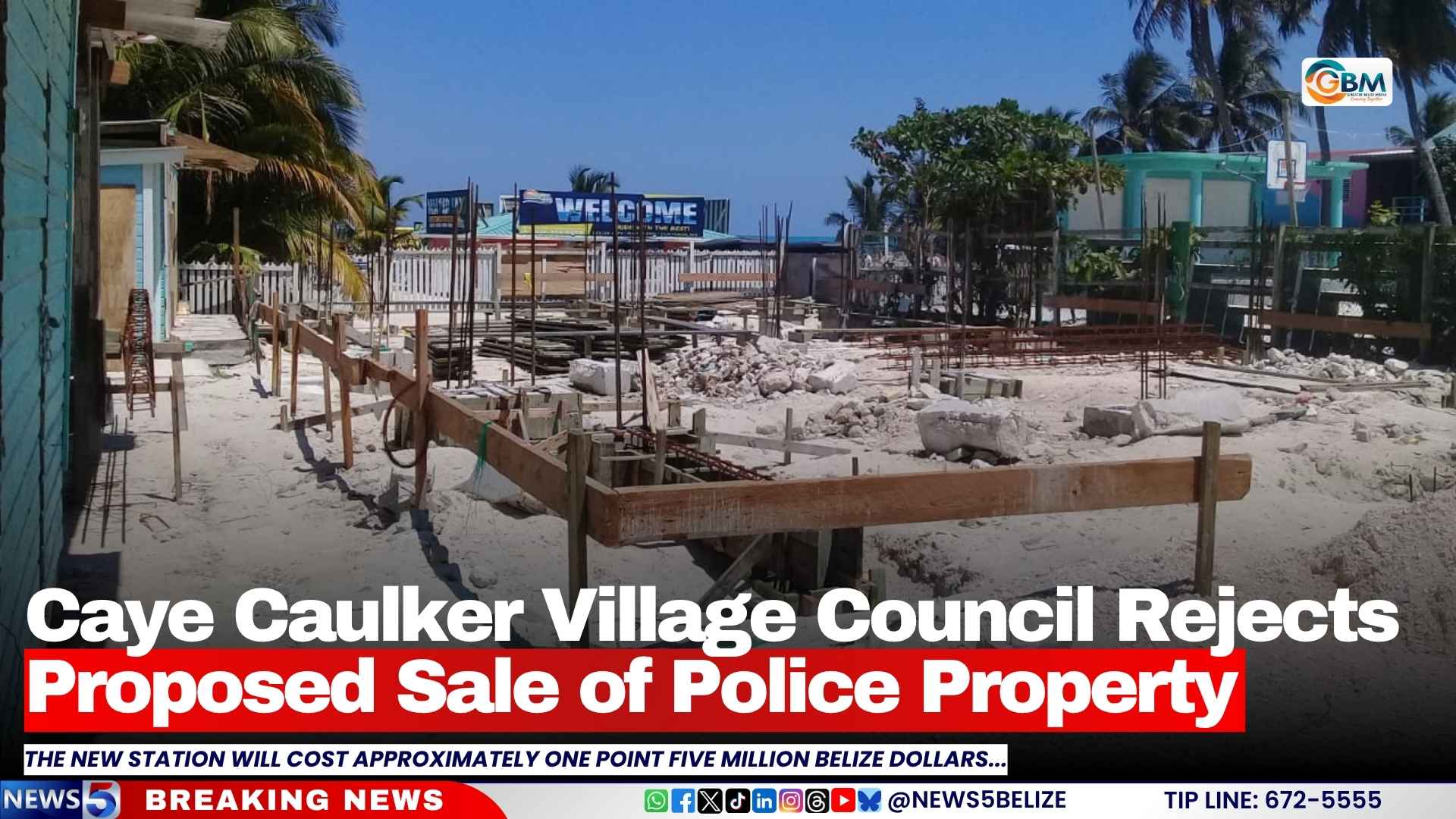
  • Caye Caulker Village Council Rejects Proposed Sale of Police Property

    Caye Caulker Village Council Rejects Proposed Sale of Police Property

    On the popular island destination of Caye Caulker, Belize, a fierce public policy dispute has emerged over the fate of a key police-owned parcel of land, with the local Caye Caulker Village Council (CCVC) issuing a firm rejection of any proposed sale or transfer of the property to outside interests.

    Parcel 815, the plot in question, is categorized by the CCVC as an irreplaceable public asset that must remain in communal hands for public use. Local governing leaders argue that retaining the land under public control is non-negotiable for upholding the safety and security of the island’s permanent resident population, and they have ruled out any sale or handover for private or non-local development projects.

    A core point of contention for the village council is the complete absence of community engagement around the proposed land deal. The CCVC confirms that neither local elected leaders nor ordinary residents have been invited to participate in any discussions about the future of the property, a lack of transparency that has amplified local opposition to the proposal.

    The conflict unfolds against the backdrop of a national public safety improvement initiative already underway on the island. Months ago, the Belizean government unveiled plans to build a modern, upgraded police station to serve Caye Caulker’s growing community and tourism sector. In January 2026, the Ministry of Economic Transformation finalized a construction contract with Coleman Construction Limited for the project, with Police Minister Oscar Mira and Belize Rural South Area Representative Andre Perez in attendance as witnesses.

    The new Caye Caulker police station is part of the $60 million Belize Integral Security Programme (BISP), a nationwide security capacity-building effort backed by funding from the Central American Bank for Economic Integration. The BISP framework is designed to expand operational capabilities for the Belize Police Department and raise overall levels of citizen security across the country. The Caye Caulker facility carries a price tag of roughly 1.5 million Belize dollars, and will offer more than 3,500 square feet of purpose-built working space. Planned amenities include a dedicated domestic violence response unit, climate-controlled secure evidence storage, confidential private interview rooms, a specialized crime investigation suite, and a community meeting and conference space, all built to serve both long-term residents and the island’s fast-growing annual tourist population.

    Despite the widely supported goal of upgrading local policing infrastructure, the CCVC has raised urgent alarms about the risks tied to any transfer of the existing police land. Local leaders warn that losing control of the parcel would erase critical public space that currently hosts a range of community activities and youth engagement programs, delivering long-term harm to local quality of life.

    Now, the village council is demanding concrete action from national authorities: an immediate freeze on all ongoing land transfer processes, full public disclosure of all agreements related to the property, and inclusive, meaningful consultation with Caye Caulker residents before any final decisions are made about the land’s future.

  • Body Found Behind Port of Belize

    Body Found Behind Port of Belize

    Authorities in Belize have launched a criminal investigation following the grim discovery of a young man’s body early on the morning of April 10, 2026, in the area surrounding the Port of Belize, located in Belize City – the country’s former capital.

    Local law enforcement confirmed that they received reports of the remains shortly after daybreak, and have since secured the crime scene to begin processing evidence. According to multiple sources familiar with the preliminary investigation, the deceased has been identified as a young man who was a resident of Belize City. Preliminary examination of the body has revealed visible gunshot wounds, indicating the death is being treated as a suspected homicide.

    As the investigation remains in its early active phase, law enforcement has not yet released additional details about the victim’s identity, potential suspects, or the circumstances leading up to the discovery. Local outlet News 5 has confirmed that it will publish a full detailed report on the incident during its 6 p.m. live broadcast, once more information becomes available from investigating authorities.

  • SSB Holds Public Consultations on Contribution Changes… But Are People Hearing About It?

    SSB Holds Public Consultations on Contribution Changes… But Are People Hearing About It?

    As of April 2026, Belize’s Social Security Board (SSB) has been conducting a multi-stop national tour of public consultations, designed to solicit community feedback on sweeping proposed changes to the country’s social security contribution framework. But the initiative has been hampered by significant communication gaps that have left many eligible participants confused about when and where sessions are being held, and unable to engage with a policy process that will directly impact their earnings and long-term social benefits.

    The reform consultation process was first announced in a 22-second promotional video released by the SSB on February 26, which outlined a schedule of sessions across nine districts around the country, kicking off with a Belize City gathering on March 5. That first session passed more than a month ago, with the tour rolling through March to include stopovers in Santa Elena, Corozal, Orange Walk and Independence. The tour is scheduled to continue through mid-April, with a session planned for San Pedro this week, followed by gatherings in Placencia on April 14 and Punta Gorda on April 16, per the original announcement.

    The policy changes up for discussion carry major stakes for both workers and employers across Belize. The SSB’s two core proposed amendments are a shift from a fixed wage-based contribution calculation model to a percentage-based system, and an increase in the minimum contribution floor to $130. Discussions also cover how contribution costs are split between employers and employees. Any adjustment to these terms will immediately impact workers’ take-home pay, and will shape the social security benefits they can access after retirement or during periods of need.

    Despite the high stakes of the reform process, public access to basic event details has been inconsistent at best. The original 22-second announcement video only provided broad dates and locations, with no mention of specific start times or event venues for any of the scheduled sessions. On the SSB’s official website, a homepage banner confirms the consultations are underway, but directs anyone seeking more information to contact the board’s communications officer via email, rather than posting public details directly.

    While some sponsored flyers for the sessions have been pushed to Belizeans’ Facebook feeds, these promotional materials are not posted to the SSB’s own official Facebook page, and the details included on flyers often contradict the original schedule announced in February. One flyer for the upcoming Punta Gorda session, for example, lists a time of 10 a.m. to 12 p.m. at the local SSB branch, but cites an event date of April 30 — two full weeks later than the April 16 date listed in the original announcement. A separate flyer for an Orange Walk session lists a gathering on April 14 at El Gran Mestizo Resort, while the original schedule had marked an Orange Walk consultation for March.

    It remains unclear whether these conflicting dates reflect last-minute scheduling changes, widespread printing errors, or uncoordinated promotional efforts from third parties, and the SSB has not issued any public clarification to resolve the discrepancies. To its credit, the agency has pinned a notice on its Facebook page advertising a live-streamed stakeholder consultation scheduled for April 16 at 1:30 p.m., creating an alternative access point for community members who cannot attend in-person sessions or cannot find information about local gatherings.

    For members of the public who do want to review the full details of the proposed amendments ahead of providing feedback, the SSB has posted a complete presentation document linked on its official website under the events tab, where the purpose of the consultations is outlined clearly.