标签: Belize

伯利兹

  • Young Women Leaders Push for Gender Equality

    Young Women Leaders Push for Gender Equality

    A transformative movement is gaining momentum in Belize as a new generation of female leaders emerges to challenge gender disparities in governance. The Caribbean Women in Leadership (CWIL) initiative recently concluded an intensive two-day workshop specifically designed to equip young Belizean women with essential tools for political engagement and decision-making roles.

    The program represents a strategic regional effort to address the persistent underrepresentation of women in Caribbean politics. Through comprehensive training modules, participants engaged in transformative leadership development, gender equality advocacy, and practical political skill-building. The curriculum incorporated feminist theory, advocacy techniques, and real-world problem-solving methodologies.

    Kathy Jones, Belize Chair of CWIL, emphasized the organization’s mission: “Our primary objective centers on developing transformational leadership among young women, particularly those interested in political life. While we acknowledge trailblazers like Honorable Mia Motley and local representatives including Honorable Tracy Panton and Honorable Valerie Woods, significant representation gaps persist across governmental structures.”

    The workshop culminated in a simulated parliamentary session where participants debated gender equality motions, providing practical experience in legislative processes. This mock assembly served as both training exercise and symbolic precursor to potential future policy initiatives.

    Nana Hesse-Bayne, President of CWIL’s Board of Directors, highlighted the program’s regional context: “Since 2018, we’ve implemented this leadership development model across seven Caribbean nations. Belize represents our newest chapter, building on proven methodologies that combine theoretical frameworks with practical application.”

    The initiative forms part of broader regional efforts to strengthen women’s participation in governance structures. Organizers anticipate that these capacity-building investments will eventually translate into increased female representation in Belize’s House of Representatives and other decision-making bodies, potentially influencing gender policy formulation in the future.

  • Nation Unites to Stand Against Child Abuse with Blue Teddy

    Nation Unites to Stand Against Child Abuse with Blue Teddy

    BELIZE CITY, BELIZE – A powerful new national initiative against child abuse launched today as government agencies and international partners unveiled the symbolic Blue Teddy Bear Campaign. The National Commission for Families and Children (NCFC), in collaboration with UNICEF and Belize’s Ministry of Human Development, introduced the distinctive blue teddy bear bearing a band-aid as an emblem of comfort, healing, and protection for vulnerable children.

    The campaign represents a strategic shift from previous awareness efforts, moving beyond recognition toward concrete action against Belize’s persistent child abuse crisis. The initiative specifically targets the urgent need for early detection, intervention, and reporting mechanisms across all sectors of society.

    Executive Director Shakira Sutherland of NCFC emphasized the comprehensive nature of the effort: “This campaign advocates for prevention of child abuse in all its forms – sexual violence, physical violence, and general violence against Belizean children. We require support from the entire community ecosystem: government ministries, education and health sectors, law enforcement, private enterprises, and most importantly, families and neighborhoods.”

    The campaign will initially deploy in Southside Belize City, identified as an area with particularly vulnerable child populations. Organizers plan to directly engage over 800 community members through schools, local organizations, businesses, and household visits. The program aims to achieve measurable outcomes including increased reporting of suspected abuse, enhanced violence identification skills, improved knowledge of support resources, and strengthened community advocacy networks.

    Maria Contreras, Chairperson of NCFC, underscored the universal responsibility: “Child protection constitutes everyone’s business – in homes, schools, and every space children inhabit. We must empower children to recognize safety concerns and understand that their voices matter. When they report issues, they must be heard.”

    Success ultimately depends on creating an environment where children feel secure speaking out, confident that their disclosures will trigger appropriate responses and that the national child protection system will respond effectively.

  • Backing the Defenders of Belize’s Natural Heritage

    Backing the Defenders of Belize’s Natural Heritage

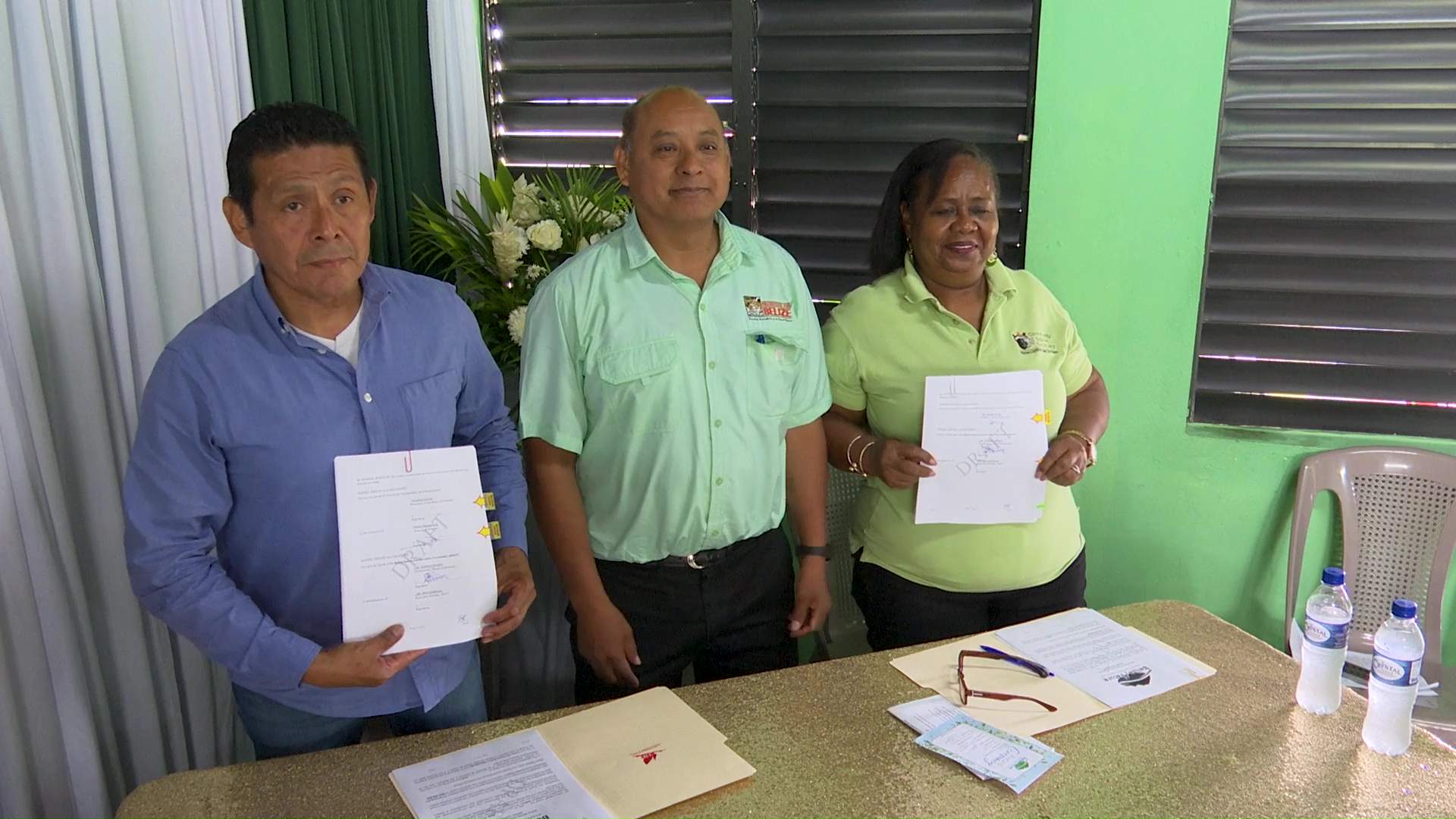
    In a landmark celebration of environmental stewardship, the Belize Nature Conservation Foundation (BNCF) has awarded substantial funding to two frontline conservation organizations during its eighteenth annual awards ceremony. The event, held recently in Bermudian Landing, highlighted Belize’s innovative approach to sustainable conservation financing that has endured for over a quarter-century.

    The Community Baboon Sanctuary Women’s Conservation Group and Friends for Conservation and Development (FCD) each received $50,000 grants to intensify their protective measures. The Baboon Sanctuary group will allocate resources toward enhanced environmental education programs targeting youth engagement through practical training and outdoor learning experiences. Simultaneously, FCD will deploy its funding to strengthen surveillance operations within the vulnerable Chiquibul Cave System, equipping specialized units to combat illegal activities threatening this ecological treasure.

    BNCF Chair Edilberto Romero emphasized the historic significance of the foundation’s enduring financial model, noting: ‘After twenty-five years, we still have resources available for grants due to our unique debt-for-nature swap design. Unlike similar initiatives in Latin America that exhausted their funds within a decade, our endowment approach has created lasting impact.’

    The ceremony underscored Belize’s collaborative conservation framework, with both recipient organizations working in coordination with national institutions including the Protected Areas Conservation Trust, the National Biodiversity Office, and the Institute of Archaeology, which holds jurisdiction over the nation’s cave systems.

    Jessie Young of the Community Baboon Sanctuary articulated their mission to ‘inspire behavioral change and cultivate a new generation of conservation leaders,’ while FCD Executive Director Rafael Manzanero emphasized the critical need for ‘ranger presence, equipment, and specialized training’ to protect Belize’s natural heritage effectively.

  • The Financial Power of Chinese-Owned Grocery Stores in Belize

    The Financial Power of Chinese-Owned Grocery Stores in Belize

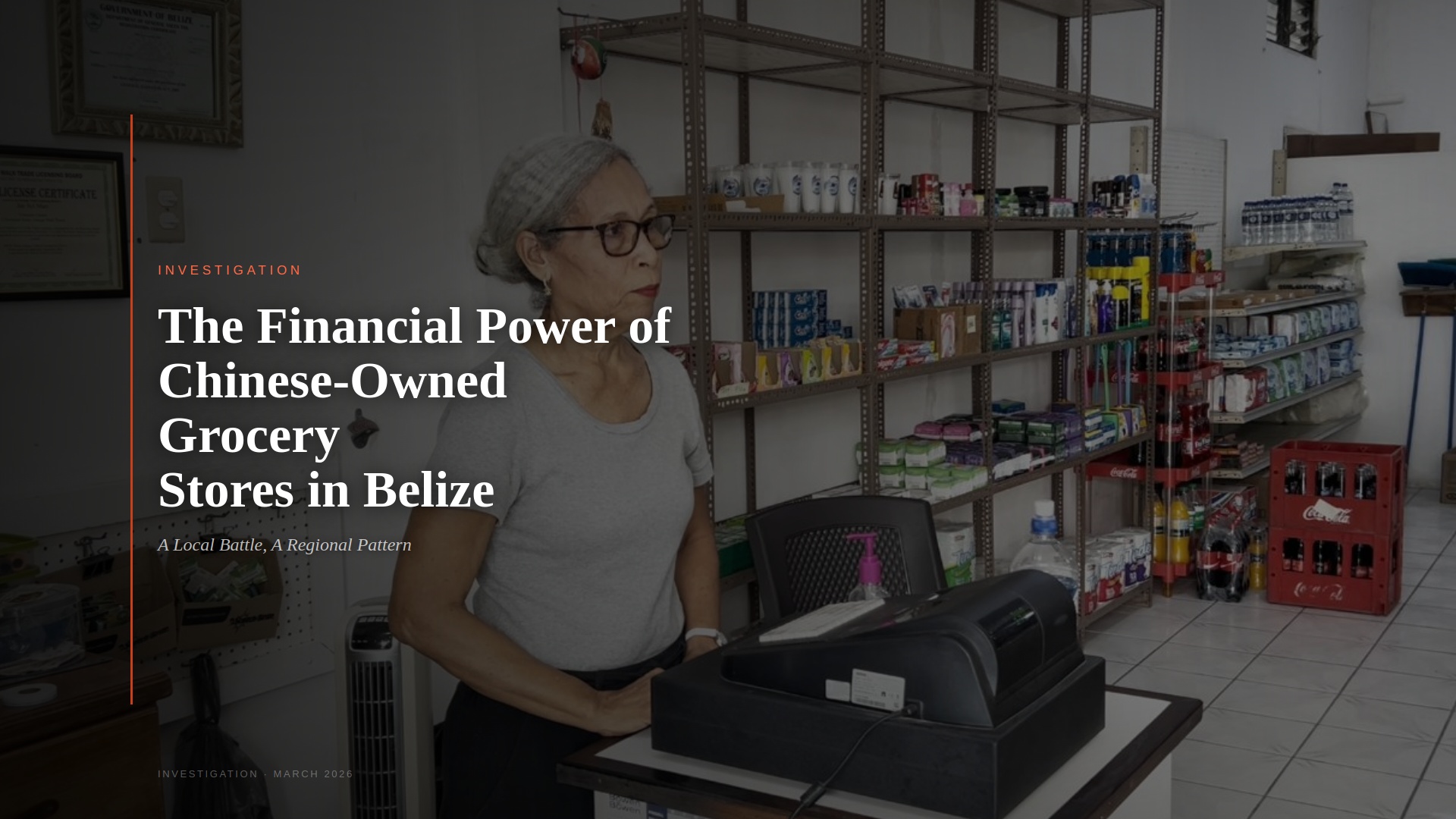
    A profound transformation is underway in Belize’s retail grocery sector, where Chinese-owned supermarkets have established competitive dominance through radical cost control measures and informal financial networks. This shift has created intense pressure on traditional neighborhood stores that have long operated on personal relationships and community trust.

    In Orange Walk Town, 67-year-old Consuelo Catzim represents the struggling traditional model. Her store, Jansyl Mart, has served the community since 1999, operating on personal knowledge of customers and occasional credit extensions. “I started this because I had to survive,” Catzim recalls, having invested her retirement payout to support her children. Despite building deep community connections, her sales dropped sharply as customers migrated to Chinese-owned stores offering lower prices.

    The competitive gap stems from fundamentally different business models. A 2015 University of Belize study of 60 Chinese businesses revealed extraordinary operational discipline: 56.7% operate 12+ hours daily, 53.3% work all seven days weekly, and 58.3% maintain monthly expenses below BZD $9,000 despite 30% reporting monthly sales exceeding $50,000. Startup capital primarily came from family networks (45%) rather than bank loans (5%).

    This financial advantage is compounded by supply chain dynamics. Small retailers like Catzim pay significantly higher wholesale prices—sometimes $3 more per case than bulk buyers—forcing them to charge retail prices that cannot compete. “That five cents is what kills us,” Catzim explains, referencing the marginal price differences that determine shopping decisions.

    New enforcement data reveals additional competitive distortions. Belize’s Supplies Control Unit documented 136 establishments violating price control regulations for essential goods like rice, bread, and cooking oil. Violations included failure to display prices and selling above mandated maximums, with Chinese-owned stores disproportionately represented on violation lists.

    The expansion is fueled by sophisticated informal financing systems documented by University of Calgary researchers. Chinese entrepreneurs typically access capital through family networks, rotating credit associations, and overseas remittances rather than formal banking. This allows rapid deployment of capital despite higher effective interest rates.

    Dr. Osmond Martinez, Minister of State in Economic Transformation, views the competition as educational: “The reason why they have survived is because they have managed to capitalize on the finance that they have, the finance mechanism, and the network that they do have.” He encourages Belizean entrepreneurs to adopt similar collaborative approaches.

    The pattern extends beyond Belize. Nicaragua experienced an influx of 400 Chinese retail businesses following its 2024 Free Trade Agreement with China, while Guyana has seen similar market transformations. This regional trend highlights how informal entrepreneurial networks can reshape entire retail sectors through disciplined cost control and alternative financing mechanisms.

    As traditional shops decline—Orange Walk saw 27% closure in five years—the question remains whether Belize can preserve the community-oriented commerce represented by operators like Catzim while adapting to new competitive realities.

  • Fake Winning Numbers Being Sold Online

    Fake Winning Numbers Being Sold Online

    The Belize Government Lotteries Limited (BGLL) has issued a formal public alert regarding a proliferation of fraudulent social media schemes targeting lottery participants. These deceptive operations involve the sale of purported ‘winning numbers’ for Boledo, Ordinary, and Jackpot games in exchange for monetary payment.

    BGLL officials have emphatically stated that advance knowledge of lottery results is fundamentally impossible due to their rigorous security protocols. Each drawing is conducted under stringent controls, including pre- and post-session ball weighing procedures. The process is overseen by senior public officers and independently verified by auditors from Coye and Associates at every event.

    The organization characterizes these fraudulent offers as deliberate public deception designed for illicit financial gain. BGLL further clarified that no authorization exists for lottery ticket sales through social media platforms, messaging applications, or any unofficial channels. Legitimate tickets are exclusively available through approved vendors.

    In their official communication, BGLL underscored the legal implications of participating in these schemes, noting that engagement with or support of such illegal activities may lead to criminal prosecution under Belizean law. The warning comes as part of broader efforts to maintain lottery integrity and protect consumers from financial fraud.

  • Belize Eyes El Salvador as New Market for Local Farm Products

    Belize Eyes El Salvador as New Market for Local Farm Products

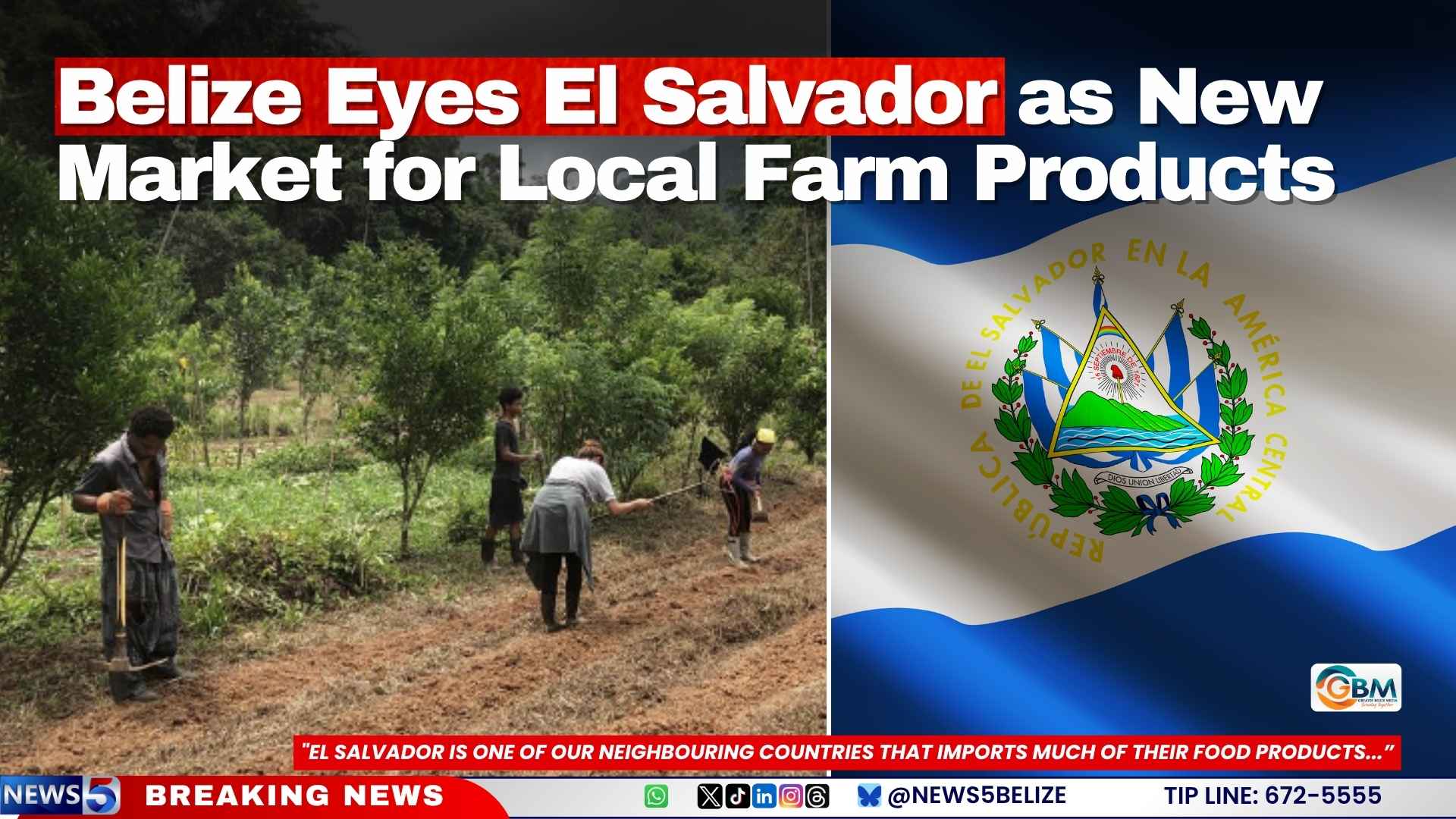
    Belize is establishing a groundbreaking agricultural trade pathway that will transport domestic farm products through Guatemala to reach markets in El Salvador. This strategic initiative follows successful diplomatic negotiations between high-ranking officials from the participating nations.

    Agriculture Minister Rodwell Ferguson recently convened with Guatemalan counterparts to finalize logistical arrangements for the seamless transit of Belizean commodity containers through Guatemalan territory. Both parties characterized the discussions as exceptionally constructive, marking a significant milestone toward operationalizing this new trade artery.

    A formal bilateral agreement between Belize’s Ministry of Agriculture and El Salvador, facilitated through its diplomatic representative in Belize, is slated for signing before April’s conclusion. This pact will explicitly outline the specific agricultural products designated for export under the arrangement.

    The Ministry of Agriculture, Food Security and New Growth Industries emphasized in an official communiqué that this endeavor constitutes a pivotal component of its comprehensive strategy to identify and develop fresh market opportunities for Belizean agricultural producers. “El Salvador represents a neighboring nation that currently imports substantial quantities of food products,” the ministry noted. “Our market access dialogues with Salvadoran authorities have yielded particularly promising outcomes to date.”

  • Child Abuse Cases in Belize Top 1,000 Each Year

    Child Abuse Cases in Belize Top 1,000 Each Year

    Belize has initiated a major nationwide effort to address its escalating child abuse crisis through the Blue Teddy Bear Campaign, a collaborative initiative uniting government agencies, law enforcement, and international partners. The campaign emerges as official data reveals more than 1,000 new child abuse cases enter the national system annually, prompting urgent action from authorities.

    The National Commission for Families and Children (NCFC) is spearheading the initiative alongside UNICEF, the Ministry of Human Development, and the Belize Police Department. Thea Garcia-Ramirez, Minister of Human Development, emphasized the severity of the situation, stating, ‘Annually, we document over a thousand new cases of children entering our system, primarily victims of abuse and neglect. We must reverse this trend.’

    While increased public reporting has contributed to the rising statistics, officials note disturbing patterns in abuse distribution. Girls predominantly suffer sexual abuse, while boys experience higher rates of neglect and physical violence. Police Superintendent Elroy Carcamo reported additional concerns regarding children engaging in inappropriate nighttime activities and rising incidents of both traditional bullying and cyberbullying.

    The campaign specifically addresses harmful social media practices that jeopardize victims’ privacy. NCFC Executive Director Shakira Sutherland condemned the sharing of minors’ identifying information online, noting this practice severely impacts children’s mental health and discourages reporting. Maria Elena Contreras, NCFC Chairperson, reinforced that child protection constitutes a collective community responsibility rather than solely a governmental mandate.

  • Canada Urges Citizens to Exercise Caution When Traveling to Belize

    Canada Urges Citizens to Exercise Caution When Traveling to Belize

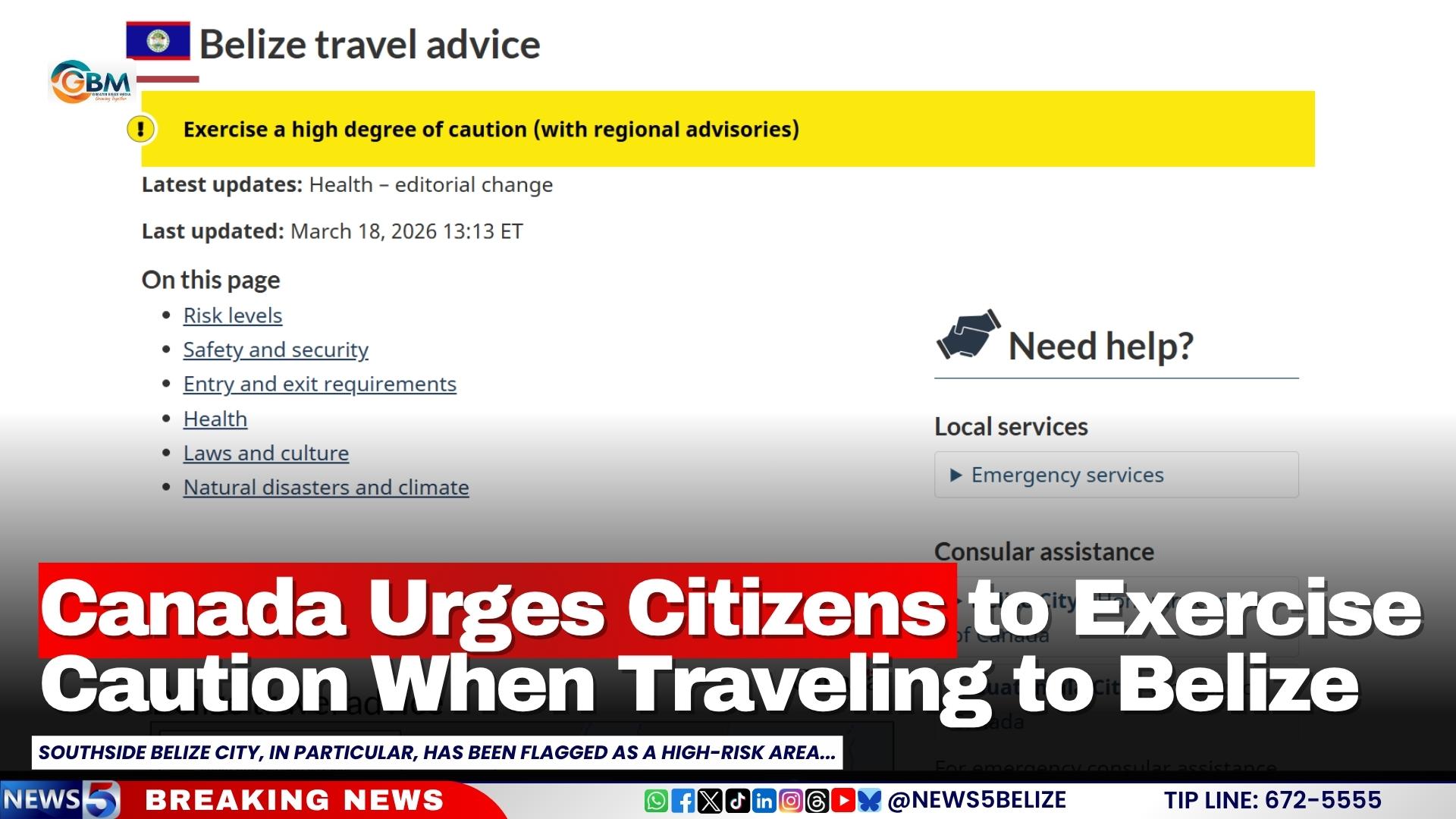
    The Canadian government has escalated its travel advisory for Belize, issuing a nationwide caution urging citizens to maintain heightened vigilance due to escalating violent crime rates. This updated warning specifically identifies Southside Belize City as a particularly hazardous zone where non-essential travel should be avoided entirely due to gang warfare and drug-related violence involving frequent homicides and shootings.

    While tourists are not typically targeted directly, Canadian authorities emphasize that situational proximity to criminal activity creates substantial collateral risk. Violent offenses including armed robberies, physical assaults, residential break-ins, and murders have been reported across multiple regions, including popular tourist destinations such as Caye Caulker, San Pedro, Placencia, and the capital city of Belmopan.

    Beyond violent crime, the advisory notes pervasive petty criminality including pickpocketing and bag snatching. Travelers are advised to secure personal belongings, avoid displaying affluence, and utilize group travel protocols. Additional concerns include deficient road infrastructure, limited emergency medical capabilities, questionable food and water safety, and heightened risks associated with adventure tourism and aquatic activities.

    Vulnerable demographics including women, 2SLGBTQI+ individuals, and those attending mass gatherings face elevated harassment and safety concerns. The advisory further cautions that Belize maintains strict legal enforcement with severe penalties for drug and firearm violations, while medical facilities—particularly in rural areas—often lack adequate equipment and resources.

    Canadian officials recommend all travelers register with consular services, monitor local news developments, adhere to official directives from authorities, and implement comprehensive personal safety measures throughout their stay in Belize.

  • US Chargé d’Affaires Goes To Jalacte

    US Chargé d’Affaires Goes To Jalacte

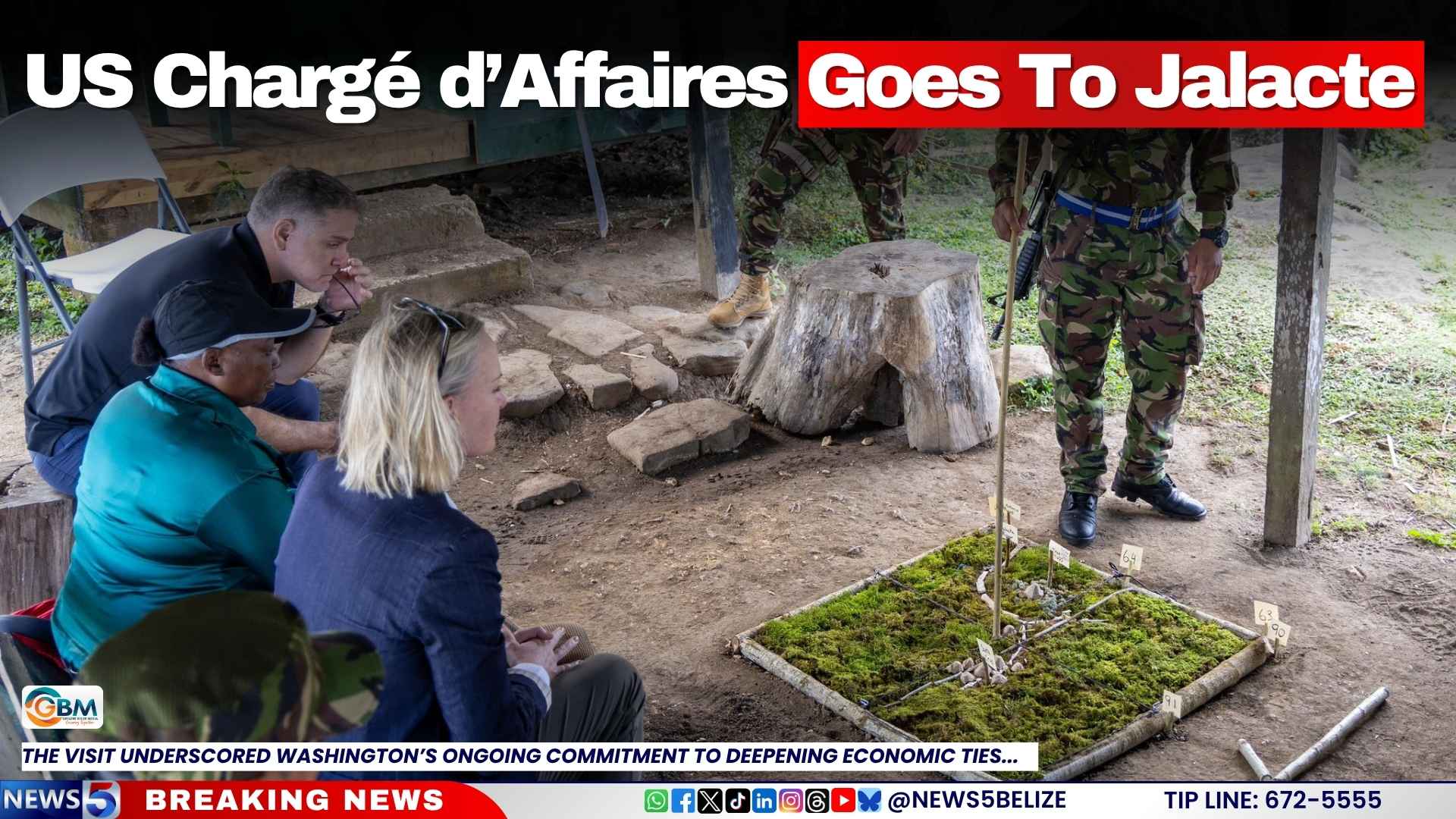
    In a significant diplomatic engagement, U.S. Chargé d’Affaires Katharine Beamer conducted a comprehensive tour of strategic locations in southern Belize this week, signaling Washington’s reinforced commitment to bilateral cooperation. The high-level visit focused on enhancing economic partnerships and security coordination between the two nations.

    Beamer’s itinerary included the Port of Big Creek, a crucial commercial gateway that handles substantial Belizean sugar exports to American markets. During discussions with port authorities, the diplomat emphasized the mutual benefits of strengthened trade infrastructure, job creation initiatives, and supply chain reinforcement throughout the Caribbean region. The dialogue centered on developing robust commercial pathways that simultaneously advance shared economic and security objectives.

    The diplomatic mission extended to the Jalacte Border Crossing with Guatemala, where Beamer engaged with frontline personnel from Belize’s Immigration, Customs, and Agricultural Health Authority. She recognized their critical role in intercepting illegal activities and contraband, highlighting how effective border management protects both Belizean and American communities from transnational criminal networks. The U.S. Embassy issued a statement acknowledging Belize’s interagency coordination efforts, noting that enhanced border security in partner nations directly contributes to safer communities in the United States.

    The tour concluded at the Belize Defence Force Forward Operating Base in Sarstoon, where military-to-military partnerships took center stage. Discussions focused on collaborative strategies to combat transnational crime, with the embassy characterizing Belize as ‘a strong advocate for regional security and an excellent partner’ in these efforts.

  • Antigua Govt Absorbs Fuel Price Hike to Shield Citizens

    Antigua Govt Absorbs Fuel Price Hike to Shield Citizens

    In a decisive move to protect its populace from escalating global energy costs, the government of Antigua and Barbuda has implemented strategic fiscal measures to maintain stable domestic fuel prices. Prime Minister Gaston Browne announced during his weekly radio address that his administration has been actively absorbing the financial impact of rising international fuel markets to prevent inflationary pressures on essential goods and services.

    The policy response comes following confirmation from the West Indies Oil Company regarding a recent shipment of fuel procured at substantially elevated prices, with diesel and jet fuel experiencing the most pronounced cost increases. Without government intervention, these market fluctuations would typically translate to higher transportation expenses, increased grocery bills, and elevated prices across imported commodities.

    Despite these external pressures, retail gasoline prices in the twin-island nation have remained steadfast at EC$14.25 per imperial gallon (approximately $10.60 Belize dollars). This price stability has been achieved through a deliberate reduction of government consumption taxes on fuel products. “We have made a conscious decision to accept reduced tax revenues to ensure pricing consistency for our citizens,” Prime Minister Browne stated.

    The situation contrasts with neighboring Belize, where Prime Minister John Briceño acknowledged the unavoidable impact of global market forces, particularly citing geopolitical tensions involving Iran as a significant driver of current price surges. Briceño emphasized the challenges faced by smaller nations in mitigating international market dynamics, noting that Belize must navigate supporting both agricultural producers and general citizens amid circumstances beyond national control.