标签: Belize

伯利兹

  • Fatal Crop Duster Crash Could Force New Aviation Safety Rules

    Fatal Crop Duster Crash Could Force New Aviation Safety Rules

    July 16, 2026 — The investigation into a deadly aerial application aircraft crash that claimed the life of veteran pilot Henry Plett last week in Spanish Lookout has entered a decisive phase, with the potential to trigger sweeping updates to Belize’s civil aviation safety regulations.

    Civil aviation investigation teams are nearing the completion of their on-site evidence gathering at the crash location, where Plett was conducting an aerial crop spraying mission when the accident occurred. Beyond identifying the immediate cause of the tragedy, officials emphasized the broader scope of the probe: its final conclusions are expected to drive the creation of updated safety protocols and new regulatory rules designed to stop identical fatal incidents from happening in the future.

    Nigel Carter, Director of Civil Aviation, noted that every fatal aviation accident, while a devastating loss, delivers critical lessons that can strengthen safety across Belize’s national airspace.

    “In aviation, our constant goal is to improve the overall safety of all flight operations,” Carter explained in an official statement. “Under both our international aviation commitments and domestic regulatory requirements, we are mandated to launch a full, thorough investigation any time an aircraft is destroyed or a life is lost — a range of other factors can also prompt a full probe, but this case meets both of those core thresholds. We conduct this investigation not to assign blame to any individual or organization, a boundary that is protected by national law. Our sole priority is to uncover the probable root cause of the crash, along with any secondary contributing factors that combined to lead to this tragedy.”

    Carter stressed that the true impact of the investigation will be felt in the actions taken after the final report is published. When asked how the findings will strengthen Belize’s broader aviation sector, he outlined the formal regulatory process that will follow the investigation’s conclusion.

    “Once the Accident Investigation Unit finalizes its report, it will issue targeted safety recommendations,” Carter said. “From there, the Department of Civil Aviation will conduct a full review of those proposals, and implement required updates to regulations and operational procedures wherever necessary. The end goal is to close any gaps in our existing safety framework that this accident has exposed, and eliminate the risk of this type of fatal accident happening again.”

  • Belize Claims First-Ever Men’s Volleyball Gold

    Belize Claims First-Ever Men’s Volleyball Gold

    July 16, 2026 — A new chapter was written in Belize’s sports history this week, as the nation’s senior men’s national volleyball team claimed an unprecedented gold medal at the AFECAVOL Men’s Final Four, marking Belize’s first regional senior championship title in the sport. The underdog Belizean squad defeated Central American volleyball powerhouse Costa Rica in a four-set thriller to clinch the historic win, sending the small Caribbean nation into a wave of celebration.

    For leaders of Belize’s volleyball community, the long-awaited victory comes after decades of unmet expectations, incremental progress and heartbreaking near-misses that tested the commitment of the country’s volleyball development programs. Allan Sharpe, president of the Belize Volleyball Association and a former national team player himself, opened up about the intense emotion surrounding the final match, revealing he chose to watch the game alone to manage his overwhelming anxiety.

    “I gotta tell you, Shane, I watched the game locked up in a room with nobody around me, lots of anxiety, lots of emotions,” Sharpe said in a post-victory interview. “Years and years of emotions coming. I mean tears – me myself in my room jumping up and down screaming whilst they ran around in the court. It brings out a lot of emotions to think about the gold medal.”

    Plans are already underway for a public homecoming celebration to honor the champion team. Team Belize is scheduled to cross back into the country via the northern border at approximately 4 p.m. local time, and fans are invited to gather at Belize Elementary School to welcome the athletes, with the official welcoming event set to begin at 6:30 p.m. this evening. The historic win is expected to leave a lasting impact on volleyball development in Belize, inspiring a new generation of young athletes and raising the profile of the sport across the region.

  • PM Briceno Dismisses UDP Protest, Says Opposition Must Win Back Public Trust

    PM Briceno Dismisses UDP Protest, Says Opposition Must Win Back Public Trust

    On July 16, 2026, Belizean Prime Minister John Briceño publicly dismissed the latest protest demonstration organized by the country’s main opposition bloc, the United Democratic Party (UDP), saying the opposition’s top priority is not challenging his administration but rebuilding public trust to win broader voter support.

    The UDP launched its protest on Friday, framing the action as the opening move of a sustained nationwide campaign targeting the Briceño administration. The opposition has leveled unaddressed corruption allegations against the ruling government and said further actions will follow to ramp up pressure. While opposition protesters gathered in city streets to voice their demands, Briceño revealed he chose to step away from political affairs entirely that afternoon to spend quality time with his granddaughter.

    In an exclusive interview with local outlet News 5, the prime minister emphasized that his roles as a husband, father, and grandfather remain central to his life, separate from his duties as head of government. “I am not only the prime minister,” Briceño explained. “It was raining, so we couldn’t go to the park like I planned. Instead, we went to Moe’s which has an indoor playground, and we spent an hour and a half there. That quiet time is the real joy of life.”

    When asked if he views the UDP’s criticism and protest campaign as a meaningful political threat, Briceño questioned whether the opposition’s messaging actually resonates with ordinary Belizeans. “What they really need to worry about is that the people of this country are not taking them seriously,” he stated.

    Briceño also pointed to a recent gathering of his own ruling party, the People’s United Party, held the day after the UDP protest in the southern town of Dangriga, to back up his claim. He noted that even though the UDP arranged free cross-country bus transportation to mobilize protesters for their demonstration, the total turnout at the opposition’s event was still lower than the number of attendees that turned out for his party’s council meeting in Dangriga.

    For its part, the UDP has reaffirmed that Friday’s protest is just the first phase of a coordinated, incremental campaign to keep pressure on the Briceño administration over the unresolved corruption claims the opposition has put forward.

  • San Lazaro Farmer Charged for Murder of Elderly Man

    San Lazaro Farmer Charged for Murder of Elderly Man

    A shocking act of violence has convulsed the small farming community of San Lazaro in Belize’s Orange Walk District, after a local farmer was officially charged with the murder of a well-liked 68-year-old resident killed while out cycling earlier this week.

    On July 16, 2026, Belizean police announced they had filed formal murder charges against 26-year-old Christian Navel Velasquez, a farmer based in San Lazaro. Velasquez is accused of carrying out the fatal attack on 68-year-old Virginio Carillo on the afternoon of July 13, as Carillo rode his bicycle along a rural road adjacent to a local sugar cane field.

    According to preliminary findings from the ongoing investigation, the attacker waited in dense vegetation alongside the road before emerging to launch the sudden, deadly assault on Carillo. No motive for the killing has been released to the public as detectives continue to piece together details of the incident.

    News of the murder has sent ripples of fear and grief through the close-knit San Lazaro community, where Carillo was widely known as a hard-working, dedicated resident who was actively involved in local village life. Residents have expressed shock over the unprovoked attack on an elderly, well-regarded community member.

    As of the latest update, Velasquez remains in custody and is scheduled to appear before the courts, with the official investigation still ongoing to uncover all circumstances surrounding the killing.

  • 124 Women Entrepreneurs Graduate from Business Incubator Programme

    124 Women Entrepreneurs Graduate from Business Incubator Programme

    In a milestone for women’s economic empowerment in Belize, 124 women entrepreneurs from every corner of the country have officially graduated from the incubator phase of the landmark “Catalyse Her Potential: Fuelling Female Entrepreneurship Project” on July 16, 2026. The initiative was crafted with a clear mission: to level the playing field for women in business by equipping emerging female founders with the practical resources, skills, and connections required to build and scale sustainable, successful enterprises.

    Funded by RF&G, the program is executed on the ground by NIME Belize Inc. in strategic partnership with IDB Lab. Unlike generic business training programs, the incubator phase was tailored specifically to meet the needs of early-stage women-led ventures. Over the course of the program, participants gained hands-on training in core business areas including business model development, strategic planning, and market positioning. Beyond technical skills, the initiative also opened doors to one-on-one mentorship from experienced industry leaders, and created a dedicated collaborative space for female founders to network, share challenges, and exchange actionable ideas with peers who understand their unique obstacles.

    The graduating cohort reflects the broad geographic reach of the project, drawing participants from all six of Belize’s administrative districts. The highest turnout came from Belize District, which contributed 50 graduates, followed by Cayo District with 24, Toledo with 21, Orange Walk with 11, Stann Creek with 10, and Corozal with 8. This cross-district participation underscores the widespread demand for targeted support for female entrepreneurs across both urban and rural areas of the country.

    Even before the ink dried on the incubator phase graduation certificates, 91 participants moved forward to the program’s next stage: the accelerator phase, which officially launched on July 13. Where the incubator phase focused on laying a strong foundational framework for new businesses, the accelerator phase is designed to help more established female-led businesses expand their operations. The curriculum for this stage centers on advanced growth strategy development, financial planning and readiness, expanded access to top industry experts, continued personalized mentorship, and connections to potential investors who are focused on supporting women-owned ventures.

    Overall, the “Catalyse Her Potential” project is structured around three interconnected core pillars that address common barriers facing women entrepreneurs in Belize. The first pillar is comprehensive capacity building, delivered through a flexible learning management system that allows participants to access training materials on their own schedule. The second pillar is intentional networking and connection, designed to bridge gaps between emerging founders, experienced mentors, and established industry professionals. The third and final pillar is seed capital and micro-financing support, which directly addresses one of the most significant challenges women business owners face: limited access to affordable capital to grow their operations.

  • Briceño Addresses Brother’s Reported Ties to Controversial Payments

    Briceño Addresses Brother’s Reported Ties to Controversial Payments

    As Belize Prime Minister John Briceño prepares to start a scheduled personal leave on July 16, 2026, growing scrutiny over questionable spending at the nation’s Ministry of Defense continues to overshadow his administration, with fresh allegations linking his brother to controversial under-the-radar payments.

    The controversy first erupted after leaked invoices from financial service provider Smart Stream revealed that Briceño’s brother and several of his business associates have received disbursements from the Ministry of Defense via a series of transactions each valued below $10,000, a threshold that often triggers less stringent regulatory oversight for public spending. Compounding these concerns, Briceño’s brother also holds a shareholder stake in Hugo Engineering, a local firm that has been contracted to supply fresh food and produce to the ministry for its military personnel.

    On July 15, 2026, reporters caught up with the prime minister during a recruit graduation ceremony for the Belize Defense Force (BDF) at Price Barracks, pressing him for answers on the ongoing independent audit into the ministry’s financial transactions. When asked whether he had spoken with his brother since the allegations first came to light four weeks prior, Briceño offered only a brief, one-sentence response: “I have spoke to him and there is nothing more to add.”

    Pressed for updates on the progress of the audit being conducted by Belize’s independent Auditor General, Briceño declined to comment on ongoing details, emphasizing that the office operates autonomously from the prime minister’s office. “I do not talk to the auditor general. She is independent and doing her own job. She is going meticulously through; it is a lot of files. There are invoices, the Pos, purchase orders, and the contracts, it is a lot of work and they are compiling them. That is the last I know from the CEO and whenever she has her report she will make it available,” Briceño told reporters.

    When questioned about calls to expand the audit to review procurement records dating back to 2015, Briceño confirmed he supports a full, far-reaching review of past spending, and announced he would direct the Financial Secretary to formally request the Auditor General extend the audit’s scope to that year. He pushed back against widespread public claims that the questionable payments have come at the expense of military rations, noting “every soldier will tell you that today they are eating way better than they did before we came into government.”

    Additional scrutiny has centered on the fact that multiple companies now holding Ministry of Defense supply contracts, including Kukulcan, MP Farms, and A&Y, were only incorporated after Briceño’s administration took office. When asked whether this timeline raised red flags for him, Briceño rejected suggestions of impropriety. “Nothing is wrong if you want to start your business to be able to supply or to provide a service or good to the government. There is nothing wrong with that. It is about getting value for money. And that is most important,” he said, adding that he could not comment on the founding of the firms and directing questions to the companies themselves.

    Briceño also refuted a claim from a former BDF Services and Support Battalion commander that all local procurement authority for basic supplies was moved from military command to central government in Belmopan after 2020. The prime countered that the centralization of procurement actually began in 2015, following a previous procurement scandal within the BDF, and that military personnel still have input on what supplies are purchased. “That is not true. That started in 2015 when there was a problem with the very same procurement within the BDF… even the things we buy, it is in consultation with the soldiers. The soldiers tell you what they want,” he explained.

    This report is based on a transcribed evening television broadcast from Belize.

  • How Transparent Is Belize’s Procurement System?

    How Transparent Is Belize’s Procurement System?

    On July 15, 2026, a deep-dive investigation into Belize’s public procurement framework has exposed critical structural weaknesses that open the door to favoritism, graft, and misuse of taxpayer funds, sparking urgent calls for sweeping reform from good governance advocates. Every year, millions of dollars in public revenue flows through Belize’s procurement system to fund everything from rural road construction and new school facilities to routine office supplies and government consulting contracts. But for ordinary citizens, tracing exactly how these funds are allocated, who benefits from awarded contracts, and whether selection processes follow official rules has long remained a major challenge. Reformers warn that this pervasive lack of transparency creates fertile ground for abuse, and that outdated rules are failing to hold bad actors accountable.

    Public procurement is the backbone of government spending: when the system operates with integrity, taxpayers receive full value for every dollar spent, legitimate businesses get a fair competitive playing field, and public projects are delivered on time and on budget. But when oversight and transparency are lacking, the risks of corruption multiply rapidly. Political influence can skew contract awards toward connected firms, prices can be artificially inflated, true ownership of winning bidders can be concealed, and honest businesses that play by the rules are pushed out. Ultimately, the public foots a higher bill for substandard work, and public trust in government erodes.

    A new independent analysis of Belize’s procurement regime finds that while basic rules exist on paper, there is insufficient enforcement power to back them up. The review identifies five core gaps that undermine integrity: Belize lacks procurement-specific criminal legislation, an independent dedicated regulator, a centralized public online portal for contract tracking, mandatory beneficial ownership disclosure for bidders, and a robust, enforceable system to bar rule-breaking contractors from future public work.

    Currently, Belize’s framework is anchored in outdated legislation and guidelines, including the 2005 Financial and Audit Reform Act, 1965 Financial Orders, and the 2013 Procurement Handbook. Reformers argue these existing rules do not go far enough to address serious misconduct. They fail to codify specific criminal penalties for offenses that plague public procurement, such as bid rigging, tender fraud, splitting contracts to avoid oversight, and concealing political connections through opaque ownership structures. In short, while Belize has written procedures for how contracts should be awarded, there are few meaningful consequences for those who manipulate the system.

    Unlike neighboring Trinidad and Tobago, which maintains a dedicated, independent procurement regulator with full oversight powers, Belize relies on general oversight bodies with limited authority to police government contract awards. The Contractor General’s office is able to review isolated cases, but reformers note it lacks the mandate to monitor the full scope of procurement activity across all government ministries. Advocates are pushing for the creation of a new independent oversight body that reports directly to the National Assembly, with authority to halt suspicious contracts, conduct public hearings, blacklist non-compliant contractors, issue binding orders, and refer cases of suspected criminal misconduct to the Director of Public Prosecutions. This gap in dedicated oversight leaves a critical unanswered question: when government ministries award multi-million-dollar contracts, who verifies that the process was fair, clean, and free from political interference?

    To date, Belize has also failed to launch a centralized, searchable online platform for the public to track government contracts. Most tender notices are only published in the official Gazette or local newspapers, with no single hub that lists open tenders, awarded contracts, cancellations, contract values, winning bidders, beneficial ownership, complaints, or project performance records. This fragmentation leaves key public information scattered, and in many cases, completely inaccessible to the public. A centralized e-procurement portal would consolidate all contract data in one place, simplify public tracking of public spending, and make it far harder to hide improper deals.

    “In a modern, accountable procurement system, the public should not have to hunt through scattered printed notices or submit repeated freedom of information requests just to learn how their tax dollars are spent,” said reporter Isani Cayetano of News Five, who authored the investigation. “The clear recommendation here is a single, central online portal that is free, fully searchable, and updated in real time.”

    Another major loophole is the absence of mandatory beneficial ownership disclosure. Even when a company wins a public contract, the public has no way to learn who actually owns and profits from the award, or whether any politically exposed persons are connected to the bid. Without this requirement, individuals with political influence can easily conceal their involvement behind nominee directors, family-owned shell companies, or layered ownership structures to secure public contracts. For procurement reform to be meaningful, the public has a right to know not just which company won a contract, but who the ultimate beneficiary is.

    Sole-source contracts, widely recognized as one of the highest-risk areas of public procurement, are also poorly regulated in Belize. While direct, non-competitive awards can be justified in cases of national emergency, for specialized equipment, or for unique services that only one provider can deliver, the lack of competition requires extra safeguards to prevent abuse. The analysis finds Belize’s current rules around sole-source contracting are excessively vague, and recommends that all direct awards require formal written approval from an independent review panel, with the justification for the award published online within 48 hours.

    Current rules also do not require the publication of bid evaluation scores or bidder rankings, and unsuccessful bidders have no guaranteed legal right to a formal debriefing explaining why their bid was rejected. The analysis recommends that government publish evaluation summaries for all awarded contracts, and provide a formal debriefing to losing bidders within 10 working days. If a lower-priced bid loses to a more expensive controversial bid, the public deserves to understand the rationale behind the decision—whether it was based on experience, technical quality, delivery timelines, or other factors. Without transparency around evaluation scoring, public suspicion of favoritism will continue to grow.

    Finally, Belize’s system for debarring rule-breaking contractors is structurally weak. The 3-to-5-year debarment period outlined in the 2013 Procurement Handbook is an administrative guideline, not a statutory requirement, and there is no publicly searchable national registry of debarred actors. This means that a debarred individual or firm can simply reapply for contracts under a new company name, as long as their ownership remains concealed. A functional debarment list needs to be accessible to the public, government ministries, and journalists, and searchable both by company name and by the individual owners behind the firm.

    At its core, the push for procurement reform in Belize is about basic accountability. Since taxpayers cover the entire cost of public contracting, they deserve full visibility into how every dollar is allocated. For Belize to build a trustworthy procurement system, the country must move beyond outdated procedural rules and build a new framework that centers transparency, mandatory public disclosure, independent oversight, and meaningful penalties for misconduct. This report comes from a televised broadcast transcript from News Five.


  • Anti-Corruption Reform Back in Focus Amid New Scandals

    Anti-Corruption Reform Back in Focus Amid New Scandals

    As two high-profile corruption controversies continue to dominate public discourse in Belize, long-stalled anti-corruption reforms aligned with the United Nations Convention Against Corruption (UNCAC) have once again jumped to the top of the national policy agenda.

    The small Central American nation has long grappled with repeated corruption scandals, but it has failed to build a robust institutional framework capable of preventing corrupt activity, launching thorough investigations, and holding bad actors accountable for violating public trust. Today, the unresolved Mira Millions affair and lingering questions about irregular procurement practices at the Ministry of Defense have renewed public pressure for action, forcing a reckoning with a pledge Belize made a decade ago to fully implement UNCAC, the world’s only legally binding global anti-corruption agreement.

    UNCAC is widely recognized as a comprehensive global blueprint for strengthening government transparency, enforcing public accountability, and safeguarding state resources from misappropriation. While Belize signed onto the convention in 2016, full national implementation has moved at a glacial pace, blocked by gaps in domestic legislation, limited technical capacity within government institutions, and the significant upfront costs associated with systemic reform. This week, local outlet News Five’s senior correspondent Isani Cayetano investigated why the decade-old promise remains unfulfilled, and why growing numbers of Belizean citizens argue the country can no longer afford to leave anti-corruption reform as an unfinished priority.

    In his on-the-ground reporting, Cayetano outlines how growing public anger over the two ongoing scandals has built new momentum for finally putting UNCAC’s requirements into national law. Phillip Willoughby, an aspiring councilor for Belize’s opposition United Democratic Party, framed the reform as non-negotiable, telling reporters: “Nuh care what no government do, the only thing that will stop corruption in this country is UNCAC. They need to give us UNCAC.”

    As the U.N. describes it, UNCAC functions as a complete anti-corruption toolkit that imposes binding legal obligations on signatory nations to address gaps in governance. Speaking in a past address, U.N. Secretary-General António Guterres explained the far-reaching harm of unregulated corruption: “Society cannot function equitably and efficiently when public officials from doctors, to police, judges to politicians, enriches themselves rather than perform their duties with integrity. Corruption robs funds from schools, hospital, infrastructure and other vital services.”

    Nearly 10 years after Belize signed on to the convention, full implementation remains stalled. Cesar Ross, Director of Belize’s Good Governance unit, which leads the reform process, says limited government funding and a shortage of specialized technical capacity are the primary barriers holding back progress. Ross noted that the small team of legislative drafters and crown counsels responsible for drafting the required new laws are already overloaded with existing work, slowing the process dramatically. “Wherever possible we would like to bring in a consultant to develop and draft the legislation. That is what we need to do, but that entails a certain amount of expenditure right,” he explained in an interview with News Five.

    Despite the delays, Ross emphasized that the reform process has not stopped entirely. He highlighted one key milestone: a finalized draft of new whistleblower protection legislation, modeled after UNCAC requirements, that would shield individuals who come forward with evidence of public sector misconduct. This framework is particularly relevant amid the current Mira Millions scandal, which was sparked by an anonymous whistleblower who leaked sensitive Smart Stream invoices exposing potential irregularities. “The legislation and the elements within the legislation are there to ensure that any complaint made is processed that the reporting authority has to look at it seriously. And in it we are putting in that if they minimize its importance and say it is frivolous that there be another opportunity for that move forward,” Ross said.

    Ross stressed that passing new legislation aligned with UNCAC is not the end goal of reform. True success, he argued, will only come when these new laws produce tangible results – including successful prosecutions and convictions of corrupt public officials, and a measurable reduction in the millions of dollars lost annually to corrupt activity in procurement, contracting, and other high-risk public sectors. “The creating of the legislation is not the end point. It is applying them and showing them, when we can say that there is so much less corruption occurring. I remember one time saying that there is so many millions we are losing to certain levels of corruption, whether it is contractor or procurement or areas as such,” he explained.

    While Ross acknowledged that Belize is still likely years away from full, complete implementation of all UNCAC requirements, he confirmed that reform work is now moving forward, and his unit is prioritizing closing the legislative and institutional gaps that have allowed corruption to take root across the Belizean public sector.

  • Is Government Doing Enough to Fight Corruption?

    Is Government Doing Enough to Fight Corruption?

    Three years after the Briceño administration launched a dedicated body to spearhead Belize’s anti-corruption agenda, progress toward full compliance with the United Nations Convention Against Corruption (UNCAC) remains hampered by limited funding, personnel, and operational capacity, the agency’s top leader has confirmed.

    In remarks ahead of a public discussion over the government’s commitment to rooting out graft, Cesar Ross, Director of the Good Governance Unit, outlined the structural challenges his young agency has faced since it was established in 2022 under the Ministry of Public Service, Constitutional and Political Reform. The unit was created specifically to drive forward Belize’s pledges to meet UNCAC requirements, but its incremental pace of work has sparked questions over whether the slow progress stems from insufficient government backing or a broader lack of political will to crack down on corruption.

    Ross explained that the unit’s annual budgeting process forces the team to advance work one initiative at a time, rather than rolling out a comprehensive anti-corruption strategy all at once. When the agency was first launched, its baseline operating budget was crafted around the need to build out internal systems and establish a foothold within government. Each year, leadership assesses existing resources, identifies unmet needs, and submits funding requests for new projects, with separate budget allocations required for every individual anti-corruption initiative.

    That fragmented funding structure, combined with a small core staff, means the unit can only expand its work gradually as new projects are approved and resourced, Ross said. He added that the agency has received support from a network of external stakeholders to fill some capacity gaps and keep progress moving forward despite the constraints.

    The revelation comes amid growing global pressure on member states to follow through on their UNCAC commitments, with corruption widely recognized as a barrier to sustainable development, democratic accountability, and public trust in government. For Belize, which has positioned itself as a reform-minded state committed to good governance, the gap between the government’s anti-corruption pledges and the operational resources provided to its lead agency raises ongoing questions about the depth of its political commitment to meaningful reform.

  • Belize’s Power Demand Climbs as Mexico Signals Supply Cut

    Belize’s Power Demand Climbs as Mexico Signals Supply Cut

    As of July 15, 2026, Belize is navigating a looming electricity crisis driven by two overlapping factors: surging domestic power demand and an impending cut to energy imports from neighboring Mexico. The crisis threatens to bring repeated rolling blackouts across multiple districts of the small Central American nation, but government and utility officials are moving quickly to roll out contingency measures and avoid widespread disruption.

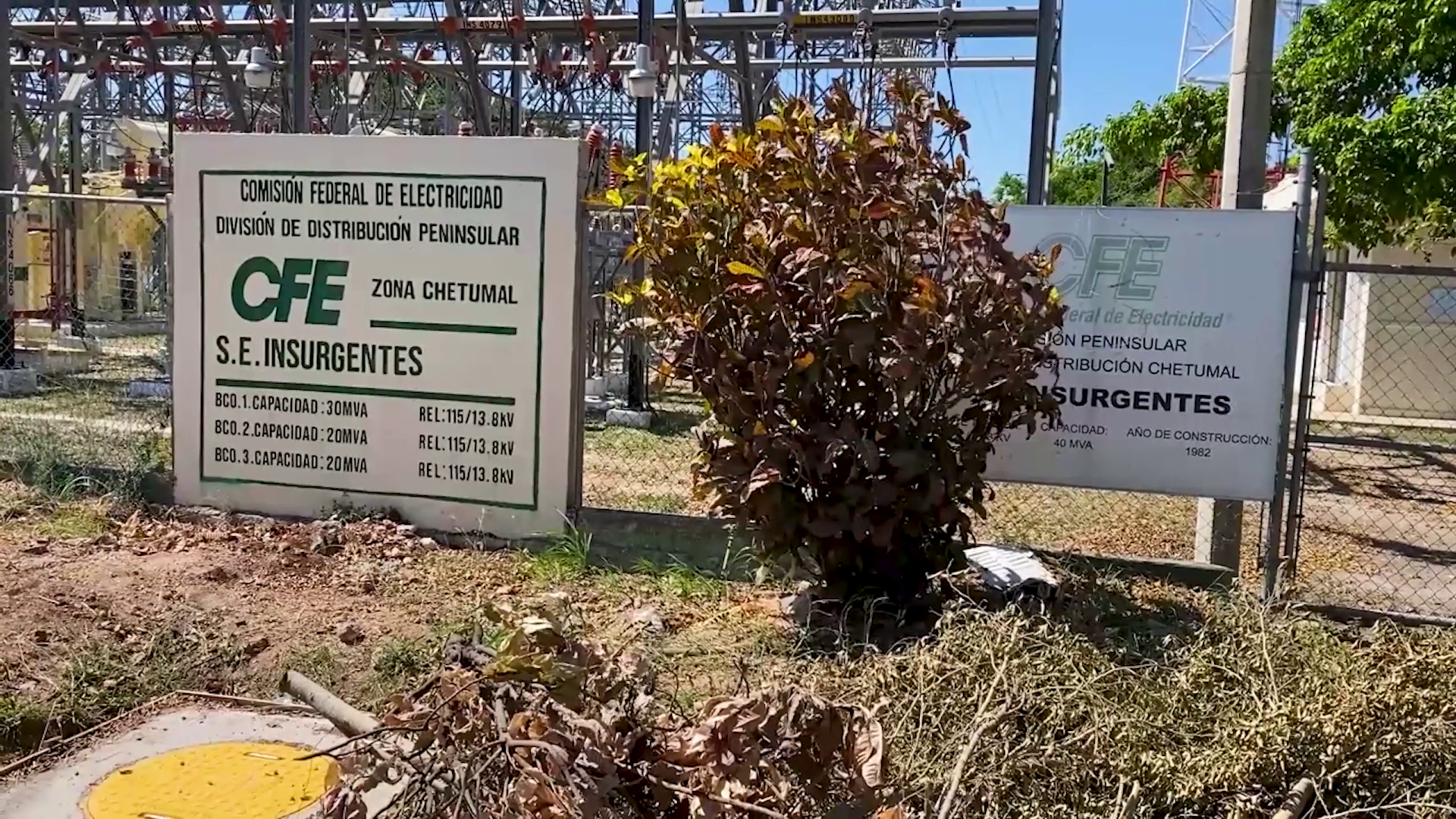
    Prime Minister John Briceño outlined that power supply constraints have been a lingering issue for Belize since 2000, exacerbated by rapid economic and population growth that has outpaced domestic generation capacity. Mexico, Belize’s primary energy import partner, is facing its own strain: soaring power demand in southern Mexican states has left Mexico’s state-owned power utility Comisión Federal de Electricidad (CFE) unable to meet its export commitments to Belize on schedule. CFE had been expected to bring 1.2 gigawatts of new generation capacity online to cover both domestic and export demand, but the new gas-fired plants have sat idle due to critical shortages in natural gas supply to fuel operations.

    Briceño noted that Belize has received a lucky temporary reprieve from recent rainy weather, which has replenished water reserves at the country’s hydroelectric dams, boosting domestic hydropower output in the short term. For longer-term buffer capacity, Belize Electricity Limited (BEL), the country’s national power utility, had arranged for a standby backup generator that was originally scheduled to arrive at the end of May. However, shipping disruptions stemming from the ongoing conflict in Iraq have delayed the delivery. Officials now expect the generator to arrive by the end of July or early August, and will bring it online immediately once it clears customs and installation.

    BEL has already begun preparing contingency plans in case CFE implements export cuts before the new backup capacity is activated. The utility has warned that if supply falls short of demand, controlled rolling blackouts will be implemented between 6:00 p.m. and midnight, a period of peak residential power usage. The outages would impact six districts: Orange Walk, Corozal, Belize, Cayo, Stann Creek, and Toledo. Beyond the standby generator, BEL is developing a 24-megawatt mobile emergency power plant near Mile Eight on the George Price Highway, and has arranged to rent an additional 20 megawatts of generation capacity to be installed at West Lake. That project was originally targeted for launch in July 2026, but shipping delays tied to global logistics disruptions from the Iraq war have pushed the launch back to mid-to-late August.

    Once the emergency generation capacity is online, BEL Executive Chairman Lynn Young explained that Belize’s exposure to CFE export cuts will be drastically reduced. In addition to the temporary emergency measures, the utility is in active discussions with independent power producers operating in Belize — including BABCO and Belcogen Santander — to boost output from existing domestic facilities in the short term. For long-term energy security, BEL already has grid-connected solar energy projects in development to grow domestic renewable generation capacity and reduce reliance on imported power over time.

    Young added that CFE’s export challenges are not an isolated issue, but part of a broader global energy crisis that has pushed up fuel prices and created widespread logistics bottlenecks for energy infrastructure deliveries, making the entire supply chain more volatile.

    Diplomatic efforts between Belize and Mexico are also ongoing to minimize disruptions. Oscar Arnold, Chief Executive Officer of Belize’s Ministry of Foreign Affairs, confirmed that Belizean officials are in constant daily communication with CFE leadership both in Yucatán, where the export power is generated, and at CFE’s Mexico City headquarters to negotiate continued supply where possible. Arnold noted that CFE has an incentive to continue exporting power to Belize, as the country pays a premium for the imports, but CFE must prioritize meeting its own domestic demand first, just as Belize does with its own commodity exports. During past periods of supply uncertainty, Belizean diplomatic teams worked around the clock to adjust to daily shifts in available export capacity from CFE, a process that has helped build strong working relationships between the two countries’ energy and diplomatic teams.

    Arnold emphasized that while Belize prioritizes building up its own domestic generation capacity, continued diplomatic dialogue with Mexico remains a key tool for managing shortages and avoiding unnecessary disruptions for Belizean consumers.