标签: Belize

伯利兹

  • Quick-Thinking Neighbor Foils Violent Cristo Rey Break-In

    Quick-Thinking Neighbor Foils Violent Cristo Rey Break-In

    On June 4, 2026, a terrifying home invasion rocked the quiet community of Cristo Rey Village, where two armed men forced their way into the residence of a 66-year-old local woman, pushed her inside, and began looting her belongings. What could have escalated into a fatal incident ended with one suspect in custody, all thanks to the quick, alert action of a nearby neighbor who spotted the crime in progress and immediately contacted local law enforcement.

    Officers rushed to the scene in response to the emergency call, prompting the two intruders to flee the property before they could cause harm to the homeowner or carry off all of their stolen goods. A pursuit was launched immediately after their escape, and law enforcement teams successfully apprehended one of the suspects, recovering critical evidence along the way: a .22 caliber pistol, rounds of ammunition, and jewelry that had been stolen from the victim during the break-in. Notably, the 66-year-old homeowner escaped the violent encounter without any serious injuries, a relief to both investigators and local residents.

    In an official statement released by Assistant Superintendent of Police Stacy Smith, a Staff Officer with the local force, investigators have now formally filed charges against the captured suspect, identified as Chris Anthony Velez, a 33-year-old Belizean bartender who resides in the nearby community of Santa Cruz. Velez faces three separate criminal offenses: aggravated burglary, illegal possession of an unlicensed firearm, and illegal possession of unlicensed ammunition. The investigation remains ongoing as law enforcement continues to search for the second suspect who remains at large.

    This incident marks the latest high-profile crime in the region, and highlights the critical role that engaged neighbors play in preventing violent outcomes and supporting local law enforcement. Community safety advocates have long emphasized that informal neighborhood watch dynamics and quick reporting of suspicious activity can drastically reduce the risk of harm to residents and improve the likelihood of suspects being apprehended. As of the latest update, local police have not released additional details about the ongoing manhunt for the second intruder.

  • Belizean Traveler Alleges Homophobic Abuse at Border Crossing

    Belizean Traveler Alleges Homophobic Abuse at Border Crossing

    On June 8, 2026, a Belizean traveler has come forward with public allegations of homophobic harassment committed by a Belizean immigration officer during a routine border crossing into Guatemala, sparking calls for institutional accountability and professional reform within the country’s immigration sector.

    Nuhann Lopez, the complainant, took to social media to share his distressing experience, detailing that the offensive remarks were directed at him and his male partner as they processed entry through the western border checkpoint. In his account, Lopez described the encounter as deeply humiliating and a profound disappointment, emphasizing that immigration officials serve as official representatives of Belize to both outgoing citizens and incoming visitors, and are obligated to maintain standards of professionalism and mutual respect for all people regardless of identity.

    According to Lopez, the confrontation escalated after his sister intervened to question the officer’s inappropriate conduct. What began as biased verbal remarks devolved into further disrespectful treatment, culminating in explicit threats to summon local police against the group, Lopez claims.

    Following the incident, Lopez submitted a formal written complaint over the alleged abuse, with additional separate grievances filed to the Belizean Embassy stationed in Guatemala. In a public statement accompanying his complaint, Lopez said: “I sincerely hope Belize Immigration takes this matter seriously, conducts a thorough review, and holds its officers to the standards of professionalism, dignity, and respect that every person deserves. Belize can and should do better than this.” He has since amplified his call for relevant national authorities to launch a full investigation and implement meaningful accountability measures.

    In response to public attention, Belize’s Ministry of Immigration has formally acknowledged receipt of Lopez’s complaint. Tanya Santos, the Chief Executive Officer of the ministry, confirmed that the department shares deep concern over the serious allegations, and has already collected incident reports from all immigration officers who were present at the checkpoint during the alleged encounter. As of the publication of this report, no further findings from the internal review have been released to the public.

  • Cuba Thanks Belize for Major Aid Shipment Amid Shortages

    Cuba Thanks Belize for Major Aid Shipment Amid Shortages

    As Cuba grapples with a deepening economic and energy crisis exacerbated by tightened United States sanctions, the Caribbean island has received a critical 1,700-ton shipment of food and essential humanitarian supplies from Belize, with additional backing from Mexico. Cuban President Miguel Díaz-Canel has publicly extended his gratitude to both neighboring nations, framing the donation as a profound demonstration of international solidarity at a moment of extraordinary hardship for the Cuban public.

    In an interview with local media, Oscar Arnold, Chief Executive Officer of Belize’s Ministry of Foreign Affairs and Foreign Trade, explained that the aid gesture is rooted in decades of reciprocal friendship between the two countries. Arnold recalled that when Belize was campaigning for international recognition and building its newly independent nation in the decades past, Cuba played a pivotal role in rallying support for Belize’s sovereignty through the Non-Aligned Movement. That history of mutual support, he emphasized, creates an unbreakable bond that Belize has no intention of abandoning.

    “You don’t forget your friends. You don’t cast your friends aside,” Arnold stated, reinforcing Belize’s unwavering commitment to standing with the Cuban people amid their current struggles.

    Beyond the aid shipment, Arnold addressed the future of the Cuban Medical Brigade that has long provided critical healthcare support to Belize. The deployment of the brigade was initially structured for a fixed term, and as that end date approaches, Belize’s foreign and health ministries are now weighing strategic decisions about the program’s next chapter. Belize relies heavily on Cuban medical professionals to fill gaps in domestic healthcare access, particularly for high-demand specialized care that the country cannot easily source locally. Losing these specialized providers is both an undesirable and unaffordable outcome, Arnold noted, adding that multiple policy proposals to extend or restructure the partnership are currently under active review by the Ministry of Health.

    Arnold also clarified the core principle guiding Belize’s independent foreign policy: the country’s support for Cuba does not equate to hostility toward any other nation. “We are friends of all and enemies to none,” he said, underscoring that Belize’s commitment to its long-standing ally aligns with its broader approach to global diplomacy.

  • “Arrests Aren’t Enough,” CEO Arnold Warns in Anti-Narco Push

    “Arrests Aren’t Enough,” CEO Arnold Warns in Anti-Narco Push

    As the newly appointed Chief Executive Officer of Belize’s Ministry of Foreign Affairs and Foreign Trade, Oscar Arnold is prioritizing a paradigm shift in the country’s response to surging narcotics trafficking activity along its shared northern border. Drawing on years of firsthand experience as Belize’s Ambassador to Mexico, a nation that has long grappled with transnational drug networks, Arnold is pushing back against traditional law enforcement strategies that focus solely on individual arrests, arguing that incremental arrests alone will not resolve the deep-rooted crisis.

    In comments made during a public briefing on June 8, 2026, Arnold outlined that transnational criminal organizations rely on two foundational pillars to operate: unregulated financial infrastructure that allows cartels to launder illicit proceeds into the formal global economy, and hidden institutional support that enables their cross-border operations. To meaningfully curb narco activity, he says, authorities must target these underlying systems rather than only reacting to isolated criminal incidents.

    Arnold reflected that his tenure as ambassador to Mexico gave him an unparalleled on-the-ground perspective on how these networks operate, as well as the economic ripple effects of unchecked drug trafficking. During his time in the role, he regularly assessed how border disruptions driven by narcotics enforcement—from prolonged border closures to work stoppages by customs brokers—impacted everyday Belizeans, ranging from cross-border business owners to road travelers and local car dealers. This experience, he noted, shaped his holistic approach to the crisis that he is now implementing in his new leadership position.

    A key advantage Belize holds in this collaborative effort, Arnold emphasized, is the strong, trusting bilateral relationship it has built with Mexico’s federal government over recent years. Rather than approaching the issue through a lens of disagreement, Belize can work alongside Mexican authorities as partners, leveraging established diplomatic ties to coordinate cross-border enforcement more effectively. Arnold acknowledged that dismantling transnational crime networks is no easy feat, but he added that the shift toward structural, system-focused enforcement is already underway, and he expects this new approach to deliver meaningful, long-term gains in reducing narcotics activity along the border.

  • Foreign Minister Fonseca Recovering Well After Heart Surgery

    Foreign Minister Fonseca Recovering Well After Heart Surgery

    More than one month following a successful heart procedure at Belize’s leading public medical facility, Karl Heusner Memorial Hospital, top government official Francis Fonseca is making steady, encouraging progress in his recovery, according to close colleagues and the minister himself. As the nation’s foreign minister, who also holds cabinet portfolios for foreign trade, education, culture, and information technology, Fonseca has been out of office during his post-surgery recuperation, leaving colleagues across the Ministry of Foreign Affairs and the broader cabinet eager for his return.

    Oscar Arnold, Chief Executive Officer of the Ministry of Foreign Affairs and Foreign Trade, confirmed in an interview with local media that he has maintained consistent private communication with Fonseca throughout his recovery period. Arnold shared that the minister has repeatedly expressed that his recuperation is proceeding exactly as his medical team planned, and that he is eager to step back into his official responsibilities.

    Arnold, however, noted that the ministry is prioritizing Fonseca’s long-term health over an immediate return to work, even pushing back gently on the minister’s desire to restart his duties sooner rather than later. “He says that he will try to gradually slip into certain things,” Arnold explained, acknowledging the massive scope of the multiple cabinet portfolios Fonseca oversees. “We do miss him but we want to ensure that the paramount importance is his health.”

    Any decision about a formal return to full duties will be a discussion between Fonseca and Prime Minister Briceno, Arnold added, noting that every member of the cabinet has missed the foreign minister’s contributions during his leave. To avoid adding unnecessary stress to Fonseca’s recovery, Arnold said he intentionally limits work updates to brief bulletins, allowing the minister to focus fully on healing.

    When contacted directly by local outlet News Five on June 8, 2026, Fonseca independently confirmed that his recovery continues to go well, and shared that he hopes to resume his official responsibilities in the very near future.

  • Football, Fans and Big Cash: The Rise of Belize’s ‘K Match’ Phenomenon

    Football, Fans and Big Cash: The Rise of Belize’s ‘K Match’ Phenomenon

    Belize’s sports landscape is undergoing a dramatic shift, driven by a fan-focused, cash-prize football innovation that has quickly captured the attention of young audiences across the country. The concept, dubbed the ‘K Match’, blends high-stakes amateur football competition with entertainment spectacle, creating a wholly new experience that stands out from traditional local sports events. This week’s *Sports Monday* broadcast breaks down how the trend took root and where it is heading, alongside updates on other major regional and local sports action.

    The K Match model draws inspiration from the high-viewership, big-payout structure of professional boxing exhibition bouts, reimagined for 11-a-side football. Instead of multi-tournament schedules, the format centers on a single, high-energy match between amateur teams, with a large cash prize awarded directly to the winning side. This stripped-back, high-stakes structure has proven to be a hit with spectators, packing stadiums and drawing crowds that far outpace attendance at typical local amateur football matches.

    The brainchild of Belmopan-based organizer Richie Galvez, the flagship 6K Match – named for its $6,000 top prize – was built around a deliberate focus on attracting young Belizeans, who make up nearly 70% of the event’s fanbase. Galvez explained that the 6K Match was designed to meet young audiences where they are, blending their love of sports, social media culture, public gathering, and personal expression into one accessible event. Unlike more expensive concerts or high-profile entertainment outings that are out of reach for many young Belizeans, the 6K Match offers an affordable space for attendees to showcase their personal style, create social media content, and participate in a growing cultural movement. What started as a single event has now evolved into a cultural staple for young sports fans across the country, Galvez noted.

    The runaway success of the 6K Match has inspired a wave of copycat events across Belize. One of the country’s most well-known football figures, Ian “Yellowman” Gaynair, recently launched a 4K Match – a $4,000 prize event held in Belize City – that drew 1,200 attendees, a number local observers called unprecedented for an amateur exhibition football match. Gaynair emphasized that Galvez’s model fills a gap in local sports, offering a safe, welcoming space for fans and giving amateur players a rare chance to feel like elite professional athletes for the day. Gaynair also noted that even long-time local football organizers have never seen such a large turnout for a standalone amateur match, confirming the broad appeal of the K Match format.

    Galvez’s most recent 6K Match at Belmopan’s FFB Stadium also drew a record crowd, prompting the organizer to formalize the brand: he has officially registered 6K Match as a legal business and secured a trademark for the name. While Galvez confirmed that the trademark means any unlicensed use of similar “K Match” branding could face legal action, he emphasized that his core mission is growing the sport of football across Belize, not blocking opportunity for young athletes and organizers. He also acknowledged that he personally provided guidance to Gaynair ahead of his 4K Match, supporting efforts to expand the model to new regions of the country.

    Beyond the rise of the K Match phenomenon, *Sports Monday* also shared results from several recent major sports competitions. At the 2026 Central America Senior Track and Field Championships held in Managua, Nicaragua, Belize’s 10-person delegation secured four bronze medals. Two bronze medals came on the first day of competition: one in the men’s 4x100m relay, where the Belize team finished in 45.8 seconds, and a second in the men’s 4x400m relay. On the second day of competition, Belizean sprinter Brandon Jones won two individual bronze medals: first in the 200m sprint with a time of 21.73 seconds, followed by a bronze in the triple jump with a 15.8-meter leap.

    In other local sports action, the annual Marconi Leal Fastpitch Softball Tournament continued over the weekend, with the Rednecks women’s team notching a lopsided 10-2 victory over Sand Hill De Trop in Friday night’s matchup. In national basketball, the NEBL playoffs officially tipped off over the weekend, with the Orange Walk Running Rebels securing an opening 86-68 win over the Cayo Western Ballers in their home opener. The playoff schedule continues this coming weekend, with Cayo hosting Orange Walk on Friday night and the Tiger Sharks facing off against the Defenders on Sunday.

  • Drone Industry Group Accuses Civil Aviation of Regulatory Railroading

    Drone Industry Group Accuses Civil Aviation of Regulatory Railroading

    A high-stakes dispute over new drone regulations has broken out in Belize, with the nation’s leading drone industry trade group leveling serious accusations of rushed, unfair rule-making against the country’s civil aviation regulator that could threaten the future of Belize’s burgeoning unmanned aerial systems (UAS) sector.

    The Belize National UAS Industry Association (BNUIA) claims the Belize Department of Civil Aviation (BDCA) has cut corners on stakeholder input and pushed forward with a flawed regulatory framework that fails to address industry concerns, putting the fast-growing local drone market at unnecessary risk.

    The conflict centers on a planned two-day collaborative line-by-line review of the draft regulations, scheduled for May 21 and 22 of this year. According to the BNUIA, the BDCA unexpectedly slashed the workshop agenda just 24 hours before it kicked off, truncating the session to just a day and a half. When the workshop concluded, regulators and industry stakeholders had only reviewed 24 of the 55 pages included in the proposed regulatory text.

    The remaining 31 unreviewed pages contain provisions that deviate sharply from globally accepted UAS regulatory standards, the association says. BNUIA leaders add that their formal request to reconvene the workshop to finish the full review was rejected outright by BDCA leadership.

    Further controversy emerged over the meeting minutes distributed to participants after the workshop. The BNUIA says the original draft described the review as fully completed, a characterization that participants refused to sign off on. The wording was only altered to reflect that only a partial review of concerns had been completed after industry pushback. BDCA director Nigel Carter frames the disagreement over the minutes as a simple miscommunication, explaining that the document was intended to outline workshop goals and note that stakeholders would submit additional feedback post-meeting.

    Carter pushed back against the industry’s claims of a rushed process, noting that public consultation on the draft regulations first launched back in July 2025 – nearly 11 months before the May workshop. He added that the BDCA granted multiple extensions to the comment period at the industry’s request, with the final extension ending on January 5, 2026, and that the department continued to accept public input even after that date.

    Following the workshop, Carter sent a formal letter to all stakeholders setting a May 29 deadline for submission of any remaining outstanding concerns. The BNUIA points out that this same letter laid out BDCA’s plan to publish a final version of the regulations by June 30, with a possible future forum only to explain how public comments were addressed, not to revisit unresolved disagreements. For the industry association, this timeline confirms that the BDCA intends to finalize the rules before all stakeholder concerns are fully resolved.

    Carter refuted this claim in comments to local outlet News 5, stressing that the consultation process remains open. After the department analyzes all submitted feedback, a revised draft will be released for additional public review, and a second full public consultation session will be held, he said. “It is just that we had to say, listen, we are at a point now where we must move on,” Carter explained, noting that the department has a range of other mandatory regulatory responsibilities to advance. He committed that all feasible changes to the draft will be made based on feedback, and that the BDCA will publish a clear public rationale for any adjustments that are not adopted.

    Transparency has emerged as a second core flashpoint in the dispute. The BNUIA filed a Freedom of Information Act (FOIA) request on April 24, 2026, seeking records from the BDCA, the civil aviation ministry’s CEO, and other relevant government agencies. By law, agencies are required to respond to FOIA requests within 30 days, but the association says that 30-day window has now expired with no acknowledgement or response from any of the named agencies. Carter responded that the requested records are currently being compiled and will be released to the association within the next week to 10 days.

    The industry association also argues that the proposed regulations are largely a copy-paste of international rules that are poorly suited to Belize’s local drone market, imposing unnecessary heavy burdens on small local operators and stifling the sector’s growth. BNUIA claims the rushed process is driven primarily by a desire to meet international auditor requirements rather than to craft rules that support the development of Belize’s domestic drone industry.

    Carter countered that Belize has had a binding obligation to implement International Civil Aviation Organisation (ICAO) standards since the country joined the Convention on International Civil Aviation back in 1991. Aligning local rules with global international standards improves aviation safety for all operators, he explained, creating a consistent, predictable regulatory environment that both local and foreign operators can rely on when operating in Belizean airspace.

    The disagreement comes as drone technology emerges as a fast-growing economic sector in Belize, with applications ranging from agricultural mapping and infrastructure inspection to tourism and delivery services, making the final shape of the country’s first comprehensive UAS regulations critical to the sector’s long-term trajectory.


  • Opposition Leader Says 80% NHI Funds Go to Private Clinics

    Opposition Leader Says 80% NHI Funds Go to Private Clinics

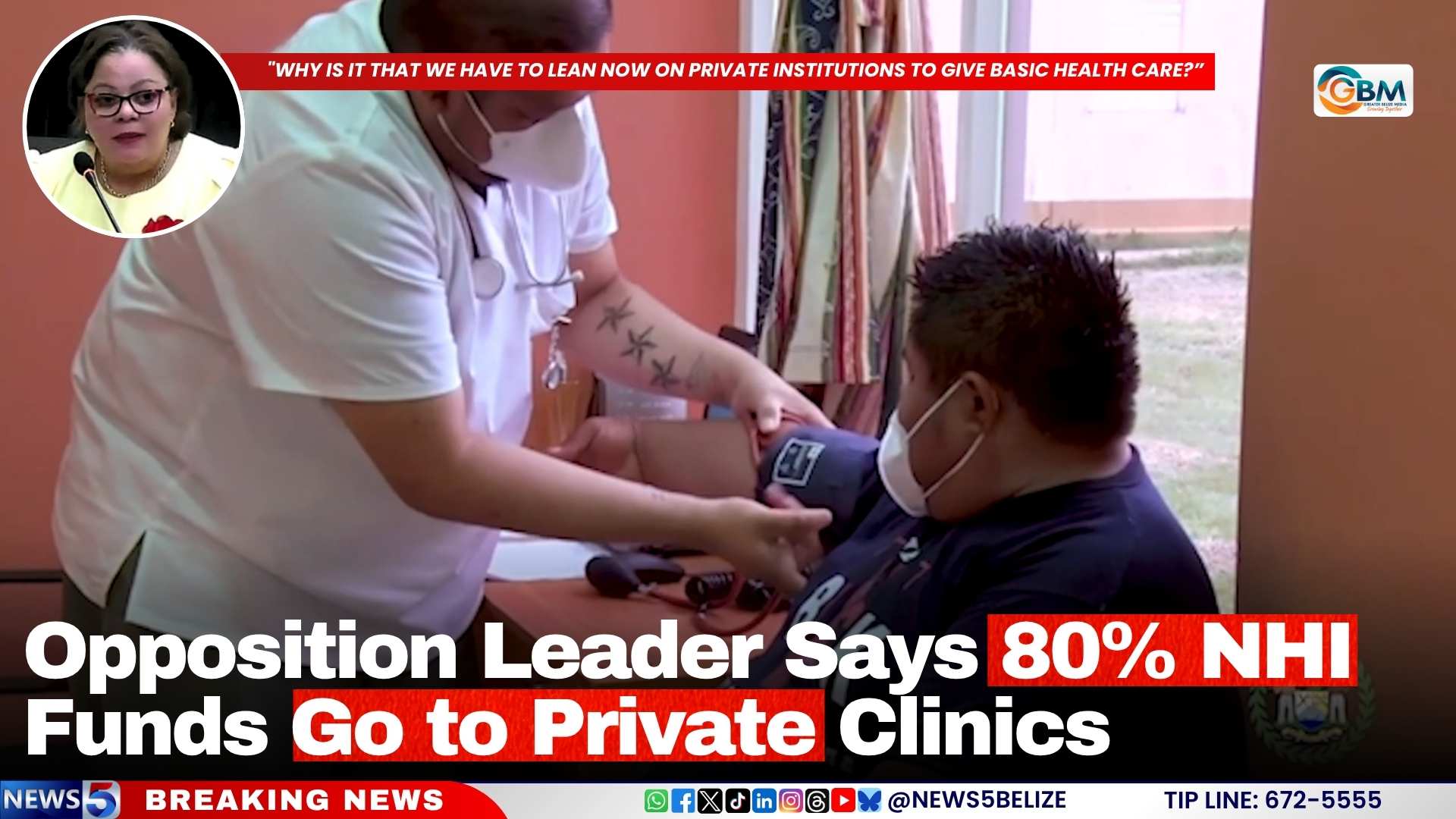
    On Thursday, June 8, 2026, Belize’s House of Representatives approved the second reading of the National Health Insurance Authority Bill 2026, capping off a heated debate that exposed deep partisan divides over the future direction of the Central American nation’s public healthcare system. The core point of contention revolves around the government’s growing reliance on private clinics to deliver services under the existing National Health Insurance (NHI) program, with the opposition accusing the ruling administration of sidelining public healthcare institutions to funnel the vast majority of program funds and contracts to private operators.

    Opposition Leader Tracy Panton levelled the sharpest critique of the government’s model during floor remarks, revealing that 80 percent of all NHI service contracts are currently awarded to private healthcare facilities, leaving just 20 percent for public sector providers. She questioned the logic of outsourcing core basic healthcare services to private entities, arguing that public institutions are better positioned to deliver equitable, universal primary care to all Belizeans. Panton called for a redirection of existing NHI procurement funds to upgrade underfunded public healthcare facilities, rather than continuing to channel resources to the private sector.

    Panton further warned that the new legislation, which formalizes the structure of the NHI authority, concentrates excessive regulatory power in the executive branch without adequate accountability safeguards. She argued that the current trajectory risks creating a parallel funding system that socializes financial risk for taxpayers while concentrating private profit for healthcare operators, warning that without urgent oversight reforms the program could become another corrupt, mismanaged public body similar to the troubled former LIU.

    Prime Minister John Briceño, who frames the NHI bill as a foundational long-term nation-building initiative, defended the mixed public-private delivery model on efficiency and cost-saving grounds. Briceño argued that contracting both public and private providers allows the NHI program to leverage bulk purchasing power to drive down service and medication costs for the system. He illustrated the savings with a concrete example: while an average patient pays $50 out of pocket for a private clinic appointment, the NHI negotiates a rate of just $12 per visit, thanks to the guarantee of more than 4,000 patients annually for participating providers. Briceño noted that this same bulk negotiation principle applies to pharmaceutical procurement, delivering broader savings across the entire program.

    Health and Wellness Minister Kevin Bernard did not directly refute Panton’s 80-20 funding split claim, but pushed back against her critique by highlighting the addition of seven new public sector NHI providers across the country, including new polyclinics in high-demand population centers Orange Walk, Belmopan, and San Ignacio. The bill now moves forward in the legislative process, as debates over the balance between public and private healthcare delivery in Belize continue to dominate political discourse.

  • Edmund O. Pennil, Who Served Belize’s Courts for 64 Years, Has Died

    Edmund O. Pennil, Who Served Belize’s Courts for 64 Years, Has Died

    The small Central American nation of Belize is in mourning this week following the passing of one of its most iconic public servants, Edmund O. Pennil, a man who dedicated nearly his entire life to upholding the country’s judicial system over 64 consecutive years of service. Known affectionately as “Mr. P.” to nearly every member of Belize’s tight-knit legal community, Pennil’s legacy of dedication, institutional expertise, and unwavering integrity has drawn tributes from the Government of Belize, former colleagues, and generations of court users, many of whom say the country will never see another public servant quite like him.

    Pennil’s extraordinary career in Belize’s court system began in 1958, when a 15-year-old Pennil took his first entry-level position at the General Registry. Unlike many young workers who move between roles and industries over the course of their careers, Pennil never left the institution that became his life’s work. Climbing the ranks through consistent dedication and a deep commitment to mastering every detail of the court system, he earned a promotion to the senior role of Deputy Registrar of the High Court in 1979, a post he held with distinction for 18 years.

    When he officially reached retirement age in 1997, Pennil was not ready to step away from the work he loved. That same year, he agreed to return to the judiciary on a contractual basis, continuing to share his vast knowledge with newer staff and the legal community. He later transitioned into the role of Supervisor of the General Registry, where he remained until his full retirement in 2022 – 64 years after he first walked through the doors of the registry as a teen.

    Long before the digital transformation of court records that swept through judicial systems around the world, Pennil served as Belize’s walking, living search engine for legal information. When lawyers needed to track down decades-old case documents, understand obscure filing procedures, or untangle complicated administrative workflows, they did not turn to a database – they turned to Mr. P. His memory held decades of irreplaceable institutional knowledge that no official manual, training program, or fellow staff member could ever replicate.

    Colleagues who worked alongside Pennil throughout his career remember him as a man defined by three core traits: unwavering punctuality, meticulous precision in every task he undertook, and a lifelong commitment to the oath of public service that he never violated. He prided himself on serving all court users equally, without fear of repercussion from powerful figures or favor for personal connections, a standard he upheld throughout his entire career. As tributes continue to pour in from across the country, Pennil’s legacy as a model public servant remains a touchstone for all who serve Belize’s institutions.

  • Magnitude 6.4 Earthquake Near Cuba Felt in Belize

    Magnitude 6.4 Earthquake Near Cuba Felt in Belize

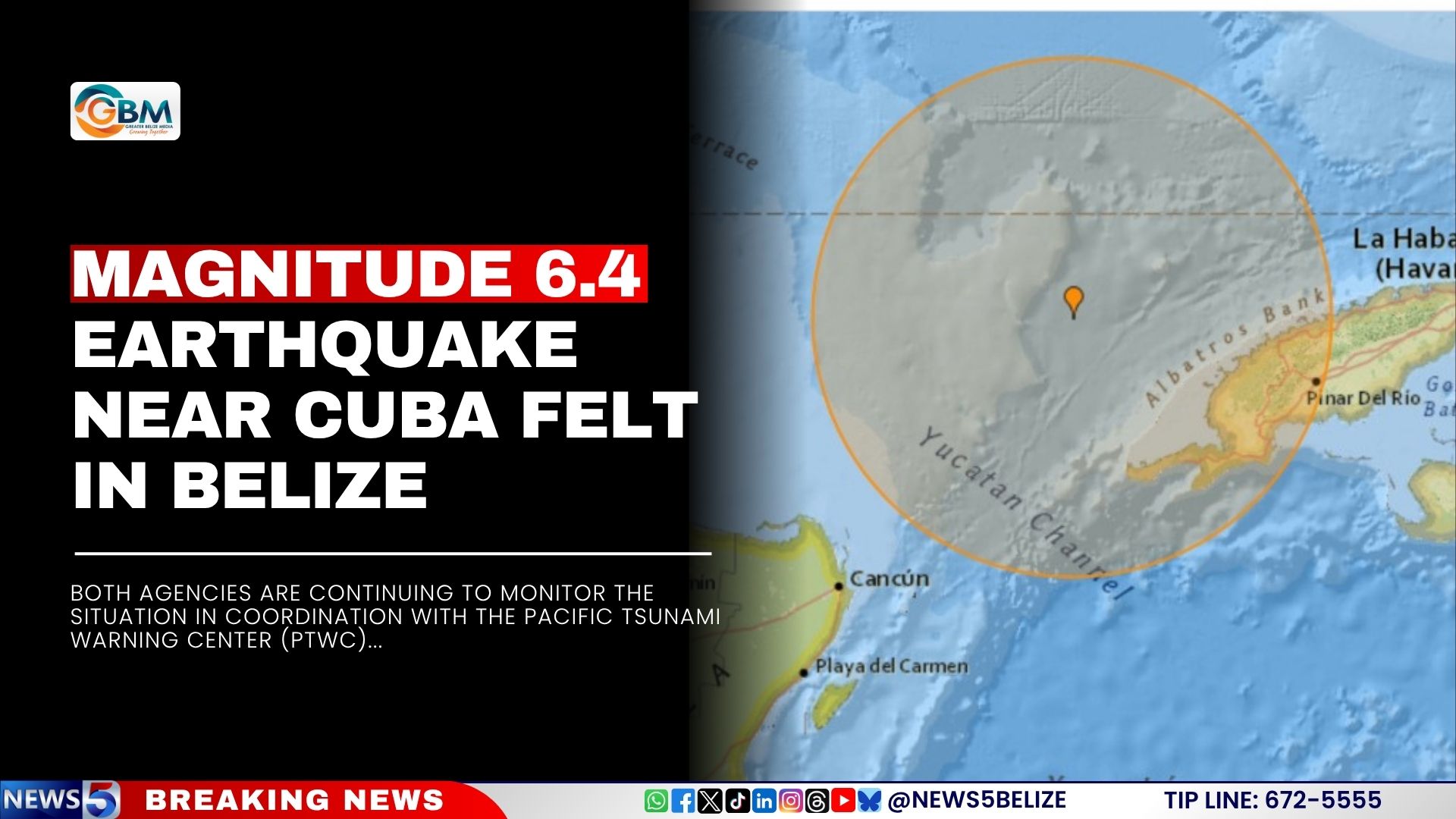
    On June 8, 2026, a magnitude 6.4 earthquake hit the region near Cuba, shaking parts of neighboring Belize and prompting rapid coordinated assessments from regional emergency management agencies.

    According to initial seismic data, the temblor struck at approximately 12:00 p.m. local time, with its epicenter positioned around 118 kilometers west-northwest of Mantua, a town in western Cuba. The earthquake originated at a depth of 33 kilometers below the Earth’s crust, a depth that typically reduces the severity of surface shaking compared to shallower seismic events.

    Within hours of the earthquake being detected, residents across multiple districts in Belize reported feeling noticeable tremors. In response, Belize’s National Emergency Management Organization (NEMO) and the country’s National Meteorological Service immediately launched situational assessments to rule out potential secondary hazards.

    Shortly after their initial evaluation, NEMO released an official informational bulletin reassuring the public that the earthquake does not pose a significant tsunami risk to coastal areas of Belize, and no emergency evacuation or protective action is required for residents at this time.

    Both Belizean agencies are maintaining continuous monitoring of the situation in close coordination with the Pacific Tsunami Warning Center (PTWC), the international body that provides regional early warning infrastructure and support for seismic and tsunami events across the Caribbean and adjacent regions.

    As of the latest update from Cuban state media, no reports of casualties or major structural damage have been confirmed across Cuba. However, national authorities are still working to compile damage and injury reports from more remote, harder-to-reach areas near the epicenter, with updates expected as more information becomes available.