标签: Belize

伯利兹

  • Allies Hesitate as U.S. Pushes Coalition to Secure Strait of Hormuz

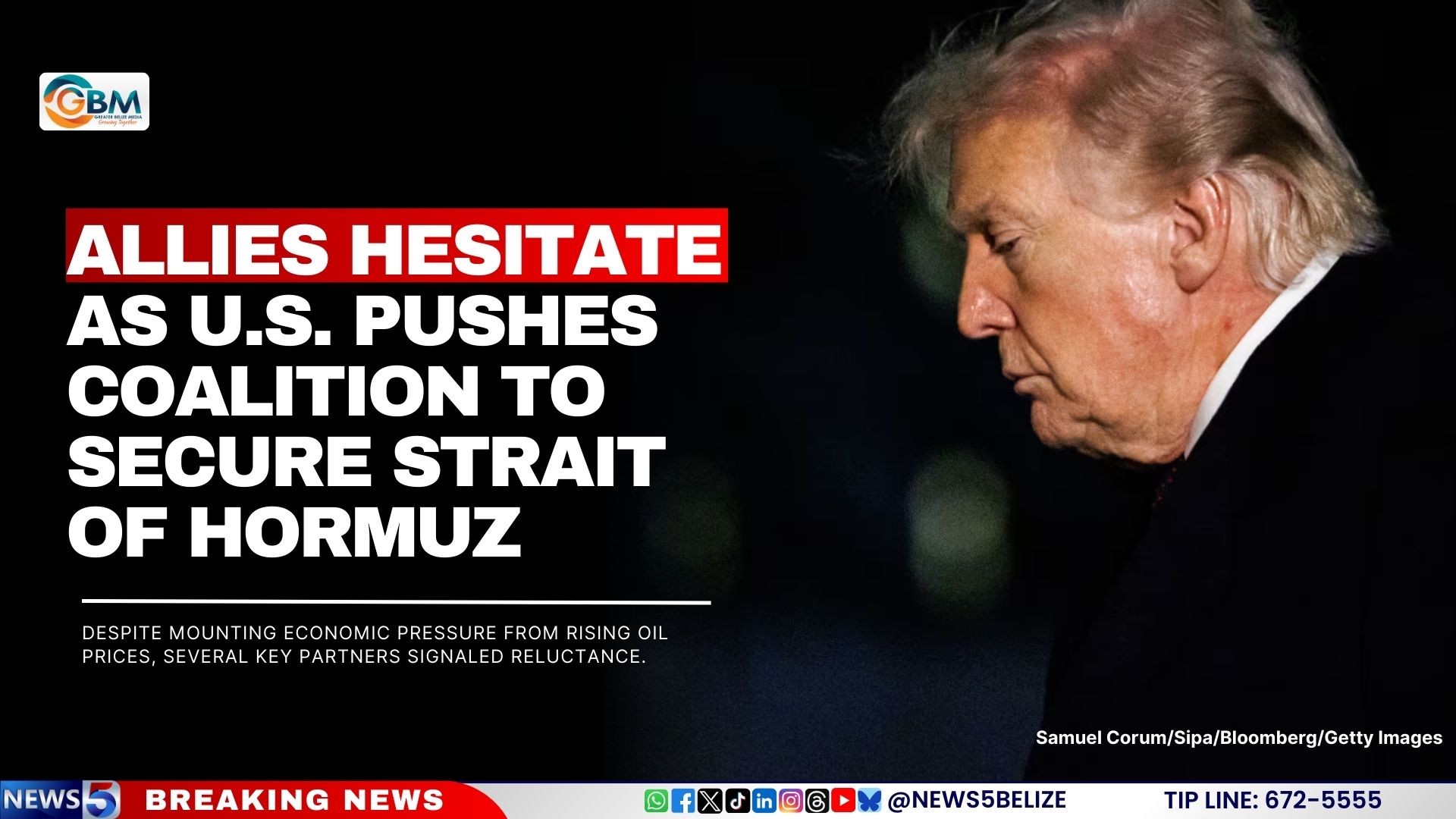
    Allies Hesitate as U.S. Pushes Coalition to Secure Strait of Hormuz

    Washington’s diplomatic campaign to establish an international maritime coalition for safeguarding the Strait of Hormuz has encountered significant hesitation from key allies, creating uncertainty around the proposed security initiative. The strategic waterway, through which approximately 20% of global oil shipments transit, has been operating under what Iranian authorities term ‘special conditions,’ prompting U.S. efforts to organize a multinational naval response.

    Despite intensive weekend diplomacy by American officials urging allied participation, no nation has publicly committed naval assets to the proposed coalition. The initiative, championed by the U.S. administration, seeks to ensure uninterrupted navigation through the critical chokepoint bordered by Iran, Oman, and the United Arab Emirates.

    Germany’s government spokesperson explicitly distanced the matter from NATO obligations, stating the conflict falls outside the alliance’s purview. European Union Foreign Policy Chief Kaja Kallas acknowledged the economic importance of maintaining open sea lanes while similarly noting the operation exceeds NATO’s operational boundaries.

    British Prime Minister Keir Starmer indicated ongoing consultations with international partners to develop a ‘viable collective plan’ to restore navigation freedom but offered no commitment of Royal Navy resources. Meanwhile, Japanese Prime Minister Sanae Takaichi formally declared Tokyo would not deploy warships, and Australian officials concurrently ruled out naval participation.

    The collective reluctance emerges amid growing economic pressures from rising oil prices, yet key U.S. partners appear cautious about military engagement in the region. With no formal commitments secured, the proposed multinational force faces operational uncertainty as global energy markets monitor the evolving situation with increasing concern.


  • Protests Erupt in Cuba as U.S. Restrictions Deepen Food, Energy Crisis

    Protests Erupt in Cuba as U.S. Restrictions Deepen Food, Energy Crisis

    Cuba is experiencing rare waves of civil discontent as mounting economic pressures trigger widespread resource shortages. In the central city of Morón, demonstrators set ablaze a local Communist Party headquarters, marking one of the most significant anti-government protests in recent history.

    State media reported five arrests following what authorities characterized as ‘acts of vandalism.’ According to government-run newspaper Invasor, the demonstration initially manifested as a peaceful gathering before escalating into direct attacks on municipal government facilities. Unverified social media footage appears to show protesters hurling stones at the burning building while chanting calls for liberty.

    Additional government installations reportedly sustained damage during overnight unrest. While no injuries have been officially confirmed, human rights organization Justicia11 alleged audible gunfire and potential shooting victims—claims promptly denied by state media outlet Vanguardia de Cuba.

    The protests represent a notable departure from Cuba’s typically subdued political landscape, where dissent traditionally faces immediate government response. However, public frustration has reached critical levels following weeks of intensifying rolling blackouts and food scarcity. Residents have increasingly resorted to ‘cacerolazos’—nocturnal pot-banging demonstrations—while University of Havana students recently staged sit-ins after energy rationing suspended academic activities.

    This deterioration directly correlates with intensified U.S. sanctions initiated under the Trump administration. January 2026 witnessed Washington halting Venezuelan oil transfers to Cuba, followed by an executive order threatening penalties against nations supplying fossil fuels to the island nation. Cuban President Miguel Díaz-Canel confirmed this week that no petroleum shipments have reached the country in ninety days, crippling the nation’s aging power grid and devastating electricity generation capabilities.

    President Trump recently indicated potential escalation, suggesting Cuba would be ‘next’ in line for increased pressure following U.S. actions in Venezuela and Iran.

  • Chinese National Arrested After Attempt To Smuggle 2,000 queen ants

    Chinese National Arrested After Attempt To Smuggle 2,000 queen ants

    Nairobi, Kenya – March 15, 2026 – Kenyan authorities have apprehended a 27-year-old Chinese national in a significant wildlife trafficking operation at Jomo Kenyatta International Airport. Zhang Kequn was intercepted while attempting to board an international flight with an illicit cargo of over 2,200 live giant African harvester ants (Messor cephalotes) concealed within his luggage.

    Court documents reveal that immigration officials had flagged Zhang’s passport with a stop order due to his alleged involvement in evading arrest during a previous incident in Kenya last year. Upon inspection, authorities discovered 1,948 ants meticulously packaged in specialized laboratory test tubes, with an additional 300 specimens hidden inside tissue paper rolls within his suitcase.

    The seized insects represent a species protected under international biodiversity conventions, with their trade subject to strict global regulations. Prosecutors have connected Zhang to an extensive ant-trafficking network that was previously dismantled in Kenya during 2025. Investigators are currently seeking forensic access to his electronic devices, including mobile phone and laptop, to expand their understanding of the smuggling operation.

    The Kenya Wildlife Service has issued warnings about escalating international demand for these protected insects, particularly in European and Asian markets where exotic ant species command high prices among collectors. Officials indicate that further arrests are anticipated as investigations broaden to examine suspected harvesting operations in multiple Kenyan regions.

    This case follows last year’s landmark prosecution where four individuals—including two Belgian nationals, a Vietnamese citizen, and a Kenyan—received sentences for attempting to smuggle thousands of live queen ants out of the country.

  • Police Believe He Murdered Clinton Pou

    Police Believe He Murdered Clinton Pou

    BELIZE CITY – A 21-year-old man stands formally accused in connection with a deadly shooting that claimed two lives last week near the city’s fish market. Luewin Link now faces multiple criminal charges including murder, attempted murder, and employing deadly means of harm.

    The violent incident unfolded on Tuesday when assailants aboard a motorcycle opened fire near a food trailer establishment. Clinton Delton Pou and his sister Kiandra Pou were reportedly present at the location when the attack commenced. Police personnel already stationed in the vicinity immediately responded to the shooting, initiating pursuit of the fleeing suspects.

    During the subsequent chase, law enforcement officers engaged one of the alleged perpetrators, 40-year-old Ryan Barnett, resulting in his injury. Both Barnett and Clinton Pou subsequently succumbed to their wounds despite medical intervention. An eyewitness account depicted the scene as profoundly chaotic, characterizing the exchange of gunfire as rapid and intense.

    Court documents reveal this was not the first attempt on Clinton Pou’s life. Historical records indicate he survived a previous shooting incident in 2019 at his North Front Street residence, where armed intruders entered the property and discharged multiple rounds, leaving him injured but alive.

    The investigation remains active as authorities continue to examine the circumstances surrounding the tragic event that has shaken the local community. Additional forensic analysis and witness testimonies are being collected to reconstruct the precise sequence of events leading to the fatalities.

  • U.S. Maintains Belize at Level 2 in Updated Travel Advisory

    U.S. Maintains Belize at Level 2 in Updated Travel Advisory

    The United States Department of State has reaffirmed its travel advisory for Belize, retaining the Central American nation at a Level 2 classification, which urges travelers to ‘Exercise Increased Caution.’ This assessment, reissued on March 12, 2026, continues to identify criminal activity as the predominant risk for visitors.

    The advisory underscores that while violent incidents can transpire in zones frequented by tourists, the epicenter of such crime remains concentrated on the south side of Belize City. The spectrum of offenses highlighted encompasses sexual assault, armed robbery, residential break-ins, and homicide, with a significant portion of this violence being attributed to ongoing gang conflicts.

    Compounding these security challenges, the update points to systemic issues within local infrastructure. Belizean law enforcement agencies are noted to operate with constrained resources, which frequently impedes criminal investigations and often results in cases remaining unsolved. Furthermore, the capacity for emergency medical response is characterized as limited. In instances of severe injury, medical evacuation to another country is frequently necessitated due to inadequate local treatment facilities.

    A distinct and more severe Level 3 advisory—’Reconsider Travel’—is applied specifically to the south side of Belize City. Consequently, U.S. government personnel are under strict directives to avoid travel south of the Haulover Creek Canal to Fabers Road. An additional security protocol prohibits them from inter-city road travel after nightfall.

    The advisory concludes with standardized safety recommendations for all visitors, which include avoiding walking or driving during nighttime hours, being discreet with valuables to not attract attention, and complying with assailants without physical resistance in the event of a robbery.

  • LOO Demands Explanation for Fuel Price Increase

    LOO Demands Explanation for Fuel Price Increase

    BELIZE CITY – Opposition Leader Tracy Panton has issued a forceful demand for the Briceño administration to deliver a comprehensive explanation for the recent abrupt escalation in domestic fuel prices, challenging the government’s reference to international market conditions as insufficient justification.

    Prime Minister John Briceño previously attributed the price hike to escalating global fuel costs, specifically referencing the closure of the Strait of Hormuz following unexpected Middle East conflict developments. “This should surprise no one,” Briceño stated on Friday. “We’ve observed considerable price increases in the United States, and with twenty percent of global oil supplies transiting through the Strait of Hormuz now disrupted, Belizeans have been anticipating this adjustment.”

    Panton countered that such geopolitical explanations lack transparency for a government that once pledged exemplary accountability standards. She emphasized that Belize primarily imports refined petroleum products from Mexico and the United States rather than directly from conflict zones currently affecting global markets.

    The Opposition Leader highlighted that global crude oil prices have remained relatively stable within the $95-$100 per barrel range, questioning the mathematical correlation between international headlines and domestic price increases. Panton further pressed the administration to disclose whether it has pursued regional energy partnerships, specifically noting recent diplomatic engagements with Guyana—CARICOM’s largest oil producer—and Venezuela, which maintains the world’s largest proven oil reserves and historical ties with Belize.

    Panton concluded by urging the government to implement previously proposed policy measures, including reducing the fuel intake tax by at least $2 per gallon—a solution the current administration had advocated while in opposition.

  • Treasure Hunter Released After 10 Years; 500 Gold Coins Linked to Belize Still Missing

    Treasure Hunter Released After 10 Years; 500 Gold Coins Linked to Belize Still Missing

    After serving a ten-year prison term for contempt of court, renowned deep-sea explorer Thomas G. “Tommy” Thompson has been released from custody. The 73-year-old treasure hunter, who achieved fame in 1988 by locating the historic SS Central America shipwreck, completed his sentence on March 4, 2026.

    The SS Central America, famously known as the “Ship of Gold,” met its tragic end during a hurricane in 1857 while transporting substantial quantities of California gold. The maritime disaster claimed over 400 lives. Thompson’s groundbreaking discovery of the wreck off the South Carolina coast yielded treasure valued at tens of millions of dollars.

    Thompson’s release concludes one chapter of a complex legal saga that began when expedition investors filed lawsuits in 2005. These investors claimed they were denied their rightful shares from an estimated $50 million gold sale. The legal confrontation intensified when Thompson failed to appear in court proceedings in 2012, resulting in an arrest warrant.

    Following his capture in 2015, Thompson was held in contempt for refusing to disclose the whereabouts of 500 gold coins described as commemorative “restrikes” from the recovered treasure. Throughout legal proceedings, Thompson maintained that these coins were transferred to a trustee in Belize around 2009 and that he possesses no knowledge of their current location.

    Although the contempt order against Thompson was lifted in 2024, he remained incarcerated to complete a separate two-year sentence for his failure to appear in court. His release conditions include one year of supervised release and $250,000 in fines. The mystery of the missing gold coins, potentially linked to Belizean interests, remains unresolved.

  • More Gas Pains as Motorists Cry for Relief at the Pumps

    More Gas Pains as Motorists Cry for Relief at the Pumps

    Belizean motorists are confronting severe economic strain as fuel prices skyrocketed overnight by more than ten percent, exacerbating existing financial pressures from the rising cost of living. This abrupt increase directly results from escalating geopolitical tensions in the Middle East, particularly involving Israel, the United States, and Iran, which have disrupted global oil markets.

    The critical Strait of Hormuz, a maritime passage responsible for nearly twenty percent of worldwide oil shipments, faces potential closure due to ongoing conflicts. Consequently, international crude oil prices have surged between ten to thirteen percent, with U.S. gasoline prices climbing nearly twenty percent. These global developments have now directly impacted Belize’s local economy.

    Prime Minister John Briceño acknowledged the inevitability of this price hike, stating, ‘The unrest in Iran and the threat to the Strait of Hormuz created expected pressure on fuel costs. Belizeans have been anticipating this increase as international markets reacted.’

    Despite government explanations, motorists express profound frustration. Interviews reveal widespread distress among drivers, including tourism workers and dollar van operators who report operating at a loss. Many are implementing personal austerity measures—reducing routes, limiting trips, and pleading for government intervention.

    While some citizens recognize the global nature of the crisis, they simultaneously urge authorities to consider relief measures for vulnerable populations. The Prime Minister cautioned that reducing fuel taxes to alleviate pressure would consequently strain public finances, potentially affecting government services and upcoming public sector salary increases scheduled for April 1st.

    Economists warn that continued instability in oil-producing regions may trigger further price increases, potentially affecting electricity costs and broader economic sectors. Belizeans now face the challenging balance of adapting to higher expenses while hoping for stabilization in international markets.

  • JPAC Hearing Exposes Troubling Audit Pattern

    JPAC Hearing Exposes Troubling Audit Pattern

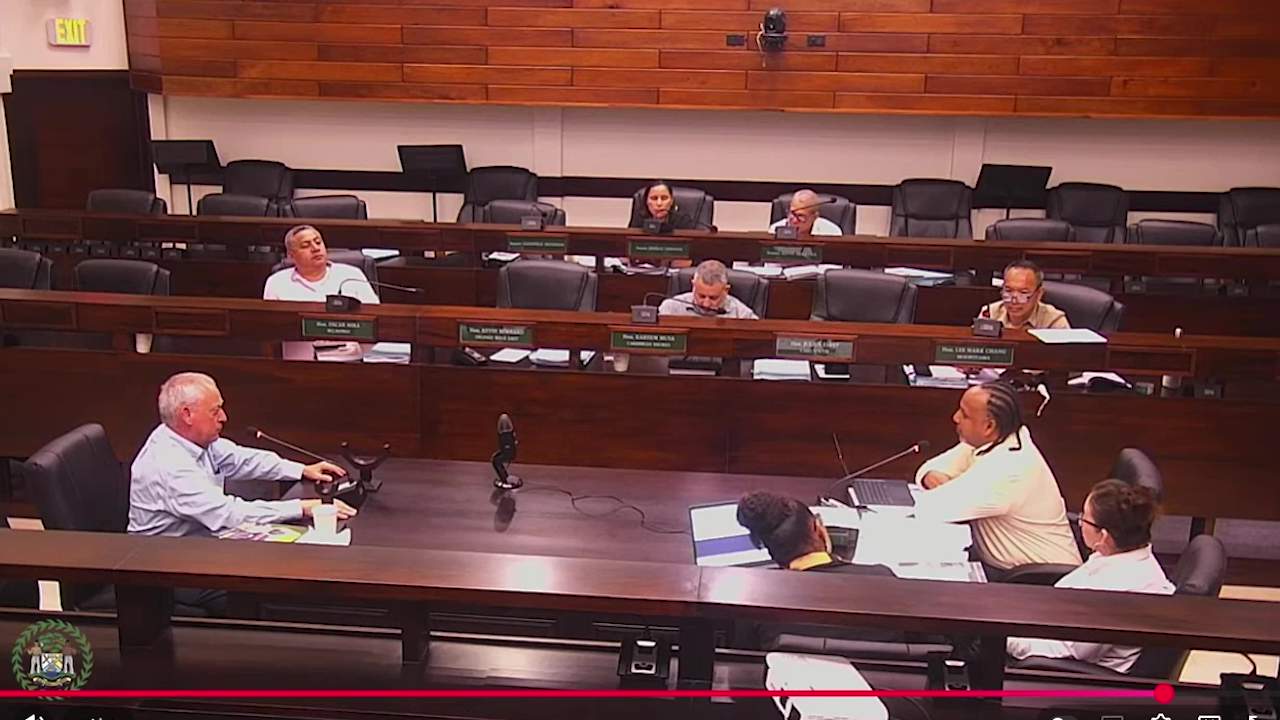
    A startling pattern of institutional obstruction against governmental oversight has been unveiled during the Joint Public Accounts Committee hearing, focusing on the Auditor General’s 2016/2017 report. Auditor General Maria Rodriguez testified that her office continues to encounter significant roadblocks when attempting to verify government expenditures, including missing documentation, uncooperative officials, and outright refusal to provide access to financial records.

    The hearing revealed that multiple government ministries failed to account for expenditures, with several CEOs failing to appear when summoned by auditors. Most alarmingly, Rodriguez confirmed these issues are not historical artifacts but persist today, creating a decade-long pattern of accountability failure.

    A specific case involved the Belize Defense Force’s Non-Public Funds, where auditors discovered a questionable 2016 transaction. The German military paid $152,000 to the BDF for training that was already funded by the Belize government. Despite triggering police and Financial Intelligence Unit investigations, no charges were ever filed.

    Even more concerning, Rodriguez revealed that her staff faced physical obstruction when attempting to audit taxpayer-funded agencies. Both the Belize Agricultural Health Authority and Border Management Authority denied auditors access to their financial accounts, prompting intervention from Financial Secretary Joseph Waight.

    Waight emphasized that all government officers bear responsibility for records on their desks, regardless of when transactions occurred. The committee chair expressed sharp criticism regarding the blocked audit attempts, while legal confirmation established that all parastatal organizations fall within the Auditor General’s jurisdiction.

    The hearing underscores a critical breakdown in Belize’s financial oversight mechanisms, with the Auditor General urging Cabinet intervention to ensure senior officials comply with accountability requirements.

  • Belize Advances Labor Reform with New Standards

    Belize Advances Labor Reform with New Standards

    The Central American nation of Belize has garnered significant international acclaim following its successful implementation of comprehensive labor reforms. The International Labor Organization (ILO) has formally commended Belize for fulfilling its constitutional obligations regarding workers’ rights, marking a milestone achievement in the country’s labor governance framework.

    In a significant administrative accomplishment, Belize’s Labor Department has successfully submitted a complete portfolio of international labor standards to the National Assembly. This extensive submission, completed in September 2025, encompassed 43 distinct labor Conventions, Recommendations, and Protocols dating back to 1990, effectively addressing years of pending international commitments.

    The reform initiative gained further momentum on March 10, 2026, when Labor Minister Kareem Musa presented three additional contemporary labor standards to the legislative body. These included the groundbreaking Safe and Healthy Working Environment Convention and the forward-looking Quality Apprenticeships Recommendation, both established in 2023.

    Minister Musa emphasized the government’s unwavering dedication to its ILO commitments, characterizing the international recognition as a testament to Belize’s progress in transparency, governance excellence, and enhanced worker protections. The ILO Committee of Experts confirmed this assessment, specifically acknowledging Belize’s complete compliance with Article 19 of the ILO Constitution.

    With these comprehensive submissions, Belize has now satisfied all outstanding international labor standard requirements. The Ministry of Labor has committed to maintaining this trajectory by continuing to advocate for dignified employment opportunities, strengthened labor governance mechanisms, and legislative frameworks that remain synchronized with evolving global standards.