标签: Barbados

巴巴多斯

  • BLP nominee Munro-Knight opens constituency office, emphasises access and service

    BLP nominee Munro-Knight opens constituency office, emphasises access and service

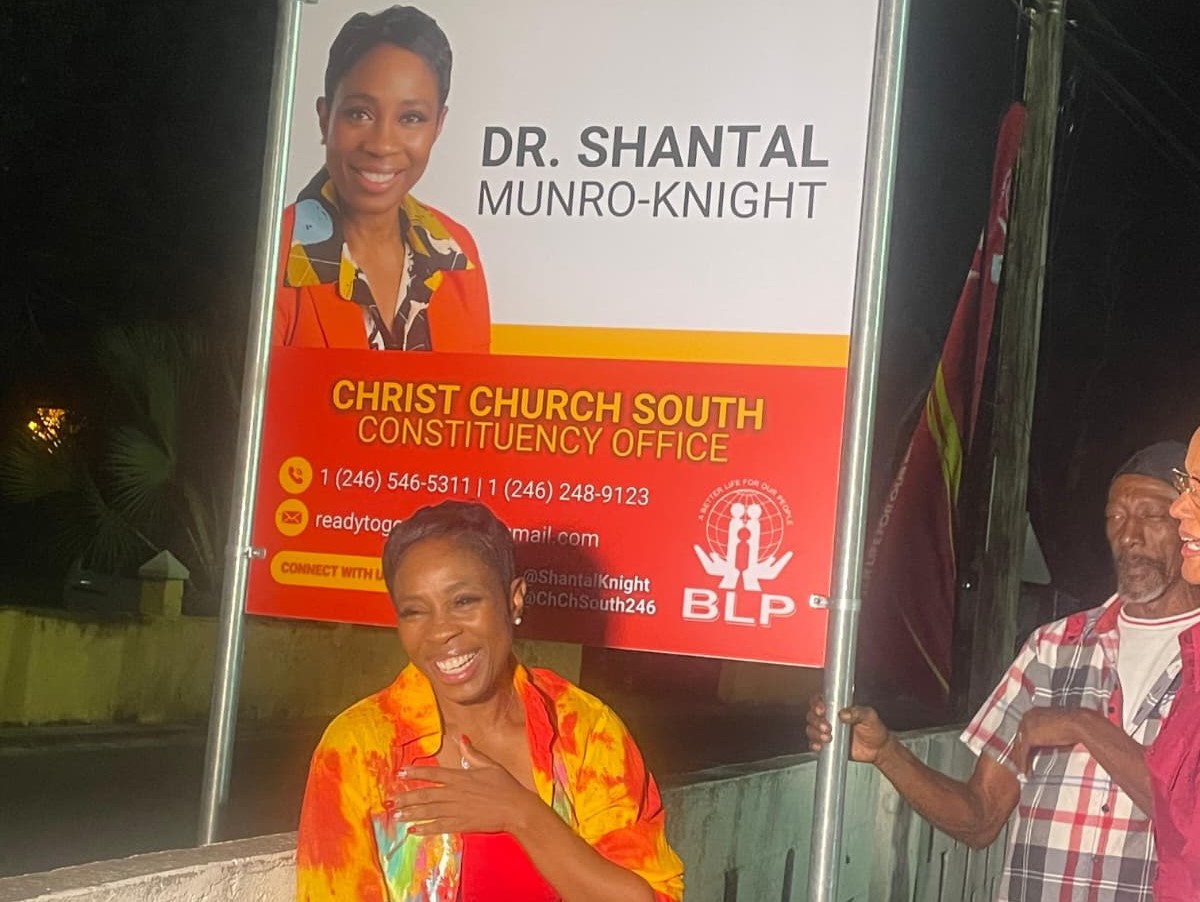
    In a significant move signaling electoral preparedness, Senator Dr. Shantal Munro-Knight has inaugurated her Christ Church South constituency office just over a year after securing the Barbados Labour Party’s nomination. The Friday evening ceremony at the Maxwell Main Road location drew party dignitaries, supporters, and local residents, marking a strategic organizational advancement ahead of potential general elections.

    The establishment addresses persistent concerns about accessible representation that emerged during Dr. Munro-Knight’s extensive community walkabouts. ‘Throughout my engagements across this constituency, the recurring question has consistently been: Where is your office?’ the senator revealed. She succeeds former BLP representative Ralph Thorne, who currently leads the Opposition, and emphasized that the facility will serve dual purposes as both campaign headquarters and constituent service center, openly accessible to all residents regardless of political affiliation.

    Dr. Munro-Knight framed her political journey as fundamentally rooted in service rather than personal ambition, noting she hadn’t previously envisioned herself in such a role. ‘My motivation stems from a singular desire—to serve authentically,’ she stated, explicitly inviting constituents to hold her accountable for her representation. The senator highlighted ongoing initiatives including a commemorative wall honoring Oistins fisherfolk’s sacrifices, the Silver Spoon Programme providing meals for elderly residents inspired by a dignified utility-deprived senior, and a self-empowerment initiative creating internship opportunities for young women.

    Despite electoral uncertainties, Dr. Munro-Knight committed to maintaining door-to-door engagement and daily resident interactions, asserting that ‘effective leadership emerges from directly seeing, feeling, and hearing the people.’ The event garnered substantial party support with attendance from MPs Wilfred Abrahams, William Duguid, Chad Blackman, Kerrie Symmonds, Ryan Straughn, and Acting Prime Minister Santia Bradshaw.

    Bradshaw testified to Dr. Munro-Knight’s de facto representative status, humorously acknowledging her persistent advocacy: ‘She has made my life miserable, detailing every road requiring repair, every drain needing cleaning, and every light requiring installation—despite not yet being officially elected.’ The acting PM confirmed allocated funding through the Ministry of Transport and Works to address identified infrastructure issues, with an aggressive rollout planned from January 2026. MP Abrahams offered unequivocal endorsement, urging constituents: ‘With the clearest conscience, vote for us. This is a good woman coming to represent you all.’


  • Nearly 12 000 receive reverse tax credits worth $16.2m – Straughn

    Nearly 12 000 receive reverse tax credits worth $16.2m – Straughn

    The Barbados government has successfully delivered $18.8 million in reverse tax credits to nearly 14,000 low-income citizens this week, providing crucial financial support ahead of Christmas celebrations. Finance Minister Ryan Straughn announced to Parliament on Friday that the Barbados Revenue Authority (BRA) distributed $16.2 million through banking institutions to 11,941 recipients, while an additional $2.6 million was issued via physical checks to 1,994 individuals whose banking information remained unregistered.

    The initiative represents a cornerstone of the government’s cost-of-living relief measures, offering a $1,300 cash rebate specifically targeted at employed Barbadians earning $25,000 or less annually. Eligibility requirements include minimum employment thresholds, National Insurance contributions, and having paid less than $500 in income tax for the current fiscal year.

    Minister Straughn connected the disbursement to broader economic modernization efforts, highlighting how the current mixed payment system—combining electronic transfers and physical checks—demonstrates the necessity of implementing digital financial infrastructure. The government is actively developing a national real-time payment system that would future credits, refunds, and benefits through digital wallets via the BIMpay platform.

    ‘Especially the person with cheques, because you got to wait for the postman to deliver, and then you got to find your way to a physical location in order to be able to access that money,’ Straughn noted, emphasizing the practical challenges of traditional payment methods.

    The finance minister confirmed that key government agencies including the Treasury Department, BRA, and National Insurance and Social Security Service are being equipped to process electronic payments more efficiently. This transition aims to accelerate various disbursements including welfare payments and court-ordered maintenance allocations.

    Straughn directly linked faster payment processing to enhanced economic vitality, stating that increased velocity of money circulation would stimulate consumption patterns and support broader economic growth. The timing of this financial injection coincides with peak holiday spending periods, potentially amplifying its positive impact on both household finances and national economic indicators.

  • Thorne: Govt ignoring ‘murderously high’ cost of living

    Thorne: Govt ignoring ‘murderously high’ cost of living

    In a scathing address to Barbados’ House of Assembly, Opposition Leader Ralph Thorne launched a fierce critique against the government’s economic management, accusing officials of ignoring what he described as economically devastating price levels and systematic price gouging practices. Thorne asserted that escalating living expenses are driving countless Barbadian families into severe financial hardship.

    During parliamentary debates on the Economic Diversification and Growth Fund Bill, Thorne challenged the administration’s narrative of economic progress, stating that ordinary citizens remain excluded from purported growth benefits. He emphasized that persistent inflation and continuously rising retail prices consistently outpace wage increases for working-class Barbadians.

    Thorne characterized routine grocery shopping as a ‘nervous exercise’ for households struggling with budgetary pressures. He insisted the government bears direct responsibility for addressing both the tangible economic suffering and widespread consumer anxiety gripping the nation.

    The opposition leader further warned that many Barbadians perceive themselves as victims of unjustified retail mark-ups, demanding the administration ‘educate itself’ about the reality of price gouging experiences throughout the country. Thorne’s comments highlight growing tensions over economic policy as legislators consider new fiscal measures.

  • Minimum wage hike lags behind cost of living – CTUSAB

    Minimum wage hike lags behind cost of living – CTUSAB

    Barbados’s leading labor organization has issued a strong critique of the government’s proposed minimum wage adjustment, declaring the planned 2% increase insufficient to address the nation’s escalating cost of living. The Congress of Trade Unions and Staff Associations of Barbados (CTUSAB) contends that the January adjustment fails to reflect both economic realities and previous government assurances.

    CTUSAB General Secretary Dennis De Peiza emphasized that wage determinations must directly correlate with documented increases in essential expenses including food prices, healthcare, utilities, transportation, and general business operations. The union leader pointed to the government’s own reports of robust fiscal performance—including seventeen consecutive quarters of economic growth and substantial surpluses—as justification for expecting a more meaningful wage enhancement for vulnerable workers.

    The scheduled adjustment would elevate the national minimum wage from $10.50 to $10.71 per hour, while security guards would see their industry-specific rate increase from $11.43 to $11.66. This follows a significant June 2025 increase that raised rates from $8.50 and $9.25 respectively.

    In defense of the policy, Labour Minister Colin Jordan characterized the increase as a carefully calibrated compromise designed to balance worker support with business sustainability. Minister Jordan outlined the government’s commitment to methodical, evidence-based wage reform, noting that the Minimum Wage Board has commenced analysis of the previous increase’s economic impact and is developing a structured indexation framework informed by international models.

    While acknowledging the government’s fulfillment of its promise to implement an increase, CTUSAB maintains that the modest adjustment contradicts the administration’s proclaimed economic achievements. The union body continues to advocate for wage rates that enable vulnerable workers to achieve a decent standard of living, reinforcing its position that both national and sectoral minimum wages require more substantial elevation to match Barbados’s economic trajectory.

  • Thorne warns digital payment reforms risk excluding vulnerable Barbadians

    Thorne warns digital payment reforms risk excluding vulnerable Barbadians

    In a critical parliamentary session addressing the National Payment System (Amendment) Bill, Opposition Leader Ralph Thorne voiced substantial concerns regarding Barbados’ transition to the BimPay digital payment infrastructure. Thorne emphasized that while modernization through digitization represents inevitable progress, the government’s approach must carefully balance technological advancement with socioeconomic inclusivity.

    Thorne articulated a fundamental distinction between mere modernization and genuine development, noting that while digital systems facilitate speed and novelty, true development necessitates consideration of human elements. He highlighted how the abrupt shift to cashless transactions could disproportionately affect street vendors, small-scale merchants, and economically marginalized citizens who rely on traditional cash-based commerce for survival.

    Evidence of public discontent has already emerged, Thorne revealed, with protests organized not to reverse technological progress but to preserve essential economic spaces for vulnerable populations. He challenged the government to provide transparent projections detailing anticipated cash usage percentages post-implementation, warning that current uncertainty is generating widespread anxiety.

    Despite these concerns, Thorne acknowledged the necessity of digital payment systems for Barbados’ global competitiveness, particularly for international transactions that inherently require digital processing. He called for clear timelines and comprehensive support systems to ensure no segment of the population is excluded during this economic transformation.

  • St Michael man fined for cannabis trafficking and importation

    St Michael man fined for cannabis trafficking and importation

    In a significant ruling at the District ‘A’ Criminal Court No. 1, a 53-year-old resident of St Michael, Barbados, has been convicted on drug-related charges. Denson Emroy Bailey, residing at #24 Tamarind Avenue on Culloden Road, entered a guilty plea before Chief Magistrate Ian Weekes during a court session held on Friday. The charges stem from his involvement in the trafficking and importation of a substantial quantity of cannabis.

    The case, investigated by the Narcotics Unit of the Barbados Police Service, centered on activities dated December 11. Law enforcement officials apprehended Bailey after uncovering approximately 3.1 kilograms of suspected cannabis in his possession. The illicit substance, with an estimated street value of $24,800, represents a significant seizure in ongoing efforts to combat narcotics distribution on the island.

    The judicial outcome resulted in a financial penalty of $6,000 imposed on Bailey. This ruling underscores the continued vigilance of Barbadian authorities against drug offenses, particularly those involving substantial quantities with considerable market value. The case highlights the operational effectiveness of specialized police units in intercepting illegal substances and bringing perpetrators to justice through the criminal court system.

  • New Zealand wrap up three-day victory over Windies

    New Zealand wrap up three-day victory over Windies

    New Zealand secured a commanding nine-wicket triumph against the West Indies on Friday’s third day of the second Test at Basin Reserve, propelled by fast bowler Jacob Duffy’s spectacular second-innings performance. The visitors collapsed to a meager 128 runs in their second innings—marking their sixth-lowest Test total against New Zealand—after trailing by 73 runs from the first innings.

    Duffy achieved his second consecutive five-wicket haul in the series, finishing with impressive figures of 5-38, while Michael Rae contributed significantly with 3-45. The West Indies, resuming at 32-2, initially showed resilience through overnight batsmen Brandon King and Kavem Hodge. However, a disastrous run-out of King triggered a catastrophic batting collapse. King was caught short of his crease following a miscommunication with Hodge and an accurate throw from Michael Bracewell.

    The dismissal sparked a rapid unraveling of the West Indies’ lineup. Shai Hope fell five balls later, offering a simple return catch to Rae. Captain Roston Chase continued his poor form, gloving a sharp delivery from Duffy to the wicketkeeper after scoring just two runs. Hodge’s departure for a team-high 35—caught brilliantly by substitute fielder Will Young—effectively ended the contest at 88-6.

    Though Justin Greaves (25) and Tevin Imlach provided brief resistance, Duffy’s post-lunch breakthrough, dismissing Greaves lbw via review, swiftly curtailed their efforts. Imlach fell soon after, caught at second slip off Duffy’s bowling. The tailenders offered little resistance, with Rae clean bowling Jayden Seales and Duffy claiming the final wicket of Ojay Shields.

    Chasing a modest target of 56 runs, New Zealand suffered an early setback with captain Tom Latham falling for nine to Anderson Phillip. However, Devon Conway’s explosive unbeaten 28 off 22 balls (including six boundaries) and Kane Williamson’s composed 16 not out guided the hosts to victory in just ten overs, securing a 1-0 series lead after the first Test ended in a draw.

  • Caribbean unity: Built from below

    Caribbean unity: Built from below

    A profound lesson in construction, nature, and regional history is being applied to the modern pursuit of Caribbean integration. The principle is universal: enduring structures are never built from the top down. Just as a house requires a solid foundation before walls or a roof can be added, any lasting union must be carefully and deliberately assembled, with each new layer dependent on the stability of the one beneath it.

    This philosophy is vividly illustrated in the natural world by the bachac leaf-cutting ant, a species native to the Caribbean. These insects construct immense, resilient underground colonies through a meticulous process of accumulation. Each individual leaf fragment is insignificant, but through continuous feedback and incremental addition, a complex and robust network of galleries and chambers emerges. The nest’s strength is derived not from a single grand act, but from the intelligence gained at each small step.

    History provides a stark warning against ignoring this gradualist approach. The failure of the West Indies Federation serves as a regional case study. This ambitious political union of ten territories collapsed in 1962 precisely because it lacked a tested, stable foundation. As famously noted by Dr. Eric Williams, the withdrawal of a single member, Jamaica, caused the entire edifice to crumble, proving that ‘one from ten leaves zero.’

    In response to these lessons, a new framework called the Sequential Evolutionary Approach (SEA) is being advocated. This strategy posits that true, functional unity is best achieved organically. It would begin with a core partnership between two or three nations, allowing trust and shared systems to be proven and strengthened. Only then would the union expand, inviting additional members one by one, with each step informed by the practical intelligence gained from the previous one.

    The central insight is that systems thrive when they are allowed to evolve naturally rather than being forced into existence. For the Caribbean, the path to the strength found in unity is not through a sudden leap to a fully-formed coalition. It is through a patient, collective climb, building resilience and trust with each secure step forward, ensuring the final structure is built to last.

  • What do we really mean by “valuing education”?

    What do we really mean by “valuing education”?

    A pervasive narrative condemning contemporary youth for allegedly undervaluing education represents a fundamental misdiagnosis of today’s societal challenges. Rather than reflecting generational failings, this critique exposes how outdated comparisons and systemic failures have eroded the traditional educational contract between society and its young people.

    Historical nostalgia often clouds intergenerational discussions, with many adults recalling an era when professional opportunities existed without stringent credential requirements. Today’s youth face a transformed landscape where entry-level positions demand both academic qualifications and prior experience—creating an impossible paradox for those transitioning from education to employment. This dramatic shift in opportunity structures renders cross-generational comparisons fundamentally invalid.

    The prevailing assumption that demonstrating financial investment in education will automatically instill value proves equally flawed. When students observe significant educational expenditure alongside deteriorating infrastructure and resource shortages, it creates cognitive dissonance rather than appreciation. True educational value derives from trust, relevance, and tangible outcomes—elements that cannot be manufactured through monetary investment alone.

    Perhaps most critically, the historical promise connecting educational effort to socioeconomic mobility has fractured. Contemporary youth witness countless examples where academic achievement fails to correlate with professional success, where nepotism overrides meritocracy, and where identical outcomes emerge from vastly different effort levels. This observable reality generates legitimate questions about education’s ROI that adults frequently dismiss as laziness rather than rational inquiry.

    For many young people, educational disengagement represents not rebellion but survival logic. Witnessing parents and siblings struggle despite following prescribed educational paths, they recognize systemic biases toward profitable rather than meaningful pathways. When alternative routes promise faster financial security, choosing them reflects pragmatic calculation rather than moral failure.

    This disconnection creates vulnerability. Youth detached from educational institutions often seek belonging and income elsewhere, sometimes through destructive channels. This phenomenon represents not absent values but absent options—a distinction society routinely misses.

    The core issue transcends value and centers on trust. Young people engage with systems demonstrating respect, relevance, and returns. They invest in pathways proving responsive to their realities. Until educational systems can demonstrate consistent fairness, transparent opportunity structures, and tangible outcomes, exhortations about education’s inherent value will continue falling on skeptical ears.

    Ultimately, the critical question isn’t why youth don’t value education, but what educational systems have done to earn that valuation. Bridgeman-Maxwell’s analysis challenges us to reexamine our institutions rather than our children, recognizing that demonstrated worth—not asserted importance—builds genuine educational engagement.

  • Light & Power spreads Xmas cheer at senior citizens village

    Light & Power spreads Xmas cheer at senior citizens village

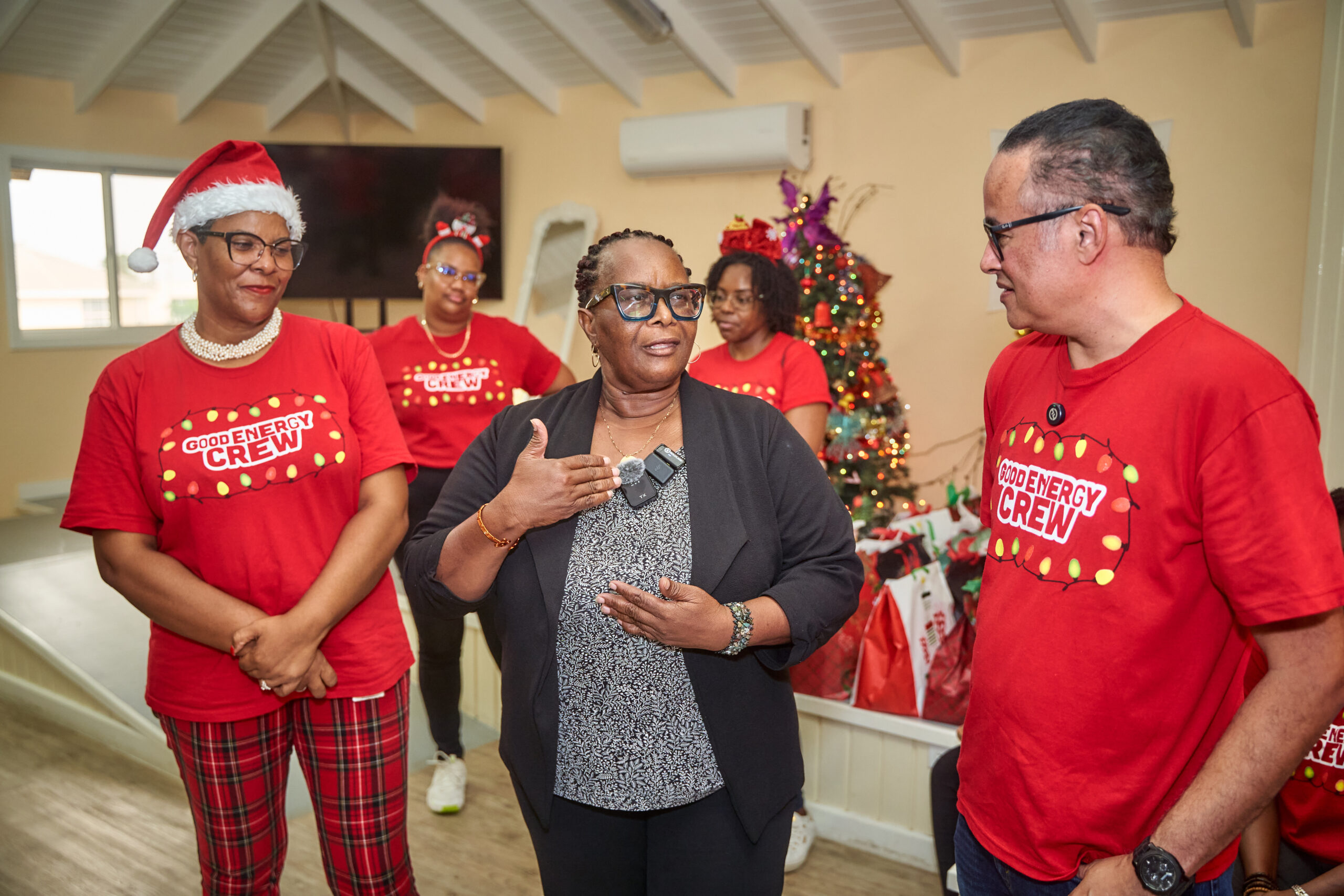
    In a heartwarming display of corporate social responsibility, the Barbados Light and Power Company delivered holiday joy to Vauxhall Senior Citizens Village in Christ Church this Thursday. The company’s annual ‘Brighten Your Christmas with Good Energy’ initiative brought musical entertainment and gift deliveries to 36 residents of the long-term care facility, many of whom are low-income seniors dependent on institutional support.

    The festive event featured an energetic caroling performance led by renowned artist Geoffrey ‘Biggie Irie’ Cordle, accompanied by pannist Terry ‘Mexican’ Arthur. Their musical interlude created an atmosphere of celebration and community connection for residents who often feel overlooked during holiday seasons.

    Teresa Hamilton, Acting Assistant Director of the National Assistance Board, expressed profound gratitude for the thoughtful timing of the visit. “While children and youth typically receive most seasonal attention,” Hamilton noted, “this gesture acknowledges our elderly population who laid the foundation for our current society. Such kindness creates meaningful impact for seniors who cherish community interactions.”

    Roger Blackman, Managing Director of Barbados Light and Power, emphasized that the initiative reflects the company’s broader commitment to service extending beyond electricity provision. “Our teams work year-round to deliver secure, reliable service,” Blackman stated. “This outreach represents our ongoing dedication to supporting programs that foster care, kindness, and human connections during the holiday season.”

    The corporate outreach program demonstrates how utility companies can play vital roles in addressing social isolation among elderly populations while promoting inclusive community engagement during significant cultural celebrations.