标签: Barbados

巴巴多斯

  • Police begin destruction of tonnes of seized narcotics

    Police begin destruction of tonnes of seized narcotics

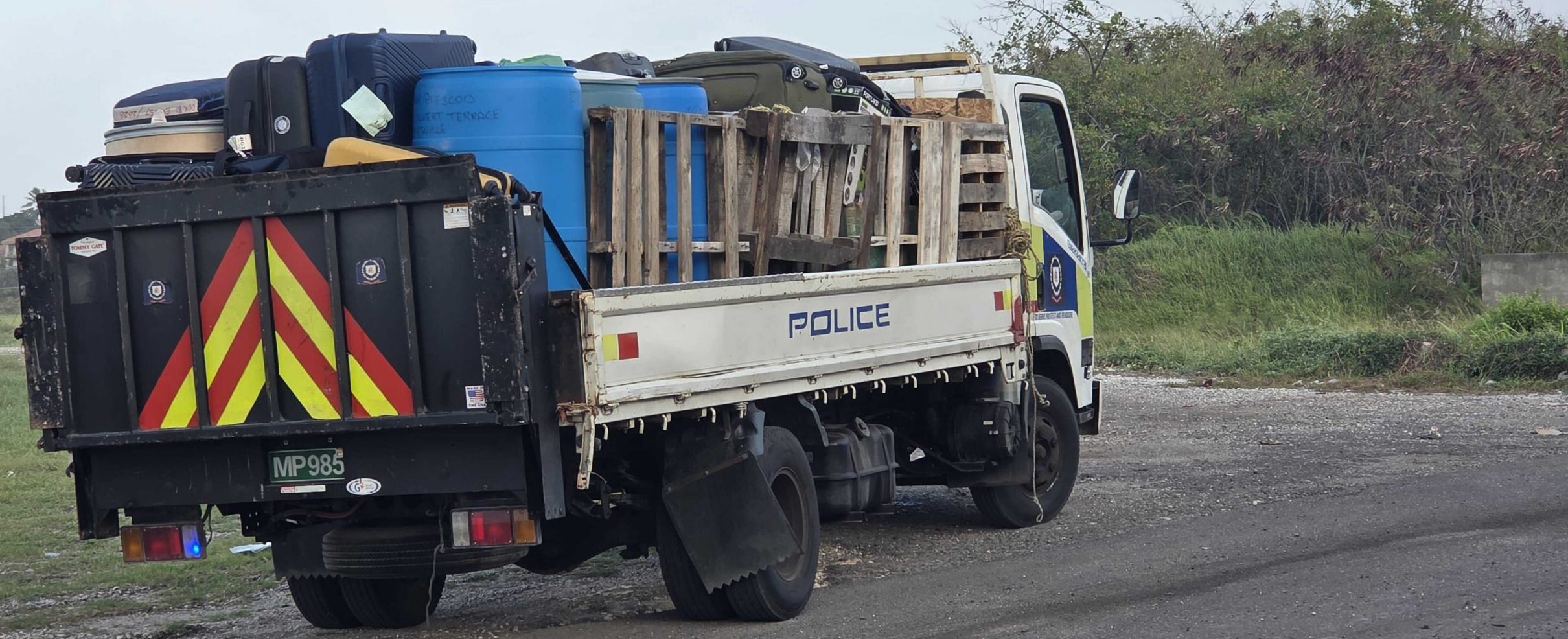
    Barbados law enforcement has launched the Caribbean nation’s largest single drug disposal operation of 2024, with teams working through the end of the week to incinerate nearly 3.5 tons of seized narcotics worth an estimated $56 million on the black market.

    The operation kicked off early Friday morning, marking a major milestone for months of coordinated investigative and interdiction work across Barbados’ security agencies. According to Barbados Police Service spokesperson PC Damian Farmer, the haul set for destruction includes 3,490 kilograms of a range of illegal substances, encompassing cannabis, cocaine, and multiple potent opioids. All drugs included in the disposal have already been processed through the national court system and formally adjudicated as contraband.

    The massive stockpile of illicit drugs was accumulated through a range of law enforcement actions over recent months. Officials confirmed that seizures came from multiple sources: proactive undercover investigations into local drug trafficking networks, routine patrols and inspections along Barbados’ maritime borders and ports of entry, and targeted interdiction operations targeting smuggling rings operating in the region.

    To guarantee full transparency, strict accountability, and public safety throughout the high-stakes disposal process, multiple stakeholder agencies have been brought in to oversee every step of the operation. Senior Superintendent Derek Bobb, a top leader in the Barbados Police Service, leads the oversight team, which includes representatives from the Barbados Defense Force and forensic specialists from the national government forensics laboratory.

    Forensic experts have been tasked with independently verifying the identity and quantity of all substances before they are destroyed, a step designed to eliminate any discrepancy in the official record of the operation. The Barbados Defense Force has also deployed armed personnel to provide continuous security for the disposal site and the transport of drug batches, preventing any diversion of contraband during the process.

    Unlike small-scale disposal operations held in previous years, this multi-day exercise is the first large-scale effort of its kind in 2024, and is expected to be the opening installment of a series of planned drug destruction initiatives. Authorities stressed that large-scale permanent disposal operations serve a critical public safety purpose: removing lethal illicit substances from communities entirely, and eliminating any risk that seized contraband could be reintroduced into illegal circulation on Barbados’ streets.

  • Trust is the trade union’s currency

    Trust is the trade union’s currency

    For decades, trade unions have been anchored on a foundational pillar that rarely receives mainstream attention but defines their entire ability to deliver for workers: trust. This intangible bond starts with a core expectation from rank-and-file members: that their elected leadership will prioritize their needs, communicate honestly, and deliver tangible outcomes that improve working conditions. Beyond the member-leader dynamic, this web of trust extends outward to connect unions, their membership bases, and company management, creating the productive working relationship that underpins all successful labor organizing work. When trust is intact, collective bargaining proceeds with open dialogue, workplace conflicts are resolved efficiently, and both the workforce and the employer benefit from long-term operational stability. A stable labor environment, in turn, supports consistent production, higher employee retention, and reduced operational disruption for businesses of all sizes.

    This critical bond of trust does not form by accident; it depends on consistent adherence to a set of core guiding principles, starting with unwavering good faith. Every action taken by union leadership must align with the best interests of members and the broader organization, with no room even for the perception of self-serving decision-making. It must be clear to all stakeholders that personal gain never drives policy or operational choices within the union.

    Collaboration, rather than adversarial confrontation, is widely recognized as the most fundamental pillar of sustained trust. When leaders prioritize conflict over partnership, they erode confidence far faster than almost any other misstep. Undermining cross-stakeholder relationships breeds confusion about inconsistent actions, erodes public and member confidence, and ultimately creates a damaging irony: the very interests and wellbeing of union members that leaders are meant to protect get pushed to the bottom of the priority list.

    Alongside intentional collaboration, authenticity and full transparency are non-negotiable to prevent trust from breaking down. For productive relationships between unions and employer management, union leaders must be included in problem-solving and decision-making processes from the earliest stages, not called on only to rubber-stamp choices that have already been finalized without their input. Building and retaining trust between all parties requires consistent, transparent communication, even when sharing difficult news, uniform application of workplace policies across all employee groups, and a shared commitment to collective goals that benefit both workers and the business.

    This approach is particularly critical for external relationships between unions and employers, including government agencies that set labor policy. Framing union representatives as collaborative partners rather than inherent adversaries has been repeatedly shown to be the most effective strategy to prevent costly, disruptive labor disputes from emerging in the first place.

    Existing industrial relations research has identified six core actionable practices that boost trust across all labor organizations: consistency in actions, proven competence in delivering results, open ongoing communication, empathetic recognition of worker concerns, full transparency around decision-making, and clear accountability for missteps. When union and management leaders master these six behaviors, they create the conditions for cross-team relationships that run smoothly, foster open communication, and overcome shared challenges through collective problem-solving.

    These core principles also align closely with the widely adopted five Cs of trust, a popular leadership and relationship framework that outlines the core traits of a trustworthy stakeholder. The five Cs break down as: competence, meaning the ability to deliver on promised outcomes; consistency, meaning predictable, reliable actions that stakeholders can count on; care, meaning demonstrating genuine empathy for the needs of all parties; candour, meaning a commitment to honest, straightforward communication at all times; and character, meaning unwavering personal and institutional integrity. This analysis comes from Dennis De Peiza, a veteran labor and employment relations consultant at Regional Management Services Inc.

  • Petition prompts phased rollout of revised curriculum, assessment framework

    Petition prompts phased rollout of revised curriculum, assessment framework

    In a significant shift to Barbados’ education reform agenda, Minister of Education Transformation Chad Blackman has announced a multi-year delay to the planned rollout of continuous assessment for secondary school placement, responding to widespread concerns raised by parents, teachers and education stakeholders.

    The policy change was originally designed to phase out the decades-old Common Entrance Examination (also known as the 11-Plus), a high-stakes, single-sitting test that has long determined secondary school placement for Barbadian students. When first unveiled earlier this year, the government planned to make the cohort of students entering Class Three this academic year the first group to transition to the new model, which would have replaced the one-shot exam with a two-year continuous assessment framework built into primary schooling.

    But that original timeline hit a major roadblock after more than 400 parents and guardians signed a formal petition calling for a more gradual, phased implementation. The parent group argued that starting the new assessment model with incoming Class Three students would leave educators, schools and the ministry itself without enough time to update curricula, deliver required teacher training, refine operational processes and put necessary support systems in place before assessment results carried high stakes for secondary placement. Instead, the petitioners urged the government to launch the new framework with students entering Class One, giving all parties sufficient preparation time.

    In a formal ministerial statement released Friday, Blackman confirmed the ministry had heeded those calls and reset the transition timeline. While continuous assessment practices will be integrated into primary school teaching starting this academic year, the results will not be used to determine secondary school placement for the foreseeable future. The new placement model will not launch until the 2026 academic year at the earliest, when continuous assessment will first be embedded into primary-level learning as a tool to track student progress, identify learning gaps early, deliver targeted support, and build individual learning profiles that follow students through their educational journey.

    Under the revised pathway, the first cohort to move to secondary school via the new continuous assessment model will be students entering Class Two this September, but only if all pre-implementation conditions are fully met by 2029–2030, when that cohort would transition to secondary school. This adjusted timeline gives that group three full years of preparation under the new curriculum framework. Students entering Class One this year will get four years of preparation, while students entering Infants B and Infants A will get five and six years of preparation respectively, ensuring no cohort enters the new model without adequate time to adapt.

    Blackman outlined a clear set of non-negotiable requirements that must be satisfied before the new model goes live for placement purposes. These include comprehensive, ongoing training and professional support for all teachers, clear, consistent and widely understood assessment standards across all primary schools, robust moderation processes to guarantee fairness and consistency in grading, reliable data and information systems to manage assessment records, fully operational quality assurance mechanisms, and sufficient capacity and resources for all schools to implement the new approach successfully. Blackman also emphasized that the ministry will maintain transparent, timely communication with parents, teachers and stakeholders throughout the transition, and will only launch the model once it can prove the new system is fair, equitable and does not disadvantage any student or demographic group.

    For current students further along in their primary education, the existing system will remain in place. Students entering Class Four this September, who are scheduled to sit the Barbados Secondary School Entrance Examination (BSSEE) in May 2027, will still have their secondary placement determined by the traditional Common Entrance Exam. Blackman added that the government will also strengthen the existing placement system during the transition period to make it fairer and more inclusive, continuing to allocate secondary school places based on established criteria of academic performance and residential location to provide certainty, consistency and fairness for families.

    Beyond placement reform, the government is also working to upgrade overall secondary education quality across the country. Blackman reaffirmed the government’s commitment to ensuring every secondary school is a center of educational excellence, where all students receive the challenge, support and inspiration needed to reach their full potential.

    Longer-term plans for national assessment will also expand the scope of standardized testing beyond the current focus on English and Mathematics. Over time, science, Social Studies and citizenship will be added to the national assessment framework, creating a broader evaluation that captures the full range of knowledge, skills and competencies that primary school students are expected to develop. Blackman noted that continuous assessment data will play a key role in this expanded system, helping teachers and schools identify and address student learning needs early before gaps widen and impact long-term progress.

  • Concern over alleged circus move to Garrison

    Concern over alleged circus move to Garrison

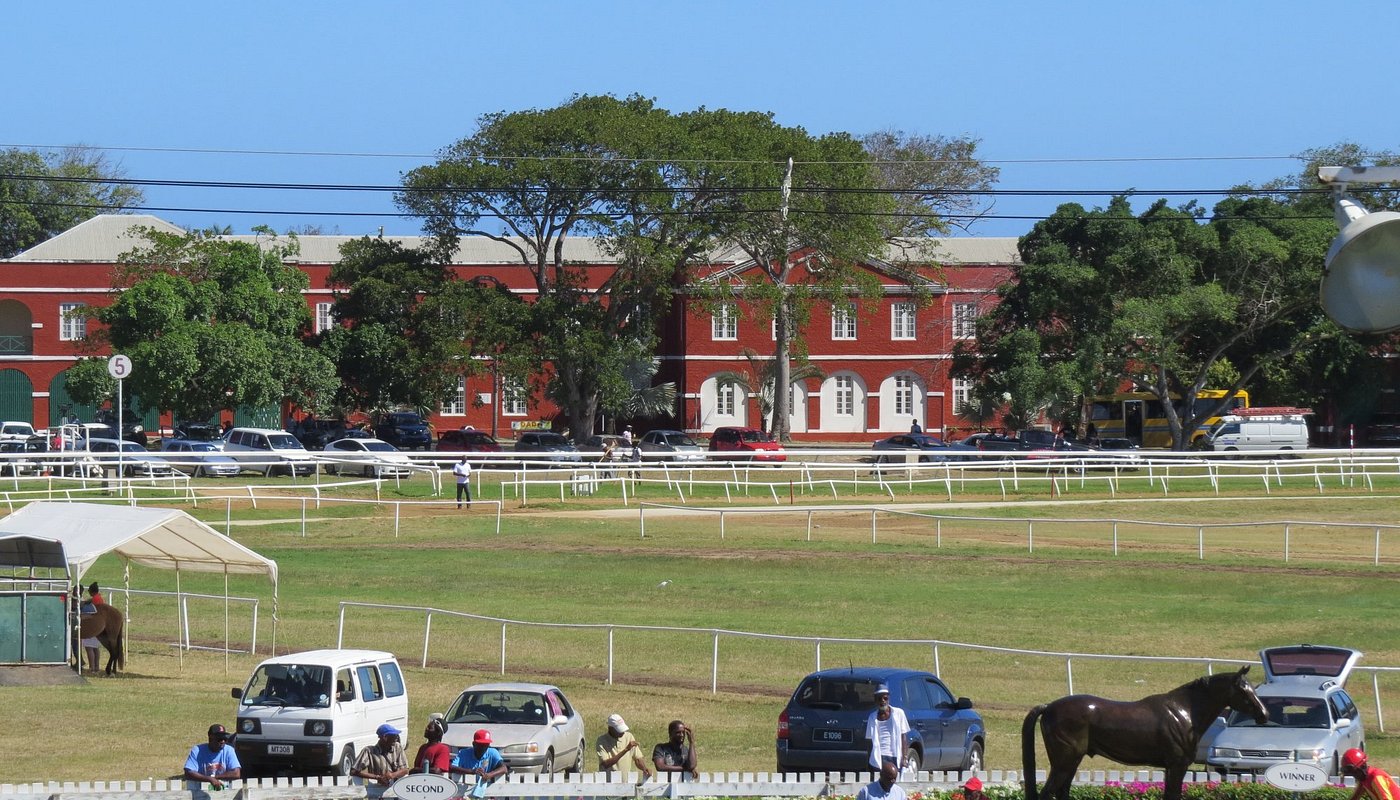
    A controversial proposal to move the Mexico-based Suarez Brothers Circus to Barbados’ Garrison Savannah has ignited fierce pushback from local horse racing enthusiasts and rugby stakeholders, after the traveling performance was forced to shutter its initial location over public health violations.

    The circus, which has faced a string of scheduling setbacks since arriving in Barbados, first set up its operations at the Norman Niles Roundabout in the Belle district along the ABC Highway. Barely one public performance had been held when public health officials stepped in and ordered an immediate shutdown over unresolved public health concerns, forcing organizers to scramble for an alternative site across the island.

    Internal correspondence reviewed by Barbados TODAY revealed that Garrison Savannah, a multi-use public space that hosts regular horse racing meets and rugby matches, has emerged as the top candidate for the circus’s new home. What makes the proposal particularly contentious is that it would force the cancellation of two already scheduled horse racing days: August 22 and September 5. The Barbados Turf Club, the governing body that oversees racing at the site, has remained tight-lipped on the final outcome. When reached for comment by Barbados TODAY on Friday, CEO Rosette Pearce declined to confirm whether the plan would move forward, leaving both event organizers and community members in limbo.

    While the official stance from racing authorities remains uncertain, fans and industry analysts have already launched sharp criticism of the proposal, calling the potential venue swap unfathomable. Many have highlighted the serious risk of permanent damage to Garrison Savannah’s specialized infrastructure. One long-time racing fan noted that the site’s new overhead lighting system relies on sub-surface cabling that could easily be cut or damaged during the transport and construction of large circus tents and heavy equipment, a hazard that makes the plan completely unacceptable.

    Another seasoned racing observer warned that the circus’s heavy gear and crew activity could cause lasting harm to the site’s carefully maintained race track and infield. He explained that all the materials and equipment needed for the circus would have to cross the track’s jump section, a low-lying turf area that is already prone to flooding. Even minor compaction or disruption to the ground here could ruin the track for future racing events for months to come.

    The proposal also directly encroaches on space that the Barbados Rugby Football Union recently invested heavily to upgrade, adding new irrigation systems and lighting to the rugby playing surface. Rugby community members have been even more scathing in their criticism, with one fan dismissing the entire idea as a “dumb idea.” They pointed out that the union poured extensive time, labor, and financial resources into completely revamping the pitch, and even during large neutral events like the Gold Cup, officials have to erect protective barriers around the pitch to prevent unauthorized vehicles from damaging the turf. Hosting a large circus on the site is simply not a practical use of the upgraded space, they argued.

    Beyond infrastructure damage, community members have raised alarms over the expected massive traffic congestion that a circus at Garrison Savannah would create. The site already sees heavy gridlock during regular racing days, and a popular circus would draw multiple times the typical crowd, worsening what is already a chronic issue in the area.

    Many community commentators have questioned why organizers did not evaluate alternative sites across the island that would be far better suited for a large traveling circus. Veteran racing journalist and analyst Martin Parris argued that locations like Weymouth, Weymouth “B”, or Queen’s Park would be far more appropriate. He noted that the annual Agrofest agricultural fair, a major event that draws large crowds and requires substantial space, sets up in these locations every year with minimal infrastructure damage or logistical issues, and there is ample surplus parking available near the Queen Elizabeth Hospital pasture to accommodate guests. Even fans who say they enjoy the circus agree that organizers need to look elsewhere for a venue that does not put existing community infrastructure and scheduled events at risk.

  • Boys make reading strides despite attendance woes

    Boys make reading strides despite attendance woes

    As Babb’s Reading Clinic, a five-week summer literacy intervention focused on supporting boys’ reading skill development, wrapped up its 2024 summer session on Friday, program leaders are celebrating measurable progress for engaged participants while confronting longstanding hurdles that have undermined participation year after year.

    The program launched with 125 enrolled boys, but inconsistent attendance and competing activities dragged active participation down to just 89 students by the final week of the clinic. Despite the drop-off, Dr. Astra Babb, founder of the initiative, says she remains encouraged by the gains made by students who completed the full program.

    “Many boys have taken real strides in reading,” Babb noted. “Some are now equipped to handle higher-order comprehension questions, and a number of the boys are ready to step confidently into the classroom at their new schools this fall.”

    Built on evidence-based instructional frameworks, the clinic centers its curriculum on strengthening two core literacy pillars: word decoding proficiency and reading comprehension. The program integrates structured methodologies including phonics instruction to build understanding of letter-sound relationships, structural analysis to teach prefixes, suffixes and word morphology, and syllabication to help students break words into pronounceable segments.

    Even with these proven learning strategies in place, Babb explained that the program faced unavoidable competition from other popular summer youth activities that drove attendance down. Many parents who registered their sons ultimately did not follow through on bringing them to daily sessions, with multiple families reporting their children opted instead to attend sports-focused camps including football, cricket, and cadet training camps. Additional attrition occurred after the third week, when a number of families traveled abroad to visit relatives and did not return for the remainder of the clinic.

    Babb added that absenteeism is not the only persistent challenge the clinic faces annually. Behavioral issues and unregulated device use also create significant disruptions to learning. “We encountered boys who were disrespectful toward their teachers and quick to get into conflict with their classmates, and a good deal of our time went into disciplining and counselling,” she said. “We also noted that some boys, often the very ones who most needed to focus on reading, spent much of their free time on their phones playing games.”

    As a leading literacy expert, Babb has observed that many of the students struggling the most with reading hide their gaps by imitating peer behavior during classroom reading activities, even as they remain unable to read the text on the page. She also issued a stark warning to parents about the far-reaching developmental impacts of unregulated excessive screen time, beyond its negative effect on reading progress.

    “When children are constantly on their phones, they miss out on interacting with other children and on building essential life skills such as self-control, self-efficacy, and creativity, exercising sound judgment and problem-solving,” Babb explained. “Excessive screen time can also expose children to inappropriate adult content. We saw the consequences in the classroom: boys who tuned out from the work taking place at the time and some who became agitated when asked to put away their phones.” Babb emphasized that when used intentionally, technology is a valuable learning tool, but unmanaged device access can cause serious harm to children’s cognitive and social development.

    To address these risks, Babb is urging parents to set clear, consistent boundaries around children’s screen time, particularly as students prepare to return to in-person classes for the new school year. She also encouraged caregivers to maintain ongoing open conversations with their children about device use, and to continue prioritizing shared reading at home to reinforce the skills built at the clinic.

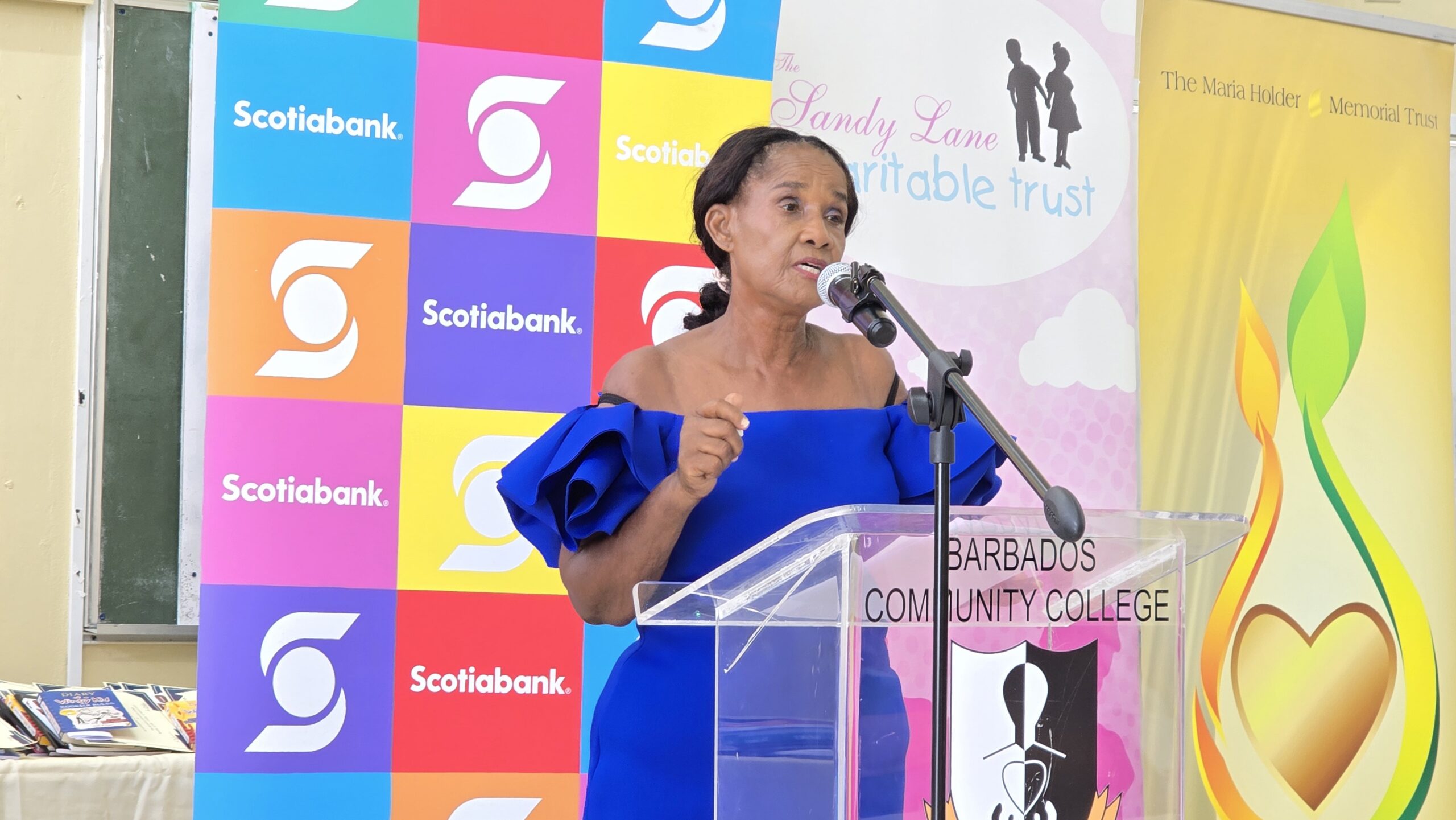
    Looking ahead, the clinic will launch its next 12-week term on Saturday, September 19, hosted at the Barbados Community College. Unlike the boys-only summer session, the fall term will be open to both boys and girls, running every Saturday morning from 10 a.m. to noon.

  • Career thief jailed for three months

    Career thief jailed for three months

    A 55-year-old homeless man has been handed a three-month prison sentence after publicly confessing to stealing multiple pairs of slippers from a retail display outside a Bridgetown store earlier this month. Keith Fitzgerald Anderson Batson, who lists no permanent address, entered a guilty plea before the No. 1 District ‘A’ Magistrates’ Court on Thursday. He was charged with taking three pairs of Crocs and an additional pair of slippers, owned by store proprietor Simmon King, with the total value of the stolen items amounting to $60, stolen on August 13.

    Court proceedings revealed that King’s establishment, which sells apparel and footwear, keeps a selection of merchandise displayed on an outdoor table near the store’s entrance for customer browsing. Like most modern retail outlets, the location is covered by closed-circuit television monitoring, a security measure that proved critical in documenting the incident. A member of the public passing the store spotted Batson taking items from the display and alerted the store’s security team immediately.

    The store manager pulled up the security camera footage, which clearly captured Batson removing the footwear from the display table before making a quick escape down Swan Street. Following this confirmation, the manager filed an official report with local law enforcement. Authorities were quickly able to locate Batson and take him into custody shortly after the theft.

    During his court appearance, Batson offered an unusual explanation for his actions, telling the magistrate: “The situation with the slippers, I thought they were abandoned. I thought they were throwing them away.”

    Acting Chief Magistrate Douglas Frederick drew attention to Batson’s extensive criminal record, which includes 23 prior convictions, the vast majority of which are also for theft offenses. Addressing the defendant directly, Frederick noted: “You are known for stealing. You know you cannot walk around and be picking up people things. You are a town man, and you know how things are set up in town with regards to displays. So, you knew you were stealing. The problem is what to do with you now.”

    Batson responded to the magistrate’s comments by stating: “Jail ain’t for me, I do not like being incarcerated.”

    In handing down the sentence, Frederick acknowledged two mitigating factors: all stolen footwear was returned to the store, and Batson entered a guilty plea at the earliest possible opportunity in the proceedings. As a result, the magistrate imposed the shortest custodial sentence he was able to issue: three months behind bars. Frederick explained: “The people have gotten back their slippers, you pleaded guilty at the earliest opportunity. I am giving you the minimum time I can give you.”

  • NCSA warns over export of drug precursors

    NCSA warns over export of drug precursors

    A senior Barbadian anti-drug official has issued a stark public warning, highlighting that criminal networks trafficking unregulated precursor drugs out of the country have created a grave, growing threat to regional and hemispheric security. Troy Wickham, deputy manager of Barbados’ National Council on Substance Abuse (NCSA), outlined the escalating risks during closing remarks Friday at a specialized law enforcement training session hosted by the Regional Security System (RSS) at its Paragon, Christ Church training institute.

    Wickham emphasized that unregulated precursor chemicals have emerged as one of the most pressing drug challenges across the Western Hemisphere, singling out codeine linctus — a base ingredient used to manufacture the highly addictive stimulant methamphetamine, which is tightly controlled across North America. Disturbingly, he confirmed that despite its dangerous role in illicit drug production, codeine linctus remains easily accessible to the public in Barbados, with consumers able to purchase the substance over the counter at everyday retail locations including local supermarkets and petrol stations.

    In response to this gap in regulation, Wickham confirmed NCSA has held active discussions with the Barbados Drug Service, which has already begun moving to pull all unsold stock of codeine linctus from retail shelves across the country. Beyond the immediate issue of precursor chemicals, Wickham warned that the broader landscape of drug trafficking, gang activity and transnational organized crime is evolving at a rapid pace, forcing law enforcement agencies across the region to constantly update their tactics and training to keep pace.

    Gone are the days when illicit drug and firearms activity can be tackled through traditional enforcement methods alone, Wickham argued. Modern criminal networks have grown far more sophisticated in their operations, continually shifting trafficking routes to avoid detection, introducing new unregulated dangerous substances to global markets, and relying increasingly on illegal firearms to carry out violent acts, intimidate communities and prop up other criminal enterprises.

    One of the fastest growing unaddressed risks, Wickham noted, is the proliferation of new psychoactive substances — synthetic designer drugs that often fall outside existing controlled substance legislation because their chemical makeup is unfamiliar to regulators and law enforcement. Many of these compounds carry severe public health risks despite their unregulated status, he added.

    To counter this evolving threat, Wickham told attendees of the RSS training course that frontline investigators must prioritize building their capacity to identify these emerging substances, map their spread, understand their unique chemical and behavioral characteristics, and properly document evidence related to their trafficking. He stressed that visual identification alone is never sufficient to confirm a controlled substance, noting that rigorous scientific testing, proper evidence handling, accurate forensic analysis and detailed documentation are non-negotiable to building court cases that can stand up to legal scrutiny.

  • Pro Shottas in pole position for BFA Division One title

    Pro Shottas in pole position for BFA Division One title

    Barbadian football side Pro Shottas have booked their place in the Barbados Football Association’s top-tier Premier League for the upcoming season, and remain firmly in the driver’s seat to claim the Division One crown as the regular season enters its final stretch. The club’s promotion was officially secured ahead of their 4-1 victory over Technique this past Wednesday, a result that preserved their position at the summit of the Division One league table with just two fixtures left to play.

    In an interview after the win, Pro Shottas manager Paul Croney described the promotion as a just reward for the relentless effort his squad has put in since pre-season training kicked off last November. “It’s just an incredible feeling. The lads have put in shift after shift in training ever since last November, so every single member of this team deserves full credit for what we’ve achieved,” Croney said. He added that the team’s success this season can be traced to two key factors: unwavering consistency in training, and the impact of three high-impact new signings that strengthened the squad’s spine.

    Croney was quick to highlight the transformative influence of centre back Rommel Burgess, one of the club’s key off-season additions. A experienced veteran with both senior national team caps and experience playing club football overseas, Burgess has emerged as a locker room leader and a defensive anchor for Pro Shottas. “We don’t want to overlook the work every player has put in, but this group of new signings has made an enormous difference to our season. Rommel has been phenomenal – he works as hard as anyone and lifts up all the players around him,” Croney explained.

    The club also boosted their attacking firepower by bringing in forwards Xavier Webster and Teondre Hinkson ahead of the campaign, a move that has paid major dividends. The pair now rank among the top goal scorers in Division One: Hinkson has found the back of the net 13 times, while Webster has notched 12 goals for the league leaders.

    Heading into the final two matches, Pro Shottas hold a narrow two-point lead at the top of the standings with 52 points, compared to 50 points for second-placed Parish Land. Both Empire and Pinelands are still in contention for the title as well, as the two sides can reach the 50-point mark if they pick up maximum points from their remaining fixtures, leaving the title race wide open heading into the final week.

    Croney’s side will face Barbados Soccer Academy in their penultimate match before closing out the regular season against Empire, and the manager said his squad is fully prepared to chase the title. “We’re not going into these games taking anything for granted. We know Empire will come out fighting just like they did in the first round, and our guys are ready to compete hard to get the results we need,” he said.

    Once the Division One season concludes, Pro Shottas will shift their focus to the Prime Minister’s Cup, a prestigious knockout competition set to kick off in September that awards a $100,000 grand prize to the tournament winner. Croney is hopeful his team can build on their current momentum to deliver a better performance than they managed in last year’s edition of the cup, where they were eliminated in the first round. “Last year’s result wasn’t what we wanted at all – we didn’t make it past the first stage. But with the momentum and confidence this group has right now, I fully expect we’ll do great things in this year’s competition,” Croney added.

  • Flash-Flood threat as Tropical Wave nears

    Flash-Flood threat as Tropical Wave nears

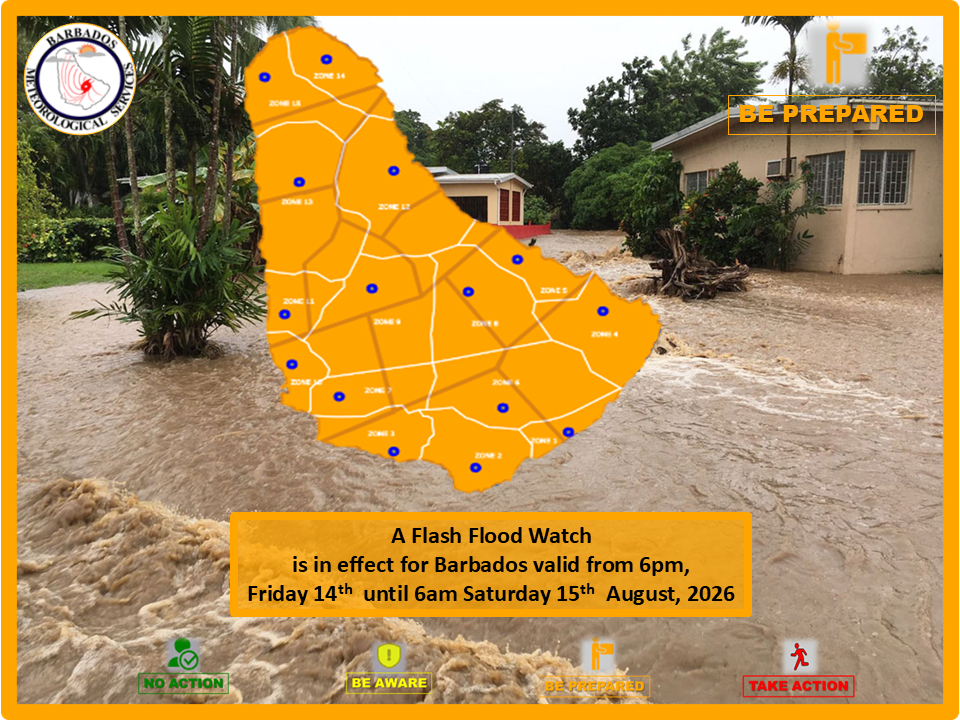
    Barbados has activated a Flash-Flood Watch effective from 6 p.m. local time through 6 a.m. August 15, as a powerful tropical wave approaches the island nation, forecast to bring unstable weather marked by moderate to intense downpours that raise the risk of flash flooding across vulnerable areas.

    Officials from the Barbados Meteorological Services (BMS) confirmed that accumulated rainfall across multiple regions of the island is projected to reach between 25 and 50 millimeters as the system moves across the territory. Forecasters warn that the sudden heavy precipitation could trigger fast-onset flooding, with a range of potential disruptions to daily life and infrastructure. Low-lying zones are identified as the most at-risk areas, where floodwaters are likely to accumulate on roadways and agricultural lands. Rising water levels in ponds, streams and other natural water channels are also expected, while excess runoff may overwhelm local drainage networks and encroach on residential and commercial properties.

    In addition to flooding risks, the unstable weather will bring gusty winds and embedded thunderstorms across the island. Commuters are warned to prepare for potential travel delays and unplanned road closures that require temporary diversions around affected areas. On exposed, cleared land, the heavy rainfall also raises the possibility of soil erosion that can damage local ecosystems and infrastructure.

    BMS officials note that the current watch may be updated or ended earlier than the scheduled 6 a.m. expiration if weather conditions improve rapidly. They also added that if the threat intensifies, the alert level will be upgraded to a full flash flood warning to prompt more urgent protective action from residents and local authorities.

  • U14s head to DR for CFU Challenge Series

    U14s head to DR for CFU Challenge Series

    A new chapter of youth regional football competition kicked off this weekend for Barbados, as the nation’s under-14 national squad left their home island Friday bound for the Dominican Republic, where they will compete in the 2024 Caribbean Football Union (CFU) U-14 Challenge Series.

    Drawn into the top-tier Tier 1 competition’s Group A, the young Barbadian side, nicknamed the Young Tridents, will face a tough test against three regional opponents across the group stage. Their first match of the tournament is scheduled for Monday, when they will take on Bermuda to open their campaign. Following the opening fixture, they will go head-to-head with host nation Dominican Republic and Martinique to round out group play.

    Team officials have confirmed the full 18-player roster for the series, with Tajheri Watkins selected to serve as team captain. Joining Watkins on the squad are Nalani Gulstone, Terrique Jordan, Andre Spencer, Ratévion Marques, Amar Kirton-Phillips, Keshon Atkins, Lashaun Small, Zion Greene, Jayden Sealy, Malachi Sargeant, Brent Lashley, Dylan Headley, Demario Hewitt, Roshaé Edwards, Zavier Barker, Shaeshawn Hinkson and Isaiah St Hill.

    The delegation is led by an experienced support staff to guide the young athletes through the tournament. Dale Rudder serves as team manager, with Kerry Trotman taking on the role of head coach. Morrison Taylor has been appointed assistant coach, while Orlando Mapp will handle equipment management duties and Khadijah Williams will serve as the team’s on-site medic for the duration of the competition. (Photo Credit: Barbados Football Association)