标签: Barbados

巴巴多斯

  • Global partners rally behind RSS to confront threats

    Global partners rally behind RSS to confront threats

    Against a backdrop of growing transnational security challenges across the Caribbean, international partners have announced new commitments of funding, resources and strategic backing to the Barbados-headquartered Regional Security System (RSS), multiple official sources confirmed to Barbados TODAY following the bloc’s recent Council of Ministers’ Meeting in Saint Lucia.

    The gathering, which Attorney General Wilfred Abrahams characterized as highly productive, brought together regional leaders and global stakeholders to align on priorities for countering the rising tide of cross-border criminal activity. Attendees hammered out a series of binding agreements and strategic initiatives designed to shore up the region’s collective security capacity.

    At the top of the meeting’s agenda was a mandate for coordinated, collective action across all RSS member states, centered on enhanced cross-border collaboration, aligned operational strategies, and real-time intelligence sharing to disrupt transnational criminal networks. A second key priority formalized standards for the third-country Refugee/Deportee Relocation Protocol, which operates under bilateral agreements between the United States and individual Caribbean member states. The framework requires full, unredacted information exchange between all parties, and the U.S. Chargé d’Affaires presented a complete briefing on outstanding questions and protocol details to the ministerial council, according to the official meeting outcome document obtained by Barbados TODAY.

    Ministers also approved a comprehensive review of national legislative frameworks across all member states, with the goal of updating and standardizing anti-gang legislation and strengthening legal tools to counter transnational organized crime. Separately, the CARICOM Implementation Agency for Crime and Security (IMPACS) updated attendees on a new centralized gang database being developed by the Civil Gang Injunctions Unit (CGIU), and issued a formal call for member states to contribute local data to complete the initiative.

    During open discussion, representatives from St. Vincent and the Grenadines raised awareness of significant unintended negative consequences stemming from kinetic strikes on commercial and civilian vessels operating in the region’s shared maritime domain, prompting further deliberation on alternative counter-maritime crime strategies.

    In his executive report to the council, the RSS Executive Director confirmed that the ratification process for the Treaty of San José has been fully completed at RSS headquarters. He also outlined ongoing infrastructure upgrades: modernization work for Maritime Operations Centres across all member states will move forward as planned, funded through a development project administered by Global Affairs Canada. Additionally, a new policy provision has been approved to reallocate funds seized from criminal operations to directly support frontline crime-fighting initiatives across the region.

    The meeting also advanced the RSS’s 2026 strategic action plan, which lays out a clear roadmap for expanding security cooperation. Key priorities outlined in the plan include: strengthening regional data collection and intelligence sharing frameworks; formalizing a strategic partnership with the Caribbean Electric Utility Services Corporation (CARILEC) via a memorandum of understanding set for signing in May 2025; establishing formal partnership agreements with Belize and the British Virgin Islands to boost regional capacity for financial crime investigations and illicit asset recovery; deepening collaboration with European Union member states on cross-border criminal investigations through alignment with the European Judicial Network. The RSS also announced plans to submit an application for observer status on the Budapest Cybercrime Convention Committee, as the region works to address rising digital criminal threats.

    In a final decision addressing shifting regional drug policy trends — as more Caribbean jurisdictions move to legalize cannabis for medical or recreational use — the Council of Ministers enacted a strict zero-tolerance policy for illicit drug use among all active law enforcement officers across member states. A formal policy paper outlining implementation guidelines will be reviewed and approved by senior police and military leadership in the coming months.

  • Bajan men struggle at Table Tennis Championships

    Bajan men struggle at Table Tennis Championships

    The 2024 ITTF-Americas Central American & Caribbean Championships kicked off in the Dominican Republic’s capital of Santo Domingo on Thursday, bringing together top table tennis talent from across the region to compete for continental honors. Through the first two days of men’s team play, one team has yet to claim a victory: Barbados.

    In their opening round-robin matchup on tournament day one, the Barbadian side suffered a lopsided 3-0 sweep at the hands of Puerto Rico. The Puerto Rican squad dominated every set across all three singles matches, with Steven Moreno delivering a straight-sets win over Barbados’ Tyrese Knight (11-6, 11-6, 11-6), Angel Naranjo claiming an equally decisive victory against Mark Dowell (11-3, 11-5, 11-3), and Enrique Rios closing out the sweep with a straight-sets win over Tre Riley (11-7, 11-10, 11-5).

    Looking to bounce back in their second group match on Friday, Barbados showed significant improvement on the court, but still fell just short of their first win, dropping another 3-0 decision to Costa Rica. While the final score mirrored their opening day result, the matchups were far more competitive. Costa Rica’s Sebastien Alviles was pushed to a full five-set thriller before he secured a win over Dowell (9-11, 11-6, 7-11, 11-3, 11-6). Jeison Martinez had to come from behind after dropping the opening set to defeat Knight (5-11, 11-9, 11-9, 14-12), and Alejandro Montoya also dropped a set before locking in a four-set win over Riley (13-11, 6-11, 11-9, 11-9) to seal the sweep for Costa Rica.

    Barbados was not the only Caribbean side struggling in the early stages of the tournament, with other English-speaking Caribbean teams also facing tough results against higher-ranked regional competitors. Cuba claimed a narrow 3-2 win over St. Lucia in their first matchup before following that up with a 3-0 sweep of the same side in a second contest. Mexico shut out Guyana 3-0, Guatemala earned a 3-0 win against St. Vincent and the Grenadines, and the host Dominican Republic delivered a 3-0 sweep of Jamaica. Puerto Rico notched another 3-0 victory against Trinidad and Tobago to round out early results.

    Among the struggling Caribbean nations, Jamaica was able to rebound in a later match on Friday, picking up its first win of the tournament with a 3-1 victory over St. Lucia to keep its hopes of advancing out of the group stage alive.

  • Empire eyeing BFA Premier League return this season

    Empire eyeing BFA Premier League return this season

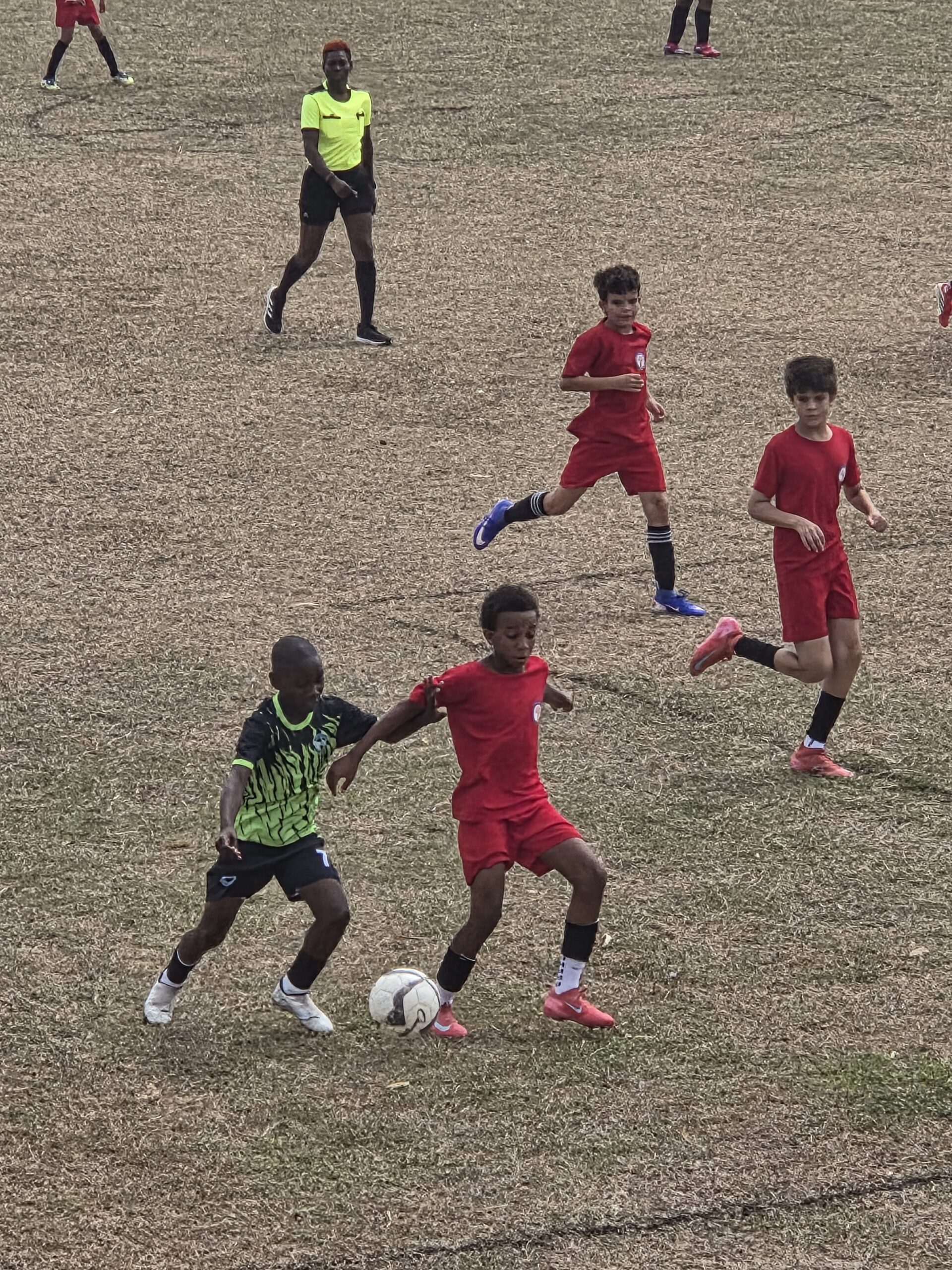
    For Empire Football Club, the 2024 Barbados Football Association Division One campaign is far more than just a series of matches — it is a deliberate push to return to the top flight of Barbadian football. After a blistering opening run of results, the Bank Hall-based side has climbed to the summit of the division’s points table, putting down an early marker as one of the competition’s title favorites. Their most recent outing on Wednesday served as a perfect demonstration of their current form, as Empire delivered a dominant 5-0 thrashing of Barbados Soccer Academy to extend their lead at the top.

    In an interview with local outlet Barbados TODAY following the lopsided win, Empire manager Captain Al Walcott broke down the factors behind the club’s flying start to the season, crediting consistent preparation and intentional off-season recruitment for the team’s early success. “The real secret to our results right now is the consistency our players bring to every training session,” Walcott explained. “We’ve worked hard to build a structured, systematic style of play that we can adapt no matter what conditions or opposition we face on match day.”

    The club’s off-season moves were specifically targeted at fixing a key problem that derailed their promotion push 12 months prior: a lack of cutting edge in front of goal. After finishing the previous campaign with too few goals to challenge for the top two promotion spots, the front office moved aggressively to add attacking talent to the roster, and those changes are already showing results. “We knew our finishing was holding us back last season, so we went out and added new attacking options to fix that gap, and so far that investment has paid off,” Walcott said.

    The new crop of talent brings a diverse range of experience and skill to Empire’s side. Among the standout signings is Saint Vincent native Romario Denny, who has already added a new dimension to the club’s attack. Another notable addition is Arantes Lawrence, who previously featured in the Welsh Premier League and now splits his time between playing for Empire Masters and mentoring the club’s younger rising stars. Completing the new attacking group are Brazil-born Brino da Silva — a left back who regularly pushes forward to join attacks — and attacker Kevron Durrant, both of whom have contributed to the team’s improved goalscoring form.

    The depth of the current roster has created a welcome challenge for the club’s coaching staff: selecting a starting 11 and matchday substitutes for each fixture. Walcott noted that as many as 23 players attend mandatory pre-match training sessions, with multiple players competing for every starting spot. While narrowing down the matchday squad is no easy task, Walcott emphasized that having this abundance of talent is a positive problem for any ambitious club to face.

    Promotion back to the Barbados Premier League remains the team’s non-negotiable ultimate goal, a target that slipped out of reach last season despite a strong defensive performance. Last term, St Andrew Lions and Bagatelle claimed the two promotion spots, while Deacons and Silver Sands were relegated from the top flight. Walcott recalled that last season, Empire conceded far fewer goals than most of their promotion rivals, but too many drawn matches — at least six over the course of the campaign — left them short of the places they needed to move up. This season, the club is determined to correct that mistake and secure their return to the top tier of Barbadian football.

    “Promotion to the Premier League is still our number one goal,” Walcott said. “We missed out last year, but we’ve fixed the gaps in our team, and we’re going to keep working every day to make that goal a reality this time around.”

  • Evening Stars Barbados pushes for autism support and inclusion

    Evening Stars Barbados pushes for autism support and inclusion

    Across Barbados, a quiet, community-led revolution in autism care and support is gaining momentum, driven by a mother’s personal journey and a commitment to ensuring no family affected by autism navigates their challenges in isolation. At the center of this growing movement is Evening Stars Barbados (ESB), a volunteer-led nonprofit organization established in 2025 by Sonia Maloney, whose experience raising an autistic daughter inspired her to turn personal struggle into a mission of widespread change.

    In an exclusive interview with local outlet Barbados TODAY, Maloney shared that her 13-year-old daughter’s diagnosis and the subsequent challenges of navigating existing support systems revealed critical gaps that extended far beyond her own experience. After connecting with other parents of autistic children, she confirmed these systemic shortcomings were not isolated incidents, prompting her to launch an organization that could guide families through complex processes and help them avoid the obstacles she had encountered.

    The core unmet need ESB was created to address is the lack of structured support for autistic children and their families outside of standard school hours—a gap that places disproportionate strain on low-income and single-parent households. To solve this, the nonprofit has centered its work on three key priorities: direct practical support, community education, and systemic advocacy, all while partnering with established disability organizations rather than competing with them.

    Practically, ESB offers two immediate, high-impact services: after-school programming for autistic children and respite care that gives caregivers much-needed breaks to preserve their personal and financial independence. Looking ahead, Maloney has laid out an ambitious plan to expand this practical support with an innovative cooperative model that allows neurodivergent people and parents with marketable skills to sell their crafts and products through an ESB shop, helping families retain economic stability while building community.

    Education forms the second foundational pillar of the organization, with monthly workshops open to parents, educators, and community members. Maloney noted that three-quarters of past workshop attendees have been classroom teachers, revealing a clear unmet demand for training: most educators report feeling under-equipped to support autistic students and are actively seeking evidence-based guidance to create more inclusive learning environments. The next public workshop is scheduled for April 14 from 6 p.m. to 7:30 p.m. at the Black Rock Chapel of The Church of Jesus Christ of Latter-day Saints, with open registration available via the organization’s Facebook page.

    To mark Autism Awareness Month, ESB has also been conducting outreach to primary and secondary schools across the island, leading informational sessions for both parents and teachers to deepen public understanding of autism. Maloney emphasized that one of the most persistent cultural barriers to support is the stigma that leaves many autistic children invisible: many self-regulatory behaviors commonly misunderstood by the general public are simply healthy coping mechanisms for autistic people, a misconception that targeted education can correct.

    To build long-term cultural change, Maloney argues that education must start early, teaching younger generations about neurodiversity and how to support their autistic peers. On a systemic level, she is advocating for simple, inclusive changes across all Barbadian schools—not just special education facilities—including adding small sensory-friendly spaces in every classroom to give autistic students the environment they need to thrive. “Inclusion is not segregation. It is making sure every child gets what they need to be able to function,” she explained.

    While Maloney acknowledged that public awareness of autism has improved in Barbados in recent years, she stressed that widespread acceptance and comprehensive support remain out of reach for too many families. As a volunteer-driven nonprofit affiliated with the community giving network Give Back Barbados, the organization relies on ongoing support from the public, with recruitment for new volunteers open via ESB’s social media channels.

    ESB also prioritizes collaboration over competition, partnering with long-standing local groups including the Autism Association of Barbados and the Barbados Council for the Disabled to amplify existing services rather than duplicate them. At its core, the organization is built on the values of hope, dignity, and radical inclusion, with a vision of a Barbados where every autistic child is valued, fully supported, and given the space to shine. Far from waiting for systemic change to come from the top down, Maloney and the ESB community are building that future from the ground up: “We’re not waiting… we’re helping ourselves. We’re advocating for our communities,” she said.

  • ‘Moral blindness’: UK far-right pol slammed for plan to deny visas over reparations

    ‘Moral blindness’: UK far-right pol slammed for plan to deny visas over reparations

    A major diplomatic and political row has erupted after Nigel Farage, leader of Britain’s far-right Reform UK party, sparked international outrage by proposing that a future Reform UK government would block all visa applications from Caribbean and African countries that demand reparations for the transatlantic slave trade. The policy, which explicitly targets nations including Barbados and other former British Commonwealth states that have led global reparations advocacy, has drawn sharp condemnation from Barbadian officials, who have labeled Farage’s stance a demonstration of “profound moral blindness”.

    Despite holding just eight seats in the UK national parliament, Reform UK – an ultra-conservative, anti-immigration party that has gained significant traction among British voters – currently leads national opinion polls ahead of the UK general election scheduled to take place by 2029. In defending Farage’s proposal, Reform UK officials have described reparations demands as “insulting”, arguing that they erase the UK’s historical legacy as the first major global power to abolish slavery and enforce its ban across the Atlantic.

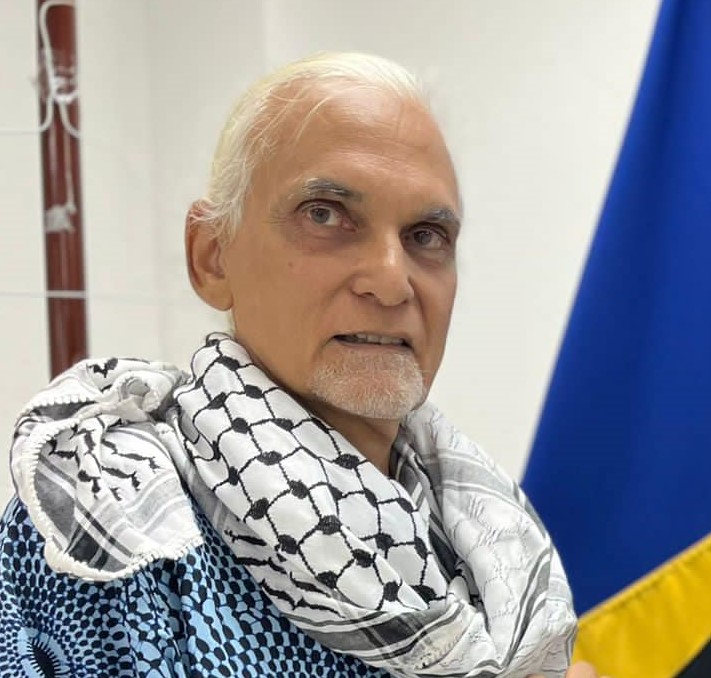
    That framing has been firmly rejected by leaders of Barbados’ reparations movement. Ambassador David Comissiong, deputy chair of the Barbados National Task Force on Reparations, told local outlet Barbados TODAY that Farage’s out-of-touch position will not weaken the reparations campaign – instead, it will galvanize advocates to double down on their efforts. The core goals of the reparations movement extend far beyond direct cash payments, Comissiong explained, and include targeted action: restoring stolen cultural artifacts and institutions, addressing ongoing public health disparities rooted in centuries of slavery, eliminating illiteracy across former enslaved nations, and facilitating equitable technology transfer.

    “Far from causing anyone to back off from the reparations issue, it is going to, in fact, motivate us, the reparations campaigners, to actually double down in telling the story, educating national public opinion, confronting people like Mr Farage with the hard facts and truth of that tragic history,” Comissiong said in the Friday interview. He added that Farage appears to misunderstand the massive scope of his own proposal: a visa ban would bar entry to the UK for nearly all citizens of English-speaking Caribbean and African nations, a policy that would carry severe negative consequences not just for affected countries, but for the UK and the entire Commonwealth of Nations.

    Comissiong argued that Farage’s stance reflects a stubborn historical strain of denial within sections of British society, one that refuses to acknowledge the grave crimes committed by the British Empire. “As an empire, they committed serious, serious crimes in dominating non-native people, enslaving, carrying out genocide of the native people, and constructing this terribly devilish and inhumane system of racialised chattel slavery, where they denied human status to a large segment of the human family,” he said. Centuries after abolition, this persistent refusal to confront the harms of slavery – harms whose intergenerational impacts endure to this day – and to humbly admit wrongdoing is exactly what qualifies Farage’s position as morally blind, he added. The only cure for this denial, Comissiong noted, is widespread public education about the true history of the transatlantic slave trade.

    Crucially, Comissiong emphasized that Farage’s position is out of step even with leading British institutions. He pointed to King Charles III’s public acknowledgment that a conversation about reparations is long overdue, as well as the Church of England’s formal admission of complicity in the crime of slavery, followed by a public apology and the launch of a dedicated reparative justice funding program. He also noted that prominent established British families with ties to the slave trade, such as the descendants of the Jacobeans and the Gladstones, have issued public apologies for their ancestors’ roles and launched their own reparative justice initiatives.

    In a separate exclusive interview with Barbados TODAY from his London office on Friday, Barbados’ High Commissioner to the UK Edmund Hinkson reaffirmed Barbados’ unwavering commitment to the reparations cause, even as he declined to comment on UK domestic political protocol. Hinkson stressed that Barbados fully endorses the United Nations resolution that formally classifies the transatlantic slave trade as the worst crime against humanity in recorded history. He also expressed regret that while the resolution passed with overwhelming support, endorsed by 152 of the UN’s 193 member states, the UK and all European Union nations that participated in the slave trade abstained from the vote.

    Hinkson also pushed back against a common misleading narrative in British media and political circles that Caribbean reparations advocates are demanding direct cash payments of between £18 trillion ($48 trillion) and £24 trillion ($65 trillion), an estimate of the value of forced labor extracted from enslaved people by British actors including commercial banks, insurance companies, the Church of England, and a majority of 19th-century British parliament. “Of course, none of the countries that were involved in this tremendous international crime have that money right now. We are not asking for that kind of money by itself … that is not at the forefront. We understand that the practicality of that money will not be paid,” he explained.

    Instead, Hinkson outlined the movement’s core priorities, starting with a full, formal apology from the British government for the country’s role in the slave trade. Critics often argue that modern Britons should not apologize for crimes committed by their ancestors, but Hinkson countered that descendants of slave owners and traders continue to reap massive economic and social benefits from their ancestors’ exploitative actions. Beyond a formal apology, the movement’s demands mirror those laid out by Comissiong: the repatriation of stolen cultural artifacts held in British museums, targeted support to address the public health crisis that stems from the intergenerational trauma of slavery – Caribbean nations have some of the highest global rates of chronic conditions including hypertension and both types of diabetes – programs to eliminate illiteracy, support for psychological rehabilitation for affected communities, equitable technology transfer, and widespread debt cancellation for former colonial nations.

  • DJ Bravo serves up new single, ‘Table’, on Santa Jamaica Riddim

    DJ Bravo serves up new single, ‘Table’, on Santa Jamaica Riddim

    For years, Dwayne “DJ Bravo” has captivated audiences as one of international cricket’s most iconic personalities, celebrated equally for his on-field brilliance and his off-field larger-than-life, entertainment-focused persona. Now, the global star is stepping into an unexpected new creative space with the release of his latest musical project, the thoughtful single “Table”, featured on the dynamic, rhythm-driven *Santa Jamaica Riddim* compilation from Digital1 Muzic.

    Unlike many of Bravo’s previous upbeat, high-energy releases, “Table” pulls the artist into a far more reflective creative lane. The track takes a playful but pointed look at the unspoken dynamics that shape modern romantic partnerships, centering its core hook around a provocative question that cuts through superficial dating culture: What are you really bringing to the table? For long-time fans who know Bravo primarily through his charismatic public persona, the track marks a deliberate departure from the entertainer’s well-known “player” image, revealing a grounded, nuanced perspective on love, loyalty, and what makes a partnership last.

    Beneath its lighthearted tone, “Table” addresses a deeper cultural truth: in an era where social media and superficial appearances often dominate how people present themselves and evaluate potential partners, the track serves as a timely reminder that romantic partners bring far more value to relationships than surface-level attraction. It shines a spotlight on the quiet, foundational qualities that truly sustain long-term connection: genuine substance, mutual support, aligned mindset, and shared positive energy – traits that rarely make it to viral highlight reels, but end up defining the strength of any lasting bond.

    The single itself is a collaborative creative work, co-written by Bravo alongside songwriter Tommy Sanchez, with production handled by Richard “DIGITAL1” Roache and 47 Productions. Clendon Auguste oversaw mixing and mastering for the track, which was recorded at Trinidad’s 47 Studios by 47 Ronzy. The final product strikes a careful balance between authentic Caribbean island sound that draws from Bravo’s Trinidadian roots and accessible, cross-cultural production that appeals to global music listeners.

    To accompany the audio release, a full official music video, directed by Christian Burkett and Ian Davis of Audio Rose Productions, has also been launched, translating the track’s core message into vivid visual storytelling. Released under the 47 Productions label, “Table” is positioned as more than just a new song – it’s designed to spark open, honest conversation about what people really value in modern relationships. The single is available for streaming right now on all major digital platforms, including Spotify, Apple Music, TIDAL, Amazon Music, Deezer, and dozens of other streaming services, while the official music video is available to view for free on YouTube.

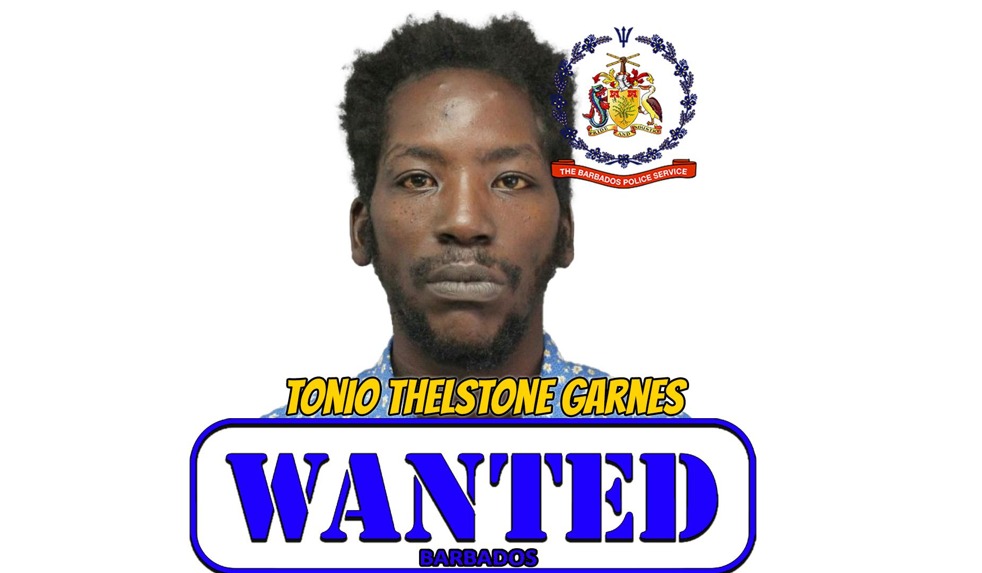
  • Man killed in Deane’s Village shooting identified

    Man killed in Deane’s Village shooting identified

    A fatal shooting in a residential neighborhood of St. Michael, Barbados has left one man dead and another hospitalized, with law enforcement launching a public appeal for information to crack the case. The victim has been formally identified as 42-year-old Andre Omar Burgess, a resident of Baycroft New Road, Bridge Road, St. Michael. The violence unfolded just after 9 p.m. on Thursday in the Deane’s Village area along Hindsbury Road.

    According to Barbados Police Force officials, the department’s Operations Control Room got the first alert of trouble at 9:18 p.m., when multiple callers reported hearing gunshots ring out across the neighborhood. Officers assigned to the Bridgetown Division were immediately dispatched to the scene to secure the area and begin initial assessments.

    When first responders arrived, they found Burgess unresponsive on the public roadway, directly alongside a parked motor vehicle. A licensed medical practitioner was called to the site shortly after, and officially pronounced Burgess dead at the scene.

    Preliminary investigative work has already shed light on the sequence of the attack. Investigators confirmed that Burgess was engaged in a conversation with a second man when three attackers, all wearing masks to conceal their identities, approached the pair without warning and opened fire. Both men were hit by gunfire before the three suspects fled the area on foot.

    The second victim, who suffered non-fatal injuries, was rushed to the Queen Elizabeth Hospital in a private vehicle by bystanders immediately after the attack. As of the latest update, he is still receiving ongoing medical care for his wounds, and no further details about his condition have been released by authorities.

    The case remains an active investigation, with detectives still working to piece together key details including the motive for the attack, the identities of the three masked suspects, and any potential connections between the attackers and the victims. To speed up progress in the case, police are urging anyone with even small pieces of information to come forward. Witnesses who were in the area at the time of the shooting, or residents who may have noticed suspicious activity in the hours before or after the attack, can submit information anonymously through Crime Stoppers at 1800-8477, reach the 24/7 police emergency line at 211, or contact investigators directly at District ‘A’ Police Station via phone at 430-7242 or 430-7246.

  • Live a clean life, advises Ena Jones, 100

    Live a clean life, advises Ena Jones, 100

    A beloved pillar of Barbados’ religious and local community marked a historic life milestone this week, as Ena Jones celebrated her 100th birthday surrounded by loved ones and national leadership, and opened up about the core values that have shaped her extraordinary century of life.

    The birthday celebration, held at Bethel Methodist Church where Jones has been a dedicated, long-time member, drew a crowd of family, close friends, and Barbadian President Jeffrey Bostic, who joined the occasion to honor the island’s newest centenarian. Even at 100, Jones impressed every attendee with her quick wit, sharp recall of life events, and gentle, steady composure. Looking back on decades of change and challenge, she shared vivid anecdotes from her youth, from carefree days attending community dances to the quiet hardships and resilience of life during World War II.

    When President Bostic asked Jones what wisdom she would pass on to younger generations during a warm, lighthearted conversation, her response was brief but deeply resonant: *“Try to be the best you can. Do not follow bad company…. If you see a person going the wrong way, don’t follow.”*

    As a formal tribute to Jones’ remarkable milestone, President Bostic presented the centenarian with a celebratory gift basket holding fresh flowers, a bottle of non-alcoholic wine, and a personal birthday card on behalf of all Barbadians. The card read: *“Reaching the remarkable age of 100 years makes you a national treasure. This calls for celebration, and so I salute you. Accept my heartfelt congratulations and those of the people of Barbados on this most significant day in your life. Happy birthday, and may God continue to shower His blessings on you.”* Bostic went on to hail Jones as the event’s “Birthday Queen” and lead a toast to her long and meaningful life.

    For those who have known Jones for years, her warmth and love of life have long made her a central part of the church community. Wendy Darlington, a fellow member of Bethel Methodist Church and long-time friend, recalled how the pair first connected: they bonded after sitting next to each other in the same pew one Sunday, and eventually formed a close bond that has lasted for years. Jones’ cousin, Stevenson Tull, shared that even after he and his family moved to the United States, stopping by Jones’ home during return visits to Barbados became a beloved family tradition. Confident in Jones’ continued vitality, Tull said, *“She loves life, she takes care of herself, she made it to a hundred and I know that we are going to celebrate another birthday… for her.”*

    In a post-celebration interview, Jones reflected that reaching 100 was a milestone she never imagined possible. Neither of her biological parents lived to see their 100th birthday, and Jones lost her mother at a young age, growing up raised by her adoptive mother, Ms. Trotman. When asked what she credits for her long and healthy life, she pointed to three core principles: intentional discipline, unwavering faith, and the intentional choice to step away from negative influences.

    Expanding on her guidance for young people, Jones emphasized the value of steady, purpose-driven living: *“Live a clean life. Work… don’t worry about other people and what they do… and that’s how you get through life.”* She noted that she enjoyed the pleasures of youth in her earlier years, but always prioritized making intentional choices to build a stable, fulfilling long-term life.

    Faith, Jones added, has been a foundational guiding force throughout every stage of her journey. Her biological mother first introduced her to church as a small child, and Jones has maintained a deep, consistent spiritual practice that she says saw her through every hardship and joy across 100 years. Jones described her 100th birthday as “very cool and quiet”, saying she approaches the milestone with deep gratitude for every year she has been given. Far from slowing down, the centenarian continues to bring joy and wisdom to everyone around her in her community.

  • Rural folk fed-up with ‘ridiculous cycle’ of brush fire, smoke

    Rural folk fed-up with ‘ridiculous cycle’ of brush fire, smoke

    Each dry season, residents of St George and St John parishes brace for smoke, ash, and disruption. This year, however, a relentless wave of blazes that blanketed both communities in toxic haze this week has pushed frustrated locals to speak out, demanding officials finally address the root causes of the annual crisis instead of only responding to emergencies after they break out.

    At the center of the problem lies vast stretches of abandoned and under-managed agricultural land across the island’s rural agricultural heartland. For decades, dozens of fallow plantations once used for sugar cane and vegetable cultivation – including the Pool, Henley, Wakefield and Todds properties, formerly owned by the defunct insurance conglomerate CLICO – have been overrun by invasive, fast-growing species: cow itch vine and river tamarind. These dense, dry plants act as perfect fuel for seasonal brush fires, creating massive blaze zones that spread quickly and generate thick, acrid smoke that drifts into residential and commercial areas.

    For long-time St George resident Brad Harper, the severity of this year’s fires hit him unexpectedly while driving through Middleton. What he first assumed was a mechanical fault in his car’s air conditioning system quickly revealed itself to be dangerous air pollution. “The smoke was very irritating to the sinus,” he recalled. “I was driving with the AC on, and at first I thought something was wrong with the vehicle, so I checked all the instruments and everything looked fine. It wasn’t until I rolled down the window that I realized just how hazy the outside air had become.” That evening, a return trip to the area with a friend confirmed his worst fears: conditions had grown even worse, with smoke thick enough to cause persistent respiratory irritation. Having lived in the region for most of his life, Harper said he has never seen smoke levels this high, even as local fire chiefs have already acknowledged a steady increase in the frequency and scale of these fires in recent years.

    The blazes are far more than a minor inconvenience: they pose a direct, daily threat to vulnerable community members. Susan, an asthmatic woman in St George, described this week’s smoke as suffocating, with a strange oily quality that triggered persistent coughing fits. “It wasn’t pleasant because the ashes and the smoke from the ashes had me coughing a lot, and I’m asthmatic too,” she explained. “It feels like burning tires, that thick black smoke. Then after it fades, everything gets covered in a white coating of ash. It’s not good at all.”

    Local small businesses have also suffered direct financial losses. Taylor, who owns a mini-mart in St Judes, St George, was forced to close her shop early and throw away contaminated stock after soot and ash blew into her store, covering fresh produce and other goods. “It was really bad,” she said. “It even got on the vegetables. We had to pack up early because the ashes and dust were blowing right past the place. It’s terrible for people with sinus issues. They’ve got to get rid of the cow itch – it’s affecting all of us, even small children. I just hope they find a way to stop these huge smoke plumes from impacting our daily lives.”

    In St John, local farmers have a front-row seat to the growing crisis. Maria Simpson, who farms land in Wakefield, says the constant cycle of fires means emergency fire crews are spread thin across the parish, with new blazes breaking out almost daily. “This is ridiculous,” she said, gesturing to the charred, blackened horizon stretching across the former plantation. “Every single day there’s at least one fire truck out from the station. If you have one fire here, another breaks out behind it, and you hear sirens nonstop. This is a real public health crisis. It’s unbelievably hard.”

    Simpson points out that the common practice of controlled burning to clear cow itch only makes the problem worse during the dry season. When the invasive plants are burned, dry particles of cow itch blow across the region, worsening respiratory irritation, and the infestation has already grown out of control, alongside unmanaged brush and even wild monkey populations on the abandoned land. Instead of reactive burning, she says officials should focus on early intervention: “Deal with them from early. If they could remove the plants before they start to flower and spread, that’d be real good.”

    For long-time St John resident Mavel Knight, the fires came right to her doorstep this week, forcing her to lock herself inside her Massiah Street home from mid-afternoon through the entire night as a blaze on Donkey Hill poured smoke into her neighborhood. “Last night there was so much smoke because there’s just so much unmanaged bush, that’s what creates all that smoke,” she said. “I had all the windows closed. To be truthful, I didn’t open the house at all. I told my daughter I was buckling down, I wasn’t moving, I kept the door locked.”

    The frustration with years of inaction is most palpable in Cherry Grove, where resident Marcia Clarke says the community has been stuck in a repeating cycle of cleaning ash and dealing with coughing fits for decades. She traces the problem directly to failed land management: what were once productive sugar cane fields are now neglected tinderboxes waiting to ignite. “Yesterday, I had to wash my clothes three times,” she lamented. “And then you have to close all the windows in the house. Years ago, when this area out front was sugar cane, we didn’t have this problem. But from the time the grounds got out of hand, this is what we get. We’ve told our member of parliament, but nothing ever happened. It’s terrible up here in St John.”

    As this week’s smoke begins to clear, residents of both parishes are left with the same unresolved problem, and their call for action has never been louder. With local fire services pushed to their breaking point and community public health at severe risk, locals are demanding a comprehensive, long-term plan to manage overgrown abandoned farmland and break the annual cycle of devastating seasonal bush fires. Until that plan arrives, as Simpson puts it, residents remain trapped in a “ridiculous” cycle of fire, smoke, and disruption.

  • Another harvest delay could finish off sugar industry – planters

    Another harvest delay could finish off sugar industry – planters

    Barbados’ centuries-old sugar sector, a foundational part of the island nation’s agricultural and economic landscape, is on the brink of total collapse if the 2026 harvest does not proceed as scheduled this Friday, private cane growers have warned. The urgent alarm comes amid a fresh, intractable disagreement between factory management and the Unity Workers Union (UWU) that has already delayed operations and put thousands of livelihoods at risk.

    The stark warning was delivered Thursday by Mark Sealy, chairman of Barbados Sugar Industry Limited (BSIL) – the cooperative that supplies 65 percent of all cane processed annually at Portvale, Barbados’ only remaining sugar mill. The conflict ignited after UWU threatened to pull its members from Portvale this weekend if management proceeds with plans to implement a mandatory shift system for workers.

    UWU General Secretary Caswell Franklyn has taken the firm stance that Portvale falls under the island’s Shops Act, meaning it must operate like a standard retail establishment with no structured shift scheduling. However, the Barbados Energy and Sugar Company (BESCO), the cooperative that oversees Portvale’s daily operations, argues that the facility is legally classified as a factory, falling under the 2013 Safety and Health at Work Act (SHAW), which permits shift-based work arrangements.

    This is not the first disruption to hit the 2026 harvest. Earlier this week, Agriculture Minister Dr. Shantal Munroe-Knight announced that limited grinding operations had resumed using cane that was delivered to the factory before UWU workers launched a prior strike. That industrial action was called to protest working conditions, wage levels, and BESCO’s refusal to recognize UWU as the workers’ official collective bargaining agent.

    For small-scale cane farmers, who form the backbone of BSIL’s membership, any further delay to harvest operations could be catastrophic. Cane already standing in fields is beginning to degrade, and extended delays will push marginal producers – who lack the financial reserves to absorb extended interruptions – out of business entirely, Sealy explained. That would leave the factory unable to meet its required daily processing target of 2,000 tonnes of cane, putting the entire annual quota at risk and triggering irreversible collapse of the industry.

    “People need to understand now that this is crunch time,” Sealy told Barbados TODAY in an exclusive interview. “This is now April 9, and we have hardly harvested any cane. We can’t continue with that; timing is of the essence. We have been trying to sustain the sugar industry for quite some time now. If we have any other drop out of marginal farmers, it will be very difficult to recover from that, because even the larger farmers will not be able to deliver 2,000 tonnes of cane to the factory per day.”

    Sealy added that small-scale producers without sufficient cash flow and reserve resources could be forced to exit the industry permanently if the 2026 crop is entirely lost to delays, creating a gap that cannot be quickly filled by remaining growers.

    Complicating the timeline further is the narrow harvest window before the arrival of the annual rainy season in June. Once soils become saturated, farm equipment cannot access fields to harvest remaining cane, making it impossible to salvage the crop. Sealy pushed back on UWU’s legal classification of the mill, noting that the facility’s function as a factory makes its classification under SHAW unambiguous. “Anybody can see that a factory is a factory. We need to get the whole thing sorted out because we can’t afford any more delays,” he said.

    On the contentious question of union recognition, Sealy threw BSIL’s support behind the Barbados Workers’ Union (BWU), which he says has been the recognized bargaining agent for sugar sector workers for nearly a decade. “For the past eight years and even before I was chairman of BSIL, we have been sitting down in negotiations with the BWU and BAMC, which is now BESCO, and going through the issues with mutual respect,” he said.

    Already, the weeks-long delay to the harvest, which was originally scheduled to begin February 15, has caused measurable damage. Standing cane has degraded, leading to lower sugar quality and reduced overall tonnage. Any additional delays will erode the economic benefits the sugar industry delivers to Barbados, pushing the centuries-old sector over the edge, Sealy warned. He called on all parties to negotiate an immediate resolution to allow the 2026 harvest to proceed for the benefit of workers, the general public, and the broader Barbados economy.